
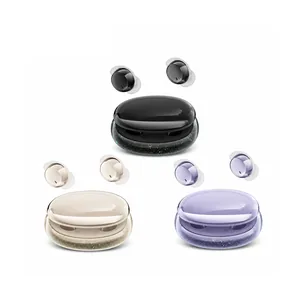


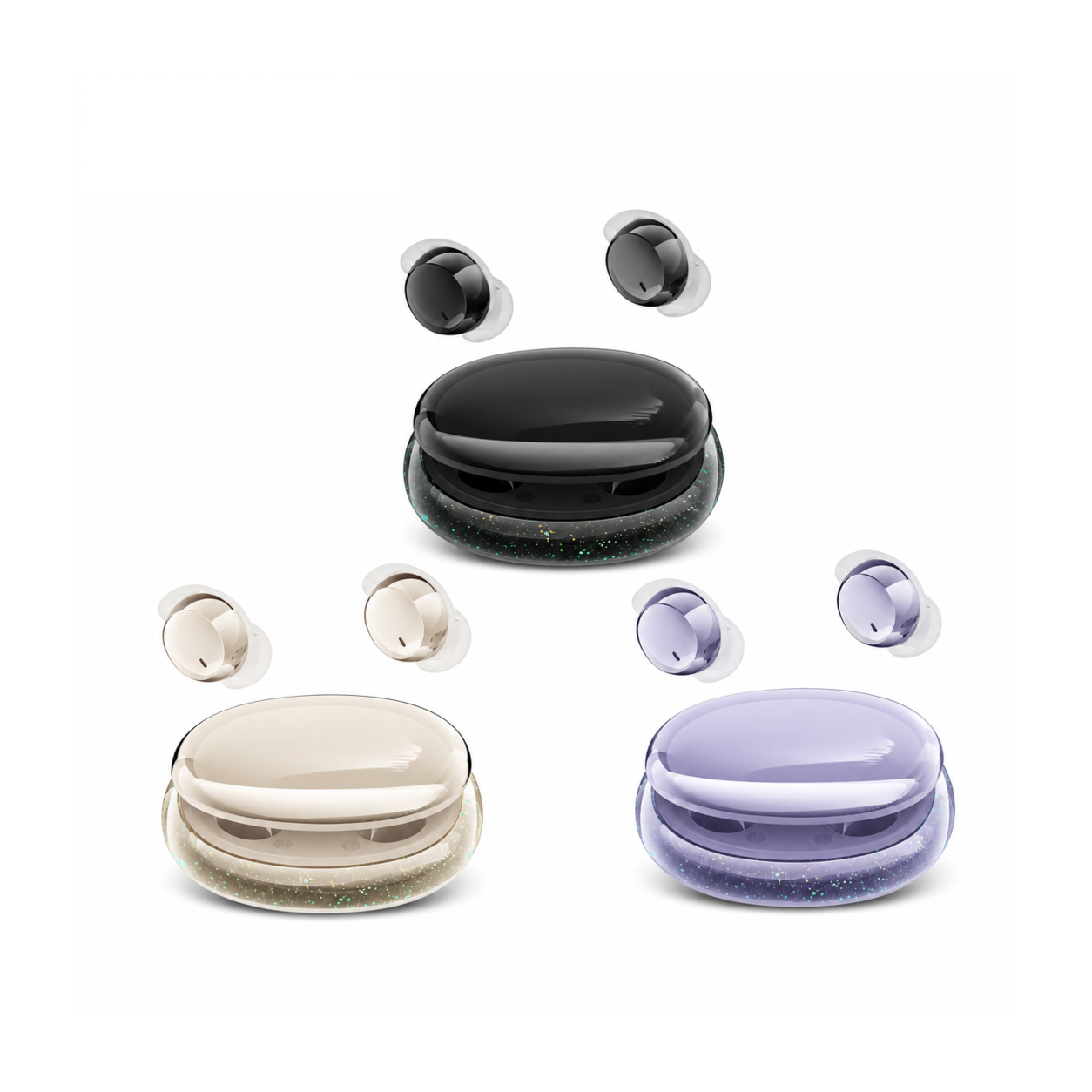
Side sleepers should choose by what touches the pillow, not by the longest feature list. EARSOLE sells all four models compared here. The Q26 adds documented Bluetooth 5.3, low-latency mode and case battery indicators; the Low-Profile model adds a sleep-support listening mode; the 2.4g Mini publishes a 2.4g per-earbud weight; and the MY-20 emphasizes soft silicone contact surfaces. This is a catalog comparison, not a hands-on pillow test.
Quick comparison
Prices and published specifications below were checked on July 17, 2026. Prices and availability can change. “Not published” means the current EARSOLE product page does not state the specification; it does not mean the feature is absent.
| Model | Price checked | Published fit details | Stability feature | Noise control | Published battery information | Useful starting point when… |
|---|---|---|---|---|---|---|
| Q26 | $29.99 | Stemless, low-profile, full-silicone in-ear | Rounded silicone body | Passive isolation; no ANC claim | Up to 20 hours total with case | You want documented Bluetooth 5.3, low-latency mode and case battery indicators |
| Low-Profile | $31.99 | Compact, stemless, low-profile in-ear | Close-to-ear rounded housing | Passive reduction; no ANC claim | Up to 20 hours combined with case | You want a documented sleep-support listening mode and a starlight-style case |
| 2.4g Mini | $32.99 | Tiny, stemless, low-profile in-ear; 2.4g per earbud | Curved stabilizing ear wing | Passive reduction; no ANC claim | Not published | Published low weight and an ear wing matter more than a long feature list |
| MY-20 | $33.99 | Low-profile in-ear with soft silicone contact surfaces | Rounded silicone-contact shape | Passive reduction; no ANC claim | Not published | You prefer soft silicone contact surfaces and a documented spatial-sound presentation |
None of these specifications proves that a model will be comfortable in your ear on your pillow. Outer-ear anatomy, ear-canal fit, pillow firmness and sleeping position all change where pressure lands.
How this comparison was made
EARSOLE compared the information currently published on its own product pages across six decision factors: outer profile, contact material, stabilization, noise-control type, disclosed battery information and price. We did not run a physical pillow-pressure test, measure projection from the concha or wear each model overnight. The table therefore helps you narrow a shortlist; it is not a comfort ranking or an independent review.
That distinction matters. Google’s guidance for high-quality reviews recommends first-hand evidence and quantitative measurements when a publisher calls something “best.” Until EARSOLE completes and documents that work, the honest format is a specification-led comparison with a short at-home fit check.
What matters more than the feature count
1. The part of the earbud that meets the pillow
A long stem or a housing that projects beyond the outer ear gives the pillow more leverage. A compact, stemless body may reduce that lever, but “low profile” is not a universal comfort guarantee. A rounded edge can still press a sensitive part of the outer ear, and an earbud that sits flush in one person may protrude in another.
2. Stability without deeper insertion
An earbud that shifts whenever you turn can break its seal or fall out. The answer is not necessarily to push it deeper. Look for a shape that remains stable with gentle placement. The 2.4g Mini uses a curved ear wing; the other three rely primarily on compact, rounded housings and their in-ear fit.
3. Passive isolation, ANC and masking are different
All four models describe passive noise reduction or isolation from their physical fit. Passive isolation uses the earbud and seal as a barrier. It is not active noise cancellation, and none of these four pages makes an ANC claim. Quiet audio may mask a remaining sound, but masking does not remove the sound from the room.
4. “Total with case” is not one-charge runtime
The Q26 and Low-Profile pages state up to 20 hours with the charging case. That number includes recharging from the case; it should not be read as 20 continuous hours from the earbuds themselves. The current 2.4g Mini and MY-20 pages do not publish a battery figure, so this comparison does not invent one.
5. Nighttime alerts and controls
Before sleeping in any wireless earbud, check how your exact model handles low-battery prompts, touch controls, timers and single-earbud playback. An accidental touch or an audible battery prompt can matter more at 3 a.m. than a daytime feature that looks impressive on a product card.
The four EARSOLE sleep models
Q26: the most fully documented technical option
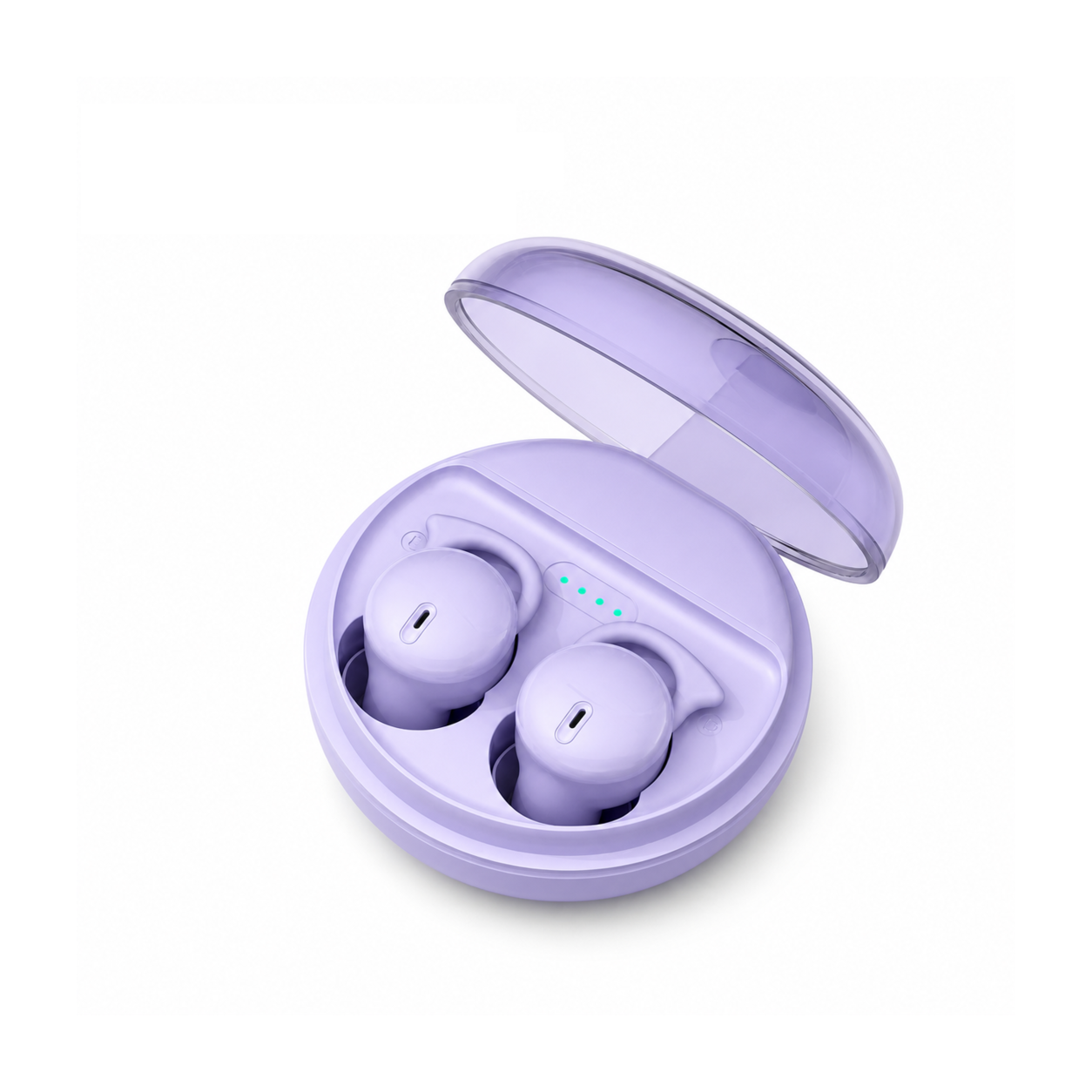
The Q26 product page publishes the broadest technical set of these four: a low-profile, stemless full-silicone body, Bluetooth 5.3, a low-latency mode, up to 20 hours total with the case, passive isolation and battery indicator lights on the case. It comes in Purple, White, Black, Beige and Green.
Start with the Q26 when you want sleep-focused geometry but also care about video sync or a visible case-status cue. Skip it if a full-silicone in-ear fit has consistently irritated your ears, or if you need active noise cancellation. EARSOLE publishes no ANC claim for this model.
Low-Profile: sleep-support mode and a decorative case
The Low-Profile model uses a compact, stemless in-ear shape and publishes up to 20 hours combined playtime with its case. Its distinguishing documented features are a dynamic sleep-support listening mode and a glitter-speckled, multicolor starlight case. The available colors are Starry Black, Milk Tea White and Aurora Purple.
Start here when the sleep-support mode and case design appeal to you. Do not interpret the mode as ANC: its product page explicitly separates the listening mode from electronic noise cancellation and describes the noise reduction as passive.
2.4g Mini: a published 2.4g per-earbud weight
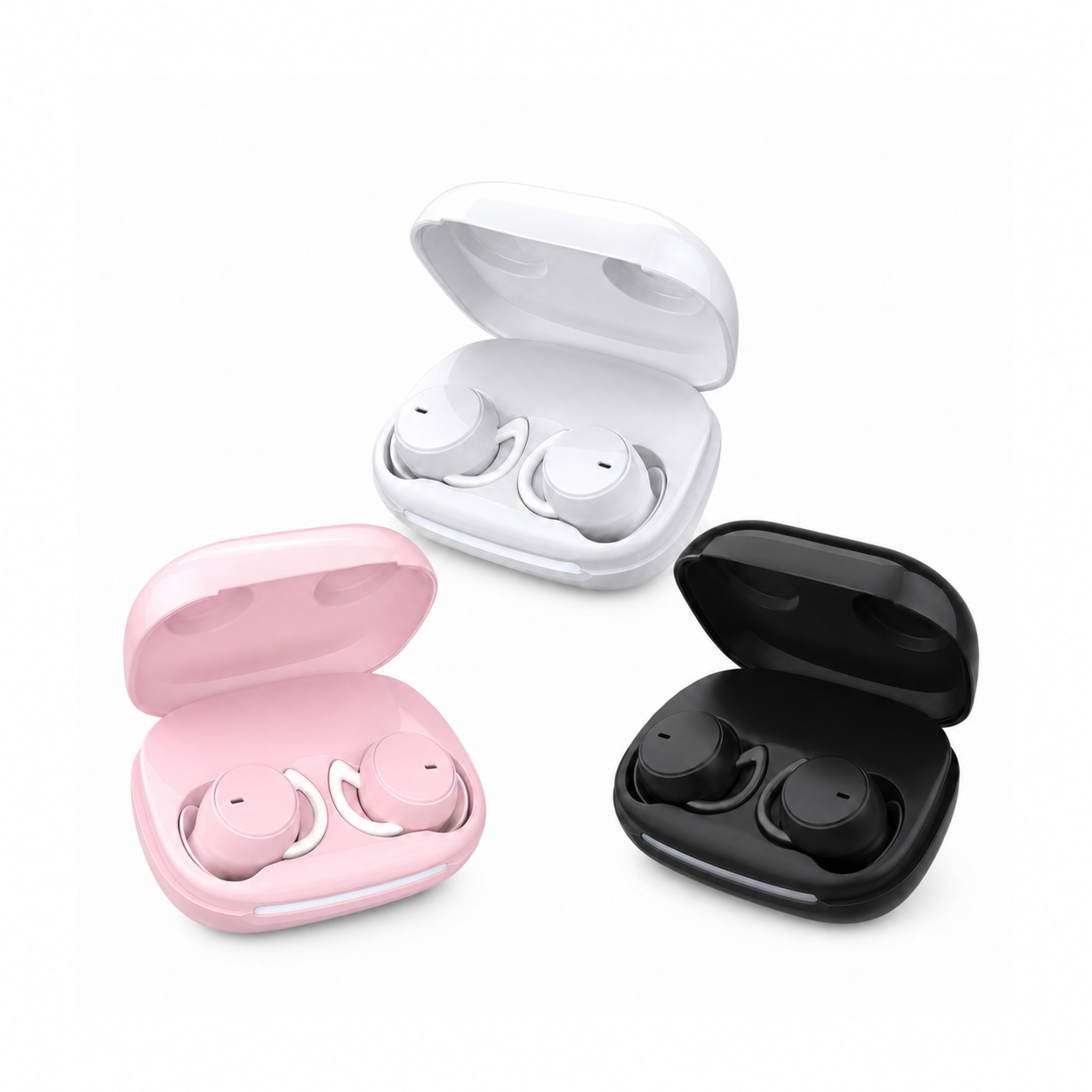
Each 2.4g Mini earbud has a published weight of 2.4 grams. The tiny, stemless housing adds a curved stabilizing ear wing, which gives shoppers a different retention approach from a simple rounded bud. The page describes passive noise reduction and offers Cloud White, Soft Pink and Midnight Black.
Start here when published low weight and an ear wing are your first filters, particularly if larger outer housings have crowded your concha. The current page does not publish a Bluetooth version or battery runtime, so choose another model if those figures must be known before purchase.
MY-20: soft silicone contact surfaces
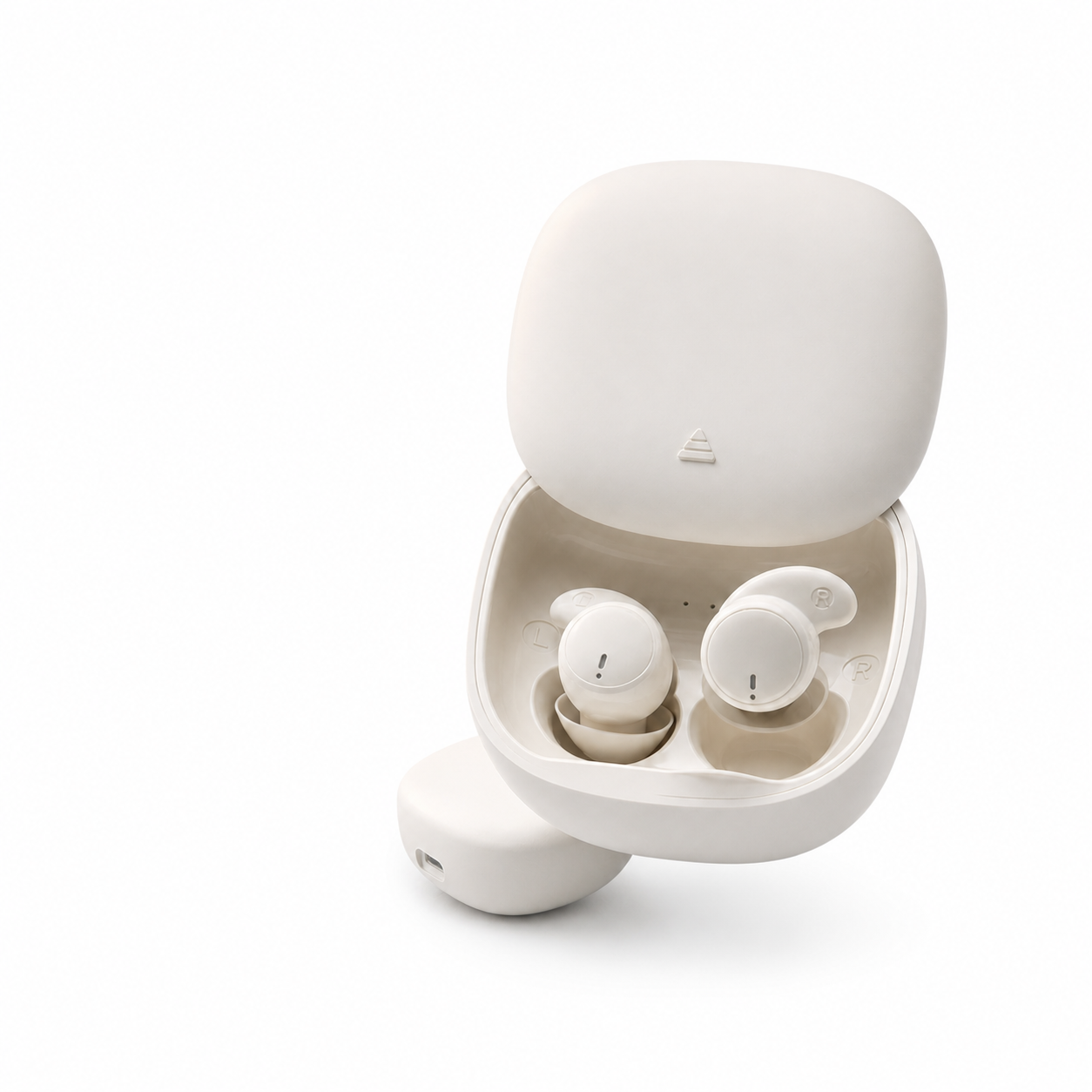
The MY-20 combines a low-profile in-ear shape with soft silicone contact surfaces. Its page also lists passive, sleep-friendly noise reduction and a 360-degree spatial-sound presentation. Colors are Milk White, Mocha Beige and Midnight Black.
Start here when the surface material is more important to you than a published Bluetooth or battery number. As with the 2.4g Mini, those two specifications are not stated on the current product page, so they remain unknown in this comparison.
A five-step side-sleeper fit check
Do this while awake before committing to a full night:
- Start with audio off. Insert the earbuds gently according to the model instructions. Do not force a deeper seal to make a housing look flatter.
- Test each side for five minutes. Use your normal pillow and lie in your usual position. Notice whether pressure is spread broadly or concentrated at one edge.
- Turn as you normally turn. Check whether a bud shifts, loosens or creates a sharp point of pressure. Stability should not require painful insertion.
- Add quiet audio and a timer. Keep the level low and set playback to stop after you expect to fall asleep.
- Stop at warning signs. Pain, numbness, skin irritation, unusual warmth, drainage, ringing or a change in hearing is a reason to stop—not a break-in period to push through.
Record the result for the left and right ear separately. Human ears are not perfectly symmetrical, and one size or model may not feel identical on both sides.
Safer overnight listening boundaries
The World Health Organization’s safe-listening guidance recommends keeping personal-device volume below 60% of maximum and reducing time spent listening to loud sound. Percentage alone cannot tell you the exact sound level at your eardrum, so quieter and shorter remains the conservative approach.
Cleveland Clinic’s guidance on sleeping with earbuds highlights extended loud listening, trapped moisture, wax buildup, pressure discomfort and reduced awareness of alarms or emergencies as relevant risks. It recommends low volume, a playback timer and regular cleaning, and notes that an external bedside speaker avoids many earbud-related risks.
If you need to hear a smoke alarm, child, caregiver alert or another safety signal, do not use isolation that prevents you from hearing it. Earbuds are personal-audio products, not treatment for insomnia, tinnitus or another medical condition.
Frequently asked questions
Are low-profile earbuds guaranteed not to hurt side sleepers?
No. A lower outer profile may reduce pillow leverage, but comfort still depends on ear anatomy, insertion depth, edge shape, pillow firmness and how long you stay on one side. A short awake fit check is more informative than a “comfortable” label.
Which EARSOLE sleep earbud publishes a per-earbud weight?
The 2.4g Mini publishes a weight of 2.4 grams per earbud. The other three pages do not currently publish per-earbud weight, so this article cannot claim how they compare on a scale.
Do any of these four models claim active noise cancellation?
No. Their current product pages describe passive noise reduction or isolation. The Low-Profile model’s sleep-support mode is a listening mode, not an ANC claim.
Does “up to 20 hours with the case” mean one earbud charge lasts 20 hours?
No. It describes combined listening made possible by the earbuds and charging case. The single-charge runtime is not separately stated in the product information used for this comparison.
What if no in-ear model passes the pillow test?
Do not force the fit. A bedside speaker removes in-ear and pillow pressure, while a sleep headband distributes contact differently. If you have persistent ear pain, irritation, discharge or a sudden hearing change, stop using the earbuds and seek qualified medical care.
Bottom line
Choose the Q26 for the most complete published technical set, the Low-Profile model for its sleep-support mode and starlight case, the 2.4g Mini for its documented 2.4g weight and ear wing, or the MY-20 for soft silicone contact surfaces and spatial-sound presentation. Then let a short awake pillow check—not the marketing label—decide whether the shape works for your ears.
Browse the complete EARSOLE sleeping-earbuds collection, read the noise-cancelling guide for sleep, or review how EARSOLE researches and labels its guides.
Sources and review notes
- Product facts and prices: linked EARSOLE product pages, checked July 17, 2026.
- Safety review: WHO safe listening and Cleveland Clinic on sleeping with earbuds.
- Comparison boundary: specification-led merchant comparison; no overnight wear test, pressure measurement or independent product ranking was performed.
