

The outer ear is smaller than the number of things people ask it to hold. Glasses arms, a mask loop, an earring and an earbud all want a strip of skin and cartilage a few centimetres across, and most complaints about earbuds for people with glasses are really complaints about two of them landing on the same spot. The fix is not a brand. It is giving each item its own zone, then putting them on and taking them off in an order that does not drag one past another.
Four zones, four occupants
Work from the top of the ear down. Each zone suits one occupant. Stacking two in the same place concentrates the load of both onto one point of cartilage, which is the geometry the rest of this article works around.
| Zone | Who should have it | What goes wrong if shared |
|---|---|---|
| Top ridge, where the ear meets the skull | The glasses arm | A hook or clip wedged under the arm concentrates the frame's whole weight on one point |
| Front and back, close to the head | A mask loop or its tie path | The loop pulls anything on the outer edge forward every time you turn your head |
| The middle of the outer edge | A clip-on bridge | Nothing, if it is genuinely clear of the two above |
| The lobe | A small earring, if it does not touch the pod | Tapping you can hear, and a snag path on the way off |
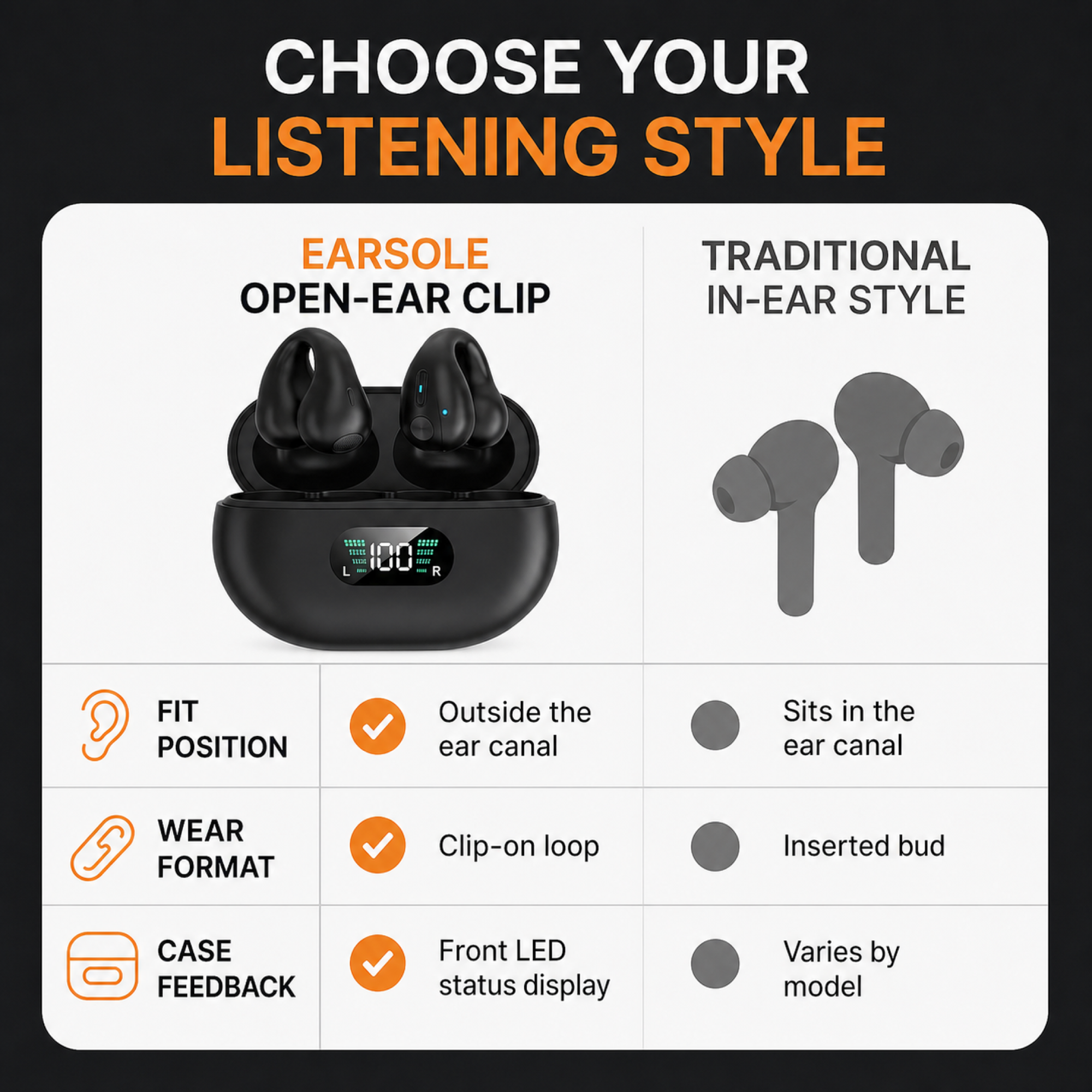
Read that as a map of one ear rather than a rule about designs. An in-ear pair takes most of its support from inside the canal and leaves all four zones largely alone, which is why it is the least likely to conflict with anything. A clip-on uses the third zone. An ear hook wraps the first and second, the same space a frame arm already occupies, which is where the real competition happens.
What our two clip pages say about frames
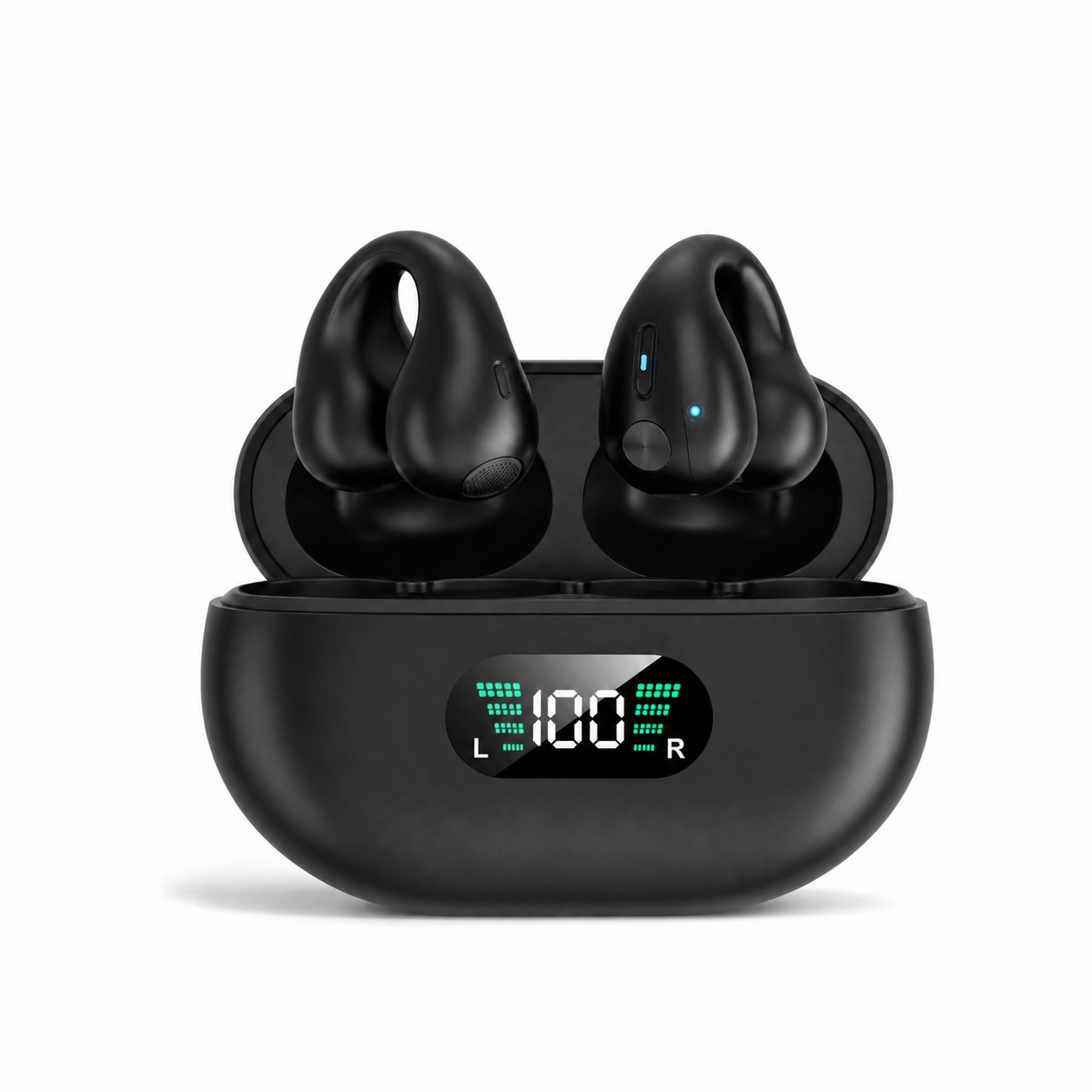
Only two product pages in our range mention glasses at all, and both are clip-ons. The EARSOLE Open-Ear Clip-On Wireless Earbuds with LED Charging Case page suggests the design "if you wear glasses and prefer something that skips bulky over-ear cups", and says where the clip belongs: "The clip rests on the outer edge of the ear." It gives one adjustment instruction, which is the whole of the fitting advice in our catalogue: "reposition it slightly lower or higher until it sits without squeezing."
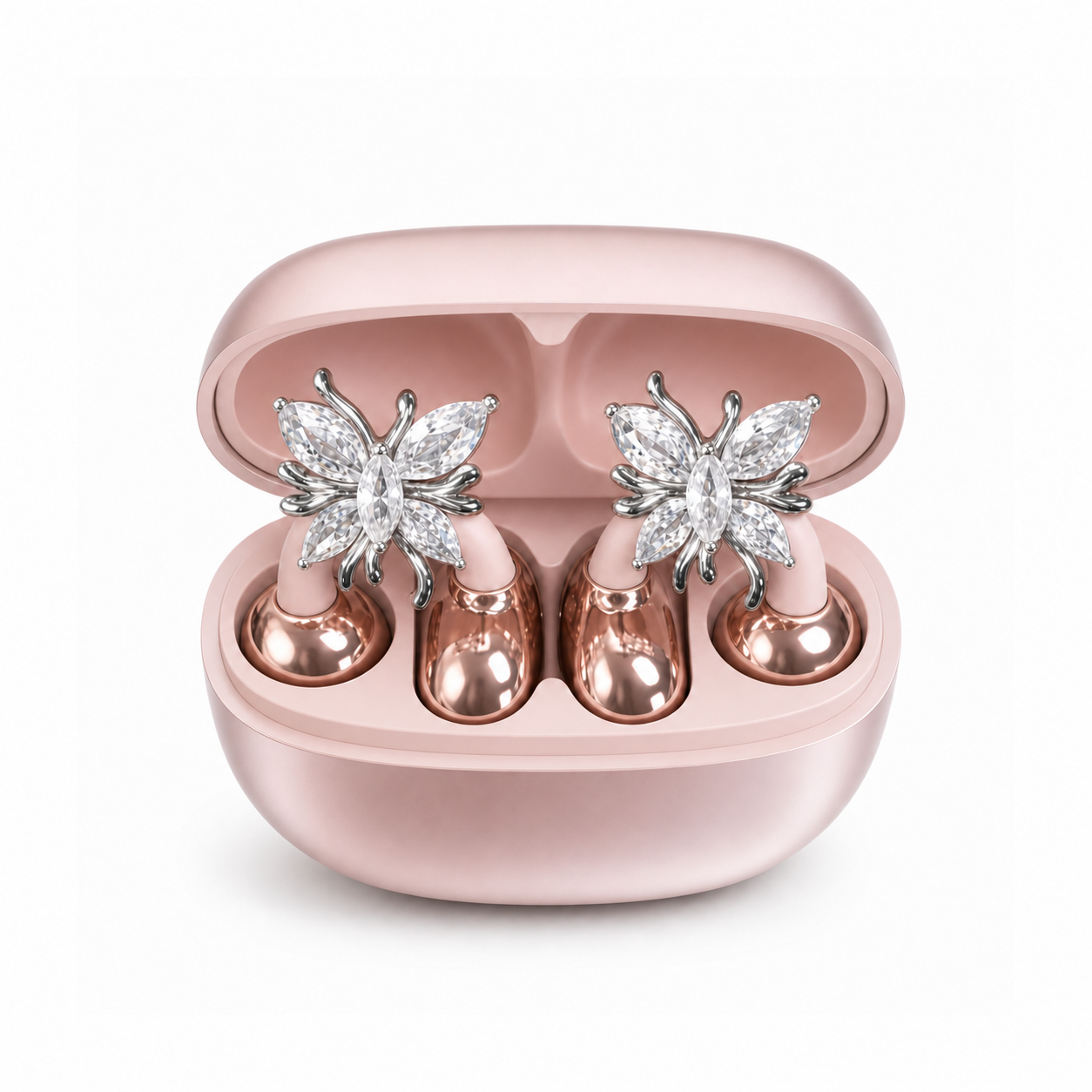
The EARSOLE Butterfly Open-Ear Clip-On Wireless Earbuds page is the one that states the geometry directly. Its clip "occupies different real estate than most glasses arms", and on the lobe question it is specific: "Small stud earrings usually coexist fine; larger hoops may need a quick reposition." It also names what dulls the finish, which matters if you are reaching past a frame several times a day: "hairspray, perfume or lotion, which can dull glossy surfaces."
Nothing on either page promises a particular frame will work. They describe where the clip sits; whether that is clear of your own arms is a measurement only you can take. For the shape that does share the space behind the ear, our ear-hook guide counts how many of those pages say anything about glasses, and the answer is none of them.
The sequence, one accessory at a time
Testing everything at once tells you that something hurts without telling you which thing. Build it up instead.
- Wear the glasses alone for two minutes and note any pressure point that already exists. That one is not the earbud's fault and will not be fixed by changing earbuds.
- Add the mask alone, adjusted the way its own instructions say, and see whether the loop crosses the temple arm.
- Put the earbuds on alone and find the lowest-pressure position that still holds.
- Combine them in pairs before all three: glasses and mask, glasses and earbuds, mask and earbuds.
- With all three on, speak, smile and turn your head. A fit that survives a still head and fails a moving one has not been tested.
If any item drags another out of place at step four or five, the answer is to move a zone, not to push harder. A tie-style mask that fastens behind the head takes its loop out of the ear entirely and removes the most common collision in one move.
Collisions, and what actually fixes each one
| What you notice | What is happening | The fix |
|---|---|---|
| A sore point above the ear after an hour | The glasses arm is resting on the clip instead of beside it | Move the clip lower on the outer edge. Never wedge the arm on top of it |
| The earbud creeps forward through the day | A mask loop is pulling it every time you turn | Route the loop closer to the head, or switch to a style that does not use the ear |
| A tap you can hear on one side | An earring is meeting the pod | A smaller earring, or move the clip; the Butterfly page says studs usually coexist and hoops may need repositioning |
| Hair caught when you take anything off | The bridge or a decorative accent is a snag point | Tie hair back before putting them on, not after it snags |
The order to take things off
Putting a crowded ear together is slow and deliberate; taking it apart tends to be done with one hand and in a hurry. The mechanism worth knowing is that an elastic loop pulled outward passes directly over the zone where the clip sits, so anything in its path comes with it. Give the removal a fixed order: stop, pause playback, put the earbuds in their case, then the mask, then the glasses. If your day involves taking a mask on and off repeatedly, a clip may simply be the wrong design for those hours, and an in-ear pair that lives inside the canal is easier to leave in place.
What this article does not cover
Everything above is about geometry: what sits where, and what pulls on what. It is not medical advice, and nobody with clinical training has reviewed it. Growing tenderness, skin that breaks, numbness, pain that outlasts taking the earbuds out, or any change in your hearing are not fit problems to be solved by repositioning a clip. Stop using the earbuds and ask someone qualified. Frame choice, prescriptions and anything to do with the eye itself are outside what a shop that sells earbuds can usefully answer.
If the shape rather than the frame is what you are deciding, what our pages say about clip-ons reads the range page by page, and the full set sits in open-ear and clip-on earbuds.