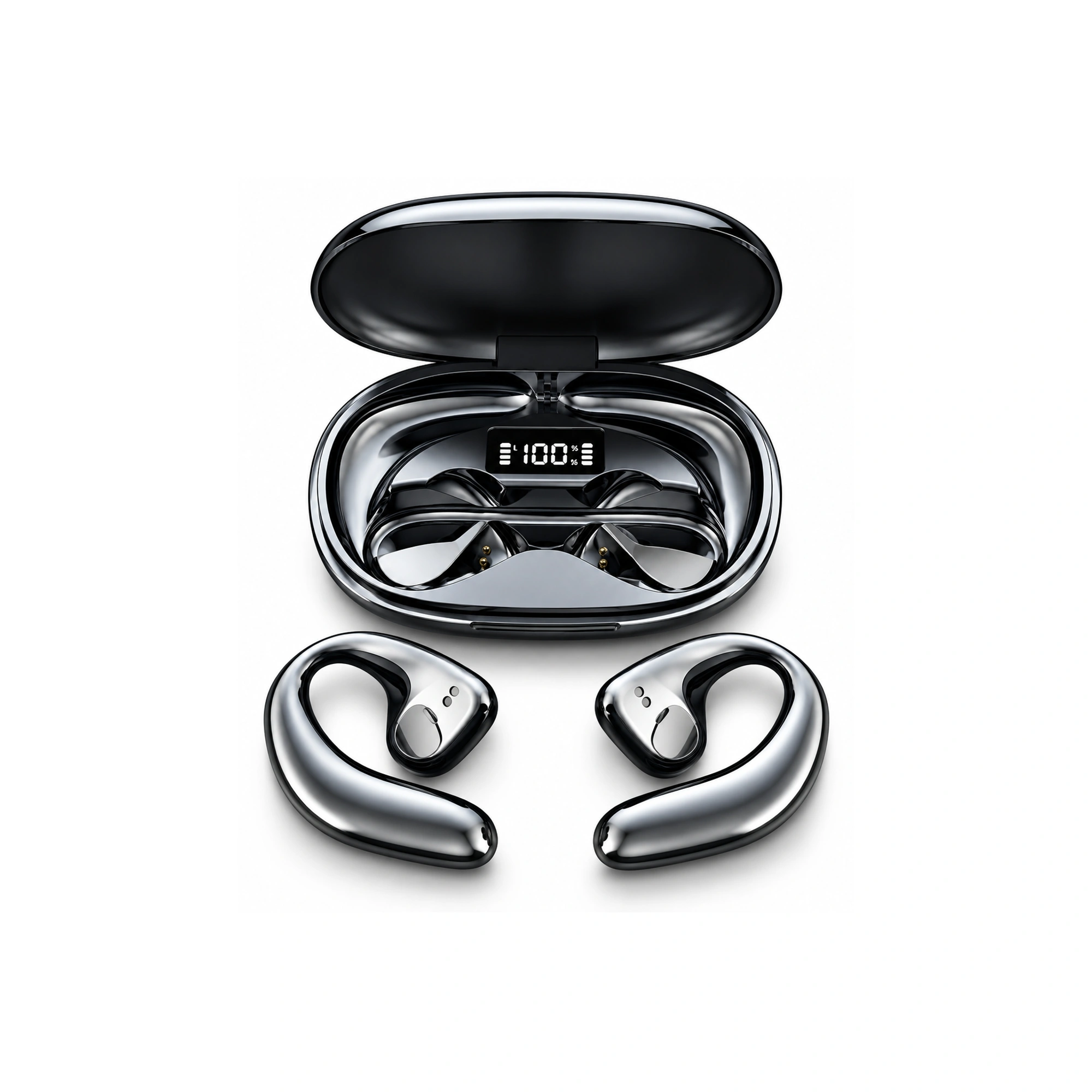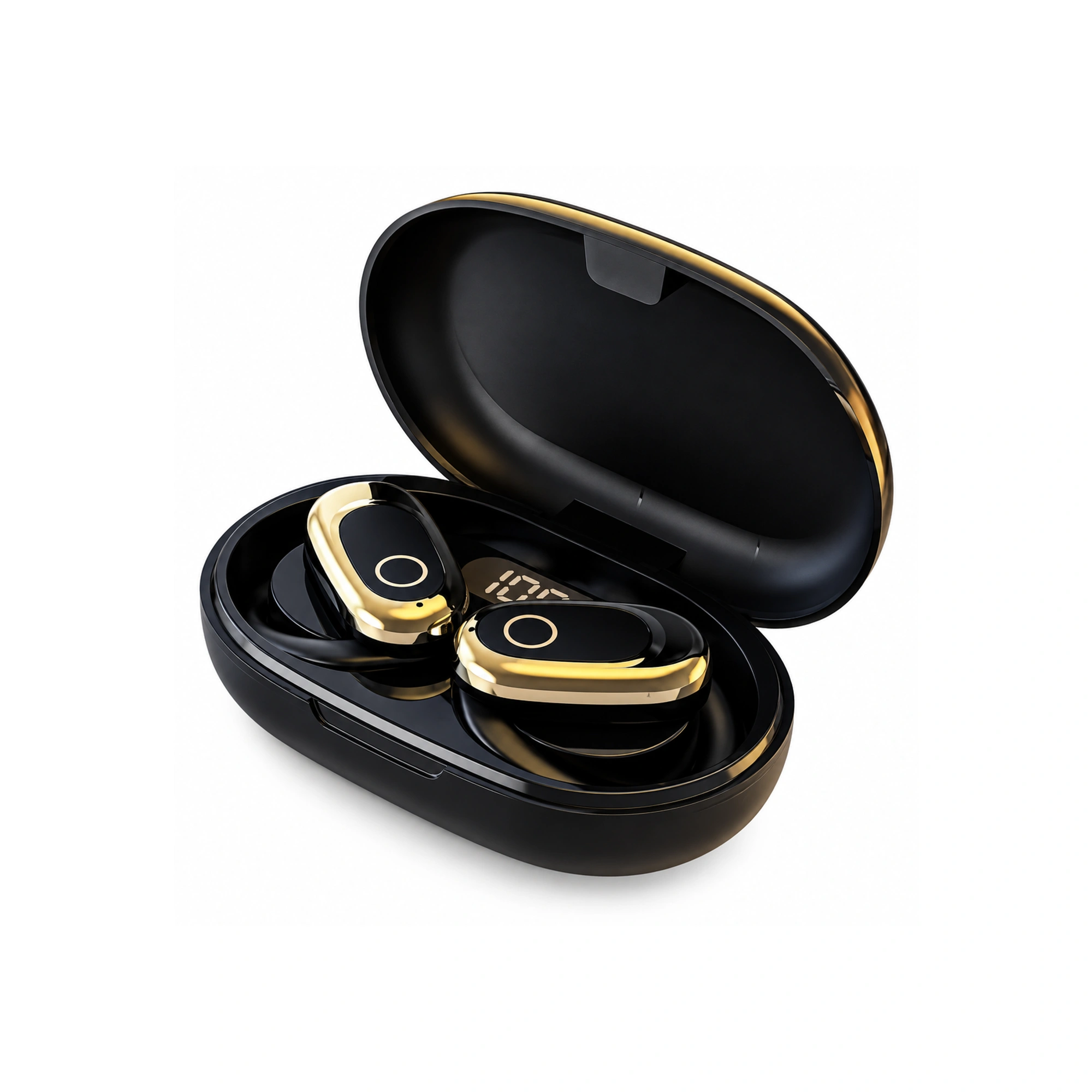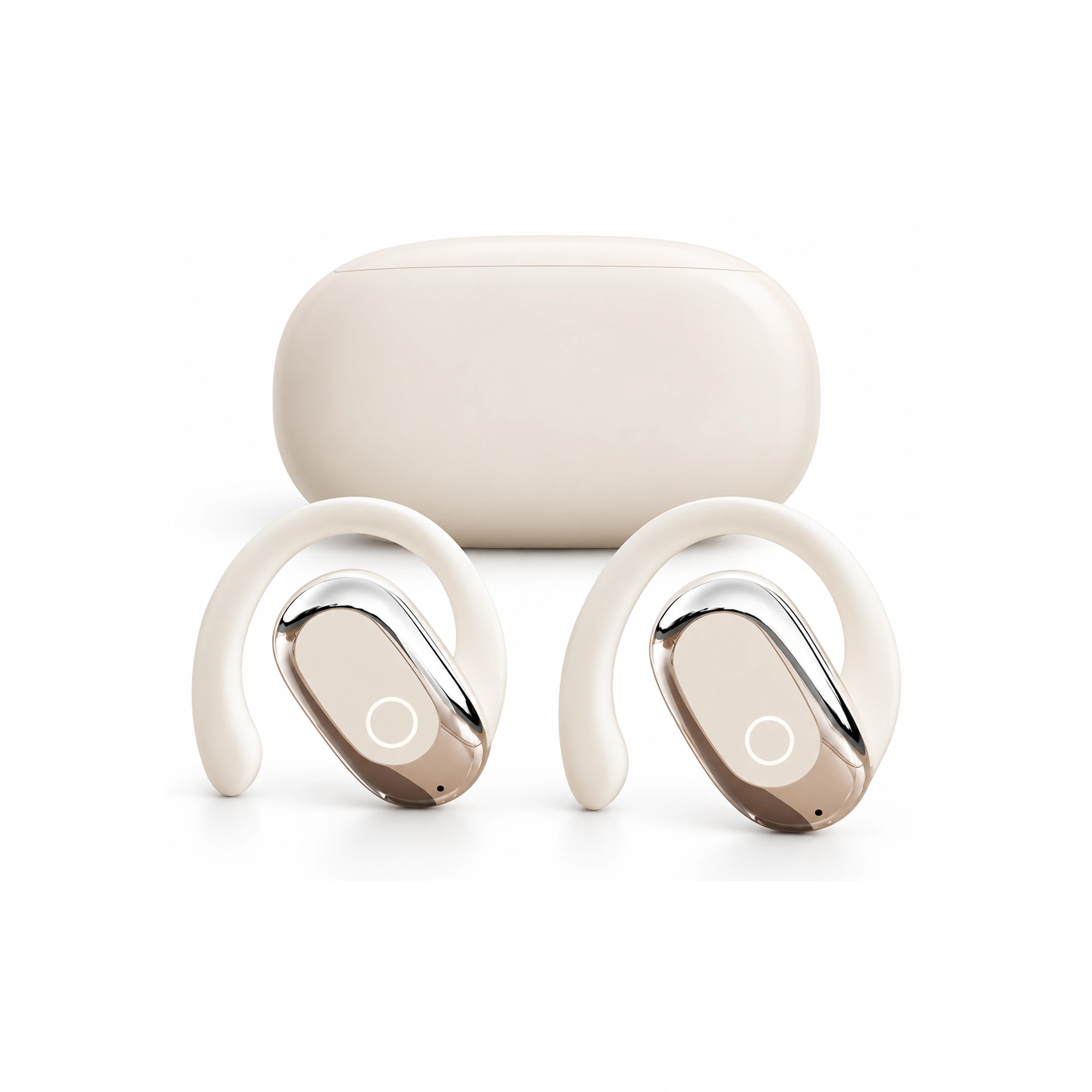


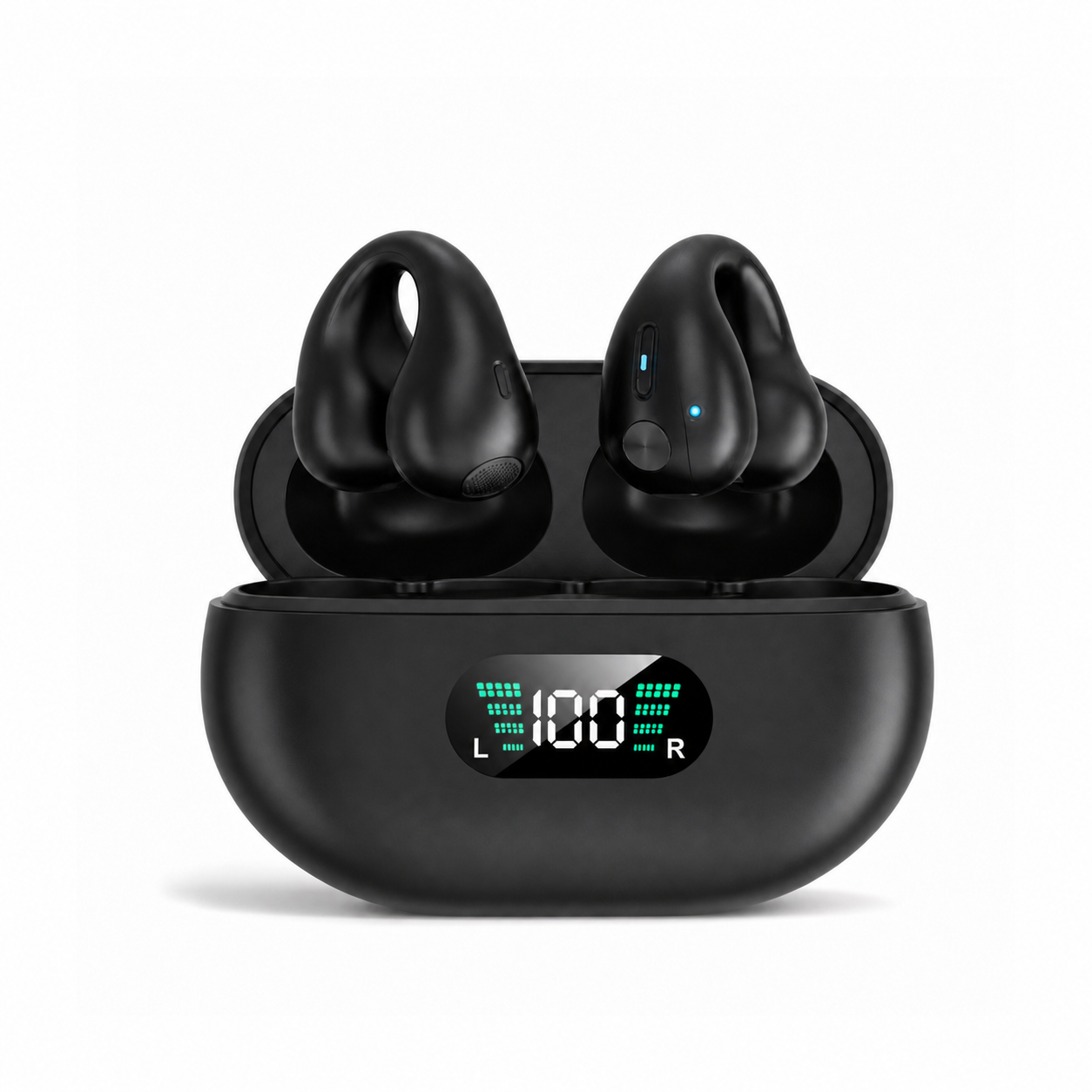
Open-ear vs in-ear earbuds is mainly a choice between awareness and isolation. Open-ear models leave the canal uncovered, which can reduce tip pressure and keep surrounding sounds audible. In-ear models use silicone or foam tips to create a seal, usually improving bass, privacy, and passive isolation. Neither design is universally better; your environment and fit sensitivity should decide.
Open-ear vs in-ear earbuds at a glance
An open-ear earbud places its speaker outside or near the entrance to the ear canal. An in-ear earbud uses a tip that sits in the canal and forms a seal. That one physical difference affects nearly every part of the listening experience.
| Decision axis | Open-ear earbuds | In-ear earbuds |
|---|---|---|
| Comfort and fit | No tip inside the canal, but clips or hooks may press on the outer ear and fit varies by ear shape | A good tip can feel secure and unobtrusive; the wrong size can cause pressure, looseness or soreness |
| Awareness | More surrounding sound remains audible, although your audio can still mask important cues | The seal reduces ambient sound; transparency features are model-specific and cannot be assumed |
| Isolation | Little passive isolation because the canal remains open | Usually stronger passive isolation when the tip forms a proper seal |
| Sound and bass | Environmental noise competes with the audio; deep bass is harder to reproduce without a seal | A consistent seal usually supports fuller bass and clearer low-volume listening |
| Leakage and privacy | More likely to be audible nearby at higher volume, especially in a quiet room | Usually keeps more sound contained, although leakage still depends on fit and volume |
| Stability and use | Clip and hook designs can stay secure, but glasses, hair, cartilage shape and clip pressure matter | Tip size and insertion angle determine stability; a poor seal can loosen during movement |
These are category-level tendencies, not promises about every product. Driver tuning, fit, microphone quality, software and build quality still vary from model to model.
What counts as an open-ear earbud?
“Open-ear” describes how the product fits, not one single audio technology. A clip-on or ear-hook design can position a conventional speaker close to the ear canal without plugging it. Bone-conduction headphones also leave the canal open, but they transmit vibration differently and should not be treated as identical to every open-ear earbud.
The common feature is an uncovered ear canal. That can suit someone who wants to hear a coworker, a doorbell or a station announcement without repeatedly removing an earbud. It can also help listeners who dislike the plugged sensation of silicone tips.
The trade-off is that the room becomes part of the listening experience. A fan, conversation, bus engine or traffic noise may cover quiet details in music and speech. Turning the volume up can make the audio easier to hear, but it also increases sound exposure.
What counts as an in-ear earbud?
An in-ear earbud uses a silicone or foam tip to seal inside the ear canal. When the tip size and angle are right, that seal reduces outside noise and helps preserve bass. It can make podcasts easier to follow on public transport and music more consistent between quiet and moderately noisy places.
A seal is not automatically comfortable. A tip that is too large may create pressure; one that is too small may leak sound or work loose. Ear canals also differ from left to right, so some listeners need different tip sizes on each side. Apple’s ear-tip guidance similarly recommends changing tip size when a tip feels too large, uncomfortable or fails to create a good seal.
If you dislike both a sealed tip and an outer-ear clip, there is a middle option. Semi-in-ear earbuds rest near the canal entrance without using a sealing silicone tip. They provide less isolation than a sealed in-ear model but may feel more familiar than a clip-on design.
A simple decision flow
Use your most common listening environment as the first filter:
- Do you need to hear people, announcements or household sounds while listening? Start with open-ear.
- Do you need to reduce office noise, transit rumble or other distractions? Start with in-ear. Passive isolation still depends on obtaining a proper seal.
- Do silicone tips create pressure or a plugged sensation for you? Try open-ear or semi-in-ear before buying another sealed pair.
- Do you listen in a quiet shared room? In-ear is usually the more private choice because open designs can leak more sound.
- Will you exercise outdoors? Compare retention and the product’s stated water-resistance rating separately. An open fit does not automatically make a product sweat-resistant.
- Are your days split between quiet focus and frequent conversation? Two fit types may be more practical than forcing one pair to handle opposite jobs.
Fit remains personal. Whenever possible, buy from a retailer with a clear return policy and test the product at normal volume in the places where you actually listen.
Which design is more comfortable?
Open-ear earbuds remove one common source of discomfort: pressure from a tip inside the ear canal. That does not make every open-ear design comfortable for every person. A clip may pinch cartilage, while an ear hook can compete for space with glasses, sunglasses or thick hair.
In-ear comfort depends heavily on tip size, insertion depth and shell shape. The goal is a stable seal without force. If the earbud feels as if it must be pushed deeply to stay in place, try a different tip size or design rather than tolerating pain.
Comfort is subjective and can change during a long session. Stop using any earbud that causes persistent pain, skin irritation, numbness or worsening ear symptoms. This guide compares consumer product designs; it is not medical advice.
Awareness is not the same as safety
Open-ear earbuds normally let more external sound reach the ear because they do not create a physical seal. That can improve awareness, but it does not guarantee that you will notice a vehicle, alarm, warning or person speaking. Audio at any fit or volume can divide attention and mask environmental cues.
In-ear earbuds reduce ambient sound through their seal. Some models offer transparency or ambient modes, but those features depend on microphones and software and should be checked on the specific product page. They are not equivalent to leaving the ear uncovered in every environment.
Choose listening behavior appropriate to the situation. Pause the audio when crossing streets, operating equipment or entering any setting where full attention is required. Follow local rules governing headphones and earbuds.
Isolation, sound quality, and bass
For listeners who want focus and fuller low frequencies, in-ear earbuds have a structural advantage: the seal helps prevent low-frequency energy from escaping and reduces competition from the room. A poor seal weakens that advantage, which is why tip selection can change perceived bass and channel balance.
Open-ear earbuds can sound clear in a quiet office, at home or during a walk, particularly for speech and casual listening. They face a harder task in a subway, airplane cabin or busy gym because external noise reaches the ear at the same time as the audio. More volume is not a substitute for isolation.
Neither format guarantees better overall sound. A well-tuned open-ear model can be more enjoyable than a poorly tuned in-ear model, and personal preference matters. The useful question is not “Which technology always sounds best?” but “Which design preserves the sound I want in the place where I listen?”
Two EARSOLE examples of the fit difference
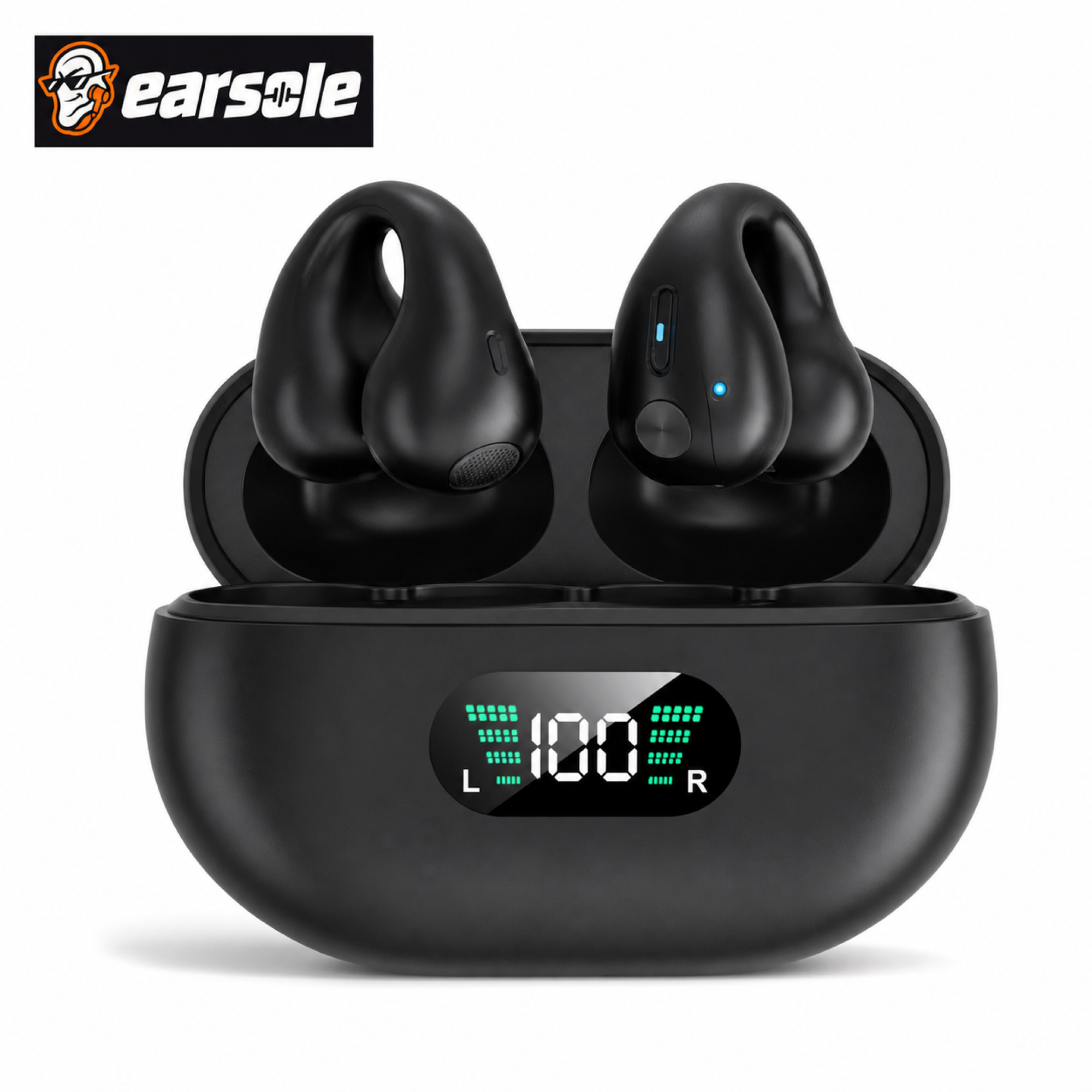
The EARSOLE Open-Ear LED Clip-On Earbuds sit outside the canal. Their published features include touch controls, USB-C case charging and a front LED case display with separate left and right indicators. The product is listed as not water-resistant, so the open fit should not be mistaken for permission to use it in rain or rinse it after a workout.
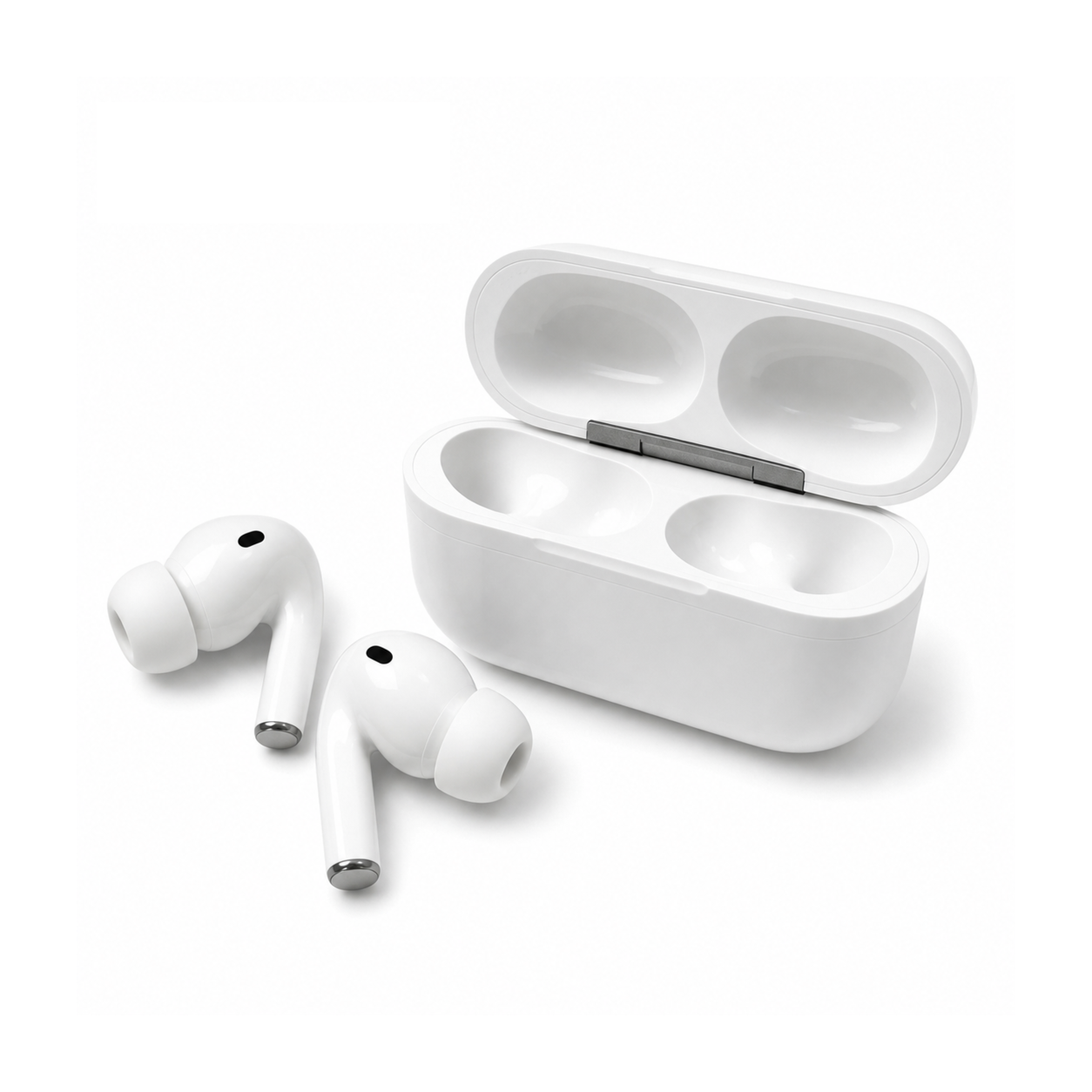
The EARSOLE Core White In-Ear Earbuds use soft silicone tips, a compact stem shape and a hinged charging case. Their sealed fit provides closer contact than an open-ear design. No active noise cancellation or water-resistance rating is stated on the verified product page, so neither feature should be implied.
These products illustrate two fit categories; they are not presented here as a laboratory-tested head-to-head comparison. You can also browse the complete open-ear and clip-on collection.
Open-Ear Earbuds Disadvantages—and In-Ear Trade-Offs
Open-ear limitations
- Little passive isolation in loud environments
- Bass and quiet details may be masked by background noise
- Greater chance of audible sound leakage at high volume
- Clip or hook comfort depends on outer-ear anatomy
- Higher volume may feel tempting when the environment gets noisy
In-ear limitations
- Silicone or foam tips can create pressure or an occluded feeling
- Fit can vary sharply with tip size and insertion angle
- A seal reduces awareness of the surrounding environment
- Tips and mesh need regular, careful cleaning
- An uncomfortable fit should not be “fixed” by forcing the earbud deeper
Neither list makes one category the winner. It shows why a pair that works well on a flight may be frustrating during a conversation, while a comfortable awareness-first pair may struggle on a noisy train.
Safe listening guidance applies to both
Open-ear earbuds are not automatically safer or healthier than in-ear earbuds. Hearing risk depends on sound level and exposure time, regardless of where the earbud rests.
The World Health Organization advises keeping device volume below 60% of maximum, reducing time spent listening loudly, taking breaks and using sound-exposure monitoring where available. A percentage setting does not equal one fixed ear-level sound pressure across every phone and earbud, so quieter and shorter remains the conservative rule.
In a loud setting, a well-fitted isolating or noise-cancelling product may reduce the urge to raise the volume. Whichever design you choose, use the lowest level that remains clear and give your ears quiet breaks.
Frequently asked questions
Are open-ear earbuds better for your ears?
Not categorically. They avoid silicone-tip pressure inside the canal, which some people prefer, but a clip can still press on the outer ear. Sound exposure remains relevant with both designs. Comfort, volume, listening duration, hygiene and individual ear health all matter.
Do in-ear earbuds always sound better?
No. In-ear models usually have an advantage in bass consistency and isolation because they form a seal, but tuning and fit still determine the result. A poorly fitted in-ear earbud may sound thin, while a well-designed open-ear model can sound clear in a quiet environment.
Can open-ear earbuds work on a noisy commute?
They can play audio, but surrounding noise will remain audible and may mask podcasts or music. If hearing announcements is your priority, that may be acceptable. If clarity and isolation are the goal, a properly fitted in-ear model is usually more suitable. Do not compensate by listening at unsafe volume.
Which type is better for running?
Choose based on retention, comfort, awareness needs and a verified sweat- or water-resistance rating. Clip, hook and in-ear designs can all be stable when they fit correctly. Check the individual product specification: the EARSOLE Open-Ear LED Clip-On model discussed above is explicitly listed as not water-resistant.
Do open-ear earbuds leak sound?
They can. Because there is no seal, someone nearby may hear audio when the volume is high or the room is quiet. Leakage varies with speaker direction, fit, distance and volume. In-ear earbuds usually provide more privacy, but no earbud is completely silent to people nearby.
Should I choose semi-in-ear instead?
Semi-in-ear can be a useful middle ground if you dislike silicone tips but do not want a clip or hook. It normally provides more environmental awareness and less isolation than a sealed in-ear model. Read the semi-in-ear vs in-ear comparison before deciding.
Bottom line
Choose open-ear when keeping the canal uncovered and retaining more awareness matters more than isolation. Choose in-ear when a stable seal, stronger passive isolation, greater privacy and more consistent bass matter more. Then verify fit, water resistance, controls and other features on the exact model—none of those can be inferred from the fit category alone.
For more options, browse EARSOLE open-ear and clip-on earbuds, read the semi-in-ear vs in-ear guide, or see how the EARSOLE Editorial Team researches content.
Sources and review notes
Fact-checked: July 17, 2026.
This guide compares physical fit types using published product specifications and established safe-listening guidance. It does not report laboratory measurements, medical outcomes or hands-on comfort scores. EARSOLE sells products in both categories; the examples explain their verified designs rather than declaring either product universally superior.
Sources include the World Health Organization’s current safe-listening guidance, Apple’s ear-tip fit guidance, and current category explanations from Shokz. Product details and images were verified against the linked EARSOLE product pages on the fact-check date.