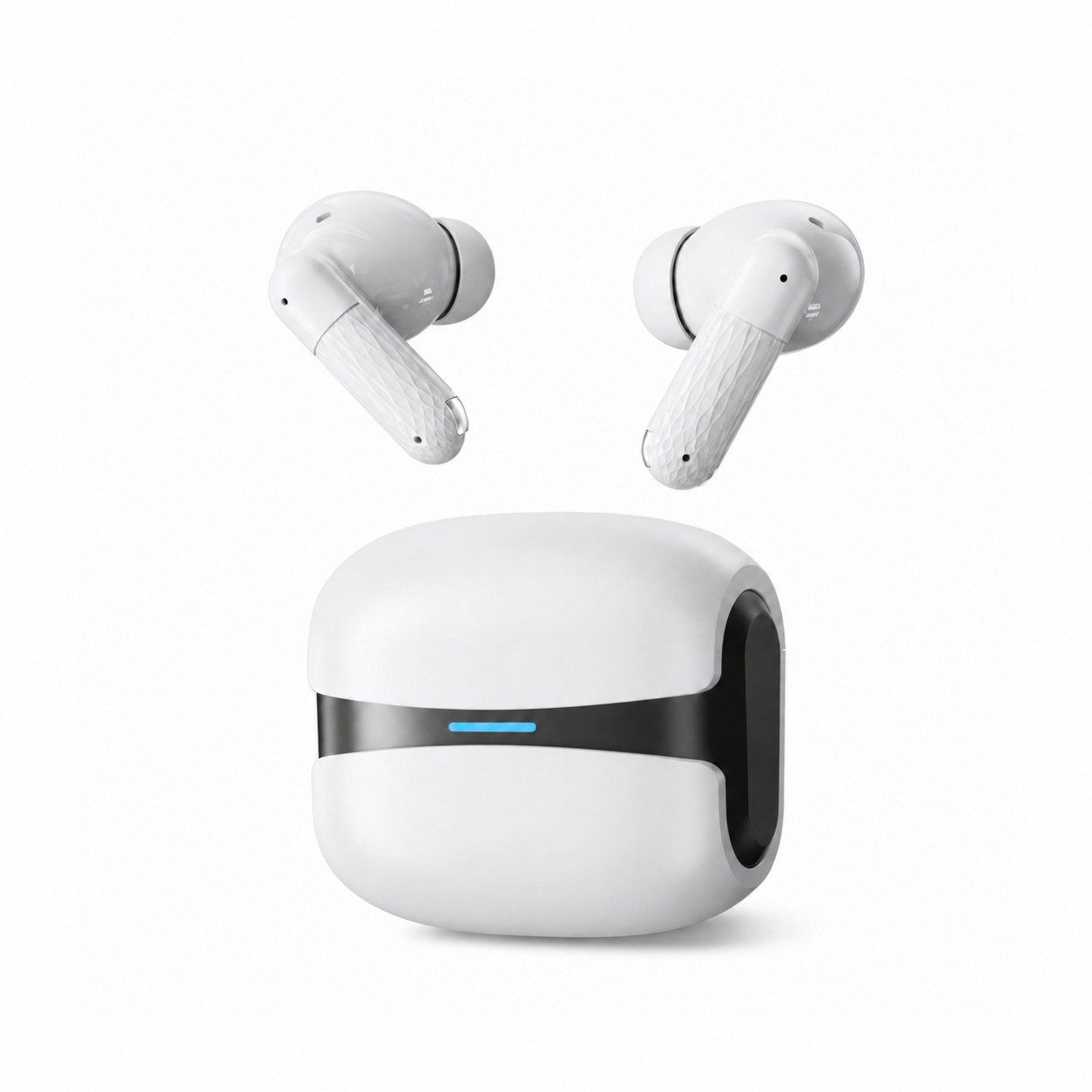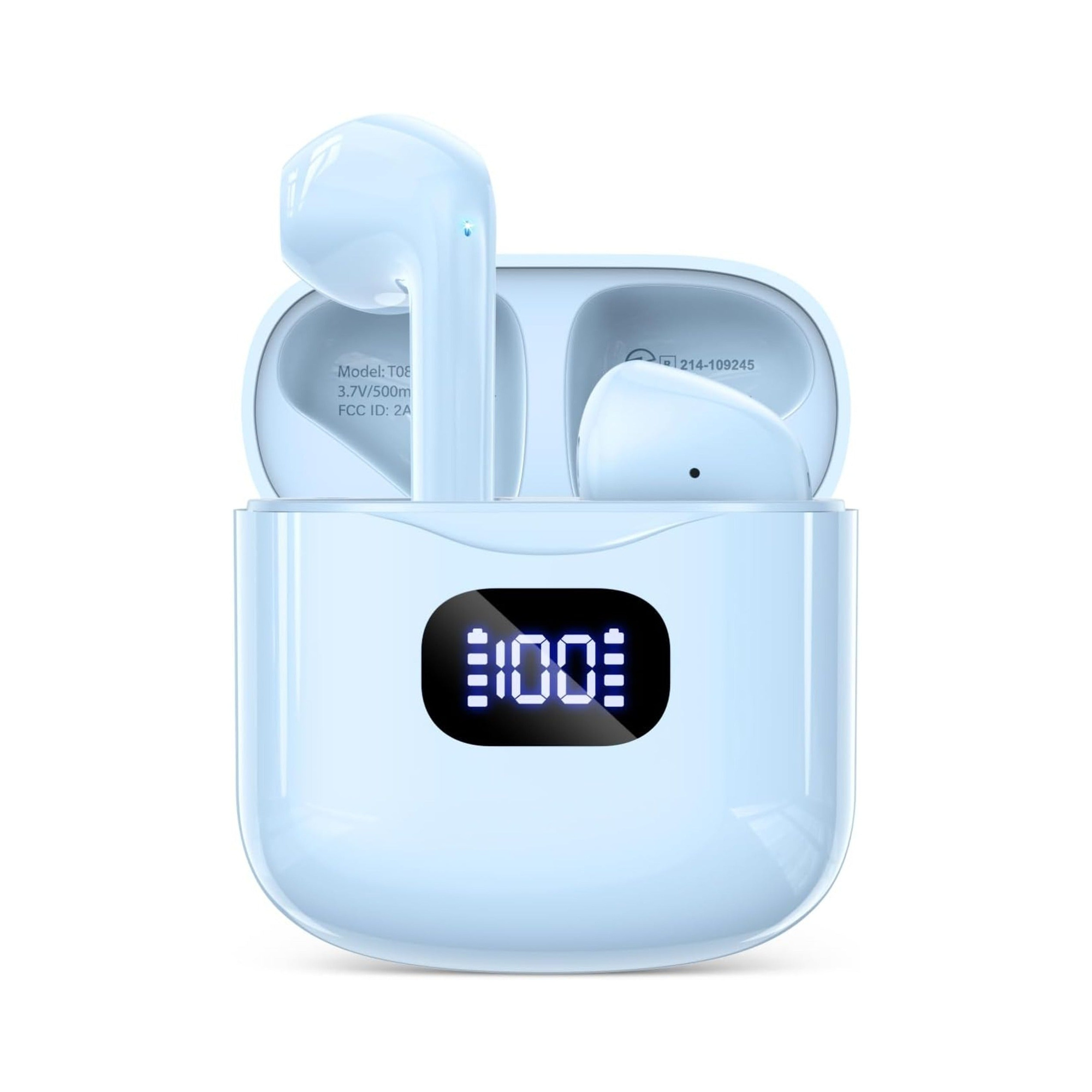


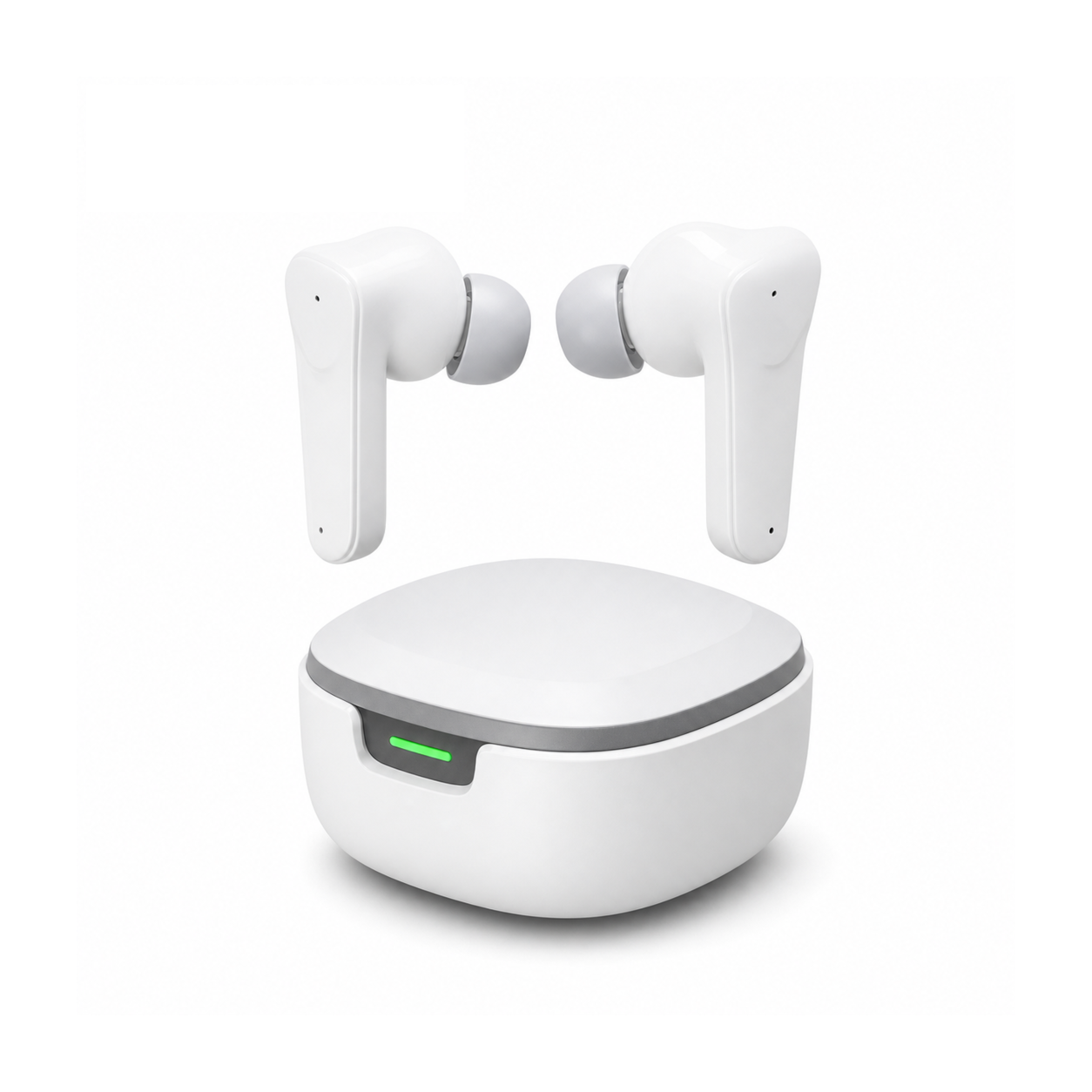
Thirty-nine of our product pages use the word "latency". Five of them attach a figure to it. Two name a mode you can switch on. One says outright that it will not quote a number. The other thirty-one state that the earbuds have low latency and leave it there. If you are shopping for low latency gaming earbuds, that spread is the first thing to know, because the same two words are doing four different amounts of work.
Four strengths of the same claim
We searched every active product description we publish for the word and sorted what came back by how much the sentence commits to. The counts below are exact for our own pages and mean nothing about anyone else's.
| What the page does | Pages | The line, as printed |
|---|---|---|
| Asserts it | 31 | "has successfully achieved low latency without interruption" (fourteen pages share this sentence) |
| Names a mode | 2 | "A low-latency gaming mode helps keep audio responsive when you play or stream." |
| Gives a figure | 5 | "0.05S Ultra-Low Latency Bluetooth 5.3 Earbuds" (one supplier sentence, five pages) |
| Declines to give one | 1 | "We do not quote a latency number for this pair because we have not documented one." |
A separate fifteen pages say "no delay" without using the word latency at all, in a sentence about "signal quality during music playback and calls" — a promise about dropouts, not about a game staying in step with the picture. We have left those out of the count above because they answer a different question.
"Achieved low latency" is a sentence with nothing to check
The most common line in our range is on the EARSOLE Noise Cancelling True Wireless Earbuds page and thirteen others: "There is a faster and more stable signal transmission and has successfully achieved low latency without interruption." It contains no quantity, no condition and no comparison. It is not false — nothing in it can be false — and that is exactly why it cannot help you choose between two pairs that both print it.
That is the whole reason to sort the claim by strength. A line like this tells you the supplier considered latency worth mentioning; it does not tell you what happens when you press fire.
The one figure in our range is written in seconds
Five pages, all carrying the same supplier text for a model the sentence calls the T08, open a feature block with "0.05S Ultra-Low Latency Bluetooth 5.3 Earbuds - Lossless transmission of audio data". The EARSOLE True Wireless Earbuds Series 134 page is one of them, and the same block goes on: "Make sure audio and playback are synchronized to provide an immersive entertainment experience."
Two things about that figure are worth reading slowly. First, it is a bare number: the page does not say what was measured, from where to where, or on what phone, so it cannot be compared with a number from another brand's test. Second, it is written in seconds. People searching this topic ask about earbuds at 30 ms or 40 ms; 0.05 seconds is the same quantity written as 50 milliseconds. We are not going to rank that against anyone else's threshold — no page of ours states what counts as good enough for a given game, and we have not measured it — but you should at least be comparing like with like when you read it.
A mode is a switch, and the page that names it also says what it is not
Two pages name a mode. The EARSOLE Cloud White Bluetooth 5.4 Wireless Earbuds with ENC Mic page lists "Low-latency mode for gaming and video" among its features and then does something none of the thirty-one asserting pages do: it sets a limit on its own claim. "No specific speed figures are promised, so treat it as a sync helper for on-screen action rather than a guaranteed number." Its FAQ answers the question of when to use it: "It is there for games and video, where audio staying in step with the picture matters."
The second is a sleep pair, not a gaming one — the Q26 page says "the documented low-latency mode helps keep audio responsive for video and casual gaming." Both pages describe the mode as something for keeping picture and sound together, and both stop short of a number. That is the reverse of how a spec sheet usually reads, and it is why the mode row outranks the figure row here: the page that names a mode also tells you what the mode is for and what it is not promising, and the page that prints a figure tells you neither.
The pages sold as gaming say the least
Nine pages sit in our gaming earbuds collection. Eight of them do not mention latency at all — the six wireless gaming headsets, the Beetle and the P-M6. The ninth, the EARSOLE Wireless Gaming Earbuds with Spatial Audio, is the one page in the whole range that declines on purpose: "One honest note on gaming: wireless audio always involves some delay, and how much you notice depends on your phone, the game, and your connection." Then: "We also do not publish a delay figure, so if you play twitch-reaction competitive titles, treat these as best suited to casual and mobile sessions rather than tournament play."
So the word "gaming" on a product name carries no latency claim in our range. The only figure lives on everyday pairs; the only named modes are on an everyday pair and a sleep pair; the gaming pair that talks about delay does so to tell you who it is not for. If you came here expecting the gaming collection to be where the latency promises are strongest, the pages say the opposite, and the gaming earbuds buying guide starts from the platform rather than the delay for exactly that reason.
Weighing the line you are looking at
Find the sentence with the word in it and ask which of the four rows it belongs to. An assertion on its own is worth the same as no sentence. A figure is worth something only if you can see its unit and you accept that its test conditions are not stated. A named mode is the one you can act on, because you can switch it and compare. A page that declines has told you something too: that the seller looked and chose not to guess.
The practical difference between the rows is what they leave you able to do. A page in the assertion row leaves you nothing to act on, and two such pages cannot be told apart by their latency line at all. A page in the figure row gives you a number to read correctly — unit first — and no way to reproduce it. A page in the mode row gives you a switch, which is the only thing on any of our pages you can operate; how to compare it on and off against a clip is in the audio delay guide, not here. And a page in the declining row has already answered the question you came with, in the one way that cannot mislead. For the connection side of the same problem on a PC, PC gaming earbuds covers why a dongle and a Bluetooth link behave differently; the pairs quoted here are in the gaming earbuds collection alongside the ones that make no claim at all.
Are the 30 ms and 40 ms figures people ask about on our pages? No. Neither number appears on any of our product pages. The only latency figure we publish is the 0.05-second line above, on five pages, and we do not state a threshold for what counts as good enough — we have not measured one, and the pages have not either.