Two kinds of sentence about earbuds for sensitive ears sit on our product pages, and they do opposite jobs. One kind is a promise: "comfortable to wear and anti-allergic", printed on eight pages. The other kind is a condition: "If silicone tips irritate your ears or you prefer hearing your surroundings, a semi-in-ear or open-fit design will serve you better," printed on one. A promise tells you the pair will suit you; a condition tells you which pair to pick if the usual one does not. This article sorts every such sentence we publish into those two kinds, plus a third, and says what none of them covers.
What this article does not do
It does not tell you why your ears hurt, whether a material is safe for you, or when discomfort is a medical matter. No product page of ours does either, and we have no clinician reviewing this text. If pain, discharge or a change in hearing is the reason you searched, that is a question for a clinician, not for a listing. What follows is only a reading of what the listings say.
Three kinds of sentence, and how many pages carry each
We read every active product description for any sentence mentioning skin, allergy, irritation, discomfort or the material that touches the ear, and sorted the pages by what the sentence does. Most pages that mention a material stop there.
| What the sentence does | Pages | Example, as printed |
|---|---|---|
| Names the contact material and stops | 64 | "Soft silicone contact surfaces" |
| Makes a skin or allergy claim | 17 | "comfortable to wear and anti-allergic" |
| Gives a condition that routes you elsewhere | 4 | "If silicone tips irritate your ears … a semi-in-ear or open-fit design will serve you better." |
| Gives a stop rule | 1 | "Stop use if you experience discomfort, irritation, or a change in hearing." |
The remaining pages say nothing on the subject at all. And the words a careful shopper might look for are absent everywhere: "hypoallergenic", "nickel", "latex" and "dermatologist" each appear on 0 of 235 pages.
The promise: seventeen pages, and eight of them are one sentence
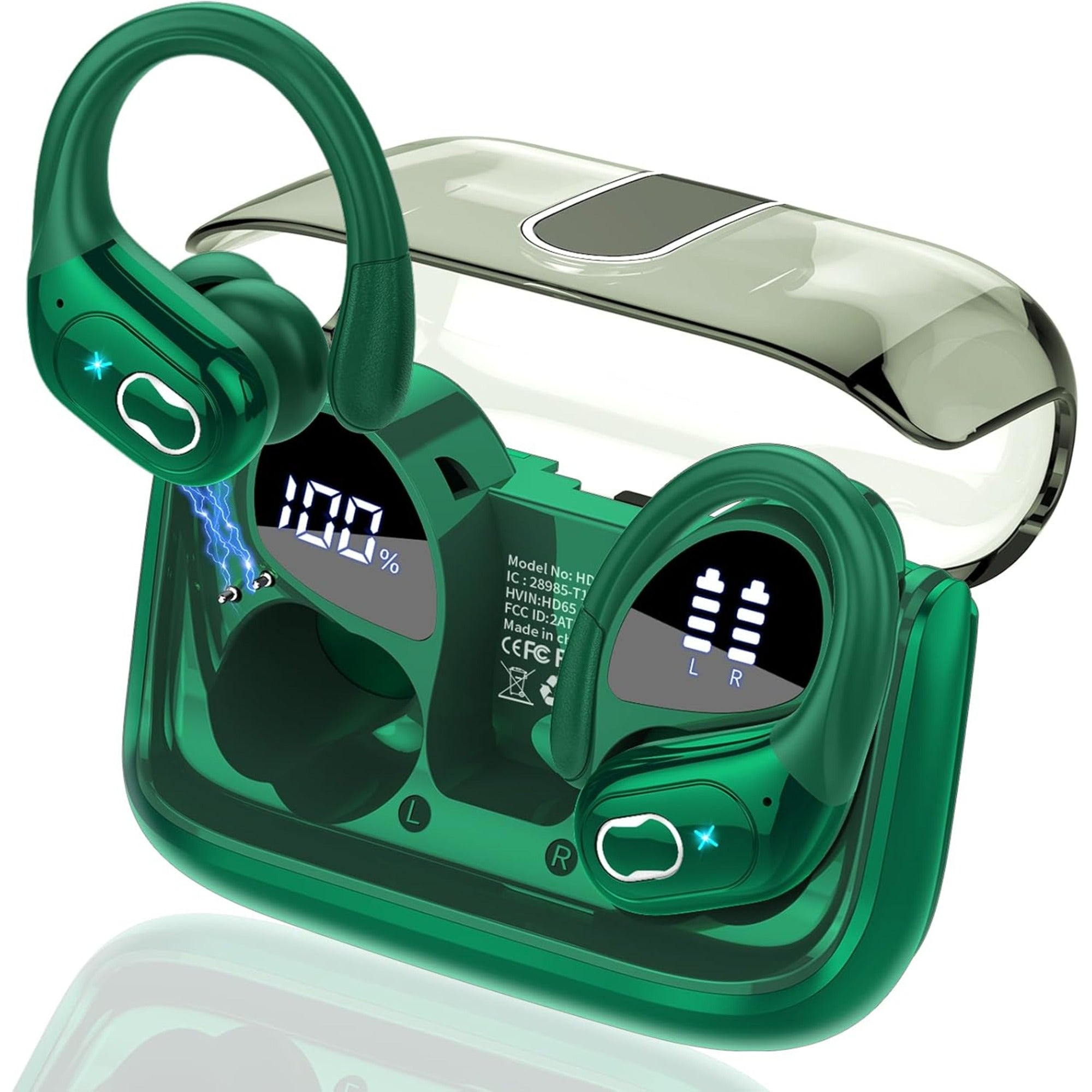
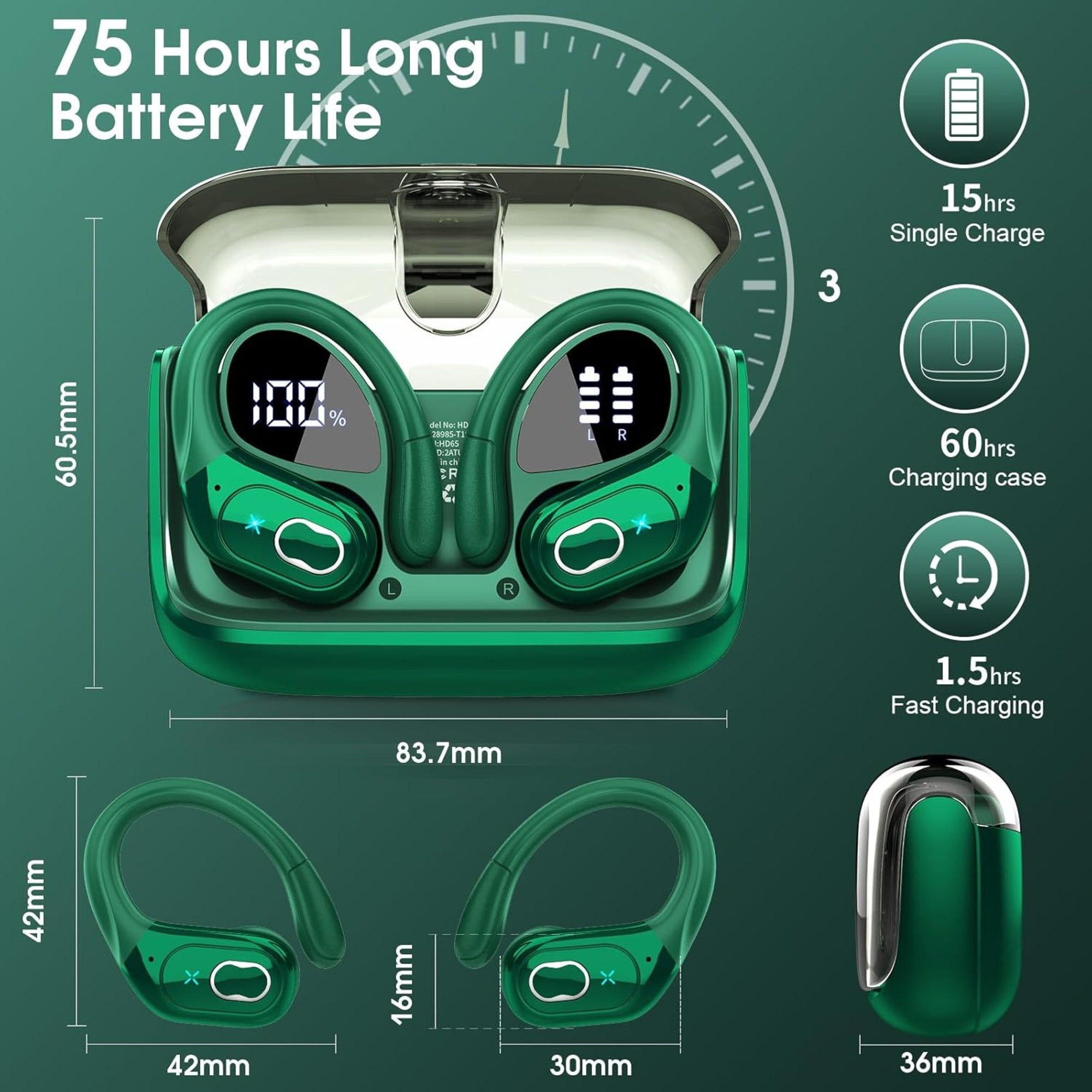
Eight of the seventeen claim pages share a single supplier sentence. The EARSOLE True Wireless Earbuds Series 202B page has it: the sport hooks are "made of an innovative TPU (elastic) material that not only solves the problem of bluetooth earphones falling off when running, but is also comfortable to wear and anti-allergic." The same words appear on seven sibling pages. That is one claim about one material, printed eight times, not eight independent claims.
The other nine are shorter. Three pages say "skin-friendly materials"; two say the buds have "a well-sealed silicone skin-friendly surface"; the Bone Conduction Sport page describes "soft skin-friendly silicone", and the Swimming Headphones page "Soft, skin-friendly silicone cushions". What every one of these has in common is what it lacks: no page states a test, a standard, or what "anti-allergic" or "skin-friendly" was checked against. We quote the words because they are on the pages; we are not in a position to confirm them, and the pages give you no way to either.
The condition: four pages tell you when to choose something else
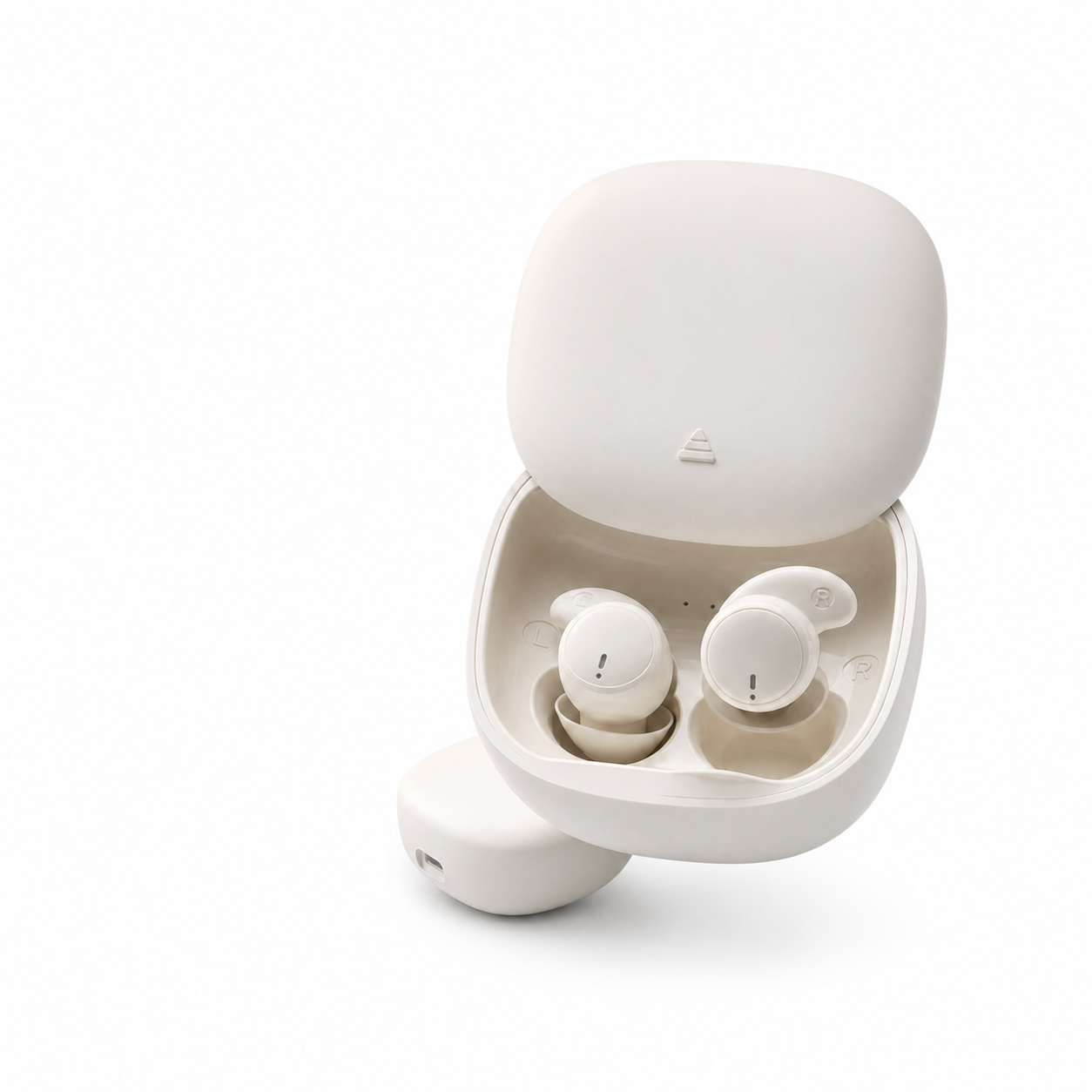
Four pages do something more useful than promise. They name the case in which their own design is wrong for you and point at another. The EARSOLE Core White In-Ear Wireless Earbuds page: "If silicone tips irritate your ears or you prefer hearing your surroundings, a semi-in-ear or open-fit design will serve you better." The Q26 sleep page, in its who-should-skip section, says that if "you find silicone in-ear tips irritating no matter the shape, these are not the right pick." The Glow page describes its open-fit shape as "a comfortable option if silicone tips tend to bother you over long sessions". The Butterfly clip-on page states the absence outright: "no in-ear silicone tip and no ear-canal pressure".
Read together, the four pages agree on one thing without any of them saying it in general terms: the part they expect to be the problem is the silicone tip in the canal, and the alternative they name is a shape that does not put one there. That is a routing rule you can act on — it does not promise the open-fit pair will be comfortable, only that it removes the specific part the in-ear pages single out.
The stop rule: one page, one sentence
Only the EARSOLE MY-20 Soft Silicone Sleeping Earbuds page prints a rule for what to do when a pair does not suit you: "Stop use if you experience discomfort, irritation, or a change in hearing." The same page is also the one that most repeats its material — "soft silicone contact surfaces" appears in the intro, the highlights and the specifications. A page that both names its material and tells you when to stop is the most complete form the subject takes in our range, and it is one page out of 235.
For the four sleep pairs specifically, our sleep earbuds comparison already carries the fuller version of that advice, including what counts as a reason to stop rather than a break-in period; this article does not repeat it.
Matching your page to the three kinds
Open the product page of the pair you own or are considering and find the sentence about the part that touches your ear. If it names a material and stops — the 64-page case — you have a fact, not a claim about you. If it says "anti-allergic" or "skin-friendly", you have a supplier's promise with nothing behind it on the page; treat it as a description of intent. If it gives a condition, you have the most actionable sentence in the range, and the alternative it points to is the one to try. If it gives a stop rule, follow it.
Where the page says nothing, which is the case on more pages than not, the page cannot help you, and neither can this article beyond telling you that. For the part of the question that is about your ear rather than about the earbud, the pages are silent and so are we; our guide to small ears covers the fit-geometry side, and the open-fit pairs the four condition pages point to sit in everyday wireless earbuds.