
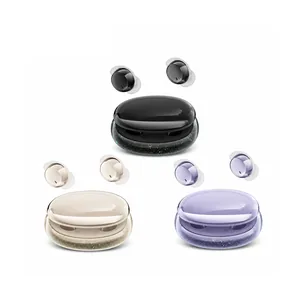


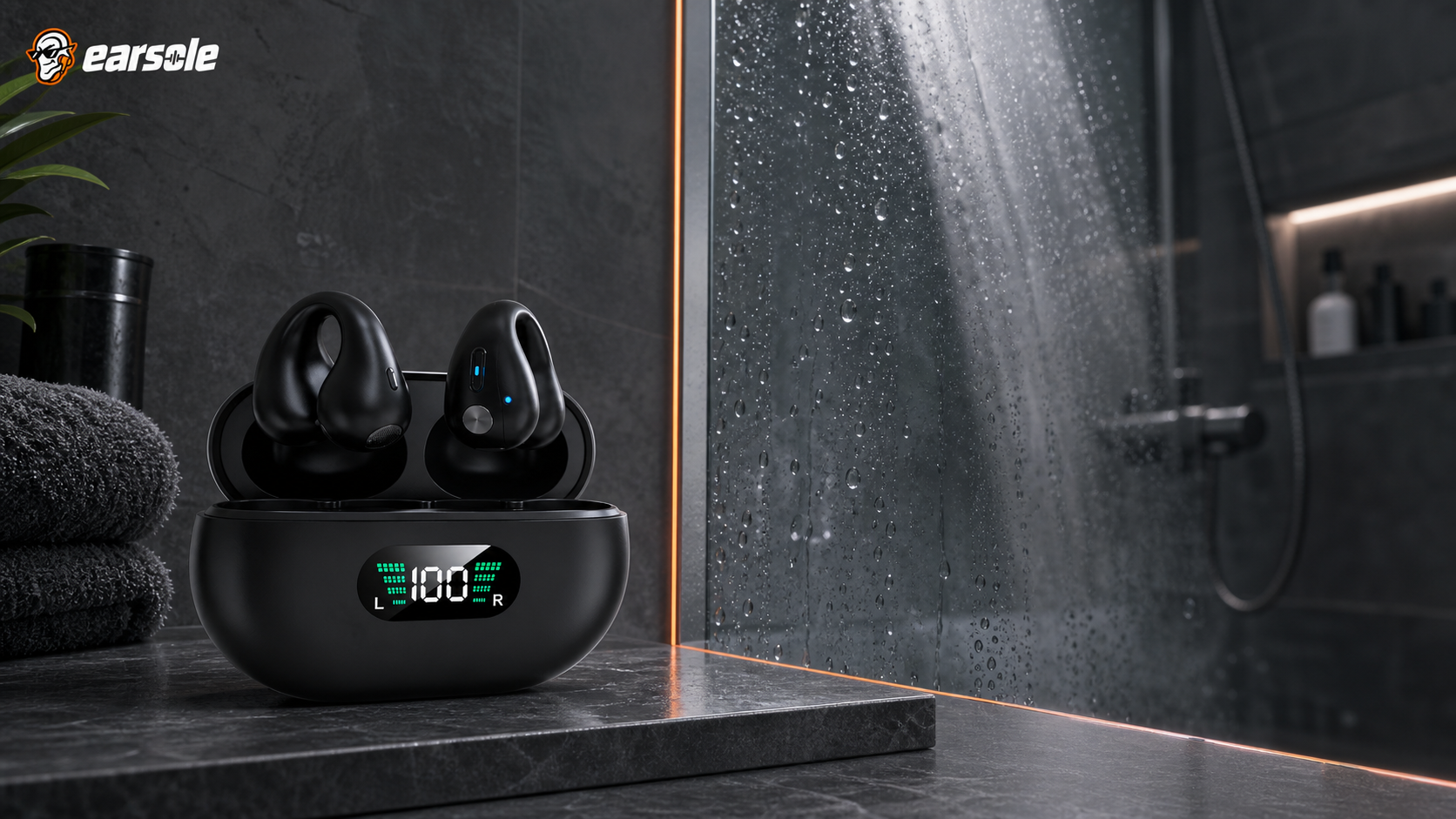
Waterproof earbuds for shower use are only safe when the maker names showering as an allowed activity. A shower adds moving water, steam, heat, shampoo and repeated exposure, and a rating earned in a fresh-water enclosure test does not cover any of that. Apple says outright that its earbuds "aren't designed for use in water sports, such as swimming, or for showering".
What a water rating covers and what it leaves out
An IP code comes from IEC 60529, whose title is "Degrees of protection provided by enclosures (IP Code)" and whose scope is "the classification of degrees of protection provided by enclosures for electrical equipment". The word in that title is protection, and the thing protected is an enclosure under a defined laboratory condition. A bathroom is not that condition.
| Shower condition | Why a rating may not speak to it |
|---|---|
| Hot water and steam | Enclosure tests are run with water; heat and vapour drawn into a cooling shell sit outside them. |
| Shampoo, conditioner, soap | Surfactants are chemistry, not ingress. Apple lists soaps, shampoos and conditioners among substances that "can negatively affect water seals and acoustic membranes". |
| Repetition | Apple states that "sweat, water and dust resistance aren't permanent conditions and can diminish over time". |
| The charging case | Often a separate, unrated part. Apple notes some of its own cases "are not water resistant or sweat resistant". |
Is there such a thing as a 100% waterproof earbud?
No, and the reason is in the sentence above: resistance is a condition a product is in when it leaves the factory, and it degrades. Seals age, adhesives creep, mesh clogs, and a drop onto tile can open a path that no rating anticipated. Treat every water claim as a statement about a new, undamaged, chemically unexposed unit doing the specific thing the maker permits. If the listing does not name showering, the answer for that model is no, however high the number on the box.
A worked example: the two hours after they get wet
Suppose a rated earbud takes an accidental soaking. Apple's guidance for its own models sets the shape of the recovery: wipe the earbuds with a soft, dry, lint-free cloth, and "allow them to dry completely, for at least two hours, before using them or placing them in the charging case". That single instruction contains the whole risk model. Two hours is longer than most people wait; the case is named specifically because putting a damp bud onto charging contacts is a separate failure from getting the bud wet; and the drying happens before use, not after you notice a problem. Apply the same discipline to whichever model you own, using its own stated drying time if it publishes one.
Six checks before earbuds go into a bathroom
- Find the exact model's own specification page rather than a marketplace category icon or a photo of someone in a pool.
- Confirm the rating applies to the earbuds themselves, and read whether the charging case is excluded.
- Look for a sentence that names showering, bathing or swimming and permits or forbids it. Silence counts as forbidden.
- Read the exclusions for soap, shampoo, conditioner, hot water, pressurised water and submersion.
- Note the stated drying time and follow it before charging or casing the buds.
- If any of those answers is missing, keep the buds on a dry surface outside the spray, as in the photograph at the top of this page, and use a speaker instead.
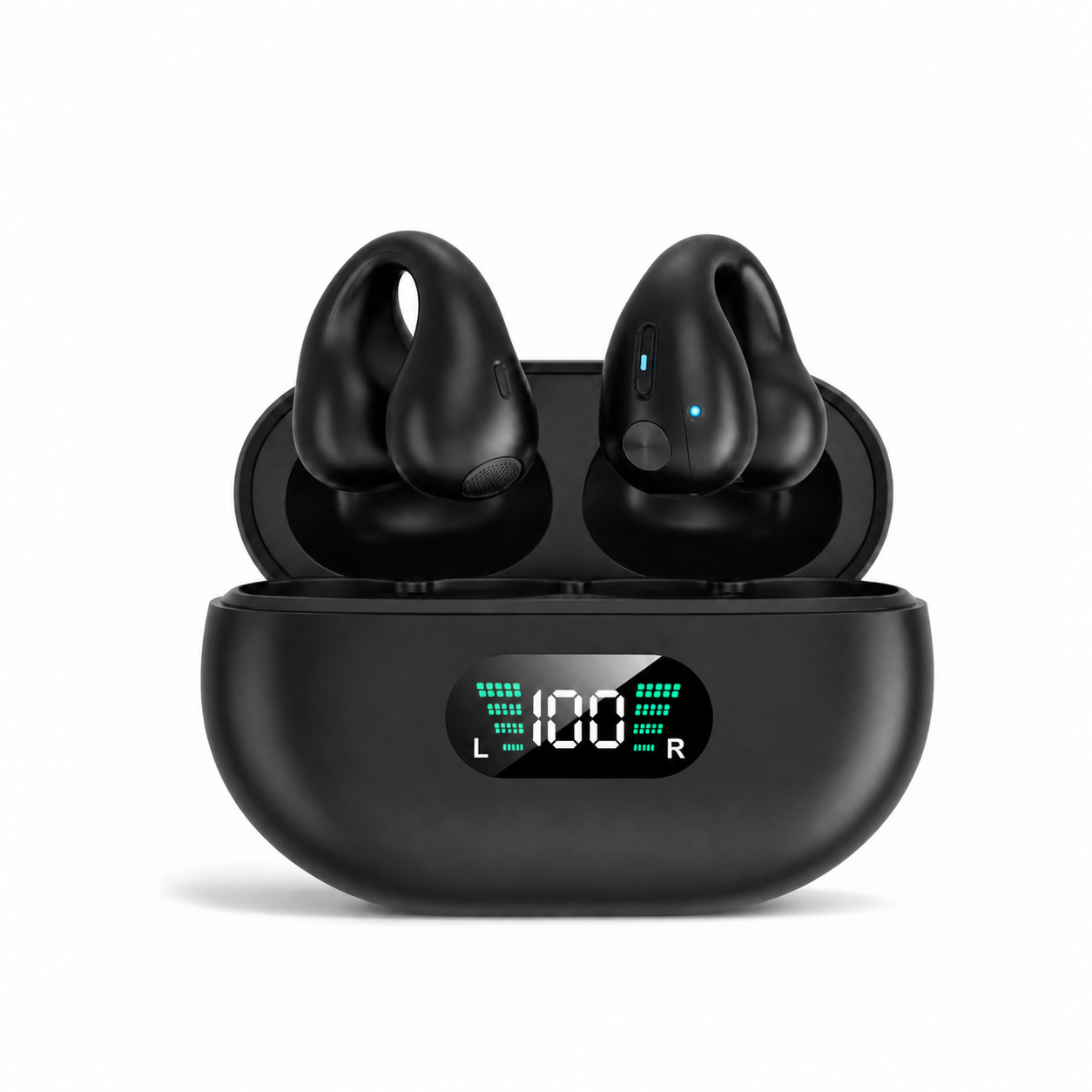
Our EARSOLE Open-Ear Clip-On Wireless Earbuds with LED Charging Case listing is explicit on this point: the product is non-water-resistant, and it asks you to keep it away from rain, showers and submersion. The open-ear clip shape, the touch controls and the USB-C case with left and right LED indicators change nothing about that, at $28.99 at the time of writing. Open-ear describes where the driver sits and says nothing about how sealed the shell is, and the rest of the open-ear clip-on collection carries the same limitation.
Your ear is the other component
Electronics are half the question. A wet ear canal with something sitting in it holds moisture against skin, and the NHS ear-infection guidance is blunt about that exposure: "do not let water or shampoo get in your ear". It lists "pain inside the ear (earache), a high temperature, difficulty hearing, discharge running out of the ear" among the symptoms, and advises seeing a GP for earache that does not settle after three days. Wiping buds down after humid use, covered in our guide to cleaning earbuds, is the cheap half of this.
If a product causes pain, irritation, ringing or a noticeable hearing change, stop using it and seek qualified care.
Bathroom questions we get about earbuds
Is IPX4 enough for a shower?
A splash-level rating is not permission for shower spray, steam, hot water, shampoo and daily repetition together. It describes one laboratory condition. Unless the maker names showering as allowed, treat IPX4 as protection against a caught rain shower or workout sweat, and keep the buds out of the cubicle.
What kind of earbuds can I wear in the shower?
Only the ones whose own documentation says so, in a sentence you can point at. That means checking the model page rather than the category name, and reading whether the permission extends to soap and hot water or stops at fresh water. If the page never mentions showering, no rating number on the packaging fills that gap.
Can I put wet earbuds straight into the case?
No. The case is frequently unrated even when the buds are protected, and damp charging contacts are their own failure. Wipe both buds with a dry lint-free cloth, leave them out for at least the drying time the maker states, and only then close them into the case to charge.
Where that leaves your shower playlist
No explicit shower approval means no shower use, and that rule costs you very little. A speaker on a dry shelf outside the spray gives you the same music without exposing seals, mesh, charging contacts and a warm damp ear canal to a condition the product was never documented for.
