

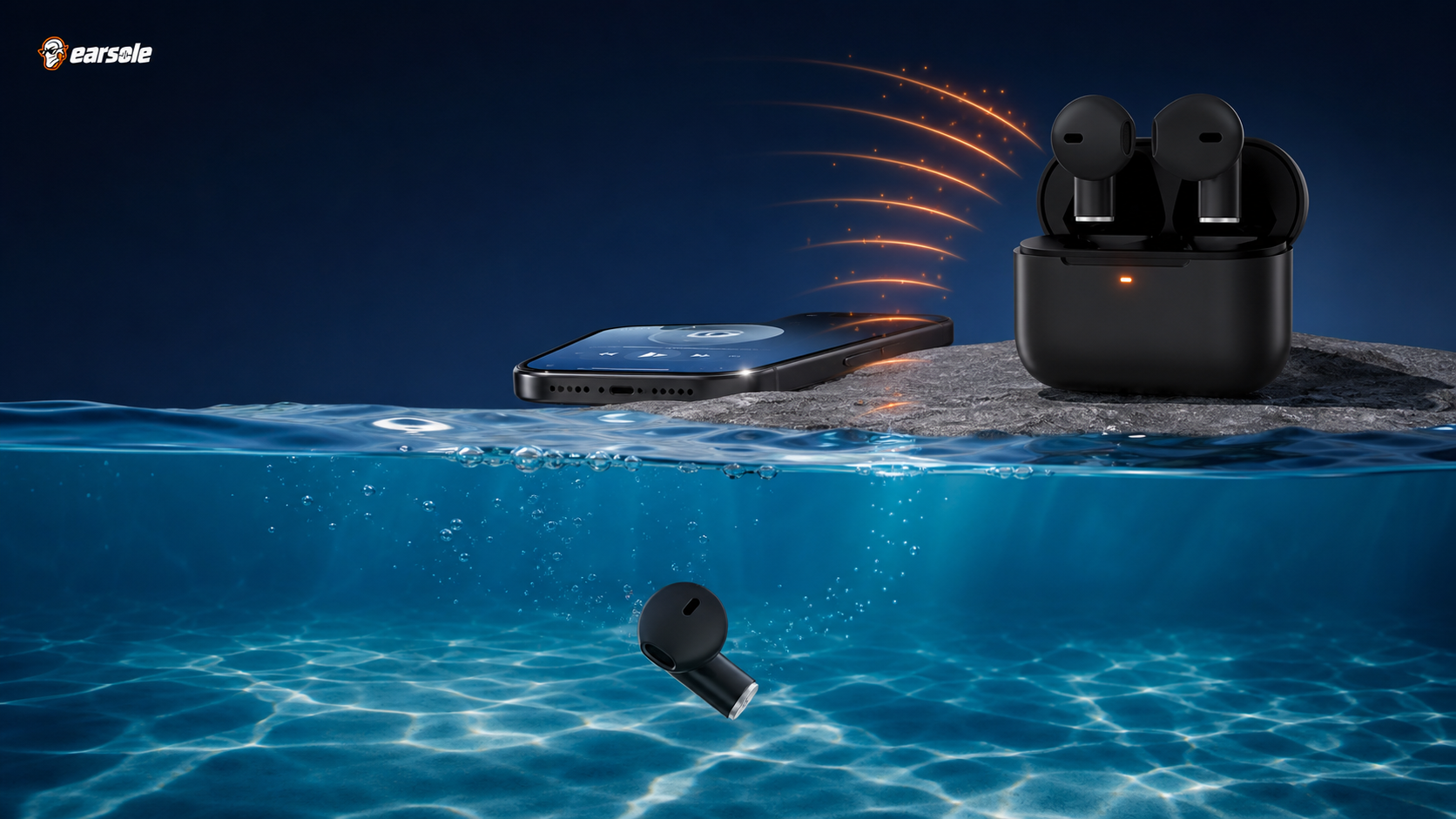
Waterproof earbuds for swimming need two separate capabilities: an enclosure rated for the intended water exposure and an audio system that does not depend on a normal Bluetooth link through water. Bluetooth uses the 2.4 GHz band, which water attenuates strongly. Many swim products therefore use onboard storage rather than live phone streaming.
This guide covers waterproof earbuds for swimming alongside Bluetooth underwater.
Quick answer
| Requirement | What to verify |
|---|---|
| Water enclosure | Exact rating, depth, duration, chemicals, and product component |
| Playback | Onboard storage or a documented underwater link method |
| Retention | Designed to stay secure during turns and push-offs |
| Controls | Usable wet without relying on a distant phone |
| Post-swim care | Fresh-water rinse/drying only if the maker instructs it |
Separate survival from communication
An earbud can survive a defined immersion test yet lose its live stream as soon as the antenna goes below the surface. Peer-reviewed propagation research reports high absorption losses for 2.4 GHz signals in water. Bluetooth SIG material confirms Bluetooth operates in the 2.4 GHz ISM band; its reliability guide describes interference and propagation as wireless-system factors. Neither an IP code nor “Bluetooth 5.x” repeals the physics of water.
Use the Swim Audio Stack
A genuine swim design must address all five layers in its own documentation. A high rating alone solves only the first under specified test conditions.
| Layer | Failure if ignored |
|---|---|
| 1. Enclosure | Water reaches electronics |
| 2. Source | Phone stream cuts out underwater |
| 3. Controls | Track/volume cannot be changed wet |
| 4. Retention | Earbud loosens during movement |
| 5. Care | Chemicals or moisture remain on seals/contacts |
Read the rating and exclusions literally
The IEC 60529 IP Code classifies enclosure protection under defined tests. Pool water, salt water, repeated impacts, dives, warm water, and chemicals can fall outside a generic rating statement. Manufacturer guidance such as Apple’s water-resistance page demonstrates why activity exclusions and declining resistance over time matter. Never transfer one model’s permission to another.
Reject four misleading shortcuts
If the product does not explicitly document swimming, underwater playback, and aftercare, choose a purpose-built swim player or keep audio out of the water.
- “IPX7 means swimming” — it means a defined test, not every stroke, depth, chemical, or impact.
- “Bluetooth 5.4 has longer range” — range in air does not promise a through-water stream.
- “The case looks sealed” — appearance is not a rating.
- “It worked once” — one anecdote is not proof of continued seal integrity or safe charging.
Where an EARSOLE model fits
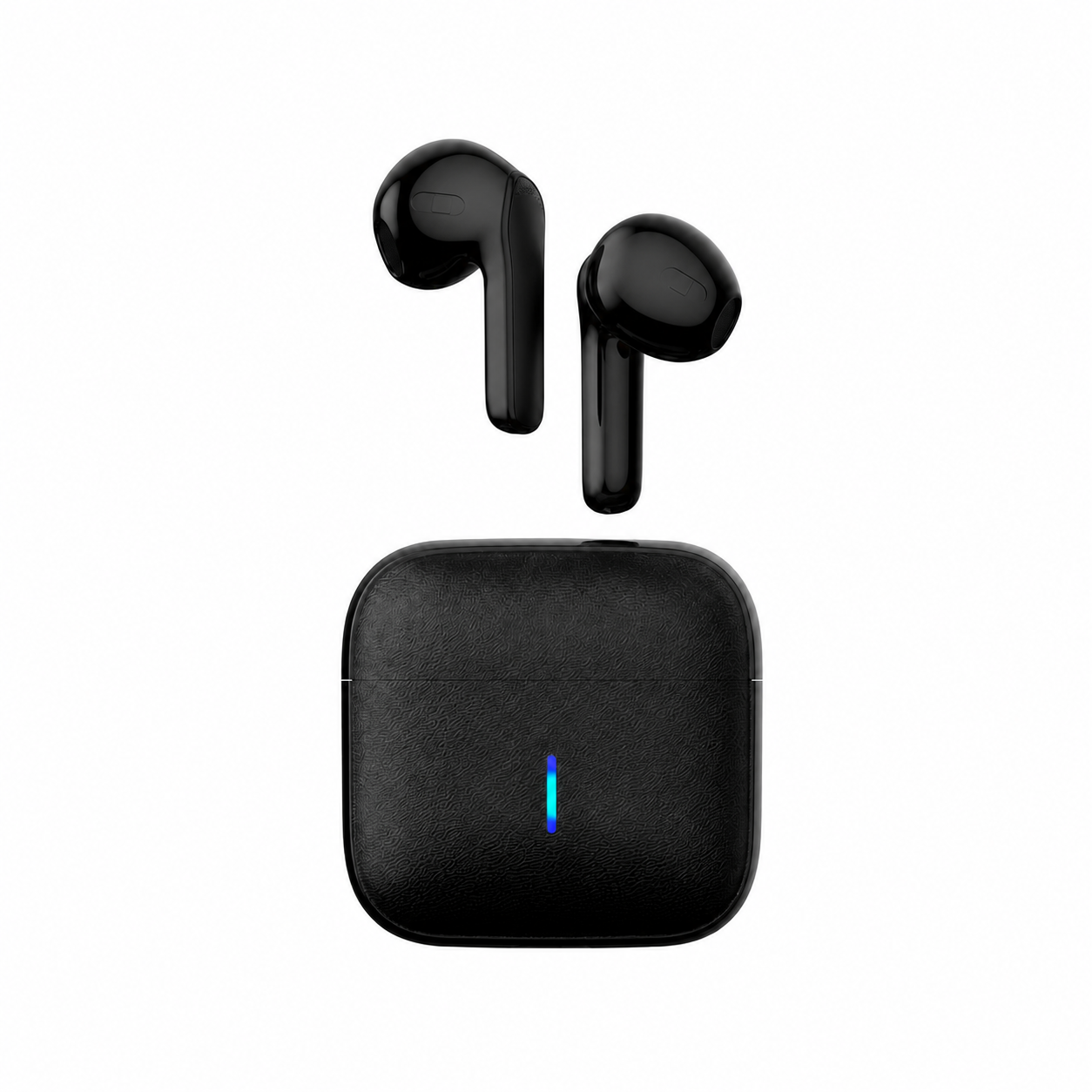
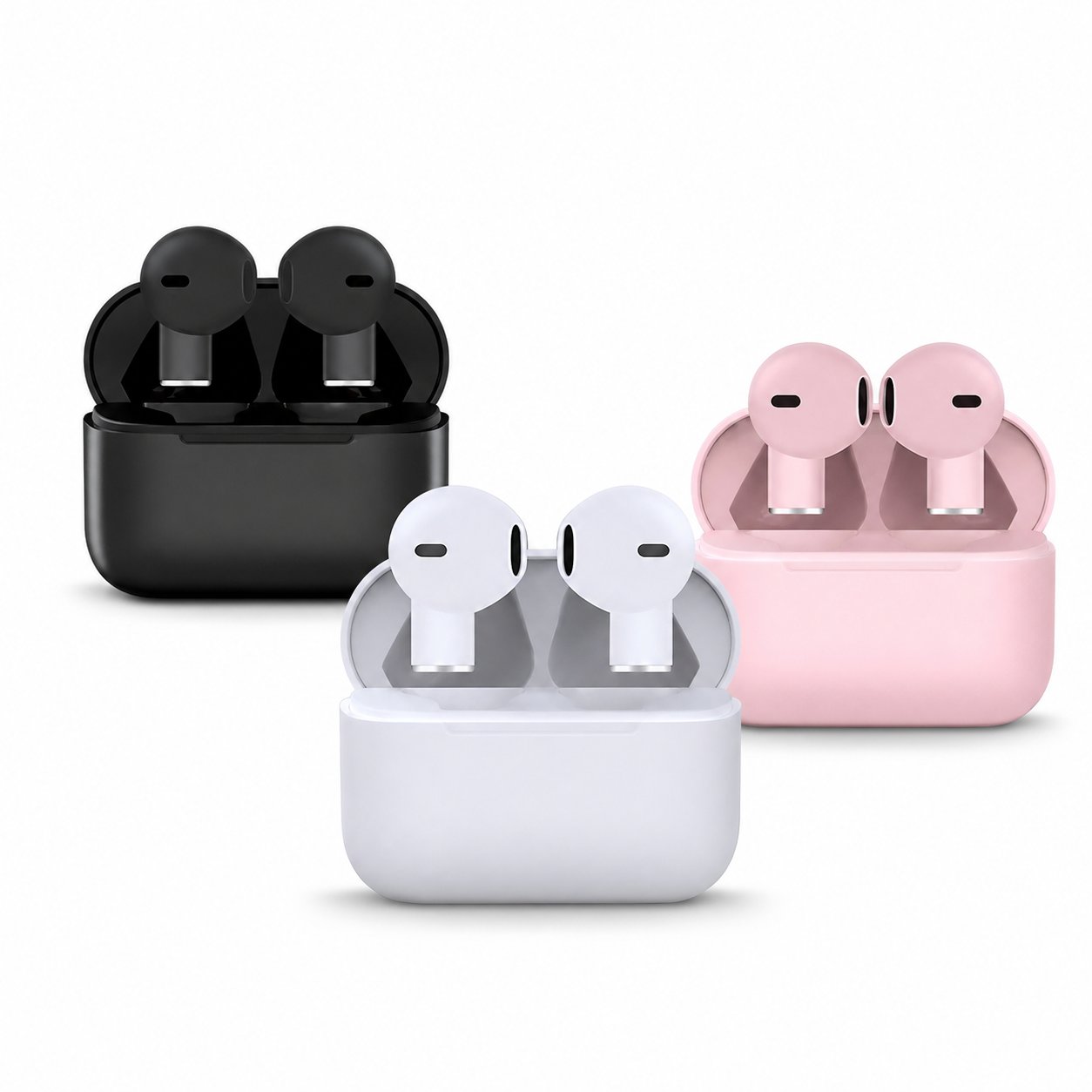
EARSOLE Three-Color Open-Fit Wireless Earbuds with Charging Case is an everyday open-fit, stem-style set in Black, White, or Soft Pink with matching hinged cases. Its listing gives no water-resistance rating and no onboard storage or swimming claim. It should not be used in a pool, shower, or underwater; the product is included to show why “wireless” and “open fit” are not swim specifications.
The product link is included as a fit example, not proof that one design works for every ear or situation. Match the physical design and documented specifications to the decision rules above.
Frequently asked questions
Why does Bluetooth cut out when my head goes underwater?
Water strongly attenuates the 2.4 GHz radio band used by Bluetooth. A short air path can become a poor water path almost immediately.
Does IPX8 guarantee music while swimming?
No. It addresses enclosure ingress under stated conditions. It does not guarantee Bluetooth propagation, onboard playback, retention, controls, or pool-chemical compatibility.
What should a swim audio product specify?
Look for explicit swimming permission, depth/time conditions, playback source such as onboard storage, retention method, control behavior, chemical exclusions, and post-swim cleaning/drying instructions.
Bottom line
For swimming, verify the whole stack—not just “waterproof.” You need an appropriate enclosure rating plus underwater-capable playback, secure retention, usable controls, and documented care. Ordinary Bluetooth earbuds belong on dry land.
Sources and review notes
- Peer-reviewed 2.4 GHz underwater propagation research
- Bluetooth SIG guide to wireless reliability
- IEC 60529 IP Code standard publication
- Apple water- and sweat-resistance guidance
Written and reviewed by the EARSOLE Editorial Team on July 14, 2026. This is educational buying and troubleshooting guidance, not medical advice. Stop using earbuds and seek qualified care for persistent pain, discharge, sudden hearing change, severe dizziness, or other concerning symptoms.