

Factory direct earbuds can show a shorter sourcing channel or a real factory context when documentation supports it, but the label alone does not prove country of origin, lower price, better quality, current specifications, safety certification, warranty, or identical production lots. Evaluate each claim separately and keep the original product evidence attached to the listing.
This guide covers factory direct earbuds alongside factory source wireless earbuds.
Quick answer
| Claim | What would substantiate it |
|---|---|
| Factory context | Original, traceable photos or visit records tied to the product |
| Direct channel | Invoice or supply agreement identifying seller and manufacturer |
| Country of origin | Truthful origin marking and supporting production records |
| Specification | Model-specific data sheet or test report |
| Compliance | Applicable certificate/test tied to exact model and importer |
| Warranty | Written terms, responsible party, and claim process |
Use the Factory-Direct Evidence Ladder
Move one rung at a time. A warehouse photo can support context, but not battery runtime. A factory invoice can support the channel, but not water resistance. A data sheet can support a specification, but not a U.S.-origin claim. The discipline is simple: every objective claim needs evidence that names the same model, component, date, and responsible party.
| Rung | Evidence question |
|---|---|
| 1. Image | Is the photo original, preserved, and tied to this product? |
| 2. Identity | Do model, color, shell, and case match the delivered unit? |
| 3. Channel | Who sold to whom, and is the seller the factory or an agent? |
| 4. Origin | Where was the product substantially made and assembled? |
| 5. Specs | Which model-specific measurements are documented? |
| 6. Compliance | Which applicable rule/test/certificate covers this unit? |
| 7. Warranty | Who resolves defects after sale? |
Do not confuse factory location with country-of-origin claims
The FTC’s Made in USA guidance says an unqualified U.S.-origin claim requires a reasonable basis that the product is all or virtually all made in the United States; specific process claims must also be truthful and substantiated. “Factory direct” does not itself say Made in USA, China, or anywhere else. Avoid flags and geography that create an unsupported net impression.
Do not confuse a source photo with testing or certification
A real photograph can prove what was visible: color, form, packaging context, or cartons at that moment. It cannot prove Bluetooth version, battery hours, ANC, water resistance, microphone performance, material safety, or certifications. The CPSC explains that applicable general-use consumer product rules can require manufacturers or importers to certify compliance based on test results. Ask which rules actually apply and tie documents to the exact model.
Write the honest listing when facts are missing
Honesty is not weak merchandising. It gives buyers a clean boundary between what the seller knows, what the photo shows, and what still needs documentation.
- State visible, verified product facts: color, form factor, included case, and source-photo context.
- Use “not supplied” or omit a specification instead of copying another model’s version or runtime.
- Separate catalog photography from the preserved original warehouse image.
- Name the responsible retailer and return/warranty process.
- Apply normal listening-safety guidance; the WHO volume and duration framework does not change because the channel is direct.
Where an EARSOLE model fits
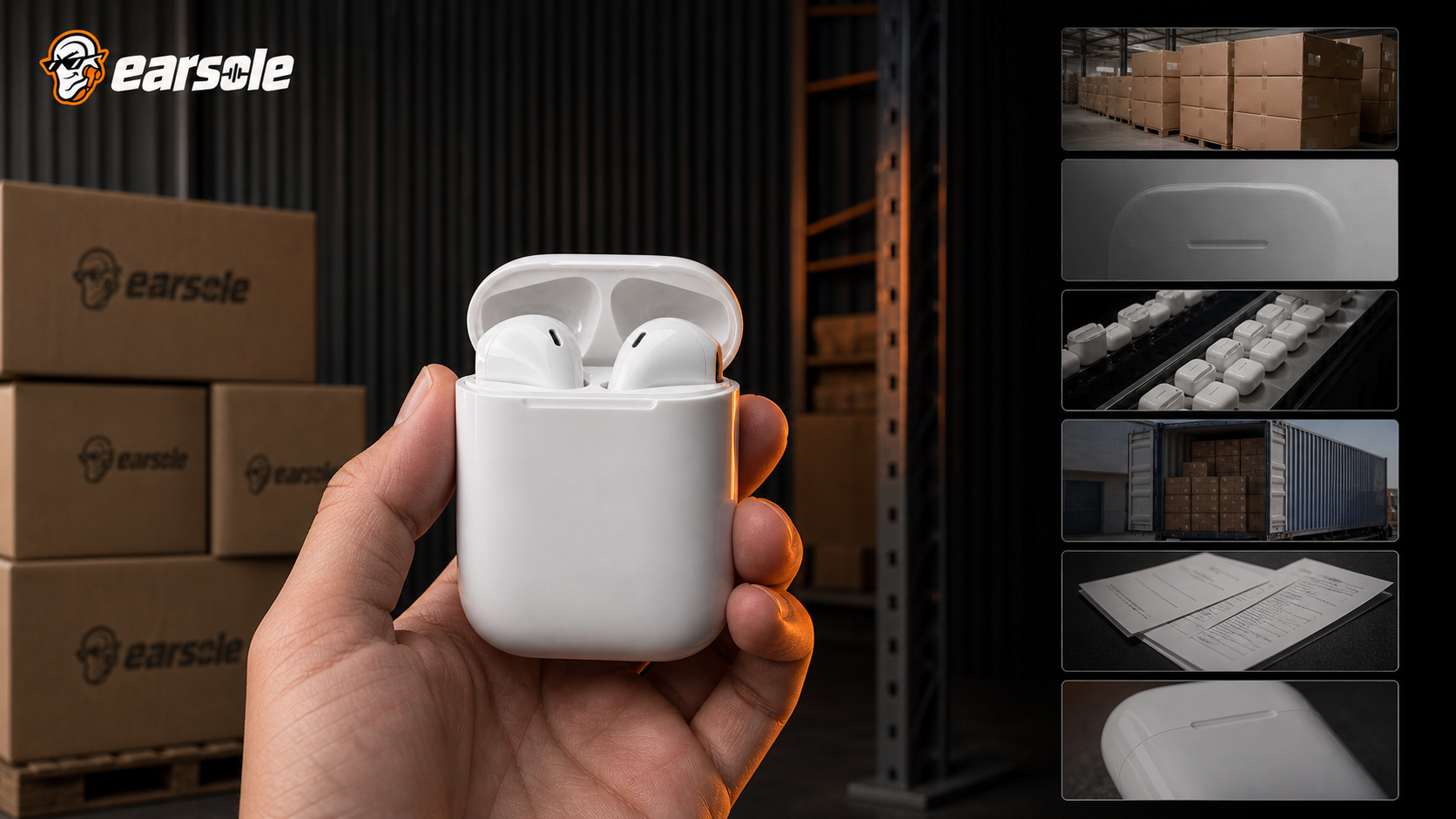
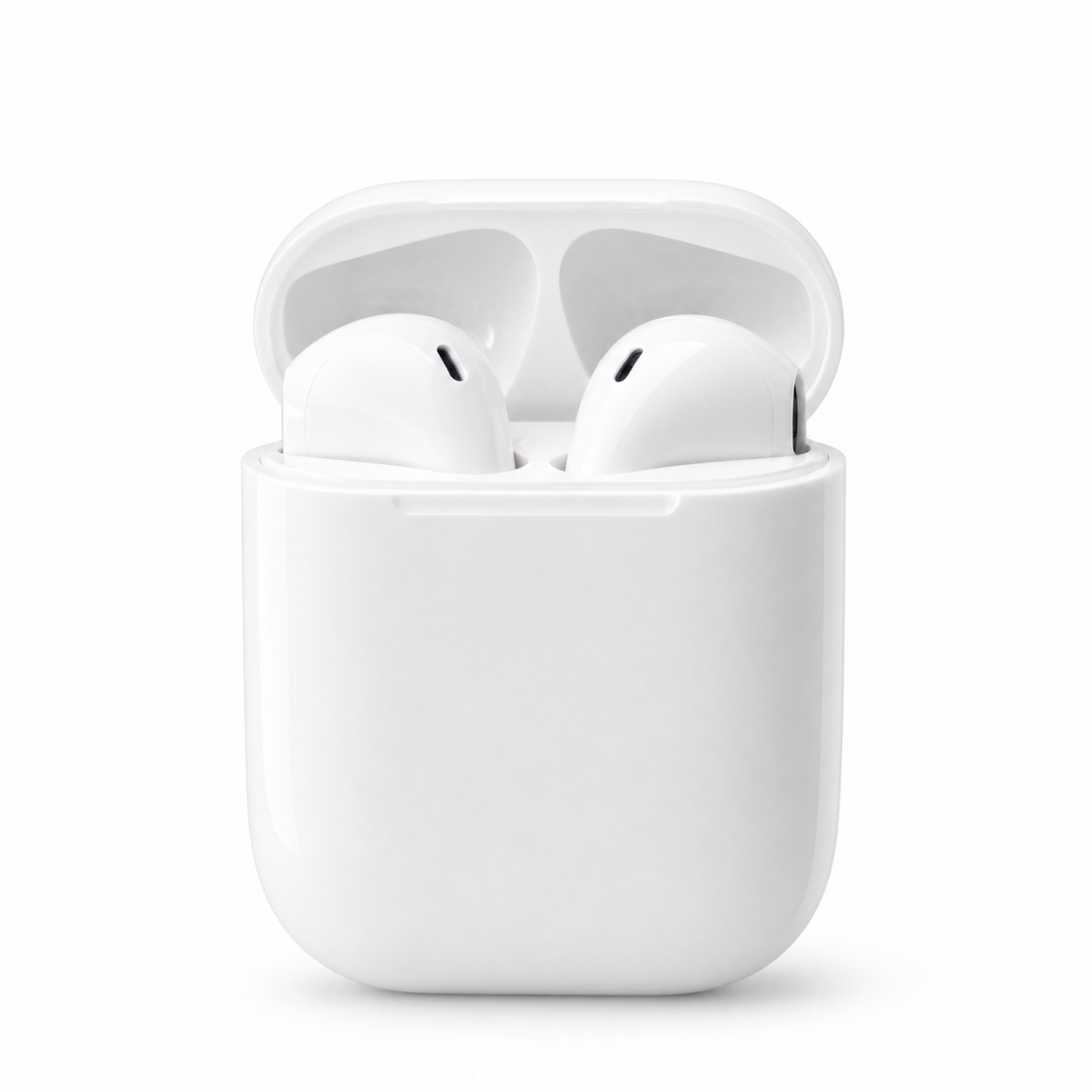
Factory Direct 工厂直发 | EARSOLE White Semi-In-Ear Wireless Earbuds is a white semi-in-ear, open-tip, stem-style wireless earbud pair with a matching charging case. Its Shopify gallery preserves an upright, content-preserving version of the real warehouse photo. The listing deliberately makes no claim about Bluetooth version, battery duration, ANC, water resistance, microphone performance, or certifications because those details were not supplied.
The product link is included as a fit example, not proof that one design works for every ear or situation. Match the physical design and documented specifications to the decision rules above.
Frequently asked questions
Does factory direct mean cheapest?
No. Channel structure can affect price, but shipping, quality control, returns, taxes, platform fees, warranty, and order size also matter. Compare the delivered offer.
Does a factory photo prove product quality?
It proves only what the image reliably shows. Quality requires specifications, process controls, inspection records, samples, and a remedy for defects.
Can I call a product factory direct if an agent is involved?
Describe the actual relationship accurately. If the seller is an agent, distributor, or retailer, “factory sourced” with a clear explanation may be more precise than implying a direct manufacturer transaction.
Bottom line
Factory direct is a channel claim, not a universal quality certificate. Preserve authentic evidence, prove every higher rung separately, and let “unknown” remain unknown until model-specific documentation exists.
Sources and review notes
- FTC guidance on substantiating U.S.-origin claims
- CPSC general-use product certification and testing guidance
- World Health Organization safe-listening guidance
Written and reviewed by the EARSOLE Editorial Team on July 14, 2026. This is educational buying and troubleshooting guidance, not medical advice. Stop using earbuds and seek qualified care for persistent pain, discharge, sudden hearing change, severe dizziness, or other concerning symptoms.