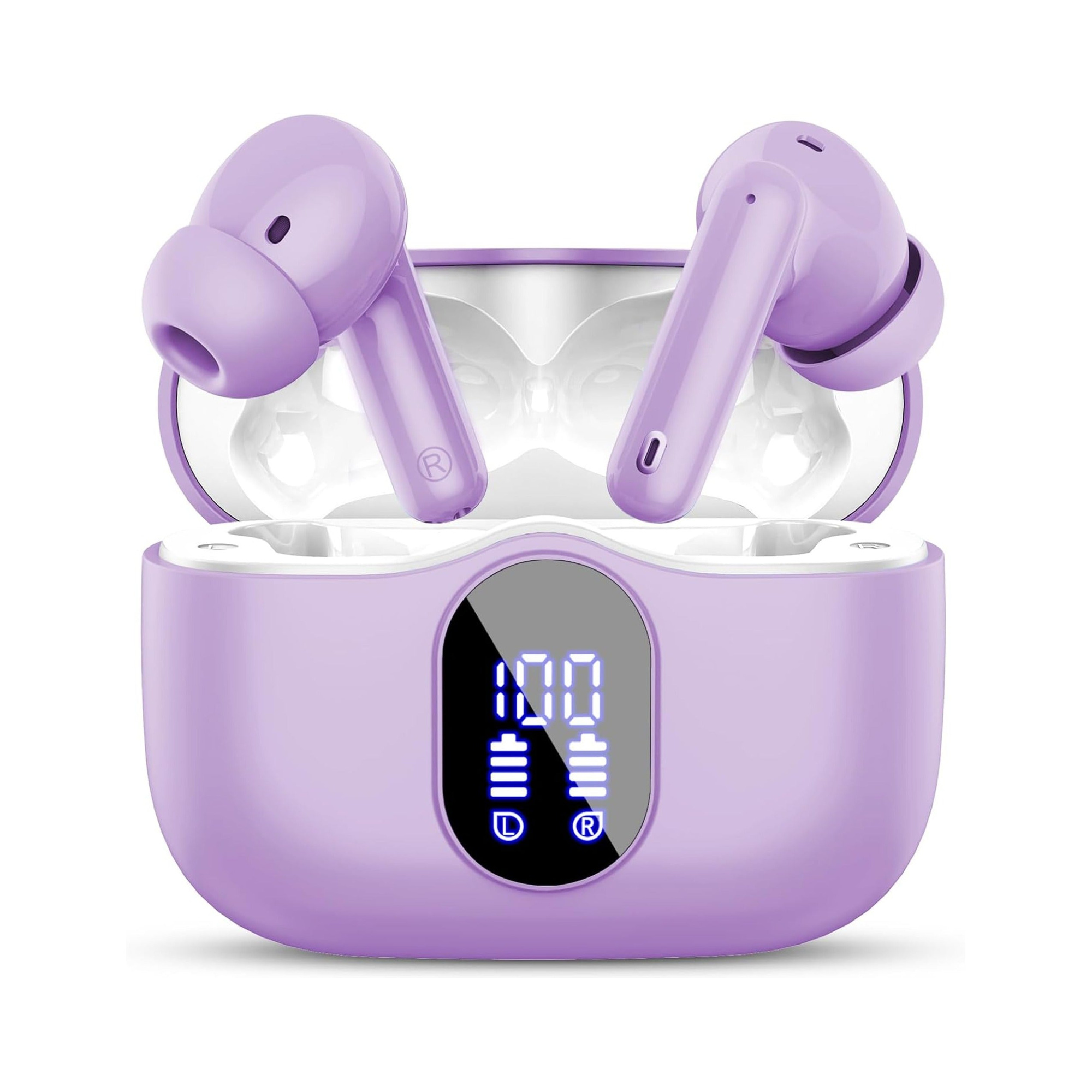
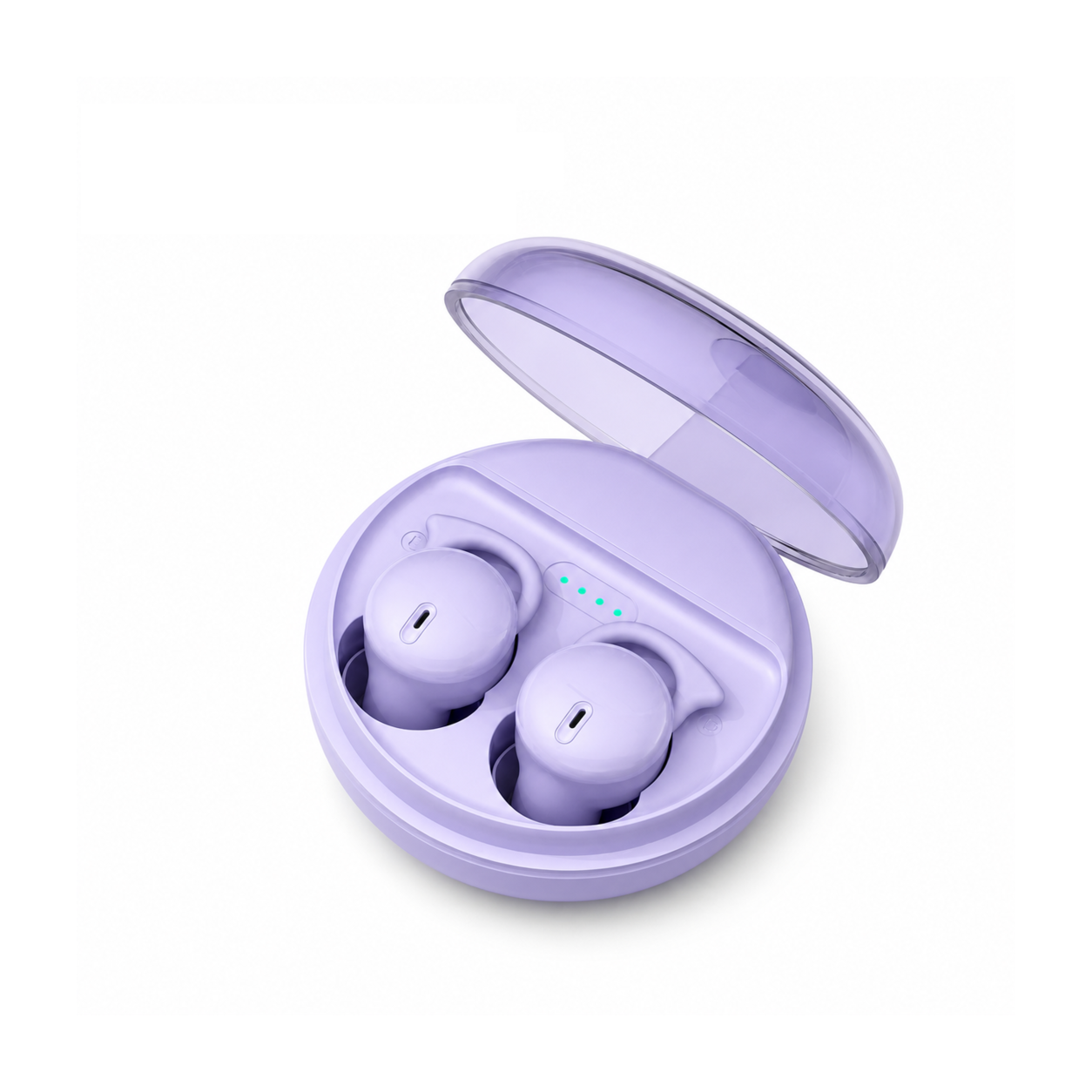
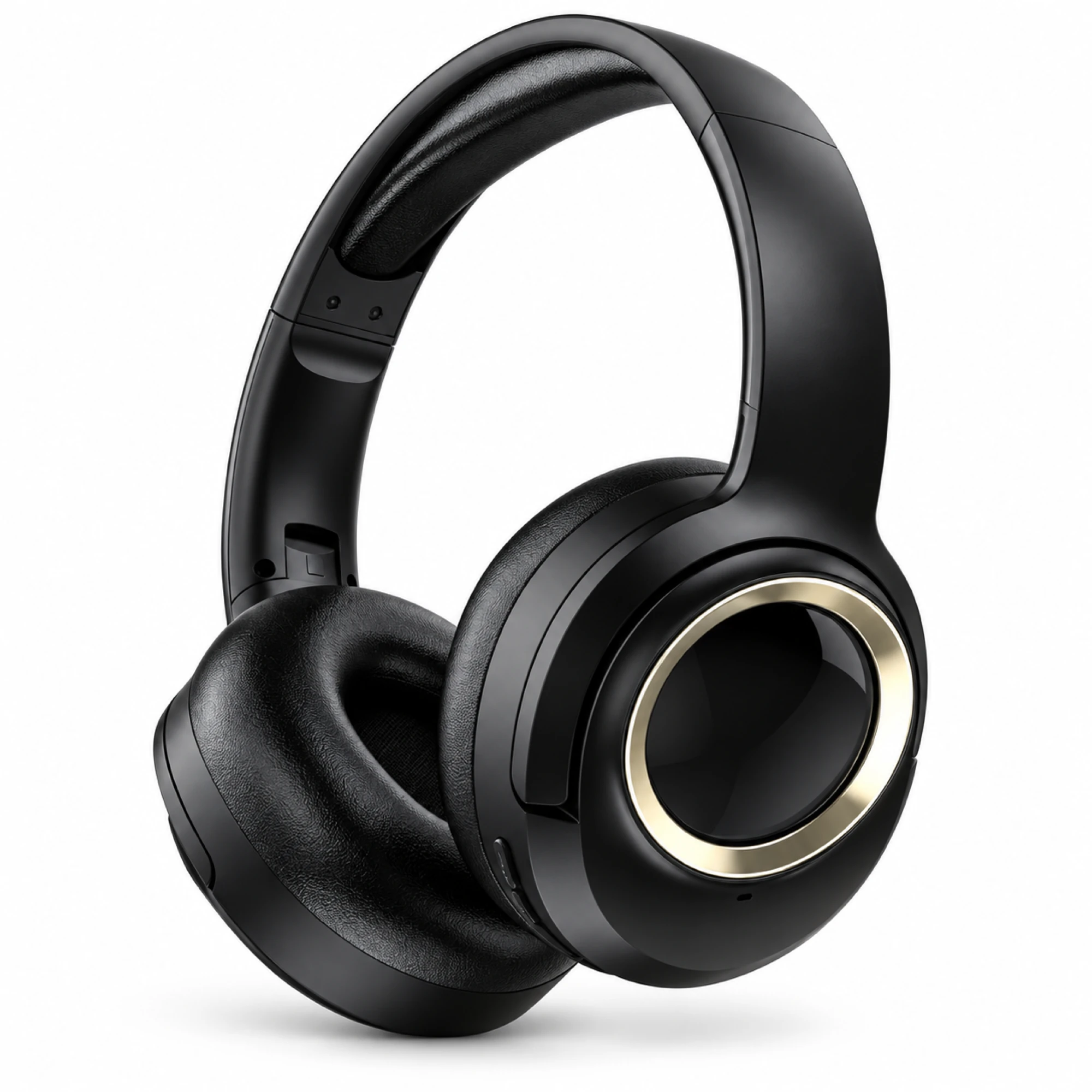
 MX-21 Black and Gold Wireless Headphones
 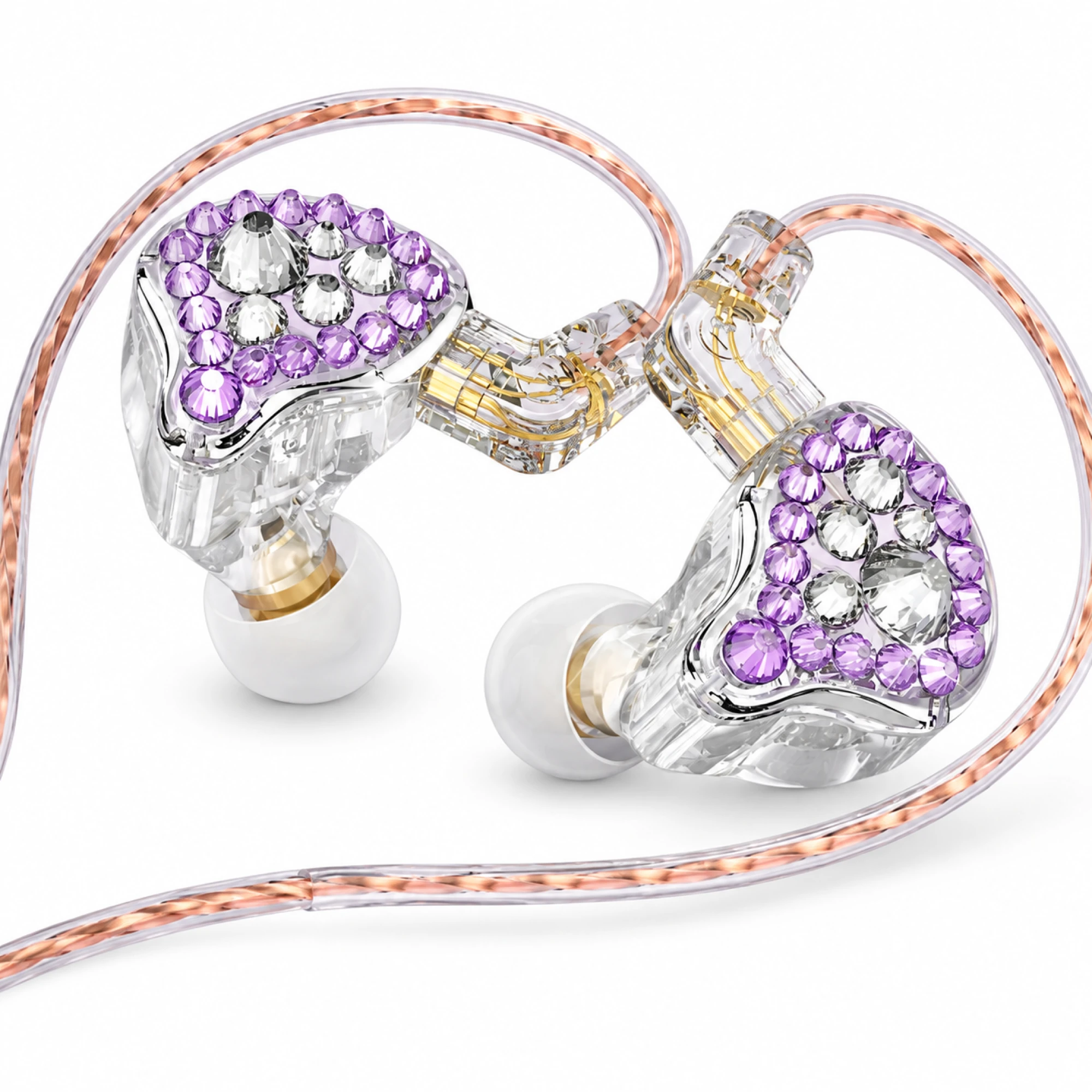 Q2 Pro Purple Crystal In-Ear Monitors
 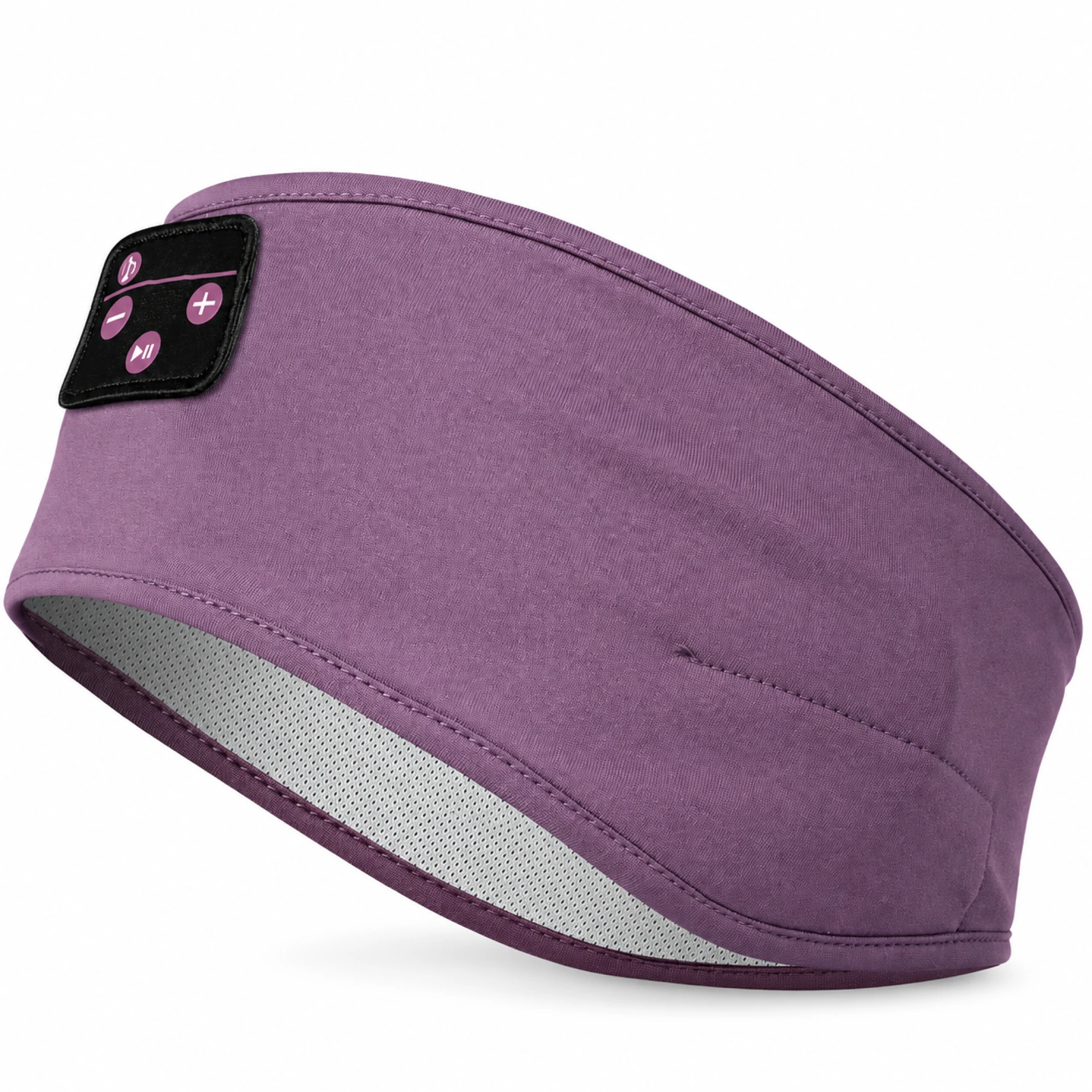 Purple Sleep Headband Headphones with Triangle Controls
 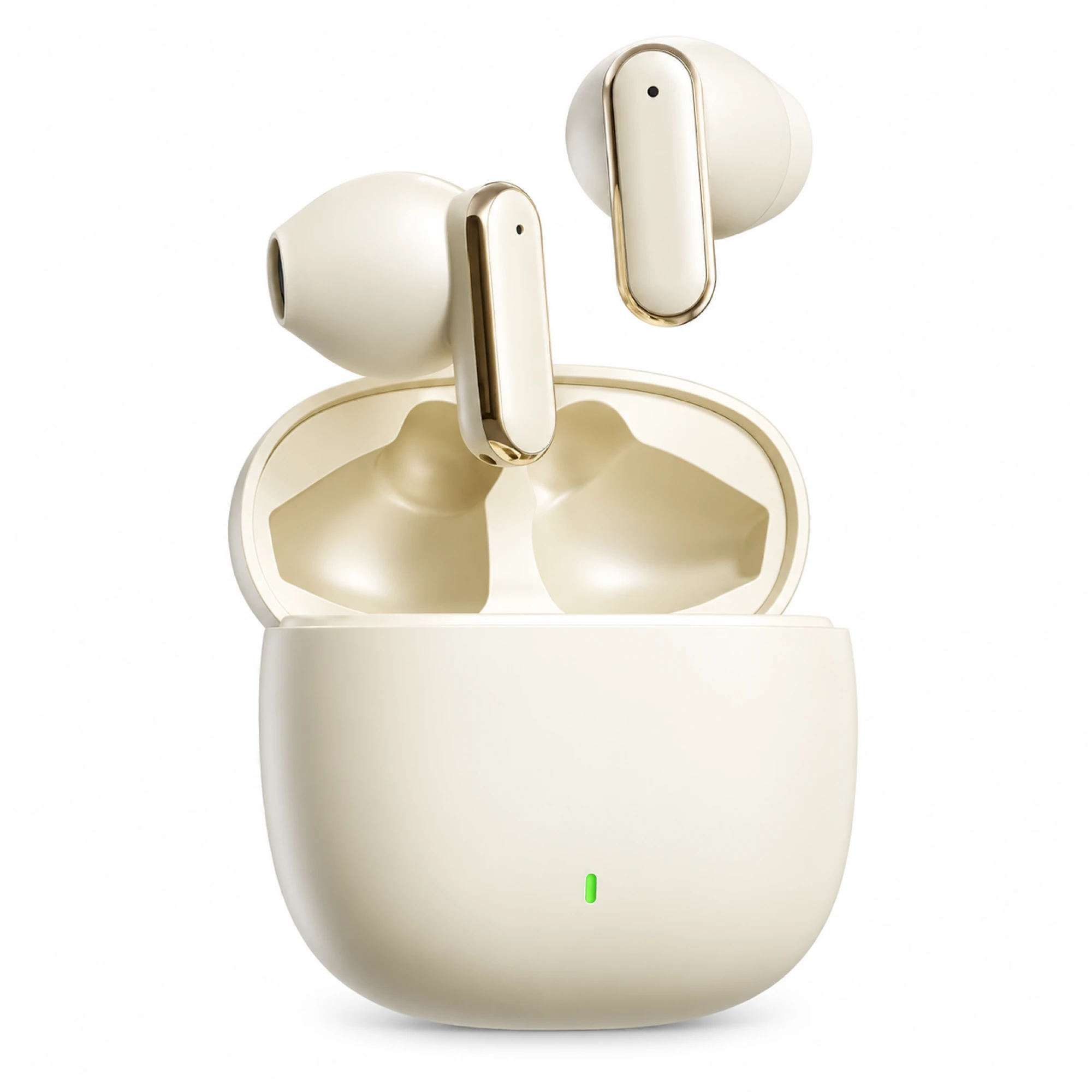 Cream Reflective-Stem Wireless Earbuds
 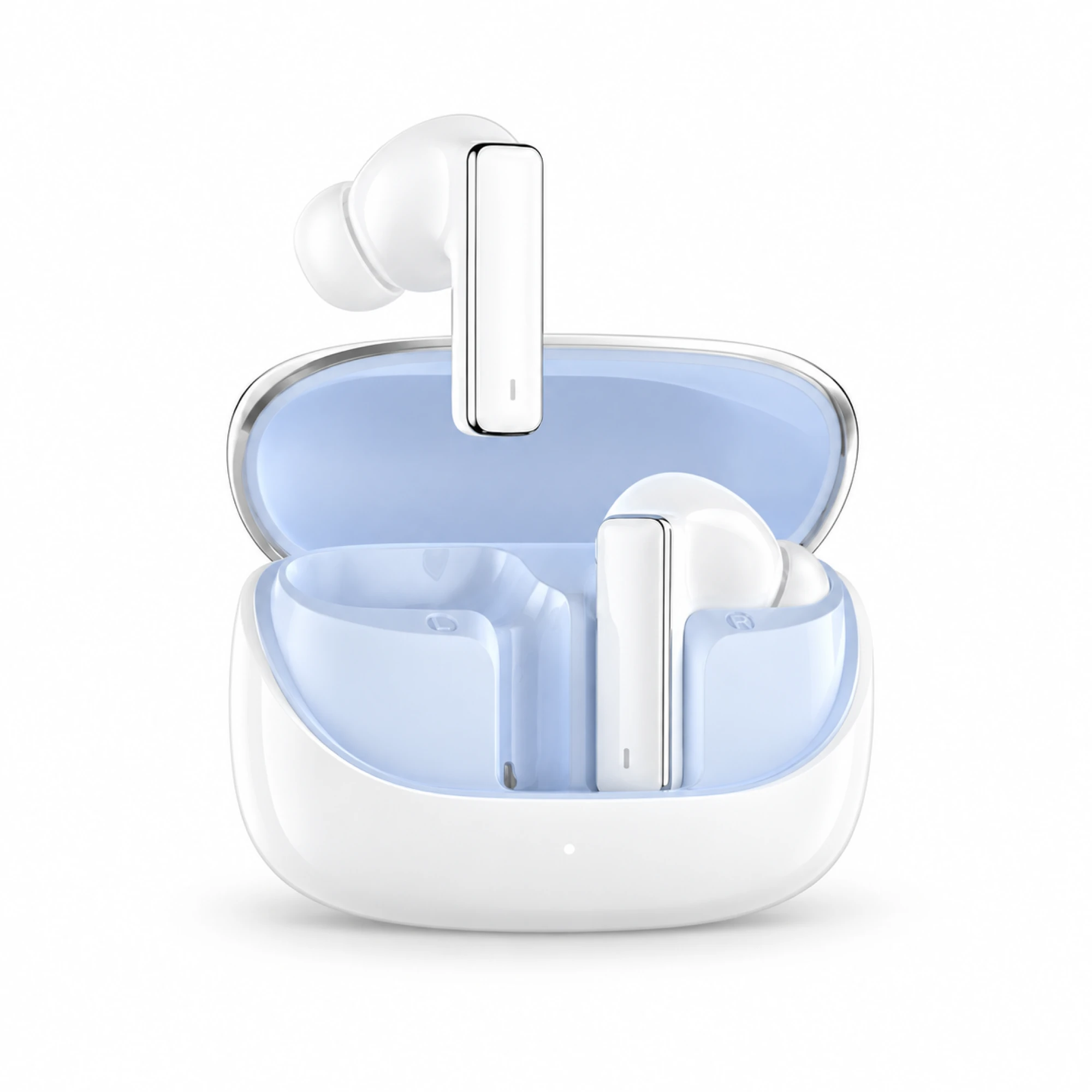 IN-01 White ANC Earbuds with Pale Blue Case Interior
 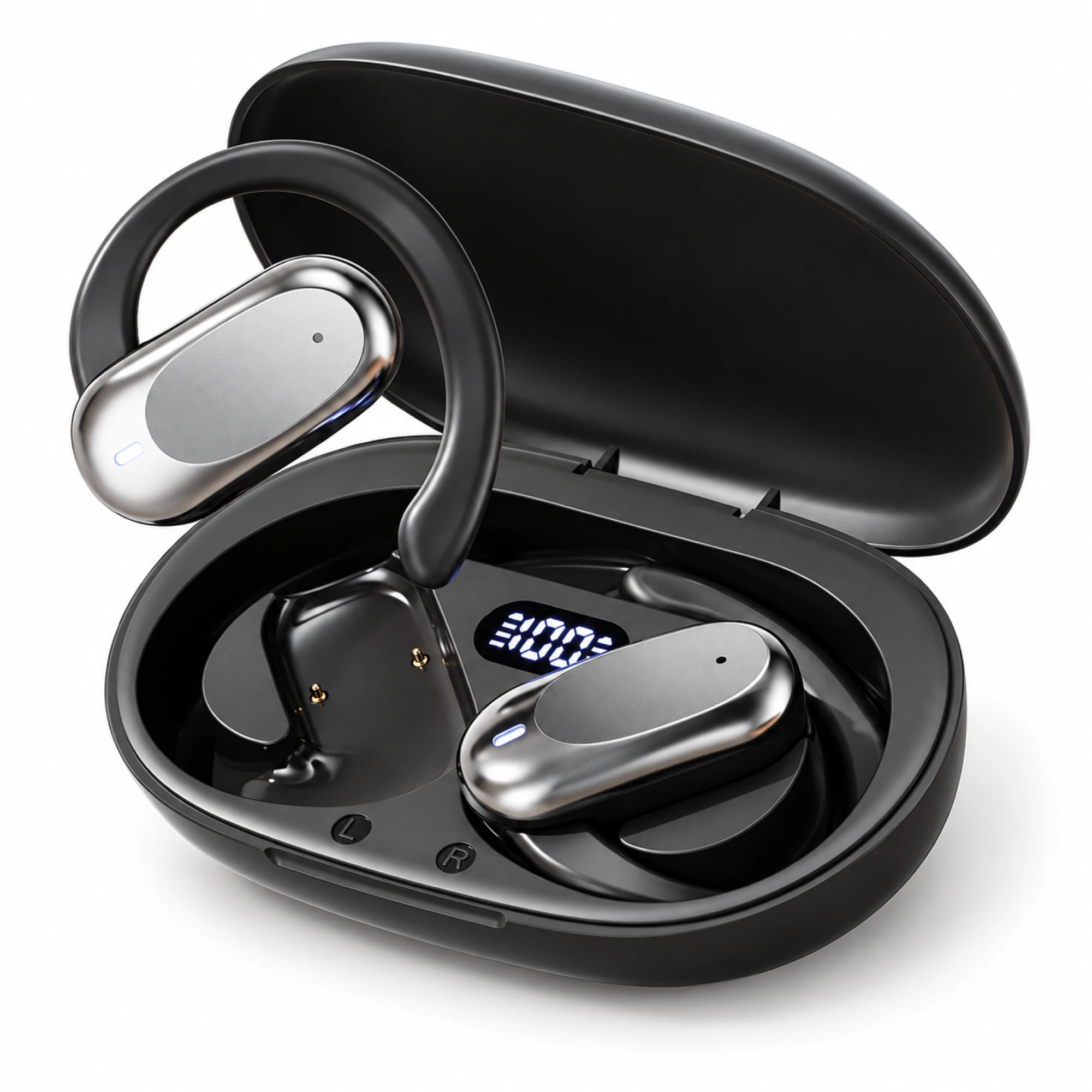 Silver Capsule Open-Ear Earbuds
 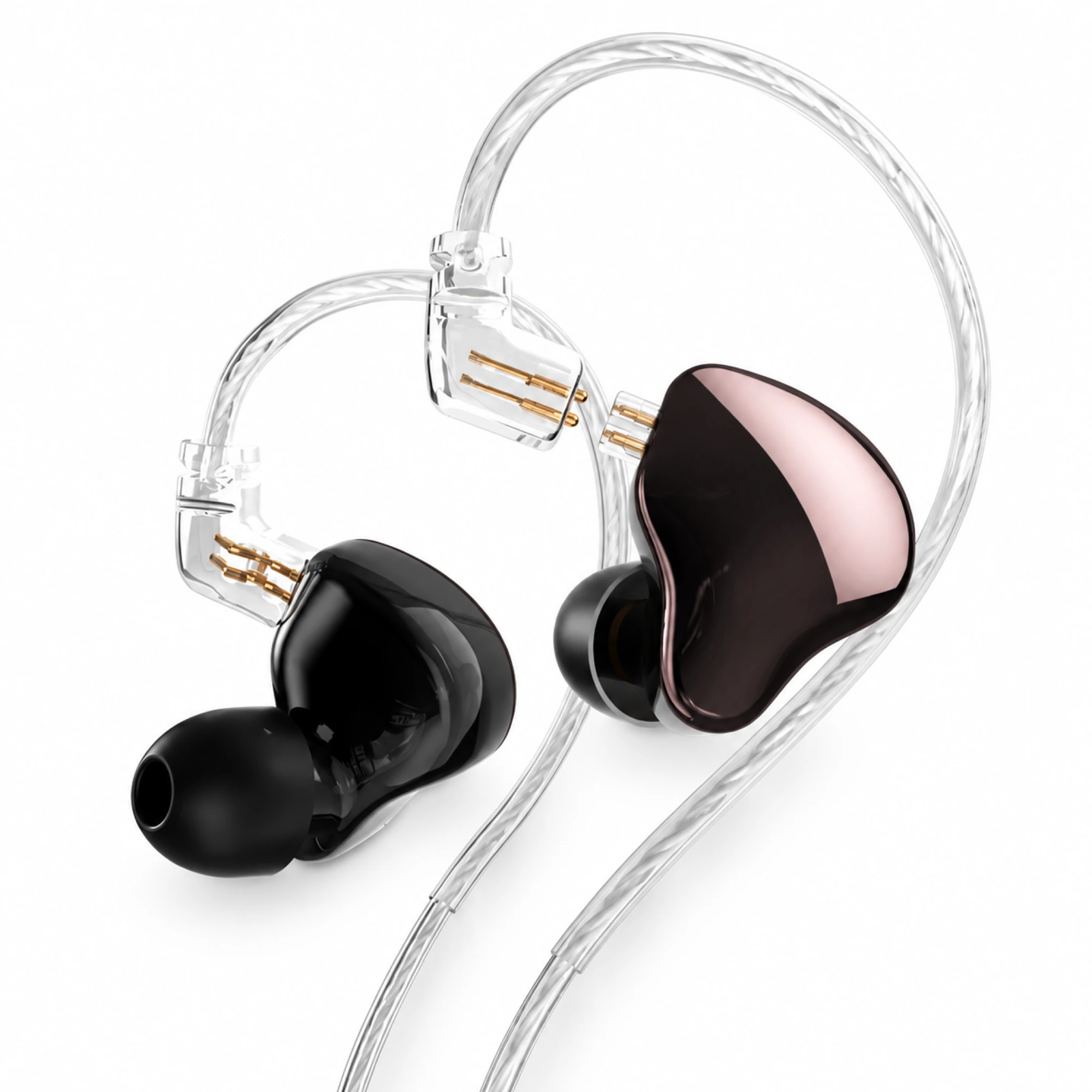 MN Rose-Metallic Detachable In-Ear Monitors
 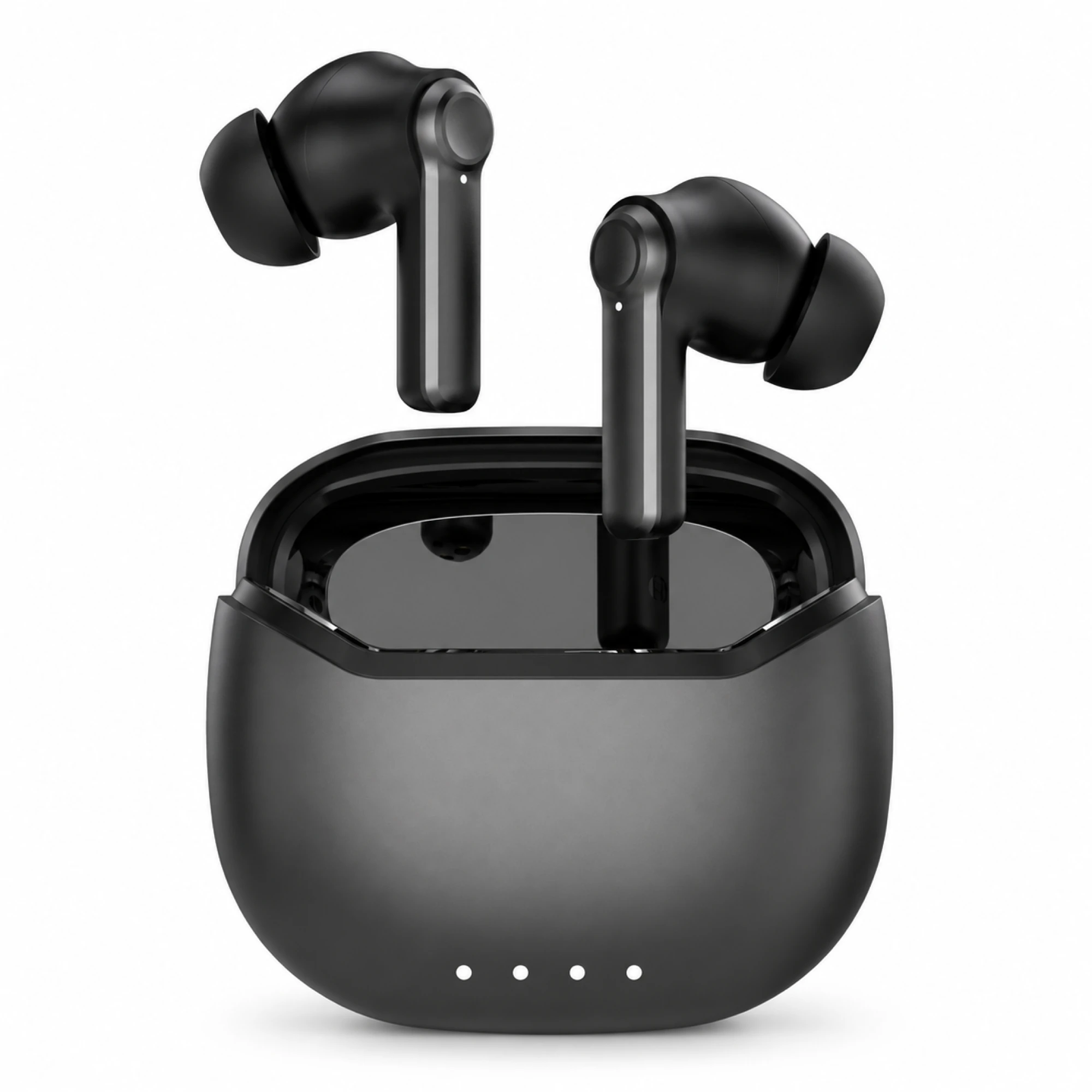 Black ANC Earbuds with Four-Indicator Case
Search for bluetooth 5.4 earbuds and you will read a lot of sentences that contain the number 5.4. We went through every product page we publish and found something about those sentences: the version is never alone. On the EARSOLE True Wireless Earbuds Series 112 page it arrives glued to "boosts data transfer speeds by up to 75 per cent"; on twelve other pages it comes with a year. Learning to read the version line means separating the number from whatever is riding on it.
Where the number sits in our range
Of our product pages, 102 print a Bluetooth version and 133 do not. Among the 102, the split is 5.4 on 56 pages, 5.3 on 37, 6.0 on 4, 5.0 on 3, 5.1 on 1 and 4.1 on 1. Four pages also mention "Bluetooth 4.0 and above", but that is a statement about the phone they will pair with, not about the earbuds, and we have not counted it as the earbuds' version.
Whether 5.4 or 5.3 is better for listening is the question our wireless earbuds buying guide answers, and its answer is short: "No. Both are core specification releases that define what the radio may do, and neither sets the driver, the tuning or the microphone." This article is not going to repeat that. It is about something narrower: what our pages attach to the number when they print it.
The version line comes bundled, and the bundle is the claim
We took every sentence on our pages that contains a version number and looked at what else is in the same sentence. Of the 102 pages, only 20 have a version sentence that adds nothing — a sentence like the one on the Glow Wireless Earbuds page: "Bluetooth 5.4 describes the radio standard the earbuds use, and it does not require any special app or setup steps." The other 82 attach something.
| What rides in the same sentence as the version | Pages |
|---|---|
| A stability promise ("stable", "stably") | 51 |
| A delay or latency promise | 41 |
| The word "chip" or "chipset" | 37 |
| "latest", "new generation" or similar | 24 |
| A pairing promise | 23 |
| A year | 12 |
| A list of profiles (HFP, A2DP, AVRCP) | 12 |
| A range figure in metres or feet | 11 |
| A codec name (AAC, SBC, aptX, LDAC) | 0 |
That last row matters, because the buying guide's point is that the codec, not the version, is what the phone and the earbuds actually negotiate. On our pages the codec never shares a sentence with the version. When you see the version, you are being shown the thing that is easy to print, next to whatever the writer wanted you to feel about it.
Which of the bundled claims you can check
Strip the version out of each sentence and sort what is left by whether it can be tested. Some of it can. Eight pages that share one supplier block, including the EARSOLE True Wireless Earbuds Series 202B page, say the pair "support HFP A2DP HSP AVRCP, which provides instant pairing and stable transmission without interruptions, with a stable connection distance of up to 33ft." Fourteen pages, including the EARSOLE Noise Cancelling True Wireless Earbuds, state "a range of up to 15 m". A distance is a claim you can walk away from your phone and test; a profile list is a claim you can look up.
Some of it cannot. The Series 112 page's "boosts data transfer speeds by up to 75 per cent while consuming less power" gives no baseline — 75 per cent more than what, measured how, is not on the page. The EARSOLE True Wireless Earbuds Series 224 page says the pair "has a 30% faster transmission speed, more stable signal connection, no delay"; again no comparison point, and "no delay" is a promise our own latency guide found on 14 pages in an even stronger form, "no delay or degradation in signal quality". We quote these numbers because they are on the pages; we are not going to treat them as measurements, and neither should you.
And some of it is not a claim at all. Twelve pages open a feature block with "2025 Bluetooth 5.4 Technology : The wireless earbuds use the bluetooth 5.4 chipset." A year next to a version is copywriting. Bluetooth versions are published by the Bluetooth SIG on its own schedule, and a page stamping a year on one tells you when the text was written, not when the radio was designed.
Four pages say 6.0, and what that does and does not settle
People searching this topic ask whether 6.0 is better than 5.4. Four of our pages print "Bluetooth 6.0": a kids' volume-limited headphone ("[Bluetooth 6.0 & Built-in Mic]-With a reliable 33ft wireless range"), a swimming headphone that says the version will "ensure ultra-low transmission latency", and two true wireless pairs. Read those the same way as the 5.4 sentences: the version arrives with a range figure on one page and a latency promise on another, and the promise is doing the work.
We have not verified which radio is inside any of these products; we sell them with the descriptions as supplied, and a version on a page is a description, not a test we ran. What the four pages show is that a bigger number changes nothing about the sentence it sits in: the 6.0 lines carry a range figure and a latency promise, the same two passengers the 5.4 lines carry, and it is still the passenger you can or cannot check. A shopper comparing "6.0" against "5.4" on our pages is comparing two supplier sentences, not two radios.
133 pages print no version, and they include our most detailed ones
The pages that skip the version are not the lazy ones. Of the 19 pages in our range that carry their own FAQ — the ones written for this shop rather than supplied — 13 do not print a version at all. The Beetle page, for instance, describes pairing as an action: "take the buds from the case, open the Bluetooth menu on your phone, tablet, or PC, and choose them from the list of available devices." The Open-Ear Clip-On page does the same. Nothing about a version is needed to do that, and nothing about a version would change it.
On those 13 pages the space the version would have taken is used for the action instead. If you need the number for compatibility with a specific old device, that is a question for the device's own documentation; none of our pages sets a minimum on the phone side except the four that say "Bluetooth 4.0 and above".
How to read the line on any listing, ours included
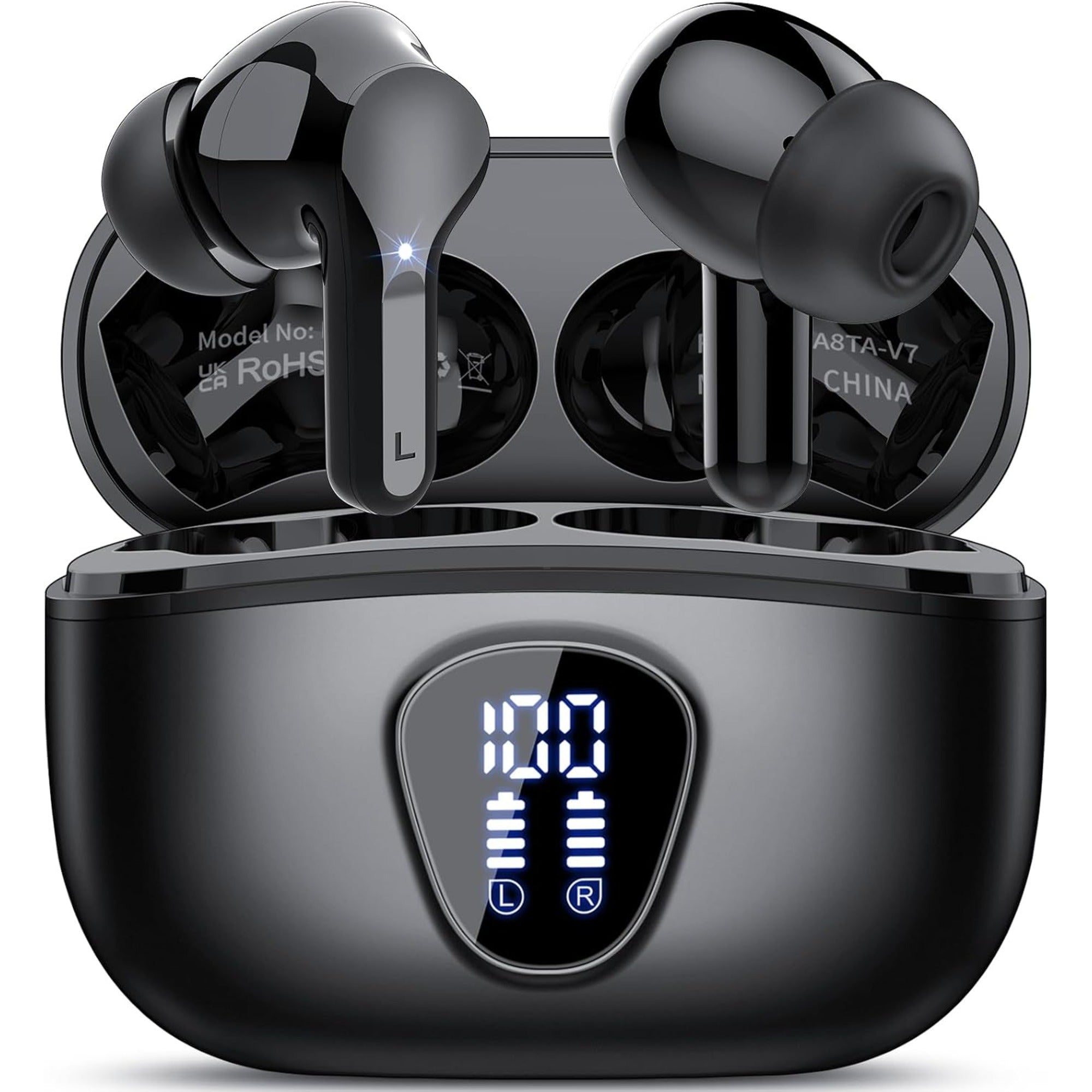
Find the sentence with the version in it and cross the version out. What is left is the claim. If it is a distance or a profile list, you can check it. If it is a percentage with no baseline, a year, or the word "latest", it is not information about the radio; it is information about the copywriter. If nothing is left, the page has told you the standard and stopped, which is the most honest form the line takes. And if there is no version sentence at all, look for the pairing instruction instead — that is the part you will actually use.
What no version line on our pages will tell you is whether a pair holds two devices at once: multipoint appears on none of them, a point the buying guide makes about its three featured pairs and that holds across the range. The pairs quoted here sit in everyday wireless earbuds, alongside the 133 that never mention a version.