

Two things decide whether running headphones work for you, and neither is sound quality. The first is whether your event permits them, which USATF leaves to the individual race instead of settling with one national ban. The second is fit under repeated impact, because running loosens earbuds in ways that walking never reveals. Get those right and the choice between models becomes much simpler.
Why races discourage headphones
USA Track & Field once banned headphones and portable music devices outright at sanctioned events. That proved hard to enforce evenly, and at its 2008 Annual Meeting in Reno the organisation amended Rule 144.3 instead of keeping the blanket prohibition.
The wording that replaced it is where most runners get caught out. As Pacific Association USATF published it, "The Games Committee for an LDR event may allow the use of portable listening devices not capable of receiving communication; however, those competing in Championships for awards, medals, or prize money may not use such devices."
Three things follow from one sentence. Permission sits with the individual event, so a local 5K, a big-city marathon and a championship can each land in a different place. Anyone chasing an award, a medal or prize money is excluded regardless of what the event allows everybody else. And the rule distinguishes devices that can receive communication from ones that only play stored audio, which is a distinction worth reading twice if you race with a connected watch.
Check your specific race, then, and check it as an entrant in your own category, not as a spectator of the general policy. The safety logic behind the restriction is consistent: organisers want runners to hear course marshals, vehicles and other competitors coming past. That reasoning also explains why open-ear designs have become popular with runners even where rules are relaxed, since keeping the ear canal open preserves the awareness the rule was written to protect.
Why earbuds fall out when you run
An earbud that stays put on a walk can work loose within a kilometre of running, and four things change the moment you start.
Repeated vertical impact is the first. Each footstrike nudges the earbud outward by a fraction of a millimetre, and the movement accumulates over hundreds of strides rather than being corrected between them. The second is your jaw: breathing hard moves the mandible, the canal changes shape slightly with it, and a marginal seal breaks. The third is sweat, which reduces friction between the tip and the canal wall exactly when the first two effects are at their strongest. The fourth applies only to neckband and cabled styles, where a collar or a cable applies a small constant pull in one direction for the whole run.
Notice that only one of those is about tip size. This is why "buy a bigger tip" often fails as advice: a larger tip can improve the initial seal while doing nothing about sweat or impact. Our note on earbuds for running that stay in works through the same problem from the product side.
Three fit strategies, and what each trades away
| Approach | How it holds | Trade-off |
|---|---|---|
| Sealed in-ear with tips | Friction inside the canal | Best isolation, and the most affected by sweat and impact |
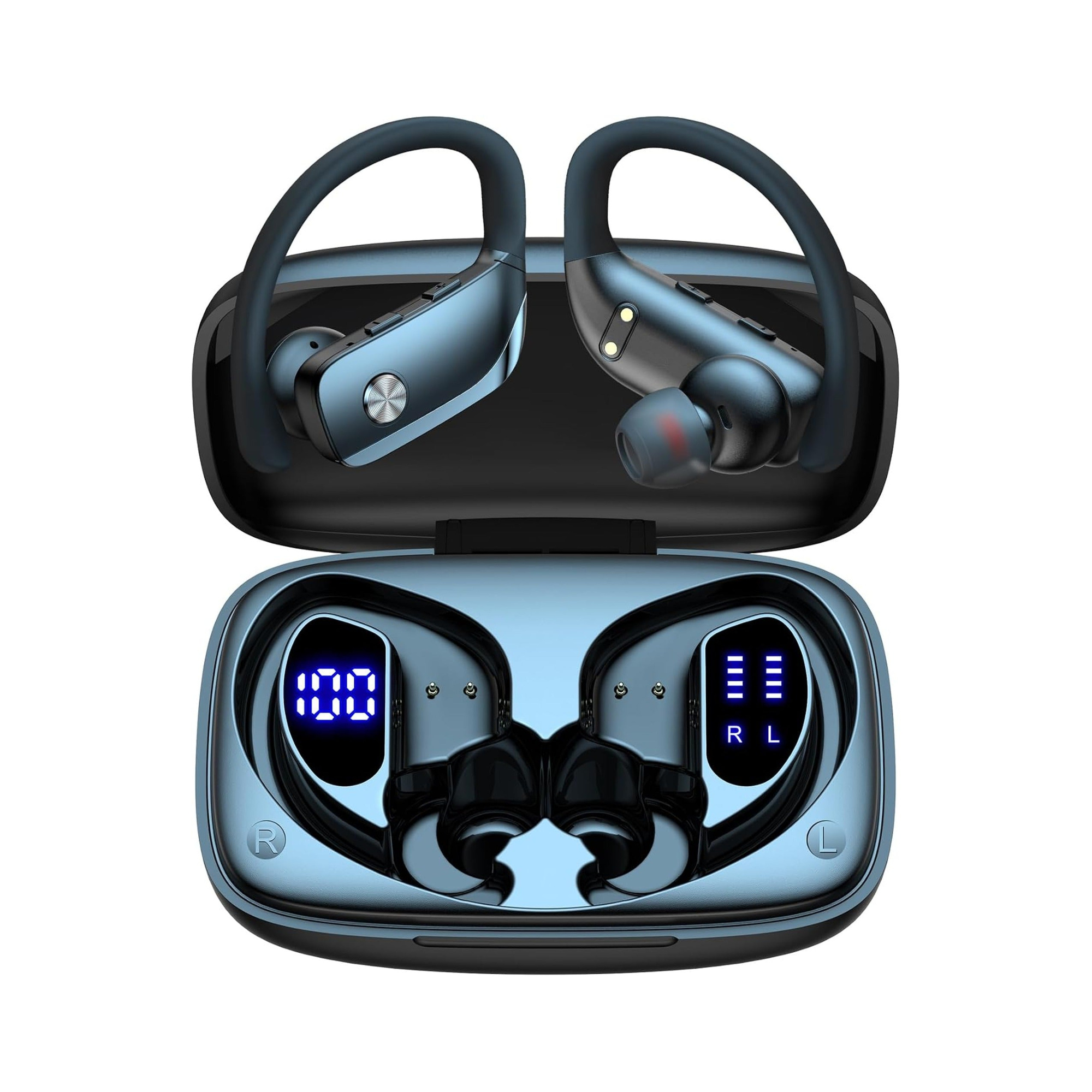
| Ear-hook or wing | Mechanical anchor on the outer ear | Very secure, can press over long runs, bulkier under a hat |
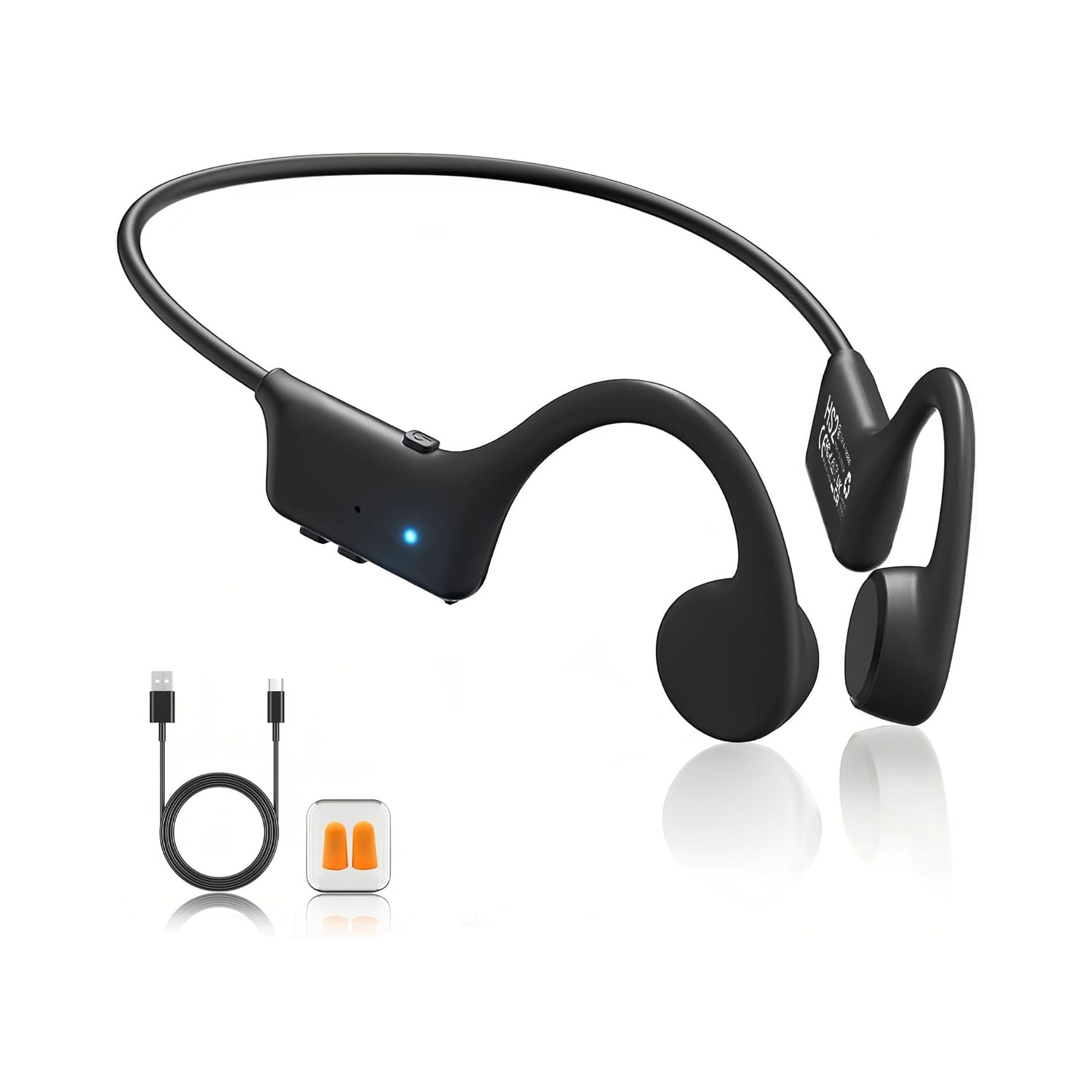
| Open-ear or bone conduction | Sits outside the canal entirely | Keeps ambient awareness, but less bass and more sound leakage |
For road running near traffic, the third row is often the right compromise even though it measures worst on paper. Awareness is a safety feature, not a specification, and the difference between the two open formats is set out in open-ear versus bone conduction.
A five-minute fit test before your next run
- Insert the earbuds and play something with steady bass. Note how full it sounds.
- Jog on the spot for sixty seconds. If the bass thins out, the seal is already moving.
- Turn your head fully left and right, then look up and down.
- Open your mouth wide, as you would while breathing hard.
- Repeat after ten minutes of real running, once you have started to sweat. This is the test that predicts the rest of the run.
Most fit failures show up at step five instead of step one, which is why testing in a shop or a living room misleads.
Sweat, rain and IP ratings
Sweat is not the same as rain. It is salty and slightly acidic, and it reaches the earbud from the inside of the ear instead of falling on it. An IP rating describes tested resistance to water ingress under defined conditions, and not immunity to long-term sweat exposure.
Practical habits matter more than the number: wipe the earbuds after a run, let them dry before sealing them in the case, and keep the charging contacts clean. Our explainer on earbud IP ratings covers what the individual digits certify.
The two of ours that hold on a run
For running, the relevant options sit in the secure-fit and open-ear part of our range rather than the standard in-ear one. The Bone Conduction Open-Ear Sport Headphones ($39.99 as the listing reads today) leave the canal open, with IP54 water resistance and up to 12 hours of playtime listed. The Sport Ear-Hook Wireless Earbuds ($28.99 as the listing reads today) take the mechanical-anchor route, with adjustable hooks as the one fit variable you can change. The rest of the range sits in everyday wireless earbuds.
If your route is quiet and isolation matters more than awareness, a sealed in-ear pair with the right tip is still a reasonable choice. If you run near traffic, we would point you to the open-ear side even though it gives up bass to get there.
Questions about racing with headphones
Which type of headphone is best for running?
Whichever type stays put on your ears after ten sweaty minutes. Ear-hook and open-ear designs hold more reliably than sealed tips for most runners, because they do not depend on a friction fit that sweat degrades, and open-ear also keeps you aware of traffic.
Can I wear headphones if I am racing for a prize?
Under the USATF wording, no. The amended rule lets an event's Games Committee allow portable listening devices that cannot receive communication, but excludes anyone competing in Championships for awards, medals or prize money. Entering the open field and entering the prize race are different answers at the same event.
Are bone conduction headphones allowed in races?
Rules are written around listening devices generally instead of naming the technology, so an event that restricts headphones may still restrict these. Their open-ear design does address the safety concern behind the rule, but confirm with the organiser instead of assuming.