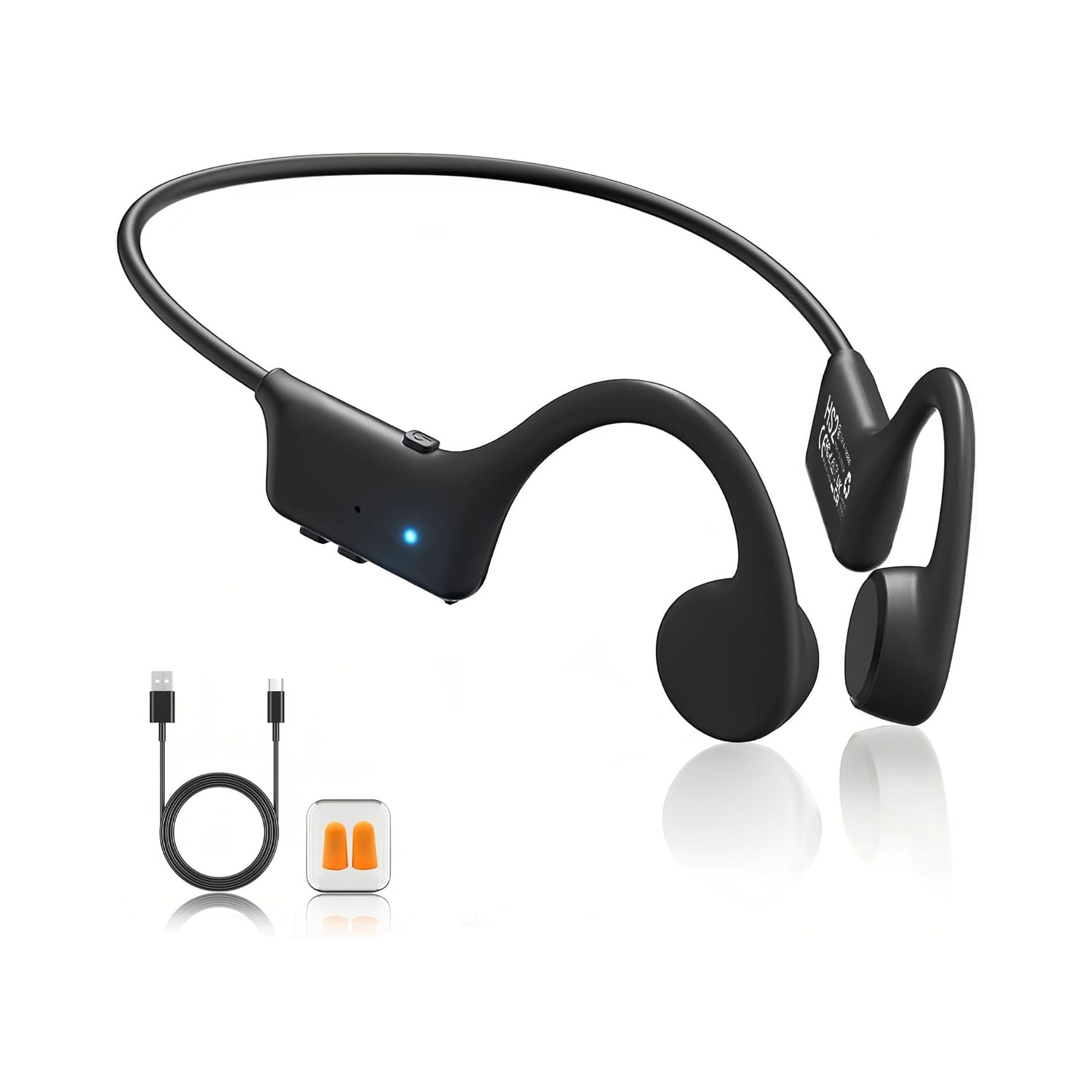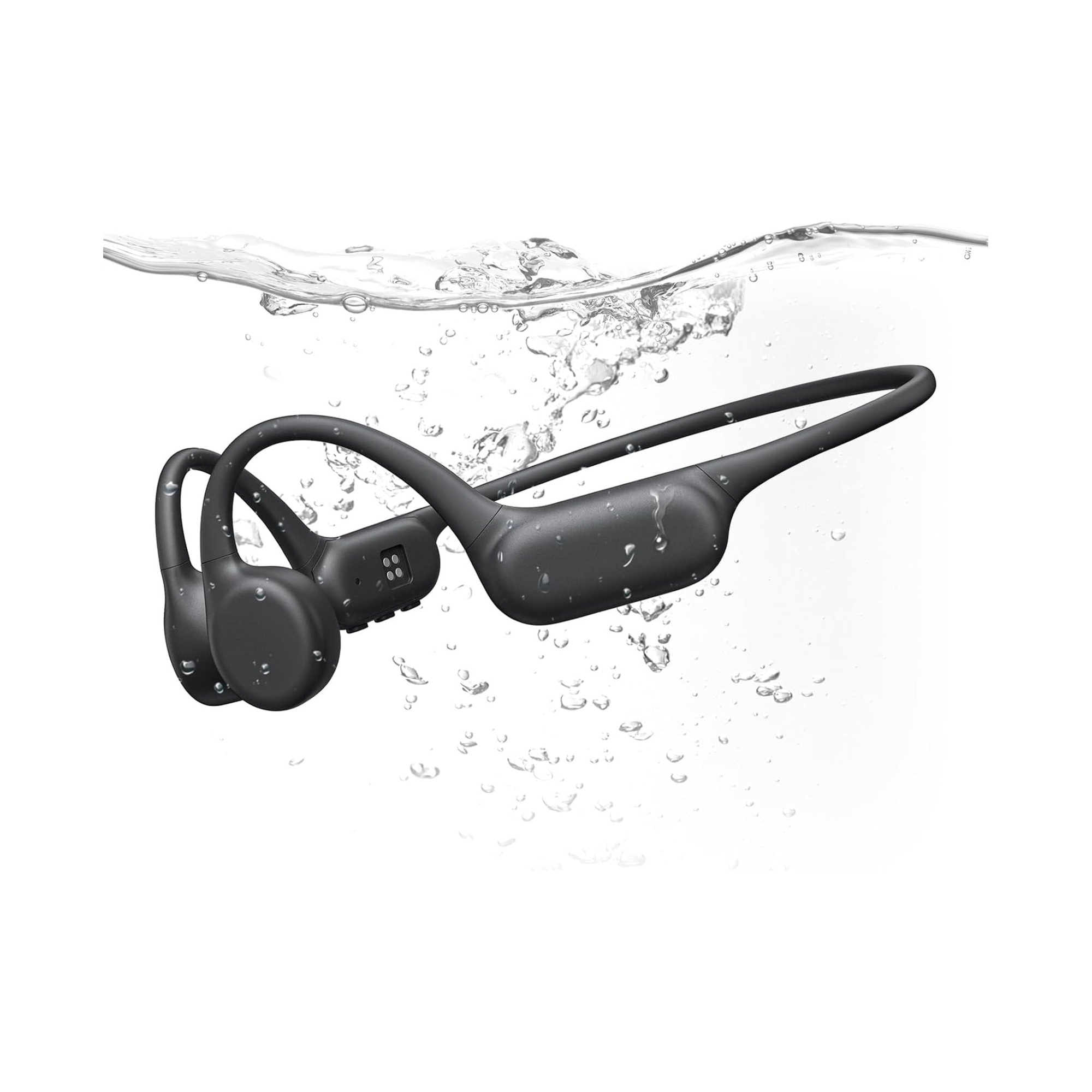



Bone conduction headphones press a vibrating pad against the cheekbone so that sound reaches the cochlea without passing through the ear canal or the eardrum. The cochlea is where an earbud's sound ends up too, and it is where NIDCD says noise does its damage, to hair cells that do not grow back. The route changes; the level and duration rules do not.
Where the vibration goes
StatPearls defines bone conduction as "the phenomenon in which vibrations are transmitted through the bones of the skull to the cochlea and the associated sensorineural structures, resulting in the perception of sound". In NIDCD's account of how we hear, the everyday route runs down the ear canal to the eardrum, through three tiny bones in the middle ear, and into the fluid-filled cochlea, where hair cells turn the ripple into an electrical signal. A pad on the cheekbone skips the first three stations and lands on the fourth. StatPearls again: "Ultimately, air conduction and bone conduction cause a vibration of the cochlea's basilar membrane". The hair cells sit on that membrane, and NIDCD's page on noise-induced hearing loss says what loud sound does to them: "Most NIHL is caused by the damage and eventual death of these hair cells. Unlike bird and amphibian hair cells, human hair cells don't grow back." That is how bone conduction headphones work on paper: a different door into the same room.
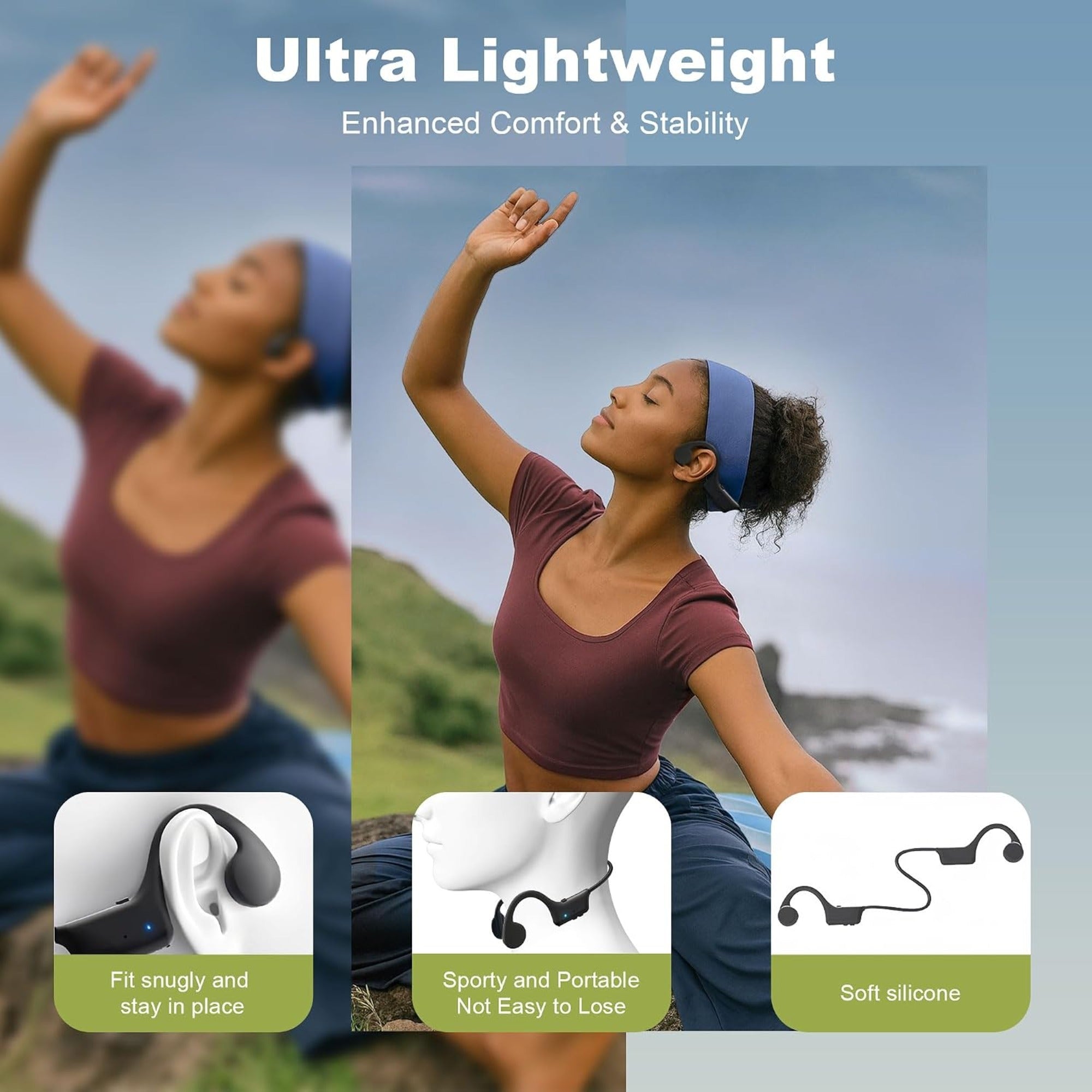
Clinical bone conduction is applied to the mastoid behind the ear; the headsets in a 2023 Trends in Hearing study (Surendran, Prodanovic and Stenfelt) sit "close to the anterior part of the ear canal opening", and the authors measured what that changes in 21 participants. At that position "the sound pressure in the ear canal dominates the perception of BC sound", with the canal pathway "estimated to be around 25 dB greater than other contributors, like skull bone vibrations" in a healthy ear. Most of what a healthy ear hears from a band worn in front of the ear therefore arrives as airborne sound in the open canal rather than through the skull, closer to the speaker-based designs in our open-ear earbuds guide than the name suggests.
Who this is not for
Three buyers should look elsewhere. The first wants headphones that make a loud place quieter. WHO's advice for noisy settings is to "use well-fitted, and noise cancelling headphones to reduce the need to raise volume in noisy situations"; an open-ear band seals nothing and cancels nothing. (What each kind of cancelling does is in our ANC versus ENC note.) The second hopes a band will stand in for a hearing device. The FDA says hearing aids are "intended to make up for impaired hearing", that bone-conduction hearing aids exist for "people who have problems with their outer or middle ear", and, of personal sound amplifiers, "These are not alternatives to hearing aids." A music headset amplifies nothing around you, and noise damage sits in the inner ear, past everything a bone route bypasses. The third has tinnitus. NIDCD says loud noise "can also cause tinnitus", which "can sometimes continue constantly or occasionally throughout a person's life"; how loud is too loud for you is an audiologist's question, and no headphone design answers it.
When to see a clinician
Four triggers, all from NIDCD. Hearing that sounds muffled or distorted after a session, even if it clears: loud noise can cause "a temporary hearing loss that disappears 16 to 48 hours later", and "there may be residual long-term damage". New or louder ringing, buzzing or roaring in the ears. A sudden drop in hearing, especially in one ear, which NIDCD's page on sudden deafness says to treat as "a medical emergency" and to "visit a doctor immediately". And any hearing change that predates the band, because a headphone choice is no substitute for an assessment. An audiologist can measure your thresholds by air and by bone; that comes first.
If a product causes pain, irritation, ringing or a noticeable hearing change, stop using it and seek qualified care.
Loud is loud on either path
NIDCD's thresholds name a level and a duration and say nothing about the route: "Sounds at or below 70 A-weighted decibels (dBA), even after long exposure, are unlikely to cause hearing loss. However, long or repeated exposure to sounds at or above 85 dBA can cause hearing loss." Its list of familiar sounds puts music through headphones at maximum volume at 94 to 110 dBA. Nothing in the sources cited here exempts a cheekbone pad, and our reading is that a level which is unsafe through an earbud is unsafe through a band. Whether bone conduction headphones are safe for your hearing therefore comes down to level and time.
WHO turns those two numbers into a weekly budget: 40 hours at 80 dB, 12 hours 30 minutes at 85 dB, four hours at 90 dB, an hour and a quarter at 95 dB, 20 minutes at 100 dB. Work a commute through it: an hour each way, five days a week, is ten hours. At 80 dB, WHO's doorbell, that week uses a quarter of the budget. At 85 dB, WHO's heavy traffic heard from inside a car, it uses most of it. At 90 dB, a shouted conversation, the same ten hours is two and a half times the allowance.
You cannot place a band on that budget from its listing, because the listing states no output level. Our Bone Conduction Open-Ear Sport Headphones ($39.99 at the price listed today) describe "Comfortable & Safer Listening" and a "lightweight wraparound frame with soft skin-friendly silicone"; they state no maximum output and no volume limiter, so read "safer" as a comfort claim about nothing sitting in the canal. Our Waterproof Swimming Headphones ($36.99 at the price listed today) state "soft, skin-friendly silicone cushions on the front of the ears" and likewise no output level. Both sit in the everyday wireless earbuds collection. Without a figure, WHO's fallback is the one to use: volume "no more than 60% of maximum", or "below 80dB average" on a sound-level app such as the NIOSH app WHO names, and a count of the hours. The speech test in our bedtime volume routine sets a level by ear anywhere.