

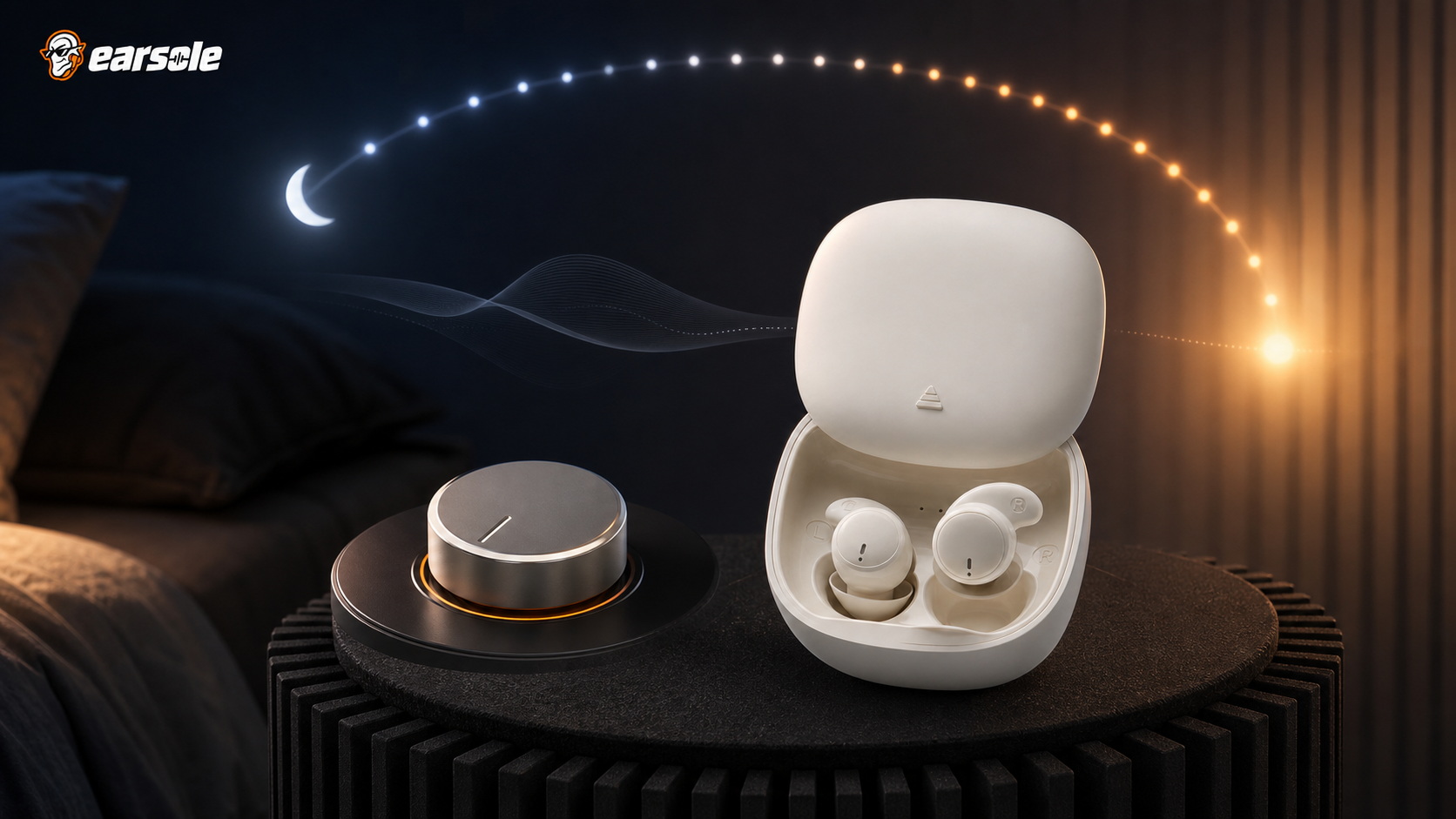
When sleeping in earbuds, use the lowest level that makes the chosen audio understandable; a fixed phone percentage is only a rough proxy. Set volume in the quiet bedroom, step it down after your ears adapt, add a timer, and never raise it merely to overpower snoring, traffic, or a poor ear-tip seal.
This guide covers sleeping in earbuds alongside sleep earbud volume.
Quick answer
| Control | Bedtime rule |
|---|---|
| Environment | Set the level after the room is quiet, not on a noisy commute |
| Content | Prefer familiar or neutral audio that stays intelligible when quiet |
| Duration | Use a timer whenever continuous playback is unnecessary |
| Symptoms | Treat ringing, muffled hearing, pain, or fullness as a stop signal |
Why one percentage cannot define safe volume
A 40% setting is not a standardized acoustic output. Phone model, earbud sensitivity, recording level, EQ, tip seal, and playback app all change what reaches the ear. The WHO gives a useful exposure framework—80 dB for up to 40 hours per week, with much shorter time as level rises—and recommends staying below 60% of maximum when no better monitoring is available. For bedtime, duration argues for going lower than “just under the limit.”
Use the Bedtime Volume Ladder
Set the system in the environment where it will be used. Do not carry over a commute volume into a quiet bedroom.
- Start playback in the quiet room with the earbuds fitted comfortably.
- Raise volume only until speech is understandable or the masking sound becomes useful.
- Wait two minutes for attention to settle, then lower one step and test again.
- If a sudden external sound breaks through, reduce that source or change the masking track before increasing volume.
- Set a 15–30 minute timer for sleep onset and extend only if a documented need remains.
- The next morning, record whether your ears feel normal before repeating the setup.
Separate masking from overpowering
Masking works when a steady sound makes an irregular sound less salient. It does not require the masker to be louder than every snore, horn, or door slam. If you keep turning up, switch to a closer room-level sound source, improve the seal only if it remains comfortable, or accept that earbuds are the wrong control for that noise. Cleveland Clinic recommends low volume and limited playback time for overnight listening.
Use symptoms as hard stop signals
Temporary mild awareness of a new fit is different from persistent pain, pressure, drainage, hearing change, severe dizziness, or feeling unwell. The NHS ear-infection guidance lists ear pain, discharge, pressure/fullness, itching, and hearing difficulty among symptoms and recommends medical review for concerning or persistent cases. Remove the earbuds rather than trying to “get used to” worsening symptoms.
Where an EARSOLE model fits
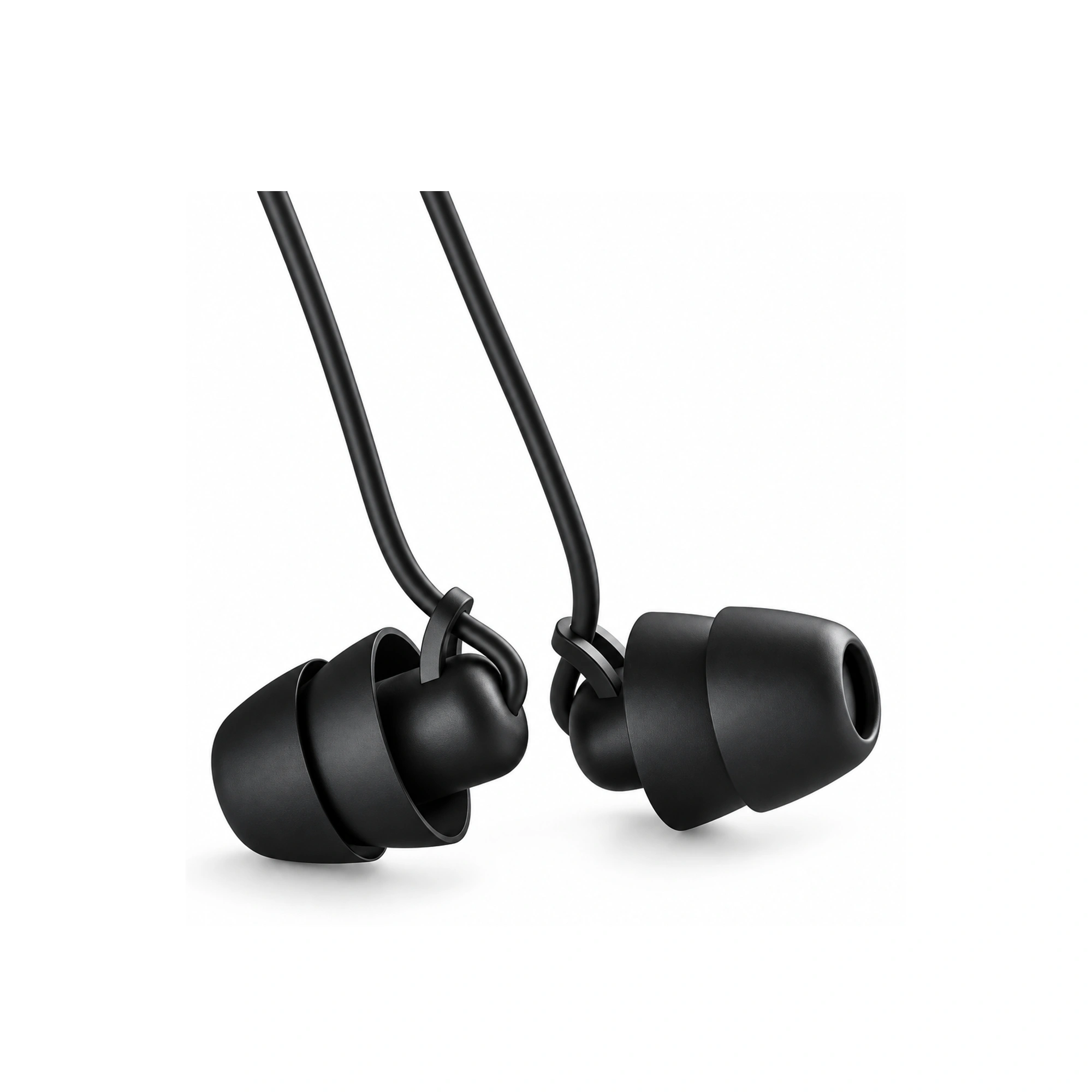
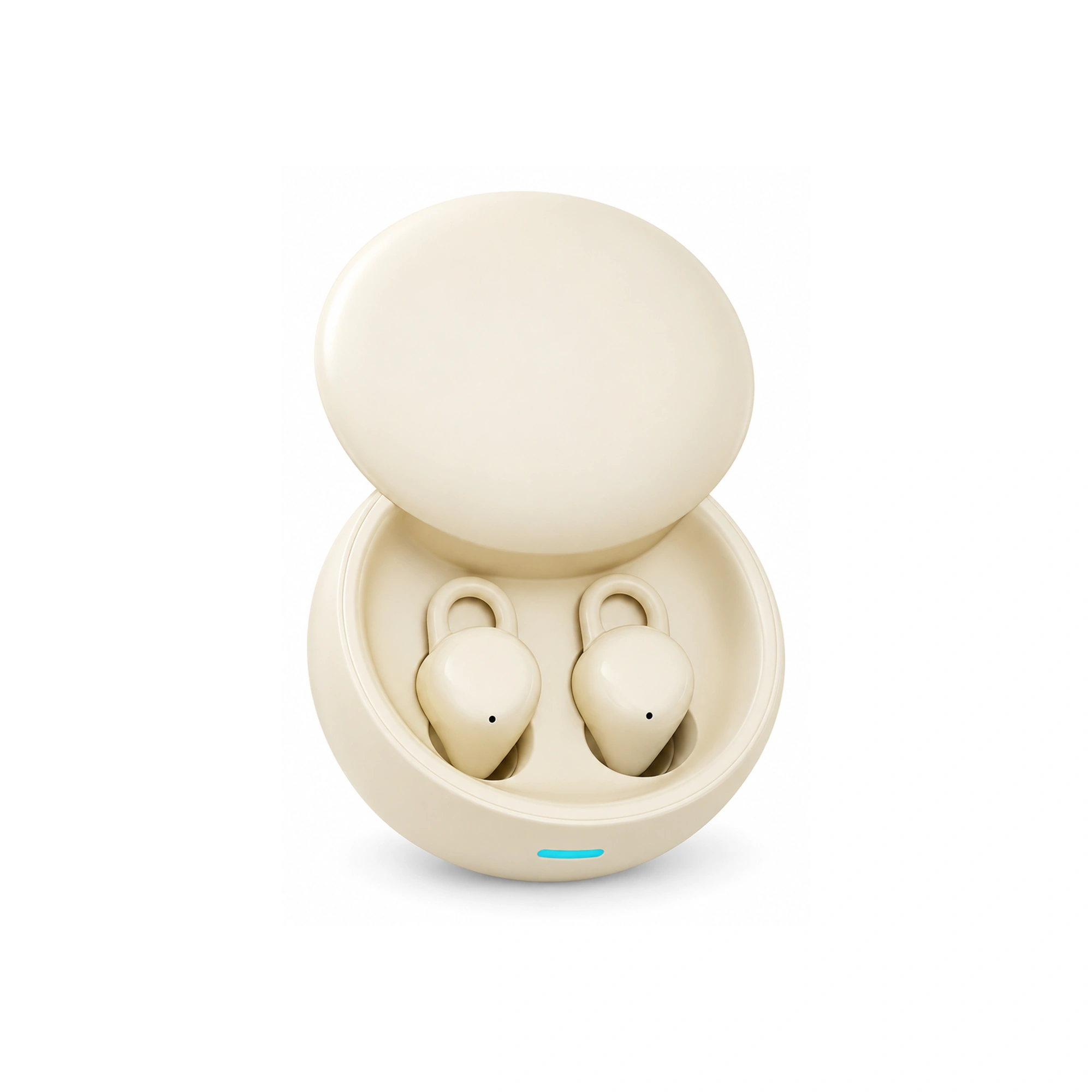
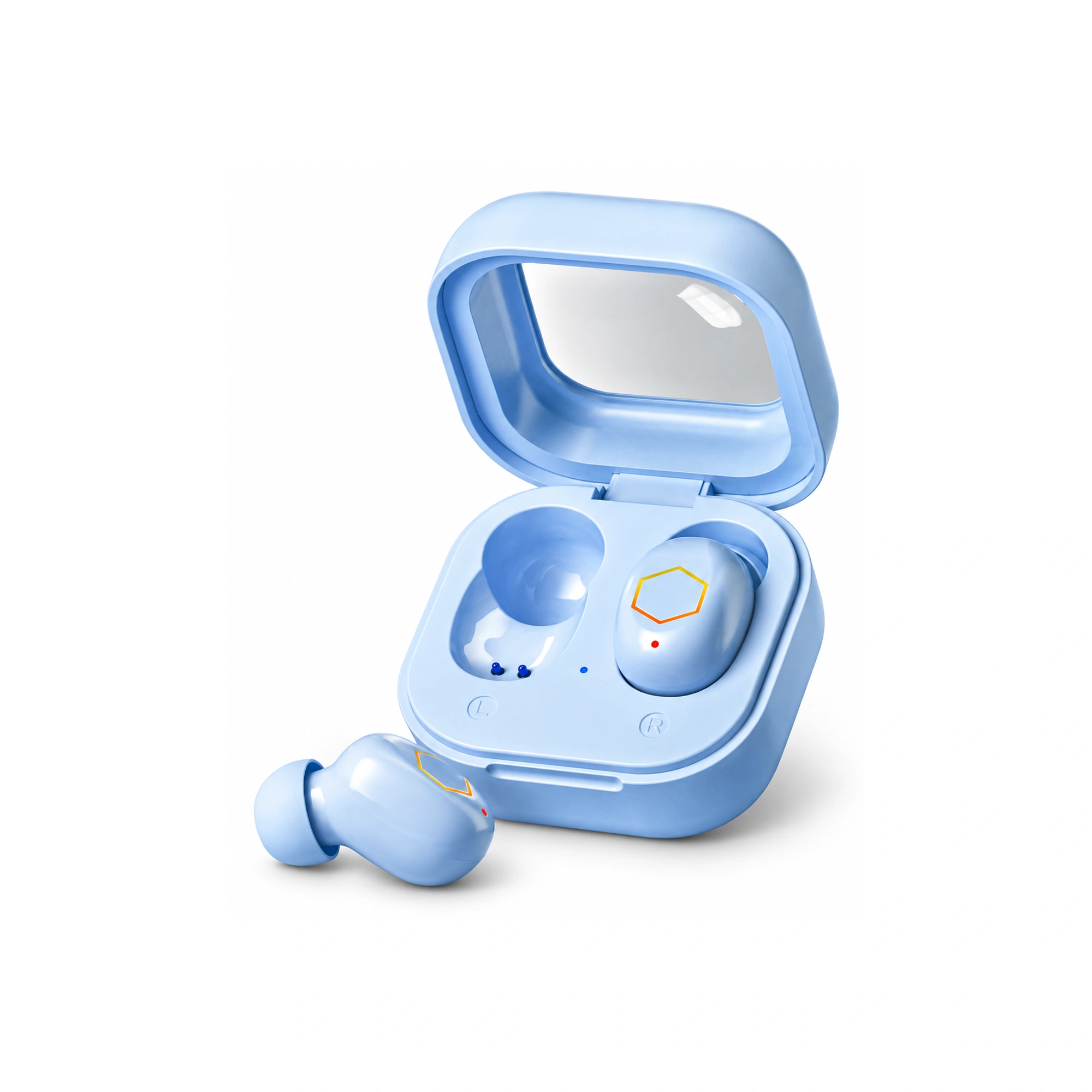
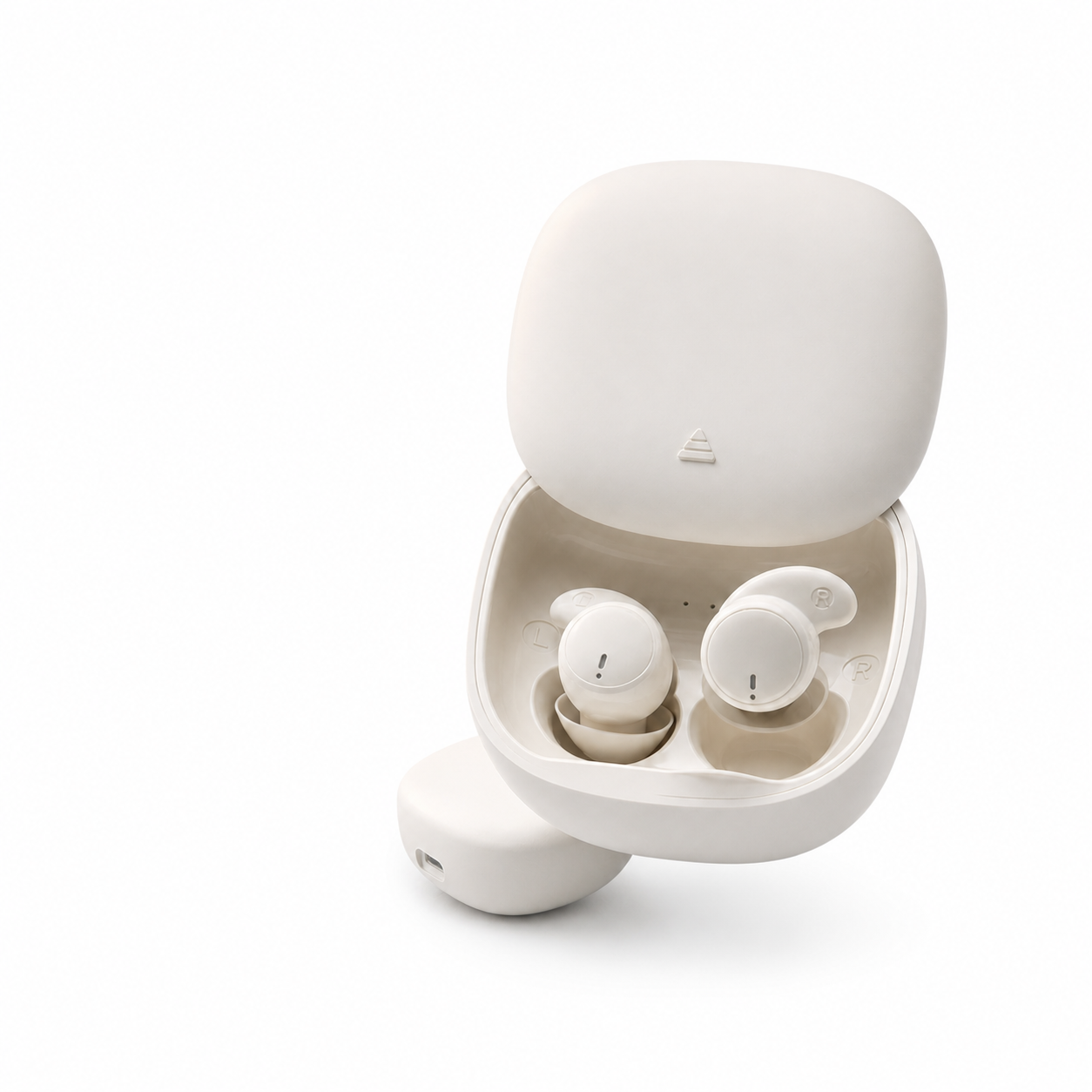
EARSOLE MY-20 Soft Silicone Sleeping Earbuds for Side Sleepers uses a compact low-profile form with soft silicone contact surfaces and passive sleep-friendly noise reduction. It is available in three colors and does not claim ANC. A close fit may reduce the urge to raise volume, but no product shape substitutes for setting a quiet level and limiting duration.
The product link is included as a fit example, not proof that one design works for every ear or situation. Match the physical design and documented specifications to the decision rules above.
Frequently asked questions
Is the 60/60 rule enough for sleep?
It is a memorable ceiling, not a bedtime target. Overnight duration can exceed 60 minutes, and slider percentages do not equal a fixed decibel level. Set the quietest useful level and use a timer.
Should masking sound be louder than snoring?
No. The goal is to reduce contrast and attention, not acoustically bury every peak. If masking needs to be loud, combine room-level changes or choose another approach.
What if the track has loud ads?
Use downloaded, ad-free, volume-consistent audio. A quiet base level does not protect you from sudden inserts mastered much louder than the track.
Bottom line
A good bedtime volume plan is quiet, time-limited, and boringly repeatable. Set it in the quiet room, lower it once, use consistent audio, and let morning ear symptoms—not a phone percentage—decide whether to repeat.
Sources and review notes
- World Health Organization safe-listening guidance
- Cleveland Clinic guidance on sleeping with earbuds
- NHS ear-infection symptoms and escalation guidance
Written and reviewed by the EARSOLE Editorial Team on July 14, 2026. This is educational buying and troubleshooting guidance, not medical advice. Stop using earbuds and seek qualified care for persistent pain, discharge, sudden hearing change, severe dizziness, or other concerning symptoms.