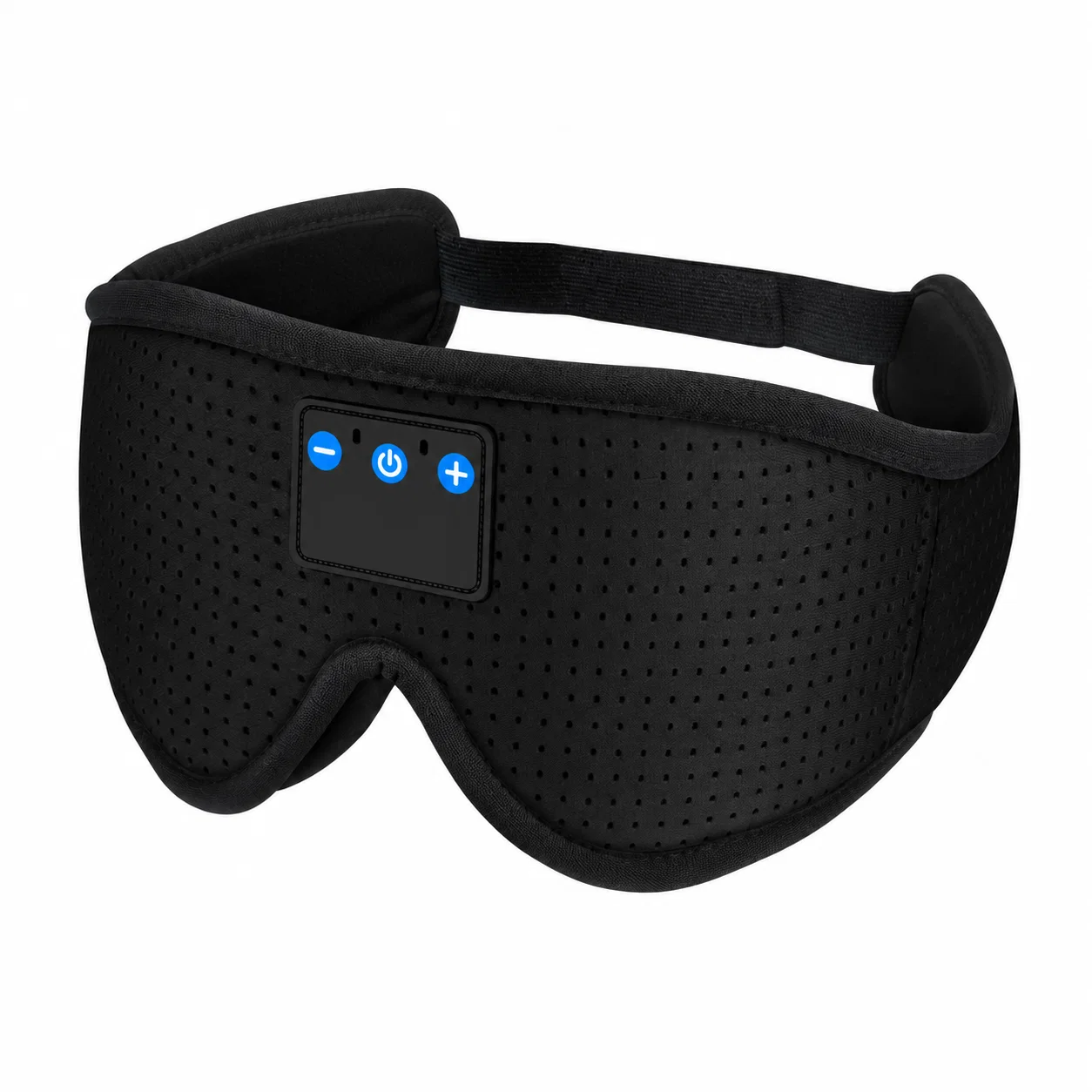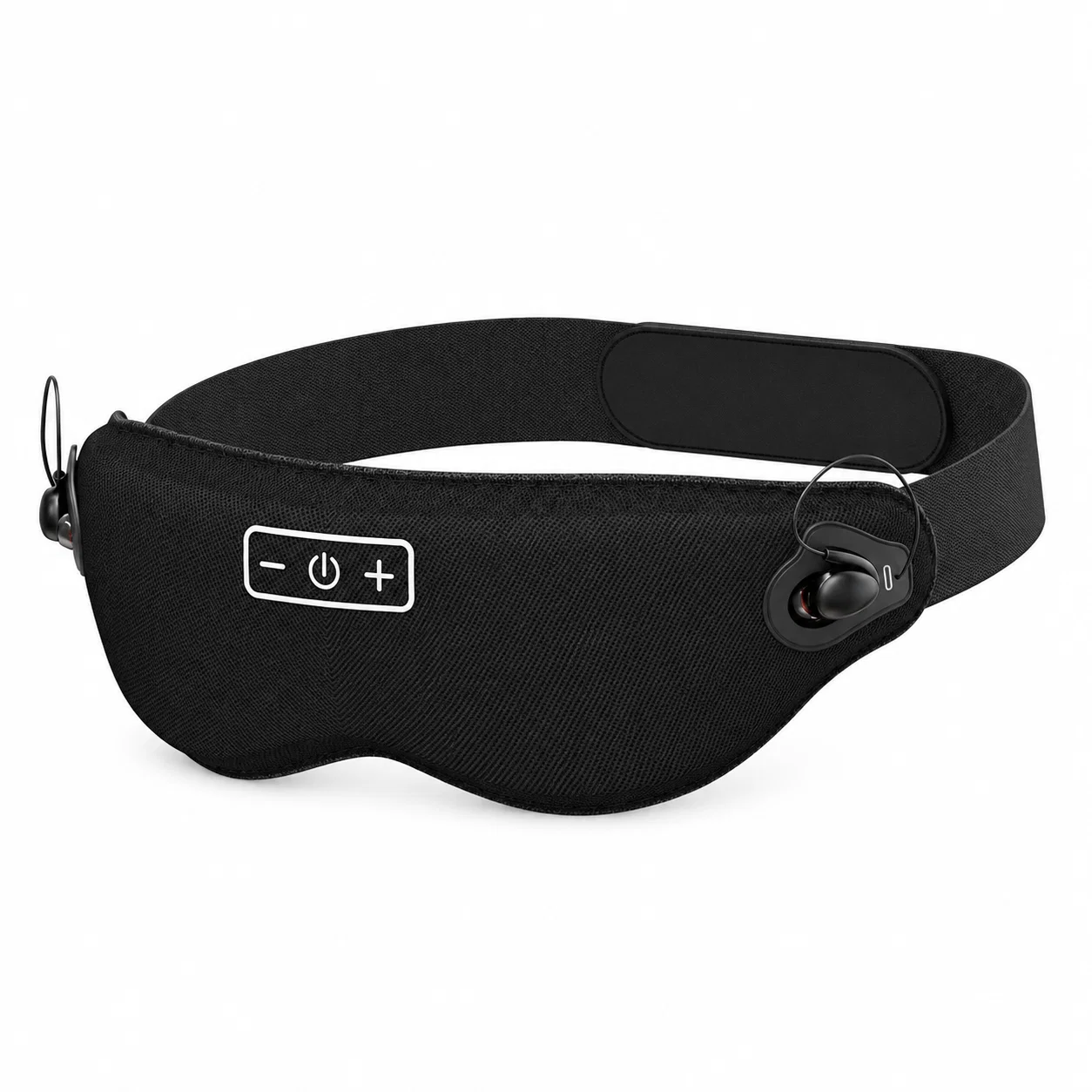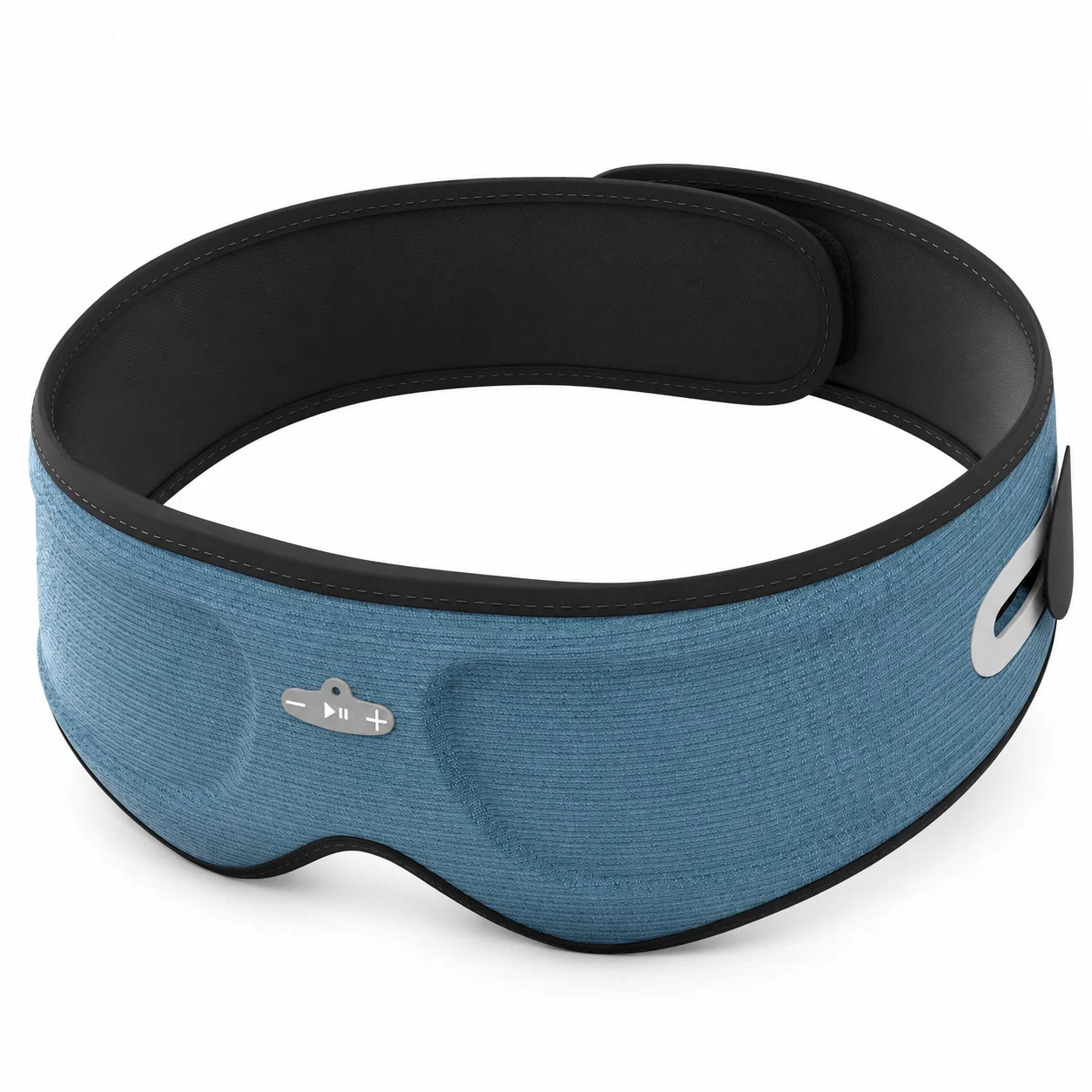


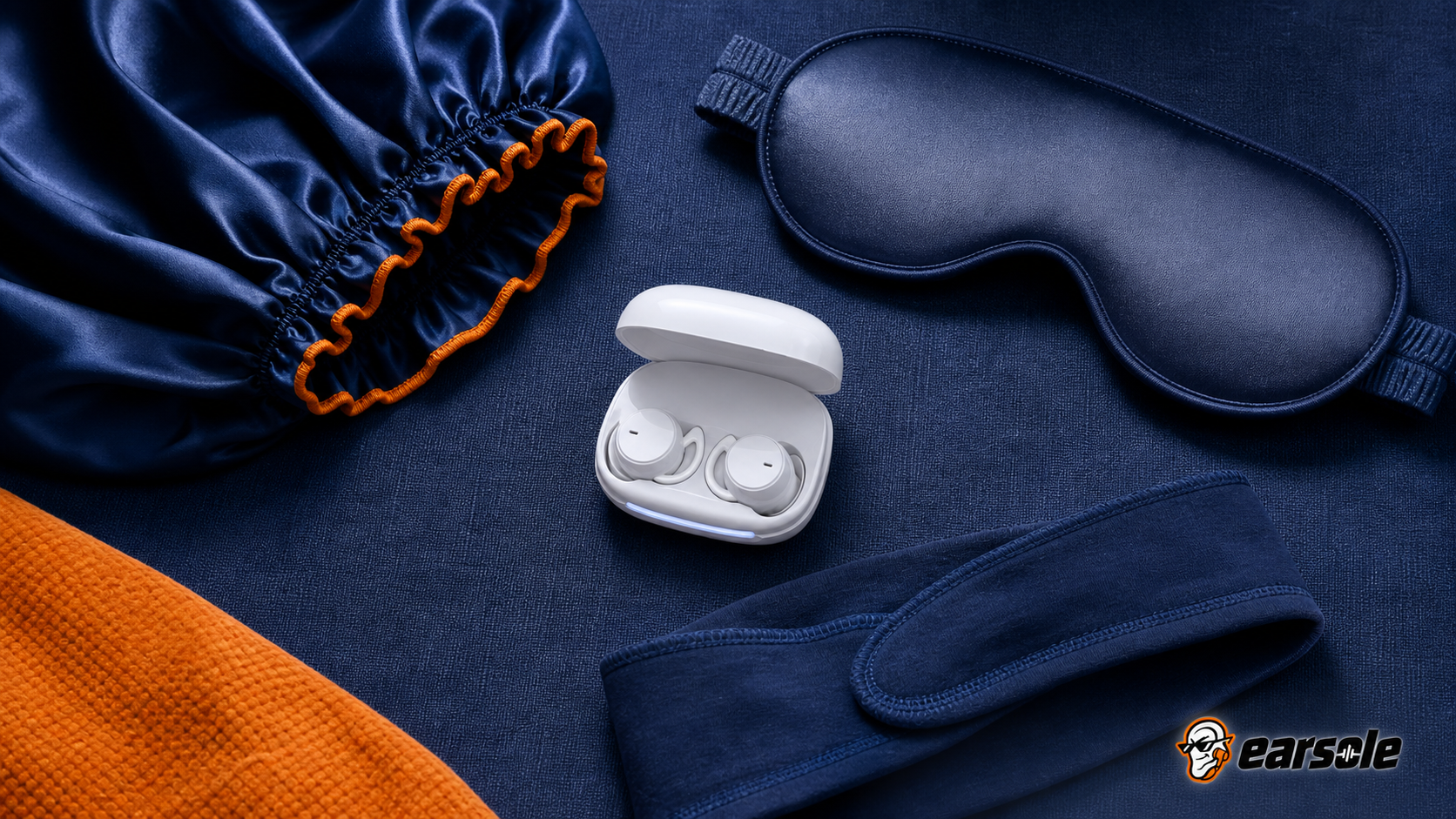
Comfortable earbuds for sleeping can become uncomfortable under a bonnet, eye mask, or headband because fabric adds inward pressure, shear, heat, and movement. Fit the earbuds first, route seams away from the ear, keep the covering loose, and test your actual pillow position for five minutes before using audio overnight.
This guide covers comfortable earbuds for sleeping alongside earbuds under a sleep bonnet.
Quick answer
| Covering | Common interaction | Fit response |
|---|---|---|
| Bonnet | Elastic edge or fabric tension crosses the ear | Place edge above or behind the ear without pulling the shell |
| Eye mask | Side strap sits over outer ear hardware | Use a strap path that clears the earbud |
| Sleep headband | Broad compression holds device inward | Use only if designed to house flat speakers, or keep tension minimal |
| Pillow | Compression multiplies every other force | Test in the exact side position |
Map the four forces before lights-out
The earbud fit you judge while standing is not the fit you experience beneath fabric on a pillow. Look for four forces: downward tension from elastic, inward pressure from compression, shear as fabric slides, and heat/moisture from reduced ventilation. A setup can pass one force and fail another after you turn your head.
- Downward tension: the covering drags the earbud toward the earlobe.
- Inward pressure: a strap or headband pushes the shell toward the canal.
- Shear: fabric catches an ear wing or decorative surface and rotates it.
- Heat: occlusion and fabric reduce evaporation around the outer ear.
Run the five-minute dressed-bed test
Insert the earbuds without audio, put on the exact bonnet or mask, and lie on your usual pillow. Turn left, back, and right; then stay on the preferred side for five minutes. Any growing hot spot, pulse-like pressure, or urge to reposition is a failure. Fix the seam path or tension before adding sound.
- Check that elastic and seams do not cross the earbud shell.
- Confirm the covering does not pull an ear wing out of its natural curve.
- Slide one finger under the edge near the ear; it should not feel like a tight strap.
- Remove the setup and inspect for redness that persists beyond a brief pressure mark.
Account for heat, hygiene, and environmental alerts
Cleveland Clinic notes that moisture, prolonged pressure, and reduced awareness can matter with overnight earbuds. A fabric layer can amplify each issue. Start with clean, dry earbuds and dry skin; avoid putting them in immediately after a shower; wash the covering regularly; and preserve another route for alarms. The WHO also recommends controlling level and duration rather than using fit comfort as permission for louder or longer playback.
Stop when the sensation changes category
“I can feel it” is not the same as pain, burning, sharp pressure, muffled hearing, drainage, or dizziness. Remove the device if symptoms escalate. The NHS lists pain, discharge, fullness, itching, and hearing difficulty among ear-infection symptoms and advises medical assessment when symptoms are concerning or persist. Do not tighten headwear to keep a problematic earbud in place.
Where an EARSOLE model fits
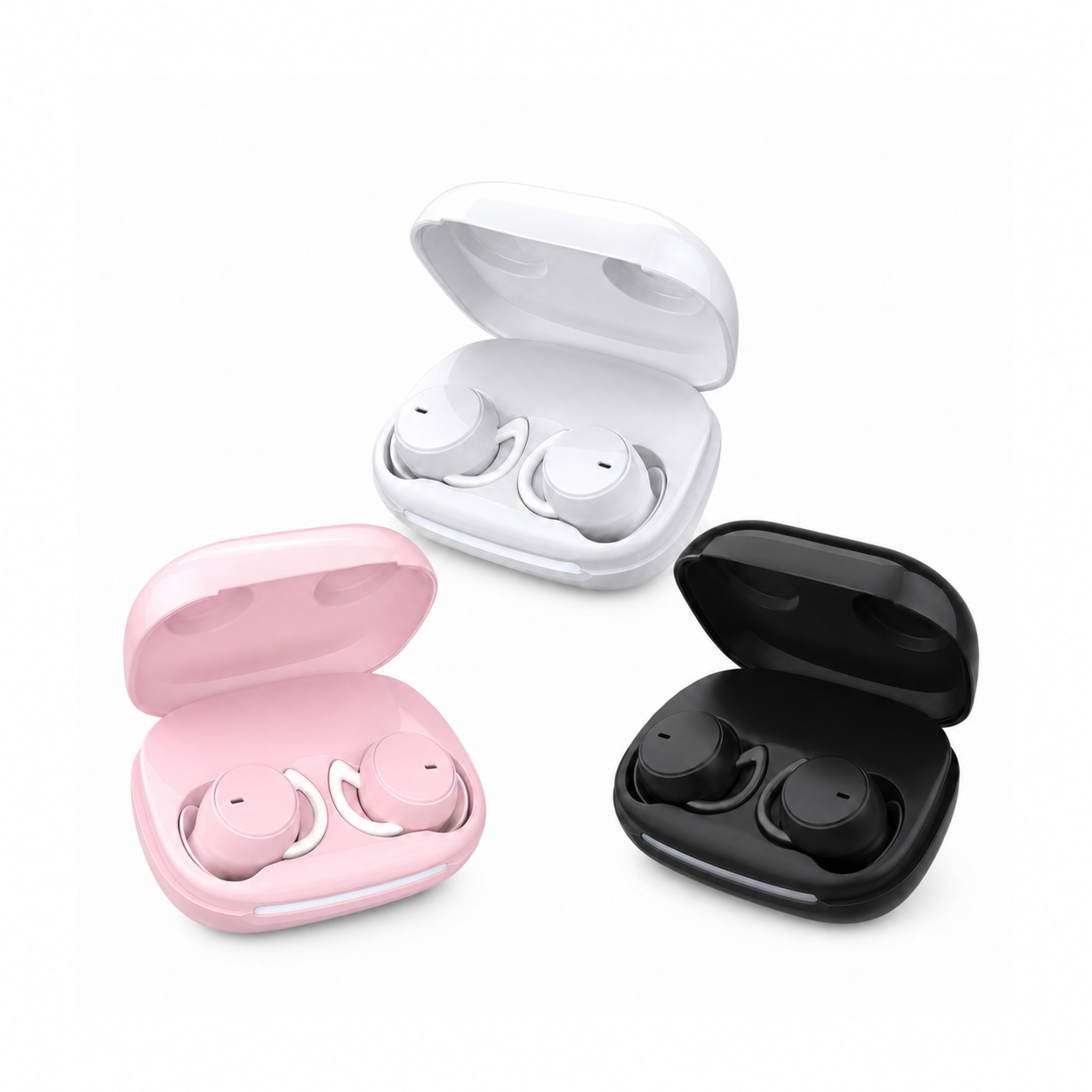
EARSOLE 2.4g Mini Sleeping Earbuds for Side Sleepers is documented at 2.4g per earbud and uses a tiny stemless body with a curved stabilizing ear wing. It offers passive noise reduction, three colors, and no ANC claim. Its wing may improve stability for some ears, but fabric can also catch that feature; the dressed-bed test remains essential.
The product link is included as a fit example, not proof that one design works for every ear or situation. Match the physical design and documented specifications to the decision rules above.
Frequently asked questions
Can a bonnet hold earbuds in place?
It can, but “held” may mean unwanted inward pressure. The bonnet should not be the retention system. The earbuds need a stable fit before the fabric is added.
Is a sleep headband always safer than earbuds?
A headband with flat speakers avoids an in-canal tip, but tight fabric can still create heat and outer-ear pressure. Compare the actual setup rather than the product category name.
Should I wear earbuds after washing my hair?
Wait until the ears, hair around them, and devices are dry. Trapping moisture under a bonnet and around an earbud is a poor overnight combination.
Bottom line
Headwear changes the mechanical system. Treat the bonnet, mask, headband, pillow, and earbud as one fit—not separate accessories. A seam-free, low-tension, five-minute pass is the minimum before quiet, timed playback.
Sources and review notes
- Cleveland Clinic guidance on sleeping with earbuds
- World Health Organization safe-listening guidance
- NHS ear-infection symptoms and escalation guidance
Written and reviewed by the EARSOLE Editorial Team on July 14, 2026. This is educational buying and troubleshooting guidance, not medical advice. Stop using earbuds and seek qualified care for persistent pain, discharge, sudden hearing change, severe dizziness, or other concerning symptoms.