

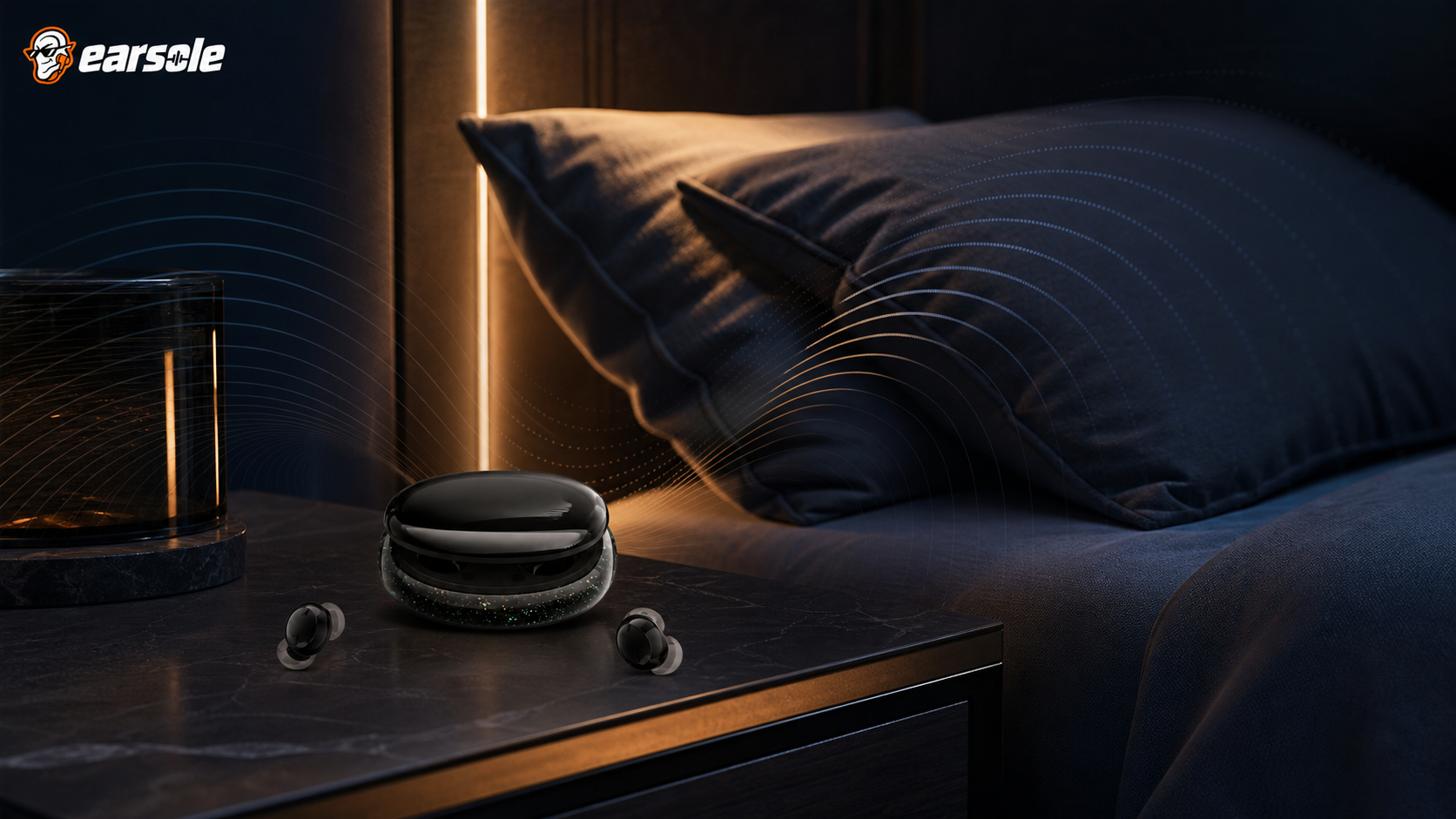
The search for earbuds for snoring partner relief should start with one distinction: earbuds may mask or reduce the sound, but they do not treat the snoring. Try room and sleep-position changes, then choose quiet masking, passive isolation, or ANC by sound character. Repeated pauses, gasping, or major daytime sleepiness deserve medical attention.
This guide covers earbuds for snoring partner alongside how to block out partner snoring.
Quick answer
| Problem | Best first experiment |
|---|---|
| Irregular snorts and sharp peaks | Steady low-volume masking sound |
| Broad bedroom noise plus snoring | Room changes plus a comfortable passive seal |
| Low, steady rumble | ANC may reduce the low-frequency part, if awareness remains adequate |
| Gasping or breathing pauses | Discuss symptoms with a healthcare professional; earbuds are not treatment |
Use the Three-Layer Snore Plan
Work from the source outward. Layer one is the sleeper who snores: position, nasal congestion, alcohol timing, and possible clinical evaluation belong here. Layer two is the room: distance, soft furnishings, door position, or a bedside sound source. Layer three is the listener: earplugs, sleep headphones, or earbuds. Starting at layer three alone can push you toward excessive volume without solving the underlying problem.
| Layer | Action | Why it matters |
|---|---|---|
| Source | Talk about patterns; note pauses, choking, or gasping | Frequent loud snoring and breathing interruptions are listed by NHLBI among sleep-apnea symptoms. |
| Room | Increase distance or add steady sound near the listener | Reduces the level the ear-worn device must overcome. |
| Listener | Use the least intrusive comfortable option | Pressure and volume matter when a device stays in place for hours. |
Masking, isolation, and ANC do different jobs
Masking adds a steady sound so the brain notices snore peaks less. Passive isolation uses the physical fit to reduce outside sound. ANC samples outside noise and creates an opposing signal; it is generally better with steady low-frequency sound than unpredictable higher-frequency events. None guarantees silence, and a stronger seal or stronger cancellation can also reduce awareness of alarms and emergencies.
- Choose masking when sudden changes wake you and a soft continuous sound is comfortable.
- Choose passive isolation when you prefer no electronic processing and can tolerate an in-ear seal.
- Consider ANC for a stable low rumble, not as a treatment for the person snoring.
- Choose an external speaker if in-ear pressure, hygiene, or environmental awareness is the bigger concern.
Keep the masking level below the snore battle
Do not try to “win” by turning audio up until it overpowers every peak. The WHO emphasizes that hearing risk depends on both sound level and exposure time; overnight duration makes restraint especially important. Use the lowest level that makes snoring less attention-grabbing, set a timer if practical, and reduce the source or room level before raising earbud volume.
Know when the snoring needs a different conversation
NHLBI lists frequent loud snoring, breathing that starts and stops, and gasping among sleep-apnea symptoms. Daytime sleepiness, morning headache, or repeated nighttime waking can add context. This does not let a partner diagnose sleep apnea, but it is a reason to discuss the pattern with a healthcare professional instead of treating the noise only. For the listener, Cleveland Clinic advises stopping nighttime earbud use if pain, hearing changes, or infection signs develop.
Where an EARSOLE model fits
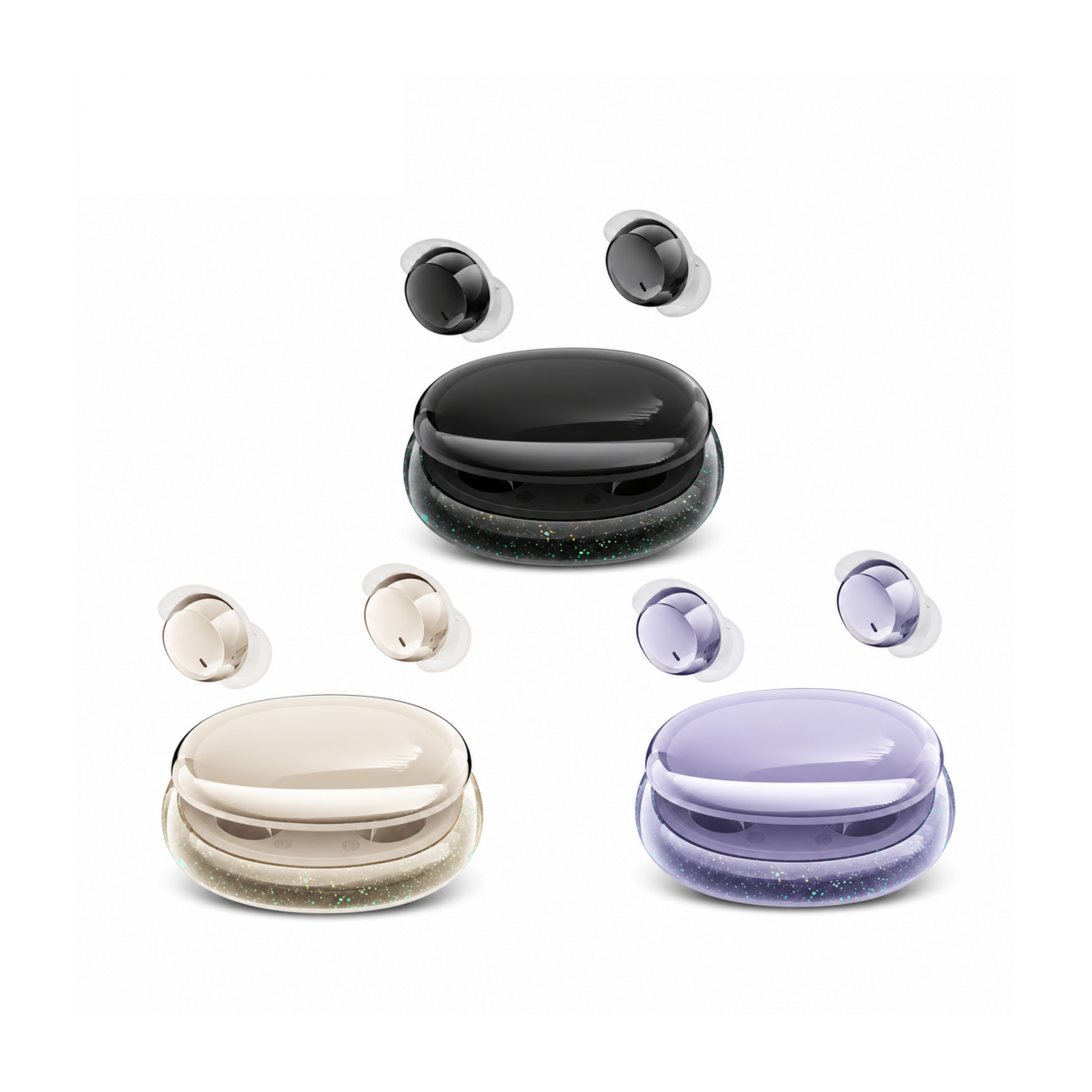
EARSOLE Low-Profile Sleeping Earbuds for Side Sleepers uses a compact stemless form, passive noise reduction, a starlight-effect case, three color choices, and up to 20 hours total playtime with the case. It does not claim ANC. That makes it a candidate for quiet masking audio and a low-profile fit, not a promise to eliminate snoring.
The product link is included as a fit example, not proof that one design works for every ear or situation. Match the physical design and documented specifications to the decision rules above.
Frequently asked questions
Are noise-canceling earbuds always best for snoring?
No. ANC is most useful for steady lower-frequency noise, while snoring often changes in level and pitch. Comfort, alarm awareness, and the ability to keep volume low may matter more overnight.
What sound should I play?
Choose a neutral sound you can keep quiet and ignore. A fan-like broadband sound, gentle rain, or a familiar low-detail track may be easier than speech or music that keeps your attention.
Can earbuds cure a partner’s snoring?
No. They change what the listener hears. They do not diagnose or treat airway obstruction, congestion, sleep apnea, or any other cause of snoring.
Bottom line
The most sustainable answer combines source, room, and listener changes. If an ear-worn device is part of the plan, prioritize a low-pressure fit, quiet masking, a timer, and a backup route for alarms—not maximum isolation at any cost.
Sources and review notes
- NHLBI sleep-apnea symptom guidance
- Cleveland Clinic guidance on sleeping with earbuds
- World Health Organization safe-listening guidance
Written and reviewed by the EARSOLE Editorial Team on July 14, 2026. This is educational buying and troubleshooting guidance, not medical advice. Stop using earbuds and seek qualified care for persistent pain, discharge, sudden hearing change, severe dizziness, or other concerning symptoms.