

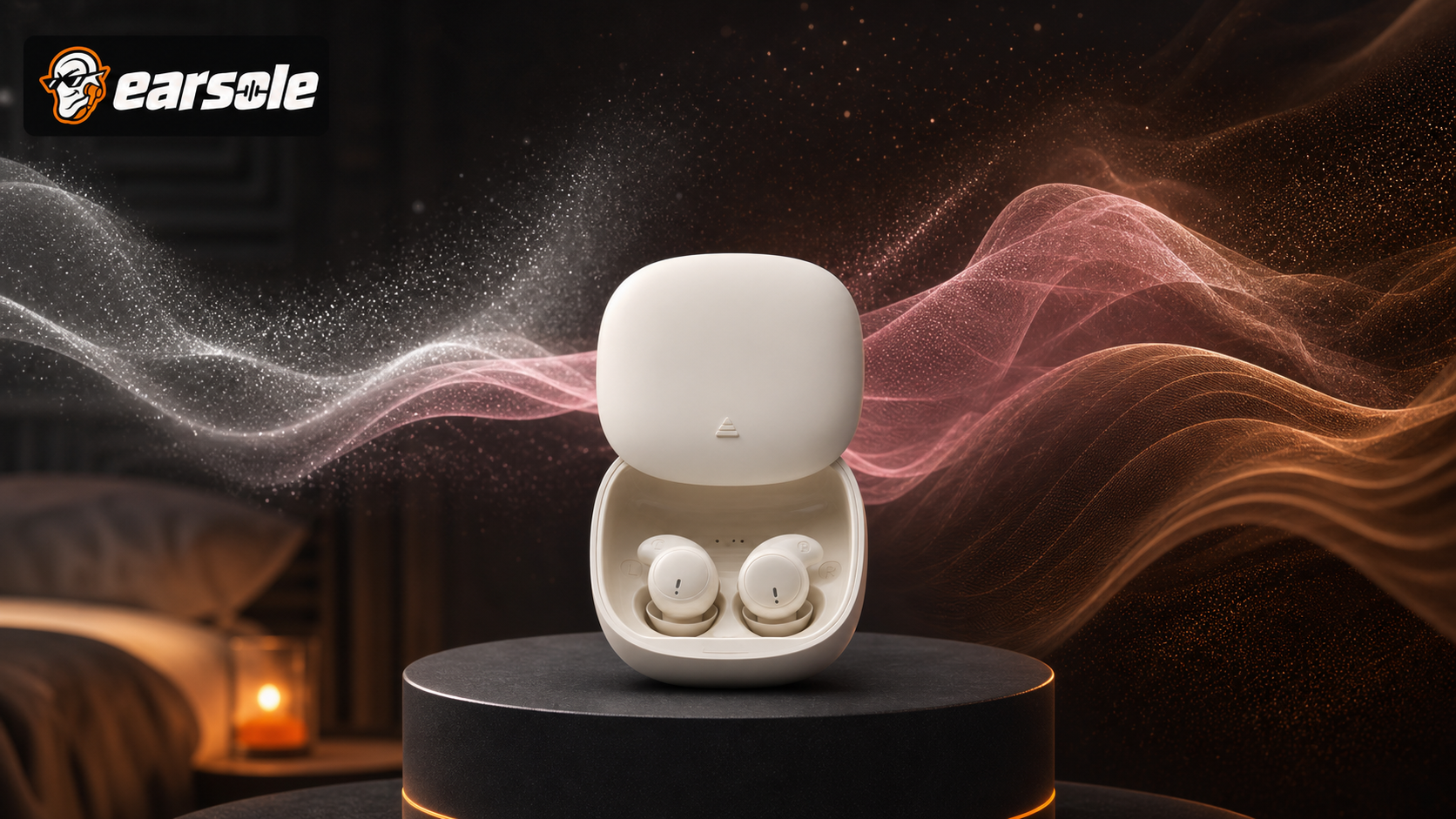
White noise earbuds can make variable bedroom sounds less noticeable, but no color is universally healthiest or best for sleep. White noise emphasizes more high-frequency energy, pink sounds softer, and brown sounds deeper. Evidence is mixed, so choose by comfort, keep the level low, and compare options with a short controlled trial.
This guide covers white noise earbuds alongside white pink brown noise.
Quick answer
| Sound | Perceived character | Useful starting point |
|---|---|---|
| White | Bright, hiss-like, broad | Masking speech-like or higher-frequency detail |
| Pink | Softer and more balanced | People who find white noise sharp |
| Brown | Deep, rumbling | People who prefer low-frequency texture |
| Silence or earplugs | No added audio | A necessary comparison night |
The color describes the spectrum, not a medical effect
“Color” is an engineering shorthand for how energy is distributed across frequencies. It does not tell you how loud a track is, whether it loops cleanly, whether your earbuds reproduce deep bass, or whether it improves your sleep. Two apps labeled brown noise can also be mastered at very different levels. Compare at a similarly quiet perceived loudness rather than using the same volume-slider number.
What sleep research actually supports
A systematic review of white and pink auditory stimulation found many positive findings but substantial differences in study design and risk of bias; it also noted that very few studies directly compared colors. Another systematic review of continuous noise concluded that evidence quality was very low and called for more objective, well-described research. That supports a modest claim: steady sound may help some people mask disruption, but color labels do not guarantee better sleep.
| Claim | Evidence-safe wording |
|---|---|
| “Pink noise improves deep sleep” | Some studies report benefits; results and methods are not consistent enough for a universal promise. |
| “Brown noise is healthiest” | There is not enough comparative evidence to rank it as healthiest. |
| “White noise blocks sound” | It masks competing sound; it does not physically block it. |
Run a seven-night, one-variable trial
Keep bedtime, device, track length, timer, and approximate loudness as stable as possible. Change only the sound condition.
- Night 1: no added sound, to establish a baseline.
- Nights 2–3: white noise at the lowest useful level.
- Nights 4–5: pink noise at a matched quiet loudness.
- Nights 6–7: brown noise at a matched quiet loudness.
- Each morning, record sleep-onset estimate, memorable wake-ups, comfort, ear pressure, and whether you removed the earbuds.
Treat volume and duration as the safety controls
The WHO safe-listening framework links risk to both level and time. Overnight listening is long, so there is no reason to run a track louder than needed for masking. Cleveland Clinic also recommends low volume, a timer, clean earbuds, and awareness of alarms and emergencies in its sleeping-with-earbuds guidance. If the sound itself becomes the dominant stimulus, lower it before changing colors.
Where an EARSOLE model fits
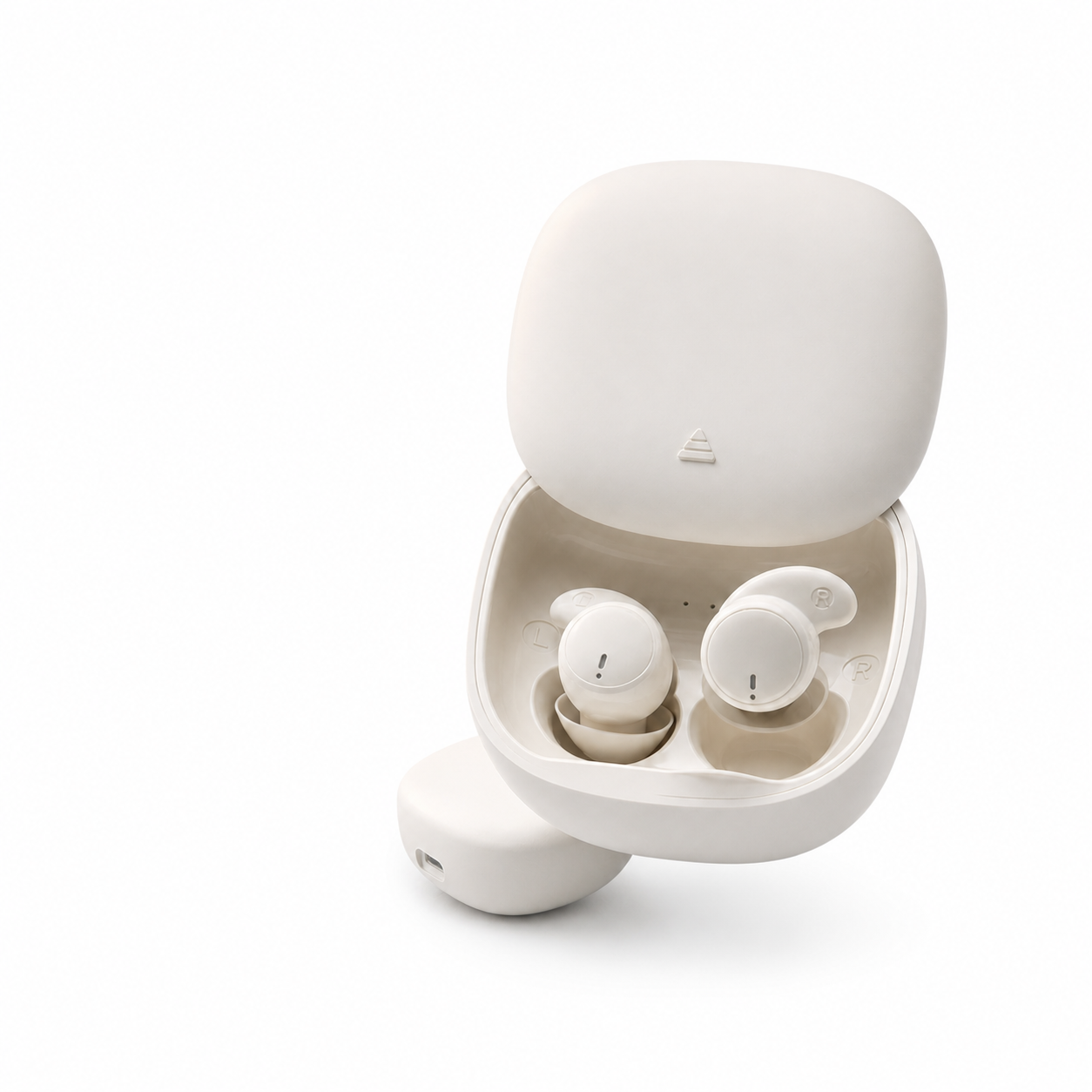
EARSOLE MY-20 Soft Silicone Sleeping Earbuds for Side Sleepers has a compact low-profile in-ear shape with soft silicone contact surfaces and passive sleep-friendly noise reduction. It is offered in three colors and makes no ANC claim. Use it to play quiet audio if its fit suits your ears; do not interpret “sleeping earbuds” as proof that a particular noise color improves sleep.
The product link is included as a fit example, not proof that one design works for every ear or situation. Match the physical design and documented specifications to the decision rules above.
Frequently asked questions
Is brown noise better than white noise for snoring?
It may feel more pleasant if you prefer lower-frequency sound, but the best masking track is the quietest one that makes the specific snore less attention-grabbing. Personal testing matters more than the color label.
Should the track play all night?
Start with a timer that covers sleep onset. Continuous overnight audio increases exposure time and may be unnecessary if the main problem is falling asleep.
Can I judge sleep quality from one night?
One night is vulnerable to stress, caffeine, room temperature, and chance. A short repeated comparison is more useful, though it is still personal observation rather than a clinical study.
Bottom line
Choose white, pink, or brown noise by the masking task and your comfort—not a health halo. Keep the track quiet, compare it with silence, and retain only the option that helps without creating pressure, irritation, or a harder morning.
Sources and review notes
- Systematic review of auditory stimulation and adult sleep
- Systematic review of continuous noise as a sleep aid
- World Health Organization safe-listening guidance
- Cleveland Clinic guidance on sleeping with earbuds
Written and reviewed by the EARSOLE Editorial Team on July 14, 2026. This is educational buying and troubleshooting guidance, not medical advice. Stop using earbuds and seek qualified care for persistent pain, discharge, sudden hearing change, severe dizziness, or other concerning symptoms.