

The best earbuds for side sleepers are only half the bedtime equation; the audio should match your goal. Podcasts and audiobooks can occupy a busy mind but may delay sleep if the story is compelling. Neutral masking sound asks less attention. Use a low-profile fit, quiet playback, a timer, and familiar content.
This guide covers earbuds for side sleepers alongside side sleeper audio.
Quick answer
| Goal | Audio starting point | Main risk |
|---|---|---|
| Settle a racing mind | Familiar, low-stakes spoken audio | Following the plot too long |
| Mask traffic or a partner | Steady neutral sound | Raising volume to overpower peaks |
| Enjoy a short wind-down | Podcast with a 15–30 minute timer | Autoplay continuing all night |
| Return to sleep after waking | Saved quiet track with no bright screen | Searching for content and becoming alert |
Use the bedtime Attention Ladder
Content sits on a ladder from cognitively active to nearly neutral. A new mystery audiobook is high on the ladder; a familiar essay is lower; rain or steady colored noise is lower still. Move down one step when you notice yourself waiting for the next fact, joke, or chapter. The goal is not to find the most entertaining content—it is to find content that becomes easy to ignore.
| Level | Example | When to use it |
|---|---|---|
| 3: Engaging | New story or interview | Short wind-down before you intend to sleep |
| 2: Familiar | Reread audiobook or known podcast | Busy thoughts, with a timer |
| 1: Neutral | Rain, fan, or gentle broadband sound | Masking without narrative attention |
| 0: Quiet | No ear-worn audio | When comfort or exposure is the priority |
Check pillow pressure before judging sound
A side sleeper can blame the audio when the real problem is mechanical. Lie on your usual pillow for five minutes with playback paused. Notice whether the earbud shell presses the concha, the tip pushes deeper, or an ear wing folds. Then play at low level. If discomfort exists before sound starts, change the fit, pillow position, or device rather than increasing distraction.
- The earbud should sit flush enough that the pillow does not lever it inward.
- A softer pillow is not automatically better; deep sink can increase side pressure around the ear.
- Left and right ears may need different positioning or tip sizes.
- Do not force an earbud deeper to keep it from moving.
Set the timer around behavior, not a magic number
Start with 15–30 minutes if the goal is sleep onset. Use a bookmark or sleep timer so a missed chapter does not become morning frustration. Disable autoplay if it pulls in louder episodes. If you repeatedly wake when the sound stops, test a longer fade or switch to a quieter external source rather than immediately playing all night.
Keep long listening quiet and symptom-aware
Cleveland Clinic identifies pressure, moisture, wax, hearing exposure, and reduced awareness as considerations when sleeping with earbuds. The WHO advises managing both level and duration. Evidence for colored noise as a sleep aid remains mixed in a systematic review, so present masking as a personal tool, not a treatment. Stop if you develop persistent soreness, muffled hearing, ringing, discharge, or dizziness.
Where an EARSOLE model fits
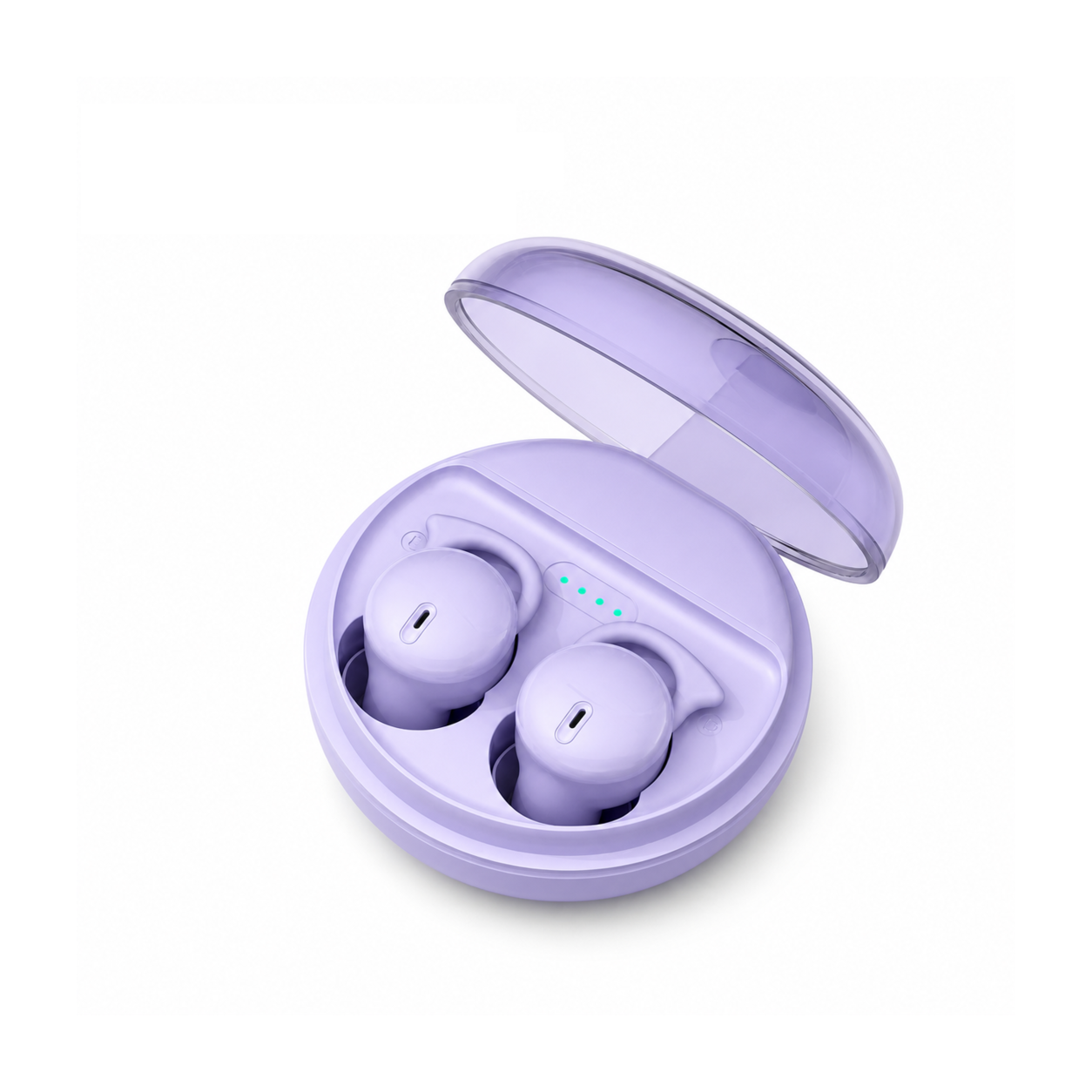
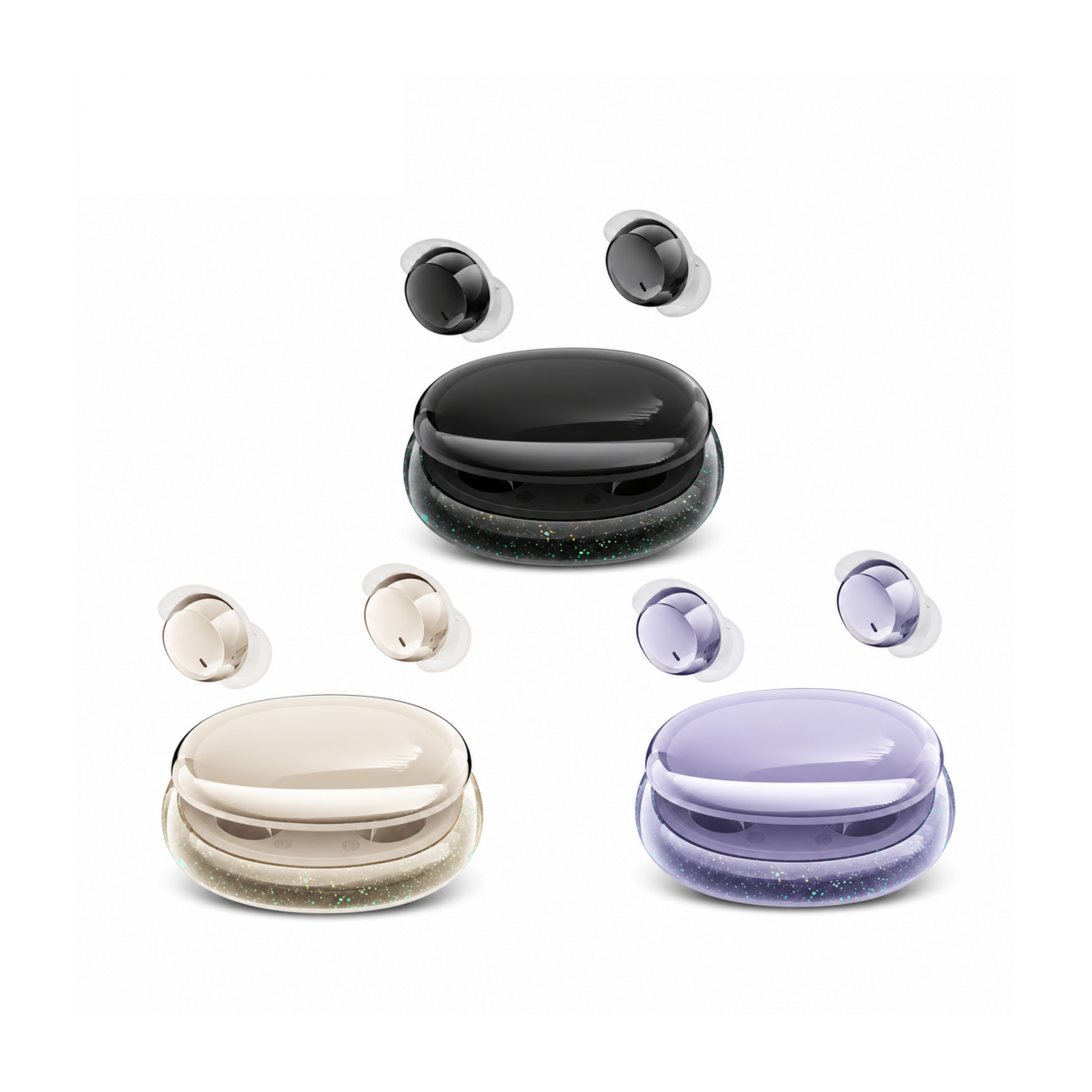
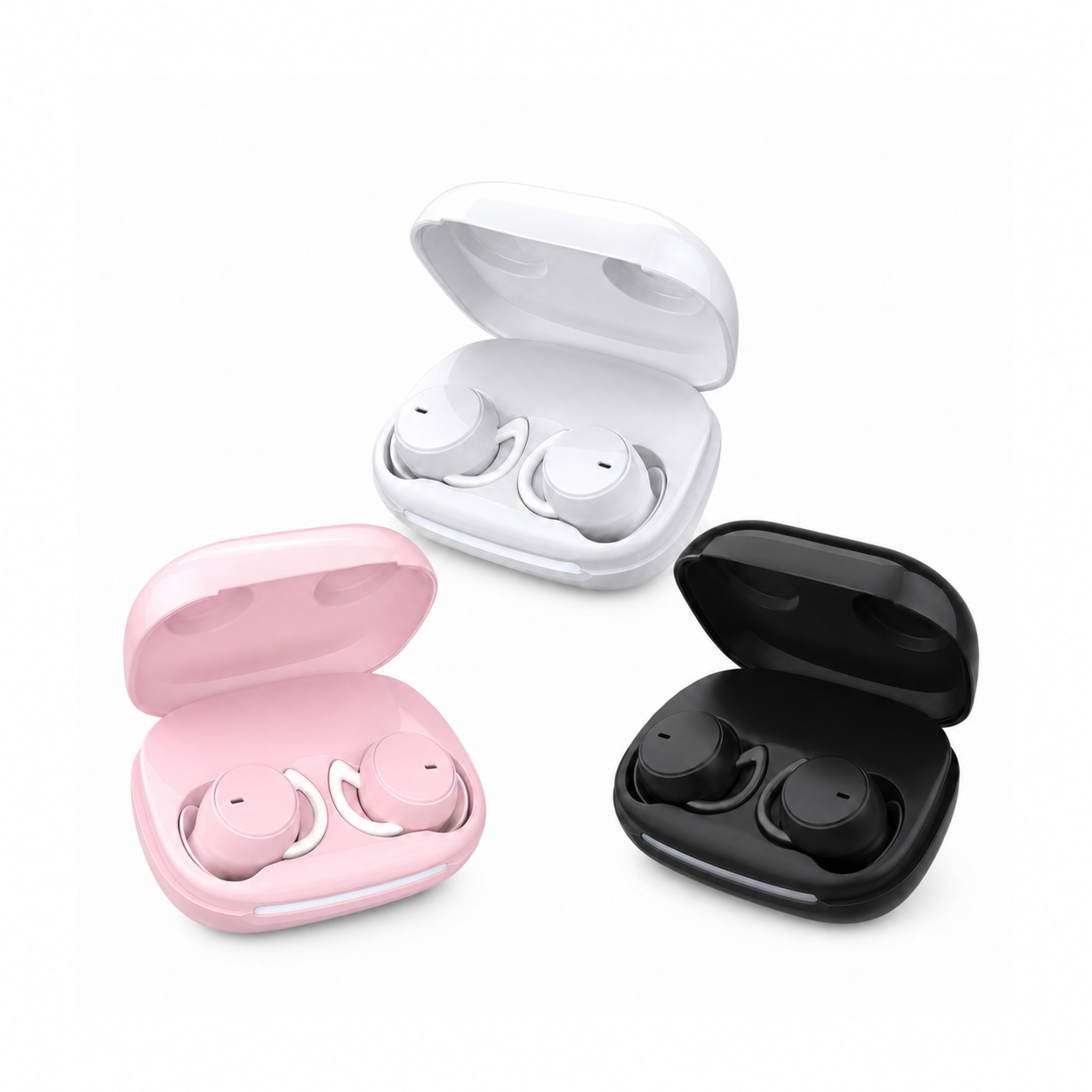
EARSOLE 2.4g Mini Sleeping Earbuds for Side Sleepers is documented at 2.4g per earbud and uses a tiny stemless body with a curved stabilizing ear wing. It provides passive noise reduction, comes in three colors, and does not claim ANC or a medical benefit. The low mass and compact shape are relevant to pillow contact, but individual ear geometry still decides comfort.
The product link is included as a fit example, not proof that one design works for every ear or situation. Match the physical design and documented specifications to the decision rules above.
Frequently asked questions
Are audiobooks bad for sleep?
Not inherently. A familiar, calm book can help some listeners disengage from other thoughts. A suspenseful new story can do the opposite. Use a timer and choose material you will not mind missing.
Which side should I wear one earbud on?
If you choose mono listening, use the upward ear so the pillow does not press on it. Keep the phone in mono-audio mode if the program mixes essential information across left and right channels.
Do lighter earbuds always feel better?
Lower mass can reduce one source of pressure, but shell shape, tip size, pillow sink, ear anatomy, and movement matter too. A five-minute no-audio pressure test is more useful than weight alone.
Bottom line
For side sleeping, choose the least attention-grabbing content that meets the task, then make the hardware disappear mechanically. Familiar audio, low volume, a timer, and a pressure-free fit beat an endless stream of “sleep” content.
Sources and review notes
- Cleveland Clinic guidance on sleeping with earbuds
- World Health Organization safe-listening guidance
- Systematic review of auditory stimulation and adult sleep
Written and reviewed by the EARSOLE Editorial Team on July 14, 2026. This is educational buying and troubleshooting guidance, not medical advice. Stop using earbuds and seek qualified care for persistent pain, discharge, sudden hearing change, severe dizziness, or other concerning symptoms.