

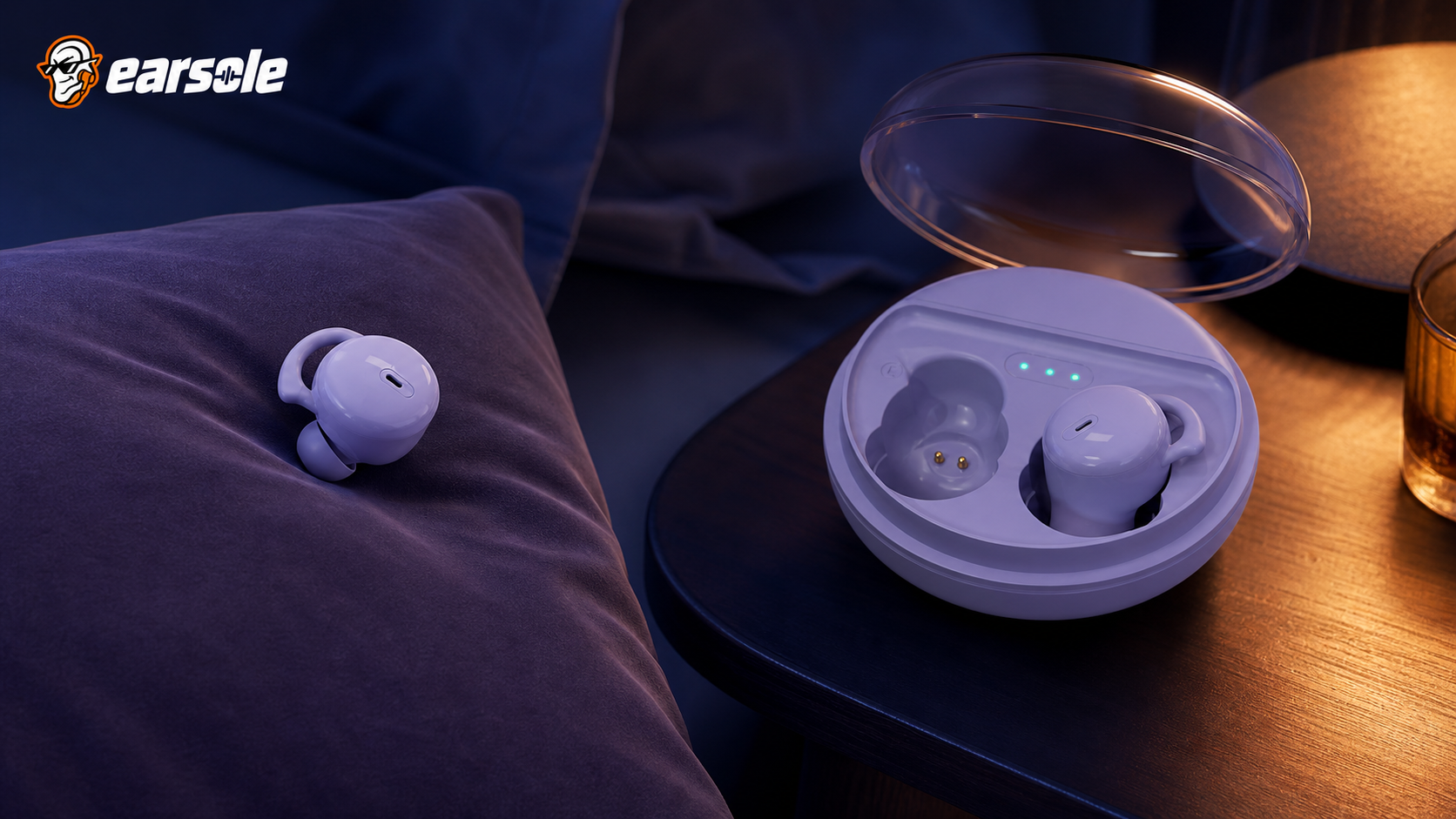
Using one of your wireless earbuds for sleeping can reduce pillow pressure and leave one ear open to the room, but it does not remove volume, hygiene, or irritation risks. Put the earbud in the upward ear, enable mono audio so no channel is lost, keep playback quiet, use a timer, and alternate sides.
This guide covers wireless earbuds for sleeping alongside how to sleep with one earbud.
Quick answer
| Potential benefit | Important limitation |
|---|---|
| No earbud between the lower ear and pillow | The upper ear still carries in-ear pressure and listening exposure |
| One ear remains open | It may not guarantee that every alarm or emergency sound wakes you |
| Lower equipment load | Stereo content may lose dialogue or effects unless mono audio is enabled |
| Easy side switching | Repeatedly using one ear can create asymmetric irritation |
Use the One-Ear Mono Protocol
The protocol solves the most common technical and mechanical mistakes without claiming that one-ear listening is universally safe.
- Place the earbud in the ear facing up, not the ear compressed against the pillow.
- Enable the phone’s mono-audio accessibility setting so left and right program material is combined.
- Set balance to center and test a dialogue-heavy clip to confirm nothing disappears.
- Set a playback timer and keep volume at the lowest intelligible level.
- On the next night, switch sides if both ears tolerate the product equally.
- In the morning, note soreness, fullness, ringing, muffled sound, or skin irritation.
One open ear improves awareness, not certainty
Leaving one ear open can make room sounds more available, but sleep depth, pillow position, the open ear’s orientation, and the alert itself all matter. Test the actual morning alarm. Apple documents its alarm route in the iPhone Clock guide; Google lists Android alarm sound, volume, vibration, notification, Do Not Disturb, and power checks in Android Help. Use a backup if waking is high consequence.
Do not compensate by doubling the loudness
Some people raise one earbud because the experience feels less immersive. That defeats part of the risk-reduction logic. The WHO safe-listening guidance links risk to level and duration; an overnight session is already long. Choose content that remains intelligible at a quiet level, or use a small nearby speaker if mono listening makes you turn up.
Know what one-ear listening cannot fix
It cannot make a poor-fitting tip comfortable, clean a contaminated surface, prevent moisture trapping, or treat tinnitus, insomnia, anxiety, or a partner’s snoring. Cleveland Clinic recommends low volume, limited time, clean devices, and attention to pain or hearing changes. One earbud is a mechanical option, not a medical intervention.
Where an EARSOLE model fits
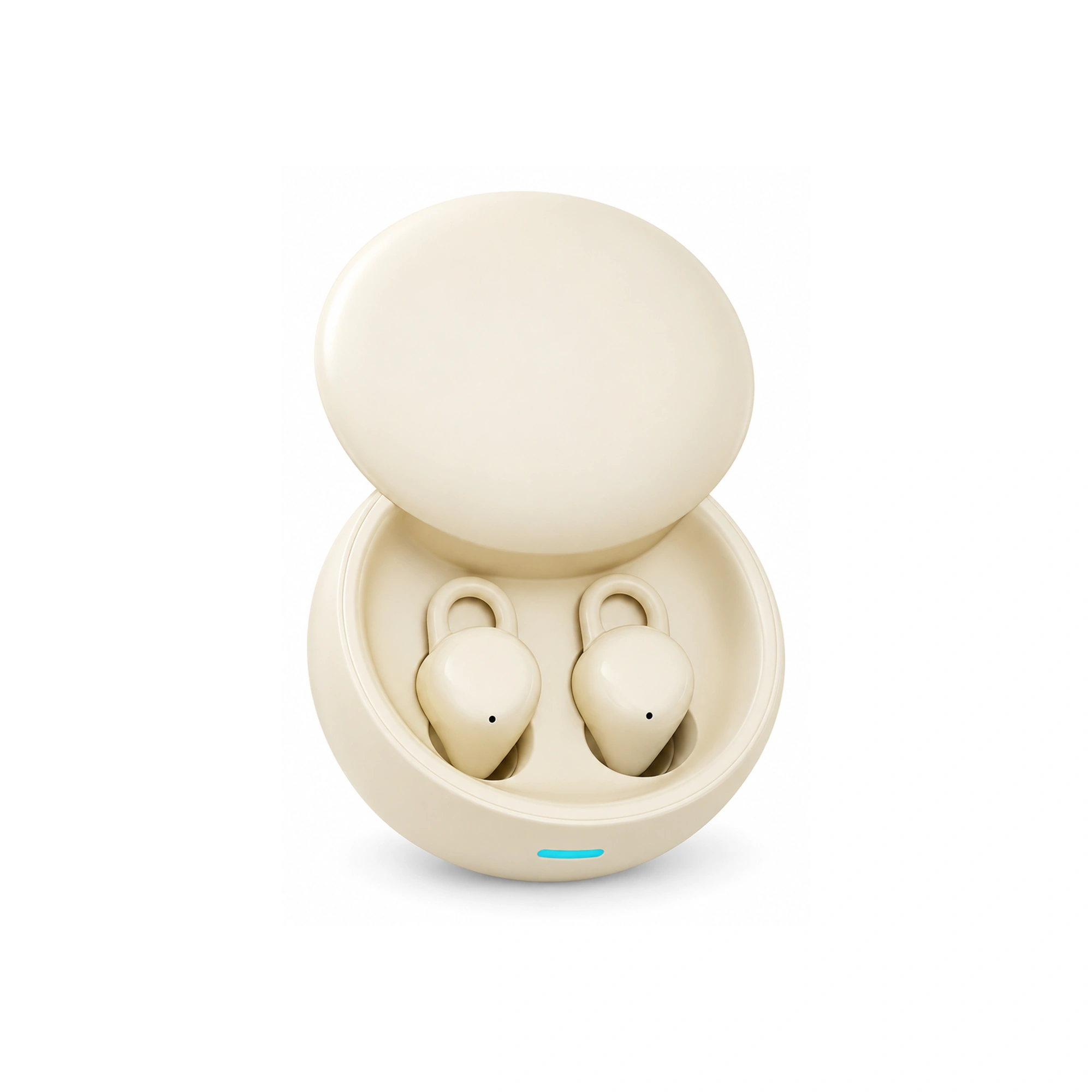
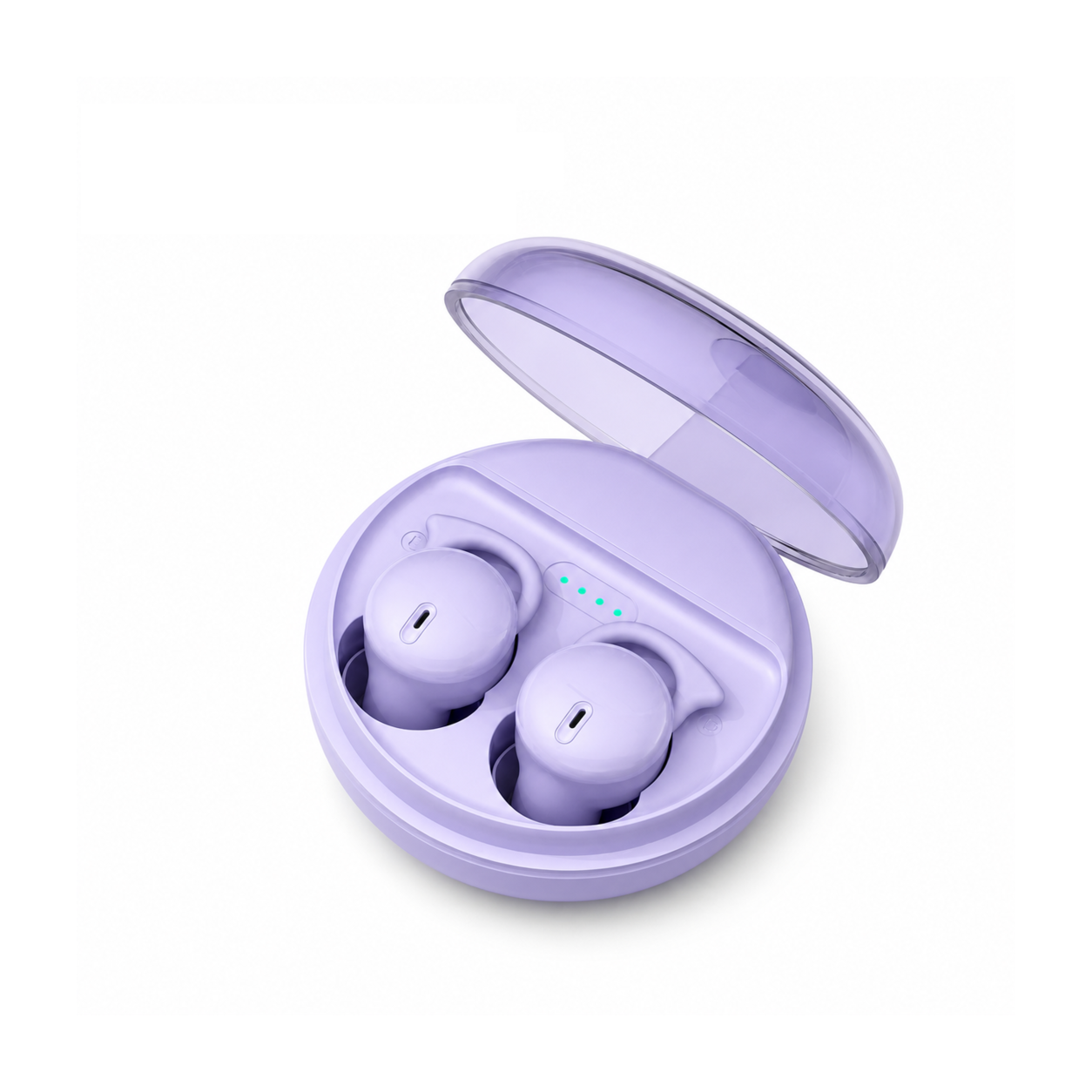
EARSOLE Q26 Bluetooth 5.3 Sleeping Earbuds for Side Sleepers has a compact rounded, stemless silicone design, Bluetooth 5.3, passive sound isolation, five colors, and up to 20 hours total playtime with the case. Those are verified catalog facts. The model does not determine phone mono settings or make overnight use risk-free.
The product link is included as a fit example, not proof that one design works for every ear or situation. Match the physical design and documented specifications to the decision rules above.
Frequently asked questions
Which ear should hold the earbud?
Use the upward ear so the pillow does not force the earbud deeper. If you change sleep sides, remove or move the earbud before settling again.
Will mono audio make music sound worse?
It removes stereo separation by combining channels, but it prevents dialogue or instruments mixed to one side from disappearing. For quiet bedtime listening, completeness may matter more than spatial effect.
Can I use the same ear every night?
Alternating may reduce repeated pressure on one side. If one ear is consistently more comfortable, inspect the other fit rather than forcing symmetry; ear canals commonly differ.
Bottom line
One-ear listening is useful when it genuinely reduces pillow contact and lets you keep volume low. Use the upward ear, mono audio, a timer, side rotation, and a tested alarm route; stop if the remaining ear develops symptoms.
Sources and review notes
- Cleveland Clinic guidance on sleeping with earbuds
- World Health Organization safe-listening guidance
- Apple iPhone Clock alarm guidance
- Google Android alarm guidance
Written and reviewed by the EARSOLE Editorial Team on July 14, 2026. This is educational buying and troubleshooting guidance, not medical advice. Stop using earbuds and seek qualified care for persistent pain, discharge, sudden hearing change, severe dizziness, or other concerning symptoms.