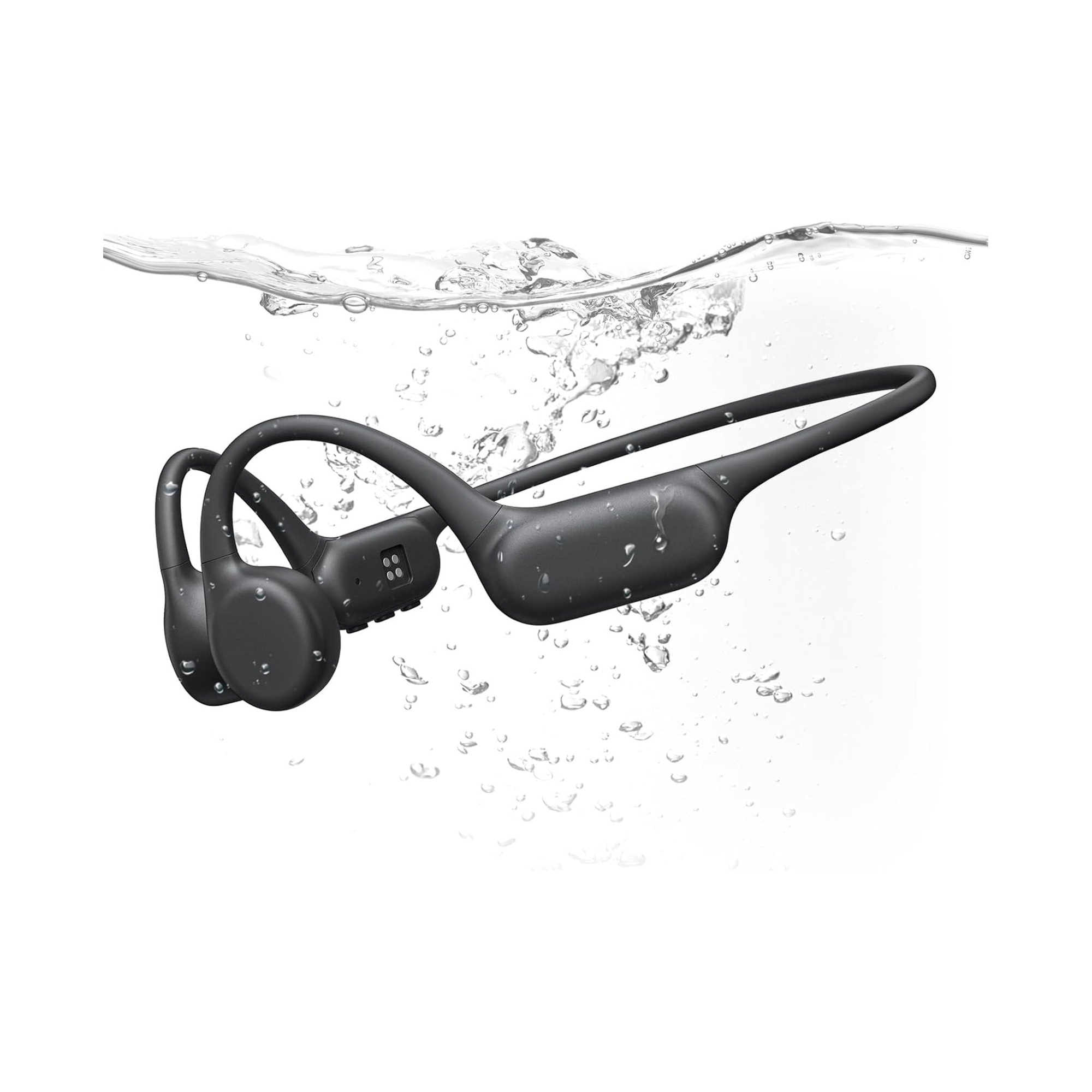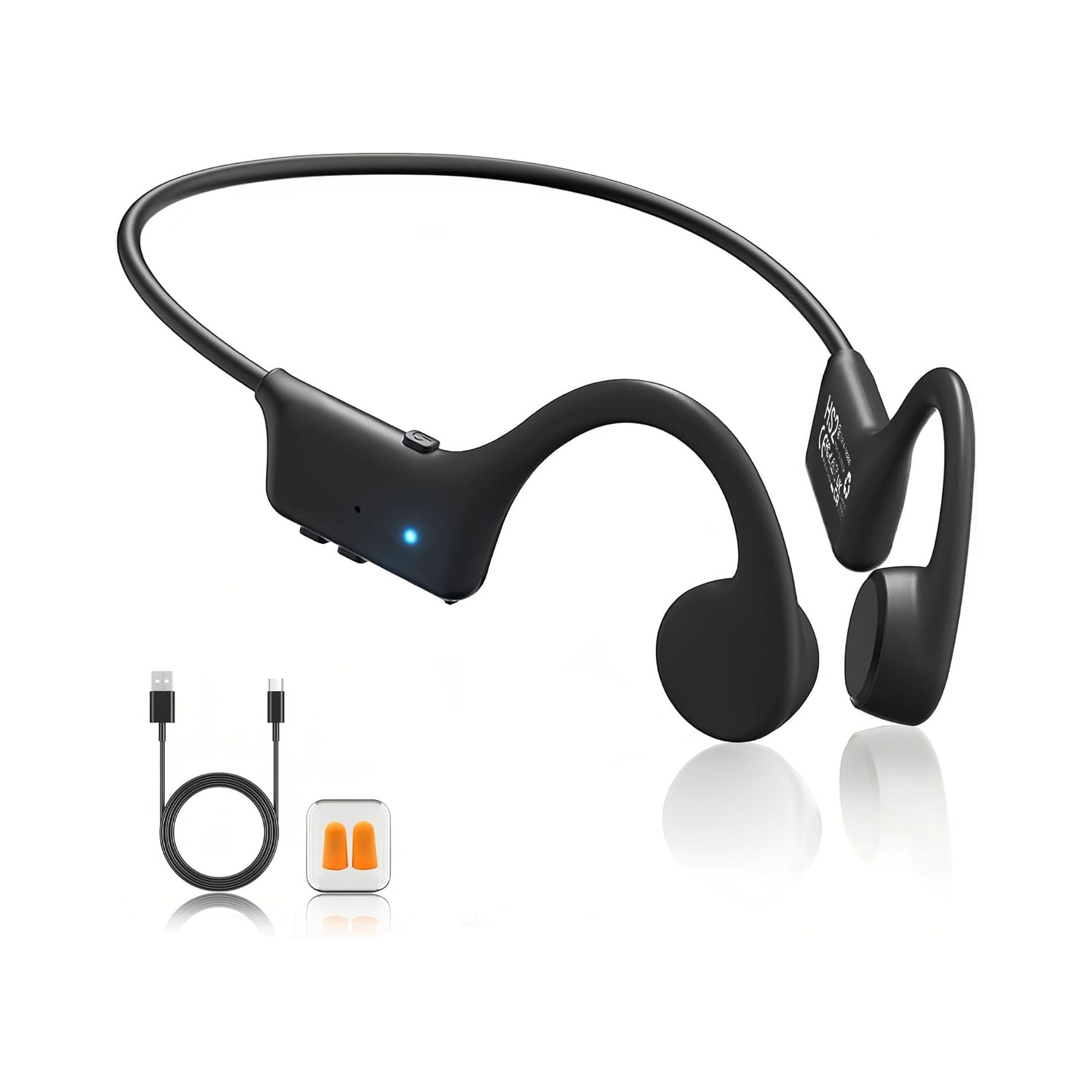
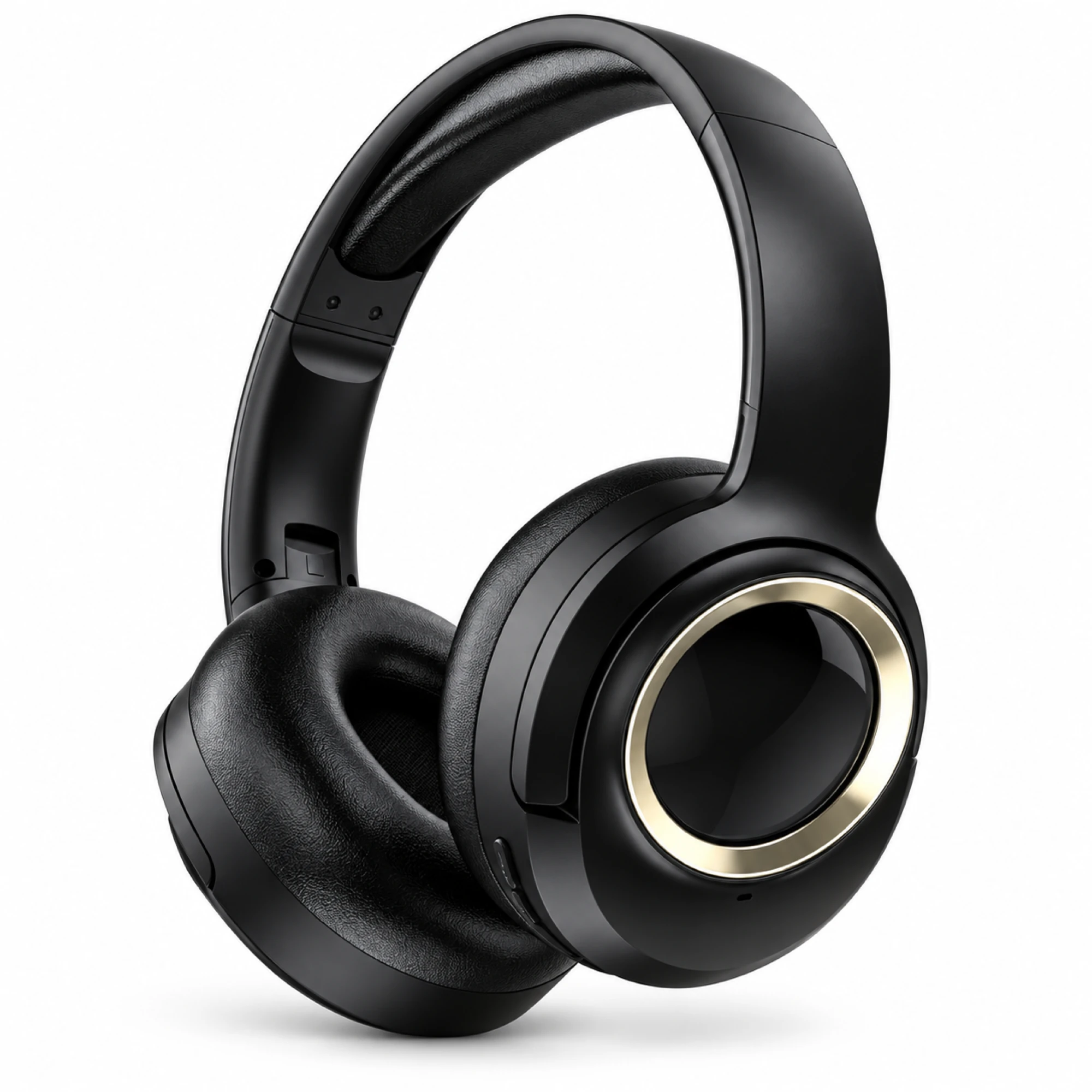
 MX-21 Black and Gold Wireless Headphones
 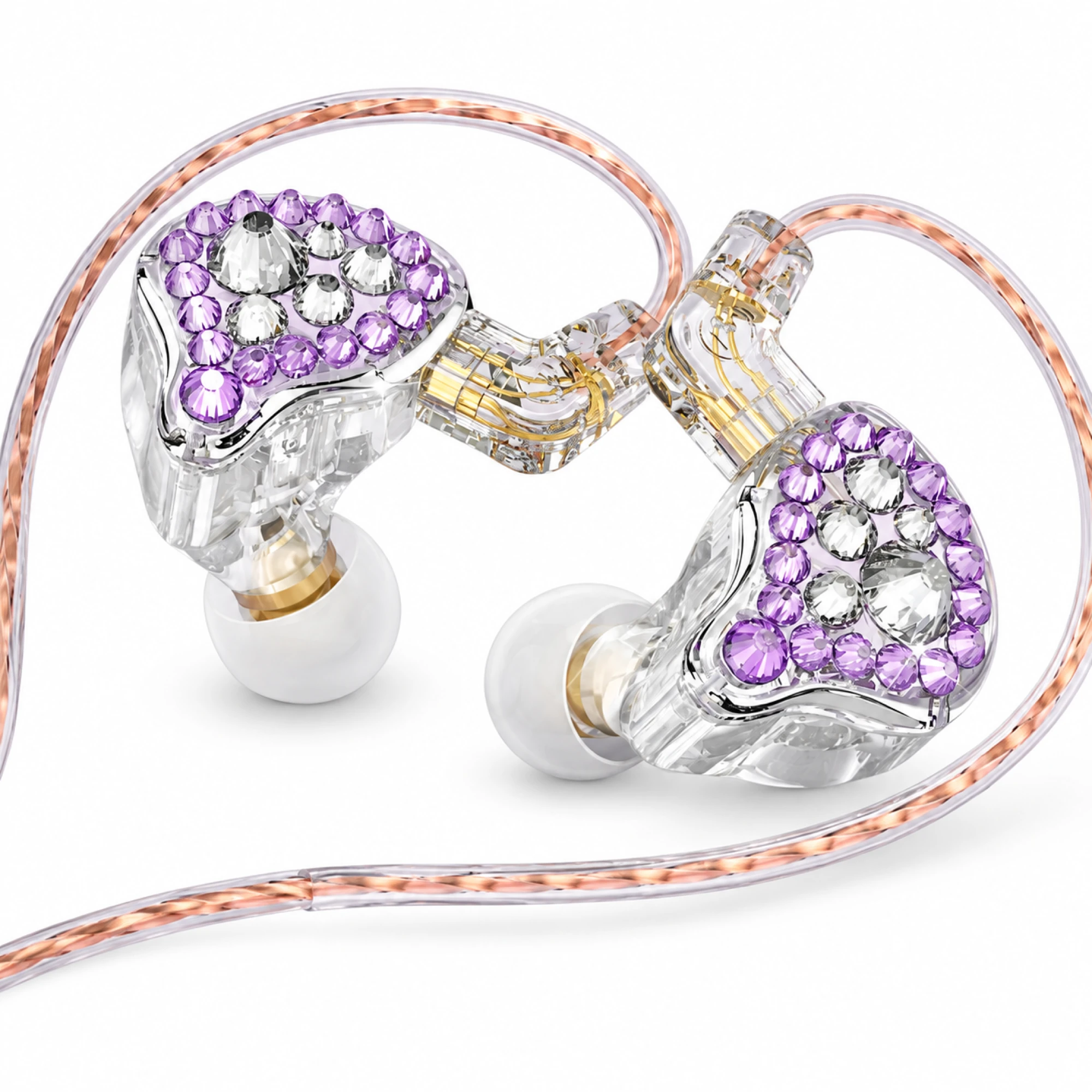 Q2 Pro Purple Crystal In-Ear Monitors
 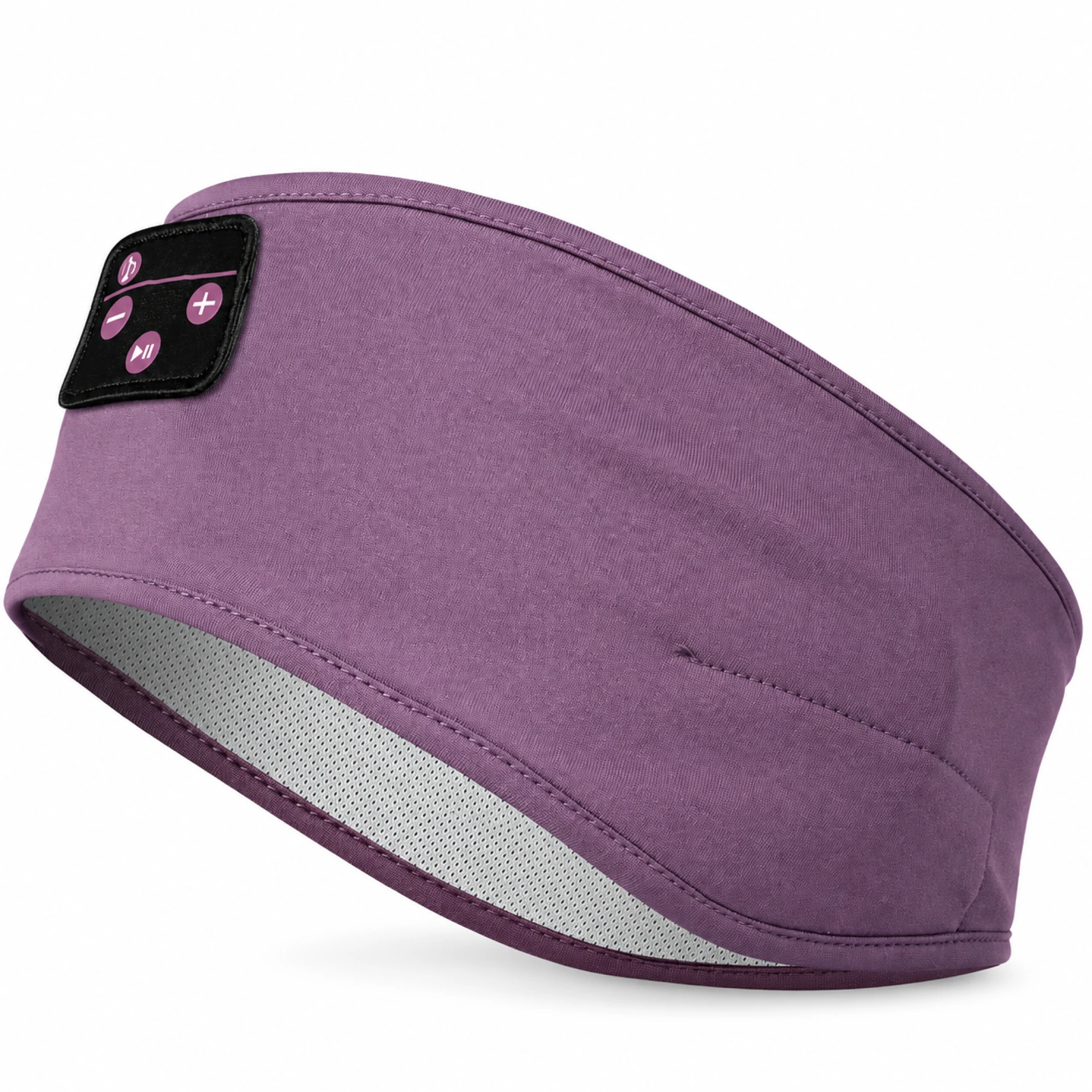 Purple Sleep Headband Headphones with Triangle Controls
 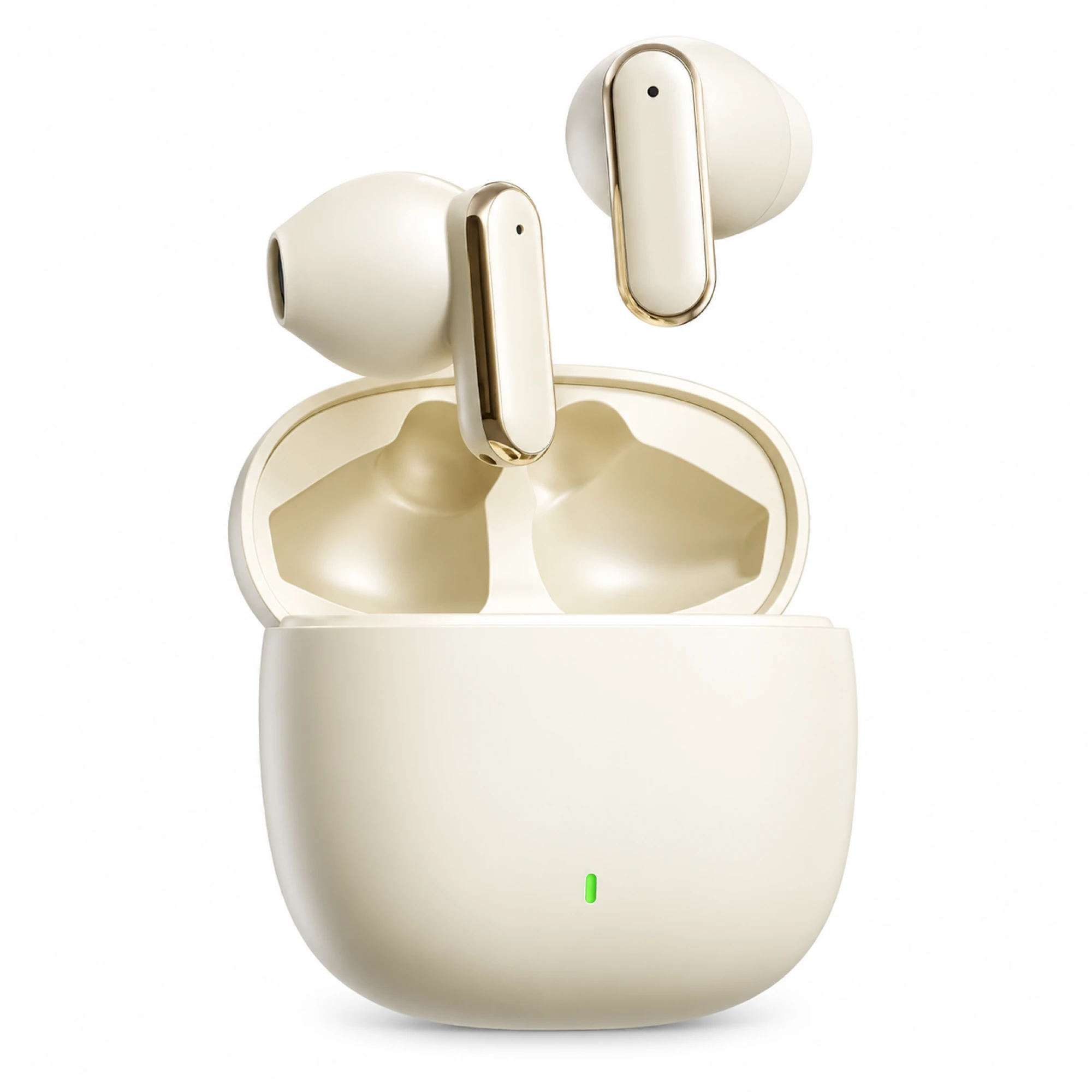 Cream Reflective-Stem Wireless Earbuds
 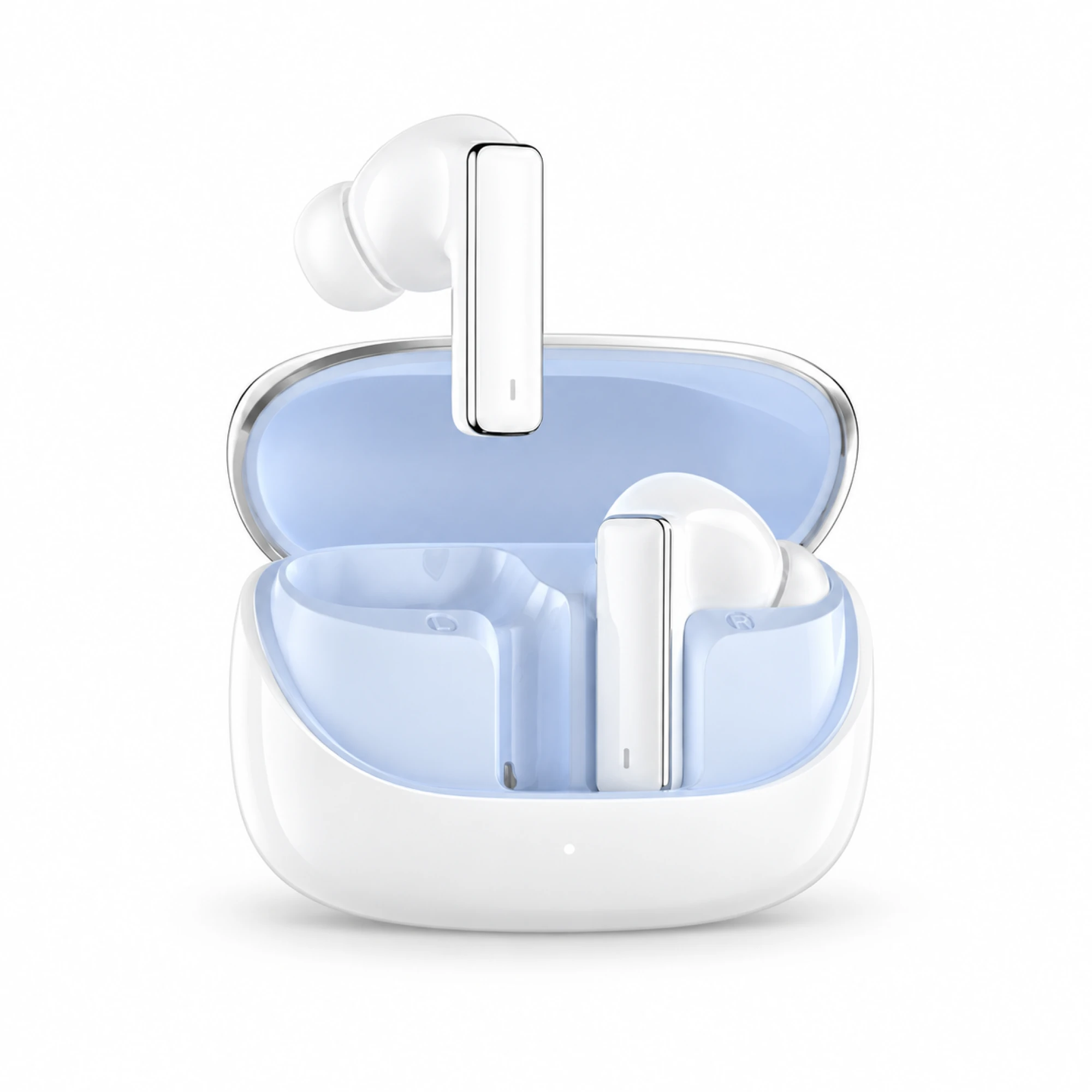 IN-01 White ANC Earbuds with Pale Blue Case Interior
 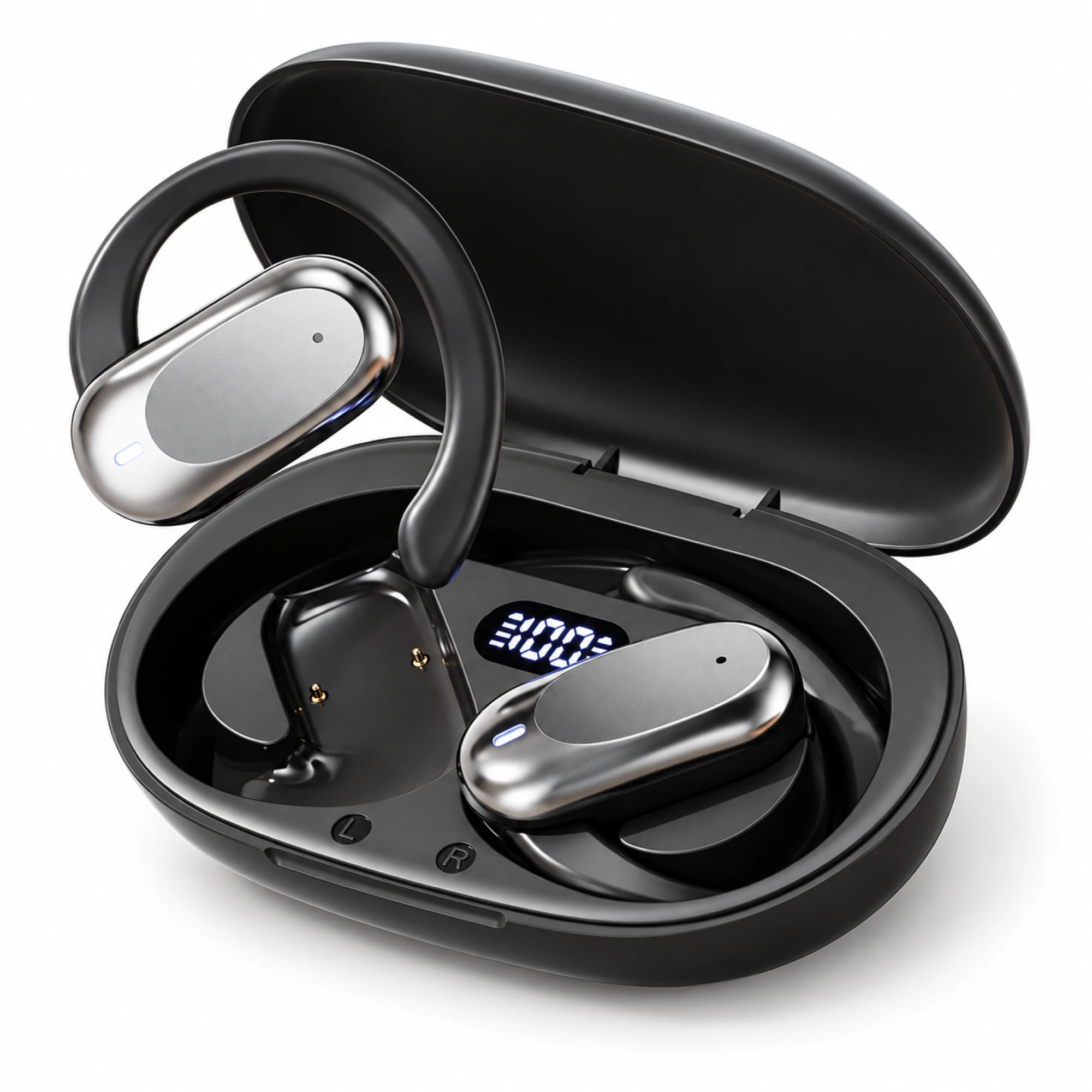 Silver Capsule Open-Ear Earbuds
 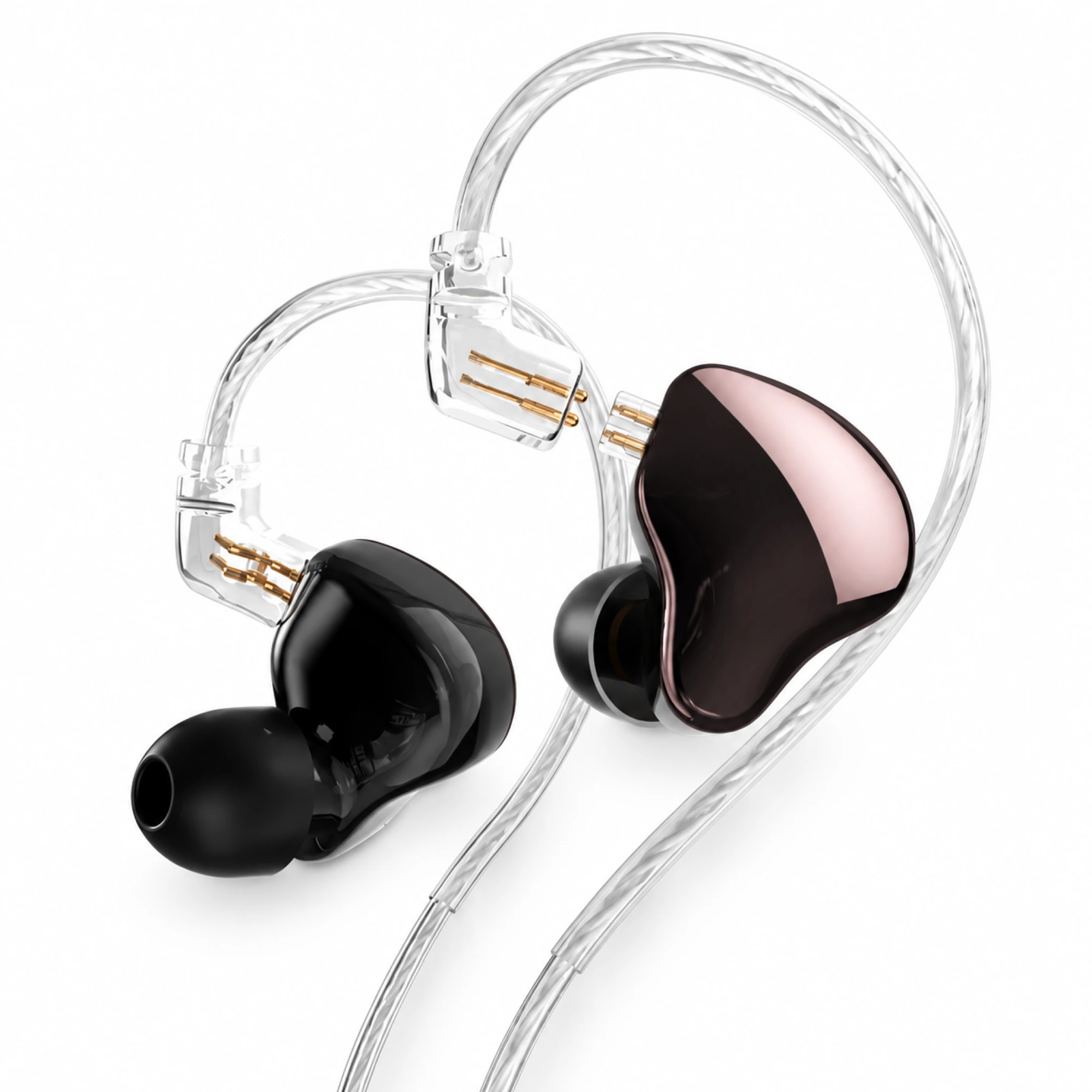 MN Rose-Metallic Detachable In-Ear Monitors
 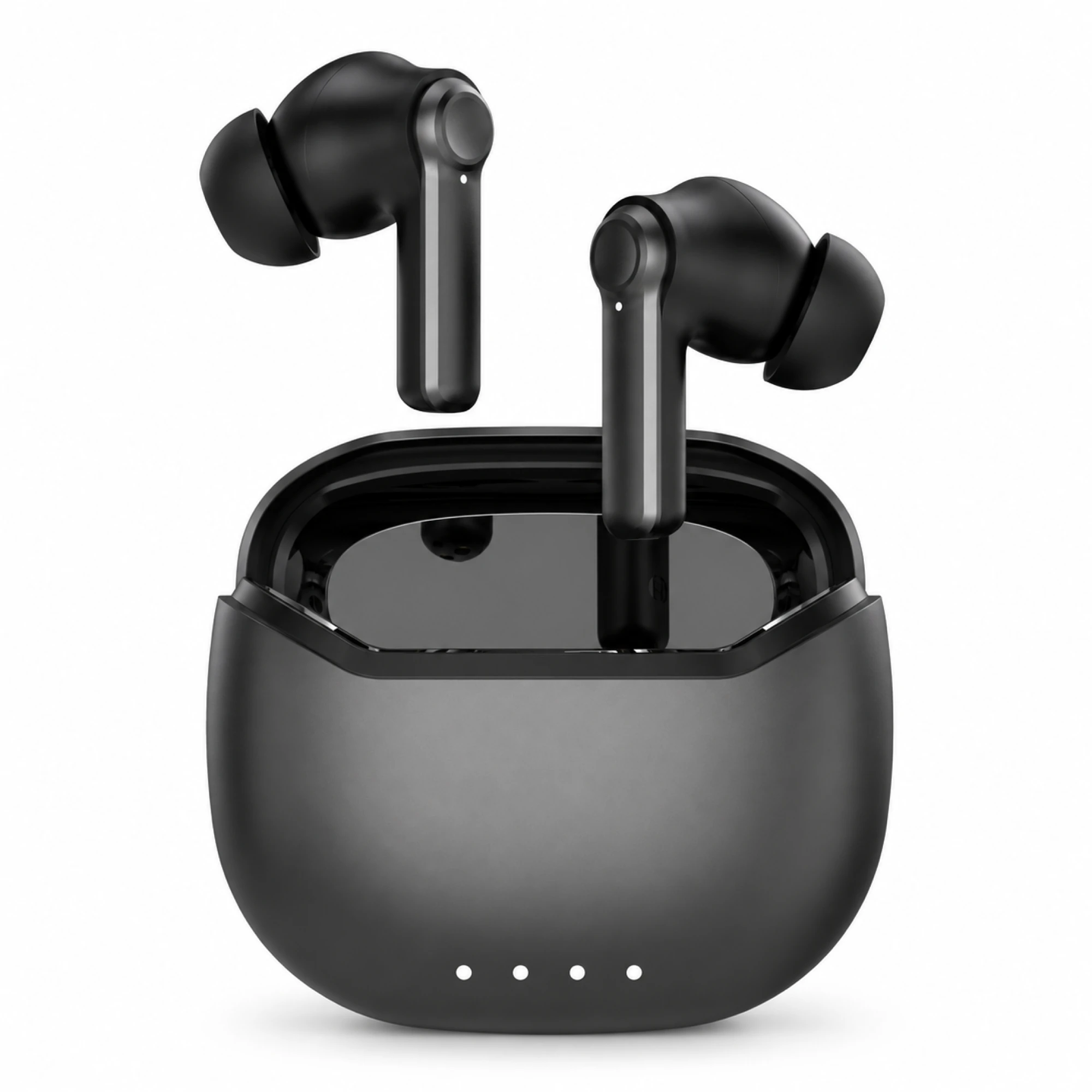 Black ANC Earbuds with Four-Indicator Case
Buy bone conduction headphones for swimming expecting the dry-land experience and you will be surprised twice. Laboratory work on bone conduction headsets found that with the transducer in front of the ear canal, the sound inside the canal was 20 to 30 dB higher than the other contributors, and that is a path the pool floods. Underwater the sound generally thins, and your sense of where noises are coming from goes with it.
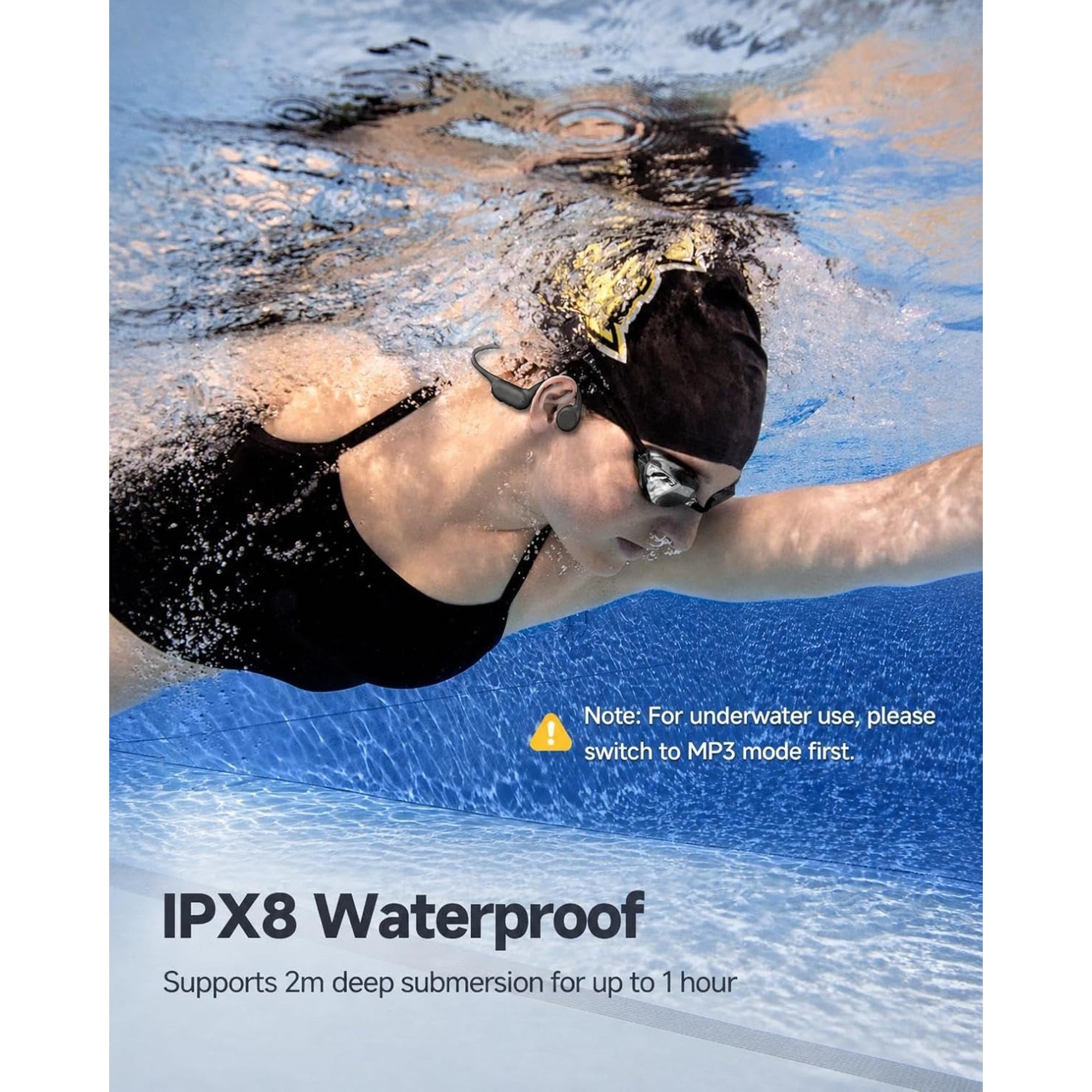
The transition itself is the subject here. Onboard storage and how to read a water rating are handled in do Bluetooth earbuds work underwater and our guide to IP ratings.
The claim worth testing
The category's standard explanation is that water changes nothing: you hear underwater exactly as you do on land, through vibration sent along your bones. That is why people assume a swim will sound like a run.
The measurement literature complicates it. A 2023 study in Trends in Hearing by Surendran and colleagues examined hearing through bone conduction headsets at several transducer positions, including in front of the ear canal, where consumer bands sit. That position gave hearing thresholds 10 to 40 dB better than a placement at the mastoid, and the authors credit the canal itself: with stimulation close to the ear canal, "the sound in the ear canal is 20 to 30 dB higher than other contributors for BC sound".
For a headset on the cheekbone, then, the vibrating pad is also driving air in the open canal beside it, and that airborne path appears to dominate. The name on the box describes the marketing category more than the mechanism. This was a laboratory setup in air with a headset on the head, so treat the size of the effect as directional; but a real share of the sound needs your ear canal open and full of air.
Three routes in, and water alters two of them
| Route to the inner ear | On dry land | Once your head is submerged |
|---|---|---|
| Air in the open ear canal, driven by the pad | Appears to dominate for a transducer in front of the ear | Canal floods or is plugged; the air column carrying it is gone |
| Vibration through skull and soft tissue | Present, and the part the category is named after | Still works; this is what keeps music playing at all |
| Ambient sound from around you | Arrives normally through the open ear | Arrives by a different mechanism, with direction largely lost |
Note which row survives intact. Bone conduction headphones underwater are not broken; they run on the one route water does not interrupt, minus the strongest contributor. Most people describe the result as thinner, then reach for the volume.
Earplugs change the sound as well as the hygiene
Swim brands recommend earplugs with a bone conduction band, and the reason given is water exclusion. True, and worth doing, but an incomplete account of what plugs do.
The same Trends in Hearing work measured the occlusion effect and reports "a positive occlusion effect at the low frequencies that increases with decreasing frequency, and a negative occlusion effect at frequencies above 2 kHz". Sealing the canal traps low-frequency energy that would otherwise escape, so the bottom end strengthens while part of the range above roughly 2 kHz weakens.
That trade lands well for swimmers, since thin bass is the standing complaint about the category. Expect the exchange to be real:
- Bass and body improve, which an equaliser rarely achieves on an open canal.
- Upper detail may dull. Cymbals and consonants soften, so speech-heavy audio can fare worse than music.
- You will probably need less volume. If the low end is boosted, keep the setting down; the WHO's safe listening guidance applies to bone conduction as to any other sound path.
Two caveats. That research measured plugs occluding an air-filled canal in a laboratory, and a flooded canal is not acoustically the same as a sealed one. And swimming with anything in your ears carries its own risk: NHS guidance on ear infections lists water and wearing earplugs among the things that can irritate the ear canal and cause an outer ear infection.
If a product causes pain, irritation, ringing or a noticeable hearing change, stop using it and seek qualified care.
Situational awareness runs backwards in the water
On a road, the case for an open ear is real: nothing blocks the canal, so traffic and voices reach you normally. That argument is about air, and it does not transfer to a pool.
Researchers at the University of Southern Denmark measured in-air and underwater audiograms in the same people, asking whether human underwater hearing is mediated by bone conduction. Three results matter to a swimmer wearing headphones.
- You hear less well underwater. Thresholds were 4 to 26 dB higher than in-air thresholds measured in intensity units, and 40 to 62 dB higher measured in pressure units.
- You largely cannot tell where a sound came from. Asked to point at a 700 Hz underwater source while blindfolded, the submerged subjects' ability to judge its direction was, in the authors' words, extremely poor, with only coarse directional hearing.
- The mechanism is not settled. Below 1 kHz the underwater thresholds were much lower than published bone conduction thresholds, leading the authors to suggest resonance of air in the air-filled middle ear rather than bone conduction alone.
So the awareness benefit is a dry-land benefit. Submerged, with music playing and plugs in, assume you may miss a whistle or a swimmer entering your lane, and would struggle to locate either. Sight and lane discipline do the work hearing does on a road.
Our own listing is not exempt. The EARSOLE swimming model's description carries the category's standard open-ear language, "let you hear your surroundings", written for land use and silent about what happens with your head under.
The goggle strap is now doing a job the band used to do
On land a wraparound band is held on by its own tension. In a pool the goggle strap crosses the same part of the skull, and the order you put them on decides how the pads sit for the next hour.
- Seat earplugs first, if you use them. Reaching into your ear afterwards moves the band.
- Fit the headset next, pads on the cheekbone in front of the ear, rear band at the base of the skull.
- Put goggles on over the band, never under it. A strap threaded underneath tends to lever the band upward and drag the pads out of position.
- Add a swim cap last if you wear one, then re-check the pads.
- Push off the wall once before starting the set; turns are where a marginal fit reveals itself.
Wet silicone against wet skin is also a lower-friction interface than a dry one, so band tension does more of the work than it does on a run. A fit that felt merely acceptable on the deck is generally the one that slips during a flip turn.
Why a swim model is a different product from a sport band
Shoppers reasonably ask why they cannot take an IP54 sport band into the pool. The answer sits in the hardware rather than the rating, and our two bone conduction listings show it.
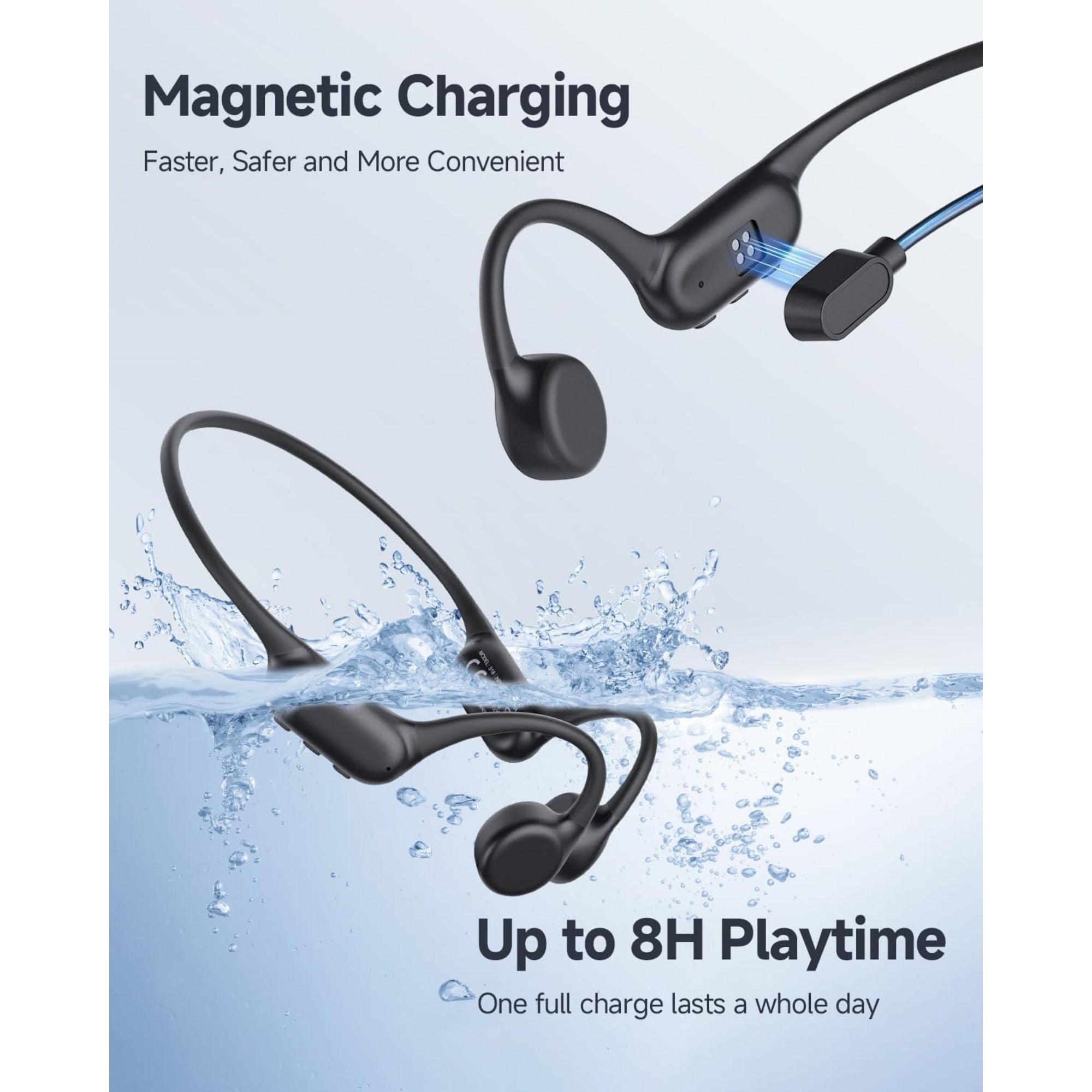
- Waterproof Swimming Headphones, $36.99 as the listing stands: magnetic charging contacts, and the same cable connects the headphones to a computer to load music onto the 32 GB storage; the listing states a fully sealed coating; IPX8, stated as two metres for one hour.
- Bone Conduction Open-Ear Sport Headphones, $39.99 as the listing stands: USB-C fast charging; no sealing method described; IP54, for sweat, splashes and light rain.
The charging row is the structural one. A USB-C receptacle is a hole in the shell with springy contacts inside it, and no gasket makes that the equal of a sealed body with contacts on the outside. Underwater bone conduction headphones must also survive being plugged into a computer to load files, which is why the magnetic cable does double duty. The second digit of an IEC 60529 code records that difference; it does not create it.
The cheaper product is the swim-capable one, so price signals nothing here, and neither does the sound path, since both are bone conduction. What the swimming listing leaves out deserves naming: no MP3-mode battery figure (the 8-hour figure is for Bluetooth mode), no head dimensions beyond an adjustable strap, and no word on whether the app's equaliser settings carry into MP3 mode. If the category is not for you, open-ear and clip-on designs use a small speaker instead, open-ear versus bone conduction separates the two, and both bone conduction models sit in our everyday wireless earbuds range.
Questions we get before a first swim with a bone conduction band
Can you use bone conduction headphones while swimming?
Only a model built for immersion, with a rating stating depth and duration and a playback source that does not need a phone. A band rated IP54 for sweat and rain is not a swim product, however similar it looks. Expect the sound to change once you are under, because the ear canal path is gone.
What are the downsides of bone conduction headphones?
Weak bass, audible leakage to people nearby, and a band competing with goggles, caps and helmets for the same space. Swimming adds two more: the sound generally thins underwater, and the open-ear awareness argument does not survive submersion.
What type of headphones are best for swimming?
Structurally, a bone conduction band with onboard storage and an immersion rating. Sealed in-ear designs must hold their seal against every push-off and turn, which is why the category settled on bands, and Bluetooth of any kind stops at the surface, which is why onboard storage is the specification that matters most.
- Surendran et al., "Hearing Through Bone Conduction Headsets", Trends in Hearing, 2023
- Sørensen, Christensen-Dalsgaard and Wahlberg, "Is human underwater hearing mediated by bone conduction?", Hearing Research, 2022
- IEC 60529: the IP Code
- NHS: ear infections (otitis externa)
- World Health Organization: safe listening