

Three things reduce what reaches your ear through sound cancelling headphones: a silicone tip that seals the ear canal, a padded cup that encloses the whole ear, and active cancellation. The seal and the cup are physical barriers and work best on higher-pitched sound; cancellation is electronic and works best on steady low drone. None of the three is complete, because sound also reaches the inner ear through the skull, a route measured at roughly 40 to 60 dB.
Where each barrier does its work
A seal is what an in-ear earbud makes when its silicone tip closes the canal. The barrier is a few millimetres of soft silicone, so it stops short wavelengths well and long ones poorly: keyboard clatter, hiss and the consonants that make speech intelligible fade, while a bus engine mostly carries on. One tip size too small leaves a leak that undoes most of the isolation, so four quick seal checks and a change of tip size do more for quiet than any setting. The price of a closed canal is occlusion: your own voice, chewing and footsteps sound boomier, because their bone-borne sound can no longer escape.
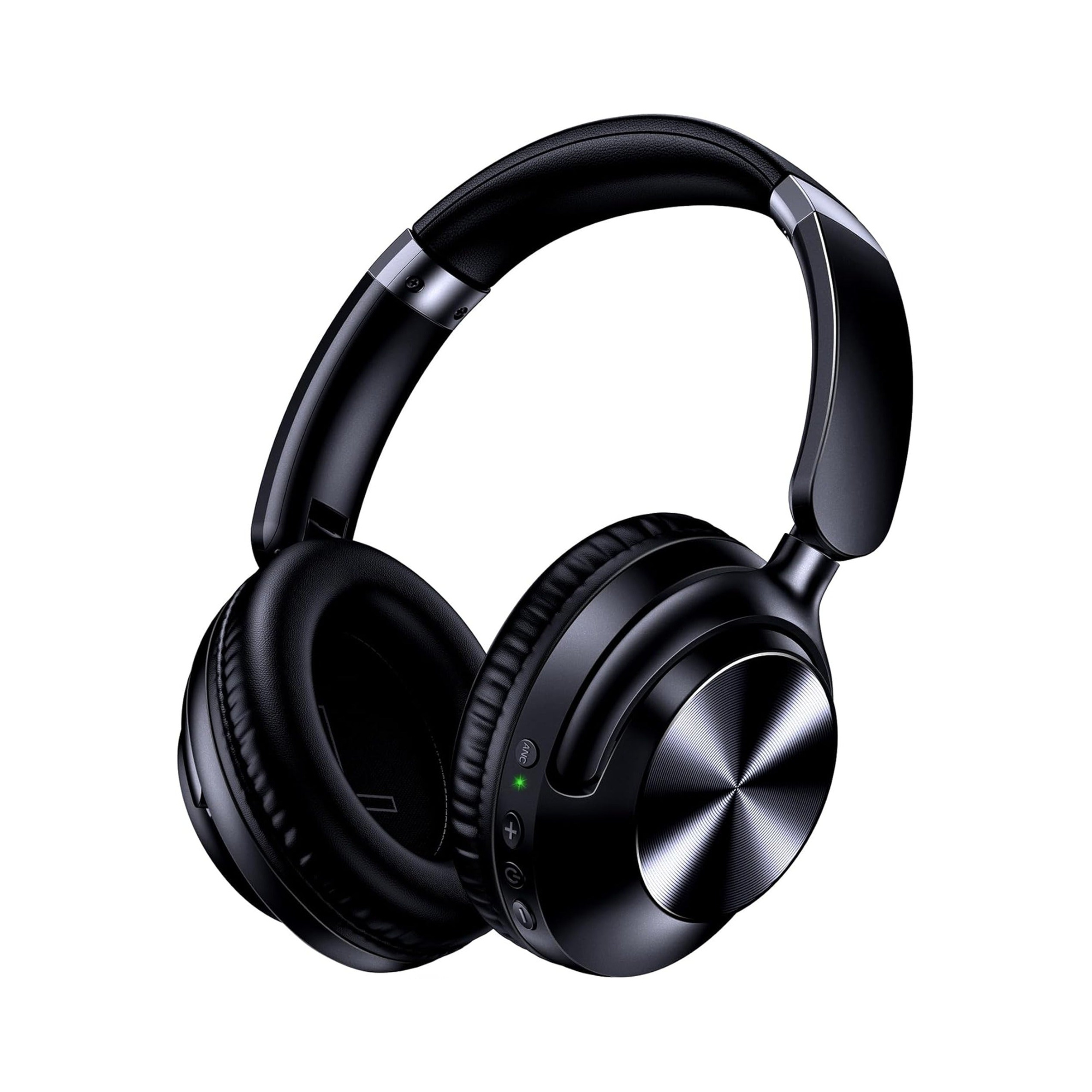
A cup is the over-ear answer. The pad seals against the side of the head, the enclosure is far heavier than a tip and traps a larger volume of air, and the canal stays open, so occlusion is mild. Heads vary less than ear canals, so two people wearing the same over-ear headphones get closer results than two people wearing the same earbuds. What breaks the cup's seal is anything under the pad, usually the arms of glasses, and heat, since a sealed pad warms up within the hour.
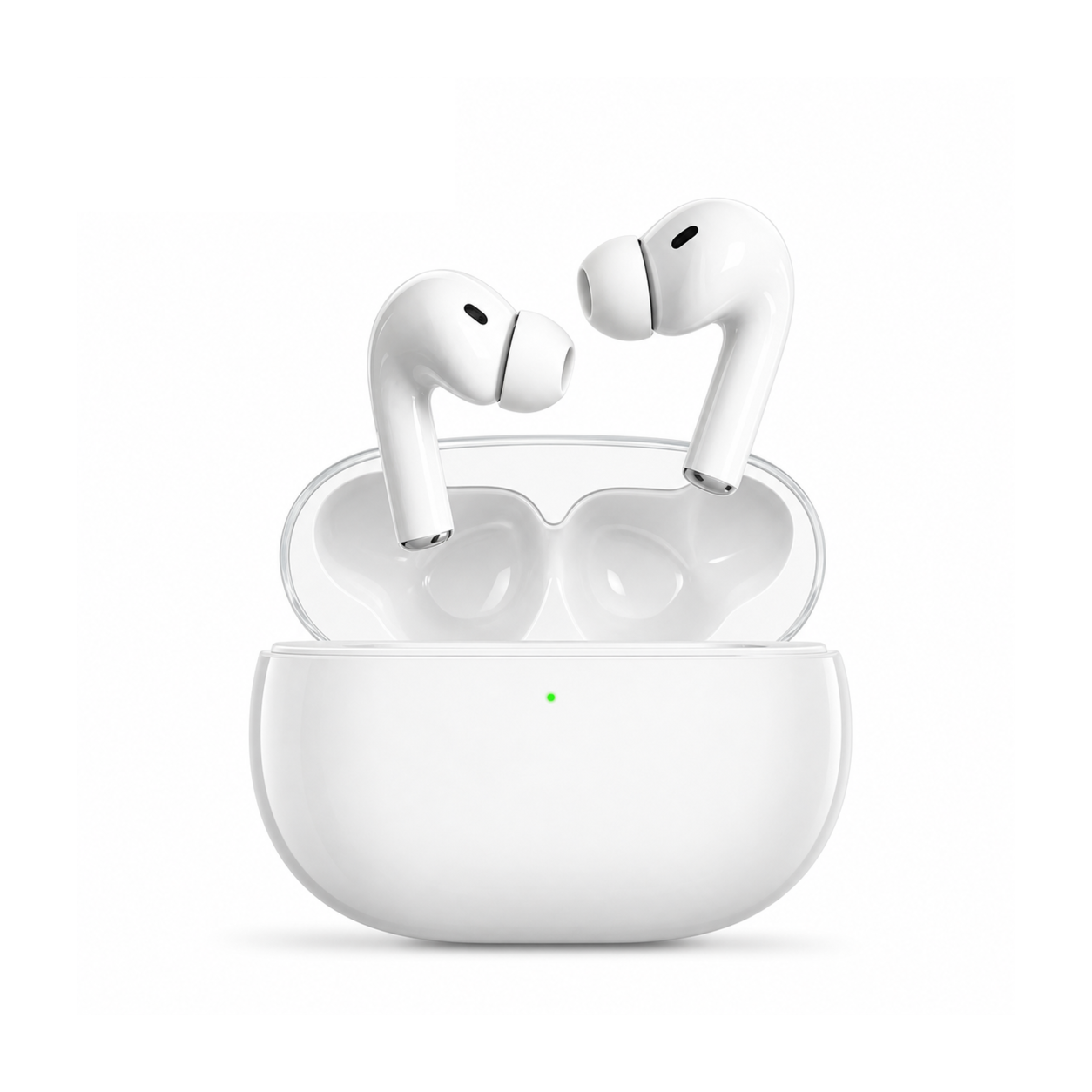
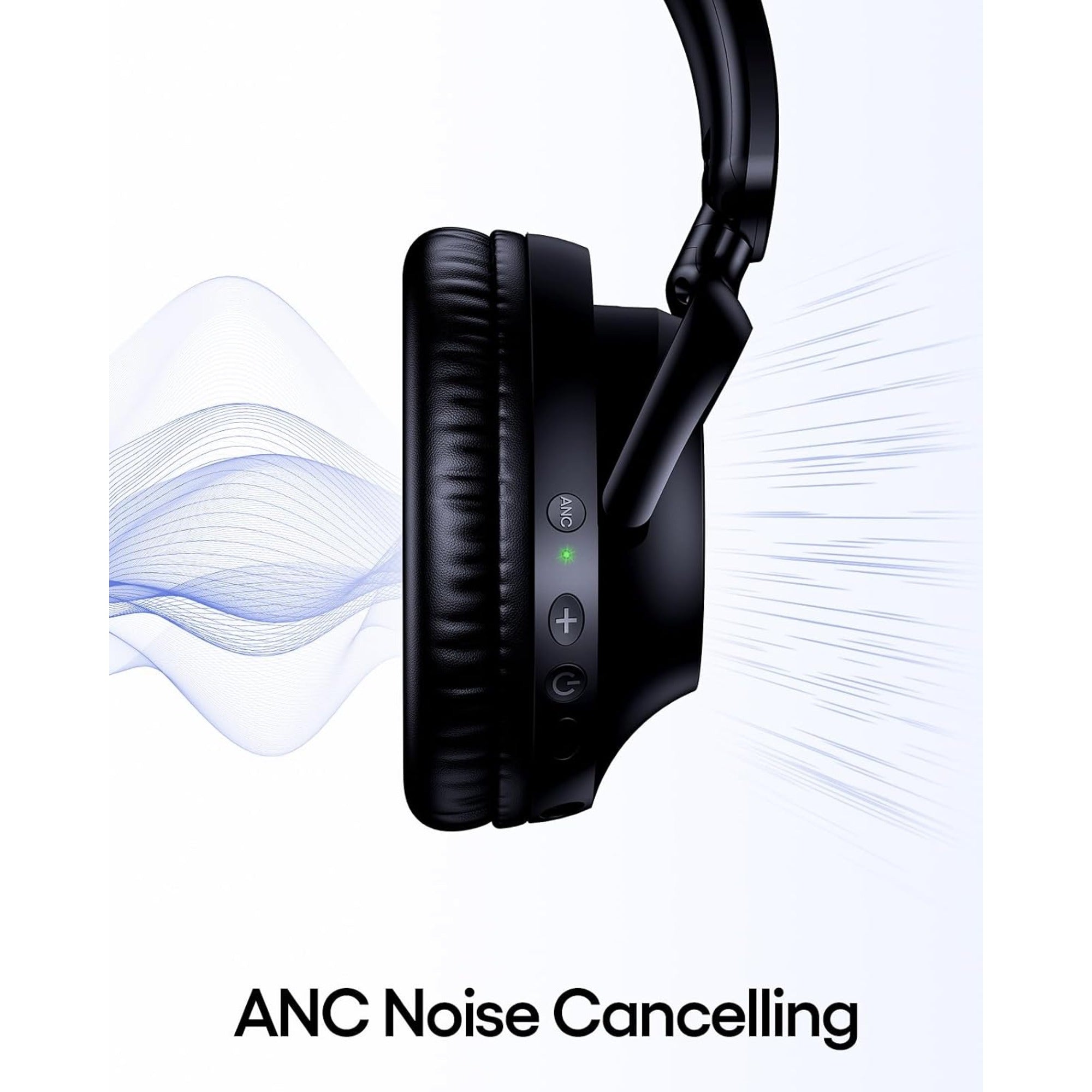
Active cancellation is different in kind. Microphones on the housing listen to the noise, a processor computes an opposite waveform, and the driver plays it so the two cancel at your ear. That only works where the noise is predictable a few milliseconds ahead, which means steady, low-pitched sound: engines, fans, cabin hum. The listing for our Smart Pro 3 earbuds puts it the way we would: cancellation "works best on steady, low-frequency sound like engines, fans and cabin hum. Sudden noises, nearby voices and high-pitched sounds still come through, just quieter." So the electronics take the bottom of the spectrum, the seal or cup takes the top, and a pair with both is quieter than either alone. A leaking tip weakens cancellation too, which is why the same listing says a well-sealed silicone tip matters as much as the electronics.
One label needs separating from the three. ENC processes the microphone signal on calls so that the person you are talking to hears less of your room; it changes nothing about what you hear. Several models in our range carry "Noise Cancelling" in the name while their descriptions state ENC and say nothing about active cancellation, so for listening purposes they are seal-only earbuds. ANC, ENC and passive isolation are three jobs, and the noise line in the description settles which one you are buying.
A worked example in decibels
Consumer headphones and earbuds carry no attenuation rating. Hearing protectors do: in the United States it is the Noise Reduction Rating, which OSHA's Appendix B to the noise standard says must be shown on the package under EPA regulation. No EARSOLE listing carries an NRR or an SNR figure, and none is sold as hearing protection. The useful thing about rated products is that OSHA also publishes the arithmetic for turning a label into a real-world number.
Take OSHA's own example from its Technical Manual: an earplug labelled NRR 25, worn in a workplace measured at 98 dBA. Subtract 7 dB from the label, because the rating comes from C-weighted laboratory tests while exposure is measured A-weighted; that leaves 18 dB and an estimated 80 dBA at the ear. For deciding whether the noise itself must be engineered down, OSHA then halves what remains, crediting the plug with 9 dB and the wearer with 89 dBA. The label needs correcting, OSHA says, because it "often did not reflect the actual level of protection": most workers are never fit-tested. A rated foam plug, worn by ordinary people, is credited with 9 to 18 dB. A tip or a cup with no rating cannot be assumed to reach even that.
Now the number that matters for a listener. The World Health Organization's safe-listening guidance allows 40 hours a week at an average of 80 dB and four hours at 90 dB, and it lists heavy traffic heard inside a car at 90 dB. Ten decibels is the difference between a working week and a long afternoon. If a seal, a cup or cancellation lets you set the player 10 dB lower than you would with an open ear, that is what it has bought you; the WHO's own advice is to "use well-fitted, and noise cancelling headphones to reduce the need to raise volume in noisy situations".
If a product causes pain, irritation, ringing or a noticeable hearing change, stop using it and seek qualified care.
The ceiling is the skull
Every barrier, rated or not, runs into the same limit. Sound does not only enter through the canal; it also sets the skull vibrating, and the cochlea picks that up directly. Berger, Kieper and Gauger reviewed the measurements of this bone-conduction path in the Journal of the Acoustical Society of America in 2003 and report limits that, as mean values, "range from 40 to 60 dB across the frequencies from 125 Hz to 8 kHz" (doi:10.1121/1.1605415). Seal the canal perfectly and that route stays open, which is why sound proof headphones do not exist: the word belongs to walls and rooms, and nothing worn on the head reaches it. OSHA's manual makes the same point from the workplace side, noting that earplugs and earmuffs worn together add only about 5 dB over the better of the two. A tip or a cup, with a driver, a vent and a microphone port outside its seal, gives up long before the skull does.
What each buys at our prices
Our range is mostly earbuds. Three models cover the three mechanisms; the useful comparison is what each listing states about noise, with prices as they stand as the listing stands.
| Model | Price as the listing stands | What the listing states about noise | Barrier |
|---|---|---|---|
| True Wireless Earbuds Series 217 | $22.99 | Passive isolation from the fit; three tip sizes; ear hooks; IPX7; no active cancellation stated | Seal |
| Over-Ear Wireless Headphones Series 127 | $44.75 | Active noise cancellation with an ANC button; padded over-ear cups; 3.5 mm wired input; foldable | Cup plus ANC |
| Smart Pro 3 Wireless Earbuds | $59.99 | Active noise cancellation; soft silicone tips for "a close, comfortable seal"; clear-lid case; no ENC stated | Seal plus ANC |
The True Wireless Earbuds Series 217, $22.99 as the listing stands, are the seal on its own: the listing describes "natural passive noise isolation" from the fit, three sizes of silicone tips, and an ear hook that keeps the tip seated when you move. One bullet heading says "noise cancellation", but the text under it describes passive isolation and a call microphone, so read them as a seal-only earbud, and the cheapest of the three ways to make a café quieter.
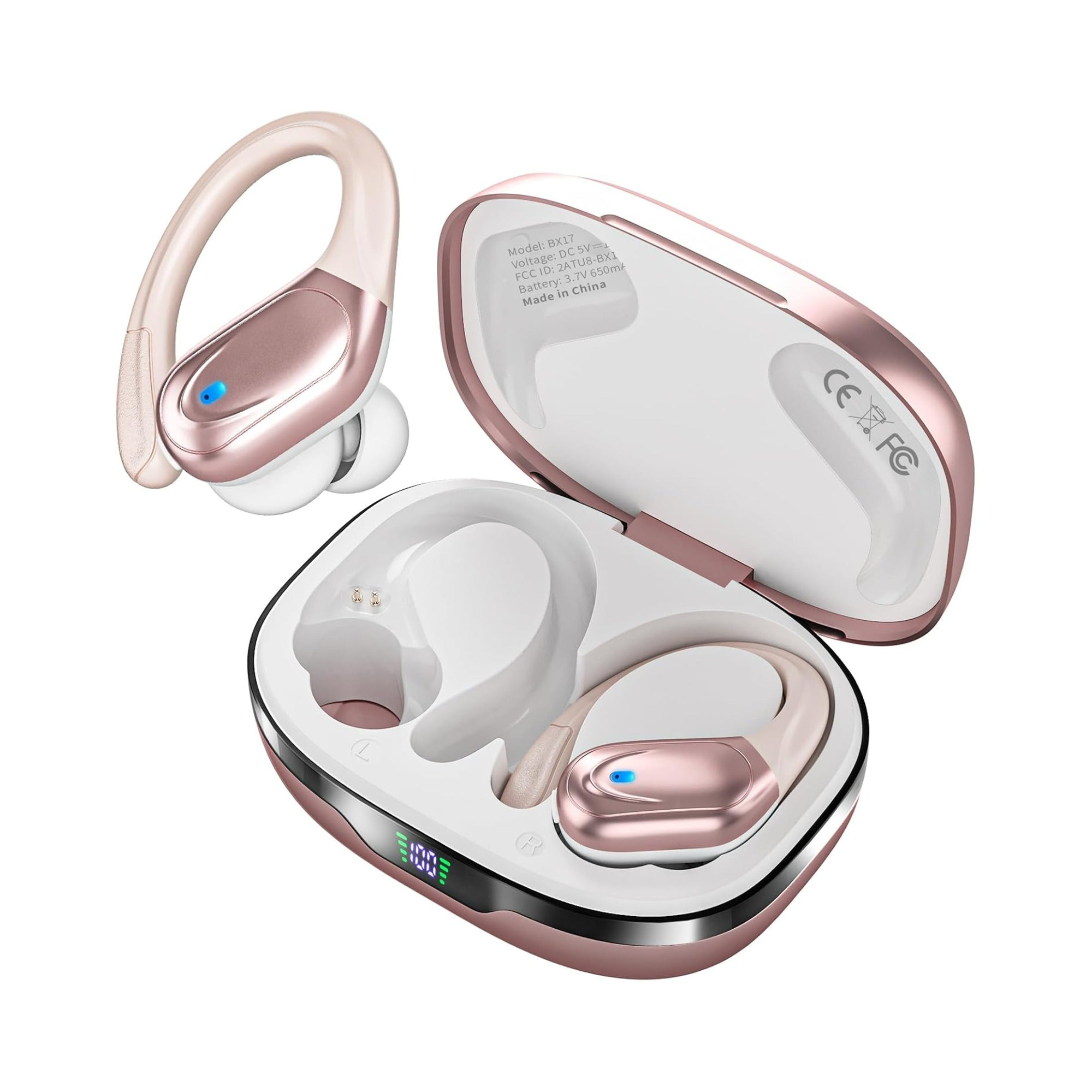
The Over-Ear Wireless Headphones Series 127, $44.75 as the listing stands, are the cup with cancellation added: padded over-ear cups, an ANC button on one housing, and a 3.5 mm wired input. The listing also quotes a supplier percentage for how much noise the cancellation removes, which we leave out: a percentage with no frequency band and no test method cannot be checked. What the cup gives you is the consistent floor described above, with cancellation on top for the drone.
The Smart Pro 3, $59.99 as the listing stands, are the seal plus cancellation in an earbud: soft silicone tips for what the listing calls "a close, comfortable seal", active noise cancellation, and a clear-lid case. The listing states ANC and does not mention ENC, which is the right way round for a listener. They are the model for the commute or the flight, where drone is the problem; in a shared office, where voices are, the tip does most of the work whichever model you pick.
Much of our everyday wireless earbuds collection is seal-and-microphone: silicone tips, ENC for calls, no cancellation for the wearer. If voices and clatter are your noise, that is the right tool at the lowest price of the three, provided the tip fits.
Three questions buyers ask about blocking sound
Are over-ear headphones better at noise cancelling than earbuds?
On average, yes, for physical reasons: the cup seals against a forgiving surface, so results vary little from head to head, and there is room inside for spaced microphones and a bigger battery. The gap closes when an earbud tip seals properly and opens wide when it does not. Session length decides more than the peak figure: past three hours nothing in the canal wins, and in a warm room the cup comes off.
Do foam earplugs block more than any headphones?
Yes. A foam plug expands to fill the canal, sits deeper than any tip, and has no driver, vent or microphone port to leave a path open; it also owes you no music. That is why the rated products are earplugs and earmuffs, and why the 9 to 18 dB OSHA credits to its NRR 25 example is a figure no headphone listing can claim. For night use, sleep earbuds against foam earplugs works through the trade.
Is ENC the same as noise cancelling?
No. ENC is applied to the microphone signal during calls, so the person on the other end hears less of your surroundings; it does nothing to what you hear. Active noise cancellation is applied to your listening. A listing that states ENC and says nothing about active cancellation is, for your own ears, a seal-only product, however the model is named.
- OSHA, 29 CFR 1910.95 Appendix B: Hearing Protector Attenuation
- OSHA Technical Manual, Section III, Chapter 5: Noise
- WHO: Deafness and hearing loss, safe listening
- Berger, Kieper and Gauger (2003), Hearing protection: Surpassing the limits to attenuation imposed by the bone-conduction pathways, J. Acoust. Soc. Am. 114(4)