


You cannot buy a single “noise-cancelling speaker” that silences an entire bedroom or home office the way active noise-cancelling (ANC) headphones quiet your ears. Because active noise cancellation relies on 180-degree phase inversion ($-1 + 1 = 0$) at a tightly controlled point in space, it works inside a sealed headphone ear cup or earbud tip where sound enters through a tiny, fixed opening, but breaks down across a three-dimensional room where street traffic and neighbor voices bounce off walls from every angle. Achieving effective noise cancelling in a room requires a two-layer approach: passive room soundproofing to block and absorb outside sound at the boundary, paired with personal ANC headphones or earbuds at your ears.
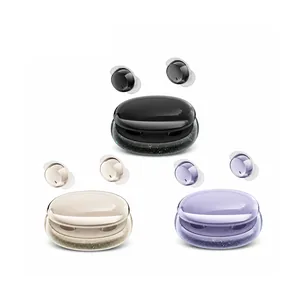
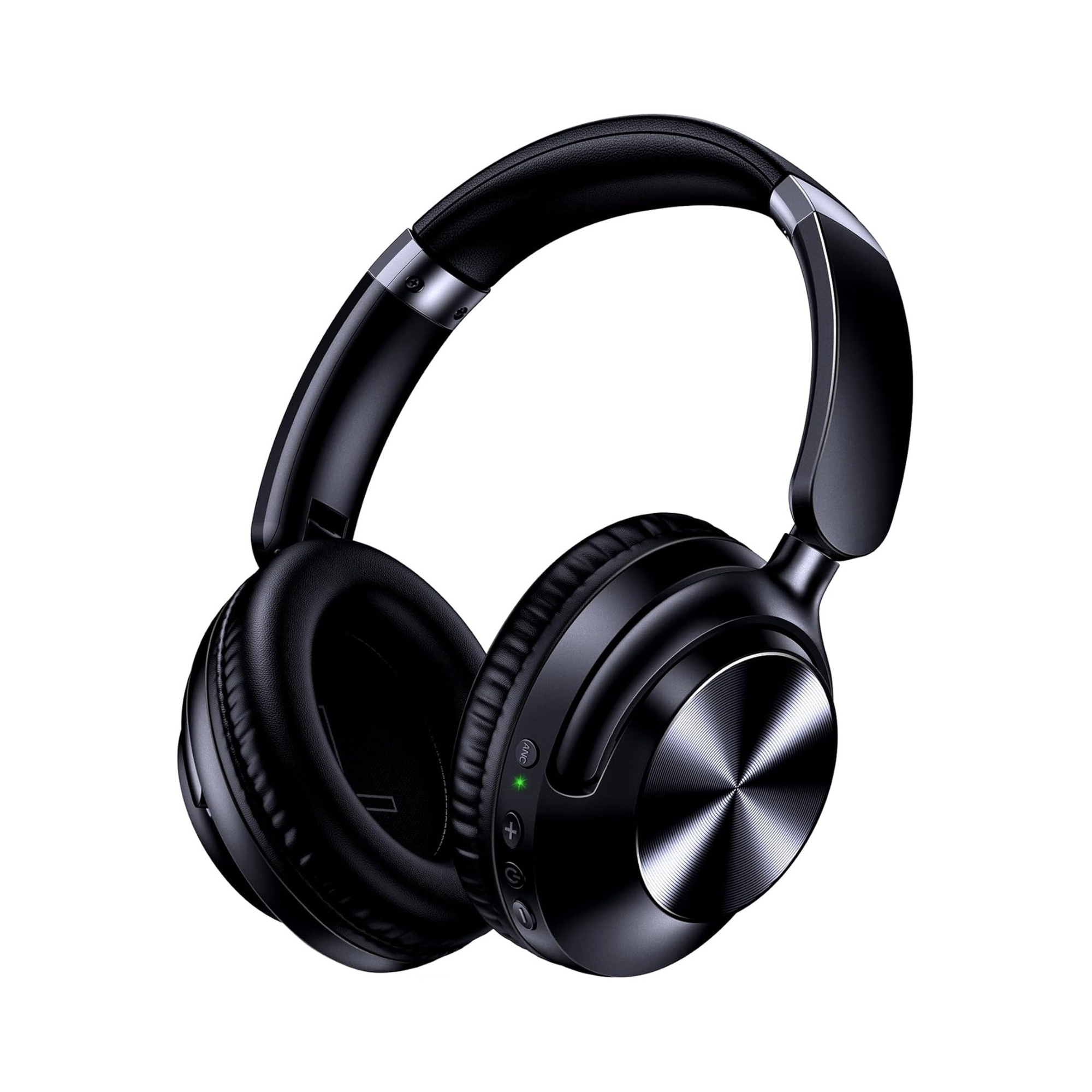
Whether you are trying to sleep near a busy road or focus at a desk during daytime apartment noise, understanding the difference between wave phase cancellation, passive noise isolation, and colored-noise masking saves you from buying gimmicky gadgets or expecting thin foam tiles to stop low-frequency traffic rumble. Below, we break down the wave physics behind noise cancelling rooms, why DIY window-transducer setups fail against street traffic, and how to pair basic room sealing with dual-mode over-ear headphones like the EARSOLE Series 127 Over-Ear Headphones or compact in-ear models like the EARSOLE Smart Wireless Earbuds with LCD Touchscreen Case.
Why Active Noise Cancellation Works in Headphones and Earbuds—Not Across an Entire Room
When people search for noise cancelling in a room, they usually picture a tabletop device that listens to street noise and broadcasts “silence” across the living room. To see why that works inside personal audio gear but fails across open rooms, it helps to look at how acoustic phase cancellation actually operates.
According to BubblyNet (Luca Masella, M.S., April 1, 2025), active noise cancellation (ANC) is based on wave phase cancellation—recording background noise, inverting the signal 180 degrees to create “anti-noise” (-1 + 1 = 0), and adding it to the output so the background noise cancels by the time it reaches the human ear, which works well for personal headphones and earbuds (where passive noise isolation already blocks outside sound at the ear opening) but is complex to integrate into large spaces with multiple rooms.
Inside a pair of over-ear headphones or in-ear earbuds, the geometry is tiny and predictable:
- A single, fixed target zone: The distance between the headphone driver, the internal microphone, and your eardrum is only a few millimeters. Because the ear canal opening is fixed relative to the speaker, the electronics can calculate the exact arrival time and amplitude of an incoming low-frequency wave and play the 180-degree inverted wave right at your ear.
- Passive isolation narrows the problem first: Before the ANC chip even generates anti-noise, the physical ear cup cushion or silicone ear tip seals the ear opening, blocking high-frequency chatter and leaving a smaller, steadier acoustic cavity for the active circuit to manage.
Across a 3D bedroom or office, however, sound waves do not travel down a tiny tube to a single stationary eardrum:
- Multi-angle reflections and standing waves: When a truck passes outside, sound radiates through the window glass, window frame, and wall studs simultaneously. As those waves reflect off ceilings, floors, and furniture, the phase relationship changes at every inch of the room. Playing a 180-degree inverted wave from a speaker in one corner might cancel a specific bass frequency at one exact spot ($-1 + 1 = 0$), while adding in phase ($+1 + 1 = +2$) two feet away—making the room louder whenever you move your head.
- Unpredictable, non-constant outdoor sources: In r/AskEngineers (thread 1an293k), a homeowner asked whether attaching a 5 W transducer as a microphone to the top window pane and driving two transducers 180 degrees out of phase on the bottom pane could attenuate passing road traffic noise for sleep, and engineers responded that while constant sound might be manageable, variable traffic noise is nearly impossible to cancel actively across a window—leaving passive measures like better windows and more insulation as the practical room solution.
- Why 3D room ANC remains experimental: As BubblyNet notes, Middle Tennessee State University Professor Dan Pfeifer points out that modulating sound in three dimensions across an entire room would require future advances—such as ultra-thin microphones and speakers printed onto wallpaper covering the room from every angle, or using passive isolation to divide a room into smaller zones before applying active control. Until full-wall transducer arrays exist outside laboratories, a standalone speaker cannot actively phase-cancel traffic across a bedroom.
Passive Noise Isolation (PNC) vs Noise Reduction vs Sound Masking in a Room
Because whole-room active phase cancellation is impractical for homes and apartments, building acoustics relies on physical barriers and acoustic masking. In BubblyNet’s framework for building noise management, room control breaks down into distinct approaches that solve different parts of the problem:
- Passive Noise Canceling / Isolation (PNC): BubblyNet defines passive noise canceling as controlling and blocking sound through physical design and isolating materials without active electronics—saying a more precise description is noise blocking or noise isolating. In a room, as the
r/AskEngineersdiscussion emphasizes, stopping outside road traffic requires passive barriers: upgrading to heavier or double-pane windows, adding wall and window insulation, and using solid barriers or acoustic panels to tame interior reflections. (Keep in mind that lightweight acoustic foam panels on a wall only reduce indoor echo and reverberation; they cannot block low-frequency road traffic coming through unsealed window glass.) - Noise Reduction via Colored-Noise Sound Masking: As BubblyNet explains, the current room-scale alternative to active noise cancellation is noise reduction carried out by masking unwanted noise with another steady sound—specifically colored noise (such as white, pink, or brown noise), where each color has a different frequency characteristic. Rather than subtracting sound waves to zero, colored noise raises the steady ambient floor so sudden outside noises are less jarring to your brain.
- Personal Hybrid Isolation (PNC + ANC at the Ear): BubblyNet highlights that combining PNC and ANC is the ideal way to regulate noise—and notes that this exact two-stage method is already built into modern earbuds and headphones, which are shaped to physically block outside sound (PNC) while using ANC electronics to cancel remaining background noise at the ear.
| Noise Control Strategy | How It Works Physically | Where It Works Best | Can It Stop Unpredictable Street Traffic Across a Whole Room? |
|---|---|---|---|
| Active Noise Cancellation (ANC) | Records background sound and plays a 180-degree phase-inverted “anti-noise” wave ($-1 + 1 = 0$) (BubblyNet) | Inside sealed over-ear headphone cups or in-ear earbud canals at the ear opening | No — complex in 3D rooms and nearly impossible for variable window traffic (r/AskEngineers thread 1an293k) |
| Passive Noise Isolation / Blocking (PNC) | Physically blocks or absorbs sound paths using heavier windows, insulation, and isolating materials or acoustic panels (r/AskEngineers, BubblyNet) | Building envelope (windows, doors, walls) AND the physical seal of headphone ear cups or silicone earbud tips | Yes — better windows and insulation are the primary way to physically reduce road noise entering a room (r/AskEngineers) |
| Colored-Noise Sound Masking (Noise Reduction) | Masks intrusive sounds by playing steady colored noise with specific frequency characteristics (BubblyNet) | Bedrooms and offices where sudden background sounds need to be blended into a steady backdrop | Partially — masks noticeable transitions, though it adds ambient sound rather than silencing the room |
The Practical Alternative: Combining Basic Room Sealing With Personal ANC Headphones or Earbuds
Instead of chasing a mythical whole-room ANC speaker, the most reliable way to create a quiet environment for remote work, studying, or rest is to combine passive room treatment at the perimeter with personal PNC + ANC audio gear at your ears.
According to BubblyNet, Krisp, and r/AskEngineers contributors, active noise cancellation (ANC) works by generating a 180-degree phase-inverted ‘anti-noise’ wave that cancels background noise at a specific point (such as inside an earcup or ear canal where passive isolation already blocks outside sound), whereas cancelling unpredictable traffic or external noise across a 3D room is physically impractical without passive soundproofing (sealing gaps, heavier windows/insulation, thick curtains, and acoustic panels) or wearing personal ANC headphones.
Step 1: Reduce Room Entry Paths and Indoor Echo Passively
Start by cutting down how much external sound energy enters and bounces around your room:
- Prioritize windows and perimeter insulation: As engineers in
r/AskEngineers(1an293k) point out, road noise enters primarily through weak window glazing and air gaps. Sealing perimeter gaps, improving window insulation, and hanging thick curtains help attenuate high- and mid-frequency street noise before it crosses the room. - Use acoustic panels for room reverb, not window blocking: Adding rugs, upholstered furniture, or acoustic panels (noted by BubblyNet under passive room materials) absorbs internal room bounce so voices and keyboard clicks don’t echo—making your personal ANC headphones even more effective.
Step 2: Use Over-Ear or In-Ear Personal ANC Where Phase Cancellation Actually Works
Once passive measures take the edge off the room, move the active phase cancellation to the one place where $-1 + 1 = 0$ works reliably: right over your ears or inside your ear canal. Depending on whether you prefer full-cup coverage at a desk or a lighter in-ear seal, two store options illustrate how personal PNC and ANC work together:
- Over-ear seal + dual-mode desk flexibility: According to the EARSOLE Series 127 listing, the over-ear headphones feature Active Noise Cancellation, ultra-soft protein leather ear cups that rotate up to 105 degrees, an adjustable headband, an included travel pouch, and switch between wireless Bluetooth and a 3.5 mm AUX wired connection using an included 47.2-inch audio cable. When you are working in a noisy room, the cushioned protein leather ear cups provide passive enclosure around the ear while Active Noise Cancellation targets steady low-frequency hum—and you can either move around wire-free over Bluetooth or plug the 47.2-inch 3.5mm audio cable into your desktop computer with the EARSOLE Series 127 Over-Ear Headphones.
- In-ear silicone tip seal + on-case controls: As BubblyNet notes, earbuds shaped to the ear opening block outside ambient sound passively (PNC) while using ANC technology to cancel remaining background noise. The listing for EARSOLE Smart Wireless Earbuds with LCD Touchscreen Case states a full-color LCD touchscreen charging case that manages music, volume, calls, and settings, Bluetooth 5.4, ANC + ENC noise reduction, and soft silicone tips, while noting that no water-resistance rating is listed. For remote workers taking calls in a shared apartment, the EARSOLE Smart Wireless Earbuds with LCD Touchscreen Case pair soft silicone tips and ANC for steady background rumble with ENC call-voice cleanup and direct desktop control from the touchscreen charging case.
Frequently Asked Questions
Is there a device that does active noise cancellation for an entire room?
No standalone consumer speaker can actively phase-cancel unpredictable noise across an entire room the way headphones do. As BubblyNet explains, active noise cancellation works by inverting background sound waves 180 degrees ($-1 + 1 = 0$) by the time they reach the ear, which is widespread for personal headphones and earbuds but complex to integrate into large spaces with multiple rooms. While acoustic researchers cited by BubblyNet envision future wallpaper-thin microphone and speaker arrays that could modulate sound in three dimensions, practical room noise control today relies on passive soundproofing barriers, colored-noise masking, and personal ANC headphones or earbuds.
Why can’t you attach a microphone and out-of-phase speaker to a window to cancel street traffic?
In r/AskEngineers (thread 1an293k), a reader proposed that exact setup—attaching a 5 W transducer as a microphone on an upper window pane and driving out-of-phase transducers on the lower pane to cancel road noise. Engineers explained that while a constant, single-tone hum might be partially reduced at one spot, real-world road traffic is non-constant, broadband, and radiates across the entire window and wall structure at shifting angles. Because the inverted waves cannot match variable traffic across a 3D room without creating interference zones elsewhere, passive upgrades—better windows and more insulation—are the only effective window-level fix.
What is the most effective way to block road or apartment noise while working or studying in a room?
As Professor Dan Pfeifer notes in BubblyNet’s guide, a blend of Passive Noise Canceling (PNC) and Active Noise Cancellation (ANC) is ideal. First, use passive room measures—better window insulation, sealed gaps, and soft furnishings or acoustic panels—to reduce outside noise entry and indoor echo (r/AskEngineers, BubblyNet). Second, wear personal audio gear that combines a physical seal with active phase cancellation at the ear, such as the over-ear EARSOLE Series 127 Over-Ear Headphones (which pair cushioned protein leather ear cups and ANC with Bluetooth or a 47.2-inch 3.5mm wired connection) or the in-ear EARSOLE Smart Wireless Earbuds with LCD Touchscreen Case (which combine soft silicone tips with ANC + ENC noise reduction and Bluetooth 5.4).
