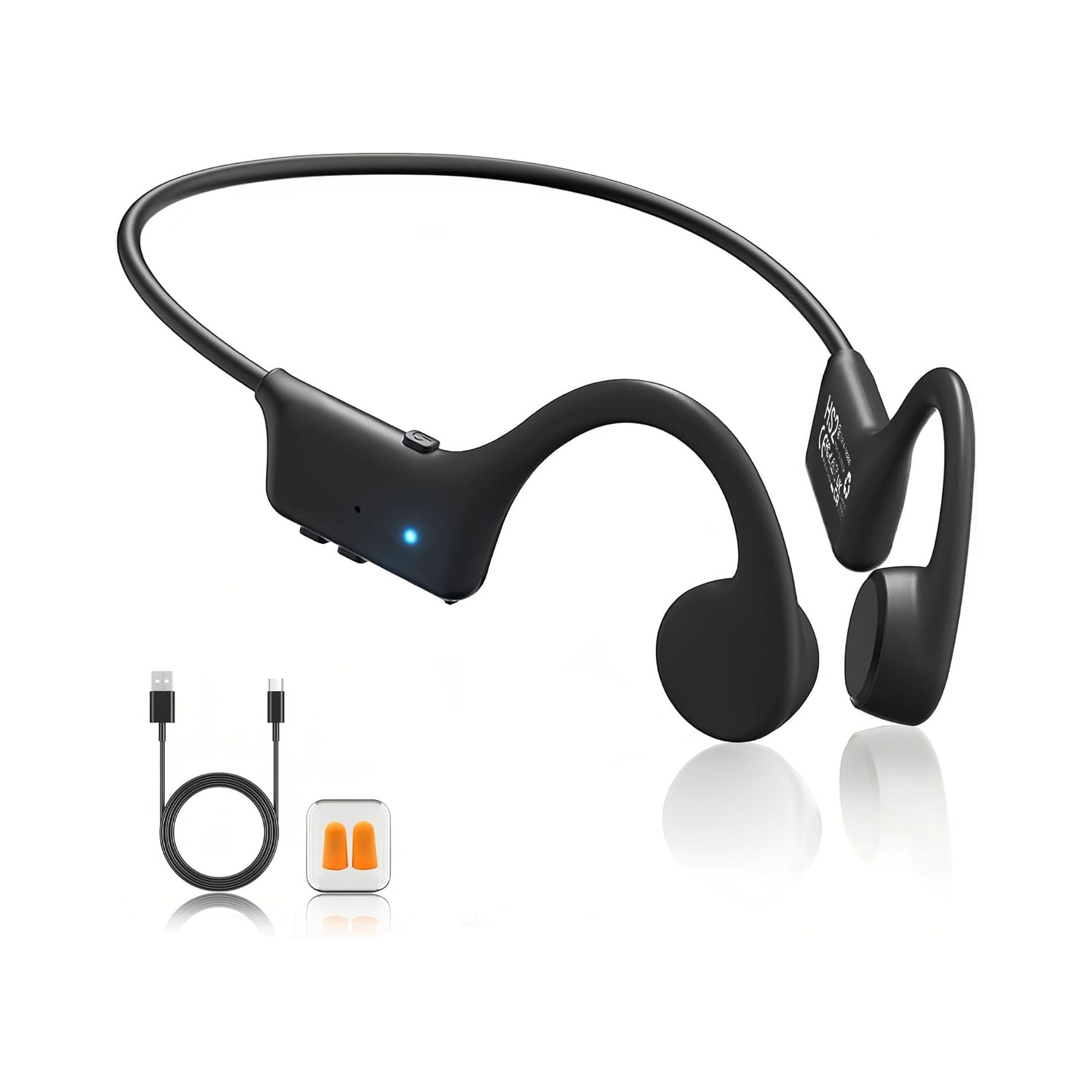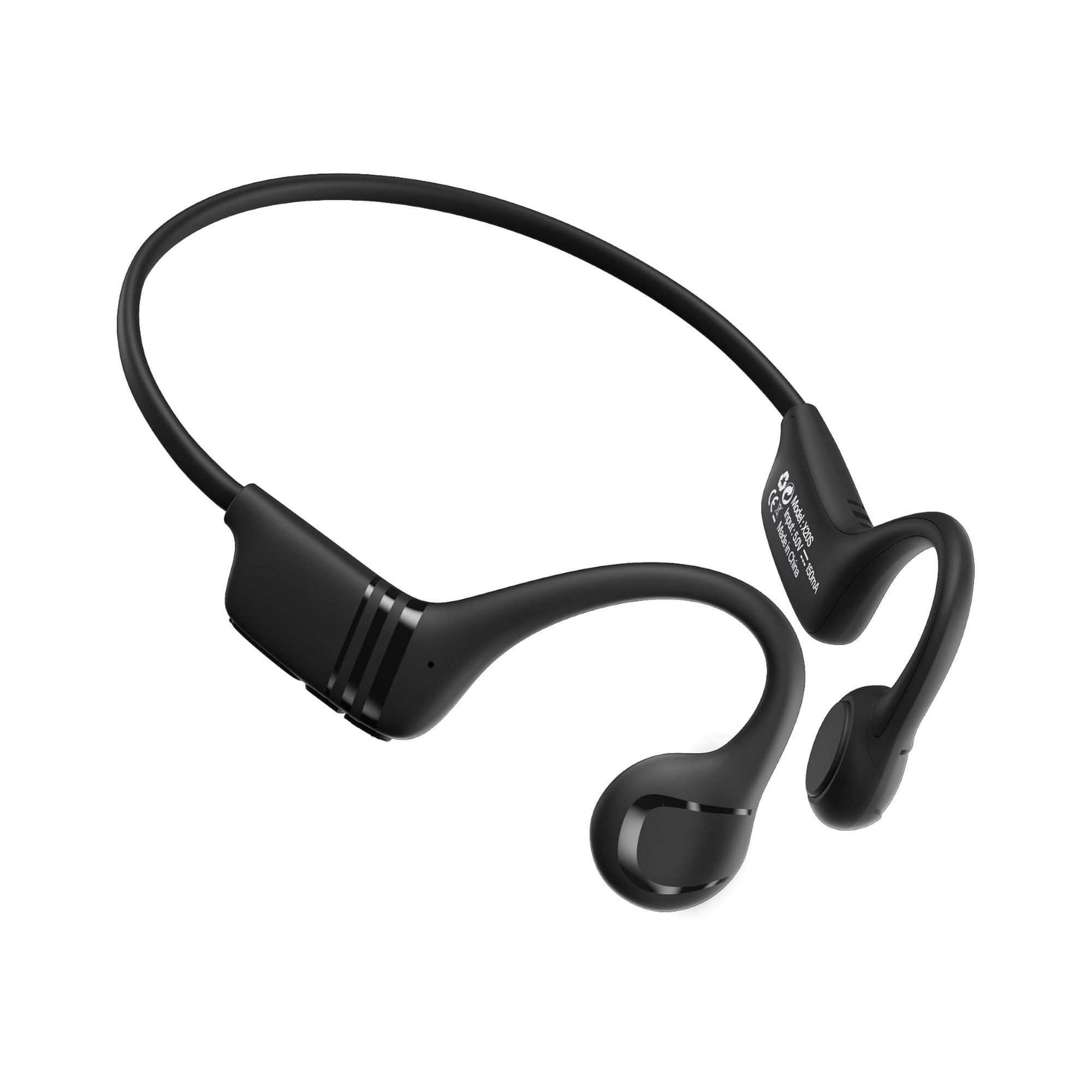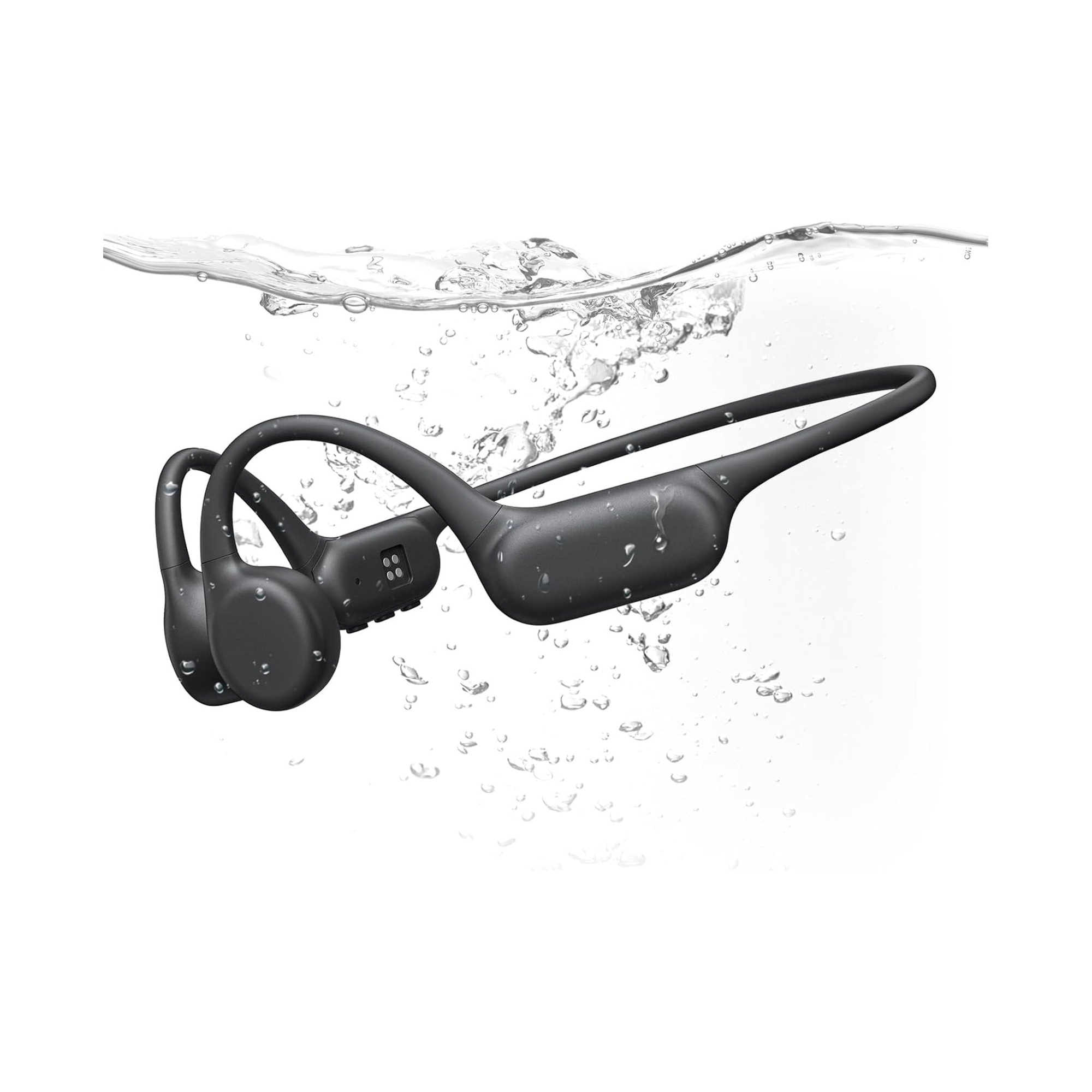



How to wear bone conduction headphones for sport comes down to three placements: pad on the bony ridge just in front of the ear opening, rear band low at the base of the skull, and helmet, cap or sunglasses layered over the arms, never under them. Position beats volume. In a 2023 laboratory study, hearing thresholds with the transducer in front of the ear canal were 10 to 40 dB better than on the mastoid behind the ear.

Where the pad goes: on bone just in front of the ear opening
"Rest them on your cheekbones" is the usual instruction, and a cheekbone is several centimetres long. The landmark you can find with a fingertip is the tragus, which StatPearls describes as "a cartilaginous projection anterior to the concha and external acoustic meatus": the small flap of cartilage over the front edge of the ear canal. The pad goes immediately in front of it, on the zygomatic arch, the bridge of bone between cheekbone and temporal bone, above the soft cheek.
Surendran, Prodanovic and Stenfelt (Trends in Hearing, 2023) report hearing thresholds for a transducer in front of the ear canal "10 to 40 dB better than that for a placement at the mastoid", where a slipping band ends up, and conclude that "the BC stimulation position needs to be very close to the ear canal". That was a laboratory transducer, not a band on a runner, so treat the figures as direction: a pad that has crept back or down spends most of what makes the design work, and turning it up is the wrong control.
How to wear bone conduction headphones so they stay put
Run this with speech playing, which shows small position changes better than music, and repeat it the first time you are properly sweaty.
- Rear band low, at the base of the skull, ears through the crooks of the arms. A band across the middle of the head levers the pads off the ridge on every stride.
- Find the tragus with a fingertip and slide forward about a finger-width onto the arch. The centre of each pad goes there; soft cheek under the pad means you are too low.
- Sweep: move the whole headset forward and back a few millimetres at a time until the voice steps forward and fills out.
- Press-test one side at a time: push a pad gently into your face. If that side gets louder it was not in contact, so reseat it. Repeat on the other side; one pad off position reads as channel imbalance.
- Set the volume last, and lower than you expect. If the pads tickle or buzz on the cheekbone, drop two or three steps and cut bass in the equaliser: the transducer moves the pad against your head, low frequencies need the most movement, and that movement is the buzz.
- Layer everything else over the top: sunglasses stems outside the arms, cap or headband above the arms, helmet cradle above or below the rear band. Take things off in reverse order.
- Re-check at ten minutes and again once you are wet. Skin warms, the band settles and sweat makes silicone slippery; the fit that counts is the one at the end of the session.
Tension, sweat and the slow slide backwards
On a fixed frame the force holding a pad to bone comes from your head circumference. Clinical audiometry controls that force: Fröhlich, Plontke and Rahne (PLOS ONE, 2018) note that standard headbands "are designed to couple the BC transducers to the head with a static force of 5.4 N ± 0.5 N" and that deviations "can only occur for very small or large heads". The 2023 study put the consumer headset it used at "around 2 N", under half the clinical figure, so a head at either end of the range has less margin than a listing's "secure fit" suggests.
Sweat does not stop a band working; there is no seal to lose. What it changes is friction: a film between silicone and skin lets the pads creep off the ridge onto softer tissue, so the sound thins although nothing looks moved, and dried sweat leaves salt on the silicone, so wipe the pads after every session. If the band floats at rest, a thin fabric headband over the arms adds tension. If the frame is the wrong size for your head, the fix is one that adjusts: our Waterproof Swimming Headphones ($36.99 on the listing today) list an adjustable strap "to accommodate different head sizes" and a Bluetooth mode for land.
Helmets, caps, sunglasses and hair
A wraparound band wants the same few centimetres as a helmet cradle, a cap's sweatband and a sunglasses stem. The headset goes on first and comes off last; most mid-session repositioning comes from removing something that was under it.
| Headgear | Where it fights the band | What works |
|---|---|---|
| Cycling helmet | Rear retention cradle sits at the height of the rear band | Cradle above or below the band, never onto it; repeat the press test |
| Sunglasses | Stems and headset arms want the same groove above the ear | Stems outside the arms; thin stems beat thick acetate (see our glasses fit map) |
| Running cap | Sweatband presses the arms inward and shifts the pads | Cap band above the arms; recheck the pads |
| Headband or beanie | Pulls the band down and loads the pads unevenly | Thin fabric only; over the arms it can add useful tension |
| Ponytail or bun | A low tail sits where the rear band goes and levers the frame up | High and clear, or low and swept to one side |
Two things the table cannot fix. Race organisers treat headphones as one category: the Road Runners Club of America's guidance is that directors "should not promote headphone use in races and group runs", with no exception for open-ear designs. And an open canal keeps traffic audible only at moderate volume; the WHO's safe-listening advice is a device set "to no more than 60% of maximum", and well past that the street vanishes behind the music through an open ear as readily as a sealed one.
If a product causes pain, irritation, ringing or a noticeable hearing change, stop using it and seek qualified care.
What the listings say about fit
The bone conduction bands sit in our everyday wireless collection. The Bone Conduction Open-Ear Sport Headphones ($39.99 on the listing today) describe a "lightweight wraparound frame with soft skin-friendly silicone" and a fit that "stays comfortably in place during movement", and state up to 12 hours of playtime with USB-C charging. The description gives IP54 while one gallery image says IP55; either way the second digit covers splashes and rain, and immersion is a different rating, as our IP ratings explainer sets out. No weight, head-size range or adjustment is listed, so treat the frame as one fixed size.
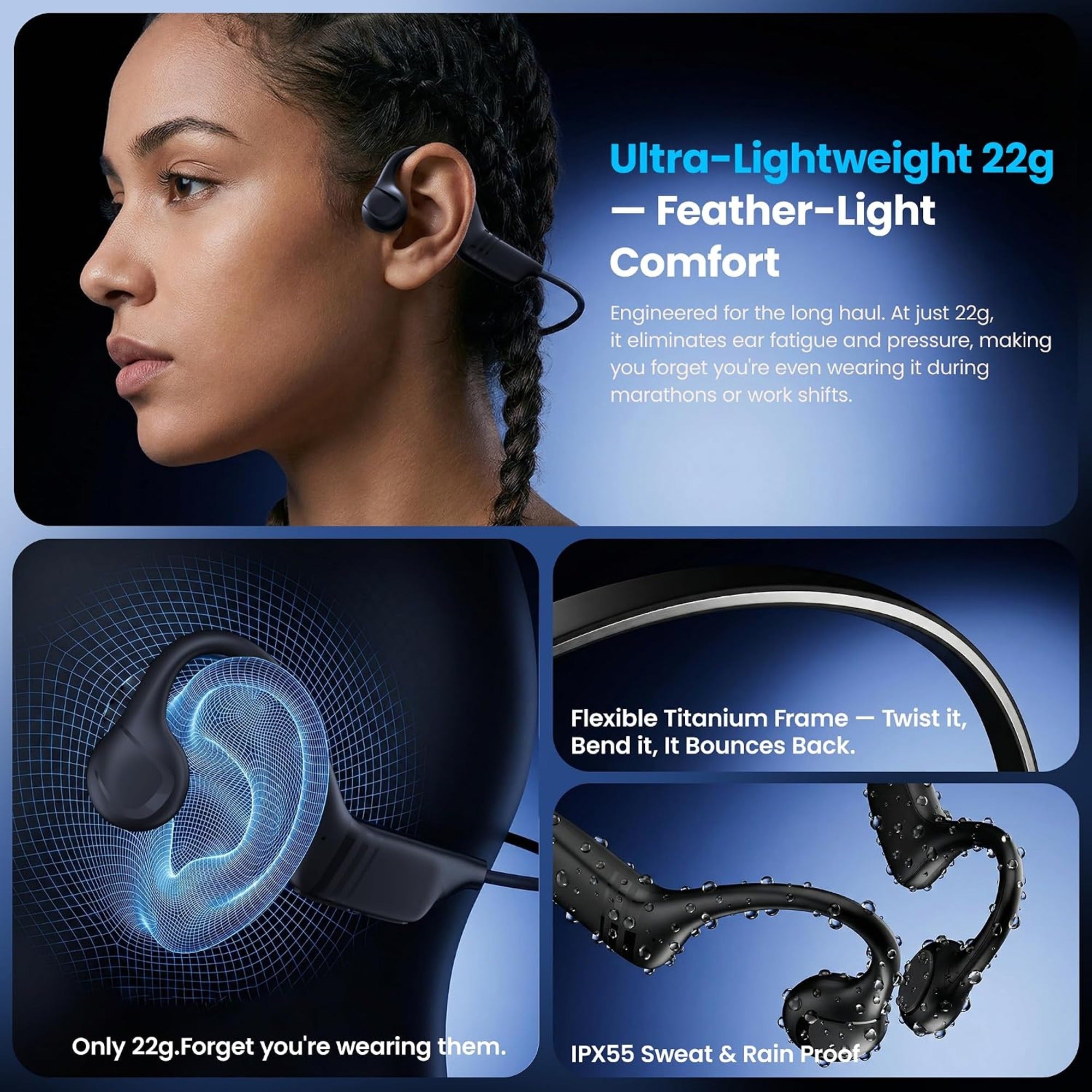
The Series 148 ($68.98 on the listing today) carries a true-wireless name but is a wraparound bone conduction band, and its listing states a weight, 22 grams on "a flexible titanium frame", with IP55 and up to 10 hours. It also claims the "wrap-around design stays in place without shifting"; take that as the manufacturer's position, since neither band lists a head-size range or a clamping force, and the press test above is how you find out. If no wraparound frame suits you, open-ear versus bone conduction explains what changes when a small speaker replaces the pad.
Questions runners and riders ask about the fit
Why do my bone conduction headphones sound thin when I run?
Usually because the pads have crept off the bony ridge, backwards towards the ear or down onto the cheek. Stop and press each pad in with a fingertip; if the sound fills out, reseat it there. If both sides are on bone and still thin, the low end is the design's limit, and cutting bass while lowering the volume sounds cleaner than boosting it.
Do bone conduction headphones stay on in the gym?
On a treadmill or a bike, yes, provided the band sits low and the pads are on bone. Floor work is the test: lying back on a bench pushes the rear band up and jumps load a slack band, so expect to reseat the pads afterwards. Also assume the next machine can hear your playlist, because open designs leak sound at gym volumes.