

In-Ear Monitors Under $100 With Detachable 2-Pin Cables and Resin Housings
Budget audiophile personal audio has shifted dramatically toward custom-inspired medical-grade resin housings and modular detachable cables. Beneath the hundred-dollar threshold, listeners no longer need to accept brittle molded plastics or fixed wires that fail at the strain relief within six months of daily commuting. Modern subtractive manufacturing and high-precision SLA 3D printing now allow boutique acoustic enclosures to enter mass production without sacrificing internal chamber geometries.
When selecting monitors in this competitive price bracket, physical engineering choices matter as much as stated frequency response charts. An airtight acrylic shell prevents internal shell resonance from smearing mid-bass definition, while standardized detachable cables let owners swap between unbalanced portable sources and balanced desktop outputs. Evaluating how driver topologies interact with acoustic damping filters reveals which affordable designs deliver true reference clarity without harsh vocal sibilance.
Detachable 2-Pin Connectors Versus MMCX Reliability Under $100
Connector longevity remains the primary point of physical failure on portable audio gear, making terminal interface selection critical. Two-pin friction-fit designs utilize twin 0.78mm gold-plated pins seated into molded concha sockets, preventing the axial rotation that steadily degrades coaxial MMCX barrels. Budget MMCX joints frequently accumulate pocket lint and microscopic grit, leading to intermittent signal cutouts and loose swivel connections after modest physical handling.
Recessed two-pin sockets provide superior lateral shear protection by anchoring the cable connector shroud directly inside the acrylic housing wall. This mechanical barrier prevents sideways cable tugs from bending internal contact pins during subway travel or gym storage. Furthermore, aftermarket multi-core oxygen-free copper cables are universally available in 0.78mm configurations, allowing seamless replacement without discarding pristine acoustic driver housings.
| Housing Material | Driver Topology | Connector Interface | Passive Attenuation | Average Price |
|---|---|---|---|---|
| Medical-Grade Resin | Single Dynamic (10mm) | 0.78mm 2-Pin (Recessed) | 22 dB to 26 dB | $45 to $70 |
| 3D-Printed Solid Acrylic | Hybrid 1DD + 1BA | 0.78mm 2-Pin (Flush) | 24 dB to 28 dB | $65 to $95 |
| Zinc-Aluminum Alloy | Dual Dynamic Drivers | MMCX Coaxial Swivel | 18 dB to 22 dB | $50 to $80 |
| Hollow Polycarbonate | Multi-BA Array (3BA) | 0.75mm 2-Pin (QDC Hood) | 20 dB to 24 dB | $75 to $99 |
Acoustic Benefits of Solid Resin Enclosures Over Hollow Plastics
Molded hollow plastic earphones suffer from thin boundary walls that flex under high internal sound pressure levels, creating unwanted parasitic vibration. In contrast, solid-pour UV-curved resin shells behave as rigid acoustic inert blocks, ensuring that every micro-displacement of the dynamic diaphragm projects directly down the sound bore. This structural mass density eliminates hollow phase cancellation between 250 Hz and 800 Hz, preserving natural warmth across lower brass and baritone vocals.
Additionally, continuous acrylic shells allow engineers to cast smooth, organic acoustic waveguides directly into the interior geometry of the nozzle. By routing high frequencies through dedicated narrow bore paths and damping low-frequency back-waves through microscopic acoustic vents, phase coherence matches high-end stage monitors. The non-porous exterior finish also conforms comfortably against the antihelix, creating an unbroken passive acoustic seal that dampens background commuter chatter.
Maintaining Connector Hygiene and Transitioning to Bedtime Listening
Preserving electrical integrity on detachable cable interfaces requires basic routine maintenance to prevent sweat corrosion. Wiping the 0.78mm pin terminals with a dry microfiber cloth and occasionally clearing socket contacts with anhydrous alcohol stops oxidation buildup. Storing resin monitors inside a hard zipper clamshell case prevents pocket lint from lodging inside delicate nozzle mesh filters during transport between rehearsals and commutes.
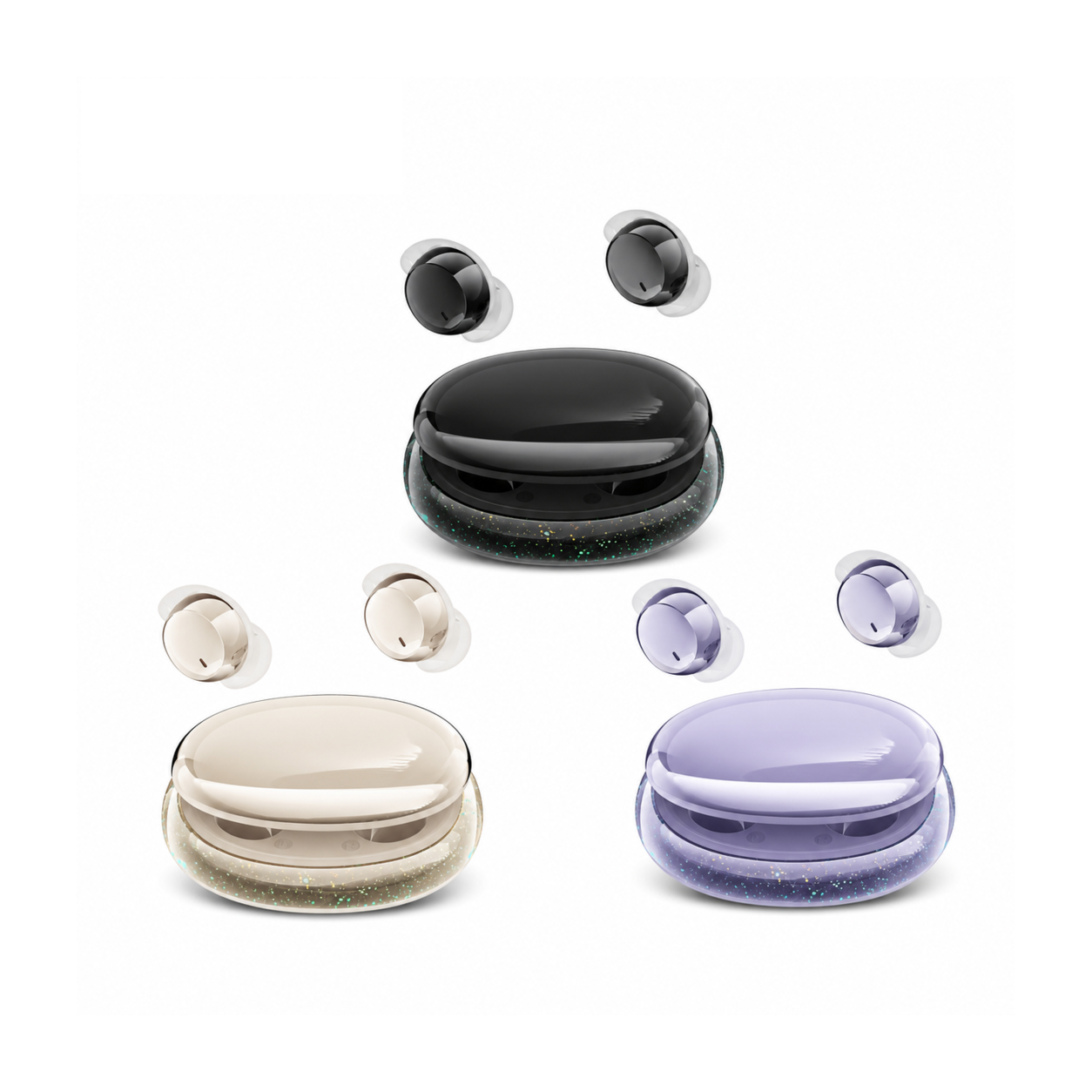
Flat, stemless earbuds for sleeping on your side, with a dynamic sleep-support mode and a starlight glow charging case. See the three colors at EARSOLE.
While high-isolation resin monitors deliver outstanding resolution during daytime analytical listening, their rigid contours and protruding connector pins become intrusive when resting on pillows. Rigid shells exert direct mechanical pressure on the ear cartilage, necessitating specialized low-profile hardware like the EARSOLE Low-Profile Earbuds for nocturnal unwinding.
Buyer Checklist for Sub-$100 In-Ear Monitor Performance
Navigating budget audiophile specifications requires looking beyond inflated driver counts to evaluate actual mechanical construction. Prioritize recessed 0.78mm 2-pin sockets over exposed flush pins to prevent mechanical shear damage during daily packing. Inspect product teardowns to ensure resin shells are solid medical-grade acrylic rather than hollow two-piece glued plastic shells that crack upon accidental tabletop drops.
Source matching is equally decisive: ensure monitor nominal impedance sits between 16 and 32 ohms with sensitivity ratings around 105 dB per milliwatt. This sensitivity profile guarantees clean, undistorted listening volumes from modest USB-C headphone dongles without requiring dedicated high-voltage mobile amplifiers. Finally, confirm the package includes multi-flange or dense memory foam tips to secure an airtight acoustic seal across irregular ear canals.
Frequently Asked Questions
Why are 2-pin connectors preferred over MMCX on budget in-ear monitors?
Two-pin friction-fit connections eliminate rotational friction wear, preventing loose swivels and intermittent signal dropouts that frequently plague budget MMCX coaxial barrels over prolonged handling.
Do solid resin housings sound better than hollow plastic shells?
Solid resin enclosures eliminate internal shell flexing and unwanted resonance cavities, providing cleaner transient response, firmer sub-bass impact, and smoother high-frequency dispersion across acoustic instruments.