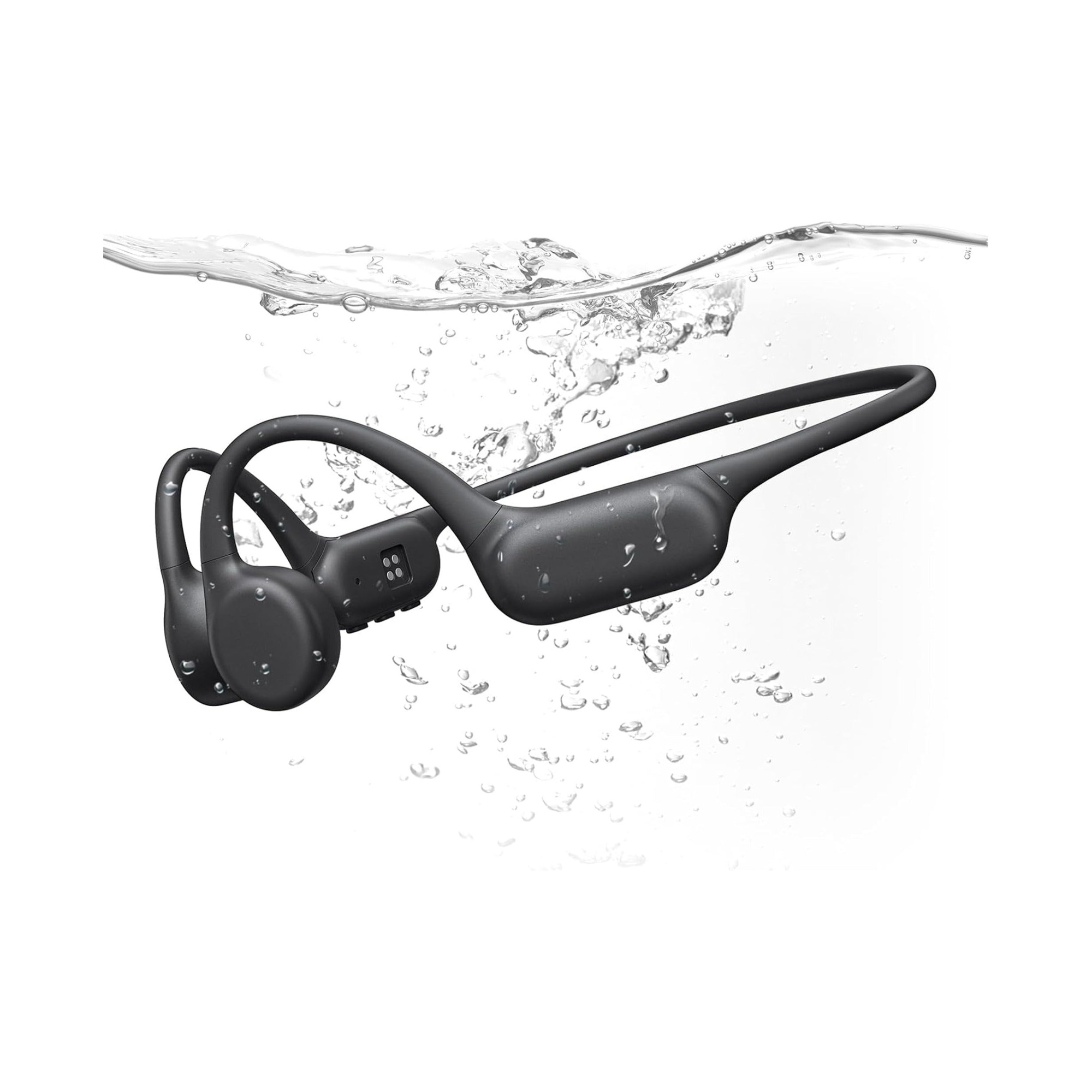
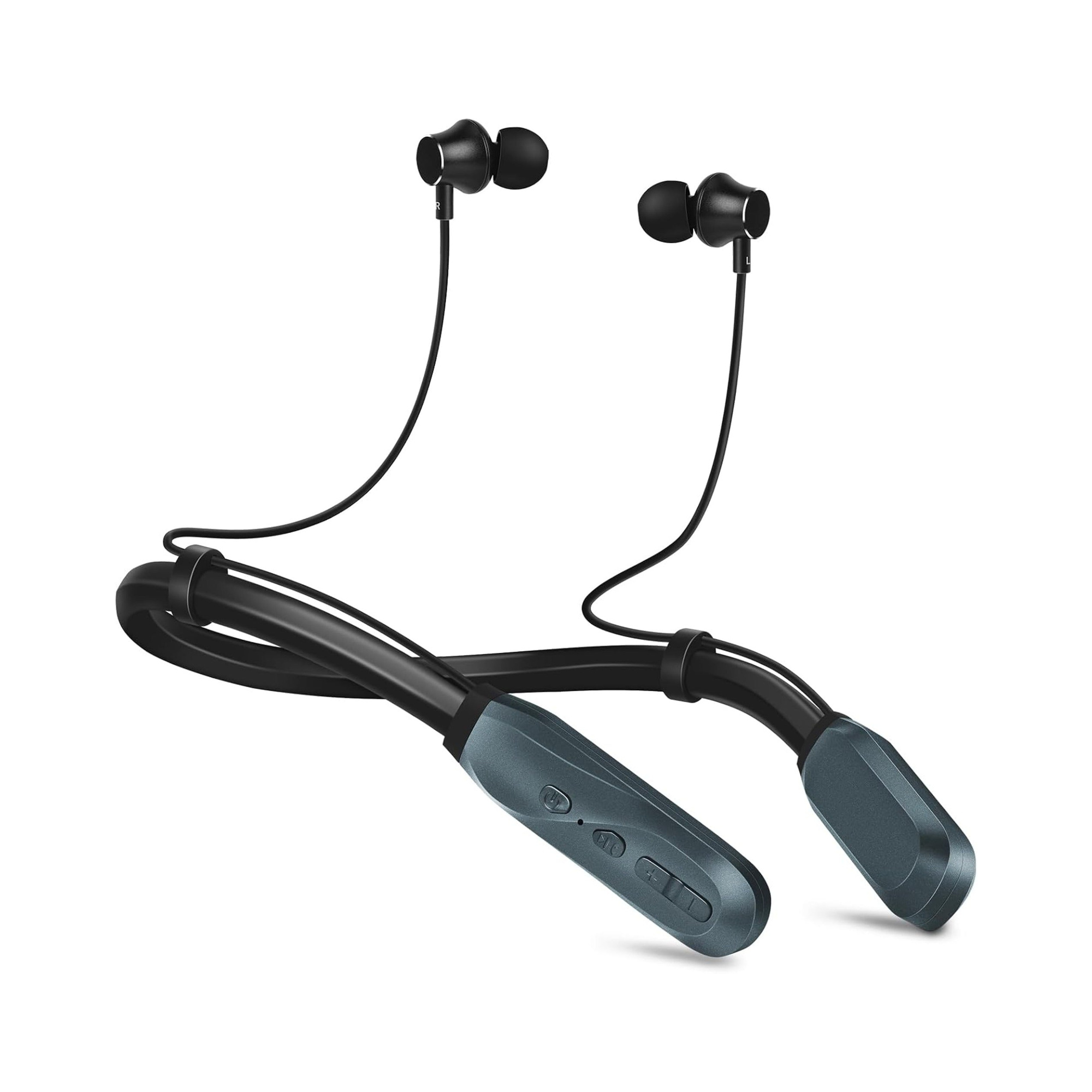
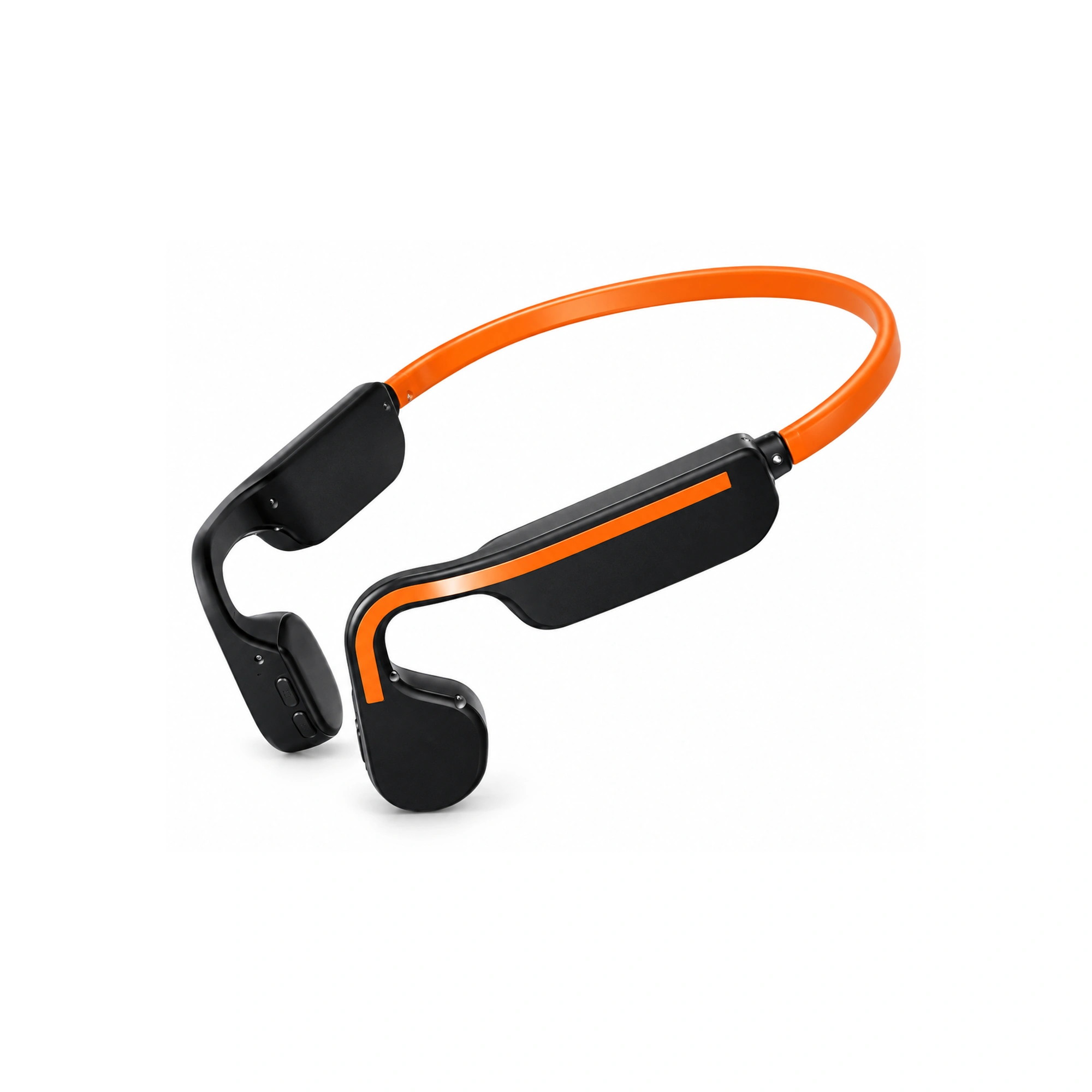
Under IEC 60529, IPX5 waterproof earbuds are certified to withstand low-pressure freshwater jets projected from a 6.3 mm (0.25 in) nozzle from any direction at 12.5 litres per minute and 30 kPa (4.4 psi) from a distance of 3 meters (9.8 ft) for 1 minute per square meter and at least 3 minutes. That nozzle test makes ipx5 waterproof earbuds noticeably more resilient than IPX4 splash-rated buds when workout sweat pools around the ear canal or passing rain hits the housing, followed by a brief low-pressure tap wipe-down. However, IPX5 does not certify protection against hot soapy shower spray, continuous torrential downpours (where runners in r/Earbuds recommend stepping up to IPX6 or IPX7), or underwater immersion. Furthermore, IEC 60529 water ingress ratings are not cumulative above IPX6: an IPX7 immersion rating does not automatically cover IPX5 water jets unless the enclosure is dual-rated (IPX5/IPX7). When evaluating everyday catalog options such as the N72 Graphite Wire-Hook Wireless Earbuds ($16.99) and the Matte Black Wedge-Panel Wireless Earbuds ($29.99) in our Everyday Wireless Earbuds collection, buyers should note that neither model publishes a verified IEC 60529 IPX rating and should treat both as dry-use audio gear whose charging contacts must be wiped dry before docking.
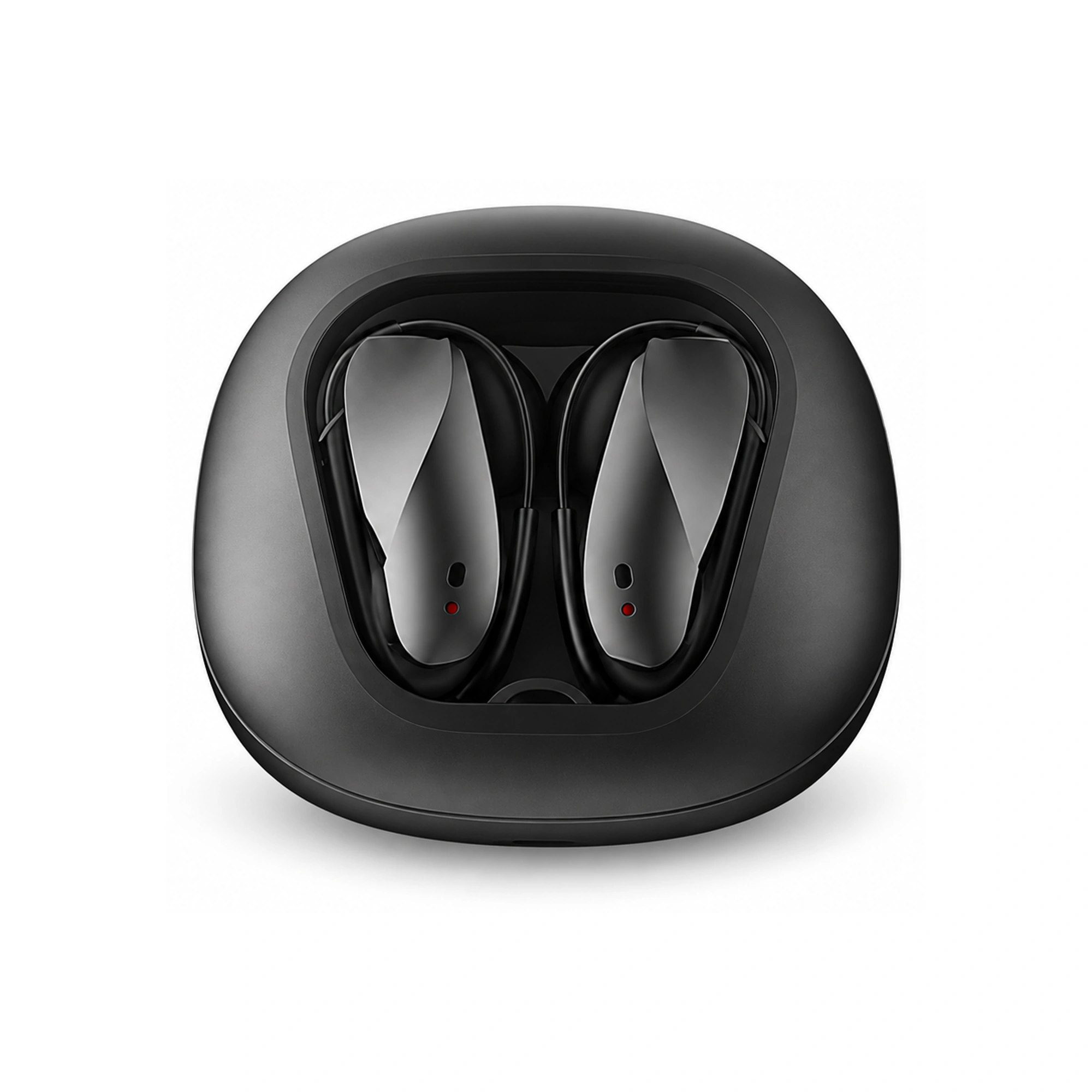
Inside the IEC 60529 6.3 mm Nozzle Test Bench for IPX5 Waterproof Earbuds
Many consumer roundups summarize ipx5 earbuds loosely as resisting a “15-minute water jet from a distance of 3 meters” and stop at saying IPX5 is too low for full submersion. Looking directly at the IEC 60529 (EN 60529) liquid ingress protection table reveals the exact mechanical parameters that an acoustic enclosure must survive to earn the second digit 5:
- Nozzle internal diameter:
6.3 mm(0.25 in) projecting a directed water stream against the enclosure from any direction. - Volume flow rate:
12.5 litres per minute(±5%). - Delivery pressure:
30 kPa(4.4 psi) measured at a test distance of3 meters(9.8 ft). - Minimum test duration:
1 minute per square meterof enclosure surface area, for at least 3 minutes total. - Test liquid medium: Clean fresh water at laboratory conditions.
Why does a 6.3 mm nozzle at 12.5 litres per minute matter on an earbud shell that is only a few centimeters wide? Unlike falling raindrops or a mist bottle, a directed 30 kPa water jet applies dynamic momentum directly against three vulnerable entry points on wireless earbuds:
- The acoustic nozzle mesh: The fine woven mesh sitting just inside the silicone ear tip must block water droplets from reaching the dynamic driver diaphragm while still allowing sound pressure waves to pass freely.
- The barometric pressure relief vent: True wireless housings rely on tiny vents to prevent “driver flex” when you press the silicone tip into your ear canal. Under a
6.3 mmwater jet, that vent relies on a hydrophobic micro-membrane to stop water penetration. - Housing split lines and microphone ports: Ultrasonic welds or adhesive gaskets along the plastic seam must resist directional water flow from every angle for at least 3 minutes without letting moisture bridge internal PCB traces.
IPX4 Splash vs IPX5 Low-Pressure Jets vs IPX6 and IPX7 Non-Cumulative Boundaries
Shoppers comparing ipx4 vs ipx5 or ipx5 vs ipx7 often assume the IPX scale works like a simple ladder where every higher digit automatically passes every lower test. Under IEC 60529, that assumption breaks down between water-jet tests (IPX5 and IPX6) and static immersion tests (IPX7 and IPX8).
| IEC 60529 Rating | Laboratory Test Method | Nozzle / Depth Specification | Flow Rate & Pressure | Minimum Duration | Cumulative With Jet Tests? |
|---|---|---|---|---|---|
| IPX4 | Splashing water from any direction | Oscillating tube or spray nozzle with counterbalanced shield removed | Splash spray across enclosure angles | 5 to 10 minutes | Covered by IPX5 / IPX6 |
| IPX5 | Low-pressure water jets from any direction | 6.3 mm (0.25 in) nozzle at 3 m (9.8 ft) distance | 12.5 L/min at 30 kPa (4.4 psi) | 1 min/m² for at least 3 minutes | Covers IPX4 splash |
| IPX6 | Powerful water jets from any direction | 12.5 mm (0.49 in) nozzle at 3 m (9.8 ft) distance | 100 L/min at 100 kPa (15 psi) | 1 min/m² for at least 3 minutes | Covers IPX5 low-pressure jets |
| IPX7 | Immersion up to 1 m (3 ft 3 in) depth | Lowest point 1,000 mm below surface (150 mm above top if taller than 850 mm) | Hydrostatic pressure at 1 m depth | 30 minutes | No — not cumulative beyond IPX6 unless dual-rated (IPX5/IPX7) |
Two engineering distinctions in this table directly affect how you choose water resistant wireless earbuds:
- IPX4 vs IPX5 (
12.5 L/mindirected stream vs splash droplets): IPX4 only certifies that random splashes from an oscillating tube or spray shield will not cause harmful ingress over 5 to 10 minutes. If you rinse salty sweat off your earbuds under a gentle stream or get caught in wind-driven rain, IPX4 seals can be overwhelmed because they were never tested against a cohesive12.5 L/minnozzle stream at30 kPa. - IPX5 vs IPX7 (The non-cumulative rule above IPX6): As IEC 60529 explicitly states, water ingress ratings are not cumulative beyond IPX6. A pair of IPX7 waterproof earbuds is tested by sitting quietly in static fresh water up to
1 meterdeep for30 minutes, which creates steady hydrostatic pressure (~9.8 kPa) rather than dynamic30 kPanozzle impact. Conversely, an IPX5 earbud can deflect a6.3 mmwater jet for 3 minutes, yet fail if dropped to the bottom of a1 meterpuddle or sink basin for 30 minutes because sustained hydrostatic pressure slowly forces water past the acoustic mesh. Only products tested and marked with a slash—such asIPX5/IPX7—are certified for both water jets and temporary immersion.
Heavy Rain, Salty Sweat, and Why Soapy Showers Defeat Freshwater Nozzle Ratings
When runners and commuters search “can you shower with ipx5 earbuds” or ask whether ipx5 waterproof models survive a storm, they are testing three very different fluid environments against a standard that only uses clean fresh water.
1. Passing Rain vs Constant Heavy Downpours
In an r/Earbuds discussion titled “IPX5 for running in heavy rain”, a runner asked whether IPX5 would hold up if caught in a strong downpour. Community members pointed out that for constant heavy rain exposure, runners should look for IPX6 (100 L/min at 100 kPa from a 12.5 mm nozzle) or IPX7/IPX8, noting that many sports models carry higher ratings specifically for sustained wet weather. Why? In a passing 10-minute rain shower, raindrops hit the outer housing at terminal velocity and run off—well within the 30 kPa, 12.5 L/min envelope of IPX5. In a prolonged, wind-driven downpour where water channels continuously down your hood, hair, and ear concha for 45 to 60 minutes, water pools directly against the microphone ports and acoustic mesh far longer than the 3-minute IEC 60529 nozzle test.
2. Why Hot Soapy Showers Defeat IPX5 Acoustic Meshes
Even though a bathroom showerhead looks similar to an IPX5 nozzle test, showering with IPX5 earbuds introduces three failure mechanisms not covered by IEC 60529:
- Surfactants lower surface tension: IEC 60529 specifies that standard IP testing is performed using fresh water, and protection against other fluids (salt water, oils, or solvents) is not guaranteed. Shampoo, body wash, and soap act as surfactants that drastically reduce the surface tension of water. Hydrophobic acoustic meshes rely on high surface tension so fresh water beads up across the microscopic pores; soapy water wets the mesh fibers and wicks straight through into the driver chamber.
- Steam and thermal expansion: Hot shower vapor penetrates microscopic vent membranes as a gas and condenses into liquid droplets on cooler internal circuitry as the earbuds cool down.
- Close-range nozzle velocity: Standing 15 to 30 centimeters under a pressurized showerhead delivers higher localized impact than a
6.3 mmnozzle positioned3 meters(9.8 ft) away.
3. Sweat Electrolytes and Pogo-Pin Corrosion
Human sweat contains sodium, chloride, potassium, and skin oils. While an IPX5 housing seal prevents liquid sweat from flooding the internal battery during a workout, any salty moisture left sitting on the exposed metal charging contacts will trigger rapid galvanic electrolysis the moment the earbuds drop onto the live 5V pogo pins inside a charging case. Even with certified sweatproof earbuds, wiping the charging contacts and removing the silicone ear tips to blot the nozzle mesh dry before docking is essential.
Inspecting Ear-Hook vs Wedge-Panel Wireless Earbuds in the Earsole Catalog
When you browse wireless earbuds for daily commuting, desk work, or gym warm-ups, housing geometry determines how the earpiece stays anchored and how moisture interacts with the shell. Below we inspect two distinct form factors from the Earsole catalog—an over-ear wire-hook design and a compact wedge-panel design—while clearly stating their verified catalog specifications and ingress boundaries.
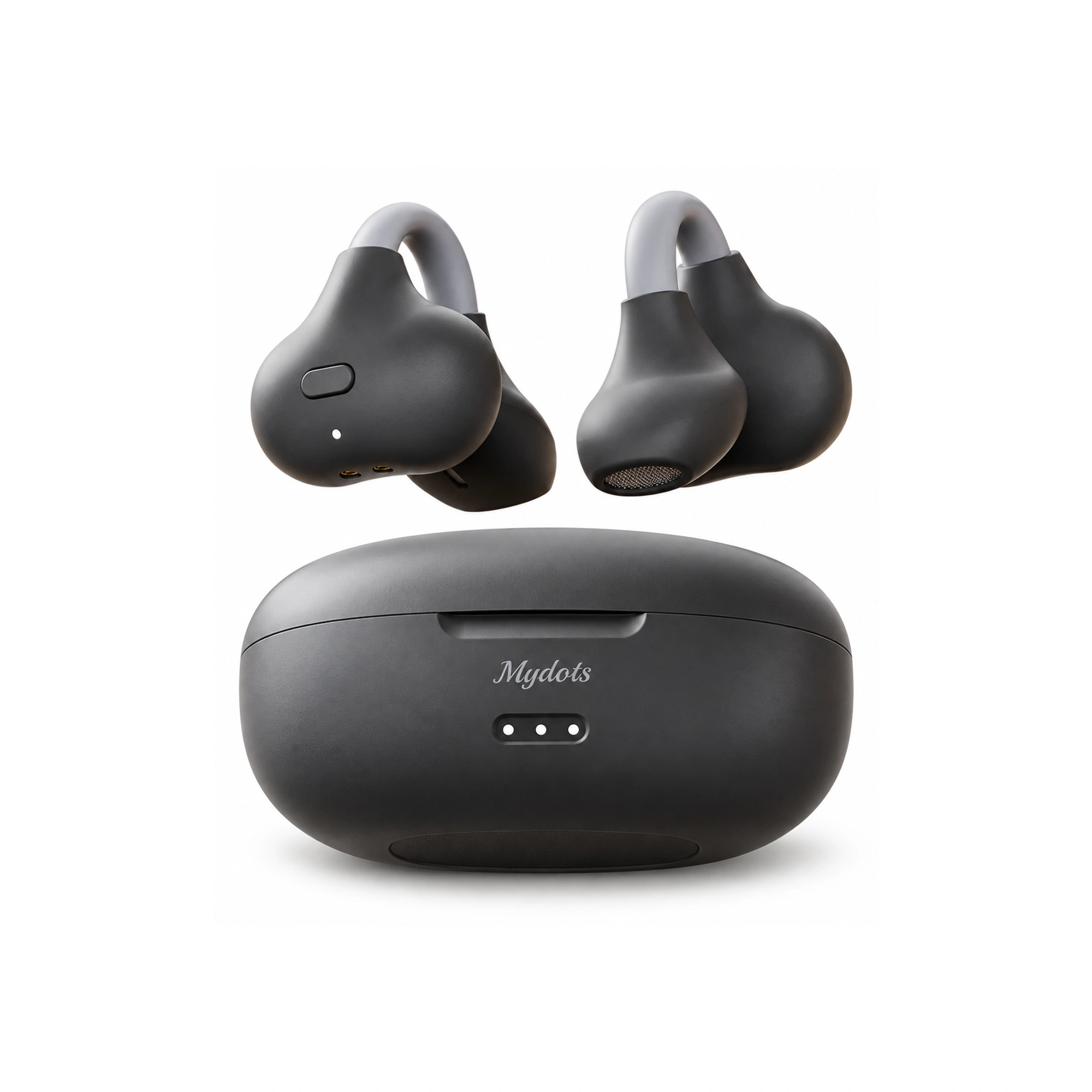
| Feature / Specification | N72 Graphite Wire-Hook Wireless Earbuds | Matte Black Wedge-Panel Wireless Earbuds |
|---|---|---|
| SKU | EAR-1688-1006180803883 | EAR-1688-773374428928 |
| Catalog Category | Ear-Hook Earbuds | Wireless Earbuds |
| Catalog Price | $16.99 (1699 cents) | $29.99 (2999 cents) |
| Selected Color / Finish | Graphite | Black (Matte finish) |
| Housing & Retention Geometry | Sculpted graphite panels with thin curved ear hooks and black silicone contact surfaces | Wedge-shaped housings with rounded edges and front indicator dots |
| Charging Case Design | Rounded-square charging case | Oval charging case |
| Verified IEC 60529 IPX Rating | Not published in catalog (treat as unrated dry-use audio gear) | Not published in catalog (treat as unrated dry-use audio gear) |
1. N72 Graphite Wire-Hook Wireless Earbuds ($16.99)
According to the Earsole catalog, the N72 Graphite Wire-Hook Wireless Earbuds (SKU EAR-1688-1006180803883, $16.99) is listed in the Ear-Hook Earbuds category and features sculpted graphite panels, thin curved ear hooks, a rounded-square charging case, and black silicone contact surfaces in a graphite finish.
- Mechanical retention advantage: Shoppers searching for wireless earbuds with ear hooks prioritize over-ear stability because standard in-ear silicone tips can lose friction when the ear canal warms up. The thin curved ear hooks loop behind the pinna to distribute weight outside the ear canal, while the black silicone contact surfaces cushion the concha.
- Transparency on water ingress: The Earsole catalog listing for the N72 Graphite Wire-Hook Wireless Earbuds documents its physical shape and graphite finish only; it does not publish a verified IEC 60529 IPX5, IPX7, or IPX8 rating. Do not expose the N72 to
6.3 mmwater jets, tap rinsing, or heavy rain, and always wipe the black silicone contact surfaces and metal charging pads with a dry microfiber cloth before placing them back into the rounded-square charging case.
2. Matte Black Wedge-Panel Wireless Earbuds ($29.99)
According to the Earsole catalog, the Matte Black Wedge-Panel Wireless Earbuds (SKU EAR-1688-773374428928, $29.99) is listed in the Wireless Earbuds category and features wedge-shaped housings, rounded edges, an oval charging case, and front indicator dots in a black finish.
- Compact pocketable ergonomics: Instead of external ear hooks, this model uses wedge-shaped housings with rounded edges that sit flush inside the outer ear bowl, paired with front indicator dots for quick visual status checks and a smooth oval charging case that slips easily into a pocket.
- Transparency on water ingress: Like the N72, the Earsole catalog record for the Matte Black Wedge-Panel Wireless Earbuds does not publish a verified IEC 60529 IPX5 or higher water ingress rating. It is designed for dry everyday listening—such as indoor desk work, study sessions, and dry commutes—and should be kept away from rain downpours, sink sprays, and bathroom humidity.
Post-Exposure Care Checklist to Prevent Acoustic Mesh Clogging and Case Shorting
Whether you own third-party certified ipx5 waterproof earbuds or unrated everyday earbuds from our Everyday Wireless Earbuds hub, moisture failures almost always happen after the listening session ends:
- Never dock wet earbuds into the charging case: Even when earpieces carry an IPX5 rating, charging cases are almost never water-jet rated. Dropping damp buds into an oval or rounded-square charging case traps humidity under the lid and bridges the spring-loaded pogo pins.
- Pull off silicone ear tips to clear capillary water: Water droplets and sweat get trapped between the silicone ear tip collar and the nozzle lip. Remove the tips, gently tap the nozzle face down on a dry lint-free towel to dislodge water film from the acoustic mesh, and let both pieces air-dry at room temperature.
- Skip high-pressure tap streams and soap: Never hold earbuds directly under a full-force kitchen or bathroom faucet to “test” an IPX5 rating, and never wash earbud housings with liquid hand soap or alcohol wipes that dissolve mesh adhesives.
- Avoid hair dryers and sealed gym bags: Heated air warps thin dynamic driver diaphragms and softens internal glue rings, while tossing damp gear into a zipped gym compartment alongside a wet towel creates a 100% relative humidity chamber for hours.
Frequently Asked Questions
Can you shower with IPX5 waterproof earbuds?
No. Under IEC 60529, IPX5 tests low-pressure freshwater jets from a 6.3 mm nozzle (12.5 L/min, 30 kPa at 3 meters for at least 3 minutes), and standard IP testing explicitly excludes other fluids such as soapy water, oils, or solvents. Warm shower steam and shampoo surfactants reduce water surface tension, allowing moisture to penetrate the hydrophobic acoustic mesh and corrode internal electronics.
Is IPX5 enough for running in heavy rain, or do you need IPX6 or IPX7?
Under IEC 60529, IPX5 provides stronger protection than IPX4 (splashing water only) and handles workout sweat and light-to-moderate passing rain. However, for constant heavy rain runs, community members in Reddit’s r/Earbuds recommend stepping up to IPX6 (tested against powerful 12.5 mm nozzle jets at 100 L/min and 100 kPa) or IPX7 / IPX8, ideally with a dual rating (IPX5/IPX7) since IEC 60529 water ratings are not cumulative beyond IPX6.
Do the N72 Graphite Wire-Hook Wireless Earbuds or Matte Black Wedge-Panel Wireless Earbuds carry a certified IPX5 rating?
No. According to the Earsole catalog, the N72 Graphite Wire-Hook Wireless Earbuds ($16.99, SKU EAR-1688-1006180803883) features sculpted graphite panels, thin curved ear hooks, a rounded-square charging case, and black silicone contact surfaces, while the Matte Black Wedge-Panel Wireless Earbuds ($29.99, SKU EAR-1688-773374428928) features wedge-shaped housings, rounded edges, an oval charging case, and front indicator dots. Neither model publishes a verified IEC 60529 IPX5, IPX7, or IPX8 rating, so both should be used in dry conditions and wiped dry before charging.