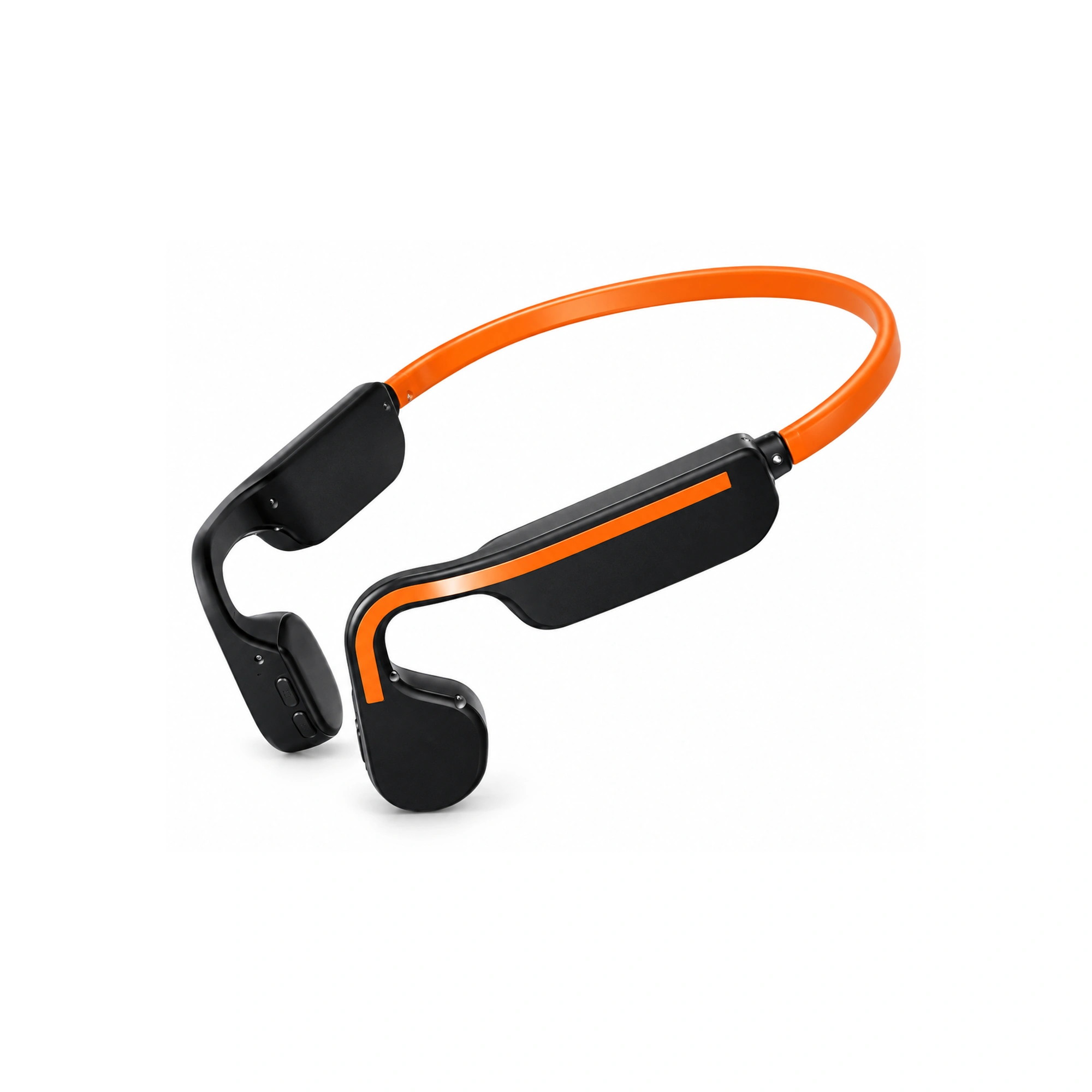
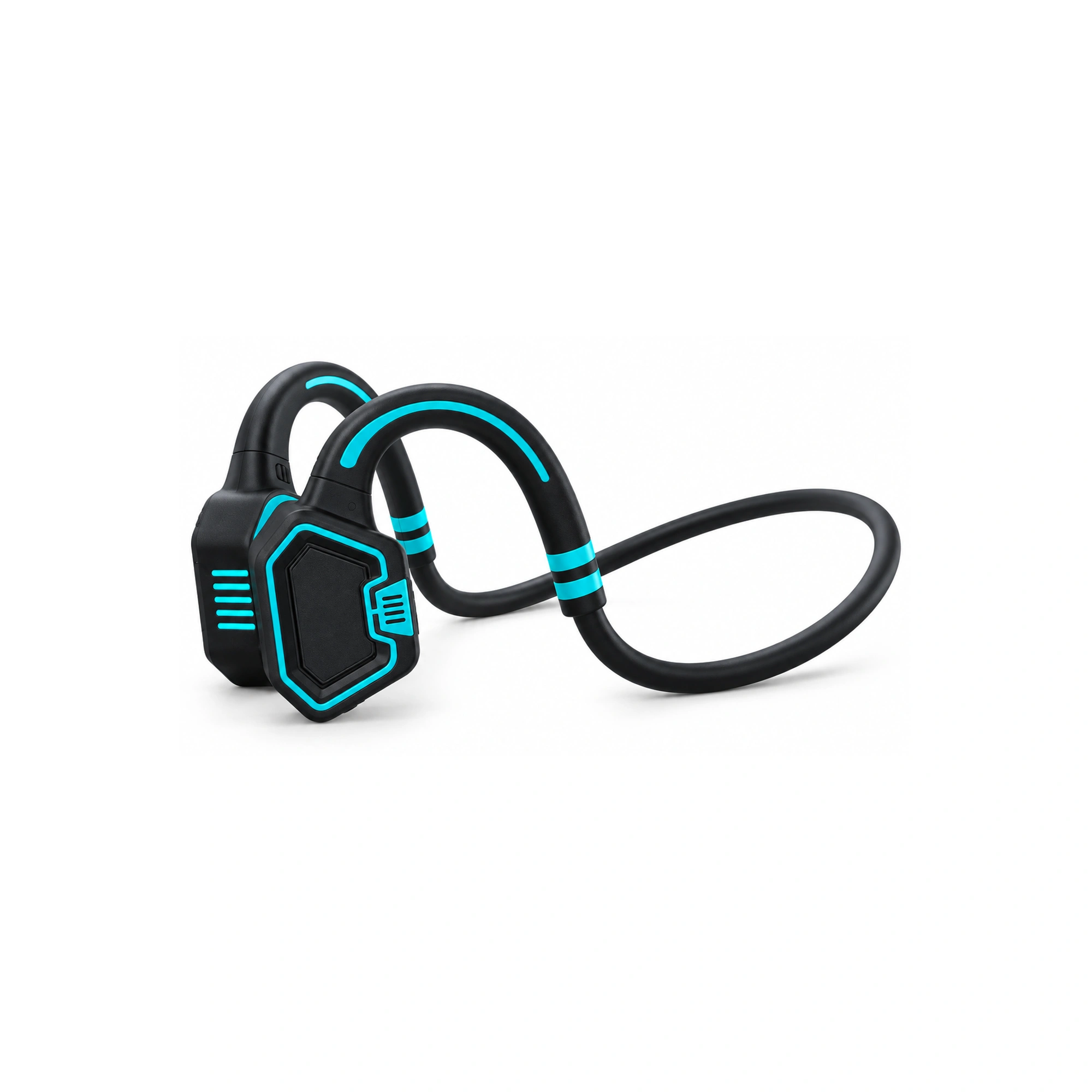
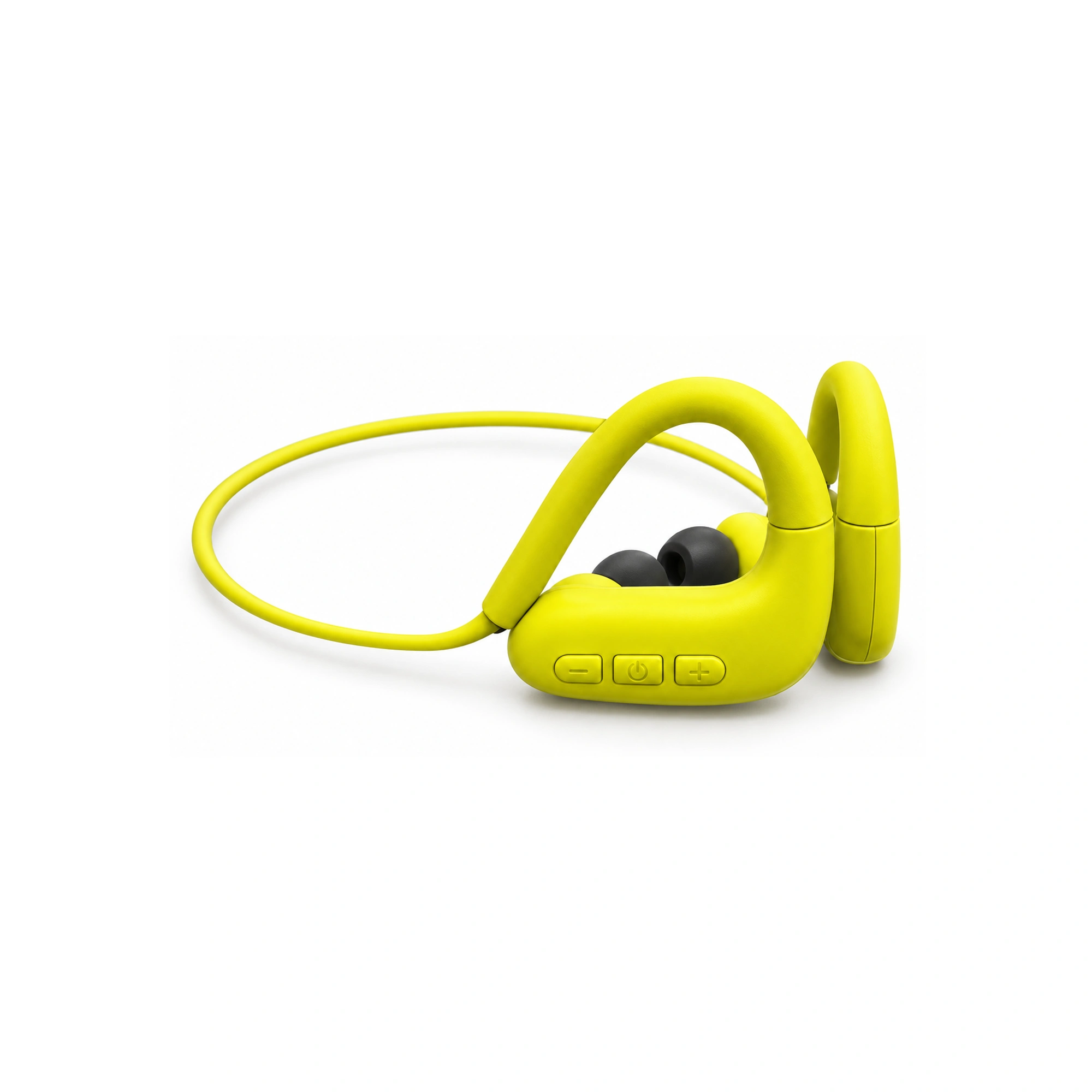
Every lap swimmer who adds audio to a pool workout eventually runs into the same mechanical bottleneck: there is less than a centimeter of space in the crease between the top of your ear (the auricular sulcus) and the side of your skull. On dry land, a wraparound headphone frame rests lightly in that groove without issue. In the pool, however, that exact same anatomical ridge is forced to share space with the thick rolled hem of a silicone swim cap and the tensioned elastic band of your swim goggles.
When all three pieces of gear stack directly on top of one another, two problems show up within your first 500 meters. First, the combined downward and inward clamping force pinches the upper cartilage of the ear until you have to stop at the wall and pull your cap up for relief. Second, if the rear band or side housings protrude outside the cap seal, the water jet created during a wall push-off or flip turn catches the frame and levers the contact pads away from your temples.
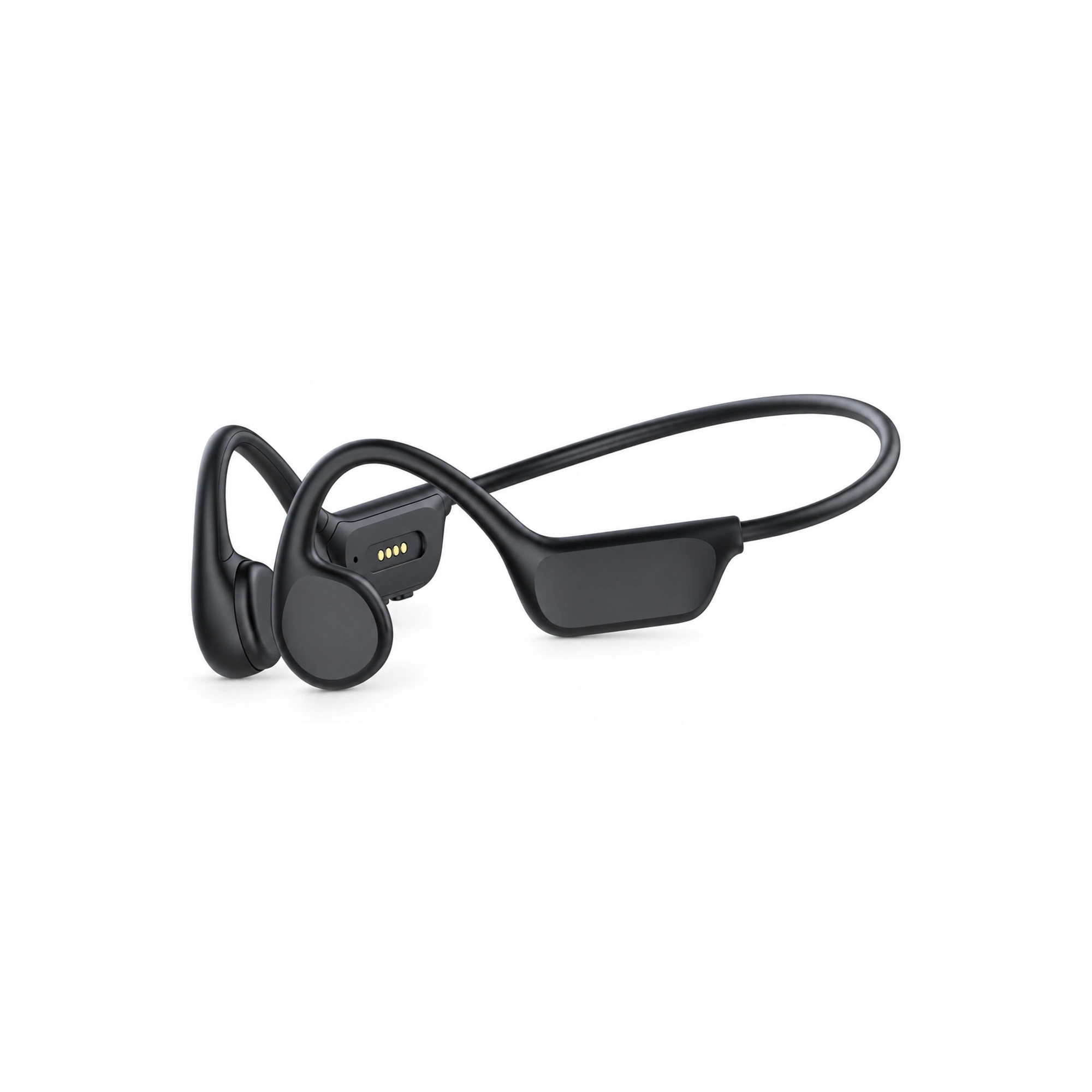
Choosing and fitting underwater headphones for lap swimming is therefore as much a headgear-routing problem as an audio decision. Below, we examine why the ear-top pinch happens, how experienced lap swimmers route their caps and goggle straps to eliminate it, and how two rear-band silhouettes in the Earsole catalog—the Black Slim-Band Swimming Headphones ($44.99) and the NANK Runner Pro 5 Rear-Band Wireless Headphones - Dark Gray ($39.99)—compare in frame geometry and catalog verification scope.
Why Headgear Stacking Ruins Lap Sets: The Three-Layer Ear Pinch
Unlike open-water sightseeing or casual pool lounging, structured lap swimming involves repetitive head rotation for bilateral breathing and high-velocity streamlining off every wall. To keep water out of your eyes and hair out of your face, your goggle strap and silicone cap must maintain steady tension around the circumference of your head.
When you add rear-band swimming headphones without changing how you put on your cap and goggles, all three tension lines converge on the top ridge of the ear:
- The Headphone Ear Hook: Curves over the top of the pinna to hold the front contact pads against the cheekbone or temple area.
- The Goggle Strap: Pulls horizontally backward from the eye sockets, often cutting right across the upper ear helix if worn low.
- The Silicone Swim Cap Edge: Features a reinforced, thicker rubber rim that grips the head right along the ear line.
Swimmers in r/triathlon (post 1urfmj9) report that wearing bone-conduction headphones, goggle straps, and the edge of a swim cap over the same area crushes the tops of the ears unless the swim cap tucks the top of the headphones down and goggle or bungee straps are routed off the ears and high on the back of the head. As thread author codephotog described after ramping up pool mileage, each item feels fine on its own, but stacking all three around the same ear zone creates rapid soreness and forces constant mid-swim adjustments.
The Three-Step Cap-and-Goggle Routing Protocol for Lap Swimmers
You do not need to loosen your goggles until they leak—or abandon your swim cap—to stop ear-top crushing. Instead, you need to separate the vertical paths of the headphone frame, the cap rim, and the goggle strap so they never stack three-deep over your ear cartilage.
Step 1: Seat the Headphones First and Use the Cap to Tuck the Upper Frame Down
Put your headphones on bare skin first so the contact pads sit flush against the temple or cheekbone area in front of your ears and the wraparound band drops low toward the nape of the neck. Next, pull your silicone swim cap on over the headphones so the cap’s reinforced bottom edge covers the upper curve of the headphone ear hook and the front pads, while leaving the lower earlobes comfortable if you prefer a half-ear cap fit.
In r/triathlon thread 1urfmj9, swimmer 21045Runner notes using the swim cap to tuck the top of the headphones down so the frame cannot shift during push-offs, and then placing the goggle strap so it never sits over the ears or directly over the headphone ear arch. Tucking the upper frame beneath the silicone cap does two things at once: it shields the front pads from wall-push water drag and locks the transducer pads in place without requiring extra clamping force.
Step 2: Wear One Cap First and Place Goggles Over the Cap for Daily Practice
Many swimmers wonder whether they should copy competitive racers who wear their goggles underneath their swim cap. Swimmers in r/Swimming (post 1172z4t) explain that wearing a cap over goggles—or wearing two caps (cap, goggles, cap)—primarily prevents goggles from coming off during a racing dive, whereas for everyday lap swimming practice, wearing one cap first with goggles over the cap is more comfortable.
During a 45-minute lap session where you push off the wall rather than diving from starting blocks, putting your cap on first (over the headphone temples) and placing your goggles on the outside of the cap gives you a major practical advantage: if your goggles fog up or need a quick rinse between interval sets, you can lift them onto your forehead without disturbing the silicone cap or dislodging your headphones underneath.
Step 3: Route Split or Bungee Goggle Straps High on the Crown (Off the Ears)
The final piece of the comfort puzzle is keeping the goggle strap completely out of the ear crease. As swimmer 9311chi points out in r/triathlon (1urfmj9), swapping a flat single strap for a bungee goggle strap—or spreading a split strap—allows you to wear the strap high on the back of the crown rather than straight across the tops of the ears.
When your goggle strap angles upward from the eye sockets toward the upper occipital bone (the crown of the head) and your headphone rear band loops downward toward the base of the skull, the two bands form an “X” geometry that never overlaps on the sensitive top ridge of your ear.
Slim Wraparound Band vs. Flared Side Housings: How Frame Profile Affects Cap Fit
Even with proper strap routing, the physical silhouette of your headphone frame determines how smoothly a silicone swim cap stretches over your temples and how much water resistance you feel when gliding off the wall. In the Swimming Headphones collection, shoppers commonly compare two distinct rear-band architectures.
1. Black Slim-Band Swimming Headphones ($44.99)
The Black Slim-Band Swimming Headphones ($44.99) is cataloged in the Earsole Swimming Headphones collection with a slim wraparound band, oval contact pads, side controls, and a black finish; the catalog record specifies physical design details only and does not list independent waterproof depth ratings or onboard storage capacity.
From a fit perspective, a slim wraparound band paired with flat oval contact pads minimizes the step-off thickness at the temple. When a tight silicone cap is pulled over oval contact pads, the cap lies flatter against the side of the head rather than tenting outward, leaving a visible gap where water can funnel in during a flip turn. The side-mounted physical buttons are positioned along the lateral housing so you can locate them by touch through a thin cap layer while resting at the wall.
2. NANK Runner Pro 5 Rear-Band Wireless Headphones - Dark Gray ($39.99)
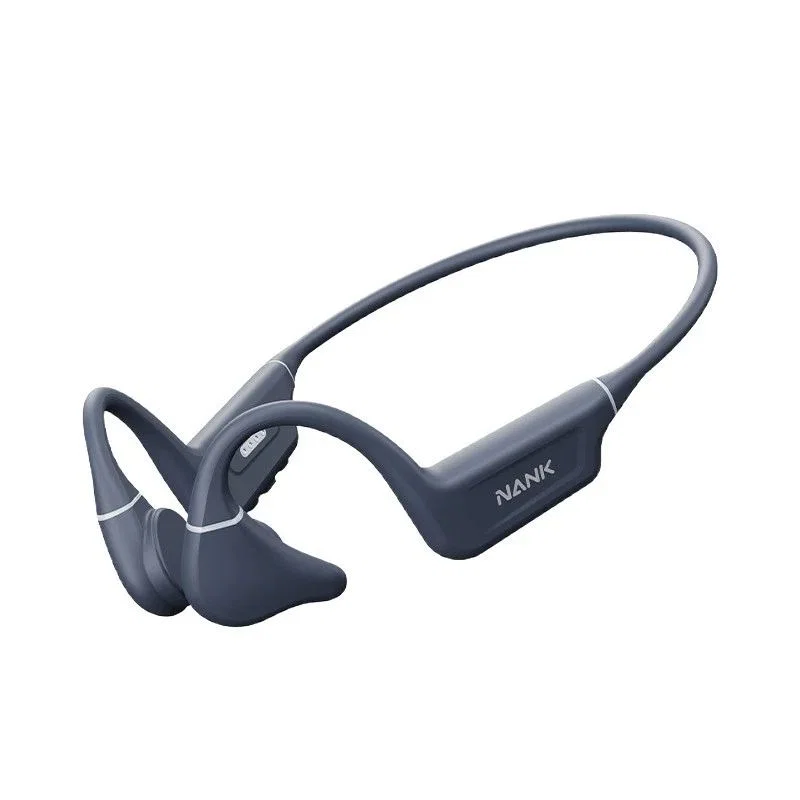
The NANK Runner Pro 5 Rear-Band Wireless Headphones - Dark Gray – Swimming Headphones ($39.99) features a dark-gray rear band and flared side housings in the selected dark-gray configuration; water-resistance, underwater use, and bone-conduction performance have not been independently verified.
Visually and structurally, the NANK Runner Pro 5 uses a sculpted, seahorse-like side profile where the rear band transitions into wider, flared side housings before curving over the ear toward the front contact modules. Those flared side housings provide a broader finger-grip surface when handling the frame with wet hands on the pool deck, though swimmers wearing high-compression silicone caps should leave slightly more slack around the temple border so the wider side housings do not press inward against the ear ridge.
Head-to-Head Comparison: Rear-Band Swimming Headphones in the Earsole Catalog
To help you compare the exact structural details and verification boundaries before choosing a frame, here is how both catalog models line up side by side:
| Feature / Specification | Black Slim-Band Swimming Headphones | NANK Runner Pro 5 Rear-Band Wireless Headphones - Dark Gray |
|---|---|---|
| Catalog Price | $44.99 | $39.99 |
| Rear-Band Architecture | Slim wraparound band | Dark-gray rear band |
| Side & Contact Profile | Oval contact pads with side controls | Flared side housings in dark-gray configuration |
| Color / Finish | Black finish | Dark Gray |
| Cap-Under-Tuck Fit Behaviour | Low-profile oval pads sit closer to the temple under a silicone cap edge | Wider flared side housings offer easier wet-finger grip but require more cap slack at the temple |
| Catalog Verification & Scope Notice | Catalog record specifies physical design details only; independent waterproof depth ratings and onboard storage capacity are not listed | Water-resistance, underwater use, and bone-conduction performance have not been independently verified |
If you are also evaluating how onboard MP3 storage compares against wireless phone streaming at the pool, see our companion breakdown on Swimming Headphones MP3 vs. Wireless Pool Setups and our physics guide on Why Bluetooth Waterproof Earbuds Drop Signal Underwater. For a deeper look at acoustic coupling in the water, read How Do Swimming Headphones Work Underwater?, or compare full-submersion enclosure ratings in Waterproof Headphones for Swimming: IPX8 Seals vs. Splash Ratings.
Flip-Turn & Wall Push-Off Checklist Before Your First Main Set
Before launching into a 1,500-meter continuous swim, run a 30-second fit check in the shallow end:
- Check the Ear-Top Crease with Two Fingers: Slide your index finger along the top of each ear after putting on your headphones, cap, and goggles. If you feel the goggle strap pressing directly on top of the headphone ear hook, slide the goggle strap 3 to 5 cm higher up the back of your head.
- Test One Streamline Push-Off: Push hard off the wall in a tight streamline with your arms squeezed against your ears. When your biceps press against the sides of your head, a properly tucked front pad will stay flat under the silicone cap rather than catching on your upper arm.
- Verify Button Access at the Wall: Practice pausing or advancing a track with one wet hand while resting at the lane line so you do not have to peel your cap up mid-workout.
Frequently Asked Questions
Should you wear your swim cap over your goggles or goggles over your swim cap when using swimming headphones?
Swimmers in r/Swimming (post 1172z4t) explain that wearing a cap over goggles—or wearing two caps (cap, goggles, cap)—primarily prevents goggles from coming off during a racing dive, whereas for everyday lap swimming practice, wearing one cap first with goggles over the cap is more comfortable. When you add rear-band headphones, putting the silicone cap on over the top of the headphone ear hooks and then placing your goggle straps on the outside of the cap lets you adjust your goggles between sets without disturbing the transducer pads.
Why do the tops of my ears hurt after 20 minutes of swimming with headphones?
Ear-ridge soreness happens when the headphone ear hook, the goggle strap, and the thick bottom hem of a silicone swim cap all cross the exact same point above your ear. Separating those three layers—by tucking the top of the headphone frame under the cap and routing a split or bungee goggle strap higher on the back of your head off the ears—removes the triple-stack pinch point.
How do the Black Slim-Band Swimming Headphones ($44.99) and NANK Runner Pro 5 Dark Gray ($39.99) differ in frame shape?
According to Earsole’s catalog records, the Black Slim-Band Swimming Headphones ($44.99) uses a slim wraparound band, oval contact pads, side controls, and a black finish, whereas the NANK Runner Pro 5 Rear-Band Wireless Headphones - Dark Gray ($39.99) pairs a dark-gray rear band with flared side housings. Independent waterproof depth ratings and onboard storage capacity are not listed for the Black Slim-Band model, and water-resistance, underwater use, and bone-conduction performance have not been independently verified for the NANK Runner Pro 5.