

Bone Conduction Headphones for Cycling Under Helmet Retention Cradles
Riding on open roads demands continuous situational awareness. Cyclists need to register approaching vehicles, overtaking riders, and sirens without isolating their auditory canal. Traditional earbuds physically occlude the ear canal, muting external traffic cues. Bone conduction headphones avoid this limitation by resting transducers directly on the zygomatic arches (cheekbones), transmitting acoustic vibrations straight to the inner ear while leaving the ear canal unobstructed.
However, pairing a wraparound neckband with road cycling gear creates mechanical competition around the ears and the occipital ridge. A cyclist’s head carries three distinct pieces of hardware: the helmet retention cradle with its rear adjustment dial, the helmet strap Y-junctions, and the temples of cycling sunglasses. When these components conflict, transducers lift off the cheekbones, sound clarity degrades, or pinching occurs behind the mastoid process.
Sorting out dial clearance and strap sequence keeps your audio clear and comfortable on long rides.
The Mechanical Clearance Challenge at the Rear Retention Dial
Modern bicycle helmets use an internal retention basket to stabilize the EPS foam shell on the cranium. This basket typically features an occipital cradle with a micro-adjustable rotary dial positioned at the base of the skull.
Standard bone conduction headphones rely on a semi-rigid connecting band that arches around the nape of the neck. When riding in low handlebar drops on a road bike, your neck extends upward and tilts back toward the spine. This posture narrows the physical gap between the helmet’s retention basket and the neckband.
If a headphone neckband possesses a high-profile arch or excessive rear protrusion, three specific issues occur:
- Dial Contact: The rear band bumps against the helmet adjustment wheel during head rotation, transmitting click sensations and thuds into the ear cups.
- Transducer Dislodgement: Impact against the cradle acts as a lever arm. When the rear band is pushed downward by the helmet, the front transducer pads pivot upward away from the cheekbone, reducing volume and cutting low frequencies.
- Collar Interference: Bulky winter jackets or high cycling collars compound this clearance problem by shoving the neckband upward into the helmet cradle from below.
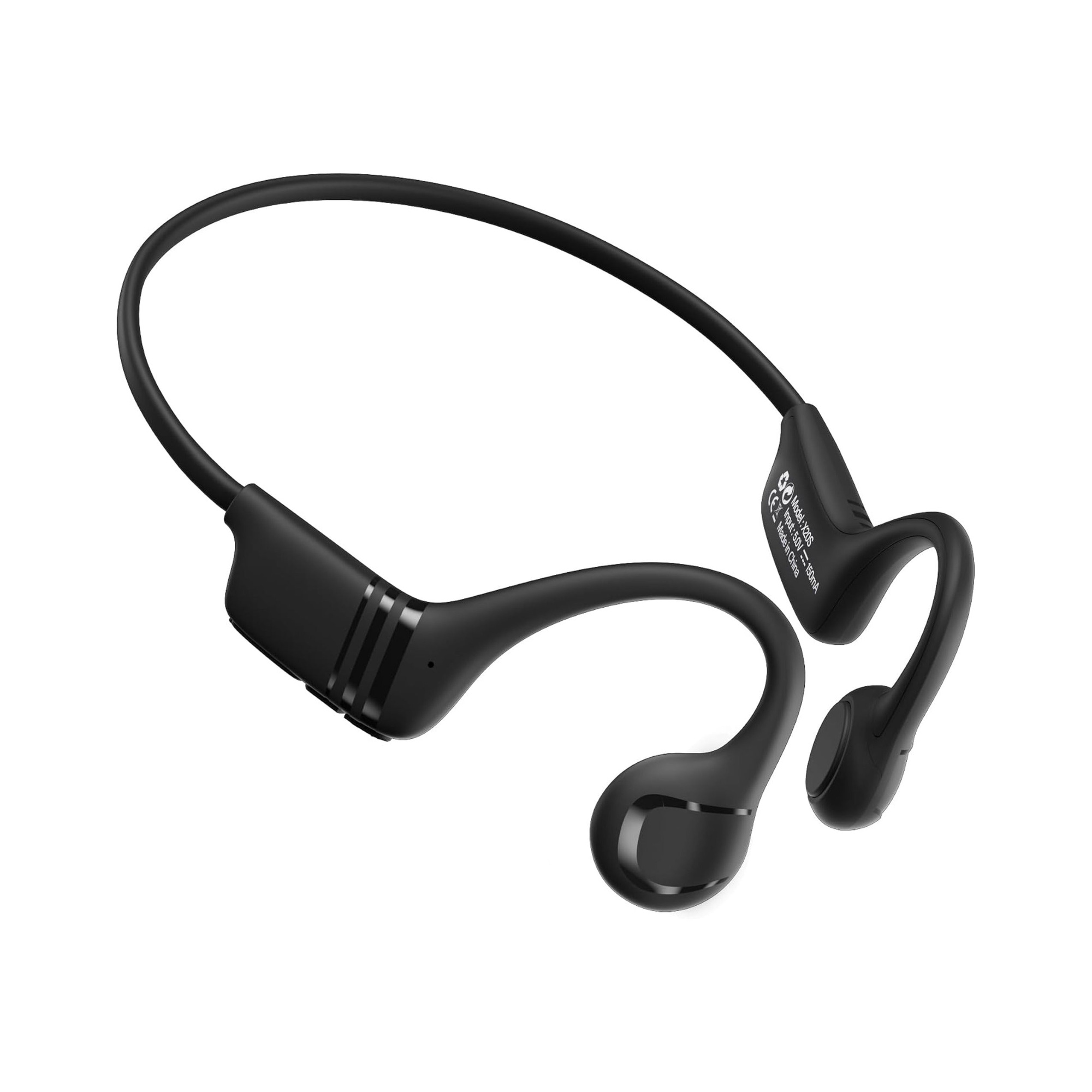
Mitigating this mechanical interference requires a low-profile connecting band built with high elasticity. Featuring a flexible titanium frame and weighing only 22 grams, these open-ear headphones provide a secure, pressure-free fit. The slender profile of the titanium band hugs close to the nape, preserving clearance beneath low-riding retention baskets and adjustment dials even when checking blind spots over the shoulder.
Equipment Layering Sequence: Straps, Sunglasses, and Transducers
The order in which you put on your gear determines whether contact pressure remains comfortable across a multi-hour ride. Placing gear haphazardly leads to pinched ear cartilage or air gaps beneath the bone conduction pads.
Step 1: Bone Conduction Headphones Against the Skin
Always position your headphones first. Hook the transducer housing over the superior pinna so the acoustic contact pads rest squarely on the cheekbones anterior to the tragus. The neckband must sit directly against the skin of the neck. This initial placement ensures maximum acoustic coupling between the transducers and the skull without fabric or plastic buffers dampening vibration transmission.
Step 2: Cycling Helmet Straps Over the Headphone Arms
Fasten your helmet second. Position the helmet level on your forehead, roughly one to two finger-widths above your eyebrows. The helmet’s front and rear webbing straps form a ‘Y’ shape beneath each earlobe.
- Fasten the chinstrap firmly under your chin.
- The helmet webbing should pass over the thin forward arms of the bone conduction headphones.
- When adjusted properly, the strap tension applies gentle, even lateral pressure against the headphone arms, stabilizing the transducers against road vibration without pulling them out of alignment.
Step 3: Cycling Eyewear Temples Outside the Straps
Position cycling sunglasses last. Slide the sunglass arms along the temples with the tips sitting outside the helmet straps and above the headphone band. Placing eyewear temples beneath the straps or under the headphone frame presses rigid plastic directly into the temporal bone, causing severe pressure headaches within an hour of riding. If your sunglasses bounce over rough road seams, tucking the very tip of the arm under the outer edge of the headphone hook holds both items firmly in place.
Cycling Gear Clearance and Compatibility Matrix
| Component | Optimal Placement Order | Common Mechanical Conflict | Practical Field Adjustment |
|---|---|---|---|
| Bone Conduction Frame | First (direct contact against skin) | Neckband pushes against rear dial | Select a low-profile flexible frame such as the 22g EARSOLE Series 148 |
| Helmet Retention Cradle | Second (seated on cranium) | Occipital basket presses mastoid area | Adjust helmet cradle vertical height setting upward by one notch |
| Helmet Y-Straps | Second (clipped under jaw) | Strap twists transducer pads forward | Slide strap tri-glide sliders directly below earlobes to widen clearance |
| Cycling Sunglasses | Third (resting outside straps) | Temple arms pinch against headphone arm | Use flexible straight temples instead of curved ear hooks |
Transducer Stability, Road Vibration, and Sweat Management
Road surfaces transmit continuous high-frequency vibrations through the bicycle frame into the rider’s body. Gravel washboards, expansion joints, and chip-seal asphalt shake loose ill-fitting accessories.
Bone conduction audio depends on consistent surface contact pressure. If clamping tension is weak, road chatter causes the transducers to bounce off the skin, introducing buzzing sensations and audible dropouts. Audio fitting guides emphasize that headband curvature, clamping tension, and contact points determine whether headphones remain seated during active head movement. The EARSOLE Series 148 listing specifies a 22-gram flexible titanium frame with a secure, pressure-free fit and IP55 water resistance, ensuring the clamping force resists rough gravel vibration while accommodating sweat exposure during steep climbs.
Water and Sweat Resistance on Summer Climbs
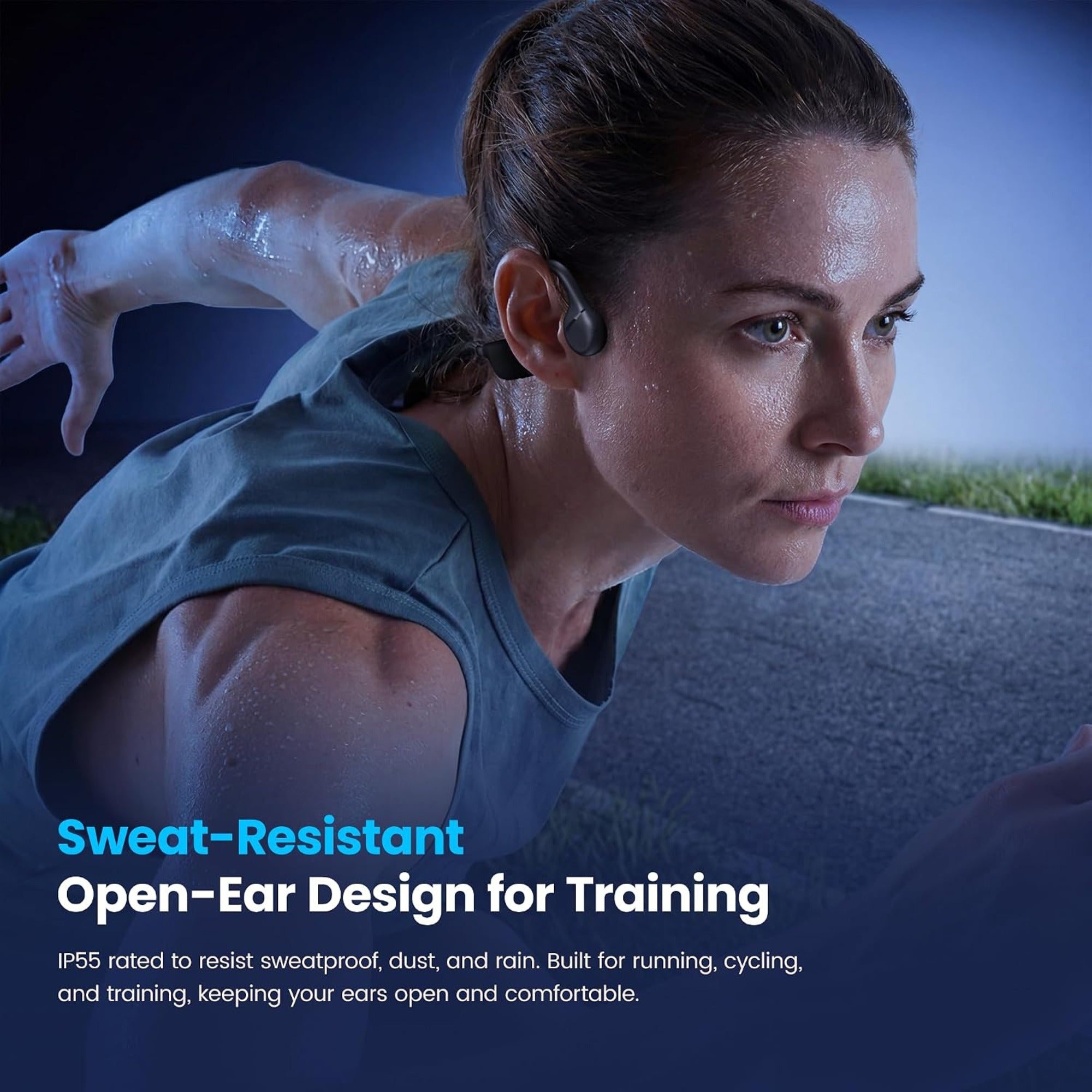
Sustained cycling efforts generate substantial perspiration around the hairline and ears. Sweat pooling beneath headphone pads can degrade internal electronics or cause skin chafing if the enclosure lacks proper sealing. An IP55 rating certifies protection against dust ingress and low-pressure water jets from any direction, making the hardware resilient against heavy sweating and sudden rain showers. After damp rides, wipe down the contact transducers and charging points with a microfiber cloth to prevent salt residue buildup.
Aerodynamic Wind Noise Limitations
Bone conduction leaves your ears open, meaning ambient air movement remains audible. At speeds exceeding 25 mph (40 km/h) on descents or into severe headwinds, aerodynamic turbulence across the external ear canal creates significant wind roar. Bone conduction headphones cannot cancel ambient wind roar because the ear canal remains unsealed. While spoken podcasts and audio navigation cues remain decipherable at cruising speeds of 15 to 20 mph, downhill descents will naturally mask lower-level audio details. Keep volume at moderate levels so hearing remains clear without over-amplifying against wind rush.
Cyclists with smaller head circumferences who experience excess rear neckband slack can consult our guide on bone conduction headphones for smaller heads to evaluate sizing considerations and band stability techniques.
Frequently Asked Questions
Should bone conduction headphones go under or over helmet straps?
Bone conduction headphones should be positioned under helmet straps, sitting directly against your skin. Placing the headphone arms against your head first allows the transducers to establish firm acoustic contact on your cheekbones. The helmet straps then fasten over the headphone arms, providing gentle secondary stabilization that keeps the transducers from shifting during fast head checks.
Can you wear cycling sunglasses with bone conduction headphones and a helmet?
Yes. Put on your bone conduction headphones first, fasten your helmet second, and slide your cycling sunglasses on last. Positioning your eyewear temples outside the helmet straps prevents the rigid plastic frame from pinching your temples against the headphone chassis.
Will cycling helmets with deep rear retention dials dislodge the neckband?
Helmets featuring deep occipital retention baskets can push against high-arching headphone neckbands when you tilt your head back. You can resolve this interference by raising the helmet retention basket’s vertical adjustment bracket up by one notch inside the helmet shell, or by choosing a low-profile flexible titanium neckband like the EARSOLE Series 148 that hugs close to the nape.