

Choosing waterproof headphones for swimming starts with separating two questions that product titles often blur together: how audio reaches your ears once your head goes under the surface, and whether the enclosure’s water-protection claim has actually been verified. As lap swimmers on Reddit’s r/Swimming community (including commenter BarberUnited7894) point out, Bluetooth-only headphones do not hold a connection during submerged pool laps because the wireless signal does not travel well through water and keeps disconnecting underwater. That is why dedicated swimming headphones pair a built-in MP3 mode with local onboard storage—such as a 32GB or 64GB configuration—while using a rear-band frame that tucks under a swimming cap.
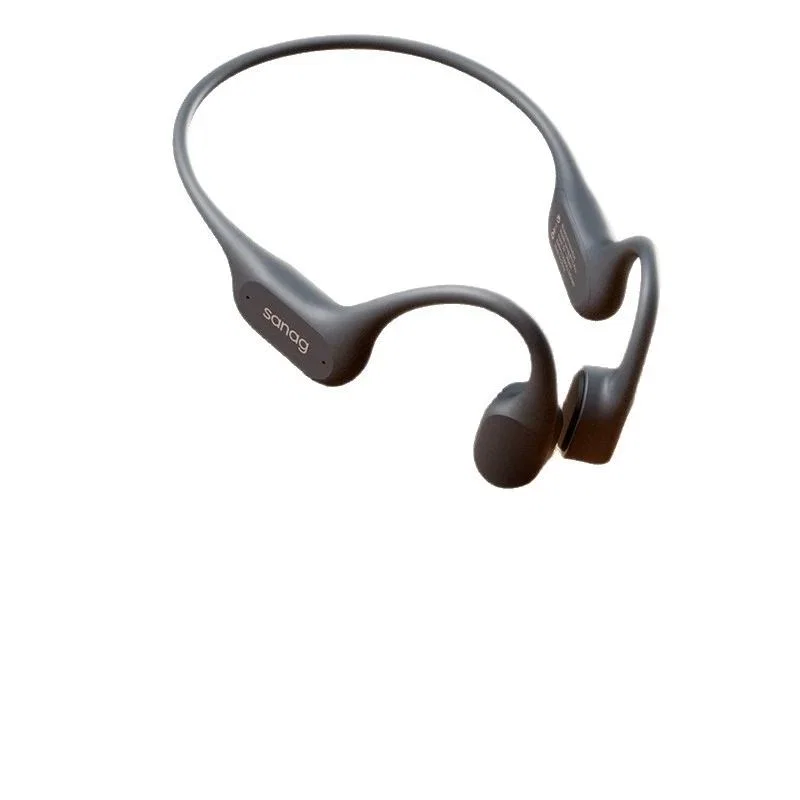
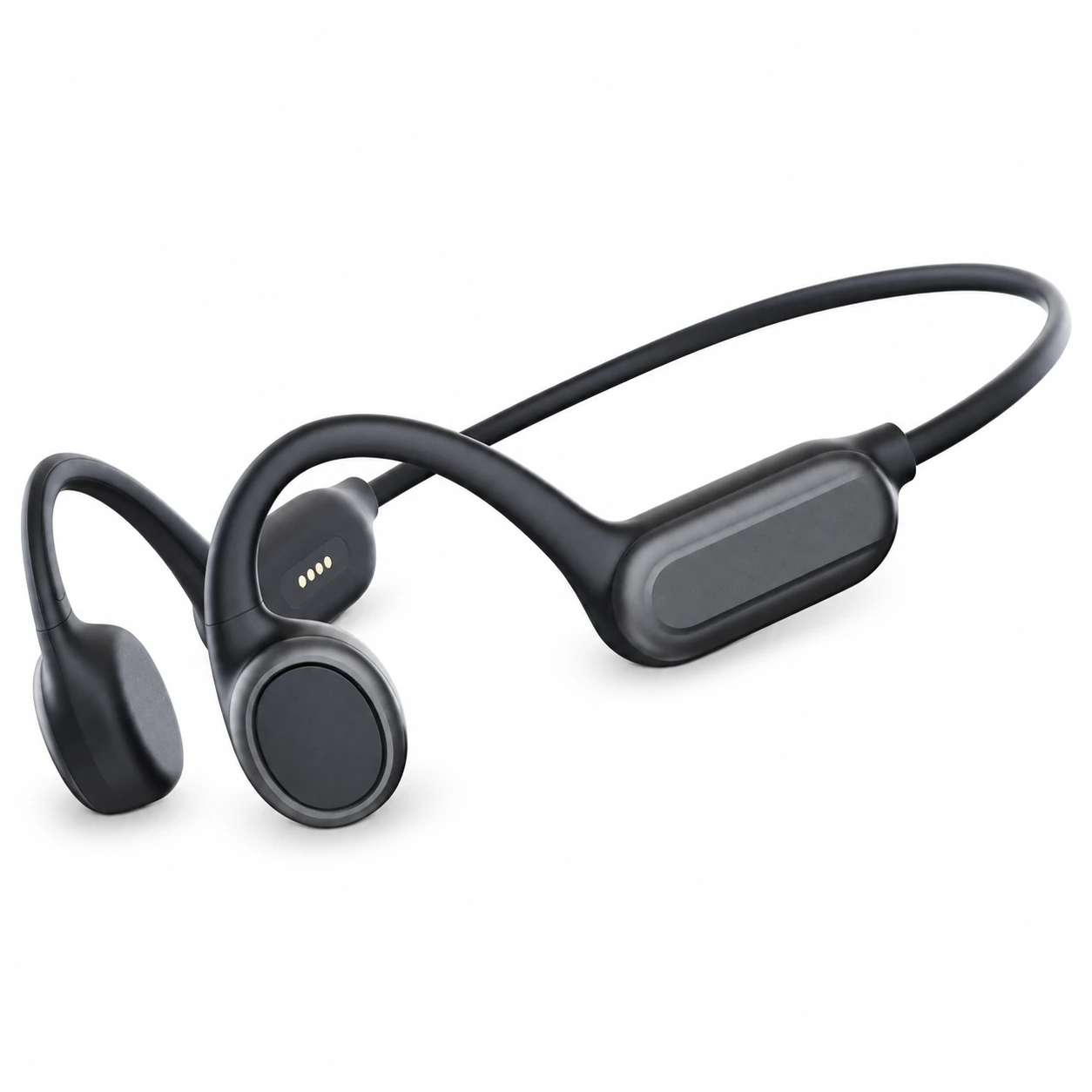
In the Earsole catalog, two active listings sit in the Swimming Headphones category for shoppers comparing mp3 sport headphones and rear-band workout earphones: the L18G Rear-Band Wireless Headphones - Black, 32GB Version ($89.00) and the SANAG B77 Rear-Band Wireless Headphones - Wind Gray, 64GB Version ($39.99). Both listings state catalog-listed storage capacities and visible rear-band geometries, and both explicitly disclose that their water-resistance and underwater-use claims have not been independently verified. Below is how to evaluate local MP3 playback, rear-band fit, and catalog verification notices before taking any headset to the pool.
Why Waterproof Headphones for Swimming Rely on Built-In MP3 Mode Instead of Bluetooth
Shoppers searching for waterproof headphones for swimming frequently ask how to listen to music in a swimming pool when their phone or watch is sitting on the deck. In threads on r/Swimming, lap swimmer BarberUnited7894 explains the practical reality: for swimming laps, Bluetooth-only headphones will not cut it because the signal does not travel well through water and keeps disconnecting once you are submerged. For consistent playback in the pool, a built-in MP3 mode is a functional necessity rather than an optional extra.
Dual-mode designs—combining dry-land wireless connectivity with onboard memory for swimming headphones mp3 playback—solve the transition between the locker room and the lane. As BarberUnited7894 notes from pool experience, you can use Bluetooth on land and then switch to MP3 mode once you are in the water, which becomes straightforward once you are used to loading local audio files beforehand. Trying to keep a Bluetooth stream alive by strapping a watch to goggle straps or a swim cap above the surface remains hit-or-miss whenever your head dips during a stroke.
Rear-Band Open-Ear Frames vs. In-Ear Buds Under a Swim Cap
A second frequent buyer question is what is better for swimming: in-ear buds or open-ear and bone conduction swimming headphones. According to the swimming headphone guide published by HeadphonesAddict, keeping headphones stable in water presents two distinct mechanical paths:
- In-ear earbuds with triple-flange eartips: These rely on multi-layered silicone tips to seal water out of the ear canal, often paired with a swimming cap for extra stability. However, as HeadphonesAddict notes, the moment you lose that physical seal and water fills your ears, you will not hear the music anymore.
- Open-ear and rear-band frames: Open-ear designs leave the ear canal open instead of inserting tips inside the ears, and their wraparound rear band fits neatly under a swimming cap. Both HeadphonesAddict and
r/SwimmingcommenterBarberUnited7894highlight that open-ear frames avoid putting anything inside your ears while making it easier to maintain a consistent position under a cap.
Alongside fit, editorial testing benchmarks emphasize enclosure protection. HeadphonesAddict specifies that continuous underwater use calls for full water protection with a minimum IPX8 waterproof rating, warning that regular headphones with IPX7 or lower protection are not sufficient to fully submerge underwater and run the risk of breaking. For a deeper breakdown of how enclosure codes are defined, see our guide to reading earbud IP ratings and our technical explainer on why Bluetooth signals drop out underwater.
Side-by-Side Audit: Earsole L18G 32GB vs. SANAG B77 64GB Rear-Band Listings
When inspecting catalog listings for open ear swimming headphones and rear-band mp3 sport headphones, buyers should separate what is visibly confirmed in the product photos and catalog record from stated specifications that have not undergone independent laboratory testing.
| Catalog Attribute | L18G Rear-Band Wireless Headphones (Black, 32GB Version) | SANAG B77 Rear-Band Wireless Headphones (Wind Gray, 64GB Version) |
|---|---|---|
| Catalog Price | $89.00 | $39.99 |
| Visible Frame & Earpiece Geometry | Black rear-band headphones with round earpieces and recessed side housings | Wind-gray headphones with a rear-band design and side-mounted earpieces |
| Listed Storage Configuration | Listed 32GB configuration | Listed 64GB configuration |
| Catalog Category & Comparison Scope | Swimming Headphones (cataloged for comparing swimming headphones, mp3 sport headphones, and rear-band workout earphones) | Swimming Headphones (cataloged for comparing swimming headphones, mp3 sport headphones, and rear-band workout earphones) |
| Verification & Compatibility Notice | Water-resistance, underwater operation, and bone-conduction performance have not been independently verified | Water-resistance and underwater-use claims have not been independently verified |
1. Earpiece Shape and Rear-Band Housing
Looking directly at the catalog photos, the two models differ in how their earpieces meet the side arms. The L18G Rear-Band Wireless Headphones - Black, 32GB Version uses a matte black wraparound rear band that terminates in round earpieces paired with recessed side housings. By contrast, the SANAG B77 Rear-Band Wireless Headphones - Wind Gray, 64GB Version features a two-tone wind-gray rear-band frame with elongated, side-mounted earpieces that curve forward in front of the ear.
2. Listed Storage Capacity: 32GB vs. 64GB
In the catalog specifications, the L18G is listed as a 32GB configuration at $89.00, whereas the SANAG B77 is listed as a 64GB configuration at $39.99. Notice that price does not scale linearly with listed gigabytes here: the wind-gray SANAG B77 lists double the storage capacity (64GB vs. 32GB) at less than half the catalog price ($39.99 vs. $89.00). For buyers who load local audio files for offline workouts, either capacity is designated for local file storage, but neither listing provides independently measured file-transfer speeds, supported codec tables, or battery runtime hours.
3. Why the Unverified Water-Resistance Notice Matters
While editorial guides like HeadphonesAddict require a minimum IPX8 waterproof rating for continuous underwater submersion, the Earsole catalog records for both the L18G 32GB and the SANAG B77 64GB explicitly state that water-resistance and underwater operation have not been independently verified (and for the L18G, bone-conduction performance is likewise unverified). Shoppers should treat both models as unverified rear-band configurations rather than independently lab-certified IPX8 diving or lap-submersion instruments. Do not submerge either headset unless you have verified the manufacturer’s written immersion depth and duration rating on the unit’s packaging documentation.
Pre-Purchase Checklist for Swimming Headphone Buyers
- Plan for local MP3 files, not live streaming: Because Bluetooth disconnects once submerged in water, confirm that you have DRM-free MP3 audio files ready to load onto a local player rather than relying on streaming-only phone apps.
- Verify the exact IPX8 immersion conditions: Editorial swimming guides specify a minimum IPX8 rating because IPX7 or lower headphones risk breaking underwater. If a catalog listing notes that water-resistance and underwater operation have not been independently verified—as both the L18G 32GB and SANAG B77 64GB listings do—do not assume submerged pool coverage without checking the physical manual’s depth and time limits.
- Choose the earpiece profile that fits under your cap and goggles: Compare whether round earpieces with recessed side housings (L18G) or side-mounted earpieces on a wind-gray rear band (SANAG B77) sit more comfortably alongside your goggle strap without requiring in-ear triple-flange tips.
Frequently Asked Questions
How to listen to music in a swimming pool?
As lap swimmers on Reddit’s r/Swimming (such as commenter BarberUnited7894) and editorial guides explain, Bluetooth signals do not travel well through water and disconnect once submerged. Swimmers therefore use headphones with a built-in MP3 mode—using Bluetooth on dry land if supported, and switching to local MP3 playback once in the water.
What is better for swimming, ear buds or bone conduction?
According to HeadphonesAddict and swimmer feedback on r/Swimming, in-ear earbuds require triple-flange eartips to keep water out of the ear canal, and you lose sound the moment water enters the ear. Open-ear and bone-conduction rear-band designs leave your ears open, avoid putting tips into the ear canal, and fit neatly under a swimming cap.
Are the L18G 32GB and SANAG B77 64GB independently verified for underwater swimming?
No. While both the L18G Rear-Band Wireless Headphones (Black, 32GB Version, $89.00) and the SANAG B77 Rear-Band Wireless Headphones (Wind Gray, 64GB Version, $39.99) are cataloged in the Swimming Headphones category with listed 32GB and 64GB configurations, their catalog listings explicitly note that water-resistance and underwater operation (plus bone-conduction performance on the L18G) have not been independently verified.