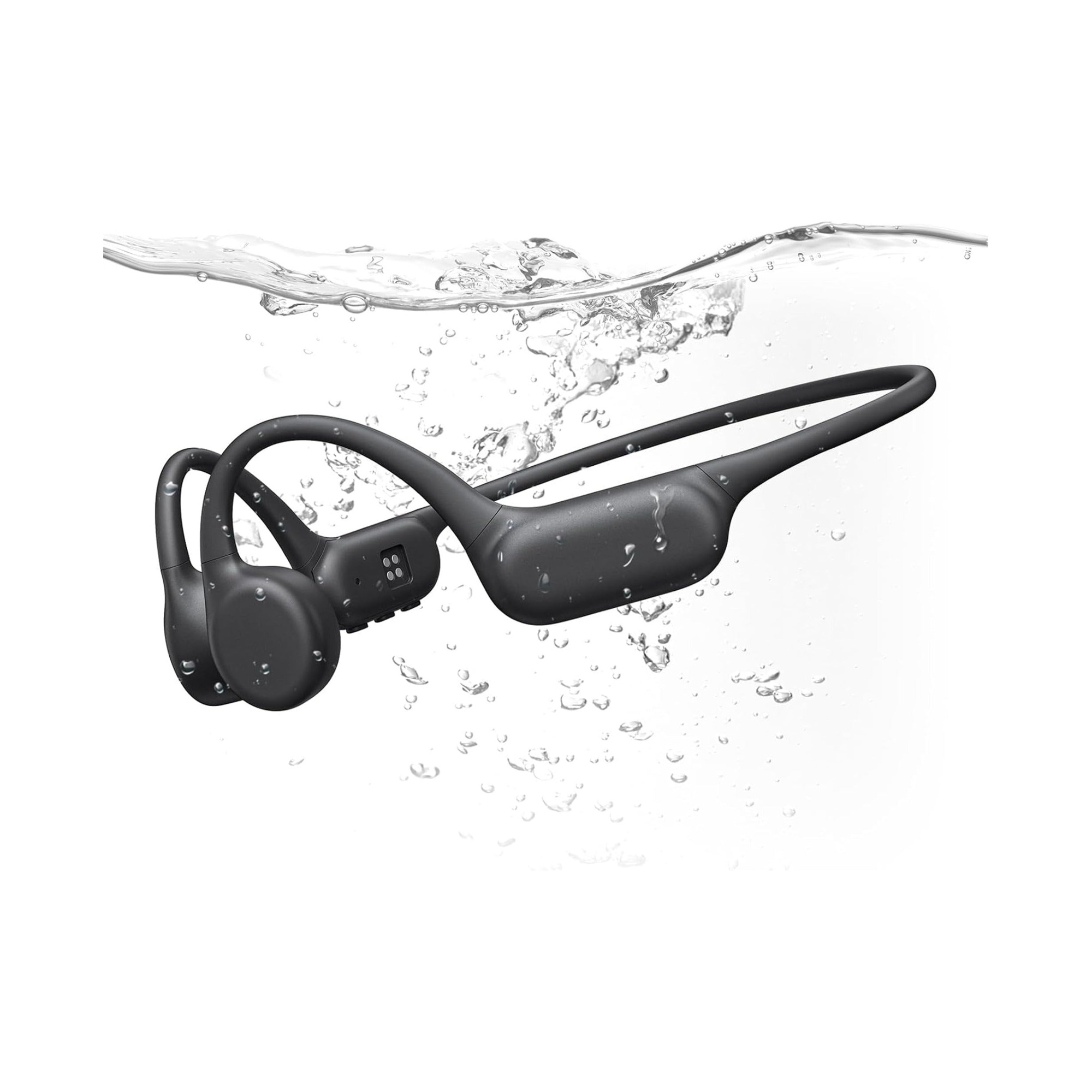


An IPX7 waterproof earbuds rating certifies that the earpieces were tested for temporary static immersion up to 1 meter (3 feet) deep in fresh water for up to 30 minutes. That one-meter boundary protects workout earbuds against heavy rain, sweat, and accidental drops into shallow water, yet it does not certify them for continuous underwater lap swimming (which requires IPX8 or IP68) or automatically guarantee resistance against direct high-pressure shower jets (tested separately under IPX6).
In real-world use, two mechanical issues affect everyday runners and gym athletes before water immersion ever reaches a circuit board: wet charging pins inside unrated storage cases and sweaty ear canals that cause unanchored buds to slip out mid-session. Understanding where the one-meter immersion boundary stops—and how loop stabilizers compare with curved over-ear hooks on running headphones—lets you choose the right physical retention setup and care routine for wet-weather training.
What the One-Meter, Thirty-Minute IPX7 Test Actually Measures
In consumer audio specifications, the second digit after IP (or after IPX when dust resistance is not rated separately) indicates liquid ingress protection. An IPX7 rating—or its dust-sealed equivalent, IP57—means the earpieces can survive submersion up to 3 feet (1 meter) deep for up to 30 minutes in static fresh water. That threshold is built for sudden trail downpours, heavy perspiration, and accidental dips into a puddle or sink, not prolonged underwater exercise.
Because each step on the Ingress Protection scale tests a distinct physical stress, a higher immersion number on waterproof earbuds does not automatically include high-pressure spray protection unless the device is dual-rated:
| Ingress Rating | Liquid Test Boundary | Intended Audio Use Case | Key Limitation |
|---|---|---|---|
| IPX4 / IP54 | Light water splashes from any angle | Light gym workouts, dry commuting, or splash-resistant charging cases | Not built for sustained water jets or submersion |
| IPX5 / IP55 | 15-minute low-pressure water jet from a distance of 3 meters | Sweaty cardio sessions and running in rain | Too low for full water submersion |
| IPX6 | High-pressure directional water jets | Heavy spray exposure and vigorous rinsing | Does not test prolonged underwater immersion |
| IPX7 / IP57 | Temporary immersion up to 3 feet (1 meter) deep for up to 30 minutes | Heavy downpours, trail runs, and accidental drops into shallow water | Not suitable for lap swimming; does not automatically guarantee passing higher-pressure IPX6 jets |
| IPX8 / IP68 | Continuous submersion deeper than 1 meter (such as up to 10 feet / 3 meters) | Dedicated underwater swimming and water sports (often paired with local MP3 storage) | Bluetooth radio signals still attenuate within centimeters underwater |
If your goal is swimming laps with your head submerged rather than running in rain or sweating at the gym, see our dedicated guide to underwater headphones for lap swimming.
Why Static Immersion Differs from High-Pressure Shower Spray and Wet Charging Cases
Buyers searching for ipx7 earbuds frequently ask whether a 1-meter immersion rating means they can wear their earbuds in a hot shower every day. As community technical discussions in r/Earbuds point out, the rating system tests static hydrostatic pressure at 1 meter depth separately from dynamic jet velocity: some devices can pass an IPX7 immersion test while failing an IPX6 test because of the higher nozzle pressure used in IPX6.
Direct spray from a showerhead strikes acoustic meshes at velocities that exceed static 1-meter immersion. Community users in r/Earbuds who discuss showering with IPX7 earbuds treat the rating as insurance against an accidental drop into water—provided you retrieve the earpieces and dry them quickly—while avoiding direct showerhead spray.
Just as important, an IPX7 rating on a pair of waterproof wireless earbuds applies to the earpieces themselves, not to the portable charging case. Even when premium sport earbuds carry an IP68 or IPX7 rating on the buds, their charging case often carries a lower splash rating (such as IP54) or no ingress rating at all. Docking wet or sweaty earpieces straight into a closed storage case traps moisture against the metal charging contacts.
Mechanical Retention in Sweaty Ears: Loop Stabilizers vs. Curved Ear Hooks
During high-output cardio or humid outdoor runs, moisture creates a mechanical problem long before it creates an electrical one: sweat lubricates silicone ear tips, causing standard in-ear buds to loosen and slip out of the ear canal. Audio testers and runners searching for waterproof running earbuds consistently note that ear wings, loop fins, or over-ear hooks are essential to keep sport earbuds stable when ears get sweaty.
On Earsole, two different retention architectures address active movement at accessible price points. Important specification transparency: neither of the two Earsole models below carries a published IEC 60529 IPX7 or IPX8 submersion certificate in the Earsole catalog, and neither should be submerged in water or worn in the shower. Instead, they illustrate the two primary mechanical ways to lock earpieces in place during everyday movement and gym training:
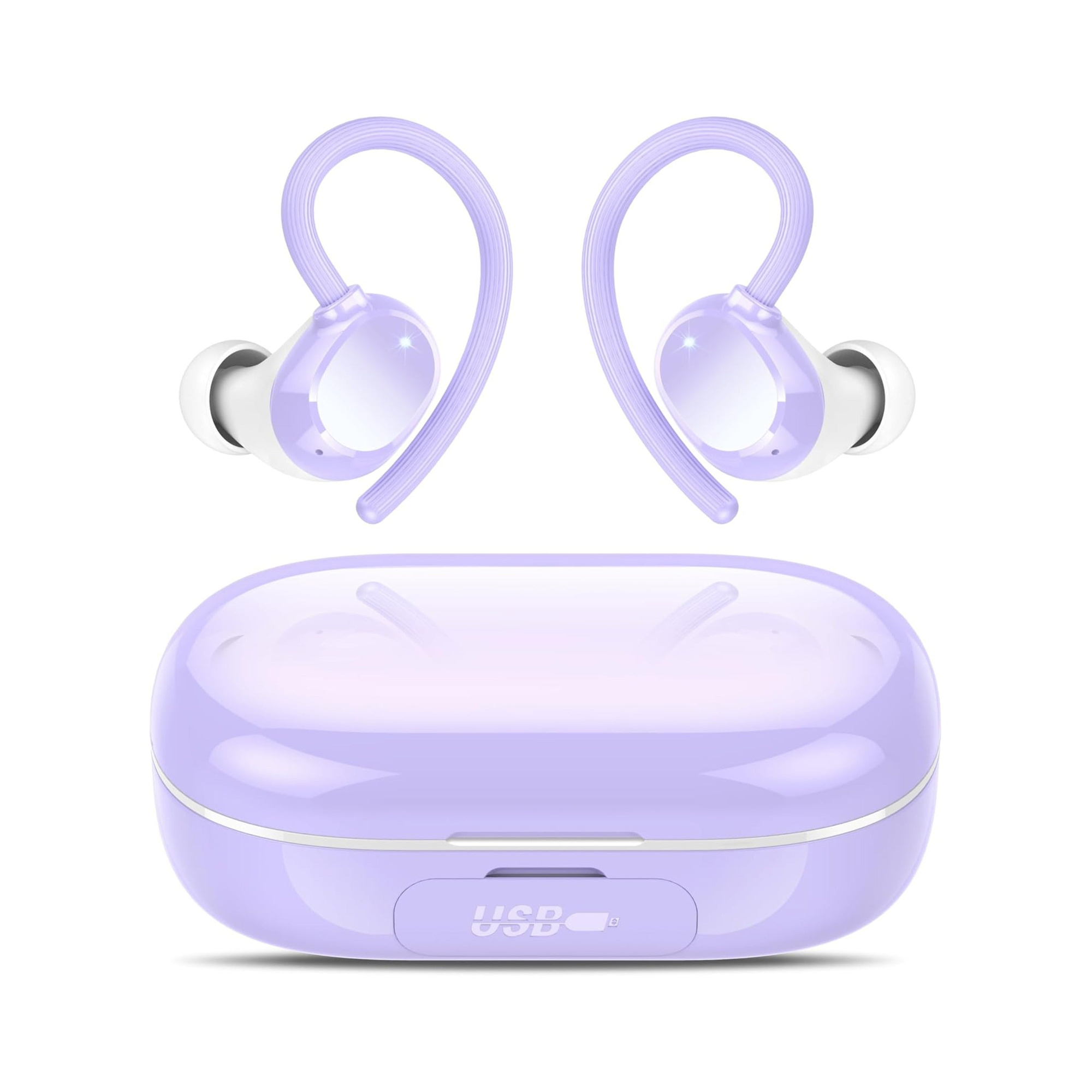
1. Concha Loop Stabilizers: Black Loop-Stabilizer Wireless Earbuds ($24.99)
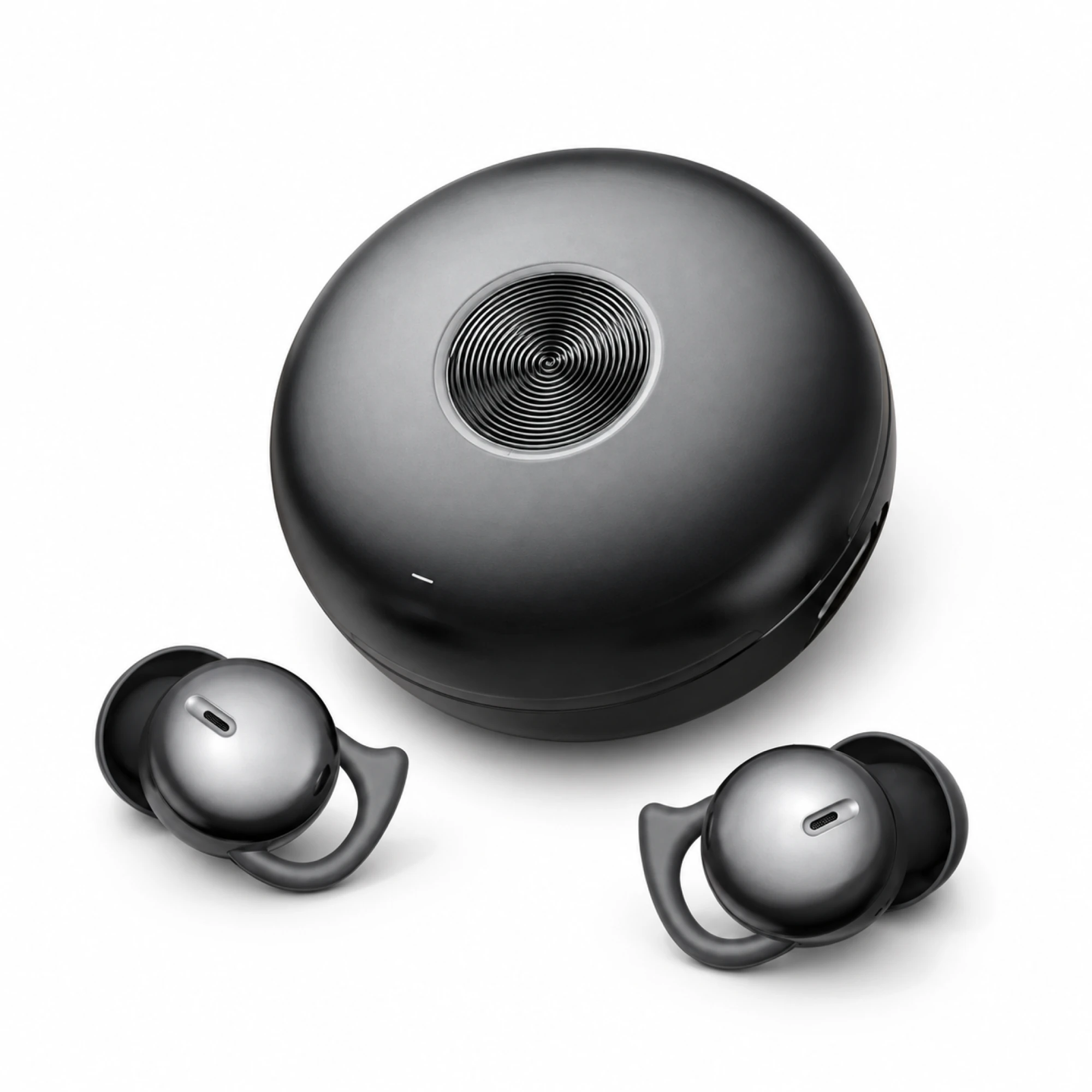
For listeners who want true wireless freedom without over-ear arms interfering with glasses or sunglasses, the Black Loop-Stabilizer Wireless Earbuds ($24.99) pair compact earpieces with loop-shaped stabilizers and a round storage case. Instead of relying solely on ear-canal friction, the flexible loop-shaped stabilizer braces against the inner bowl (concha) of the ear to resist rotational twist during movement, while the compact earpieces stow inside the pocketable round storage case between sessions.
2. Over-Ear Hooks + Neck Cable: K98 Running Headphones with Ear Hooks ($29.99)
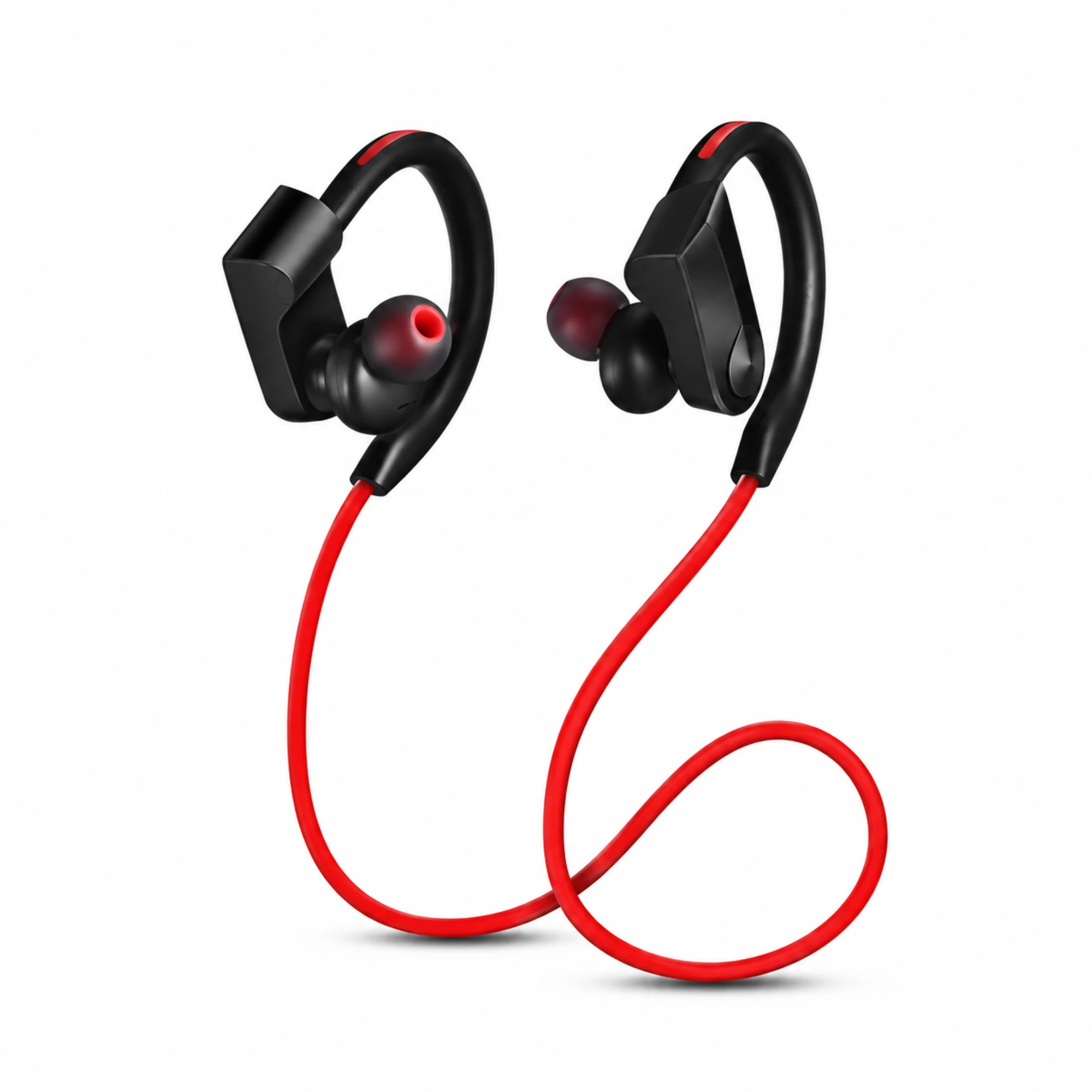
For runners who want a physical tether so an earpiece can never hit wet pavement if dislodged, the K98 Running Headphones with Ear Hooks ($29.99) use curved ear hooks, in-ear tips, black and red detailing, and a red cable connecting the two earpieces behind the neck. The curved ear hooks drape over the top of the pinna to support the housing weight, while the behind-the-neck cable lets you drape the earpieces around your collar during mid-run cooldowns without carrying a separate charging case.
| Comparison Factor | Black Loop-Stabilizer Wireless Earbuds | K98 Running Headphones with Ear Hooks |
|---|---|---|
| Price | $24.99 | $29.99 |
| Form Factor | True wireless compact earpieces | Behind-the-neck connected running headphones |
| Retention Mechanism | Loop-shaped stabilizers with compact earpieces | Curved over-ear hooks with in-ear tips |
| Storage / Tether Hardware | Round storage case | Red cable connecting the two earpieces behind the neck |
| Published Catalog IP Rating | Not specified in catalog (do not submerge) | Not specified in catalog (do not submerge) |
Post-Workout Drying Protocol Before Docking in the Storage Case
Whether you use IPX7-rated sport earbuds in heavy rain or wear everyday workout headphones like the Black Loop-Stabilizer Wireless Earbuds and K98 Running Headphones with Ear Hooks at the gym, post-session moisture care determines how long your charging contacts last:
- Shake out surface droplets away from the acoustic mesh: Hold each earpiece with the nozzle pointing downward and gently tap the housing against a dry towel so trapped droplets exit rather than migrating deeper into the nozzle.
- Wipe the housing and stabilizers with a dry, lint-free cloth: Clean sweat film off the silicone tips, loop-shaped stabilizers, curved ear hooks, and metal charging pads immediately after training.
- Air-dry completely before docking: Leave true wireless earpieces out in room air until the charging contact recesses are 100% dry before placing them back into a round storage case. Never close a charging case lid over damp earpieces.
Frequently Asked Questions
Can you wear IPX7 earbuds in the shower?
While an IPX7 rating tests static immersion up to 3 feet (1 meter) deep for up to 30 minutes, community guidance in r/Earbuds advises avoiding direct spray from a showerhead. Because high-pressure water jets are tested under IPX6 rather than IPX7, a device can pass static IPX7 immersion and still fail under pressurized shower spray. If IPX7 earbuds get wet accidentally, remove them and dry them thoroughly before charging.
Are IPX7 earbuds waterproof enough for swimming?
No. Audio testing guides and manufacturer specs classify IPX7 waterproof earbuds as suitable for sweat, heavy rain, and brief accidental dips up to 1 meter for 30 minutes—not continuous lap swimming. Repetitive swim strokes create dynamic water pressure exceeding static 1-meter tests, and underwater lap swimming requires IPX8/IP68 hardware designed for continuous submersion.
How do loop stabilizers compare with curved ear hooks for sweaty workouts?
Loop stabilizers—such as the loop-shaped stabilizers on the compact Black Loop-Stabilizer Wireless Earbuds ($24.99)—tuck inside the ear bowl for a low-profile true wireless fit that stays clear of glasses temples. Curved ear hooks—such as those on the K98 Running Headphones with Ear Hooks ($29.99)—wrap over the top of the ear and pair with a behind-the-neck red connecting cable so the earpieces remain tethered even if you pull one out mid-run. Neither Earsole model publishes an IEC 60529 IPX7 immersion rating in the catalog, so both should be wiped dry after workouts and kept out of standing water.