


When people search for earbuds for concert use, audiologists and acoustic lab researchers recommend NRR-rated high-fidelity concert earplugs (typically 12–16 dB NRR) rather than everyday wireless music earbuds. According to HearingTracker’s 2026 lab testing, effective concert hearing protection depends on a complete acoustic seal (since a pinhole air gap from shallow insertion produced a ~1,300 Hz resonance 12 dB louder at the eardrum than bare ears), OSHA recommends derating lab NRR numbers by 50% for real-world use, and dedicated high-fidelity concert earplugs (12–16 dB NRR) attenuate frequencies evenly like a volume knob unlike unrated consumer music earbuds.
That distinction clears up the most common confusion among live-music fans: many people type “concert earbuds” when looking for small, reusable in-ear filters that lower stage volume without turning vocals and cymbals to mud. Understanding NRR-rated earplugs vs consumer earbuds helps you pack the right gear for the venue floor while reserving consumer Bluetooth models—such as the EARSOLE Smart Wireless Earbuds with LCD Touchscreen Case—for the train ride, flight, or walk to and from the show.
High-Fidelity Concert Earplugs vs Regular Foam Plugs vs Wireless Music Earbuds
First-time concertgoers often wonder whether they should buy disposable foam plugs, reusable filtered concert plugs, or simply wear their daily wireless earbuds into the arena. In r/PostHardcore (thread 1cqi5iz), a concertgoer asks: “concert earbud recommendations, relatively affordable? Never worn earbuds to concerts before or gone to any metal adjacent concert. I’m changing that this year! What do ya’ll recommend?” and commenters recommend Loops (“Loops. Spend the money, it makes the concert sound good and you get to keep your hearing.”) or flanged rubber earplugs instead of disposable foam ones.
In HearingTracker’s 2026 laboratory review (The Best Earplugs for Concerts and Live Music, written by Dr. Steve Taddei with independent testing at HearAdvisor Lab, updated March 19, 2026), researchers evaluated concert earplugs on a KEMAR acoustic manikin across five repeated insertions:
- High-fidelity filtered concert earplugs (12–16 dB NRR): Built for musicians and concertgoers, true hi-fi earplugs use an acoustic filter and tuned membrane to work like a volume knob—reducing bass, mids, and treble equally so live music keeps its clarity at a safer volume. HearingTracker’s 2026 top lab picks include the Loop Experience 2 Plus (12 dB NRR, or up to 17 dB with the +5 dB Loop Mute insert and foam tips), Etymotic Research ER20XS (13 dB NRR), and Eargasm High Fidelity (16 dB NRR), noting that at a common 100 dBA concert level, a properly fitted 12 dB NRR Loop Experience 2 Plus provides approximately 2.8 hours before reaching 100% of the daily sound exposure limit.
- Disposable foam earplugs: Inexpensive foam cylinders block a higher overall amount of noise when rolled and inserted deeply, but higher NRR generally trades off against frequency uniformity—meaning standard foam plugs muffle high frequencies heavily compared to flanged or filtered high-fidelity plugs.
- Unrated consumer Bluetooth ANC earbuds: Everyday wireless music earbuds are engineered to stream Bluetooth audio and reduce steady commuter hum (such as transit rumble or office background noise), not to serve as certified, passive acoustic filters against live concert speaker arrays.
| In-Ear Option | Certified NRR Rating? | How It Handles Live Music Frequencies | Best Role on Concert Day |
|---|---|---|---|
| High-Fidelity Concert Earplugs (Loop Experience 2 Plus, ER20XS, Eargasm High Fidelity) | Yes — 12 dB to 16 dB NRR (up to 17 dB on Loop Experience 2 Plus with Mute & foam tips) | Tuned acoustic filter acts like a volume knob, lowering bass, mids, and treble evenly | Wearing inside the venue during live bands, DJ sets, and loud encores |
| Disposable Foam Earplugs | Yes — varies by foam model | Strong overall block, but higher NRR increases high-frequency muffling | Emergency backup protection if you forget filtered concert earplugs |
| Consumer Bluetooth ANC Earbuds (EARSOLE Smart Wireless Earbuds with LCD Touchscreen Case) | No — unrated for live-concert hearing protection | Active Noise Cancellation (ANC) targets steady background rumble for music/call playback | Pre-show and post-show transit, queuing outside, travel playlists, and calls |
Why Acoustic Seal and NRR Derating Matter More Than Box Specs at Live Shows
Buying a pair of concert earplugs with a 12 dB, 13 dB, or 16 dB NRR printed on the box does not automatically guarantee that your ears are receiving that exact decibel drop on the concert floor. HearingTracker’s 2026 lab testing identified two critical acoustic realities every concertgoer should understand before stepping in front of a stage PA system:
1. The Needle-Pin Air Gap Resonance Trap (~1,300 Hz Peak, +12 dB Louder)
Fit matters more than printed specifications because no earplug performs as rated without a complete acoustic seal. Ear-tip sizing varies noticeably across brands—HearingTracker notes that several popular concert plugs, including Eargasm and Alpine, run large, making it worthwhile to test multiple tip sizes or order a size down.
Even a microscopic break in the seal can backfire. While lab-testing the original Loop Experience on their acoustic manikin, HearingTracker’s researchers intentionally created a shallow insertion with a needle-pin air gap. That tiny pinhole leak eliminated low-frequency protection entirely and created an acoustic resonant peak at around 1,300 Hz—making sound pressure at the eardrum 12 dB louder than wearing no ear protection at all. A loosely seated concert earplug can amplify mid-frequency energy inside the ear canal rather than protecting your hearing.
2. Why OSHA Derates Lab NRR Values by 50%
Even when you choose the right ear-tip size, laboratory NRR measurements represent best-case conditions where an audiologist seats the plug in a controlled room. Because real-world wearers move, sing along, and rarely achieve a textbook laboratory fit, OSHA recommends derating lab-rated NRR values by 50% to estimate real-world protection.
Exceeding your daily sound dose at a 100 dBA show increases the risk of permanent music-induced hearing disorders and damage to cochlear synapses—a hidden hearing injury that standard audiograms often miss. For frequent concertgoers or musicians who want a guaranteed seal, minimal occlusion, and maximum clarity, HearingTracker recommends consulting an audiologist for baseline hearing tests and considering custom-molded musicians’ earplugs.
How to Test Your Ear-Tip Seal and When to Use Wireless ANC Earbuds Around Concert Days
Whether you are inserting NRR-rated concert earplugs before the opening band starts or fitting silicone-tipped wireless earbuds for the subway ride home, checking your acoustic seal takes less than 30 seconds:
- Trial every included ear-tip size before show night: Test XS, S, M, and L silicone or foam tips at home rather than in a dark venue. If a plug pushes itself back out or wiggles when you move your jaw, step down or up a tip size until the perimeter seals snugly.
- Eliminate shallow insertion gaps: Pull the top of your outer ear upward and back with your opposite hand to straighten the ear canal while seating the tip flush and airtight, preventing the 1,300 Hz pinhole resonance peak.
- Check for the subtle occlusion voice shift: Speak out loud in a quiet room. When an ear tip forms a complete seal, your voice sounds slightly deeper or more internal, and room noise drops evenly in both ears.
Where Consumer Wireless ANC Earbuds Fit in Your Concert-Day Kit
Once the encore ends and you head toward a train platform or rideshare pickup zone, you can remove your passive NRR concert earplugs and switch to everyday wireless earbuds for your commute home.
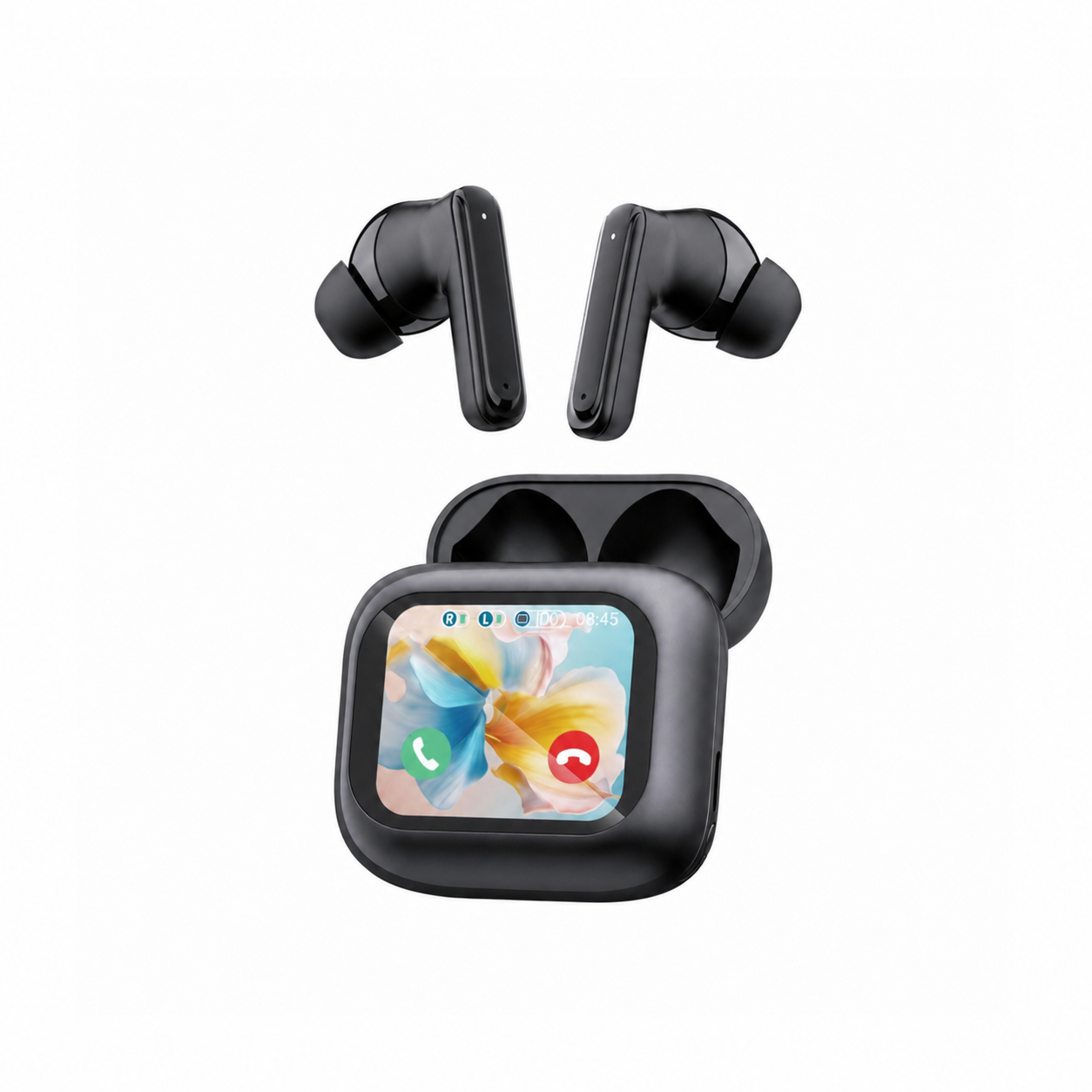
The listing for EARSOLE Smart Wireless Earbuds with LCD Touchscreen Case states a full-color LCD touchscreen charging case that manages music, volume, calls, and settings, Bluetooth 5.4, ANC + ENC noise reduction, and soft silicone tips, while noting that no water-resistance rating is listed.
According to the EARSOLE Smart Wireless Earbuds with LCD Touchscreen Case store listing (EAR-LCD54-BLK-01), the touchscreen charging case lets you switch between English and Chinese menus, adjust volume, or answer calls directly from the case screen without pulling out your phone, while ANC reduces steady commute rumble and ENC cleans up your voice for calls.
Important safety boundary: The EARSOLE Smart Wireless Earbuds with LCD Touchscreen Case is a consumer Bluetooth ANC/ENC earbud built for everyday music, calls, and commuting—it does not carry an NRR rating and is not certified hearing protection for loud live concerts. Because no water-resistance rating is listed for this model, wipe off any moisture after use and keep the earbuds and case out of rain or heavy sweat.
Frequently Asked Questions
Why can’t a loose concert earplug protect your hearing at a loud show?
According to HearingTracker’s 2026 laboratory testing, no earplug performs as rated without a complete acoustic seal. When researchers tested a shallow insertion that left a needle-pin air gap, the leak eliminated low-frequency protection entirely and created a resonant peak around 1,300 Hz that made sound pressure at the eardrum 12 dB louder than wearing no ear protection at all. Testing multiple ear-tip sizes ensures an airtight seal throughout the performance.
How much real-world noise reduction does a 12 dB to 16 dB NRR concert earplug provide?
Lab-rated NRR numbers—such as 12 dB NRR on the Loop Experience 2 Plus, 13 dB NRR on the Etymotic ER20XS, or 16 dB NRR on Eargasm High Fidelity—are measured under ideal laboratory conditions. Because real-world fit varies, OSHA recommends derating lab NRR values by 50% to estimate real-world attenuation. At a typical 100 dBA concert level, HearingTracker notes that a properly fitted 12 dB NRR concert earplug provides approximately 2.8 hours before reaching 100% of your daily sound exposure limit.
Can you wear everyday wireless ANC earbuds instead of NRR concert earplugs?
For live concert hearing protection inside a loud venue, audiologists recommend dedicated NRR-rated high-fidelity concert earplugs, which use passive acoustic filters to attenuate bass, mids, and treble evenly like a volume knob. Unrated consumer Bluetooth earbuds—such as the EARSOLE Smart Wireless Earbuds with LCD Touchscreen Case, which according to its listing features Bluetooth 5.4, ANC + ENC noise reduction for steady commute background noise and calls, soft silicone tips, and on-case touchscreen controls (with no water-resistance rating listed)—are designed for everyday listening and pre- or post-show transit rather than certified concert hearing protection.
