High-Impedance Earphones, Voltage Swing Requirements, and the One-Eighth Damping Rule
In personal audio engineering, transducer impedance fundamentally dictates how an earphone interacts with upstream amplification circuitry. While modern consumer earbuds prioritize low impedance for battery-powered smartphones, audiophile monitors often employ high-impedance voice coils exceeding 150 ohms. Understanding the electrical mechanics governing high-impedance transducers explains why high ohms clean up source noise floors while demanding specialized voltage delivery.
Higher impedance voice coils utilize thinner copper wire wound into substantially more layers around the driver former. This design generates a denser magnetic flux field while reducing overall moving diaphragm mass, resulting in lightning-fast impulse response and micro-detail retrieval. However, overcoming this electrical resistance requires higher peak-to-peak output voltage swings, placing distinct operational demands on source headphone amplifiers.
Voltage Swing Dynamics: Why High Ohms Demand Voltage Over Current
Portable battery-operated audio gear operates under strict internal voltage rail limits, typically maxing out around 1 to 2 volts RMS. Because electrical power equals voltage squared divided by resistance, low-voltage portable sources starve high-impedance earphones of necessary acoustic headroom. Without adequate voltage swing, dynamic musical peaks clip prematurely, compressing orchestral crescendoes and dulling visceral bass impact into anemic cardboard thumps.
Conversely, desktop headphone amplifiers with robust regulated power supplies deliver 5 to 10 volts RMS of clean, unclipped voltage swing. High-impedance voice coils draw relatively little current from the amplifier, allowing output transistors to operate squarely within their most linear, low-distortion operating regions. This current minimization also prevents mobile amplifier battery sag and eliminates audible background hiss from sensitive output stages.
| Load Impedance | Output Voltage (Vrms) | Damping Factor (at 1Ω Z_out) | Frequency Deviation | Target Application |
|---|---|---|---|---|
| 16 Ohms (Low) | 0.4 Vrms to 0.8 Vrms | 16:1 (Minimum) | ±2.5 dB (Audible Shift) | Mobile Smartphones & Dongles |
| 32 Ohms (Standard) | 0.8 Vrms to 1.2 Vrms | 32:1 (Adequate) | ±1.0 dB (Slight Coloration) | Portable DACs & Audio DAPs |
| 150 Ohms (Medium) | 1.8 Vrms to 2.5 Vrms | 150:1 (High) | ±0.2 dB (Near Linear) | Balanced Portable Amplifiers |
| 300 Ohms (Studio) | 3.5 Vrms to 6.0 Vrms | 300:1 (Reference) | ±0.05 dB (Flat Reference) | Desktop OTL Tube & Solid-State |
The One-Eighth Rule: Output Impedance and Electrical Damping Factor
Electrical damping defines an amplifier’s ability to control unwanted diaphragm motion after an audio transient ceases. Acoustic engineers adhere to the one-eighth rule: the amplifier output impedance must not exceed one-eighth of the earphone nominal load impedance. When source output impedance is too high relative to load impedance, voltage divider effects cause frequency response deviations that artificially boost mid-bass resonance and smear acoustic timing.
High-impedance earphones naturally preserve an exceptional damping factor even when connected to audio sources with imperfect output stages. By presenting a 150-ohm or 300-ohm load, the damping factor remains comfortably above 100:1, effectively absorbing back-electromotive force generated by the vibrating voice coil. This electrical braking action eliminates uncontrolled diaphragm ringing, delivering laser-tight bass decay and pristine instrument separation.
Source Equipment Matching and Bedtime Audio Decompression
Optimizing high-impedance earphones requires pairing them with dedicated amplifiers featuring low output impedance and high voltage rails. Desktop solid-state and transformer-coupled tube amplifiers provide the voltage swing required to unleash full dynamic expression across high-resolution master recordings. Keeping source output impedance below two ohms guarantees that the intended acoustic tuning curve transfers transparently to the listener.
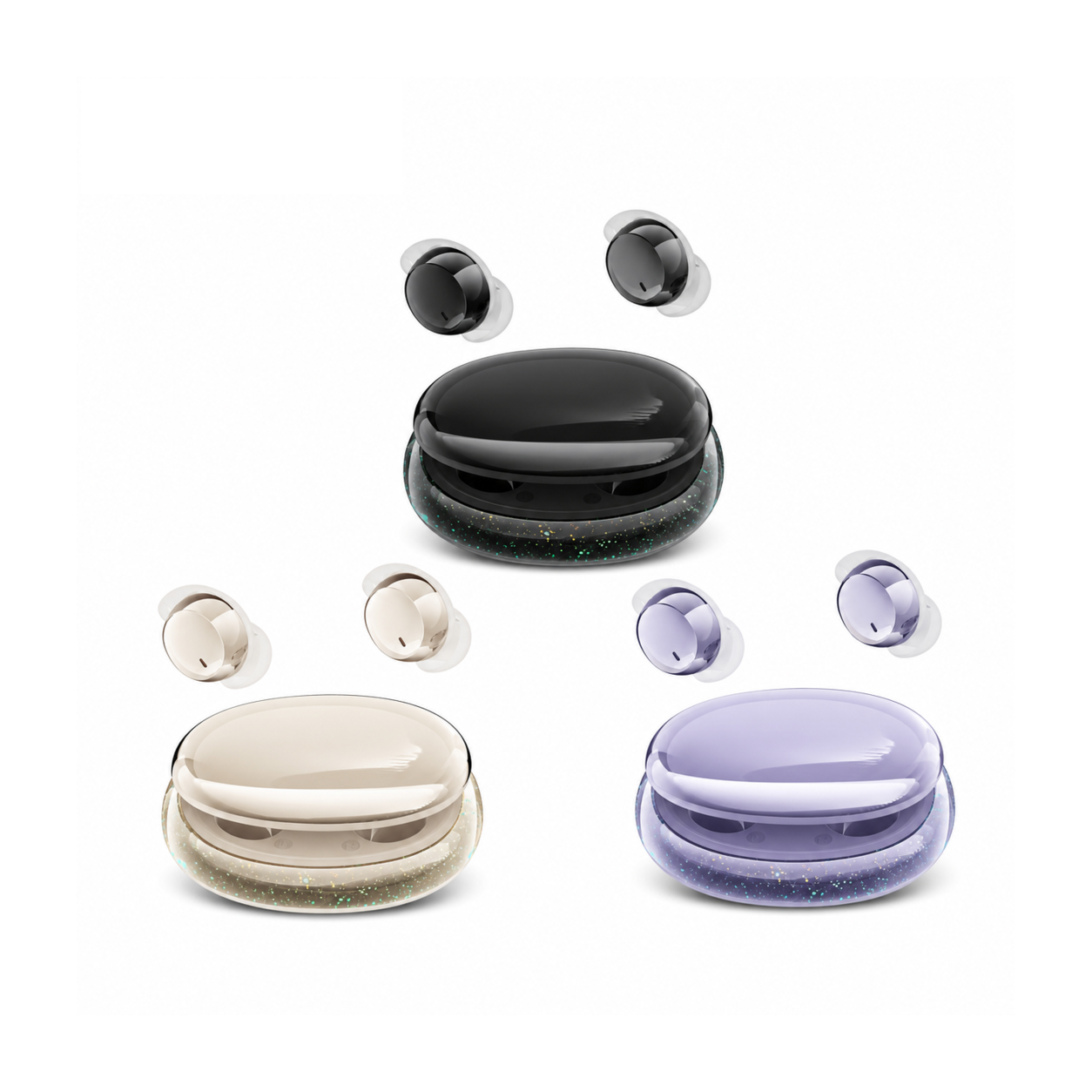
Flat, stemless earbuds for sleeping on your side, with a dynamic sleep-support mode and a starlight glow charging case. See the three colors at EARSOLE.
After intense analytical monitoring sessions with high-voltage desktop gear, listeners benefit from transitioning to low-strain audio hardware before sleep. Switching to specialized flush-fitting wireless earbuds like the EARSOLE Low-Profile Earbuds eliminates bulky cables and ear canal pressure, providing gentle acoustic immersion that supports deep, restful sleep.
Setup Checklist for High-Impedance Earphone Performance
Maximizing fidelity with high-impedance earphone gear requires systematic system configuration. First, confirm your amplifier provides at least 2.5 Vrms into 150 ohms or 3.5 Vrms into 300 ohms to guarantee distortion-free dynamic peaks. Second, inspect source output impedance specifications to verify compliance with the one-eighth rule, avoiding source gear with high internal series resistance.
Finally, adjust system gain staging: set digital software volume to 100 percent to preserve digital-to-analog converter bit depth, using analog potentiometers for volume control. Regularly clean cable connector jacks to prevent resistive oxide accumulation that can alter delicate impedance balance. With proper electrical matching, high-impedance transducers provide unparalleled acoustic transparency and effortless musical control.
Frequently Asked Questions
Can smartphones adequately drive high-impedance earphones?
Standard smartphones lack the internal voltage swing needed to drive high-impedance earphones cleanly, resulting in quiet listening levels, compressed dynamics, and rolled-off sub-bass response without an external amplifier.
What is the one-eighth damping rule in audio engineering?
The one-eighth damping rule states that an amplifier output impedance should be less than one-eighth of earphone nominal impedance to maintain electrical diaphragm control and prevent frequency response coloration.