

Memory Foam Tips for Earbuds and Why Polyurethane Expansion Changes Treble Tilt
Listeners frequently swap factory silicone ear tips for aftermarket memory foam replacements in search of superior passive noise cancellation and all-day ear canal comfort. The tactile sensation of compressing a soft foam cylinder and feeling it slowly expand inside the ear canal creates an undeniable sense of physical security.
However, replacing thin silicone with dense polyurethane changes more than physical fit. The microscopic structure of open-cell memory foam introduces distinct acoustic filtration properties that reshape an earbud’s original frequency response curve, boosting low-end rumble while softening upper-register vocal air.
Viscoelastic Physics: How Body Heat Shapes Polyurethane Expansion
Standard silicone tips rely on elasticity to snap against ear canal tissue, often exerting uneven radial pressure against the sensitive first bend. In contrast, memory foam tips utilize viscoelastic polyurethane polymer chains that soften when exposed to body temperature.
When rolled between the fingertips and inserted into the canal, the compressed foam slowly recovers its resting volume over ten to fifteen seconds. As body heat warms the material, it conforms intimately to microscopic fissures along the canal walls, distributing outward mechanical pressure uniformly and eliminating hot spots.
| Ear Tip Material Architecture | Acoustic Seal Integrity | High-Frequency Treble Tilt | Low-End Bass Retention | Average Usable Lifespan |
|---|---|---|---|---|
| Single-Flange Thin Silicone | Moderate (prone to air leaks) | Bright / Unfiltered (zero absorption) | Baseline (loses sub-bass on head turn) | Long (6 to 12 months with washing) |
| Viscoelastic Memory Foam | Superior (airtight expansion) | Dark / Dampened (-2 to -4 dB above 5 kHz) | Maximum (complete acoustic boundary) | Short (6 to 10 weeks of daily wear) |
| Hybrid Foam-Coated Silicone | High (cushioned outer layer) | Balanced (rigid inner acoustic bore) | Strong (resilient low-end isolation) | Medium (3 to 5 months of usage) |
| Dual-Flange Deep Silicone | High (mechanical second seal) | Clear (minimal acoustic damping) | High (demands deep canal insertion) | Long (durable medical silicone) |
The Treble Tilt Effect: Acoustic Absorption in Open-Cell Polymers
The fundamental reason memory foam tips sound warmer than silicone lies in open-cell porosity. While non-porous silicone reflects sound waves straight through the acoustic stem, polyurethane foam contains millions of microscopic air pockets that act as acoustic damping traps.
As high-frequency audio waves between 4 kHz and 10 kHz travel down the sound bore, boundary friction inside the porous foam core dissipates delicate treble energy. The resulting tilt tames harsh sibilance and splashy cymbals, making bright acoustic recordings sound smoother and less fatiguing during prolonged listening sessions.
Housing Leverage and Nozzle Alignment Across Long Wear Cycles
Acoustic seal depends heavily on whether earbud body geometry allows the nozzle to enter the canal at a natural resting angle. Heavy earbud enclosures that hang outside the concha bowl place constant downward torque on the tip stem, compressing the foam unevenly.
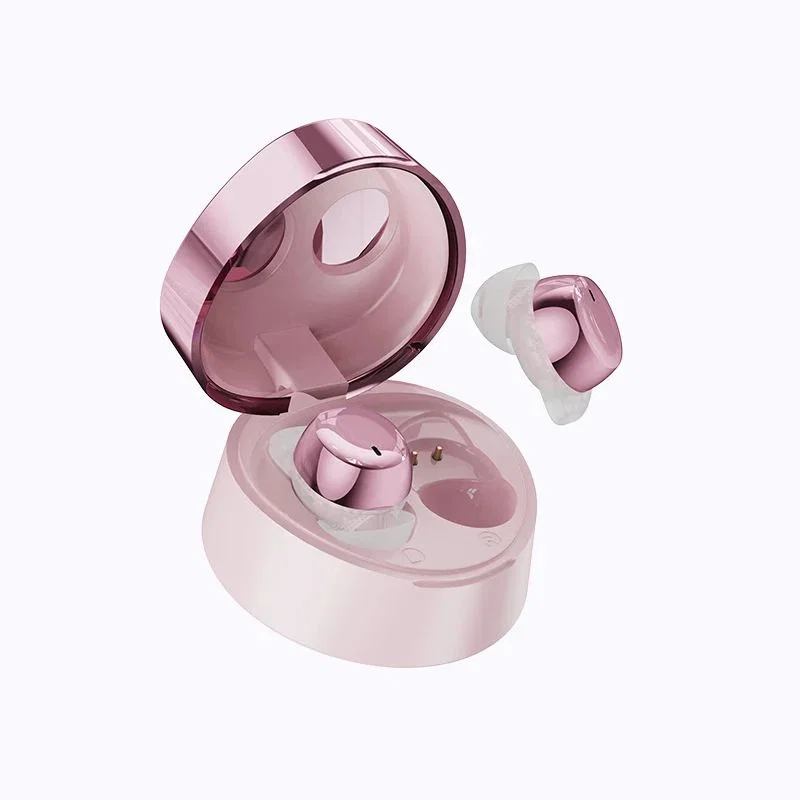
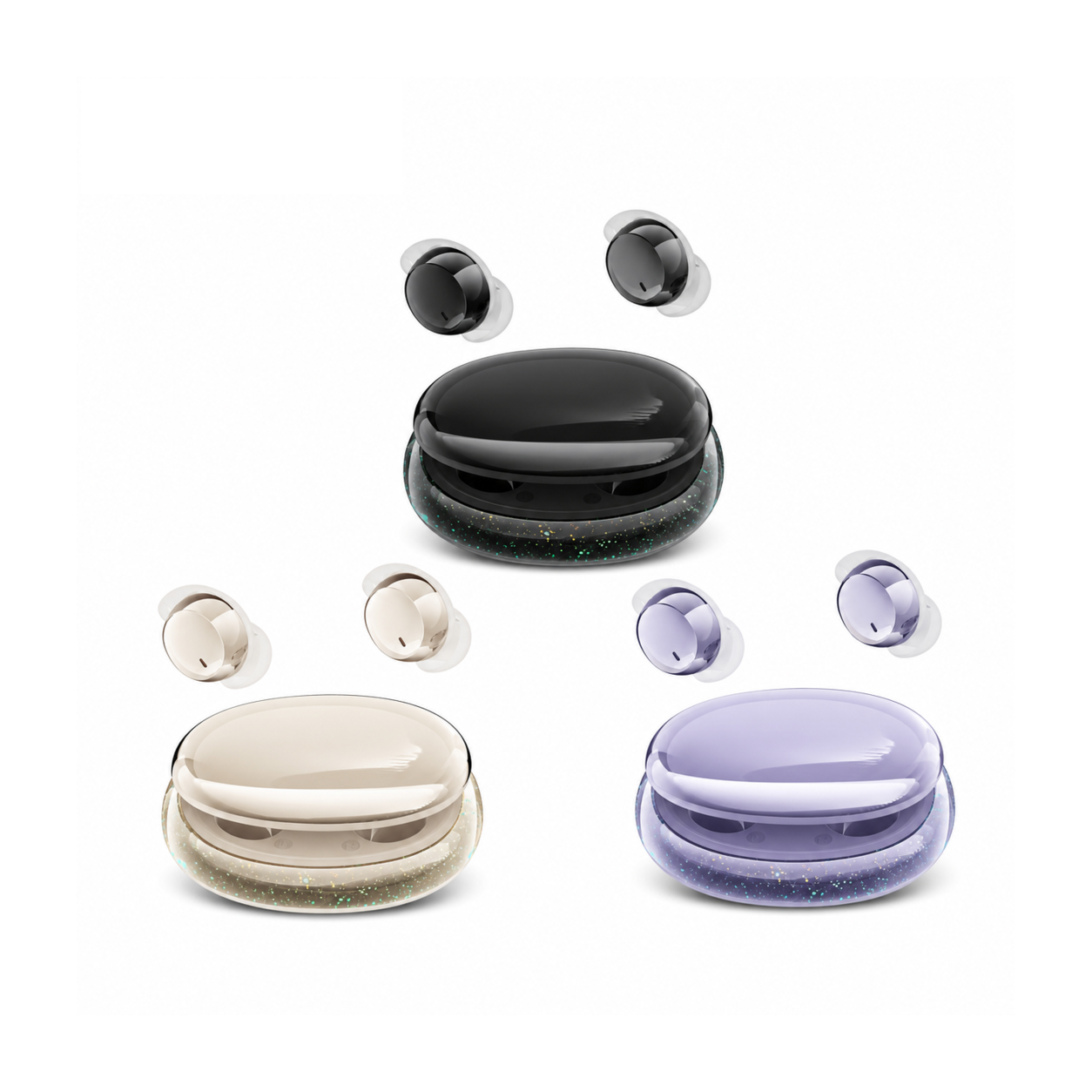
Flat, stemless earbuds for sleeping on your side, with a dynamic sleep-support mode and a starlight glow charging case. See the three colors at EARSOLE.
The EARSOLE Low-Profile Earbuds maximize acoustic transfer by keeping the entire chassis flush within the ear concha. By removing external lever arms and stem weight, the compact housing allows whatever ear tip you install to maintain a centered, uncompromised seal that prevents bore pinching and high-frequency occlusion.
Maintenance Rules and Care for Polyurethane Ear Tips
Because open-cell polyurethane absorbs skin sebum and environmental moisture, maintaining hygiene requires strict material handling:
- Avoid Alcohol and Solvents: Wipe foam tips solely with a damp microfiber cloth; isopropyl alcohol dissolves polyurethane bonds and destroys elastic recovery.
- Allow Full Elastic Recovery: Pinch foam tips gently between thumb and forefinger without twisting, ensuring the cell matrix expands smoothly inside the canal.
- Replace Every Eight Weeks: When foam loses its slow-rise rebound or exhibits surface flaking, swap in a fresh pair to restore airtight acoustic isolation.
Frequently Asked Questions
Why do memory foam tips make earbuds sound darker with less treble?
Open-cell polyurethane foam absorbs high-frequency sound reflections above 4 kHz within its porous cell walls, gently attenuating treble air while preserving full low-frequency bass impact.
Can I wash memory foam earbud tips with soap and warm water?
Submerging foam tips in water degrades the polyurethane polymer; instead, wipe them with a lightly dampened cloth and allow them to air-dry completely before listening.