

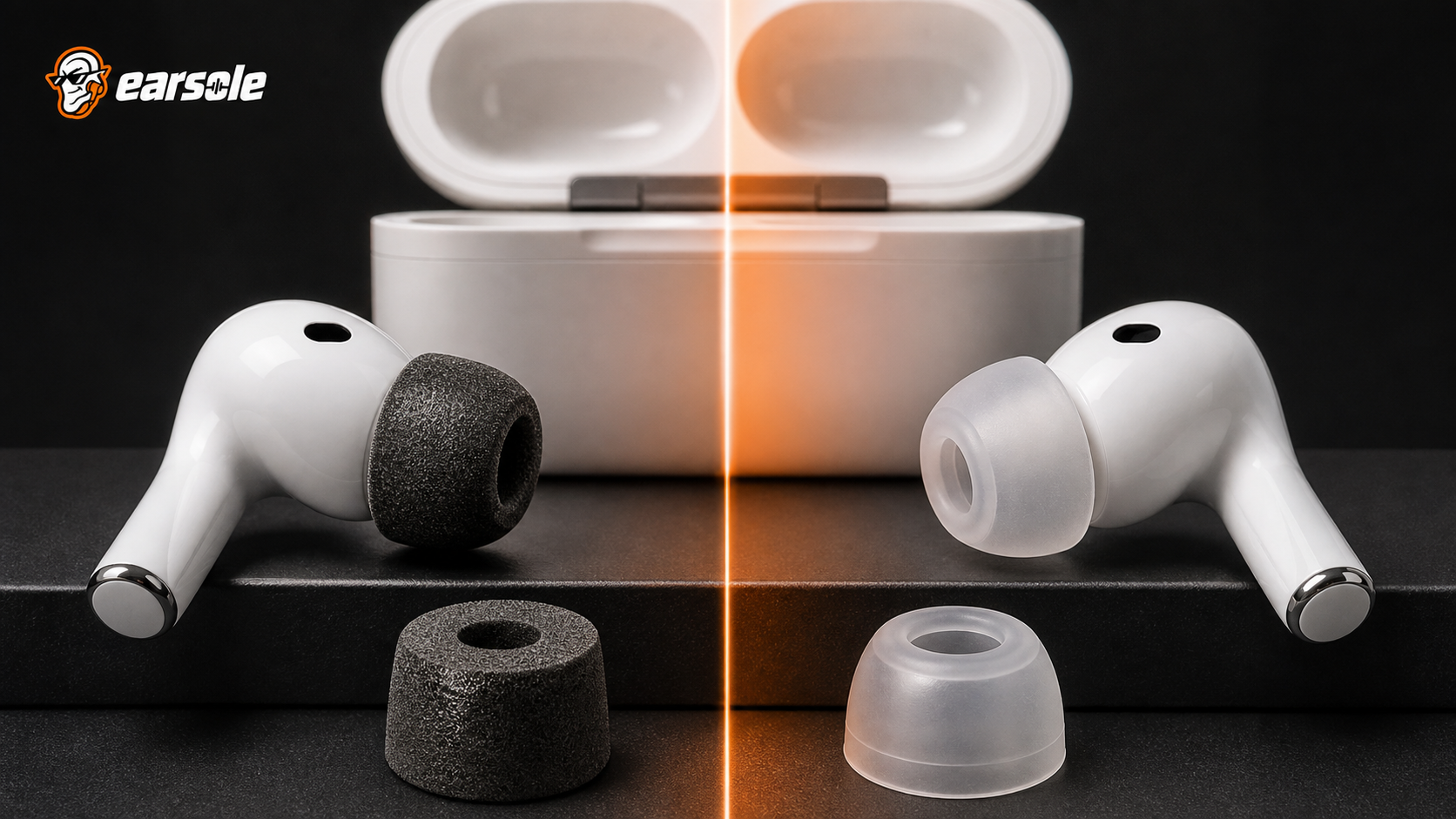
Foam vs silicone ear tips is not a simple comfort contest. Foam compresses, expands, and often creates strong isolation, but it needs careful insertion and more frequent replacement. Silicone is easier to clean, quicker to insert, and usually more durable. The correct choice is the smallest comfortable size that seals without painful pressure.
This guide covers foam vs silicone ear tips alongside silicone vs foam ear tips.
Quick answer
| Factor | Foam | Silicone |
|---|---|---|
| Fit behavior | Compresses and expands to fill space | Flexes around a fixed molded shape |
| Insertion | Roll/compress, insert, hold briefly | Insert and twist into position |
| Cleaning | Usually more limited; follow maker instructions | Often easier to wipe and wash when removable |
| Replacement | Typically more frequent | Typically less frequent |
| Best for | Users prioritizing conforming isolation | Users prioritizing speed, cleaning, and durability |
Material changes behavior, but size still wins
Foam is viscoelastic: you compress it, insert it, and wait while it expands. Shure’s foam-sleeve instructions tell users to compress the sleeve and hold it in place for about ten seconds while it expands. Silicone returns to its molded shape immediately. A poorly sized example of either material can leak, loosen, or hurt, so never compare “medium foam” with “medium silicone” as though labels are standardized across brands.
Compare the pressure map, not softness in your fingers
Foam can feel soft before insertion yet create broad outward pressure after expansion. Silicone can feel firmer yet contact a smaller area. Use a five-minute no-audio test, then a 20-minute quiet-listening test. A good seal should not require deep force. Apple’s ear-tip guidance says a tip that feels too large or uncomfortable should be replaced by a smaller option; Sony’s guide similarly distinguishes gaps from oversize discomfort.
| Observation | First adjustment |
|---|---|
| Bass weak and outside sound leaks evenly | Try reseating, then one size larger if comfortable |
| Pressure grows after foam expands | Use smaller foam or shorter insertion |
| Silicone slips with movement | Dry the tip/ear, reseat, or test another size/shape |
| One ear differs | Fit each ear independently |
Run a fair one-week A/B test
Do not increase volume to compensate for a poor seal during the comparison. If one material changes bass or isolation, first confirm that both sides are sealed similarly.
- Confirm both tips fit the earbud nozzle securely and do not obstruct the sound outlet.
- Use the same track, EQ, volume, and environment.
- Fit each material according to its own insertion method.
- Score seal, comfort at five and 30 minutes, stability, voice occlusion, and removal ease.
- Record cleaning time and any visible wear; include replacement cost rather than purchase price alone.
Hygiene and compatibility are decision criteria
Follow the tip maker’s cleaning and replacement instructions; not all foam is washable, and removable silicone should be fully dry before reattachment. Never stretch an incompatible tip onto a nozzle if it can detach in the ear. If you develop persistent pain, itching, discharge, fullness, or hearing change, stop use. The NHS identifies those as symptoms that can warrant ear-care advice rather than another material experiment.
Where an EARSOLE model fits
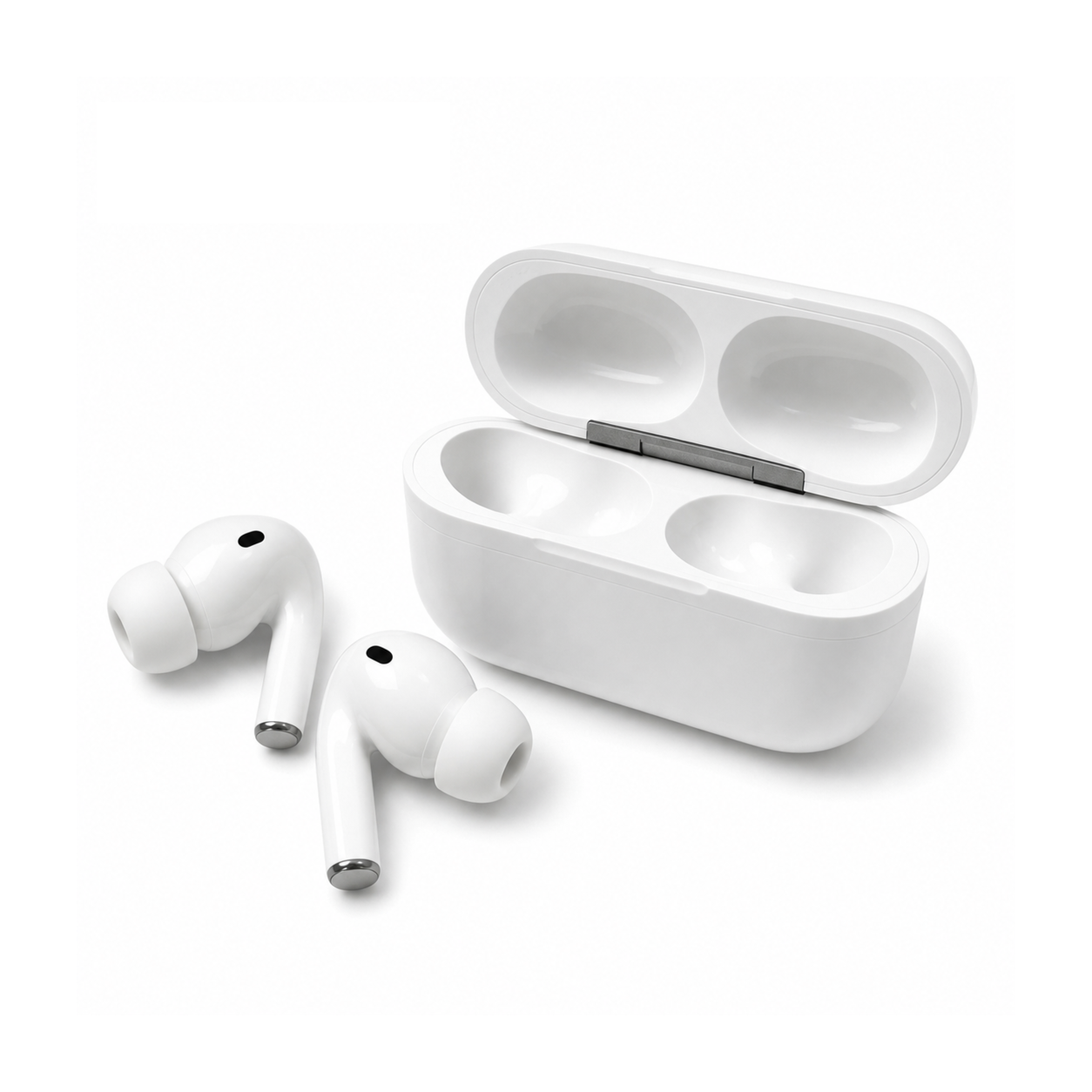
EARSOLE Core White In-Ear Wireless Earbuds with Charging Case ships with soft silicone ear tips in a compact white stem-style in-ear design and matching charging case. Its listing makes no foam-tip compatibility promise, so aftermarket tips should be used only if their nozzle fit is explicitly compatible and secure. The product serves here as the silicone baseline, not proof that silicone is universally better.
The product link is included as a fit example, not proof that one design works for every ear or situation. Match the physical design and documented specifications to the decision rules above.
Frequently asked questions
Do foam tips stay in better?
They can conform more closely for some ears, but retention also depends on size, nozzle angle, shell weight, movement, and insertion technique. A stable fit should not require painful expansion pressure.
Do foam tips change sound?
Any tip can change sound by changing the seal, insertion depth, bore, or filter. Compare at the same volume only after both sides have a consistent seal.
Can I wash foam ear tips?
Only if the manufacturer explicitly allows it. Many foam tips degrade with moisture or cleaning agents. Follow the exact product instructions and replace tips that no longer recover shape or stay clean.
Bottom line
Choose foam when conforming isolation outweighs slower insertion and replacement cost; choose silicone when quick use, cleaning, and durability matter more. In both cases, fit and compatibility—not the material label—decide the result.
Sources and review notes
- Shure foam-sleeve fitting instructions
- Apple ear-tip fit and seal guidance
- Sony ear-tip fit and airtightness guidance
- NHS ear-infection symptoms and escalation guidance
Written and reviewed by the EARSOLE Editorial Team on July 14, 2026. This is educational buying and troubleshooting guidance, not medical advice. Stop using earbuds and seek qualified care for persistent pain, discharge, sudden hearing change, severe dizziness, or other concerning symptoms.