

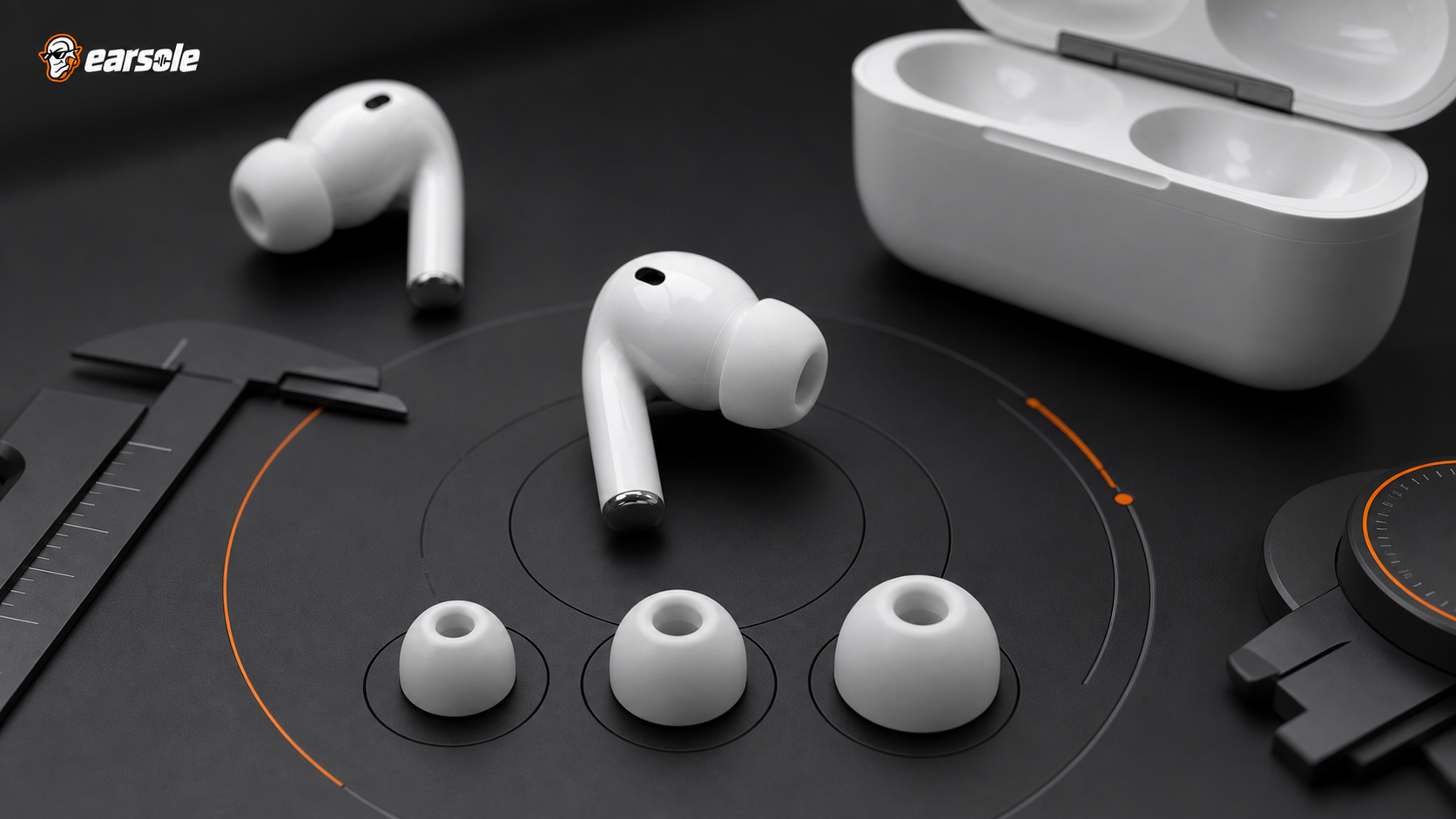
Choosing ear tips for earbuds is not about matching a universal small, medium, or large label. Start with the supplied medium tip, fit each ear independently, and check four things: no painful pressure, an even seal, stable movement, and easy removal. Go smaller for pressure; go larger only when a comfortable gap remains.
If you arrived looking for general advice on a first pair rather than this one fitting step, our wireless earbuds buying guide is the better starting point; it reads a listing line by line and ends with the questions we get before a first pair. This page assumes you already have the earbuds and are working on the seal.
This guide covers ear tips for earbuds alongside how to choose ear tip size.
Quick answer
| What you notice | First size test |
|---|---|
| Pain or outward pressure | One size smaller or a shallower fit |
| Weak bass and obvious outside leakage | Reseat, then test one size larger |
| Earbud slowly backs out | Dry surfaces, change angle, then test another size |
| Left and right feel different | Use different sizes if needed |
Do not treat S, M, and L as measurements
Tip labels are relative to one product family. A medium from one brand can differ in flange width, stem length, bore, stiffness, and nozzle interface from another. Even within one person, the left and right canals may not match. Apple’s ear-tip guidance explicitly suggests changing size when the current tip cannot seal or feels too large; Sony likewise notes in its fit guide that a gap can indicate a small tip and discomfort can indicate an oversized one.
Run four checks in the right order
Use quiet audio only after the physical fit passes. A louder track can hide a poor seal and distract from pressure.
| Check | Pass | Fail |
|---|---|---|
| 1. Pressure | Secure, no growing hot spot after five minutes | Sharp, expanding, or pulse-like pressure |
| 2. Seal | Bass and room reduction feel even left/right | Hollow sound or obvious gap on one side |
| 3. Stability | Stays seated during speech and a gentle head turn | Needs constant pushing or slips out |
| 4. Removal | Comes out slowly with the tip still attached | Painful suction or loose tip on nozzle |
Use a controlled size ladder
Change one variable at a time. Switching size, material, insertion depth, and EQ together makes the result impossible to interpret.
- Let any current soreness settle, then start with the supplied medium tip.
- Insert only as deeply as the product instructions require; do not use force.
- If pressure fails, go smaller before changing material or buying accessories.
- If comfort passes but a gap remains, reseat and change angle; only then try larger.
- Test left and right separately and write down the final sizes.
- Recheck after 20 minutes because expansion, heat, and movement can change the result.
Know when sizing is not the problem
A tip change will not solve an outer-shell pressure point, dermatitis, active ear irritation, excessive listening level, or a nozzle angle that conflicts with your anatomy. The WHO recommends lowering level and monitoring persistent ringing or hearing difficulty. If pain, discharge, fullness, itching, or hearing change persists, stop using the earbuds; the NHS lists these among symptoms that can warrant professional ear-care advice.
Where an EARSOLE model fits
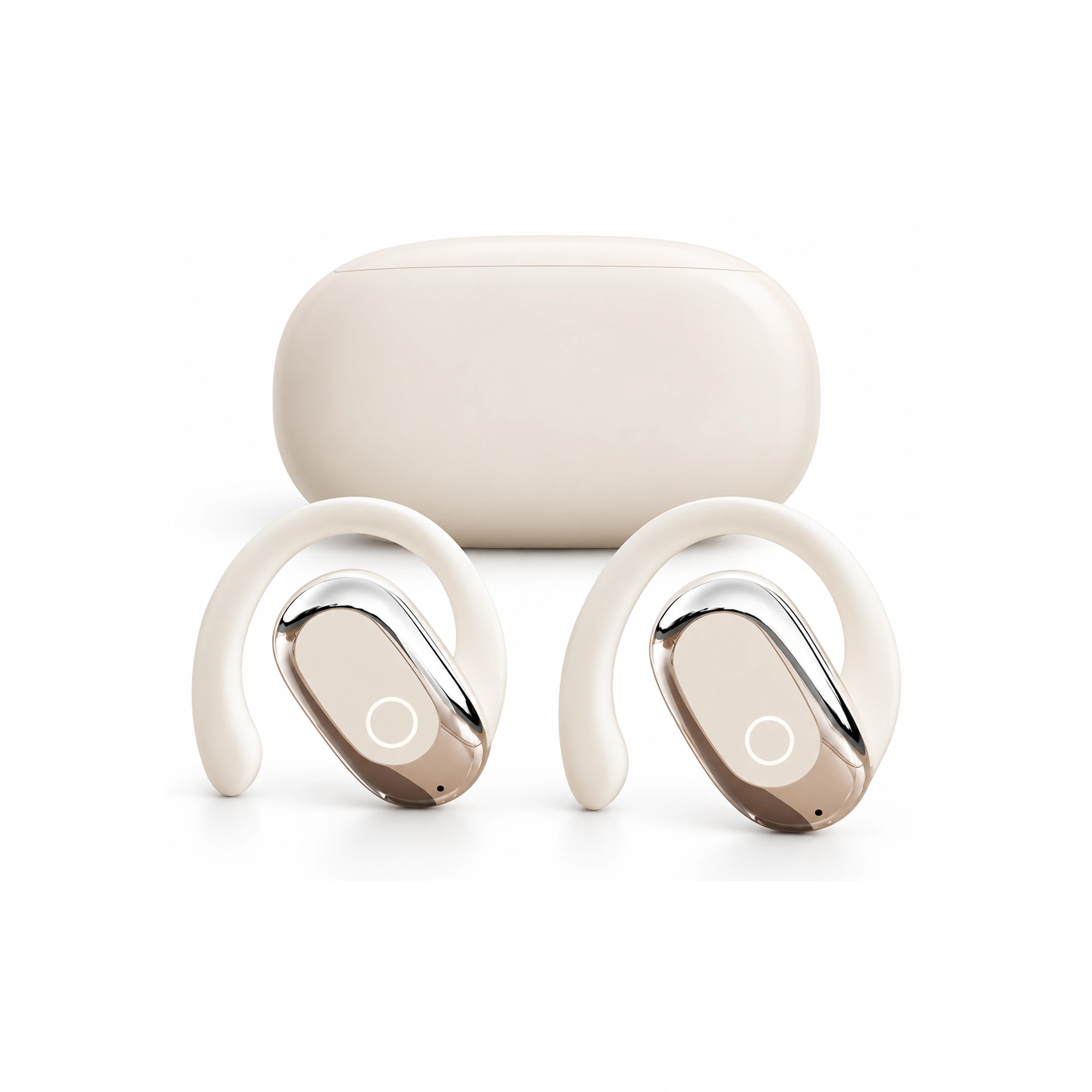
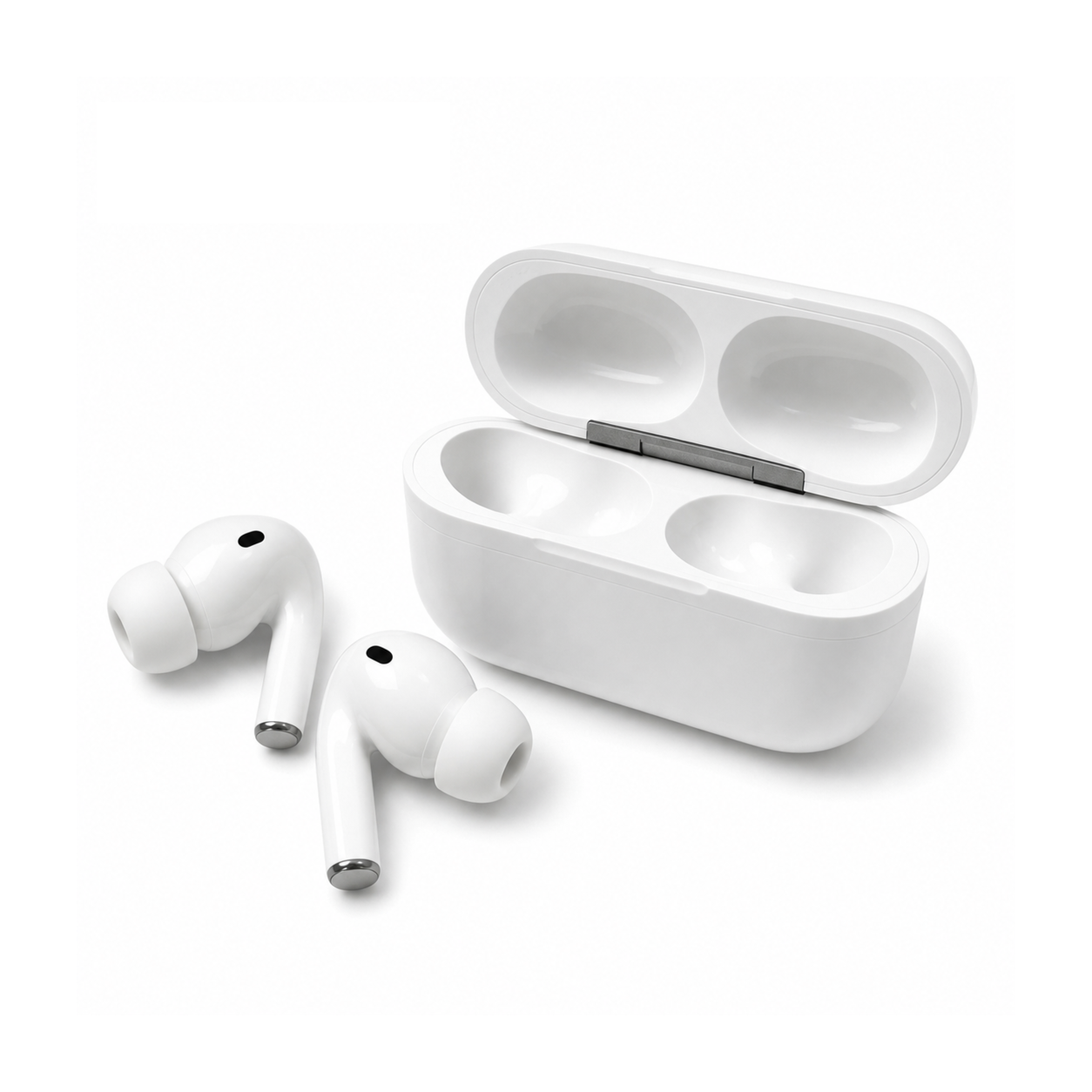
EARSOLE Core White In-Ear Wireless Earbuds with Charging Case uses soft silicone ear tips with a compact white stem-style in-ear body and matching charging case. Its catalog does not publish universal tip diameters or aftermarket compatibility. Use the included fit as the baseline and attach replacement tips only when the nozzle match is explicitly secure.
The product link is included as a fit example, not proof that one design works for every ear or situation. Match the physical design and documented specifications to the decision rules above.
Frequently asked questions
Should ear tips feel airtight?
They should create an even acoustic seal without painful pressure. “Airtight” should not mean forced deep insertion or difficult removal.
Can I use a different size in each ear?
Yes. Left and right anatomy commonly differs, and the correct goal is a comfortable, stable seal on each side—not visual symmetry.
Why does a larger tip sometimes sound better?
It may close a leak and restore bass, but better sound is not permission to accept pressure. The best size passes comfort and seal together.
Bottom line
The right size is the smallest option that creates a stable, even seal without painful pressure. Fit each ear independently, test with audio off first, and do not let stronger bass overrule comfort.
Sources and review notes
- Apple ear-tip fit and seal guidance
- Sony ear-tip fit and airtightness guidance
- World Health Organization safe-listening guidance
- NHS ear-infection symptoms and escalation guidance
Written and reviewed by the EARSOLE Editorial Team on July 14, 2026. This is educational buying and troubleshooting guidance, not medical advice. Stop using earbuds and seek qualified care for persistent pain, discharge, sudden hearing change, severe dizziness, or other concerning symptoms.