

Noise Cancelling Earbuds for Sleeping Through Snoring Fundamental Frequencies
Few nighttime disturbances match the disruptive power of bed partner snoring. The heavy rumble easily travels across a bedroom and pierces ordinary earplugs. Understanding how sound waves propagate from vibrating airway tissue reveals why standard daytime earbuds fail to keep you asleep, and how specialized low-profile sleep audio provides genuine overnight relief.
The Acoustic Spectrum of Snoring: Fundamental Frequencies vs Harmonic Flutter
Snoring does not produce a uniform hum. Instead, it generates a complex acoustic profile split into two distinct frequency bands:
- Fundamental Frequencies (50–200 Hz): Soft palate and tissue vibrations produce low-frequency resonant sound waves. These long acoustic waves carry substantial kinetic energy and easily penetrate standard foam earplugs and thin walls.
- Harmonic Throat Flutter (500–2000 Hz): Turbulent airflow across the pharynx produces sharp mid-to-high frequency rasps that catch the human ear’s natural sensitivity.
| Snoring Component | Typical Frequency Band | Acoustic Behavior | Primary Attenuation Mechanism |
|---|---|---|---|
| Deep Resonance Rumble | 50–200 Hz | Long wavelengths, high kinetic penetration | Airtight silicone physical barrier plus sound masking |
| Upper Harmonic Rasp | 500–2000 Hz | Mid-frequency spikes, directional propagation | Passive high-frequency acoustic reflection |
| Intermittent Gasps | Variable (100–3000 Hz) | Sudden acoustic transients | Dynamic sleep-support audio leveling |
Why Traditional Active Noise Cancelling Struggles With Intermittent Snoring
Many frustrated sleepers reach for standard commuter noise-cancelling earbuds, only to wake up repeatedly through the night. Active Noise Cancellation (ANC) relies on outward-facing microphones that sample ambient sounds and create inverted anti-phase sound waves.
While ANC effectively cancels monotonous drone sounds like airplane engines or HVAC compressors, snoring behaves irregularly:
- Unpredictable Transient Bursts: Snoring cycles fluctuate in rhythm, volume, and timbre. By the time digital signal processors detect a sudden snore peak and calculate anti-noise, the acoustic transient has already entered your ear canal.
- Microphone Pillow Friction: Pressing an ANC earbud into a pillow rubs fabric against exterior microphones, generating loud scratchy artifacts and digital squeal.
- Bulk and Cartilage Pressure: Protruding stems and battery housings exert continuous pressure on the outer ear cartilage, waking you with painful soreness.
Passive Physical Attenuation: Sealing the Ear Canal Against Low Frequencies
Blocking snoring fundamental frequencies begins with an airtight physical barrier. Low-frequency sound waves travel through tiny air gaps; even a microscopic leak around an ear tip compromises noise isolation across the entire lower spectrum.
A pliable, multi-flange or contoured silicone ear tip forms a complete mechanical seal within the ear canal. This physical obstruction reflects mid- and high-frequency harmonics before they reach the eardrum while significantly reducing the transmission of low-frequency energy.
EARSOLE Low-Profile Sleeping Earbuds: Flush Design and Sleep-Support Mode
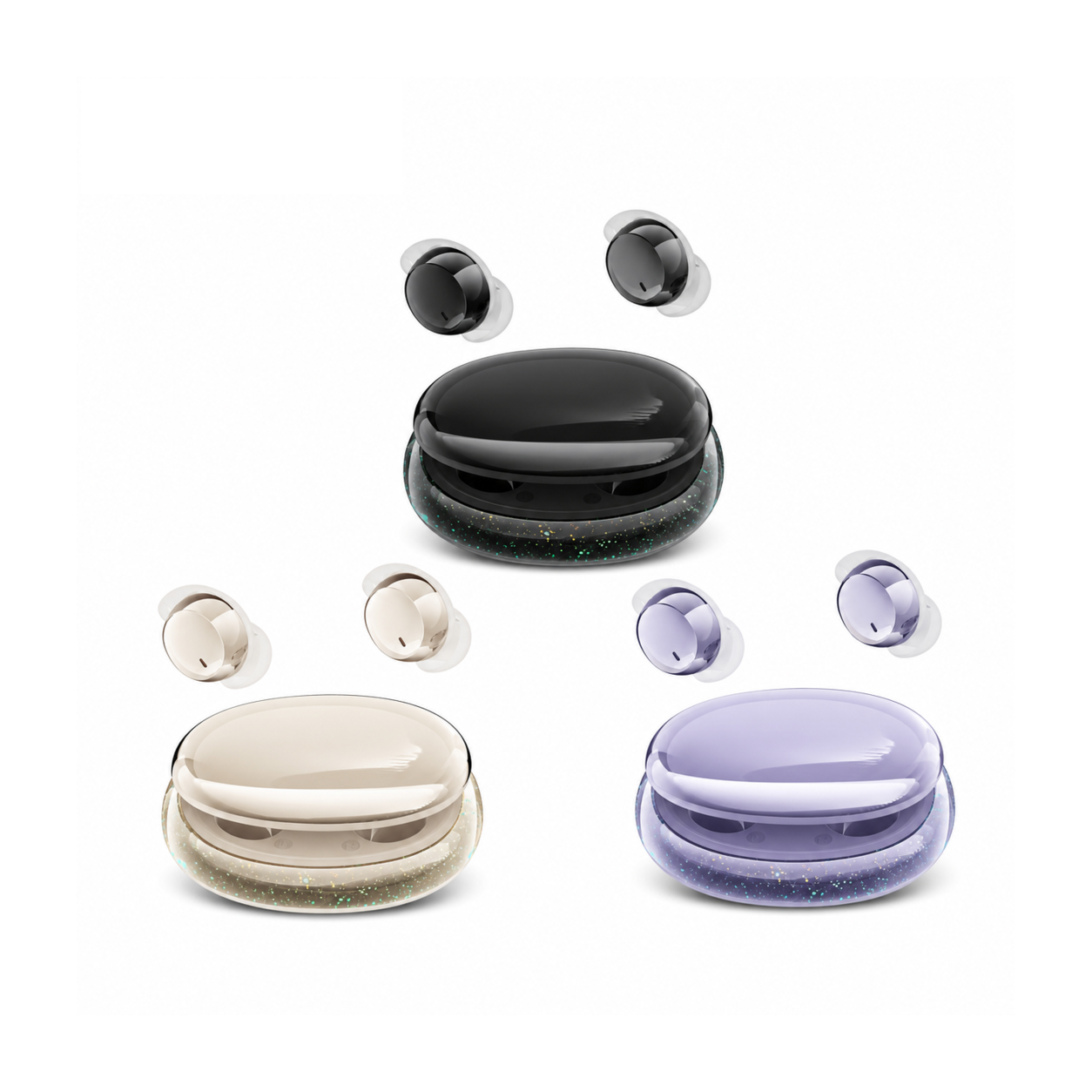
The EARSOLE Low-Profile Sleeping Earbuds for Side Sleepers are engineered to solve the dual challenges of partner snoring and side sleeping comfort. Their compact housing nests entirely inside the ear concha bowl, eliminating painful pillow pushback.
Flat, stemless earbuds for sleeping on your side, with a dynamic sleep-support mode and a starlight glow charging case. See the three colors at EARSOLE.
The dynamic sleep-support mode pairs effective passive silicone isolation with soothing sound masking. By delivering steady audio tailored to neutralize sudden acoustic spikes, the earbuds cover fluctuating snoring peaks that passive isolation alone cannot completely silence. The included starlight glow case keeps your earbuds fully powered and easily accessible on your nightstand.
Sound Masking Mechanics: Overcoming the Snoring Detection Threshold
Complete acoustic silence in a bedroom is an unrealistic goal because human hearing naturally amplifies quiet rooms, heightening our sensitivity to sudden sounds. The auditory cortex detects snoring not because of its absolute decibel level, but because the sharp contrast between a silent room and a sudden snore triggers micro-arousals.
Sound masking elevates the steady ambient noise floor with continuous acoustic profiles such as pink noise or steady rain. By narrowing the volume gap between quiet room conditions and snoring peaks, sound masking prevents your brain from registering nighttime interruptions.
Frequently Asked Questions
Can earbuds completely block loud snoring?
No in-ear device can provide one hundred percent acoustic silence against extreme ninety-decibel snoring because sound also travels through the skull via bone conduction. However, pairing an airtight passive silicone seal with dynamic sound masking reduces audible snoring below the auditory detection threshold.
Why do daytime ANC earbuds hurt when sleeping on your side?
Daytime earbuds feature bulky batteries and protruding stems designed for upright commuting. When you press your head into a pillow, that rigid exterior forces the earbud into your delicate ear cartilage, causing severe pain and acoustic feedback screeching within an hour.