

Passive Noise Cancelling Earbuds and How Shell Mass Blocks Upper-Mid Chatter
Many listeners assume that digital Active Noise Cancellation (ANC) is the only reliable way to silence a noisy workplace, coffee shop, or library. However, standard microphones and digital signal processors struggle precisely where ambient noise is most disruptive: the irregular, rapid cadence of human speech occurring between 1,000 Hz and 4,000 Hz.
While active circuits excel at canceling repetitive, low-frequency hums like airplane jet engines or HVAC fans, blocking dynamic human conversations requires physical acoustics. High-density passive noise cancelling earbuds utilize shell mass, material damping, and airtight canal coupling to stop upper-mid frequency acoustic energy before it enters your ear.
The Mass Law of Acoustics: Why Solid Shells Outperform ANC on Voice Frequencies
According to the acoustic mass law, the transmission loss across any physical barrier increases in proportion to the surface density of the material and the frequency of the sound wave. For every doubling of shell mass, sound isolation improves by roughly 6 dB.
Thin, hollow plastic earbud shells allow voice frequencies to vibrate through the casing walls, exciting internal air cavities and reaching your auditory canal. Conversely, solid high-density housings act as impenetrable kinetic dampeners, converting acoustic pressure waves into negligible thermal energy rather than transmitting them into the ear canal.
| Earbud Housing Design | Density & Shell Mass | Upper-Mid Attenuation (1–4 kHz) | Acoustic Seal Stability | Continuous Wear Comfort |
|---|---|---|---|---|
| Hollow Vented ANC Plastic | Low (1.2–1.8g hollow resin) | 12 to 16 dB (phase lag) | Vented acoustic bore | 2 to 4 hours |
| Solid Acrylic Custom Shell | High (4.5–6.0g solid polymer) | 24 to 28 dB (rigid barrier) | Full concha seal | 4 to 6 hours |
| Aluminum Metal Enclosure | Very High (7.0–9.5g alloy) | 26 to 30 dB (dense barrier) | Heavy outer canal pull | 2 to 3 hours |
| Flush Silicone Molded Body | High Mass-to-Volume (solid core) | 22 to 26 dB (viscoelastic) | In-concha zero-lever grip | 8+ hours |
Acoustic Impedance and the 1 kHz to 4 kHz Speech Band
Human vowels and sibilant consonants inhabit the critical upper-midrange spectrum where the human ear is naturally most sensitive due to concha and ear canal acoustic resonance. Because active noise cancellation introduces a slight microsecond processing lag, ANC algorithms cannot predict sudden phonetic transients like laughter, keyboard clatter, or telephone conversations.
Passive isolation bypasses signal processing entirely by presenting an overwhelming acoustic impedance mismatch. When sound waves hit dense, non-resonant boundaries, the mechanical impedance difference forces the vast majority of acoustic energy to reflect outward rather than penetrate inward.
Silicone Viscoelasticity vs Hollow Plastic Enclosures
Traditional consumer earbuds cut manufacturing costs by utilizing two-piece injection-molded plastic shells welded together over an empty acoustic cavity. This hollow internal space functions as a resonant chamber that can actually amplify ambient voice frequencies around 2.5 kHz.
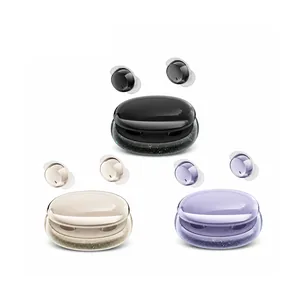
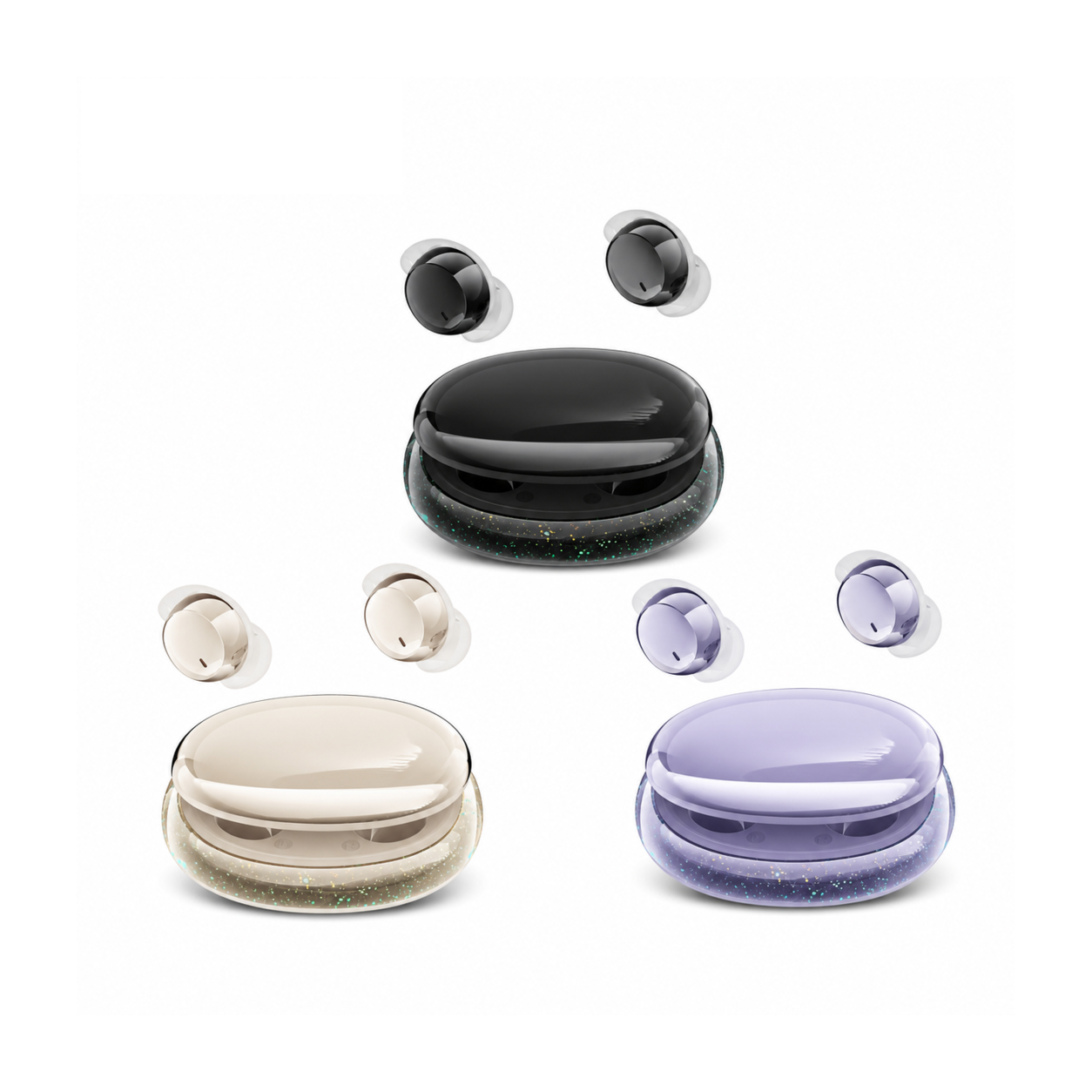
Flat, stemless earbuds for sleeping on your side, with a dynamic sleep-support mode and a starlight glow charging case. See the three colors at EARSOLE.
The EARSOLE Low-Profile Earbuds counter this acoustic vulnerability with solid, non-hollow silicone geometry. Rather than enclosing air pockets that resonate with ambient chatter, the solid viscoelastic silicone chassis conforms directly into the ear concha. This continuous anatomical seal eliminates flanking air leaks while offering substantial mass damping, giving listeners genuine quiet across the human vocal band without digital hiss or ear-drum pressure.
Maximizing Passive Noise Reduction in Loud Environments
To extract the maximum passive attenuation from dense earbud housings, combine proper hardware selection with systematic insertion practices:
- Select High-Density Silicone Tips: Choose thick-walled silicone or dense memory foam tips that provide airtight acoustic coupling against ear canal ridges.
- Ensure Full Concha Seating: Press the earbud body completely flush inside your concha basin so external sound waves cannot circumvent the perimeter.
- Inspect Vent Placement: Prefer acoustic vents equipped with dense mesh filters that maintain driver back-pressure without creating open sound leakage tunnels.
Frequently Asked Questions
Do passive noise cancelling earbuds block human voices better than active noise cancelling?
Yes, dense passive earbuds physically block irregular 1 kHz to 4 kHz human speech frequencies where active cancellation algorithms struggle with predictive processing lag.
How does earbud shell mass affect sound isolation?
Higher shell mass increases transmission loss according to acoustic mass laws, preventing airborne voice waves from vibrating through earbud casings into the ear canal.