



While celebrities and campus style made cords visible again, the 2026 wired headphone comeback is driven by practical hardware fatigue: wired headphones never require charging, never suffer from uneven lithium-ion battery degradation where one wireless earbud dies before the other, deliver zero-latency audio and reliable microphone quality without Bluetooth pairing hiccups, and eliminate the expense of losing a single earbud or charging case. Rather than abandoning wireless audio altogether, many students, commuters, and remote workers now split their daily routine—using wireless Bluetooth while moving or working out, and plugging in a wired 3.5 mm or USB-C connection at their desk.
If you have noticed more cords on university campuses, commuter trains, and coffee shop laptops lately, you are seeing a practical correction after a decade of “wireless-only” phones and laptops. Below, we look past the surface-level nostalgia narrative to examine the engineering and everyday reasons why are wired headphones coming back, what r/Earbuds commuters say about why are people switching back to wired earbuds, and how to answer are wired headphones better than wireless for your own daily workflow.
Battery Fatigue & Lithium-Ion Aging: Why ‘Infinite Battery Life’ Beats Charging Another Gadget
For the last ten years, mobile hardware pushed listeners toward an all-wireless ecosystem. According to CNET’s 2026 column (Good News: Wired Earbuds Are Back and Same as Ever), after Apple removed the iPhone headphone jack in 2016 and introduced $160 wireless AirPods, wired earbuds remained a simple, effective $20 replacement with zero latency, zero pairing issues, and a physical cord that keeps you from dropping a single earbud down a storm drain. While celebrities from Addison Rae, Harry Styles, and Zendaya to Steph Curry and Bella Hadid helped make wired earbuds visible in pop culture again, CNET notes that the enduring appeal is practical rather than nostalgic.
The single biggest driver of the wired rebound is charging fatigue. CNET emphasizes that the real standout feature of wired headphones is that you never have to charge them—you simply plug them into your phone or computer for infinite battery life instead of charging headphones on top of smartwatches, smart rings, smart glasses, laptops, and phones. Everyone has experienced boarding a flight, opening a laptop at a cafe, or starting a long commute home with a low phone battery only to discover that their wireless earbuds are dead—or worse, that one earbud is charged while the other is at zero percent.
Why One Wireless Earbud Always Dies First (And Why You Can’t Just Swap the Battery)
Why do true wireless earbuds inevitably develop lopsided battery life after a couple of years of daily charging cycles?
As CNET explains, each wireless earbud houses its own lithium-ion battery that becomes less effective at holding a charge over time, causing one earbud to run out of battery or stop working before the other—and because ultracompact wireless earbuds like AirPods use glued-in components that cannot be reassembled after disassembly, most cannot have their batteries replaced.
From a hardware standpoint, three factors accelerate this frustration:
- Tiny cell capacity and frequent charge cycles: Unlike a laptop or over-ear headphone battery that holds dozens of hours of power, the micro-cells inside compact wireless stems undergo deep charge-discharge cycles almost every day.
- Asymmetric workload between left and right buds: If you frequently use one earbud at a time for calls or voice assistants, that cell accumulates more charge cycles and degrades faster than its partner, leaving you stuck listening in one ear.
- Sealed, non-serviceable shells: Because ultracompact true wireless housings glue the battery, driver, and circuit board into a sealed shell, a worn-out lithium-ion cell turns the entire pair into disposable electronics. Wired headphones and dual-mode headphones with a 3.5 mm jack bypass battery aging completely whenever a cable is plugged in.
Zero Latency, Mic Quality & Loss Anxiety: What Campus and Train Commuters Say
The shift back to cords is not just happening in tech columns—it is visibly reshaping daily transit and university study halls. In Reddit’s r/Earbuds community (thread 1ncwze7, Why are people switching back to wired earbuds?), commuters and students explain that they returned to wired earbuds for great inline microphone quality, no need to keep a battery charged, and being done with losing a single wireless earbud or charging case and paying to replace the whole set.
When you compare everyday commuter experiences against the marketing promise of wireless audio, three practical advantages stand out:
- Zero latency and zero Bluetooth pairing glitches: As CNET points out, wired headphones simply work the moment you plug them into a computer or phone, playing albums, video lectures, or podcasts without wireless lag or multipoint pairing confusion.
- Consistent inline microphone pickup: Bluetooth headsets must split wireless bandwidth whenever the microphone activates, which often drops call audio into narrowband voice profiles. An inline wired microphone sits right below your jawline on the cable and sends uncompressed analog voice straight into your laptop or phone adapter.
- Ending “single-bud” and charging-case loss anxiety: Losing one tiny wireless stem under a train seat—or misplacing the proprietary charging case—often forces you to buy a brand-new set when the manufacturer does not sell standalone replacement cases. A physical wire tethers both earpieces together and stays anchored to your device.
- Easy compatibility with modern USB-C and Lightning phones: Even if your smartphone no longer has a built-in 3.5 mm socket, CNET confirms that wired earbuds with USB-C or Lightning connectors work just as cleanly as classic 3.5 mm plugs, and any standard 3.5 mm headphone can plug into a modern phone or tablet using a compact USB-C to 3.5mm audio adapter.
| Comparison Factor | Wired Headphones / Earbuds (3.5mm or USB-C) | True Wireless Bluetooth Earbuds | Dual-Mode Over-Ear Headphones (Bluetooth + 3.5mm AUX) |
|---|---|---|---|
| Battery & Charging | Infinite battery life—never requires charging (CNET; r/Earbuds 1ncwze7) | Requires routine charging of both earbuds and case; lithium-ion cells degrade over time (CNET) | Up to 100 hours Bluetooth playtime, plus zero-battery wired listening via 3.5 mm cable (EARSOLE Series 127) |
| Long-Term Battery Aging | No internal battery required for passive wired playback | Asymmetric lithium-ion aging often causes one earbud to die before the other; glued shells resist repair (CNET) | Even after years of wireless use, the 3.5 mm AUX input continues working indefinitely |
| Audio Latency & Pairing | Zero latency and zero Bluetooth pairing glitches; plug-and-play (CNET) | Uses wireless pairing; convenient for movement and smartwatch workouts (CNET) | Switch between wireless Bluetooth on the go and lag-free 3.5 mm wired audio at your desk |
| Loss & Replacement Risk | Tethered by a single cable; inexpensive to replace (~$20 for basic wired buds per CNET) | High risk of dropping a single bud or losing the charging case (r/Earbuds 1ncwze7) | Full-size over-ear frame with rotating cups and an included travel pouch (EARSOLE Series 127) |
| Best Everyday Use Case | Desk work, campus study sessions, calls, and zero-lag video or gaming | Gym reps, running errands, and cord-free travel (r/Earbuds 1ncwze7; CNET) | All-in-one setup for listeners who want wireless freedom outdoors and wired reliability at a desk |
Wireless on the Move, Wired at the Desk: How Dual-Mode Headphones Give You Both
So are wired headphones better than wireless, or does each connection type win in different environments? Rather than treating wired and wireless as an all-or-nothing choice, the smartest listeners match the connection to the task.
Another listener in r/Earbuds (thread 1ncwze7) summarized the hybrid routine many people use today: preferring wireless earbuds when traveling or moving around, and preferring a wired connection when sitting at a desk—matching CNET’s observation that wireless earbuds are convenient to pair with a smartwatch during a gym session while wired headphones deliver lag-free, zero-charging playback.
Depending on how you split your day between commuting, workouts, and desk work, two hardware setups cover every scenario without compromise:
1. One Headphone for Both Worlds: Dual-Mode Over-Ear Headphones (Bluetooth + 3.5mm Cable)
If you want cordless convenience while walking across campus or commuting on the train, but want to plug directly into your laptop or desktop monitor the moment you sit down, dual-mode over-ear headphones eliminate the tradeoff between wired and wireless.
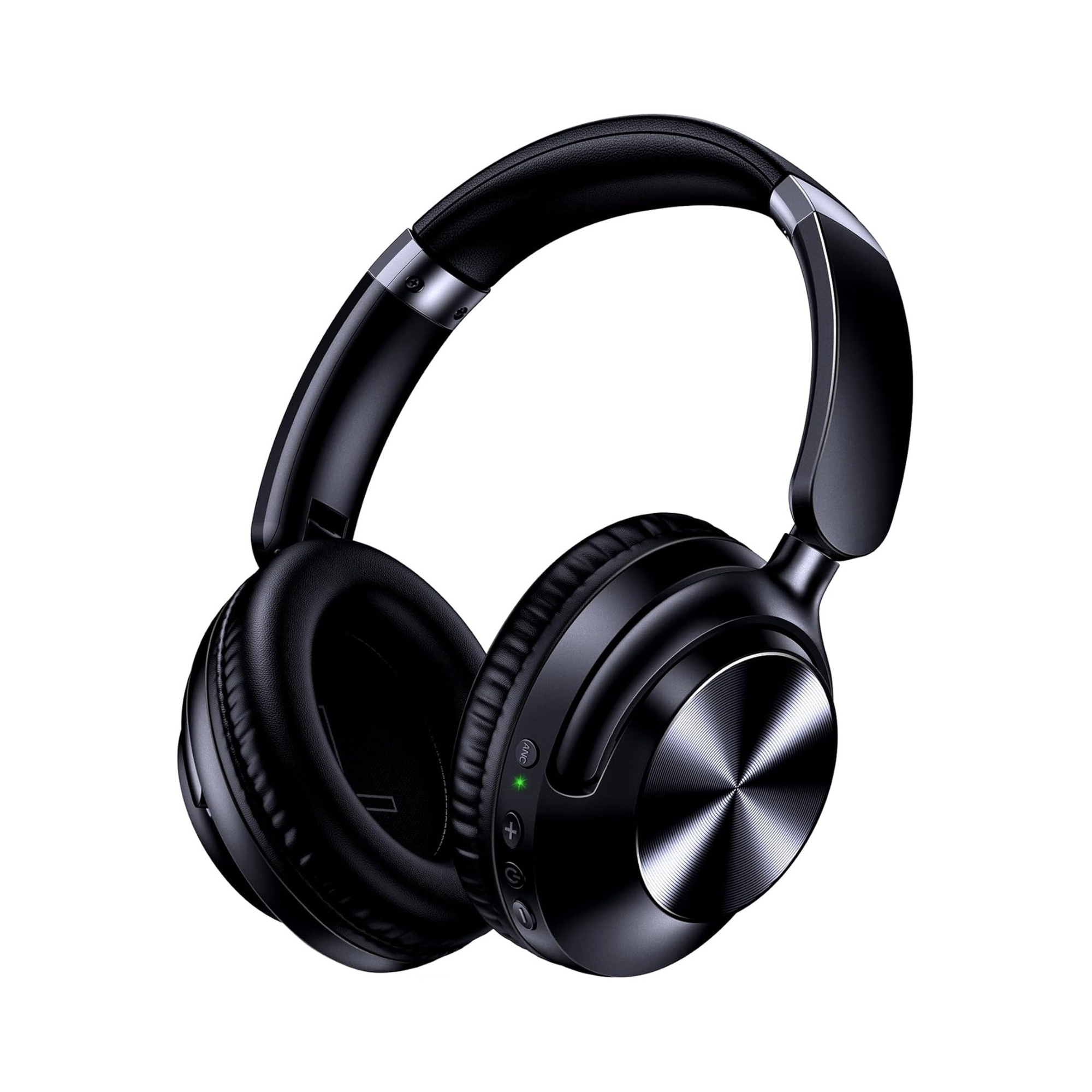
According to the store listing for the EARSOLE Series 127 Noise Cancelling Over-Ear Headphones, the over-ear headphones switch between wireless Bluetooth connectivity and a 3.5 mm AUX wired connection using an included 47.2-inch audio cable, alongside Active Noise Cancellation (stated up to 95% ambient noise reduction), up to 100 hours of playtime on a single charge (with 10 hours of music stated from a 5-minute fast charge), protein leather ear cups that rotate up to 105 degrees, an adjustable headband, and an included travel pouch.
- At your desk or on an airplane: Plug in the included 47.2-inch 3.5 mm AUX audio cable for zero-latency, battery-free listening on your computer, home stereo, or in-flight entertainment system.
- On the move: Unplug the 3.5 mm cord, fold the 105-degree rotating ear cups into the included travel pouch, and use wireless Bluetooth with Active Noise Cancellation during your commute.
2. Dedicated Pocket Wireless for Movement: Smart Touchscreen Case Earbuds
When you are lifting weights at the gym, walking between classes, or traveling light and do not want a wire catching on your jacket or gym equipment, compact true wireless earbuds remain the most convenient mobile option—especially when the charging case itself helps you stay on top of controls and settings.
According to the store listing for the EARSOLE Smart Wireless Earbuds with LCD Touchscreen Case, the earbuds feature a full-color LCD touchscreen charging case (with Chinese and English menus) that manages music, adjusts volume, handles incoming calls, and navigates settings directly from the case, paired with Bluetooth 5.4, ANC + ENC noise reduction, a built-in microphone, and soft silicone tips—while explicitly noting that no water-resistance rating is listed for this model, so you should wipe sweat off after training and keep them out of the rain.
| Daily Listener Routine | Recommended Setup | Connection Mode Used | Key Practical Advantage |
|---|---|---|---|
| Desk Work, Study & Flights + Daily Commute | EARSOLE Series 127 Over-Ear Headphones | Included 47.2-inch 3.5 mm AUX cable at the desk; Bluetooth wireless on the move | Gives you plug-and-play wired reliability with zero charging anxiety at your desk plus up to 100 hours of wireless ANC playtime |
| Gym Sessions, Errands & Pocket Travel | EARSOLE Smart Wireless Earbuds with LCD Touchscreen Case | Bluetooth 5.4 wireless with on-case LCD touchscreen controls | Cord-free movement with ANC + ENC call noise reduction and direct case controls (note: no water-resistance rating is listed; wipe sweat dry after workouts) |
| Connecting 3.5mm Cords to Jackless Phones | 3.5mm Wired or Dual-Mode Headphones + USB-C to 3.5mm Adapter | Wired 3.5 mm plug routed through a USB-C DAC adapter | Lets you use your favorite 3.5 mm cable on modern USB-C phones and tablets with zero wireless delay |
Frequently Asked Questions
Why are so many college students and commuters switching back to wired headphones?
Based on CNET’s 2026 report and discussions in Reddit’s r/Earbuds community (thread 1ncwze7), students and train commuters are switching back to wired headphones and earbuds for four practical reasons: they never need to be charged (“infinite battery life”), they deliver reliable microphone quality and zero-latency audio without Bluetooth pairing issues, they cost far less to replace than $160+ wireless earbuds, and they eliminate the frustration of losing a single wireless earbud or charging case.
Why does one wireless earbud always lose battery life faster than the other over time?
According to CNET, each wireless earbud contains its own tiny lithium-ion battery—the same battery chemistry used in smartphones and electric vehicles—which gradually loses its ability to hold a charge over time. Even between two identical earbuds, battery wear can vary, causing one side to die before the other. Because most ultracompact wireless earbuds (such as AirPods) are built with glued-in internal components that cannot be reassembled once opened, replacing a worn earbud battery is generally impossible for consumers.
Can you get both wireless Bluetooth convenience and plug-and-play wired reliability in one headphone?
Yes. Many listeners in r/Earbuds (thread 1ncwze7) prefer wireless audio while traveling or moving around and wired audio while sitting at a desk. Dual-mode over-ear headphones like the EARSOLE Series 127 let you switch seamlessly between wireless Bluetooth and a wired 3.5 mm AUX connection using the included 47.2-inch audio cable, while compact options like the EARSOLE Smart Wireless Earbuds with LCD Touchscreen Case handle cord-free Bluetooth 5.4 listening on the move (note that no water-resistance rating is listed for the LCD touchscreen earbud model).
