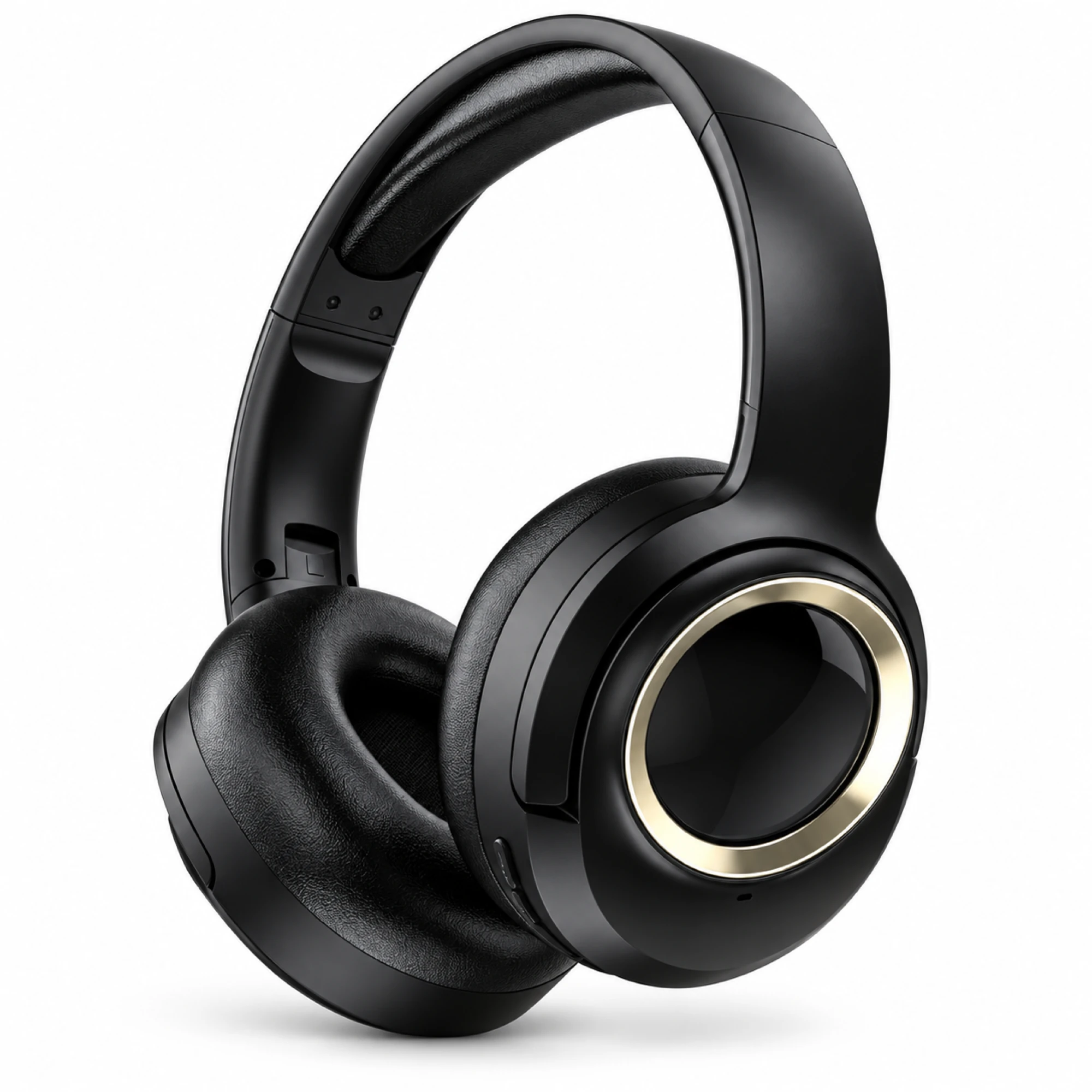
 MX-21 Black and Gold Wireless Headphones
 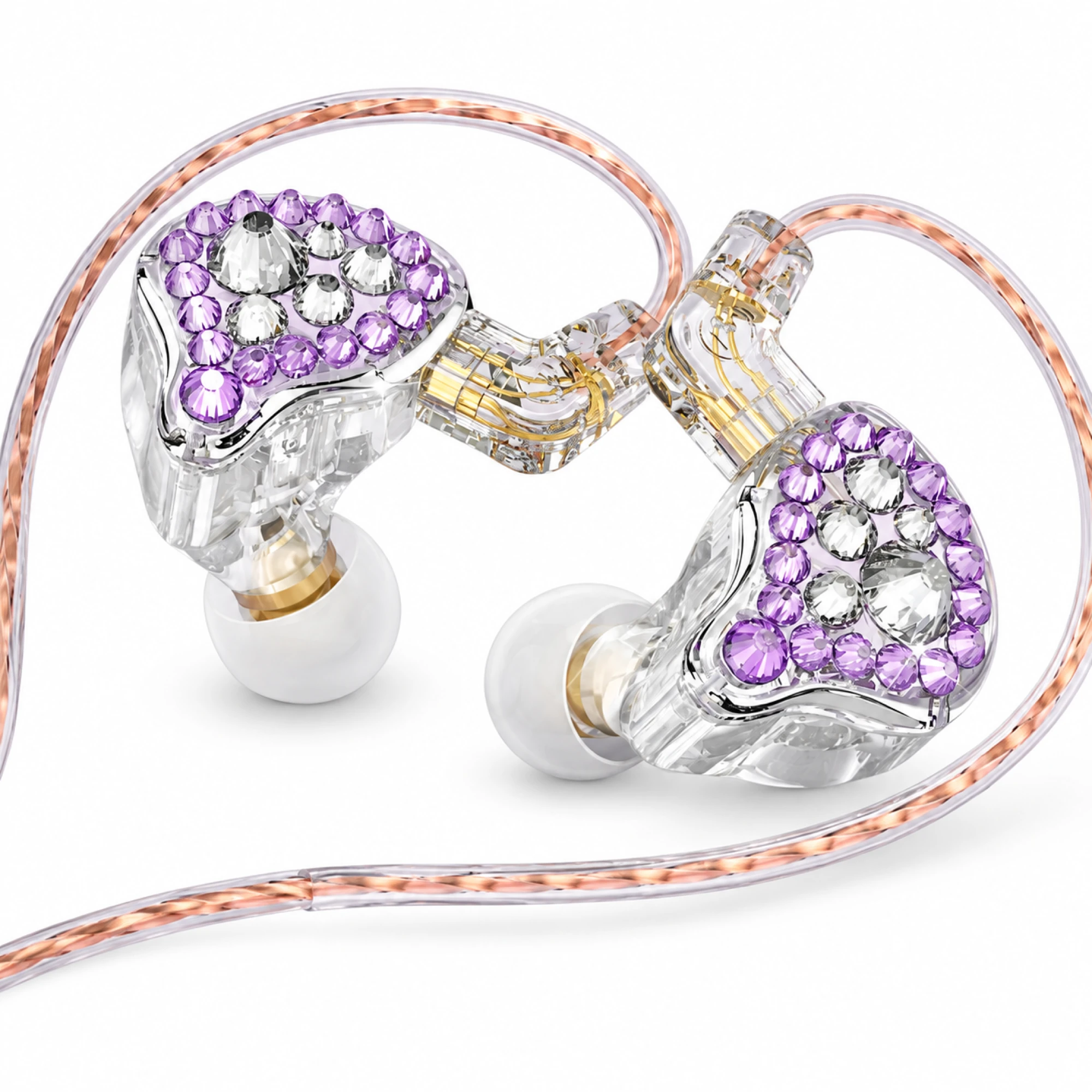 Q2 Pro Purple Crystal In-Ear Monitors
 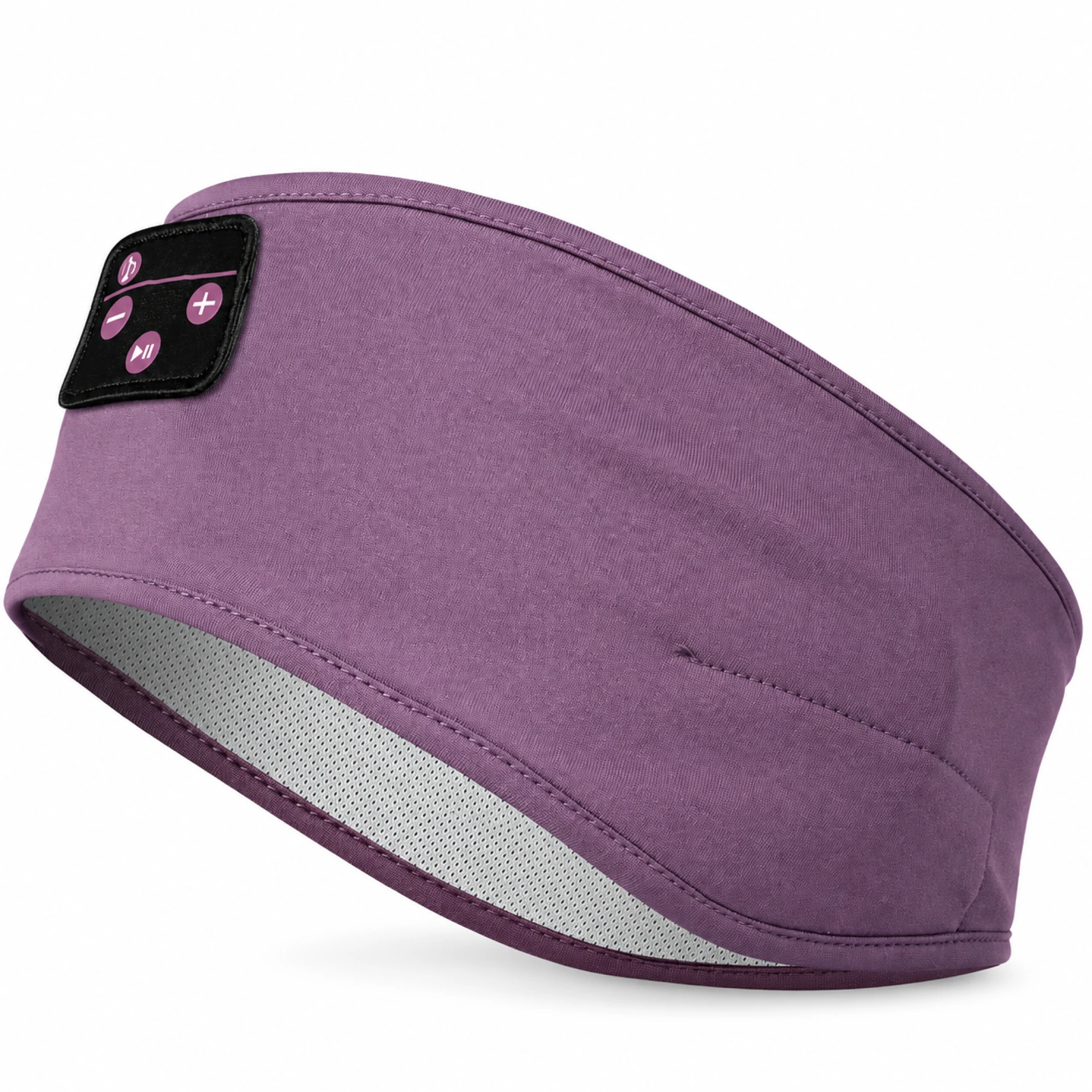 Purple Sleep Headband Headphones with Triangle Controls
 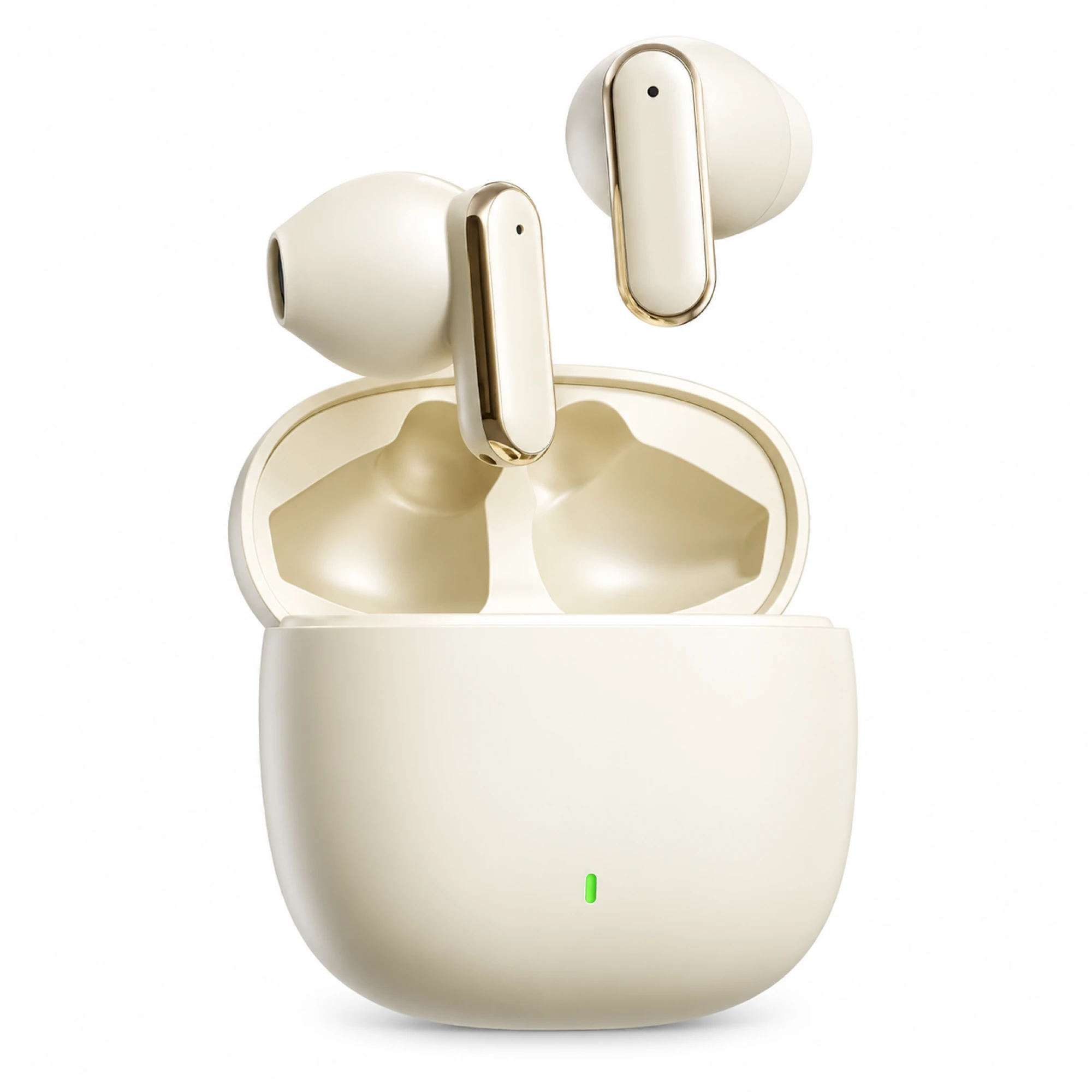 Cream Reflective-Stem Wireless Earbuds
 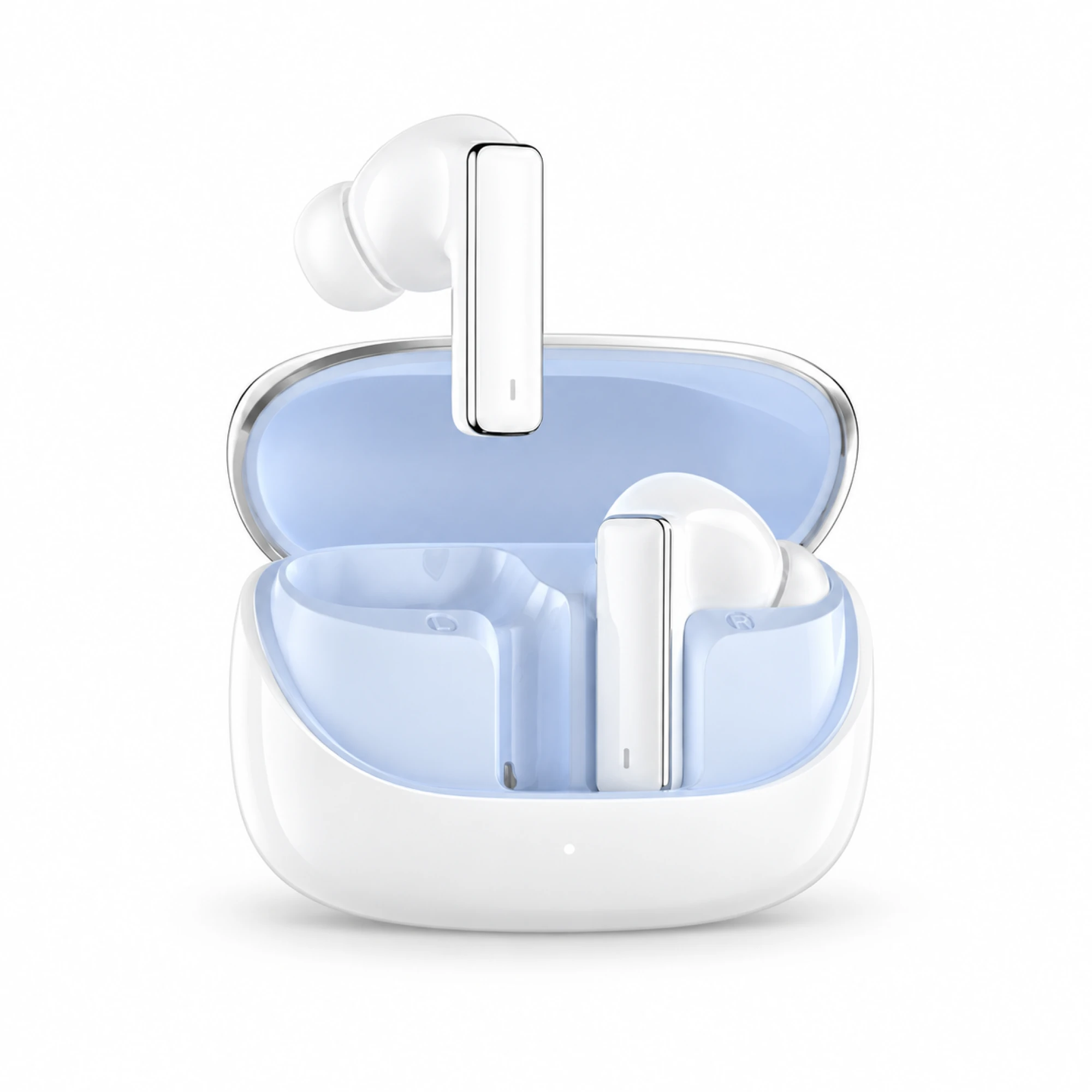 IN-01 White ANC Earbuds with Pale Blue Case Interior
 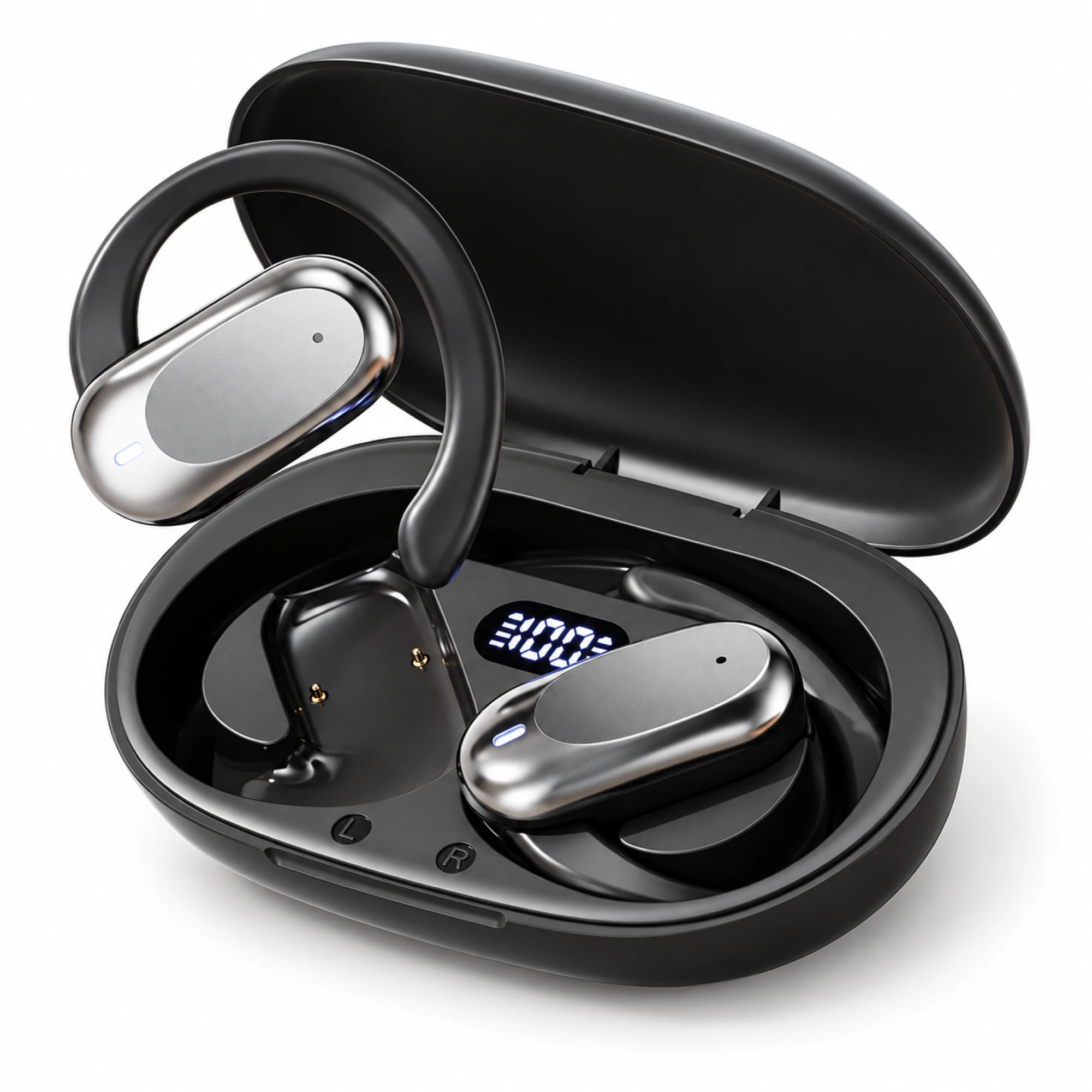 Silver Capsule Open-Ear Earbuds
 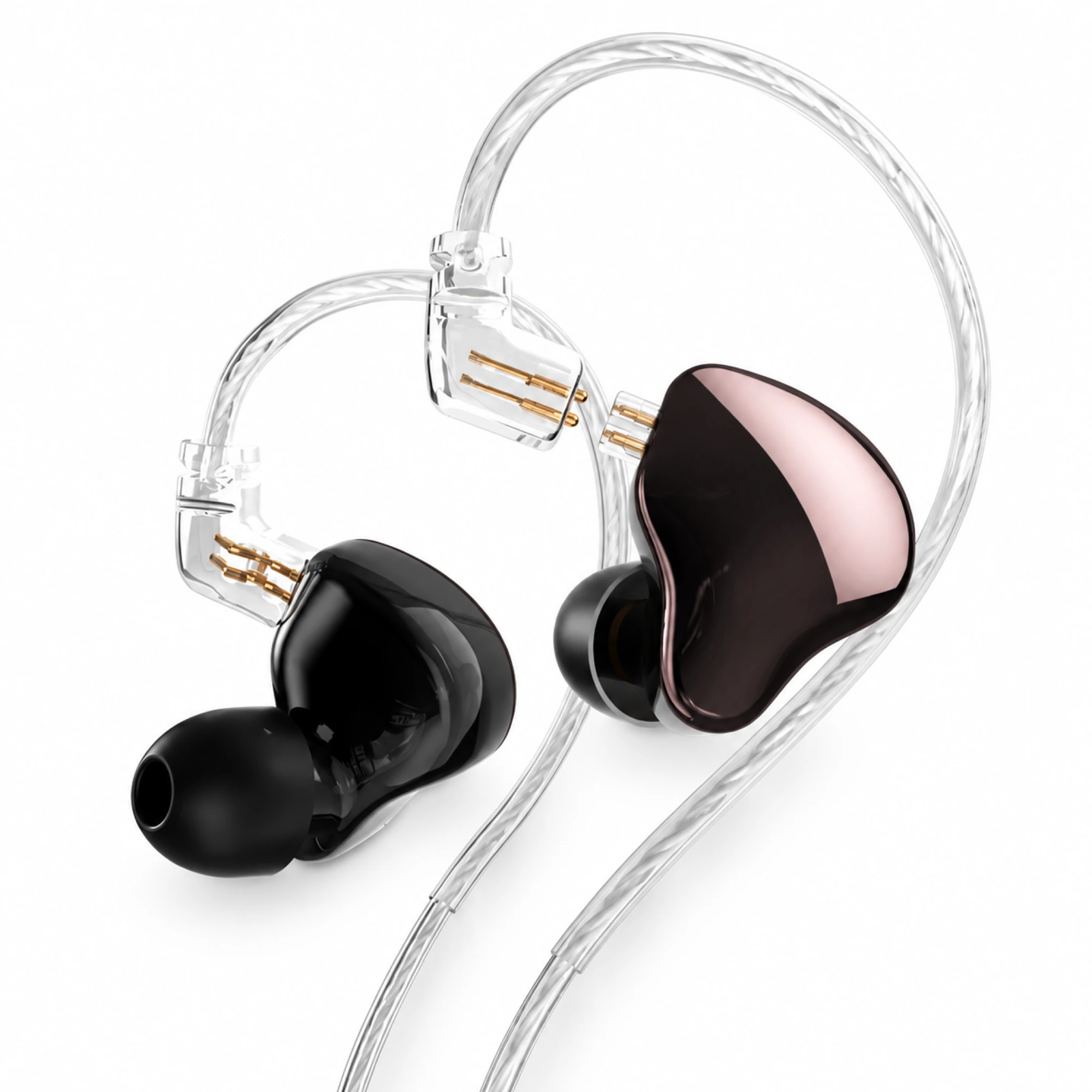 MN Rose-Metallic Detachable In-Ear Monitors
 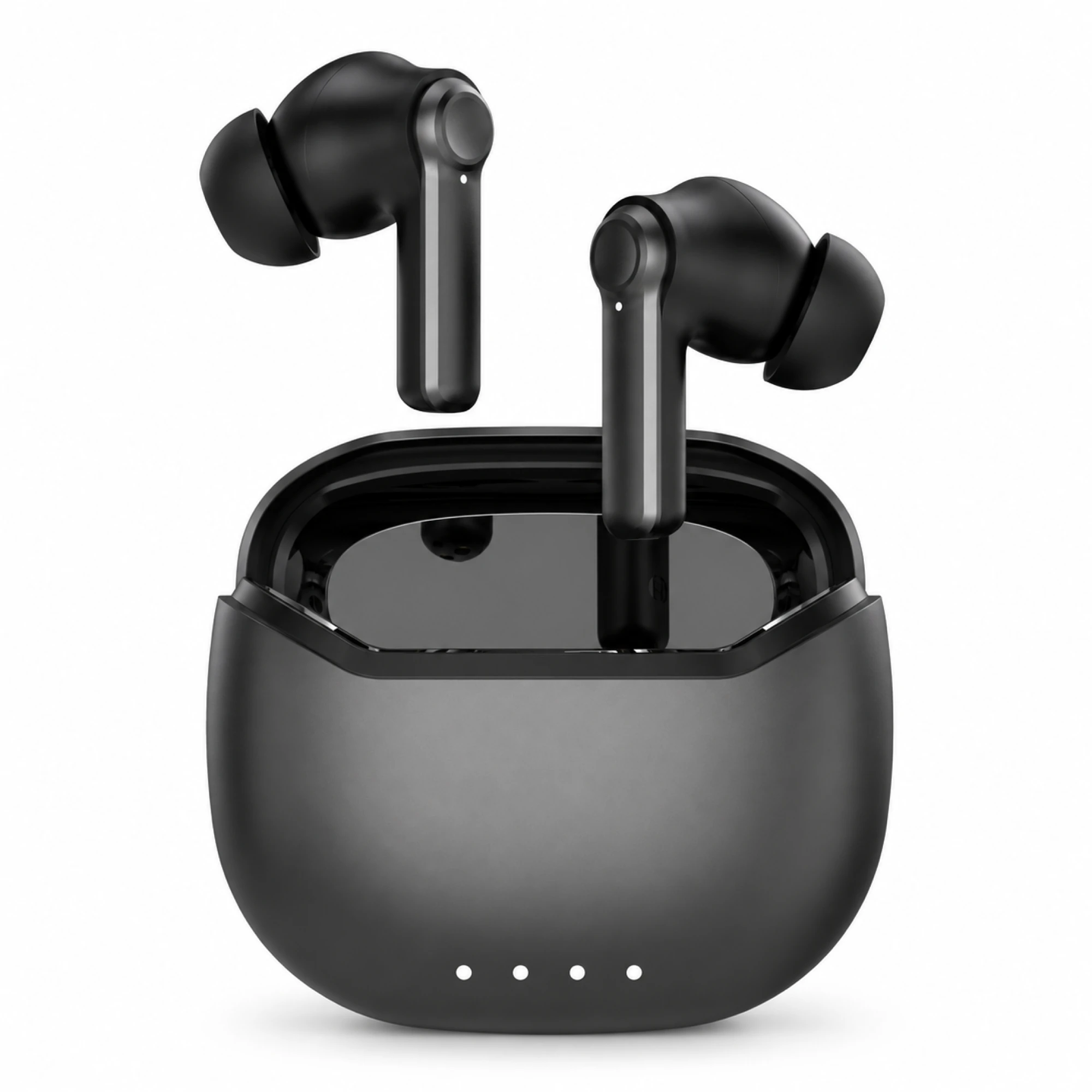 Black ANC Earbuds with Four-Indicator Case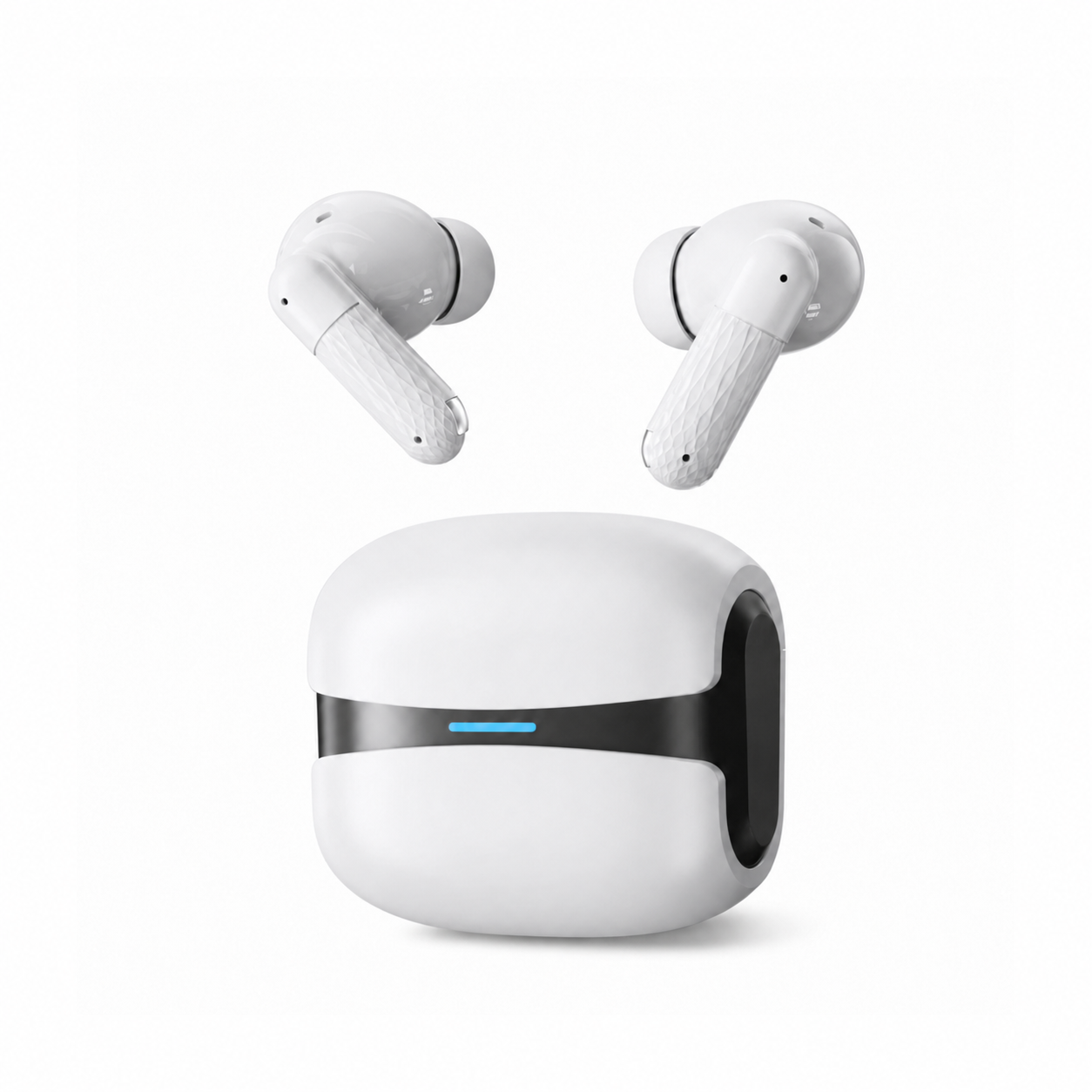
Read a wireless earbuds listing in this order: fit first, then the case and its charging port, then the Bluetooth version, then what the noise wording actually covers. Fit is what decides whether you keep wearing them. The version number decides less than it looks: EARSOLE's own Cloud White pair lists Bluetooth 5.4 at $25.99 at the time of writing.
Fit comes before every other line on the sheet
Three shapes cover most of what you will see. A tipped in-ear bud pushes a silicone tip into the ear canal and seals it. A semi-in-ear bud rests in the bowl of the outer ear with nothing in the canal. An open or clip-on design sits outside the ear entirely and leaves it unblocked.
The seal is the whole trade. Sealing the canal is what produces low bass and what blocks room noise before any electronics get involved; it is also what makes some ears ache after an hour and what makes a bud feel plugged. A semi-in-ear shape removes the pressure and, with it, most of the isolation and some of the bass. Neither is better in the abstract. If you take calls at a desk and want to hear the room, the pressure-free shape is the point; if you commute on a loud train, the seal is doing work no software substitutes for.
Tipped models ship with small, medium and large tips for a reason, and the stock medium is a starting guess rather than a fitting. If a bud works loose when you chew or walk, size up before you conclude the earbuds are faulty. The semi-in-ear versus in-ear comparison takes those fit trade-offs on their own terms.
Bluetooth versions, codecs and the phone in your pocket
Bluetooth 5.3 and Bluetooth 5.4 are core specification releases published and adopted by the Bluetooth SIG, the industry body that maintains the standard. They describe what a radio is permitted to do. They say nothing about the size of the driver, the tuning, the microphone, or how well a particular pair holds a connection when your phone is in a back pocket. Treat a jump from 5.3 to 5.4 as a housekeeping detail, not an upgrade you can hear.
The codec matters more, and it is the phone and the earbuds together that settle which one you get. SBC is the baseline every Bluetooth audio device supports. AAC is what an iPhone reaches for. LDAC is an Android-side option that only comes into play when the phone and the earbuds both list it, which almost never happens at this price. In practice, if you are pairing with an iPhone, a Galaxy or a Pixel, you are listening over AAC or SBC, and a listing that does not name a codec is telling you it supports the baseline.
Two connection features are worth looking for by name because they are often absent and rarely advertised as absent. Multipoint lets a pair hold two devices at once, so a laptop call can interrupt music from your phone; none of the three listings below state multipoint, so treat each as a one-device-at-a-time pair. A low-latency or gaming mode narrows the gap between picture and sound. The Cloud White pair lists one, with no speed figure attached, which is the correct way to state it, since audio delay has several causes and the earbuds are only one of them.
ENC cleans up your voice; ANC quiets your ears
These two abbreviations look alike on a listing and do opposite jobs. ENC, often paired with CVC voice processing, works on the microphone side: it strips traffic, keyboard clatter and wind out of what the person on the other end of the call hears. It does nothing to what you hear. Active noise cancelling works on the playback side, using microphones and inverted signal to reduce steady low-frequency noise reaching your own ears.
The Cloud White listing states ENC with CVC voice processing, and its own product page says outright that any quiet you notice comes from the passive seal of the in-ear fit, not from electronics. The semi-in-ear pair states no active noise cancellation and no canal seal, so the room stays audible by design. Neither of those is a flaw; they are just two different products. Where the wording gets slippery is in listings that say only "noise cancelling" without saying which side it acts on. If a page does not distinguish them, assume it means the call microphone, and read the ANC and ENC comparison before paying extra for a feature you will not hear.
IPX ratings, the case, and the blanks on the sheet
The IP code comes from IEC 60529, the international standard that classifies degrees of protection provided by enclosures. Two digits follow the letters: the first is solids, the second is water. The X in IPX5 means the solids digit was never rated, so for earbuds the second digit is the one to read. IPX4 and IPX5 both cover sweat and splashing; the EARSOLE Cloud White listing puts IPX5 in plain terms as sweat and light splashes, and says showers, swimming and submersion sit outside what the rating protects. Reading IP ratings without guessing goes through the digits one at a time.
The absence of a rating is a specification too. Two of the three listings below state no water resistance at all, and that is worth more than a vague reassurance. If a page claims a workout-proof design but names no IP code, it has told you nothing enforceable.
The case is the part you handle most and the part specification tables treat worst. Look for the charging port first: since the iPhone 15 moved to USB-C, one cable covers both major US phone platforms, so a USB-C case means one fewer thing in the bag. Then look for a battery figure. None of the three listings below state a mAh capacity or a playtime number, so do not infer runtime from case size or from a picture. A case that reports its own charge is the practical answer to that gap.
What $15 to $30 buys in wireless earbuds
At this end of the market you can reasonably expect a current Bluetooth version, touch controls, a charging case, a microphone that carries a call in a quiet room, and either a stated IP code or a listing honest enough to say none applies. What you should not assume from the artwork: active noise cancelling, multipoint, a published mAh or playtime figure, LDAC, a companion app, or a warranty network. Those lines are most of what the premium tier is charging for, along with the tuning and the service behind it.
US prices in this band move on a predictable calendar — the July sales week, late-August back-to-school, the Black Friday and Cyber Monday stretch, and December. If you are replacing a pair that still works, waiting for one of those windows costs you nothing.
Three EARSOLE listings side by side
| Listing | Fit as stated | Connection and sound as stated | Noise wording on the listing | Water resistance | Case and price |
|---|---|---|---|---|---|
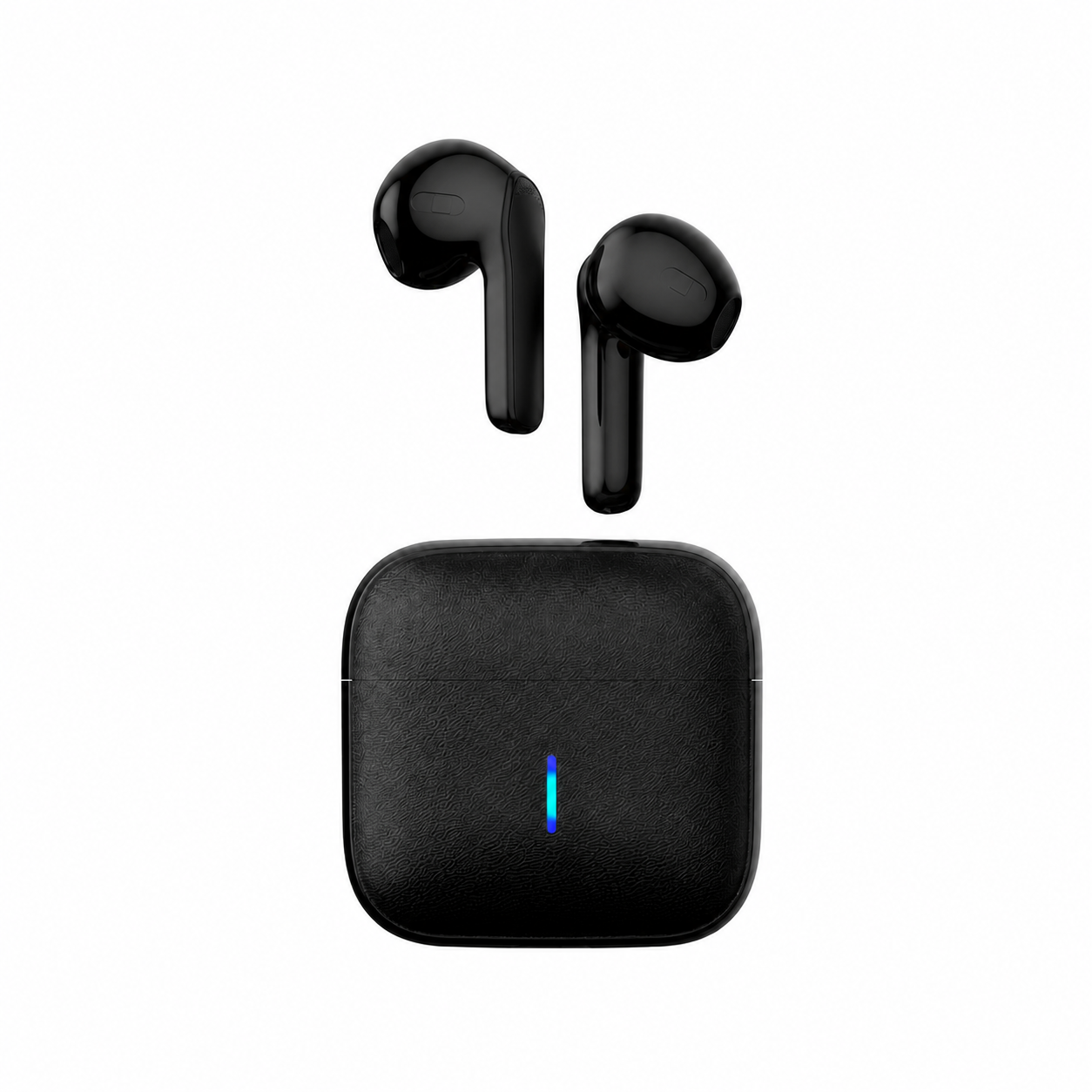
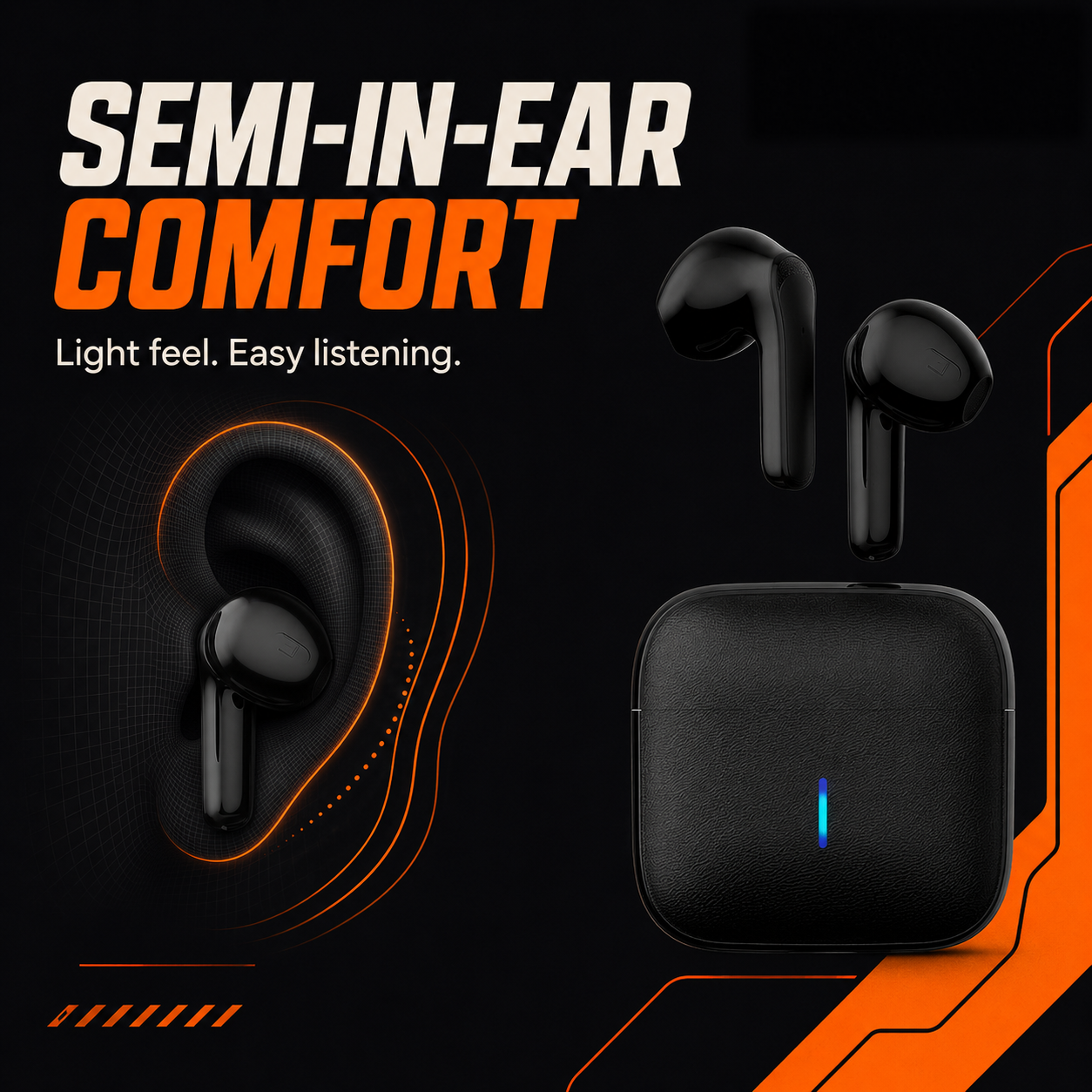
| EARSOLE Semi-In-Ear Earbuds | Semi-in-ear, no deep canal seal | Version not stated; standard Bluetooth audio with iPhone and Android; stereo | Built-in voice pickup mic; listing states there is no active noise cancellation | No rating stated | Compact textured square case; $23.99 |
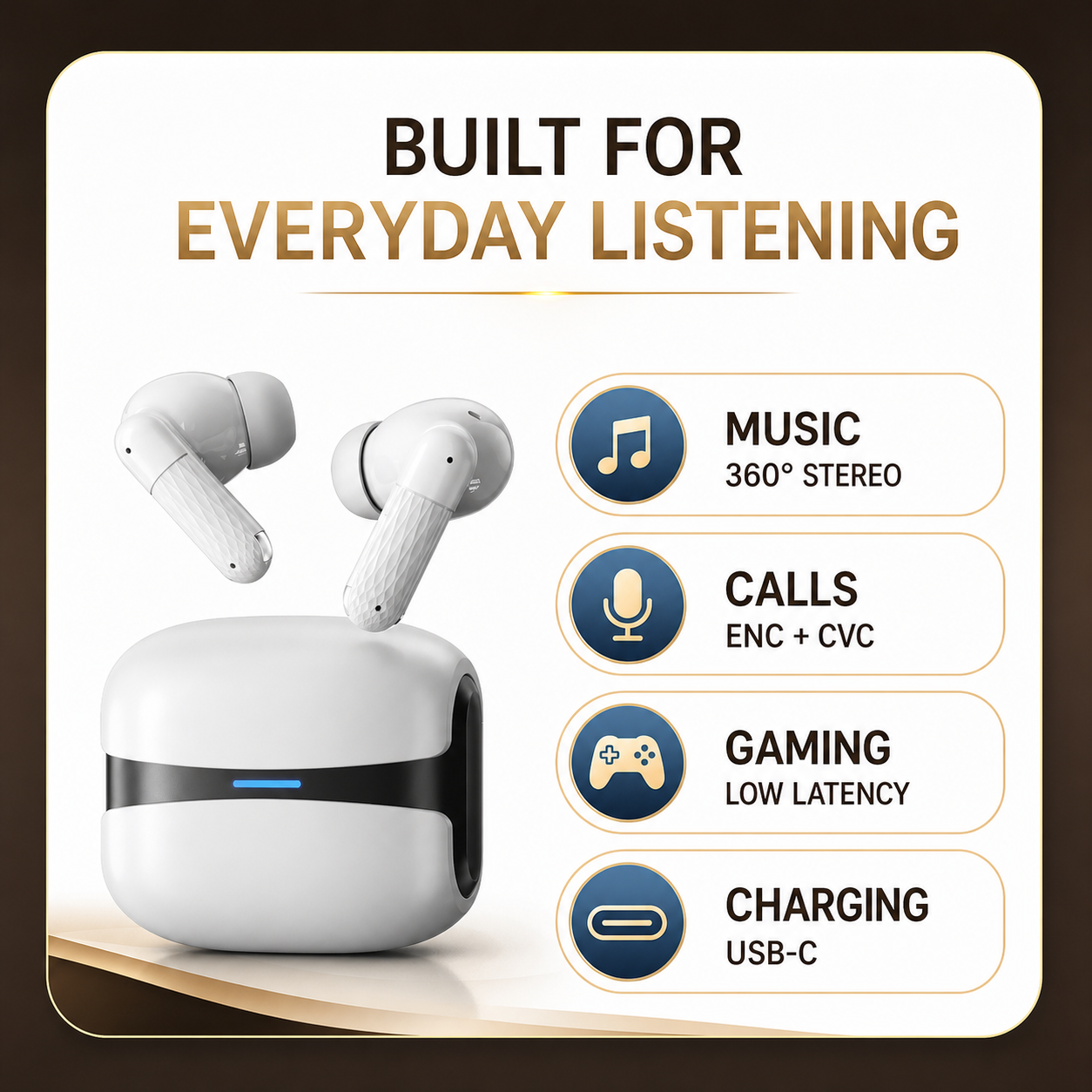
| EARSOLE Cloud White with ENC Mic | Ergonomic in-ear | Bluetooth 5.4 with fast pairing; 360-degree stereo, composite polymer diaphragm; low-latency mode | ENC call noise reduction with CVC voice processing, both on the call microphone | IPX5 (sweat and light splashes) | USB-C charging case; $25.99 |
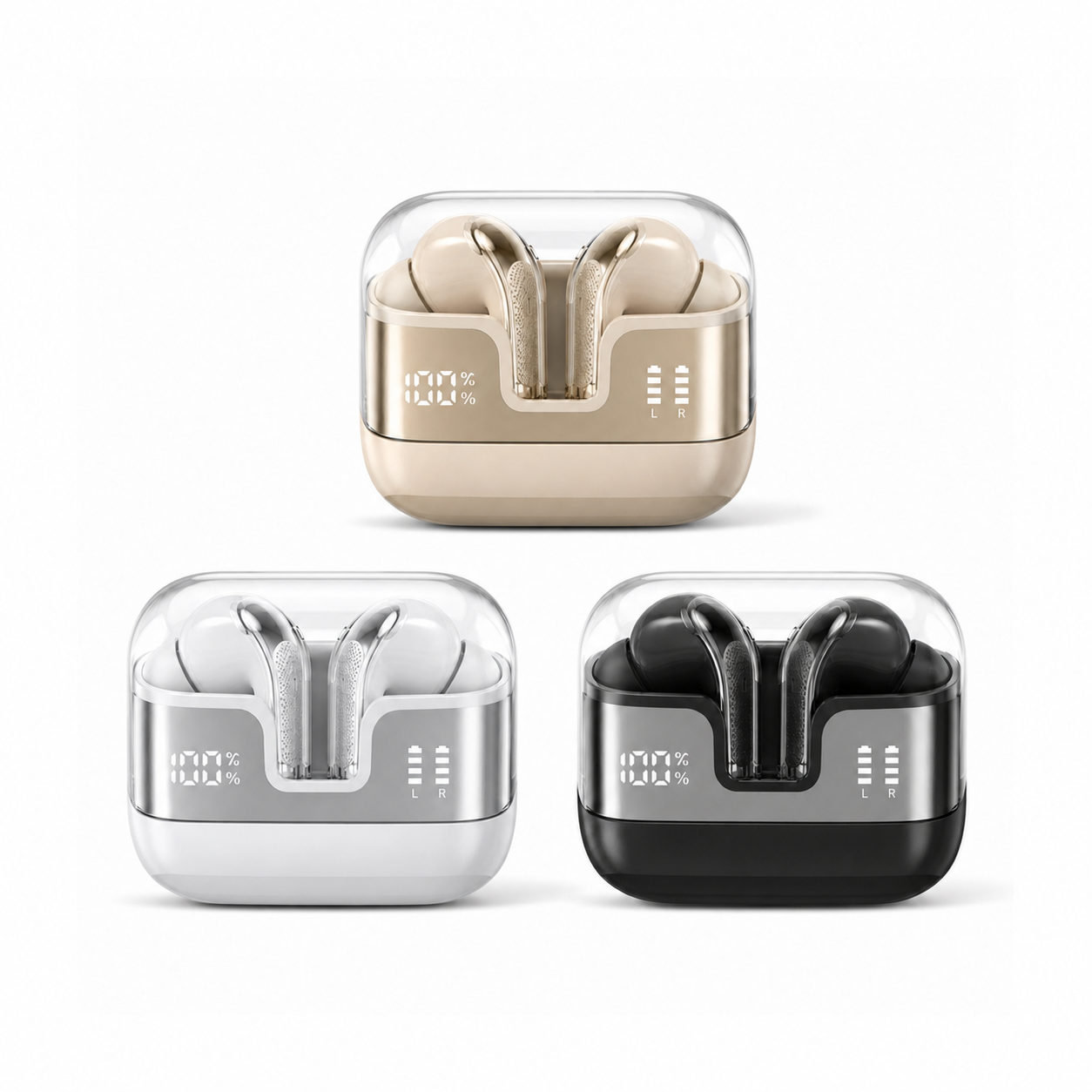
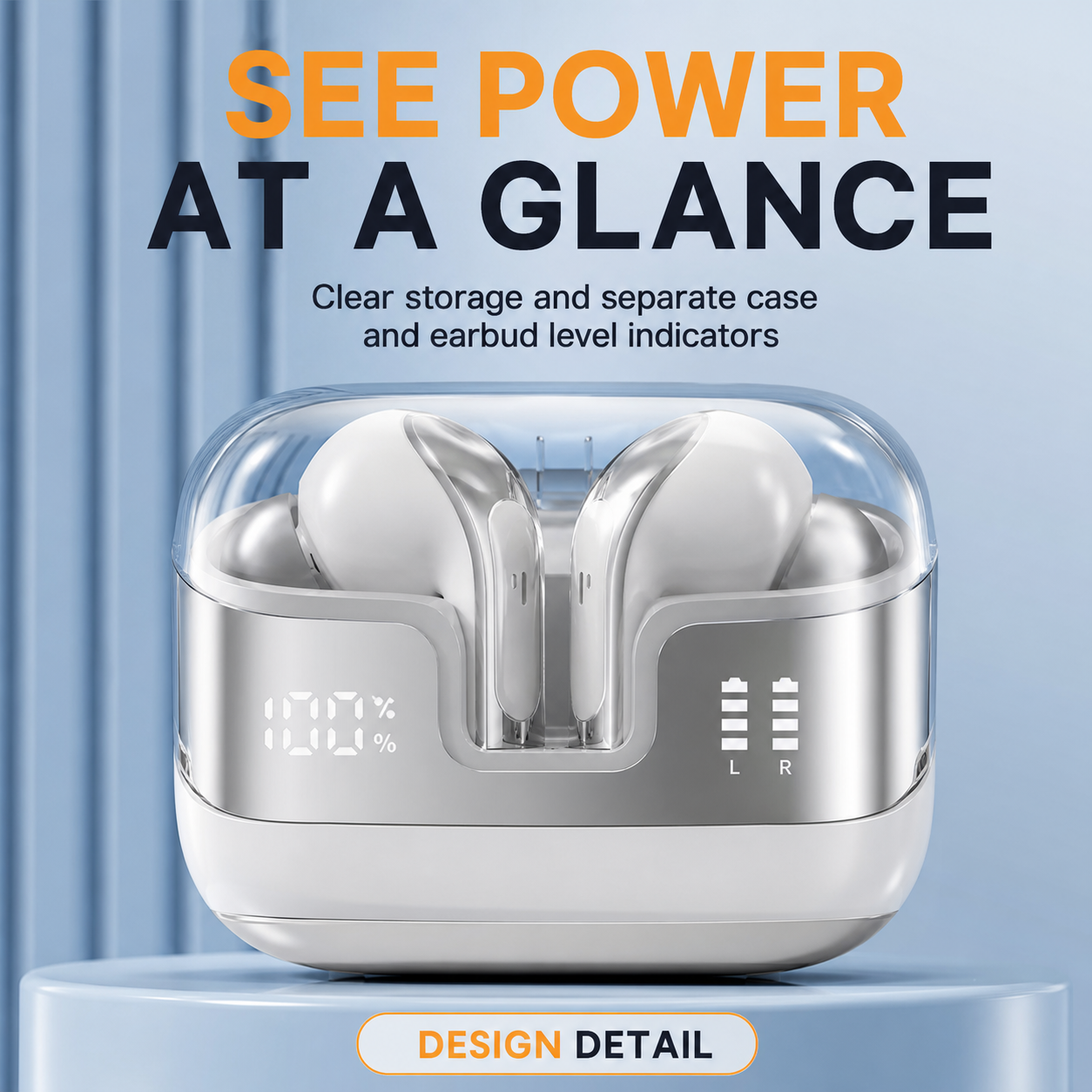
| EARSOLE Spatial Audio with Display Case | Semi-in-ear, short stem | Version not stated; 360-degree spatial audio with directional sound | No noise-control feature stated | No rating stated | Clear-lid case, front display with case percentage and separate left and right indicators; $37.99 |
Every cell above is copied from the published product listing specifications as of September 6, 2026, including the blanks. Nothing in the table was measured by us, and prices are current at the time of writing. Read the empty cells as carefully as the full ones: the pair with the readable case is the one with no water rating, and the pair with the IPX5 rating is the one that seals your canal.
If none of these three is the shape you want, the everyday earbuds collection holds the rest of the range, and what to expect under $50 sets the same expectations across a wider price band.
Questions we get before a first pair
Does Bluetooth 5.4 sound better than 5.3?
No. Both are core specification releases that define what the radio may do, and neither sets the driver, the tuning or the microphone. Two pairs with the same drivers and the same tuning sound the same whichever of those two versions they list. Judge sound by the fit and the seal you get, and treat the version number as a compatibility note rather than a quality grade.
Will one pair work with both an iPhone and an Android phone?
Yes, for standard listening and calls. Every Bluetooth audio device supports SBC, an iPhone will use AAC where it is offered, and neither needs an app to pair. What does not carry across is anything platform-specific, such as an ecosystem pairing animation or a codec only one side supports. Pairing is done from the phone's own Bluetooth menu on both platforms.
Is a call microphone with ENC enough for a noisy office?
Usually for a colleague on the other end, since ENC and CVC processing are working to keep your voice above the background they pick up. It does nothing for what you hear, so an open room stays an open room in your own ears. If the problem is that you cannot hear the caller, you need a sealing fit, not a better microphone.
- Bluetooth SIG: Specifications — the register of adopted Bluetooth core specification versions.
- IEC 60529: Degrees of protection provided by enclosures (IP Code) — the standard behind IPX4 and IPX5.