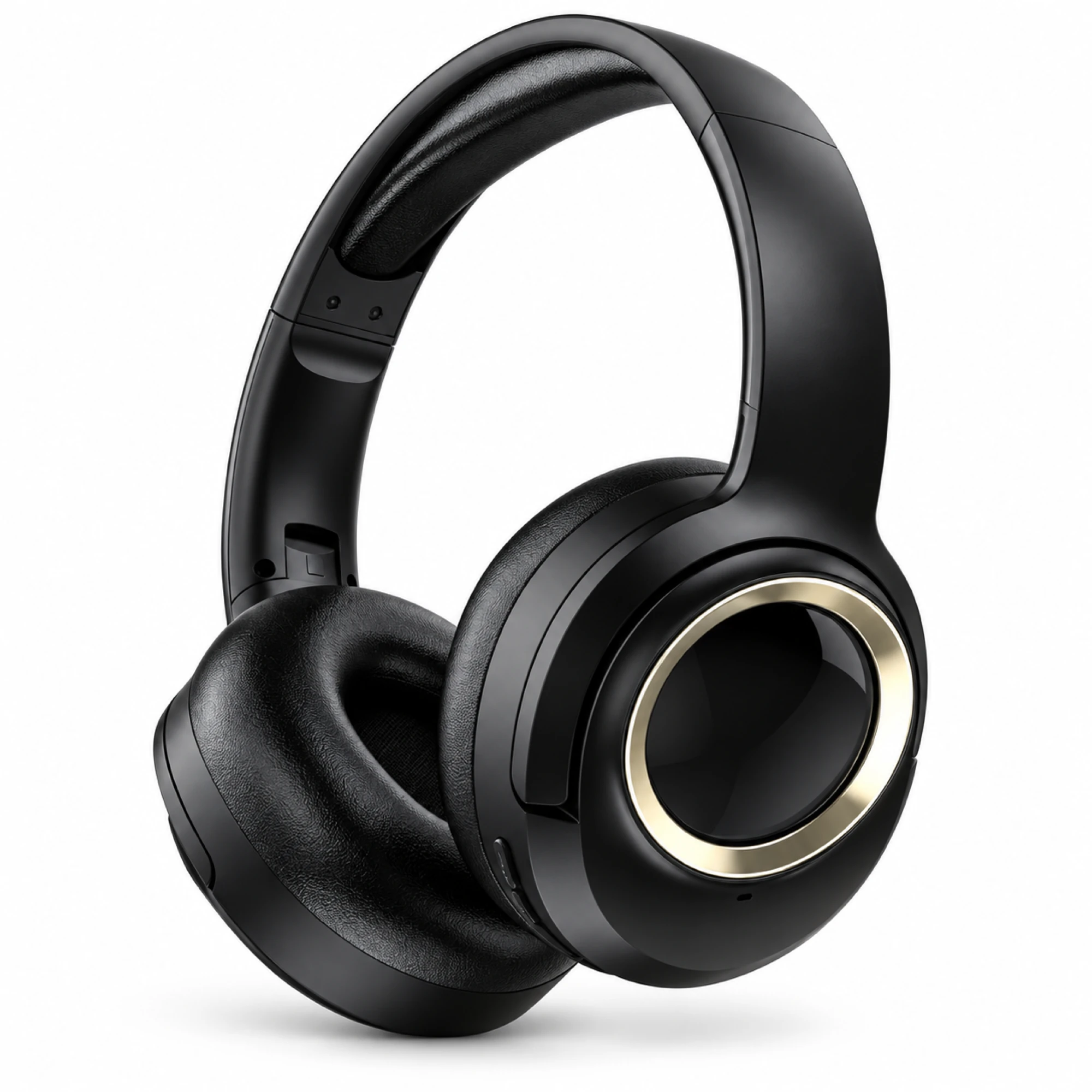
 MX-21 Black and Gold Wireless Headphones
 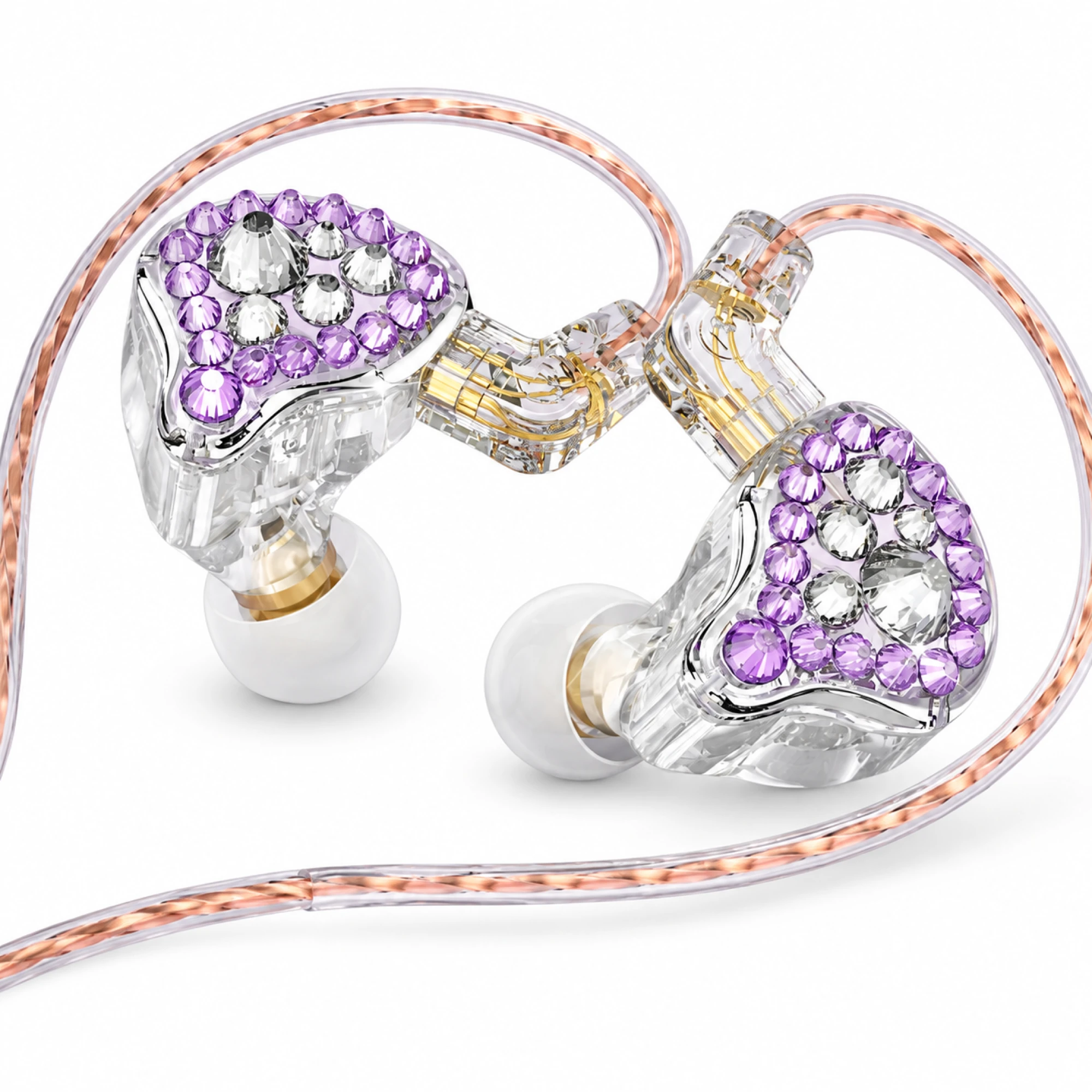 Q2 Pro Purple Crystal In-Ear Monitors
 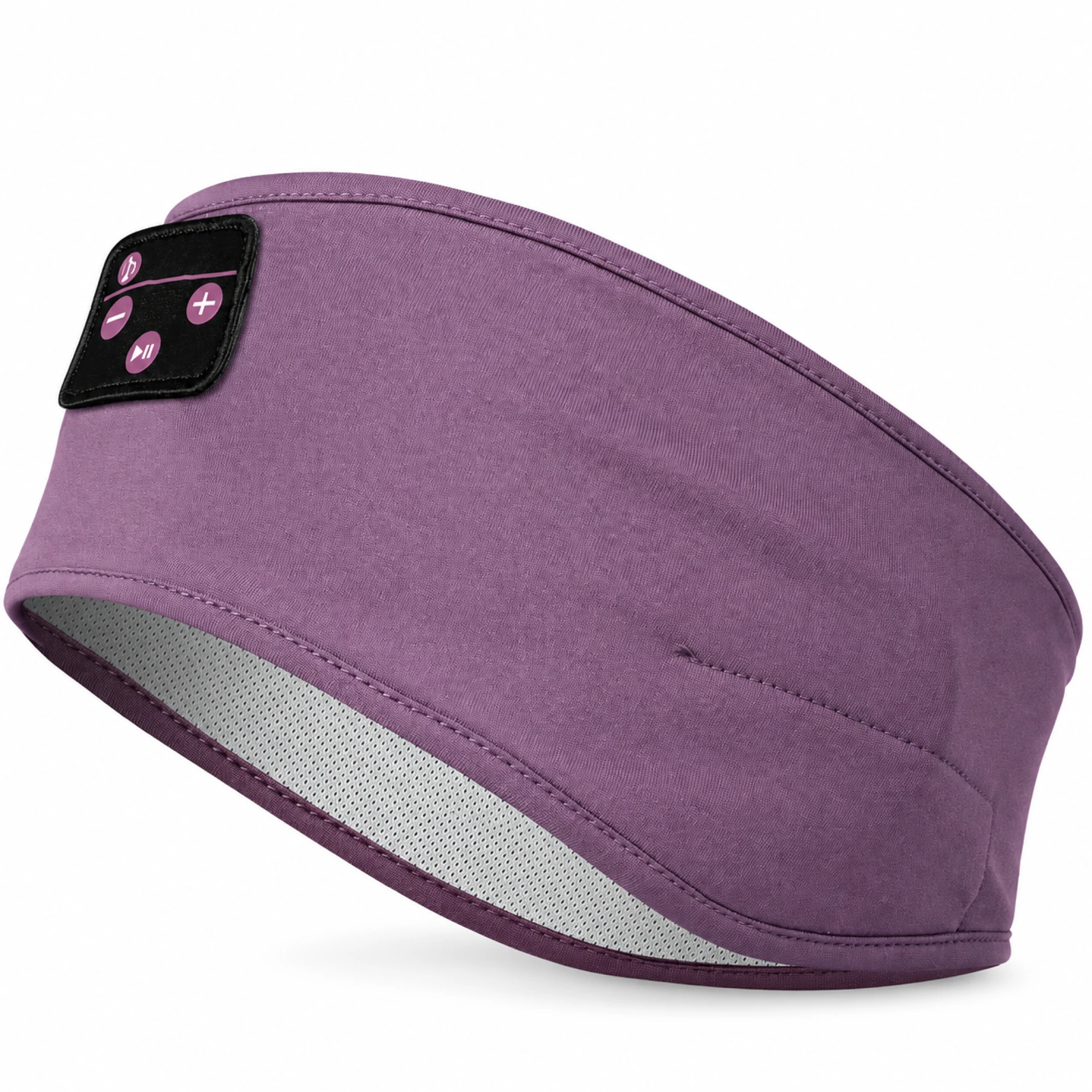 Purple Sleep Headband Headphones with Triangle Controls
 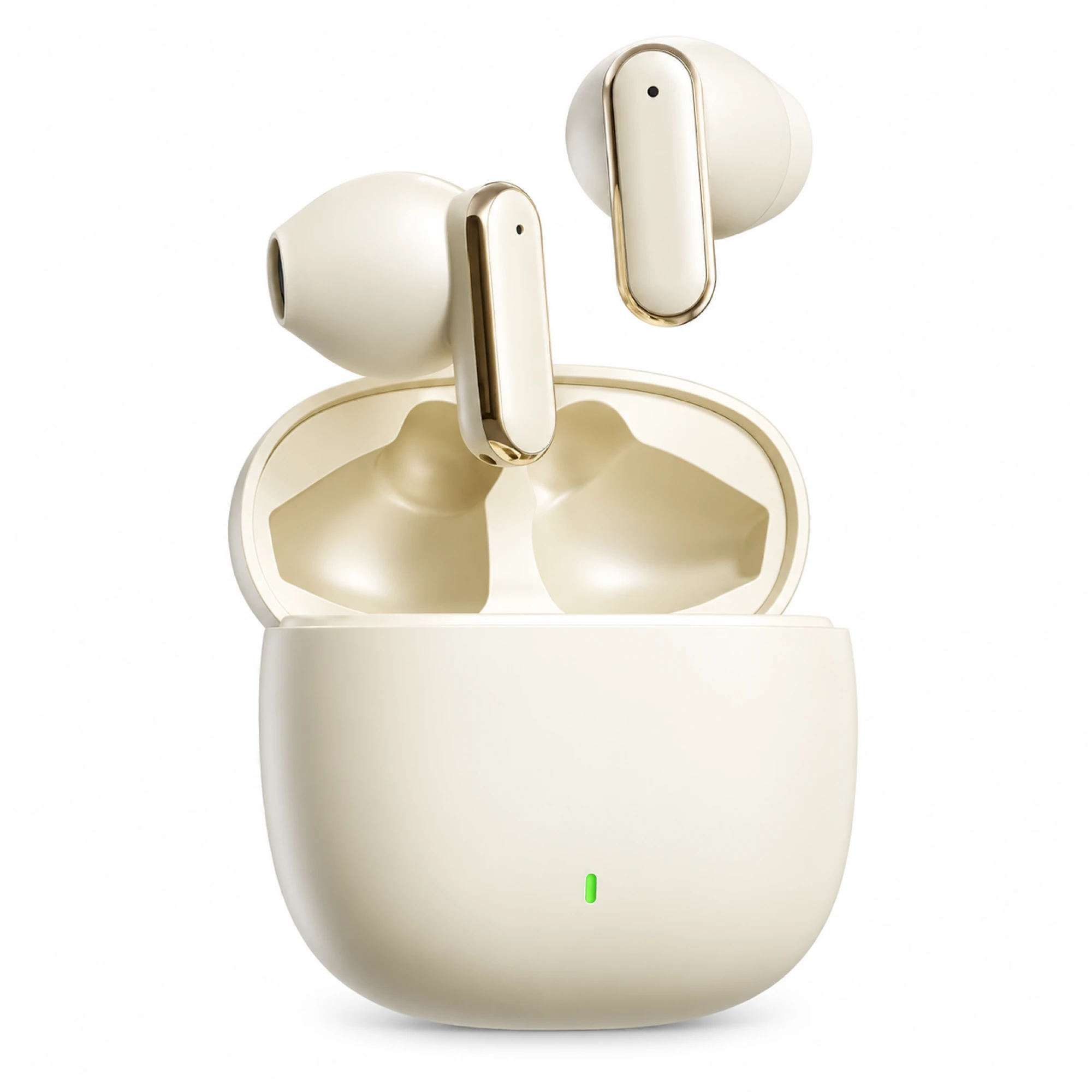 Cream Reflective-Stem Wireless Earbuds
 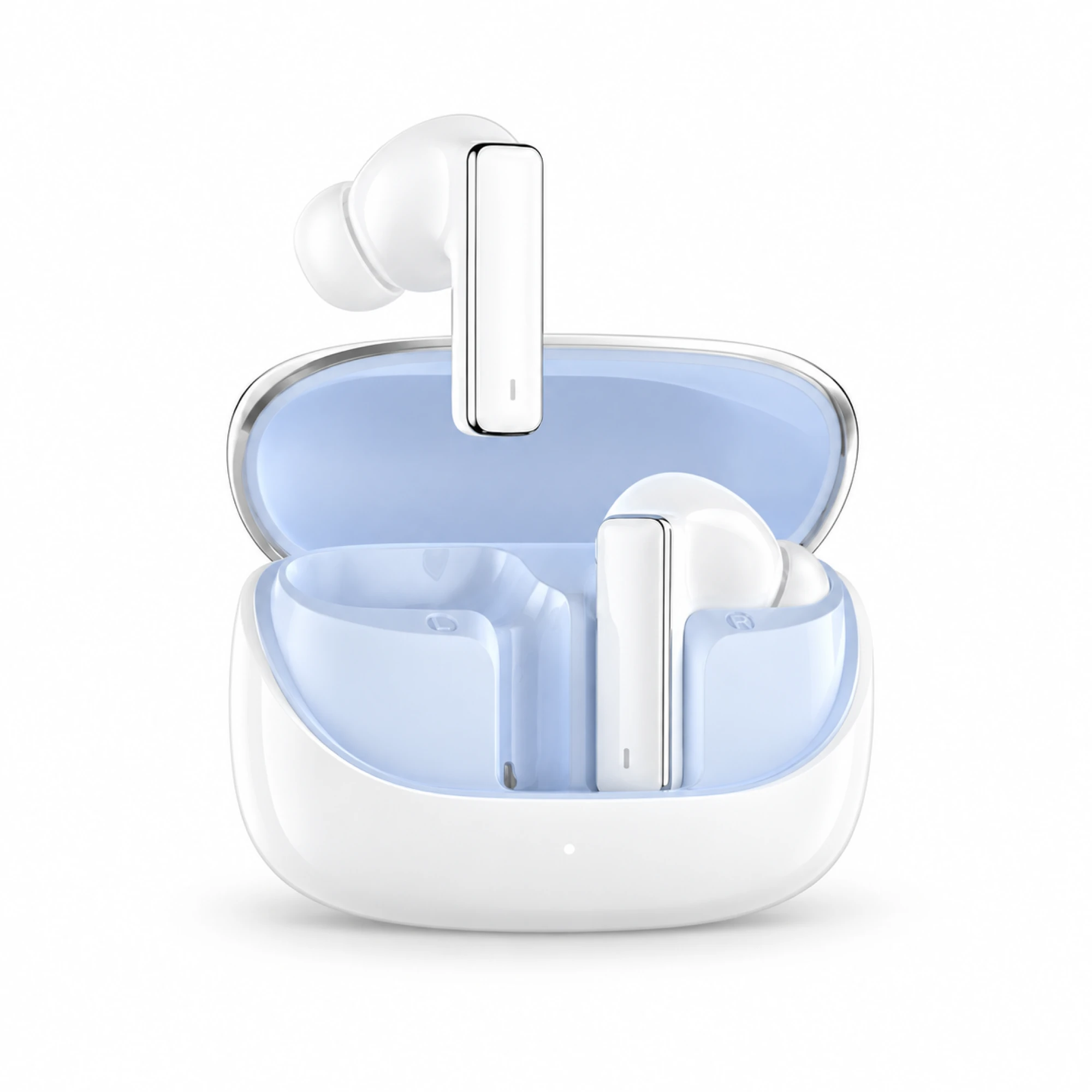 IN-01 White ANC Earbuds with Pale Blue Case Interior
 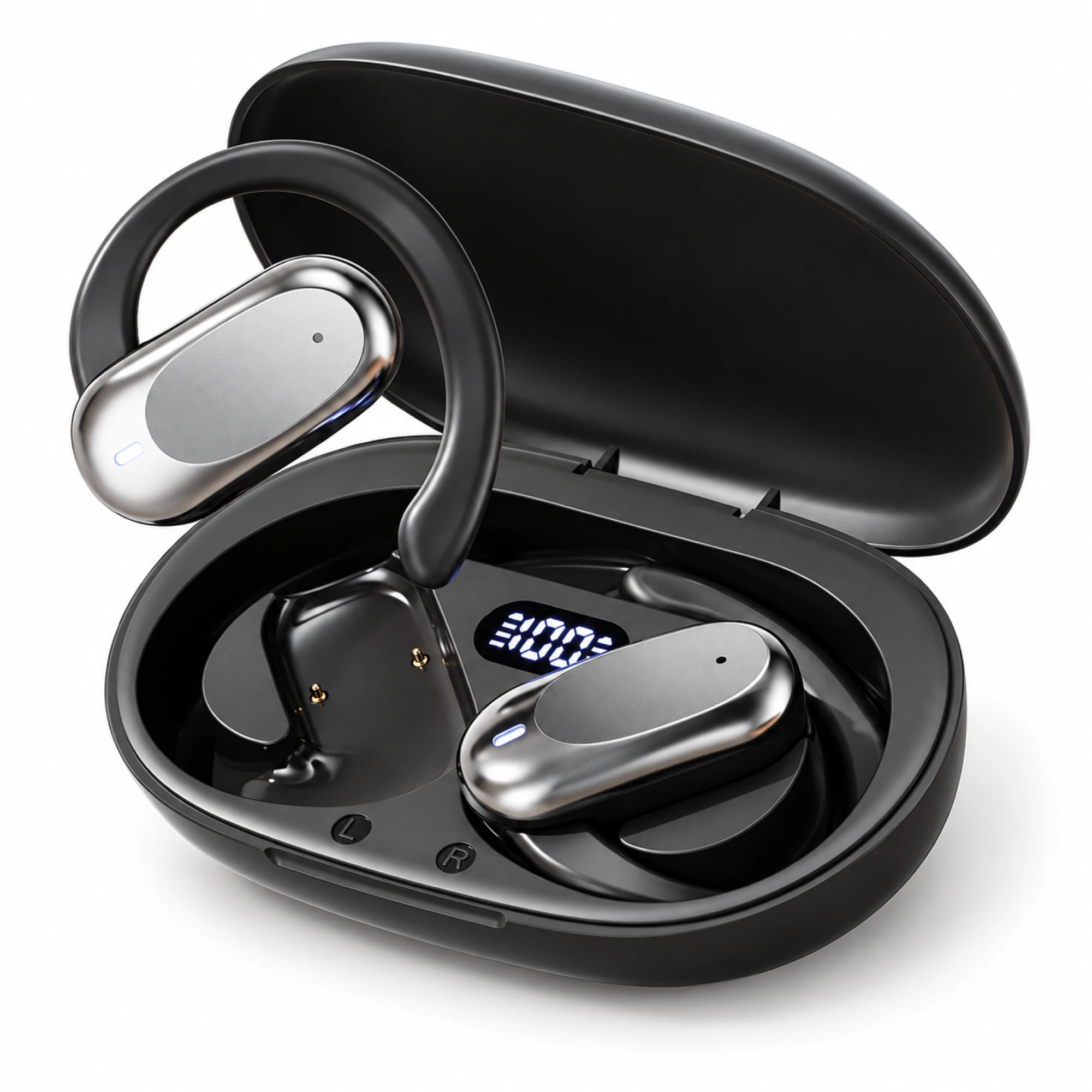 Silver Capsule Open-Ear Earbuds
 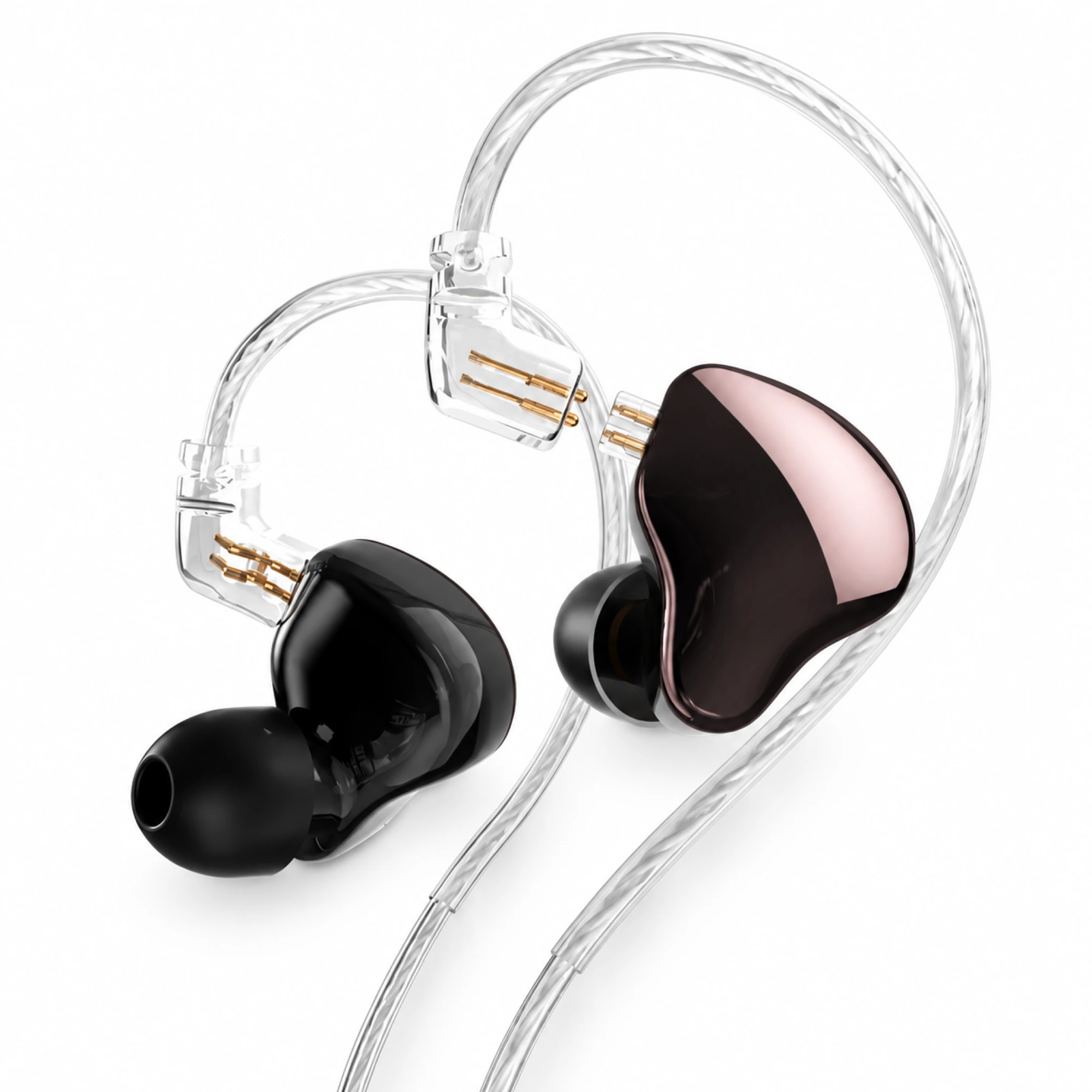 MN Rose-Metallic Detachable In-Ear Monitors
 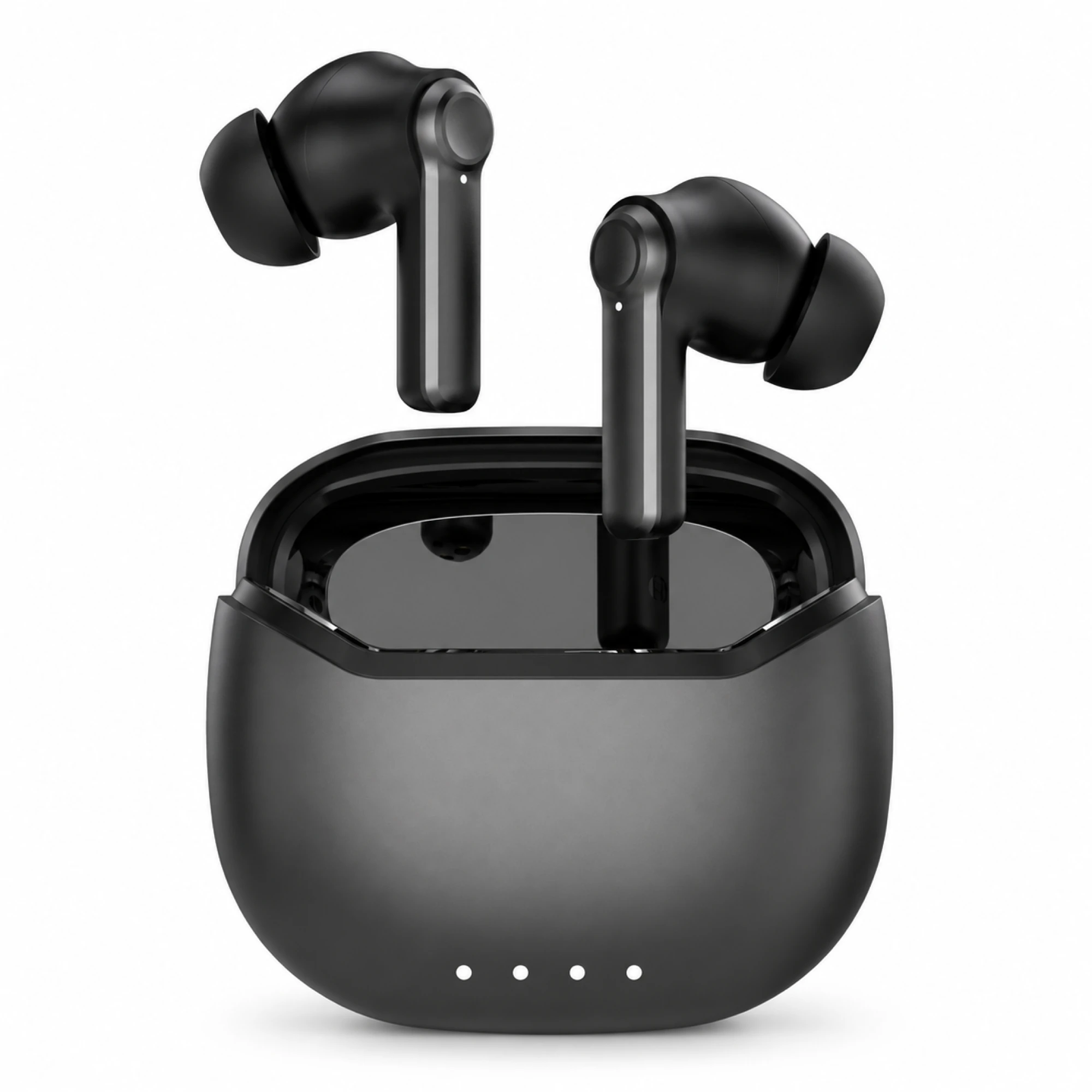 Black ANC Earbuds with Four-Indicator Case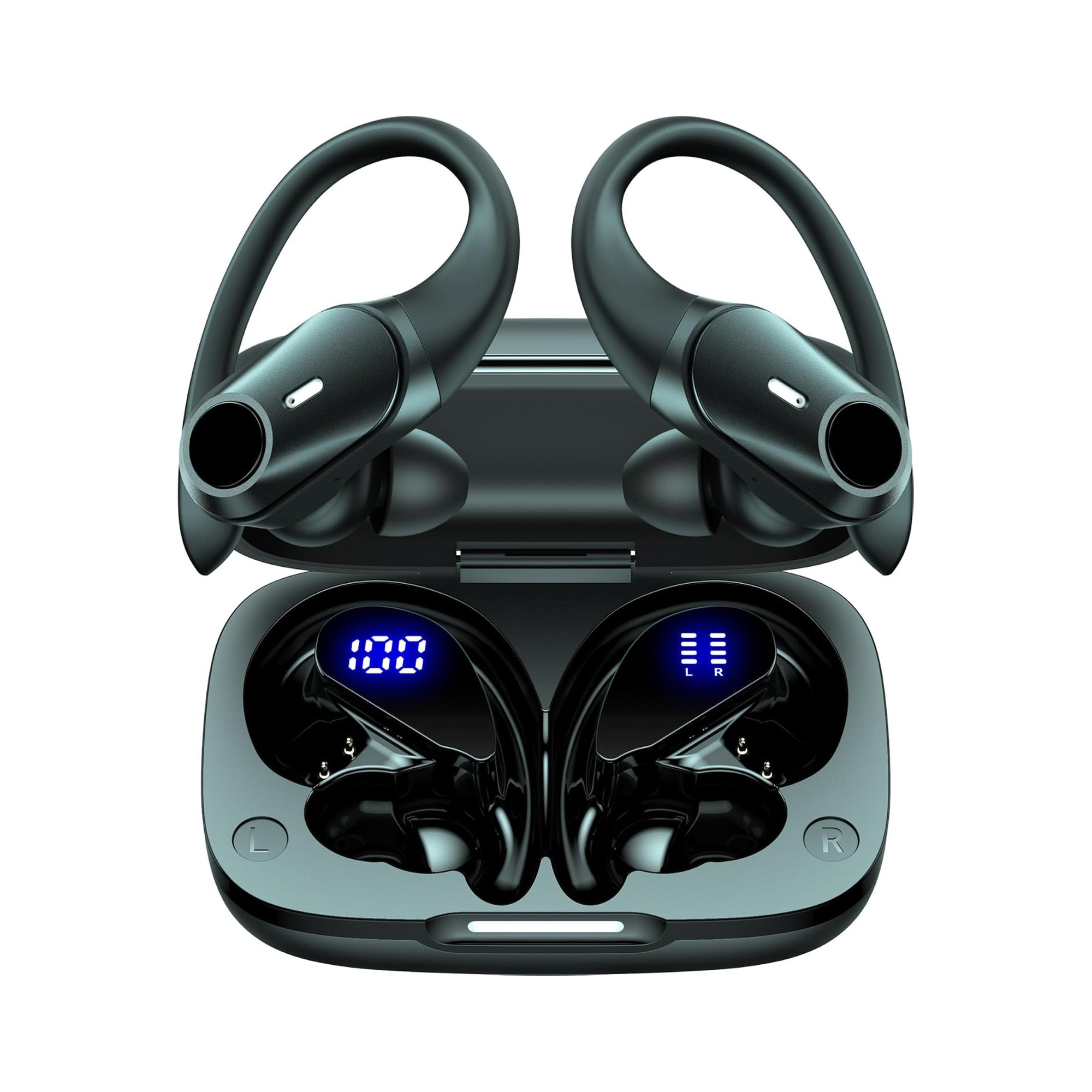
Active sound cancelling earbuds earn their money on steady, low-frequency noise: the rumble under a subway car, engine drone at cruise, the air handler above an open office. Against the person talking six feet away they do very little. So buy for the noise you sit in four days out of five, get the seal right before you judge anything, and read a headline like "up to 50dB" as supplier artwork until a method sits next to it.
What hybrid ANC takes off, and what it leaves behind
Cancellation is arithmetic done in a hurry. A microphone samples the sound arriving at the earbud, the chip drives the speaker with an inverted copy, and the two partly subtract at your eardrum. The lower the frequency, the longer each cycle lasts and the more slack the electronics have, which is why an engine, a fan and a rail joint fade while a keyboard, a door and a voice come through thinned but audible. We wrote the timing arithmetic out in how ANC and ENC each work; it does not change with price.
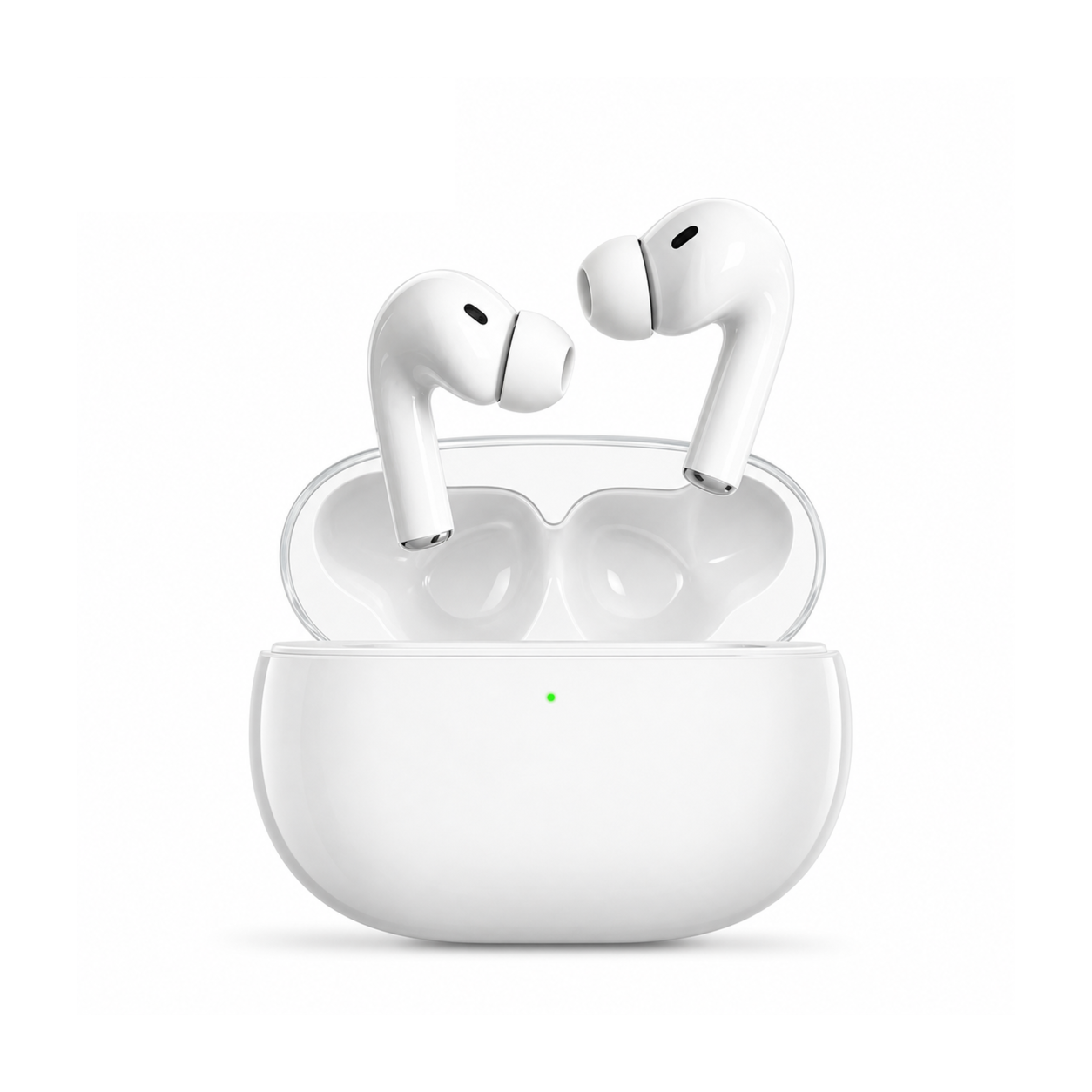
"Hybrid" describes where the microphones sit. A feedforward mic faces outward and hears noise on the way in; a feedback mic sits inside facing your ear and checks the result against your real fit; hybrid designs run both and split the work. Adaptive adds a slower loop on top, re-tuning the filter as the noise around you changes character. Of the three models below, only the Series 215 names its arrangement: its listing states adaptive hybrid ANC with a four-layer noise reduction architecture, and claims it reacts to changing noise in as little as 0.02s.
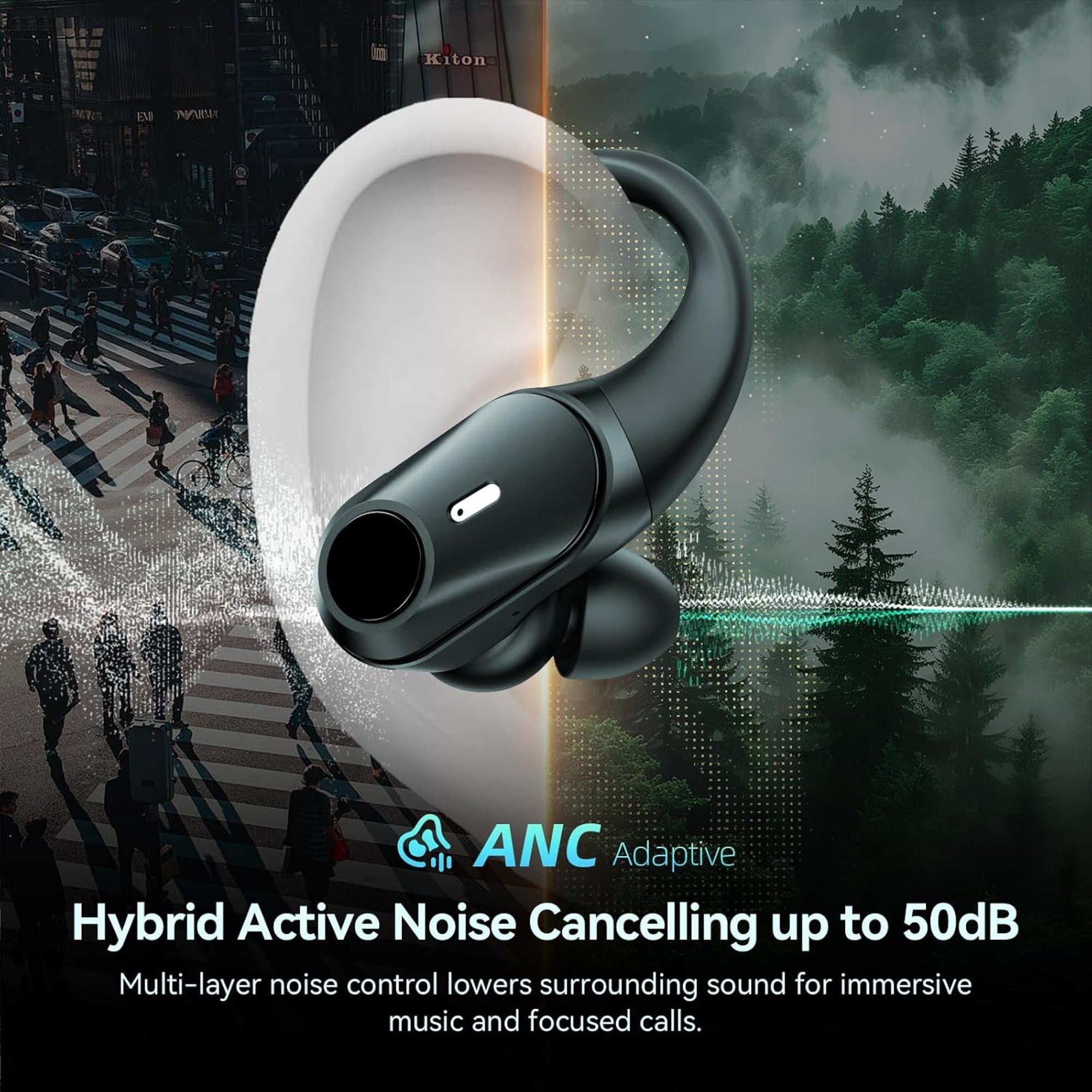
Hold that number against something measured. NIOSH puts gas lawn mowers, vacuums and power tools in the 85 to 90 dBA band, and notes that "sounds that are 85 dBA often require you to raise your voice to be heard by someone 3 feet away". If 50 dB came off across the whole spectrum, a mower would arrive at your ear quieter than the conversation you were straining to have over it. That is not what happens, because the reduction is not spread evenly: "up to" figures describe a best case at some low frequency the listing never names.
Subway rumble, office chatter, cabin hum: three different jobs
The same pair behaves like three different products depending on where you wear it. The table sorts the noise first and the feature second; the third column is drawn from what our own listings state, since we put nothing on a meter.
| Where you are | What dominates the noise | What does the work | What our listings state (read 7 Sep 2026) |
|---|---|---|---|
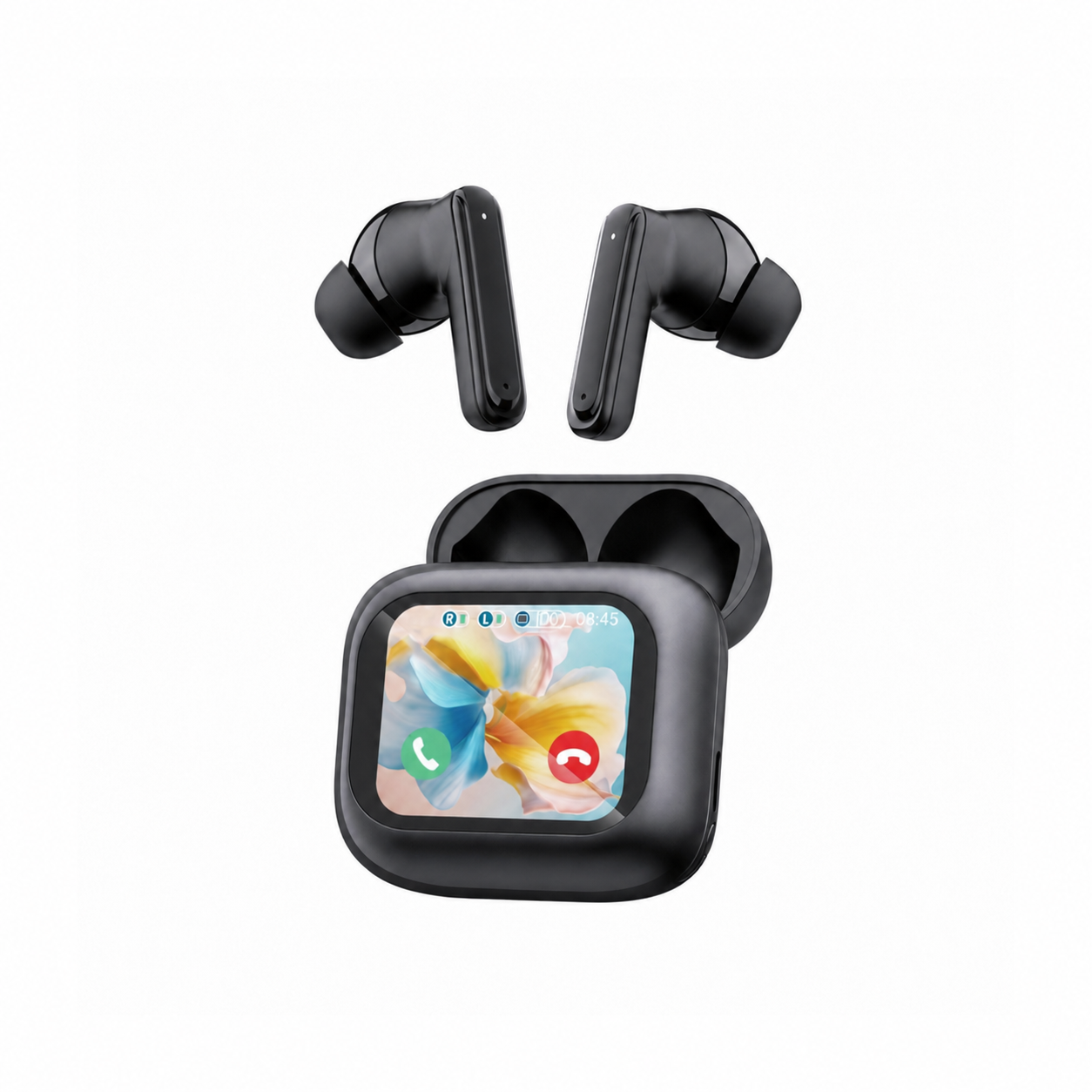
| Subway or bus commute | Rolling rumble and traction whine, plus wheel screech on curves | ANC on the rumble; the tip seal on the screech, which is too fast and too high for a filter | Series 215 lists adaptive hybrid ANC and S/M/L tips; the LCD Touchscreen model lists ANC and ENC |
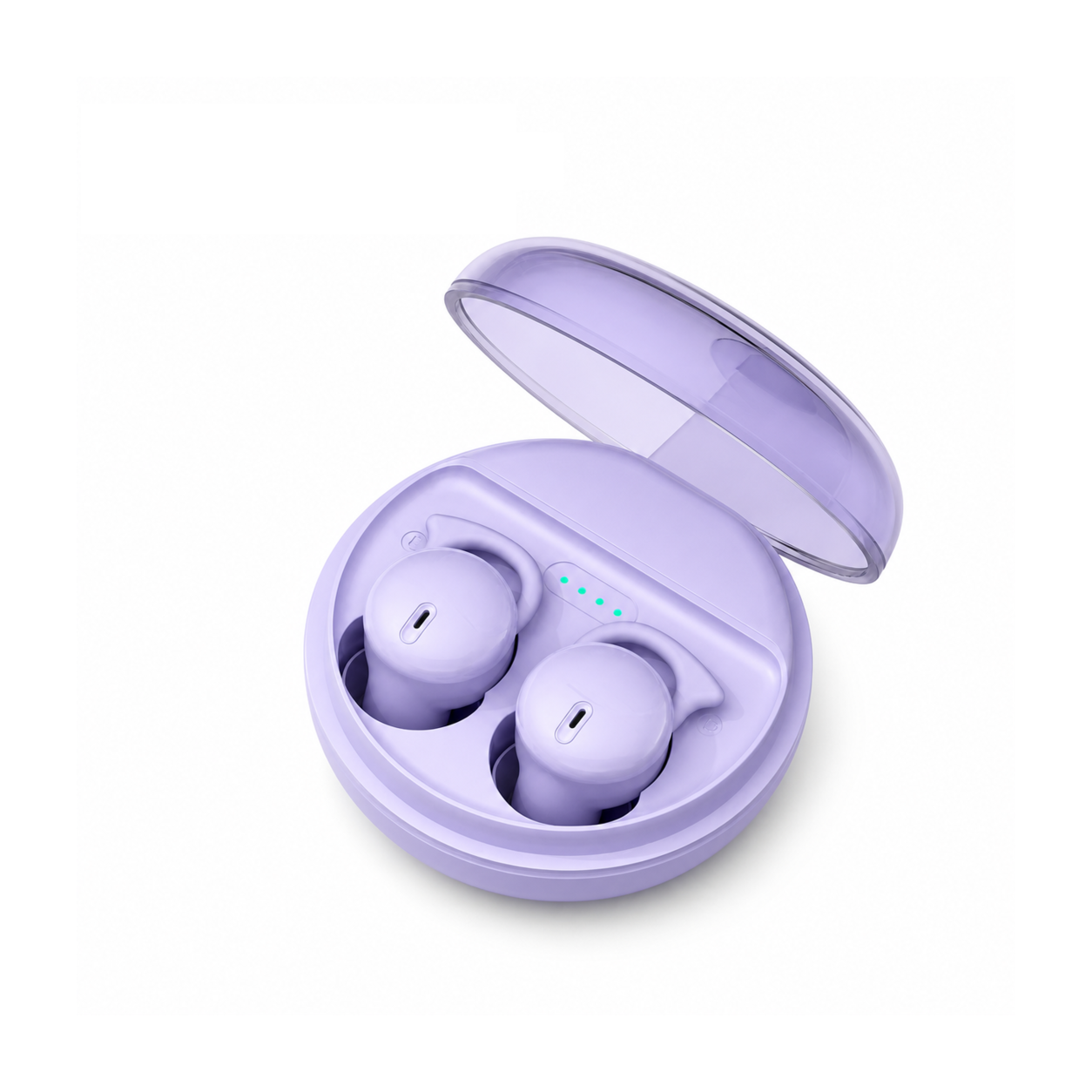
| Open-plan office | Voices, keyboards, chair casters, with HVAC drone underneath | ANC removes the drone only; speech needs a seal plus something to listen to | The Smart Pro 3 listing says outright that nearby voices and high-pitched sounds "still come through, just quieter" |
| Domestic flight, two to five hours | Steady engine and airflow hum, low and unchanging for the whole leg | The best case for ANC there is; battery and case capacity matter as much as the filter | Series 215 lists a 600mAh case, up to 80 hours total playback and 2 hours from a 10-minute charge |
| Yard work with a mower or blower | Broadband engine and blade noise at 85 to 90 dBA (NIOSH) | Hearing protection rated for the job; earbuds are the wrong tool | None of the three states a noise reduction rating, and none states a water-resistance rating |
The commute row is where sound cancelling wireless earbuds pay for themselves, and not only in comfort. The WHO's safe listening guidance gives a budget rather than a limit: at 80 dB "one can keep listening safely for up to 40 hours a week", while at 90 dB "four hours per week is all you have for listening safely". Its practical advice is to "use well-fitted, and noise cancelling headphones to reduce the need to raise volume in noisy situations". Lowering the floor is what lets you leave the volume alone; a train rider who turns everything up to win the argument with the rumble spends the week's budget by Wednesday.
The office row is the one people are disappointed by, and the reason is in the physics rather than the price. A colleague's voice sits partly inside the band ANC works on, but the consonants that carry meaning sit far above it, and speech never holds still long enough to be modelled. What helps is a tip that seals, something steady playing underneath, and accepting that you will still hear the stand-up meeting.
The yard row is a boundary, not a feature. Limitation: none of our listings carries a hearing-protection rating, so ANC is not a substitute for muffs or plugs when you are running a mower for an hour.
If a product causes pain, irritation, ringing or a noticeable hearing change, stop using it and seek qualified care.
Transparency mode, ENC and the seal underneath both
Transparency does the opposite job to cancellation: the outward-facing microphones feed the room back into the drivers so you can hear a gate announcement or a car without pulling a bud out. It is worth checking for by name, because it is not standard at this price. Of our three, only the Series 215 lists a transparency mode; on the other two, awareness means taking an earbud out.
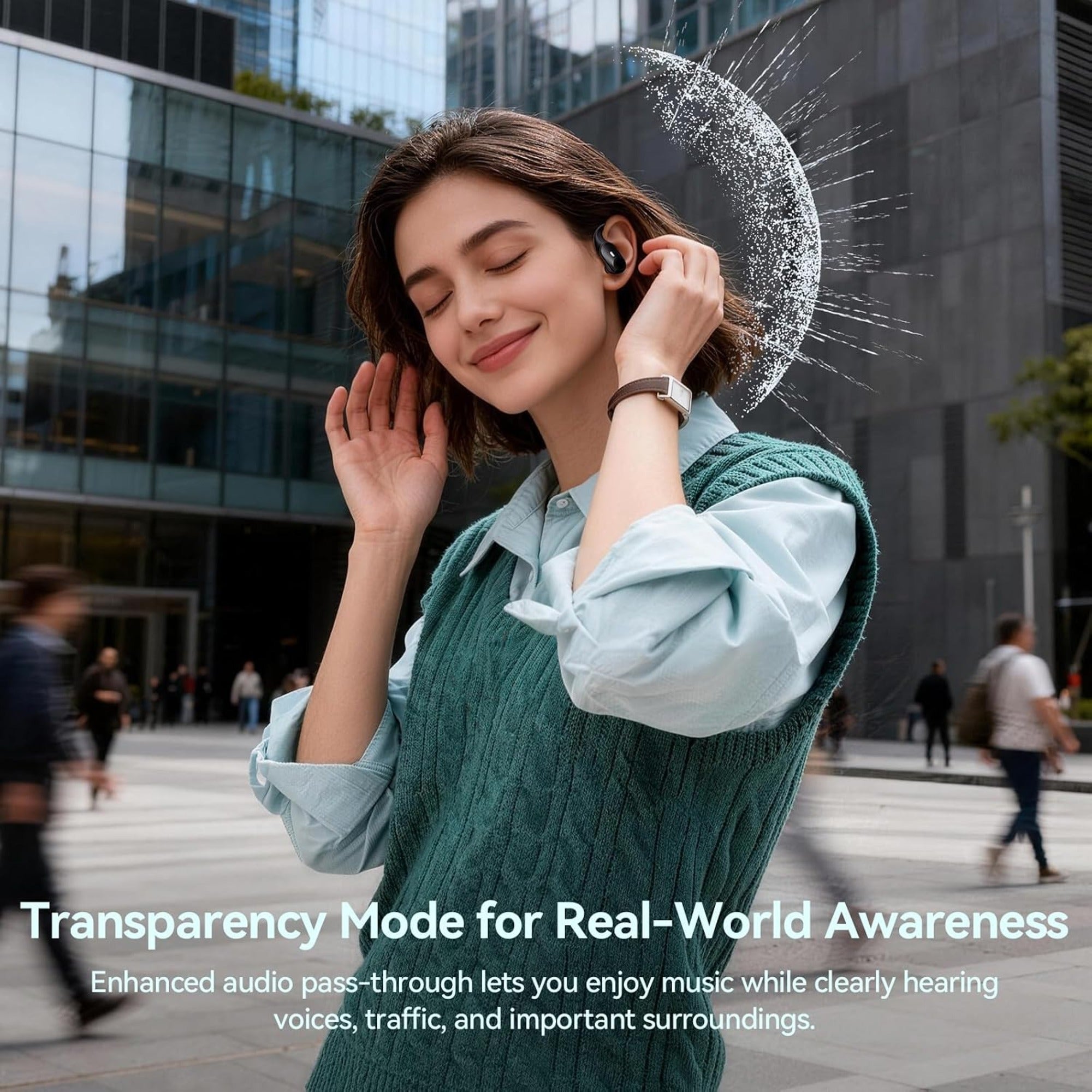
ENC is the third label on the same spec line and it changes nothing you hear. It cleans your outgoing voice so a caller hears less of the room, which matters on a platform and matters not at all while you listen to music. The LCD Touchscreen model states both ANC and ENC; the Smart Pro 3 states ANC alone; the Series 215's own gallery promotes dual microphones with call noise reduction, which is a claim about your caller's ear rather than yours. Someone buying ANC earbuds mainly for meetings should read that line first, and our glossary of ANC, ENC and passive isolation keeps the three apart.
Underneath all of it is the seal, which is unglamorous and decisive. A tip that does not close the canal hands the electronics more noise to fight and leaks the bass that makes low volumes tolerable. Series 215 ships S/M/L tips for that reason. Before you conclude that a pair's cancellation is weak, run the four seal checks and change tip size before you change model.
What $50 to $60 buys in active sound cancelling earbuds
At the time of writing the Series 215 is $51.73, the LCD Touchscreen Case model is $49.99 and the Smart Pro 3 is $59.99. What that tier reliably delivers is a working low-frequency filter, a transparency mode on some models, and a battery that outlasts a coast-to-coast flight. What it does not deliver is refinement: adaptation that keeps up with a train door opening, wind handling on an exposed platform, and cancellation that stays convincing as the noise climbs past a few kilohertz.
Reading a $250 flagship's page next to these three, the gap that matters is documentation rather than vocabulary. Both tiers print the same words. Only one tier tends to publish what its filter does across frequency, and neither publishes it in a form you can compare. Blanks are informative too: of our three, only the LCD Touchscreen model states a Bluetooth version, 5.4, and none of the three names a codec, so treat AAC, SBC or LDAC support as unstated rather than promised. No multipoint pairing is claimed on any of them either, which is worth knowing if you switch between a laptop and a phone all day. Anyone shopping for wireless ANC earbuds at this price should assume the printed feature is the whole feature.
The useful test costs nothing and takes a week. Wear the pair on your actual commute, in your actual office, on the flight you already booked, inside whatever return window you bought under. Toggle cancellation on and off at the same volume and listen for what stayed. A pair that turns a rumble into a hush and leaves voices intact is behaving normally; a pair that changes nothing usually has a seal problem before it is a chip problem.
Questions people ask before their first ANC pair
Will noise cancellation get rid of my coworker's voice?
No, and price does not change that. Cancellation works on sound that is steady and low, so it takes the air handling and the traffic outside and leaves speech thinner but present. Our Smart Pro 3 listing says the same in its own FAQ. If voices are the problem, a sealing tip plus steady audio underneath does more than any filter setting.
Is the ENC on the box the same thing as ANC?
They share two letters and nothing else. ANC changes what reaches your ear; ENC processes your microphone signal so the person you called hears less of your background. A listing can state one, both or neither. If you are buying mainly for meetings, ENC is the line to look for, and the seal still decides how well you hear the other side.
Do I need to spend more for a five-hour flight?
Cabin hum is the easiest noise there is to cancel, so a five-hour leg is the one scenario where a modest pair gets close to what the best sound cancelling earbuds manage. Battery and charging matter more: the Series 215 listing claims up to 80 hours of total playback from its 600mAh case and 2 hours from a 10-minute charge. Our airplane travel checklist covers the rest of the packing questions.
Which pair, then
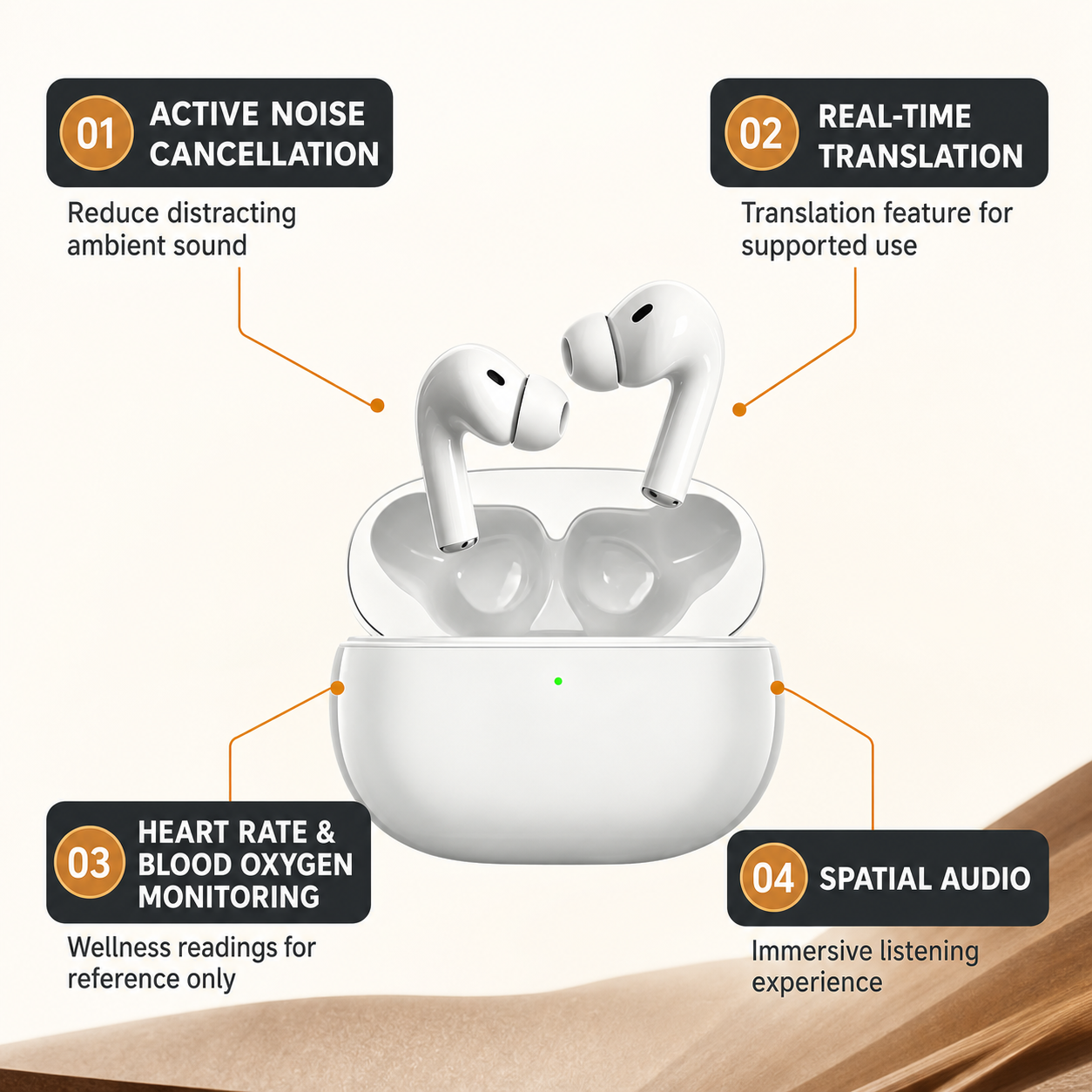
Commute and travel first: the Series 215, for the transparency mode, the ear hooks and the case capacity. Calls first: the LCD Touchscreen Case model, the only one of the three that states both ANC and ENC, with the caveat that no water-resistance rating is listed. Travel with translation and spatial audio on top: the Smart Pro 3. If none of those match your noise, the rest of the range sits in everyday wireless earbuds, and the honest order of operations stays the same in every case: seal, then noise type, then feature list.
- NIOSH, Noise-Induced Hearing Loss — 85 dBA recommended exposure limit over eight hours, the 3 dBA exchange rate, and the 85 to 90 dBA band for lawn mowers, vacuums and power tools.
- World Health Organization, Deafness and hearing loss: Safe listening — 40 hours a week at 80 dB, four hours a week at 90 dB, and the advice to use well-fitted noise cancelling headphones to avoid raising the volume.