

When shoppers search for 1more triple driver earbuds or subwoofer earphones, they are usually chasing a specific promise: that putting two or three tiny speakers inside each earpiece—one dedicated to deep bass (“subwoofer” lows) and one or two dedicated to mids and highs—will automatically deliver wider, punchier sound than a single-driver earbud. Back in the late 2010s, triple-driver hybrid earphones popularized the idea that more drivers meant higher fidelity. Today, however, in-ear monitor (IEM) engineering has evolved so much that a single well-tuned dynamic or planar driver often goes toe-to-toe with multi-driver hybrids.
Below, we break down how earphone transducer types work (which we also introduce in our guide to what IEM headphones are), examine the r/iems engineering breakdown of why hybrid crossovers help or hurt sound coherence, and show how to evaluate wired monitoring shells like the EARSOLE Faceted In-Ear Monitors with Detachable Braided Cable and everyday wireless models like the EARSOLE Wireless Earbuds – Semi-In-Ear Bluetooth Earbuds with Charging Case without falling for driver-count hype.
How Earphone Transducers Work: Dynamic Drivers, Balanced Armatures, and Planar Magnetic Units
Before comparing a single-driver earbud against a triple-driver hybrid, it helps to know the building blocks inside the shell. According to Wikipedia’s Headphones reference, headphones are electroacoustic transducers that convert an electrical signal to a corresponding sound using transducer technologies including moving-coil (dynamic), balanced armature, planar magnetic, electrostatic, electret, and MEMS designs.
In consumer earbuds and in-ear monitors, three of those transducer families do almost all the heavy lifting:
- Moving-Coil / Dynamic Driver (DD): A miniature circular voice coil attached to a flexible diaphragm in front of a permanent magnet. Because a dynamic driver moves a relatively large volume of air, it excels at warm, natural sub-bass slam (“subwoofer-like” low-end punch when sealed inside the ear canal).
- Balanced Armature (BA): A tiny reed balanced between magnets inside a sealed metal box (originally developed for hearing aids). Balanced armatures are ultra-compact and fast in the midrange and treble, which makes it easy to stack two or three of them inside a single earbud shell.
- Planar Magnetic Driver: A flat diaphragm with an etched conductive circuit suspended between magnet arrays, prized for fast transient response across the entire frequency spectrum.
Why Driver Implementation and Crossovers Matter More Than Driver Count (r/iems Insights)
If a triple-driver hybrid splits the workload across three transducers—typically 1 Dynamic Driver (DD) for bass + 2 Balanced Armatures (BAs) for mids and highs—does it always outperform a 1DD or 1-Planar earphone?
In r/iems (thread 1w69n79, “Do multiple driver IEMS have a drastic difference in sound compared to single driver IEMS?”), contributors emphasize that sound quality “100% depends on implementation” and note that “Unless it’s a single BA vs the rest of the world, the difference in a well tuned pair is not obvious.”
A detailed breakdown in r/iems (thread 1w69n79) explains both why hybrid multi-driver earphones exist and where they can stumble: “Single driver means it has to cover all frequencies, from 20-20k, let’s say. … That’s why multi-driver IEM’s and headphones exist, really. Then you get the crossover problem, it’s really easy for the Bass, Mids, and Treble to sound disconnected,” adding that many hybrids pair a dynamic driver with balanced armatures because “DD performs better at low frequencies on average. BA performs better on mids and treble.”
Here is how the three architectures compare in real-world listening:
| Earphone Driver Architecture | How Frequencies Are Handled (20 Hz – 20 kHz) | Primary Strength | Potential Weakness |
|---|---|---|---|
| Single Dynamic Driver (1DD) | One moving-coil diaphragm reproduces bass, mids, and treble with zero electrical crossover | Natural timbre coherence; punchy, unified bass impact across the range | Requires careful shell venting and diaphragm tuning so heavy bass doesn’t mask treble |
| Hybrid Triple / Multi-Driver (e.g., 1DD + 2BA) | Electronic/acoustic crossover splits bass to the DD and mids/treble to the BAs | Dedicated bass punch + crisp upper-frequency detail separation | The Crossover Problem: Poorly phase-aligned drivers can make bass and treble sound disconnected (r/iems 1w69n79) |
| Single Planar Magnetic (1 Planar) | One flat planar diaphragm covers the full 20 Hz – 20 kHz spectrum | Fast, technical transient detail and easy EQ response | Some listeners prefer the physical thump of a dynamic driver for sub-bass |
Comparing Monitoring IEMs and Everyday Semi-In-Ear Earbuds Without Driver-Count Hype
As the r/iems discussion concludes, two practical factors shape what you actually hear far more than the number of drivers printed on a box: whether the earpiece seals your ear canal (which is mandatory for deep sub-bass) and how transparently the specs are stated:
1. Sealed In-Ear Shells vs Unsealed Semi-In-Ear Buds (Why “Subwoofer” Bass Needs a Seal)
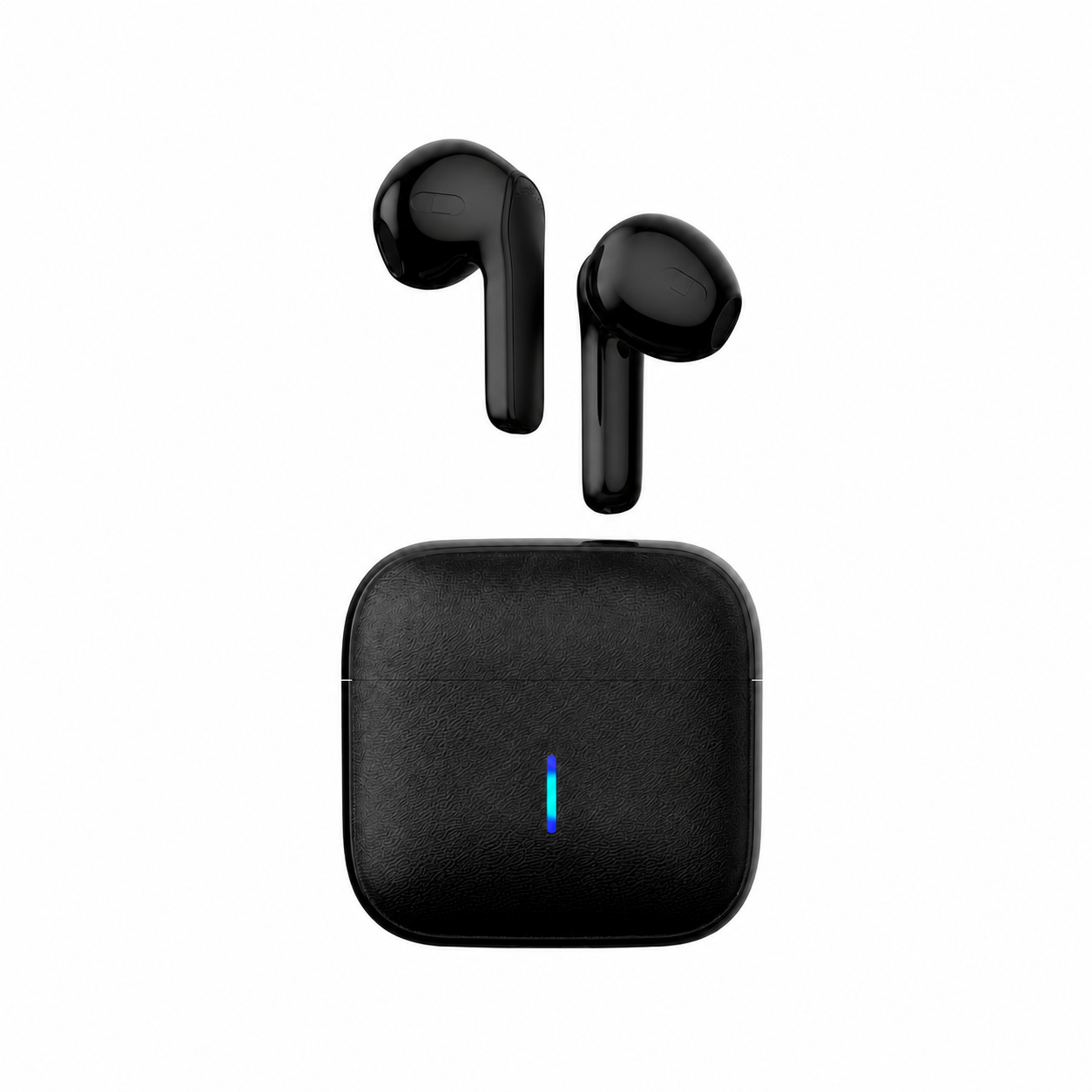
No matter how many drivers an earphone contains, low-frequency sub-bass waves dissipate immediately if there is an air gap between the nozzle and your ear canal. According to the EARSOLE Wireless Earbuds – Semi-In-Ear Bluetooth Earbuds with Charging Case listing (Model: EAR-TWS-BLK-01), these true wireless earbuds use a semi-in-ear shape without a deep in-ear seal—noting that if you want bass that relies on a sealed fit, a tipped in-ear model suits you better. For open, pressure-free desk listening and phone calls, the EARSOLE Semi-In-Ear Bluetooth Earbuds prioritize all-day comfort over sealed sub-bass slam.
2. Contoured Wired Monitoring Shells: EARSOLE Faceted In-Ear Monitors
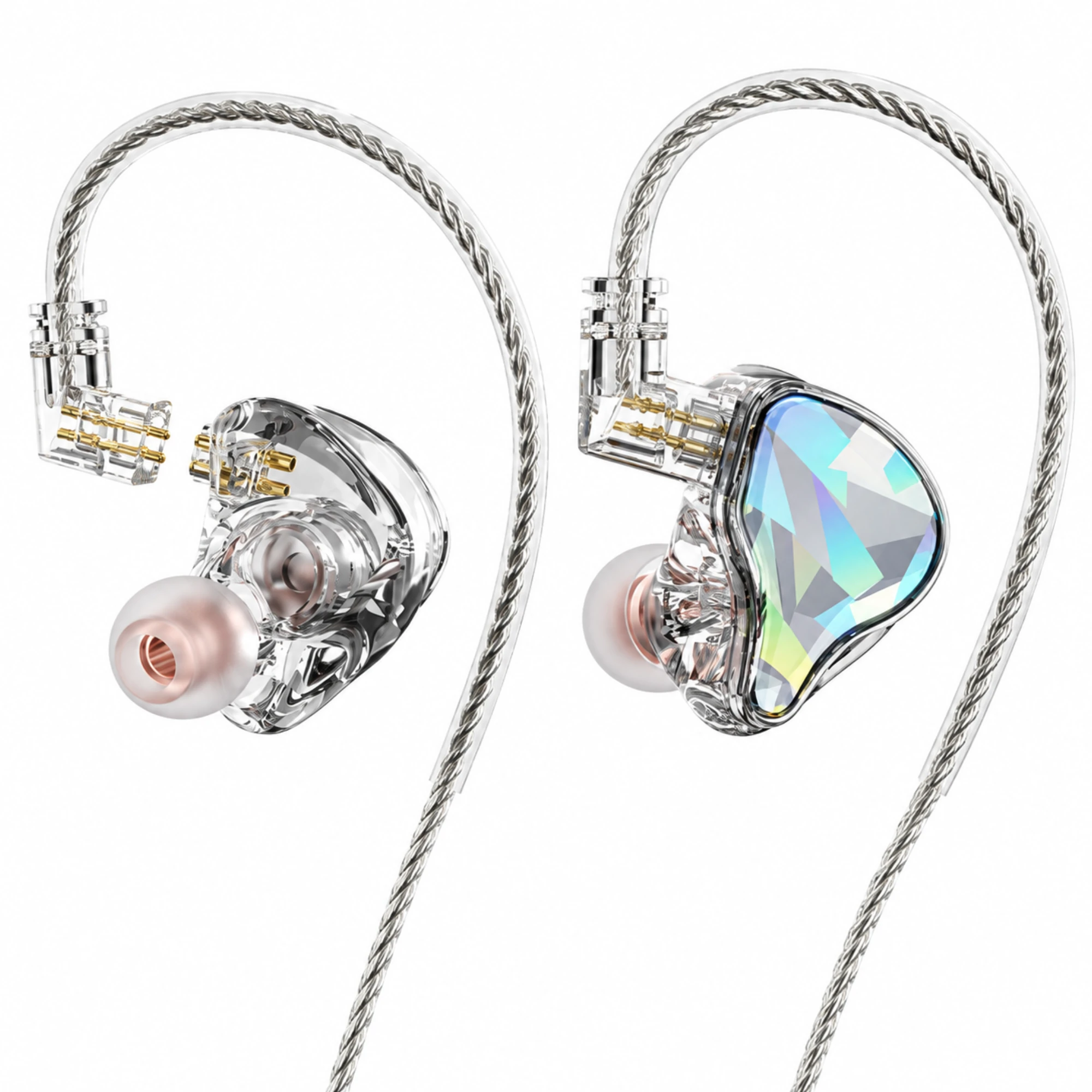
If you prefer a sealed, over-ear wired IEM form factor with a replaceable braided cord, look at the physical build and transparent disclosures rather than unverified marketing claims. According to the EARSOLE Faceted In-Ear Monitors with Detachable Braided Cable listing, the wired earphones feature clear in-ear shells, reflective faceted faceplates, and a braided over-ear cable with a detachable two-pin connection shown in the display image, while transparently stating that connector size, acoustic measurements, and device compatibility have not been verified.
You can explore the EARSOLE Faceted In-Ear Monitors with Detachable Braided Cable for wired monitoring, or read our full primer on what IEM headphones are and how they work.
Frequently Asked Questions
Do triple-driver or multi-driver earbuds always sound better than single-driver earbuds?
No. As experienced listeners in r/iems (thread 1w69n79) point out, sound quality “100% depends on implementation” and overall acoustic tuning rather than driver count. A well-engineered single dynamic driver (1DD) or single planar magnetic IEM can sound just as detailed—and often more coherent—than a multi-driver hybrid.
Why do many hybrid IEMs pair a dynamic driver for bass with balanced armatures for treble?
Different electroacoustic transducers (Wikipedia Headphones) have natural mechanical sweet spots. As explained in r/iems (thread 1w69n79), a moving-coil Dynamic Driver (DD) moves enough air to deliver punchy, physical low-end bass, whereas compact Balanced Armatures (BAs) excel at fast midrange and high-frequency detail. Combining 1DD + 2BA lets each driver operate in its easiest frequency band.
What is the ‘crossover problem’ in multi-driver earphones?
In a multi-driver earphone, an acoustic or electronic crossover splits the audio signal so bass goes to the dynamic driver and mids/treble go to the balanced armatures. As noted in r/iems (thread 1w69n79), if that crossover transition is poorly tuned, “it’s really easy for the Bass, Mids, and Treble to sound disconnected” compared to a single full-range driver covering 20 Hz to 20 kHz continuously.