


Searching for a bluetooth transmitter for headphones or a compact bluetooth transmitter for earbuds usually starts right before a long-haul flight, a treadmill workout at a gym with legacy TV screens, or a late-night movie session on an older television that only outputs analog audio through a 3.5mm headphone jack. True wireless earbuds have no cord jack at all, and many travelers prefer not to dangle a wire across their tray table if they can stream seatback movies wirelessly.
However, as frequent flyers regularly point out, not every airplane bluetooth adapter works the same way once you board a plane packed with dozens of active wireless devices. If you carry both compact earbuds and over-ear noise-cancelling headphones—or if you want a zero-battery backup when a dongle dies mid-flight—understanding how a 3.5mm bluetooth transmitter handles pairing and when a dual-mode headset eliminates the dongle altogether will save you mid-air frustration.
How a 3.5mm Bluetooth Transmitter Streams Audio Using the A2DP Profile
A wired 3.5mm headphone jack outputs an analog left/right stereo voltage signal designed to drive headphone voice coils directly. Wireless earbuds and Bluetooth headphones, by contrast, expect a digital packet stream transmitted over a 2.4 GHz radio link.
According to Wikipedia’s List of Bluetooth profiles, the Advanced Audio Distribution Profile (A2DP) defines how multimedia audio can be streamed from one device to another over a Bluetooth connection—such as streaming music from a mobile phone or transmitter to a wireless headset—while the Audio/Video Remote Control Profile (AVRCP) provides a standard interface to control TV or hi-fi equipment.
When you plug a bluetooth transmitter for headphones into an airplane armrest, Nintendo Switch, or older TV:
- Analog-to-Digital Conversion (ADC): The dongle samples the analog left and right channels coming out of the 3.5mm TRS port and converts them into digital PCM audio.
- A2DP Codec Compression: The transmitter encodes that digital stream using an A2DP audio codec (always mandatory SBC, and on some models aptX, aptX Adaptive, or AAC) and broadcasts it as a Bluetooth audio source.
- Lack of Display on Legacy Sources: Because an analog 3.5mm port only sends raw audio voltage, the airplane screen or treadmill TV has no idea a Bluetooth device is attached. It cannot display a pairing menu on the TV screen—which means all pairing and device selection must happen on the tiny transmitter itself.
| Connection Method | How Audio Reaches Your Ears | Requires Separate Battery? | Works With True Wireless Earbuds? |
|---|---|---|---|
| Screenless 3.5mm Bluetooth Transmitter | Digitizes 3.5mm jack & streams via A2DP using a single blind-pairing button | Yes (internal rechargeable battery) | Yes |
| Mini-Screen 3.5mm Bluetooth Transmitter | Digitizes 3.5mm jack & shows discovered headphone names on an onboard OLED/LCD screen | Yes (internal rechargeable battery) | Yes |
| Direct 3.5mm AUX Cable on Dual-Mode Headphones | Sends analog audio directly to over-ear headphone drivers with zero wireless lag | No (works even if headphone battery is empty or powered on) | No (requires a 3.5mm input jack on the earcup) |
Screenless Dongles vs Mini-Screen Bluetooth Transmitters: What Flyers Report in r/travel
Because an analog 3.5mm jack cannot show a Bluetooth device list on the airplane seatback monitor, a screenless bluetooth transmitter for earbuds relies entirely on a single button and a blinking LED light. When you hold that button down, the dongle enters “blind pairing mode” and attempts to bond with the nearest headset also in pairing mode.
If you only ever pair one set of earbuds at home before your trip and never touch the pairing button again, a button-only dongle is straightforward. In r/travel (thread 1wbigkk, “What airplane bluetooth headphone adaptor is the best?”), a flyer asks whether to buy the well-known AirFly SE or a cheaper UGREEN 2-in-1 adapter, and one traveler replies: “I can’t comment on the U GREEN, but I’ve been happy with my Airfly, FWIW.”
Yet the moment you travel with two pairs of wireless audio gear—for instance, wearing over-ear ANC headphones during the loud engine climb and switching to lightweight earbuds when leaning your head against a travel pillow—blind pairing inside a crowded aircraft cabin becomes a headache. In the same r/travel thread (1wbigkk), another frequent flyer highlights the frustration of blind-pairing on screenless dongles when traveling with multiple headsets: “I hated my Airfly. Was a pain switching it from AirPods to my Bose QC. It sits unused now as I replaced it with an Avantree Voyager which has a tiny screen and buttons to indicate and choose options. Much better.”
Practical Tips When Using a 3.5mm Bluetooth Transmitter on a Plane
- Pair Both Headsets at Home Before Heading to the Airport: Inside an airplane cabin, dozens of passengers have phones, watches, and earbuds broadcasting Bluetooth discovery packets. Pairing your 3.5mm bluetooth transmitter in your living room ensures your headphones are already stored in the transmitter’s memory slots.
- Disconnect Your Phone’s Bluetooth First: If your earbuds are still actively connected to your iPhone or Android phone in your pocket, they will ignore the airplane transmitter. Turn off Bluetooth on your phone—or disconnect the headset in your phone’s Bluetooth menu—before putting the earbuds into pairing mode for the dongle.
- Look for Physical Device-Switch Buttons or a Mini Readout: If you routinely alternate between earbuds and over-ear cans on long flights, choosing a transmitter with a small status screen or dedicated A/B device memory buttons prevents blind re-pairing.
Pairing Wireless Earbuds vs Plugging Dual-Mode Over-Ear Headphones Directly Into Seatback Jacks
Before you buy a dedicated bluetooth transmitter for headphones, check whether your travel kit relies on true wireless earbuds, over-ear headphones, or both:
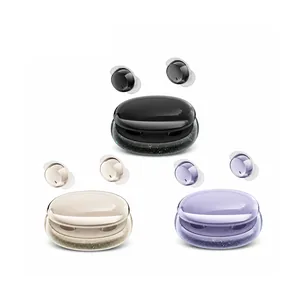
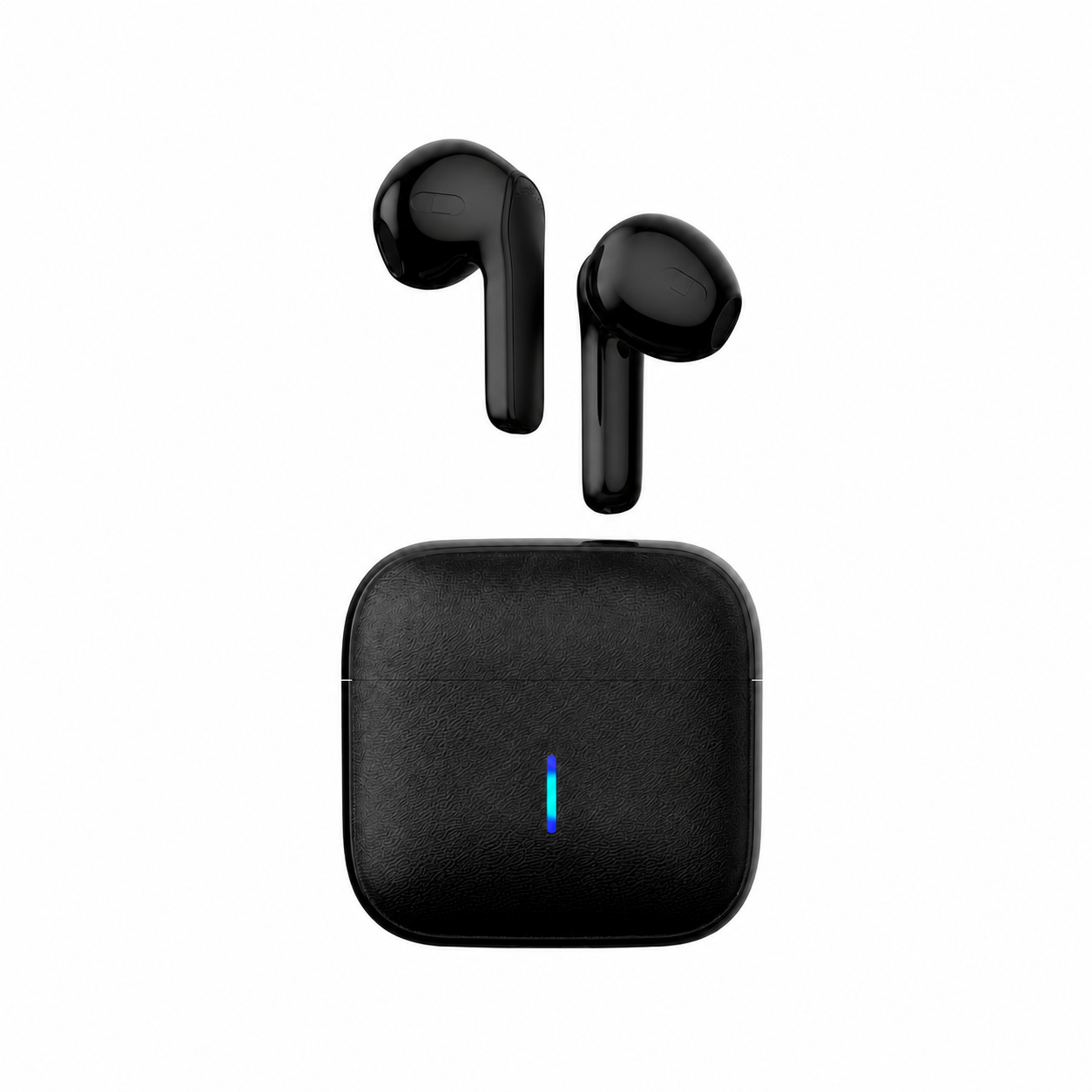
- When You Need a Bluetooth Transmitter (True Wireless Earbuds): According to the EARSOLE product catalog, the EARSOLE Wireless Earbuds – Semi-In-Ear Bluetooth Earbuds with Charging Case ($17.85) feature a lightweight contoured semi-in-ear shell with touch controls and a pocket-sized USB-C charging case, and the listing does not claim an IP water-resistance rating. Because true wireless earbuds have no physical wire jack, pairing them with a bluetooth transmitter for earbuds is the only way to listen to an analog airplane seatback screen or gym cardio console wirelessly. Their non-sealing semi-in-ear fit also keeps your ear canals from feeling plugged during cabin altitude pressure changes.
- When You Can Skip the Transmitter Entirely (Dual-Mode Over-Ear Headphones): According to the EARSOLE product catalog, the EARSOLE Noise Cancelling Over-Ear Headphones, Wireless & Wired – Series 127 ($29.40) combine Bluetooth 5.4 wireless playback with an included 47.2-inch (1.2 m) 3.5mm AUX audio cable, up to 100 hours of battery life in standard music mode, and 105-degree swiveling foldable protein-leather earcups weighing 0.54 lbs (246 g). Because Series 127 includes a standard 3.5mm AUX cord right in the travel pouch, you can plug directly into any single-prong airplane seatback jack, desktop monitor, or handheld console without carrying or charging an external airplane bluetooth adapter.
If you want to review cabin rules on wireless devices and two-prong airline jacks before your next departure, read our companion guide on whether you can use Bluetooth headphones on a plane.
Frequently Asked Questions
Why is switching between two pairs of Bluetooth headphones annoying on screenless airplane transmitters?
Because an analog 3.5mm headphone jack cannot display a pairing menu on the airplane screen, a screenless transmitter forces you to hold a single button and hope it bonds with the right headset. As a traveler in r/travel (thread 1wbigkk) noted, switching between AirPods and Bose QC headphones on a button-only dongle was frustrating enough that they replaced it with a transmitter featuring a tiny screen and selection buttons.
Can you use wireless over-ear headphones on a plane without buying a Bluetooth transmitter?
Yes—provided your wireless over-ear headphones also include a 3.5mm AUX input jack. Dual-mode models like the EARSOLE Series 127 Over-Ear Headphones come with a 47.2-inch (1.2 m) 3.5mm AUX audio cable that plugs straight into standard single-pin seatback entertainment jacks with zero wireless latency and no extra dongle battery to charge.
Do Bluetooth headphone transmitters work with both earbuds and over-ear headphones?
Yes. Any 3.5mm Bluetooth transmitter that broadcasts stereo audio using the standard Bluetooth A2DP profile will work with both true wireless earbuds (such as EARSOLE Semi-In-Ear Bluetooth Earbuds) and wireless over-ear headphones, as long as you put the receiving earbuds or headphones into Bluetooth pairing mode first.
