

"Clip-on shape." On nine of our product pages that is the entire description of how the earbud attaches — two words, a full stop, and nothing about where the clip goes or how it feels. Two other pages describe the clip in sentences: "The clip rests on the outer edge of the ear." and "A blush-pink C-bridge clips gently around the ear while the glossy rose-gold audio pod rests outside the ear canal." Anyone comparing clip on earbuds in our range is really comparing those two kinds of page, and the difference between them is the whole of what this article has to say.
Thirteen pages mention a clip; nine of them say two words
We searched every active product description for "clip". Thirteen pages use the word about the earbud (a fourteenth uses it about a bag loop and is left out). They fall into three groups.
| Kind of page | Pages | What it says about the clip |
|---|---|---|
| Short listing | 9 | "Clip-on shape." — the description is the product name plus that line |
| Written page | 2 | Where the clip sits, how to move it, who it is a poor match for |
| Supplier text | 1 | "with flexible clips that keep them comfortably in place" — and three different names for the same product |
The nine short pages are in our clip-on earbuds collection; the two written pages are in open-ear clip-on earbuds. If you arrived at one of the nine and wanted to know what the clip does, the page cannot tell you, and the honest answer is that the other two are where the description lives.
Where the clip sits, in the two pages that say so
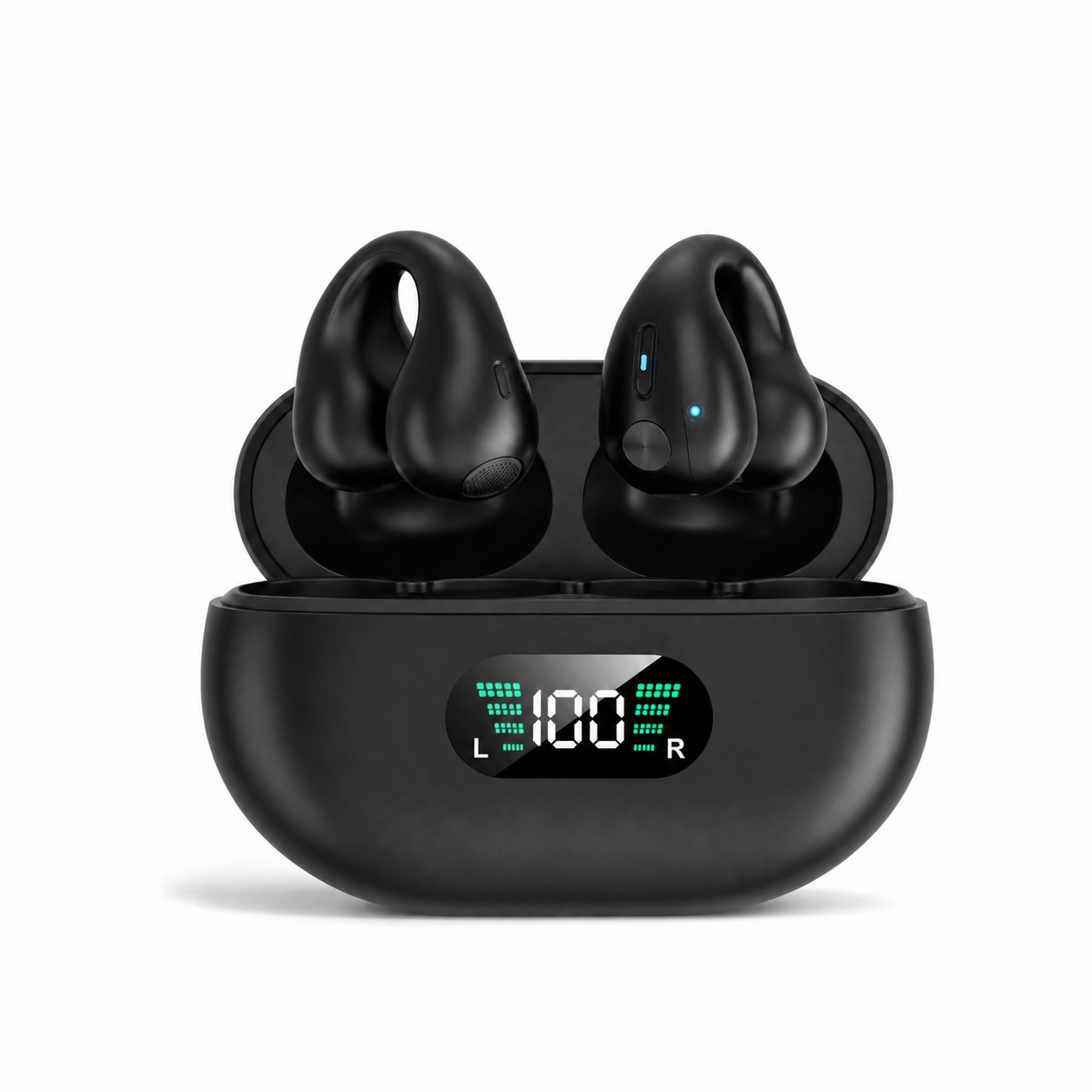
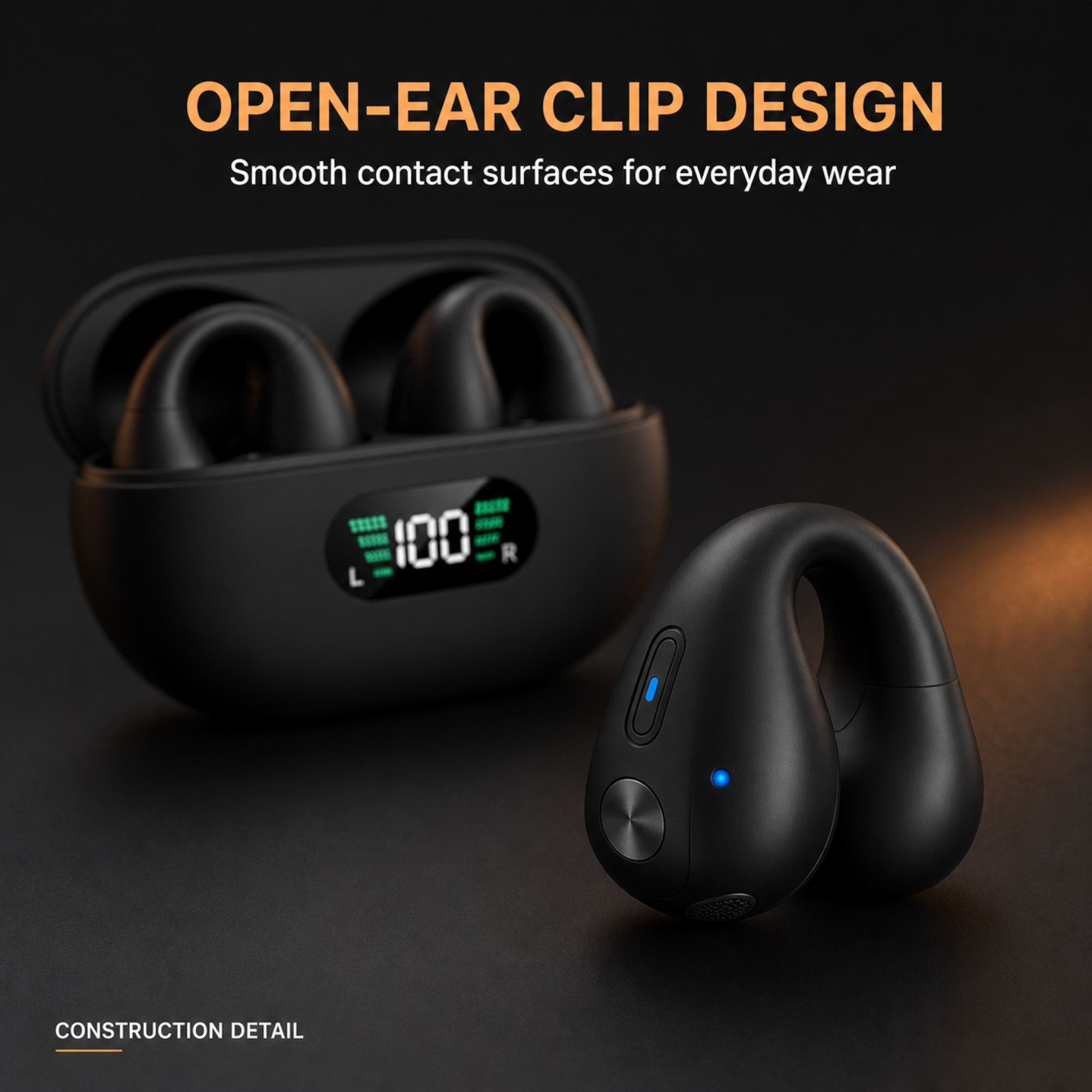
The EARSOLE Open-Ear Clip-On Wireless Earbuds with LED Charging Case page gives the position in one sentence, "The clip rests on the outer edge of the ear." — and the principle in another: these earbuds "rest outside the ear canal instead of sealing it shut." It also gives the reason a person might want that, in a phrase no short listing offers: because there is no in-ear tip, "there is none of the plugged-up pressure that makes some people give up on regular earbuds after an hour."
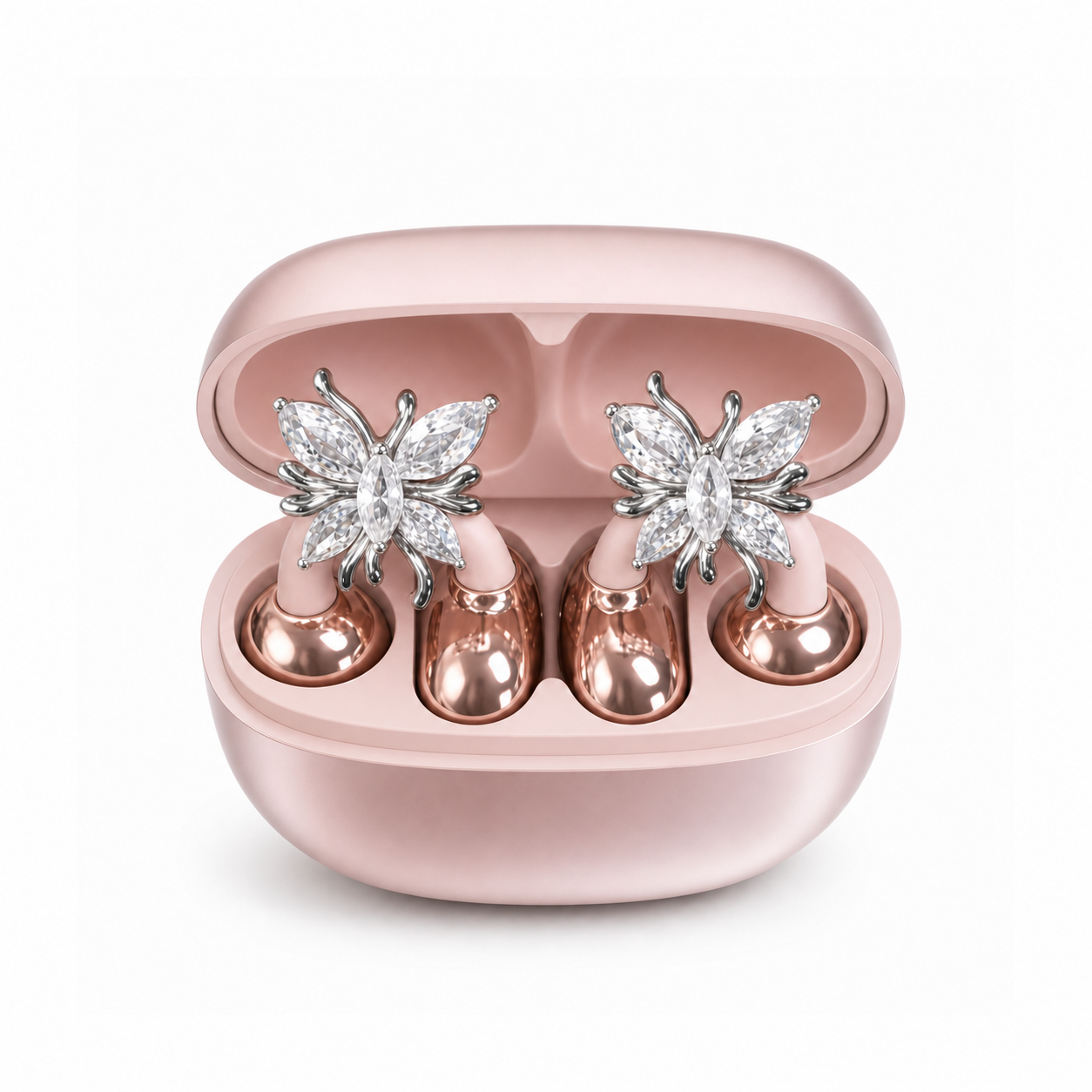
The EARSOLE Butterfly Open-Ear Clip-On Wireless Earbuds page describes the same position in the language of its own design: "A blush-pink C-bridge clips gently around the ear while the glossy rose-gold audio pod rests outside the ear canal." Two pages, two products, one placement — around the outer edge, pod outside the canal — and both say it in a sentence rather than a label.
The one instruction in the range for a clip that pinches
Only the Butterfly page tells you what to do when the clip is uncomfortable: "If you feel pinching, slide the clip toward the softer middle of your ear edge; a small position change usually fixes it." That is the only adjustment instruction for a clip on any of our pages. The LED page's version of setup is shorter and does not cover discomfort: "It is a deliberately simple setup: clip on, tap, listen."
Read the Butterfly sentence for what it assumes. It assumes the clip can be slid along the ear edge rather than fixed at one point, and it assumes the middle of the edge is softer than the top or the bottom. Neither assumption is stated as a fact about ears; the page presents them as where to move the clip, and that is the level at which to take it. If your clip pinches and sliding it does not help, the page has nothing further, and neither do we.
Who the pages say should not buy one
The LED page answers its own question, "Who are open-ear clip-ons a poor match for?", with one sentence: "Listeners who prioritize thumping bass or need isolation in loud environments." That is the only who-should-skip statement for a clip in our range, and it names the two things a clip gives up by leaving the canal open. Our guide to whether open-ear earbuds leak sound takes the isolation half of that sentence further; our guide to why earbuds fall out covers the clip as one of four ways a pair stays put, including what the Butterfly page says about glasses and earrings. This article does not repeat either.
One page calls the same pair three things
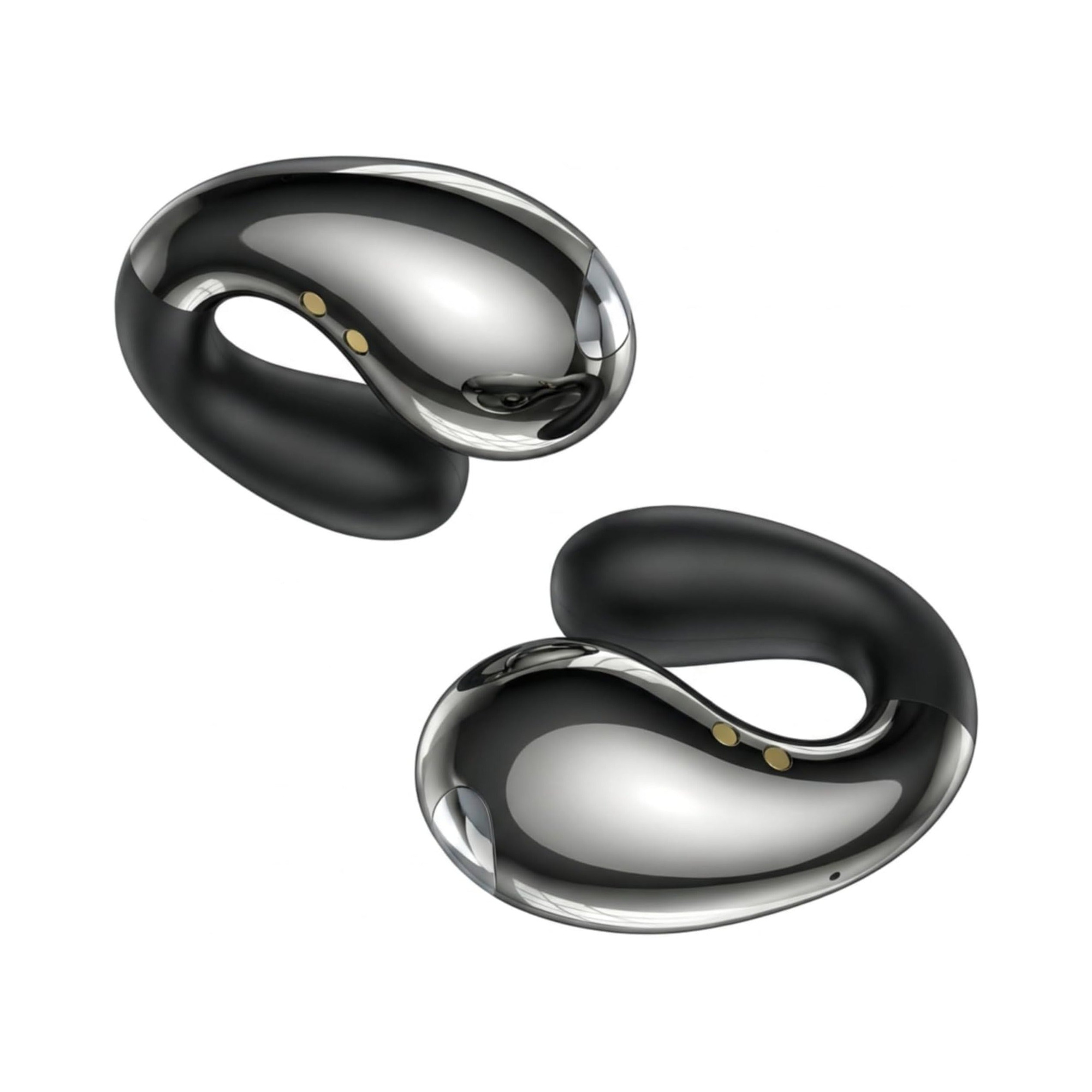
The thirteenth page is supplier text. The EARSOLE True Wireless Earbuds Series 133 page describes "ultra open earbuds" that are "lightweight and secure, with flexible clips that keep them comfortably in place" — and, within the same description, calls the product "clip on earbuds", "open ear headphones" and "bone conduction earbuds". Those are three different mechanisms in our range's own vocabulary: a clip rests on the ear edge, an open-ear design leaves the canal unsealed, and bone conduction, as our bone conduction guide sets out, is a different sound path altogether. A page that uses all three for one product cannot be telling you which of the three mechanisms it has, so read that page for the numbers it states — playtime, charge time, Bluetooth version — rather than for its category names.
What to do with a "Clip-on shape." page
Treat the two words as a shape claim and nothing more. They tell you the earbud is not an in-ear tip and not an ear hook; they do not tell you where the clip lands, whether it can be repositioned, or who it suits. For any of those, the two written pages are the only source in our range, and what they say is short enough to carry over: outer edge of the ear, pod outside the canal, slide toward the softer middle if it pinches, and not for bass or isolation. If a short page is the one you are buying from, those four points are the most our range can tell you about the clip you are getting, and none of them comes from that page.