Earbuds for Small Ear Canals With Narrow 4 mm Nozzles and XS Silicone Domes
Listeners with narrow ear canals regularly suffer through ear fatigue, throbbing pressure points, and loose acoustic seals with standard wireless earbuds. When an earbud sound tube stretches delicate canal cartilage beyond its natural resting diameter, listening to podcasts or music turns painful within twenty minutes.
Most consumer earbuds feature wide sound nozzles measuring between 5.5 and 6.2 mm in diameter to accommodate large dynamic drivers. For an adult ear canal averaging only 4.0 to 5.0 mm across its first bend, forcing these wide barrels into the ear causes chronic irritation. Finding comfortable listening requires hardware engineered specifically around narrow sound tubes and compliant extra-small silicone domes.
Anatomy of Ear Fatigue: Why Wide Sound Nozzles Stretch Small Canals
The human ear canal is not a rigid circular cylinder. It is an S-shaped tunnel lined with a delicate layer of sensitive epithelial tissue resting directly over cartilage in its outer third.
When an oversized nozzle wedges into this narrow passage, it exerts continuous outward mechanical pressure against the canal walls. The ear reacts by activating local pain receptors, causing a dull ache that lingers hours after taking the earbuds out. Furthermore, because the wide nozzle cannot penetrate deep enough to establish an airtight seal, low-end bass frequencies leak out, prompting users to shove the earbud deeper and worsening tissue trauma.
| Earbud Design Architecture | Nozzle Outer Diameter | Ear Tip Sizing Options | Canal Cartilage Strain | Acoustic Bass Retention |
|---|---|---|---|---|
| Standard Consumer TWS | Wide (5.8 to 6.2 mm) | S / M / L (rigid cores) | Severe (stretches narrow canal walls) | Poor (shallow fit leaks low-end bass) |
| Noise-Cancelling Flagships | Oval / Bulky (>6.0 mm) | S / M / L (short flanges) | High (bulky sensor housings crowd concha) | Moderate (relies on digital ANC boost) |
| Universal In-Ear Monitors | Medium (5.0 to 5.5 mm) | Multi-flange or memory foam | Moderate (deep bore leverage causes fatigue) | High (heavy mechanical seal) |
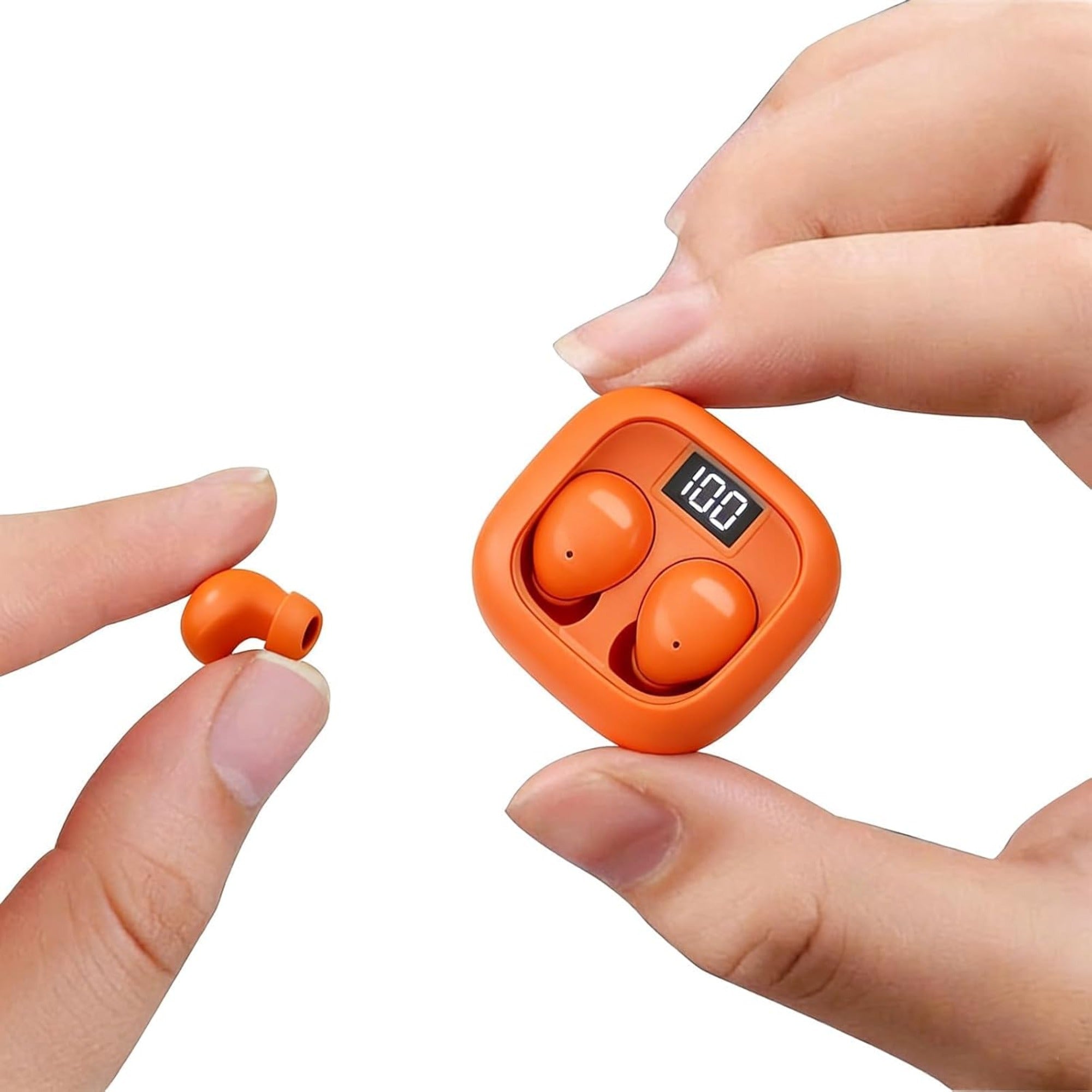
| Narrow-Nozzle Micro Buds | Narrow (3.8 to 4.2 mm) | XS / S / M (ultra-soft silicone) | Minimal (rests naturally within canal lumen) | Excellent (deep airtight acoustic seal) |
The Role of Extra-Small Silicone Domes and Core Flexibility
Swapping silicone tips on a wide 6 mm nozzle does not fix ear pain for small canals. Even when labeled “Small”, standard replacement tips retain a thick inner silicone stem that preserves the wide barrel width.
True fit optimization requires a combined approach: pairing a slim 4 mm acoustic sound tube with ultra-thin XS silicone domes. A narrow nozzle allows the flexible dome skirt to compress naturally into the ear canal lumen without exerting radial stretching tension against the tragus and antihelix cartilage.
Housing Geometry: Relieving Concha Bowl Leverage and Tragus Pain
In addition to nozzle diameter, overall earbud shell geometry dictates long-term listening tolerance. Bulky earbud bodies that protrude past the concha create mechanical leverage against the outer ear, prying the nozzle sideways with every jaw movement.
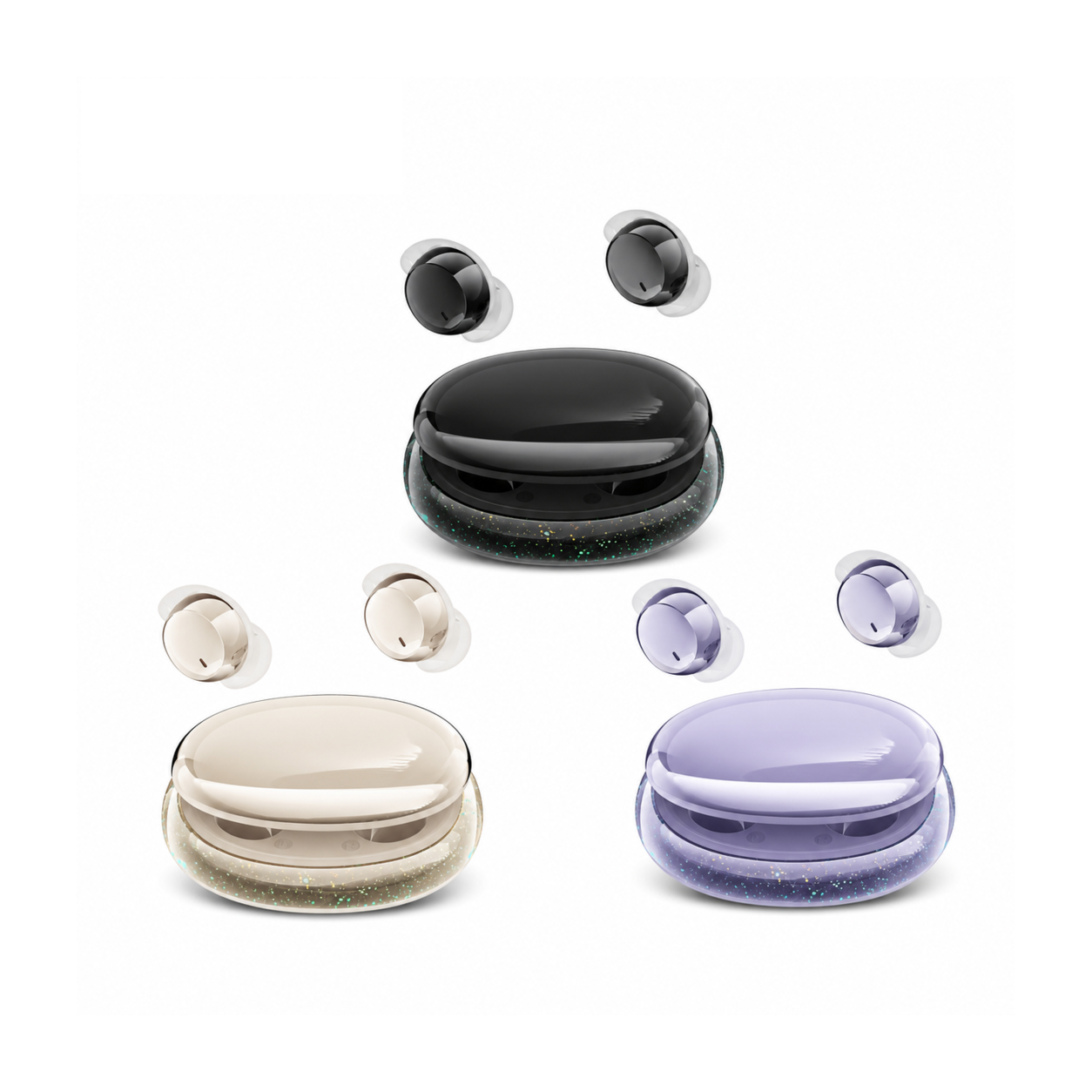
Flat, stemless earbuds for sleeping on your side, with a dynamic sleep-support mode and a starlight glow charging case. See the three colors at EARSOLE.
The EARSOLE Low-Profile Earbuds resolve ear fatigue through an ultra-compact, stemless chassis designed to sit flush inside the ear concha. By keeping the entire enclosure within the outer ear perimeter, the earbuds eliminate external lever arms, distributing physical contact evenly across soft ear contours rather than concentrating friction inside a sensitive, narrow canal.
Daily Guidelines for Sensitive Ear Care and Cleanliness
To keep narrow ear canals comfortable and prevent irritation during daily audio playback, observe these practical listening guidelines:
- Choose XS Domes That Seal Without Deep Jamming: An ear tip should gently mate against the entrance of the canal without requiring forceful insertion to block out ambient room noise.
- Schedule Regular Micro-Breaks: Remove in-ear audio devices for five minutes every two hours to allow canal skin ventilation and natural moisture balance.
- Sanitize Silicone Tips Weekly: Wipe ear tips with a dry microfiber cloth to remove oils and cerumen buildup, preserving material elasticity and hygienic acoustic delivery.
Frequently Asked Questions
Why do regular wireless earbuds hurt after 20 minutes in small ears?
Standard earbuds use wide 5.5 to 6.2 mm nozzles that physically exceed the resting internal diameter of small ear canals, exerting continuous outward mechanical pressure against sensitive cartilage.
Can putting extra-small tips on large earbuds solve ear soreness?
Usually no, because standard tips still require a wide inner core to mount onto 6 mm nozzles. True relief requires earbuds engineered with inherently narrow sound tubes around 4 mm.