Studio Headphones for Mixing vs Tracking Isolation in Untreated Bedrooms
Producing commercial mixes in untreated domestic bedrooms presents severe acoustic challenges from parallel boundary flutter echoes and low-frequency standing waves. Studio monitoring headphones bypass unpredictable room reflection modes entirely, delivering direct acoustic velocity straight to the listener’s ears without boundary interference. Selecting between open-back mixing transducers and sealed tracking enclosures dictates whether soundstage accuracy or microphone bleed prevention takes acoustic priority.
Engineers operating in small spare rooms frequently encounter modal resonance peaks exceeding twelve decibels between sixty and two hundred hertz, masking crucial bass balance decisions. Deploying calibrated studio headphones eliminates irregular room decay times, allowing surgical equalization across complex sub-bass fundamentals and delicate vocal balance. Precision acoustic decisions depend on understanding where open circumaural chassis excel and where high-attenuation closed cups remain indispensable.
Acoustic Enclosure Physics: Open-Back Breadth vs Closed-Back Containment
Open-back circumaural headphones employ acoustically transparent rear mesh grilles that eliminate internal cavity back-pressure against the moving driver diaphragm. This open architecture prevents internal resonant standing waves from smearing transient recovery, resulting in an exceptionally natural soundstage with pinpoint stereo imaging. However, zero physical containment means ambient room noise leaks inward freely, while playback audio spills outward toward sensitive microphones.
Closed-back monitoring designs seal the transducer inside a rigid acoustic chamber surrounded by high-density ear cushion dampening materials. This sealed boundary isolates external room distractions by up to twenty-eight decibels while containing headphone spill during vocal or acoustic instrument tracking. The unavoidable acoustic tradeoff involves internal chamber resonance reflections, requiring tuned bass ports or internal acoustic felt to prevent boxy low-frequency coloration.
| Enclosure Class | Acoustic Isolation | Soundstage Presentation | Low-End Resonance | Primary Studio Role |
|---|---|---|---|---|
| Open-Back Dynamic | 0 to 4 dB | Holographic & Expansive | Linear & Well-Damped | Critical Balance & EQ |
| Planar Open-Back | 0 to 3 dB | Ultra-Wide Separation | Flat Sub-Bass Extension | Mastering & Translation |
| Closed-Back Monitor | 18 to 26 dB | Focused & Lateral | Resonant Cavity Bump | Tracking Vocalists & Drums |
| Semi-Open Hybrid | 6 to 10 dB | Moderate Dimension | Controlled Mid-Bass | Long Tracking Sessions |
Controlling Microphone Spill During Critical Vocal and Acoustic Tracking
When tracking delicate acoustic guitars or intimate lead vocals, headphone bleed leaking into high-gain condenser microphones introduces destructive comb filtering across upper midrange frequencies. Closed-back tracking headphones prevent playback click tracks and guide mixes from escaping the ear cups, keeping recorded tracks pristine for aggressive compression and pitch correction. Clamping pressure must remain firm enough to sustain an airtight acoustic seal against facial bone contours without inducing cranial fatigue.
Acoustic seal leakage often occurs when session vocalists pull one headphone cup off to monitor natural bone-conducted pitch resonance. Using dedicated high-isolation tracking monitors with contoured ear cushions prevents accidental phase cancellation while maintaining reliable pitch references. Maintaining clean multitrack isolation eliminates time-consuming spectral editing and phase alignment during downstream production stages.
Driver Fatigue, Clamping Force, and Bedtime Auditory Recovery
Extended studio sessions with high-clamping circumaural headphones create localized cartilage tenderness and temporal fatigue after four to six hours of continuous editing. High clamping force compresses temporal nerves against the skull, while prolonged headphone sound pressure taxes middle ear acoustic reflexes. Transitioning away from bulky studio chassis allows tired ear canals and outer cartilage to recover baseline acoustic sensitivity overnight.
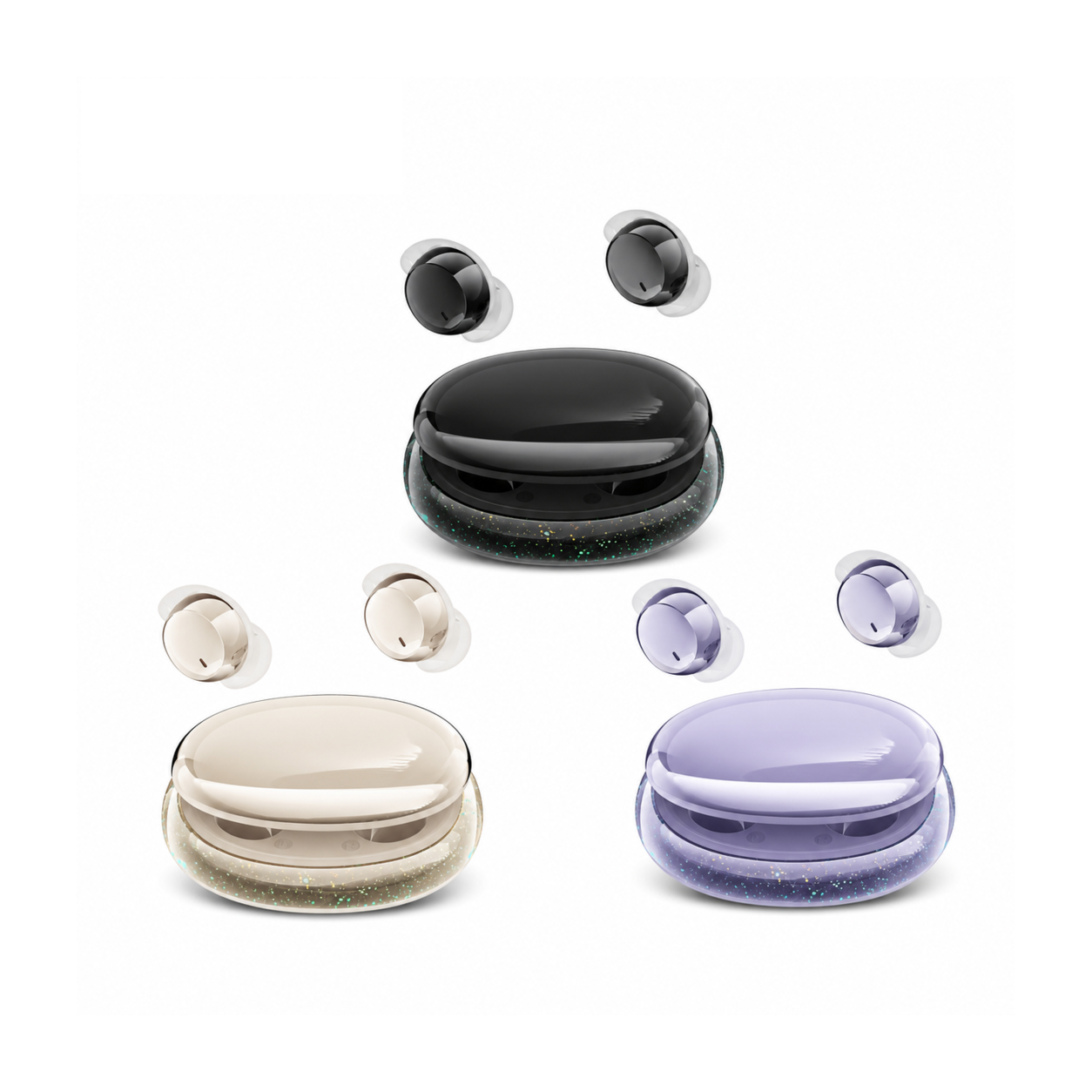
Flat, stemless earbuds for sleeping on your side, with a dynamic sleep-support mode and a starlight glow charging case. See the three colors at EARSOLE.
Incorporating ergonomic low-profile audio hardware during evening relaxation provides pressure-free listening that lets tender concha cartilage heal before tomorrow’s critical mix decisions. Allowing temporal tissues to breathe prevents ongoing chondritis while maintaining peaceful sonic immersion during bedtime unwinding routines.
Studio Monitoring Workflow Checklist for Untreated Bedroom Environments
Maximizing translation accuracy in an untreated bedroom requires disciplined monitor selection. First, track vocalists and acoustic instruments exclusively through sealed closed-back cans to eliminate microphone spill. Second, establish initial balance curves and equalization using open-back reference headphones paired with calibrated crossfeed processing.
Finally, verify low-end translation across multiple consumer playback targets at controlled seventy-five decibel sound pressure levels. Periodic reference checks against commercial records guarantee that mix balances survive translation across mobile earbuds and car stereo environments. Switching between open mixing reference cans and closed isolation tools ensures uncompromised multitrack fidelity.
Frequently Asked Questions
Can you produce a commercial mix entirely on studio headphones without studio monitors?
Yes, professional engineers routinely deliver major commercial releases mixed on open-back headphones, provided they employ calibrated crossfeed plugins and reference mixes to accurately evaluate stereo phantom center imaging.
Why do open-back studio headphones sound quieter than closed-back headphones at the same volume setting?
Open-back designs vent rear acoustic transducer energy directly into ambient space without cavity pressure buildup, requiring higher amplifier voltage swing to produce equivalent sound pressure levels at the ear drum.