
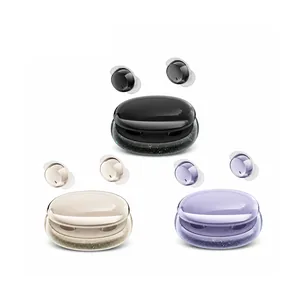


If you are searching for sweat-proof headphones over ear or sweat resistant headphones over ear, you have probably noticed a frustrating gap in the audio market: plenty of tiny in-ear workout buds carry formal water-resistance ratings, yet many lifters and cardio regulars cannot keep slippery silicone tips inside sweaty ear canals—or have ear anatomy that rejects earbuds altogether. At the same time, most full-size over-ear ANC headphones rely on large acoustic vents and stitched foam ear cushions that require post-workout care to survive daily gym sessions.
Below, we break down what official IEC 60529 IP codes actually guarantee (and expand on in our guide to IPX4 vs IPX5 vs IPX7 waterproof ratings), why lifters in r/BuyItForLife choose sealed over-ear ANC headphones over bone conduction when drowning out loud gym speakers is the top priority, and how to compare the EARSOLE Noise Cancelling Over-Ear Headphones – Series 127 for indoor noise isolation against the IP54-rated EARSOLE Bone Conduction Open-Ear Sport Headphones for heavy-sweat outdoor training.
What ‘Sweat-Proof’ and IP Codes Actually Mean on Headphones (Wikipedia IP Code Breakdown)
In consumer electronics, “sweat-proof” is a marketing phrase rather than a formal engineering standard. To know whether a headset has actually been tested against dust and moisture, you have to look for an IP (Ingress Protection) code. According to Wikipedia’s IP code reference, the Ingress Protection code is defined under international standard IEC 60529 to classify the degree of protection provided by mechanical casings and electrical enclosures against dust and water, where the first digit (0–6 or X) indicates solid particle protection (level 5 means dust-protected) and the second digit (0–9 or X) indicates liquid ingress protection (level 4 means water splashing against the enclosure from any direction shall have no harmful effect).
Wikipedia also notes an important caveat that every gym-goer should keep in mind: standard IEC 60529 liquid testing is performed using fresh water, and protection against other fluids—including salt-heavy human sweat or skin oils—is not automatically guaranteed by a freshwater splash test alone. That is why full-size over-ear headphones (which have large driver diaphragms, hinge pivots, and stitched foam pads) rarely carry high IP immersion numbers, and why wiping down ear cushions after every session matters just as much as the spec sheet.
Blocking Loud Gym Music When In-Ear Buds Slip Out: Closed-Back Over-Ear ANC vs Bone Conduction
Why do so many lifters specifically hunt for sweat resistant headphones over ear instead of buying workout earbuds? In r/BuyItForLife (thread 1vik10n, “Headphones for the gym that can handle sweat and my gyms very loud and annoying gym music”), a gym-goer explains: “I am looking for over ear headphones or as i have heard even bone conducting ones seem good. I cannot wear in ear buds as my ears holes are very moist and they slide off easily. I am looking for something that can handle my workouts, sweat and can play over the gym music by blocking out the noise.”
That thread surfaces the core choice every gym listener faces when in-ear tips won’t stay put:
- Closed-Back Over-Ear ANC Headphones (Best for Blocking Loud Gym PA Speakers): When your gym blasts overhead music at high volume, only a physical circumaural cushion seal paired with Active Noise Cancellation (ANC) can quiet the room enough for you to hear your own playlist or podcast at safe volume levels.
- Open-Ear Bone Conduction Headphones (Best for Heavy Sweat & Outdoor Awareness, Not Gym Isolation): Bone conduction frames sit on your cheekbones and handle heavy sweat effortlessly because nothing goes inside moist ear canals—but because your ear canals remain completely open, you will still hear every beat of the gym’s overhead speakers.
Contributors in r/BuyItForLife (thread 1vik10n) highlight the trade-off between isolation and sweat care: one lifter advises, “Over ears that seal well around your whole ear will do the job, just wipe them down after and maybe get ones with replaceable ear pads cause the sweat will eat through them eventually,” while another warns that bone conduction headphones “don’t block ambient noise so you’ll be hearing both. They are nice when running / biking outside because you can hear music and traffic around you.”
| Workout Headphone Type | Ear Canal Fit | Blocks Loud Overhead Gym Music? | Sweat & Moisture Handling | Best Workout Environment |
|---|---|---|---|---|
| Closed-Back Over-Ear ANC (EARSOLE Series 127) | Cushions seal around the outer ear (won’t slip out of moist ear canals) | Yes (passive protein-leather seal + Active Noise Cancellation) | No IP rating listed; requires wiping down protein-leather pads after workouts | Weightlifting and indoor gyms with loud PA music |
| Open-Ear Bone Conduction (EARSOLE Bone Conduction Sport) | Rests on cheekbones; ear canal stays 100% open | No (ambient gym music and traffic remain audible) | IP54 water resistance against sweat, splashes, and light rain | Outdoor running, cycling, hiking, and high-sweat cardio |
Post-Workout Wipe-Down Habits & Choosing Between EARSOLE Series 127 Over-Ear ANC and IP54 Bone Conduction
Depending on whether your priority is silencing a noisy commercial weight room or surviving drenched outdoor cardio, here is how the two non-earbud options in the EARSOLE catalog compare:
1. For Silencing Loud Commercial Gyms: EARSOLE Series 127 Over-Ear ANC Headphones
If in-ear buds slide out of your ears and you need to block overhead gym music during lifting or treadmill walks, a lightweight closed-back ANC headphone gives you full-ear coverage. According to the EARSOLE Noise Cancelling Over-Ear Headphones, Wireless & Wired – Series 127 listing, the headphones feature Active Noise Cancellation that reduces up to 95% of ambient noise, ultra-soft protein leather ear cups, a 0.54 lb foldable frame with 105-degree rotating cups, and up to 100 hours of playtime (with a 5-minute charge providing 10 hours of music), while no IP water-resistance rating is stated in the listing.
Because the EARSOLE Series 127 Over-Ear Headphones do not carry a formal IP water-resistance rating, follow the r/BuyItForLife maintenance routine after every gym session:
- Wipe the protein-leather ear cups and headband immediately with a slightly damp microfiber cloth followed by a dry towel to remove salt and skin oils before they soak into the seams.
- Air-dry with the cups rotated flat (105 degrees) outside the travel pouch rather than sealing damp earpads inside a closed bag right after training.
2. For High-Sweat Cardio & Outdoor Running: EARSOLE IP54 Bone Conduction Sport Headphones
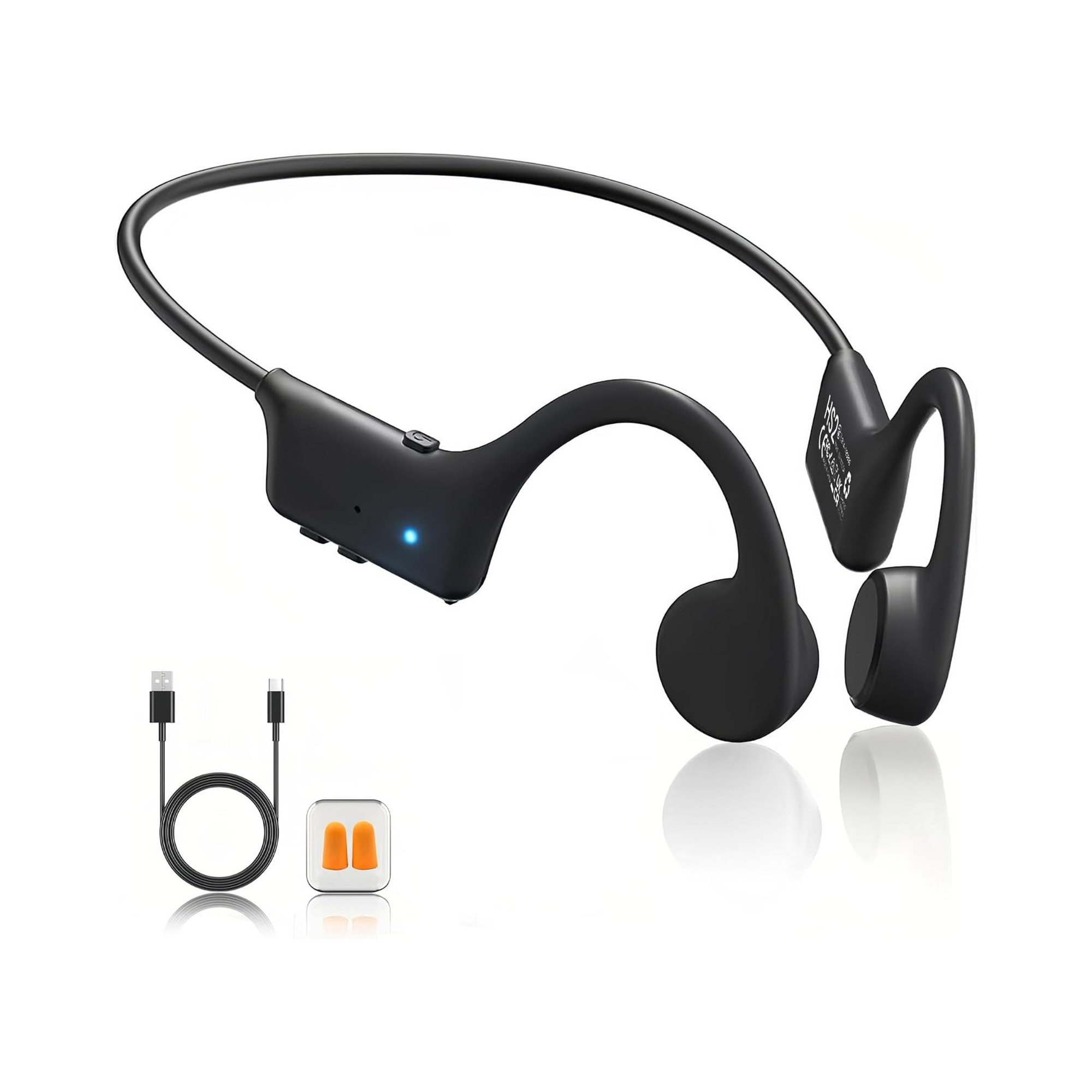
If you do heavy cardio, outdoor running, or cycling—or if you are recovering from outer-ear irritation and want zero ear-cup heat and an explicit IP rating—choose an open-ear sport frame. According to the EARSOLE Bone Conduction Open-Ear Sport Headphones listing, the headphones are designed with IP54 water resistance to withstand sweat, splashes, and light rain, use a lightweight wraparound frame with soft skin-friendly silicone that leaves the ear canal open, and provide up to 12 hours of playtime with USB-C fast charging.
The EARSOLE Bone Conduction Open-Ear Sport Headphones give you verified IP54 protection (dust-protected level 5 + splashing water level 4) and never trap sweat inside your ear canals. For a deeper dive into how IPX4, IP54, and IPX7 compare across workout gear, read our full guide on waterproof and sweat-resistant ratings.
Frequently Asked Questions
Are over-ear ANC headphones or bone conduction headphones better for a loud gym?
If your main goal is drowning out loud overhead gym music, closed-back over-ear ANC headphones (like the EARSOLE Series 127) are much more effective. As commenters in r/BuyItForLife (thread 1vik10n) point out, bone conduction headphones handle sweat well and are great for running or biking outdoors where you want to hear traffic, but they do not block ambient noise in a loud gym.
How do you stop sweat from ruining over-ear headphone pads?
As gym lifters in r/BuyItForLife (thread 1vik10n) recommend, always wipe down your over-ear cushions with a clean towel immediately after every workout so salt and sweat do not sit on the stitching, let the pads air-dry completely before storing them in a pouch, and plan to replace worn ear pads after years of heavy gym use.
What is the difference between IP54 sport headphones and unrated over-ear headphones?
Under the IEC 60529 standard (Wikipedia IP code), an IP54 rating—such as on the EARSOLE Bone Conduction Open-Ear Sport Headphones—certifies level 5 dust protection and level 4 protection against water splashing from any direction. Unrated over-ear headphones have not undergone formal IEC liquid-ingress testing, so they should be kept out of rain and wiped dry after sweaty indoor workouts.
