



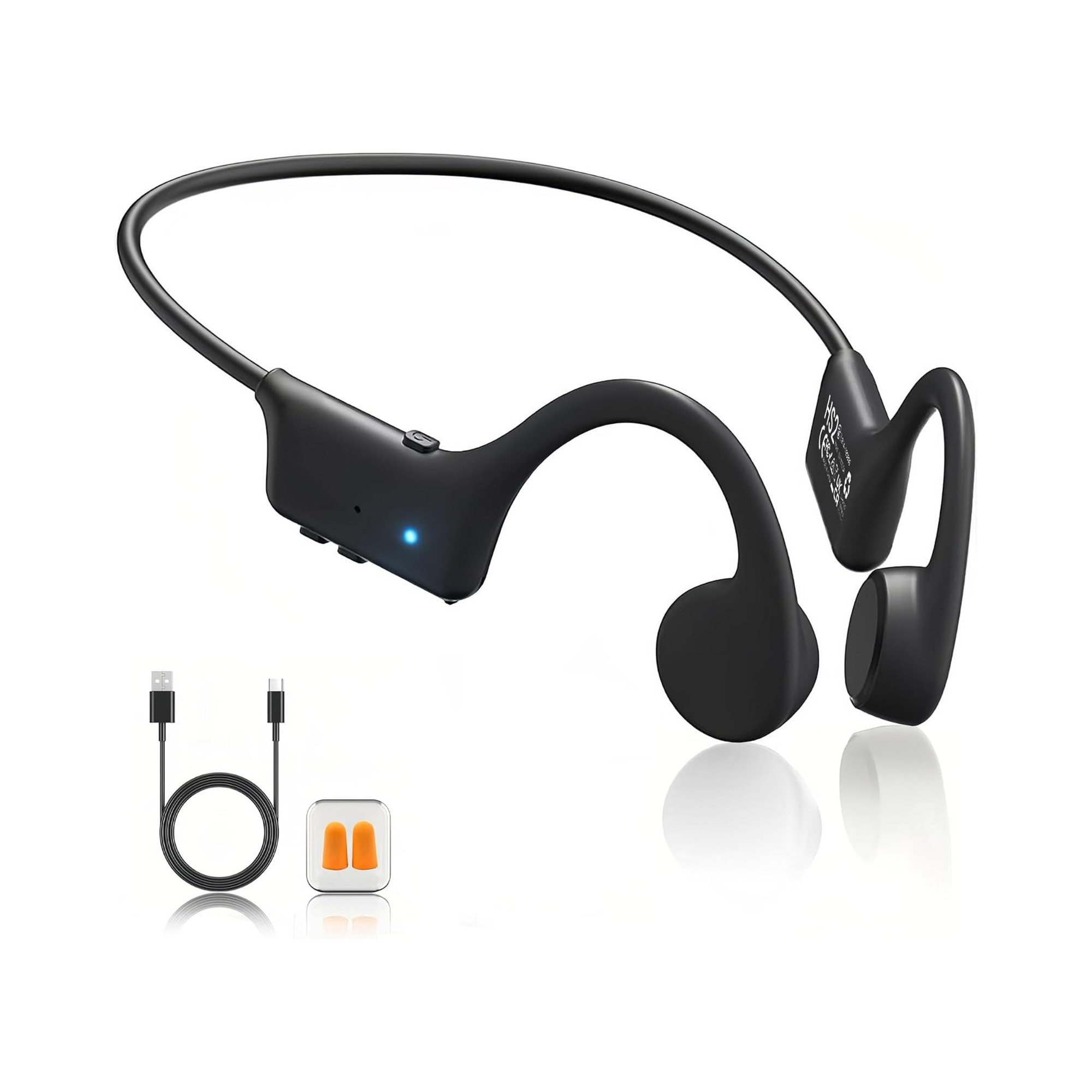
Light sleepers searching for bone conduction headphones for sleep usually want to play bedtime audiobooks or meditation tracks without blocking their ear canals—or they want to wear foam or silicone earplugs underneath a headphone while still hearing audio. If you are asking can i sleep with bone conduction headphones, the answer depends heavily on whether you sleep on your back or your side, and whether your headset uses pure bone conduction or a hybrid bone-and-air speaker.
Below, we compare what Wildhorn Outfitters’ sleep guide and sleepers in r/sleepheadphones report about wraparound frames, temple pressure on a pillow, and pairing bone conduction with earplugs. We also compare two models from the EARSOLE catalog—a wraparound sport bone conduction headphone and a stemless full-silicone sleeping earbud—alongside our earbuds for sleeping guide and our wearing bone conduction headphones for sport guide.
Why People Try Bone Conduction Headphones for Sleep (Open Ears or Pairing With Earplugs)
In r/sleepheadphones (1svcv7q), a light sleeper explains that they are still awakened by environmental sound even with sleep earbuds and asks whether a combination of earplugs and bone conducting headphones might work so they can get the sound blocking of earplugs while listening to sleep meditation or music during the night.
A commenter in r/sleepheadphones (1svcv7q) responds that Shokz is a premier manufacturer in the bone conduction space and reports using the combination of earplugs and bone conduction for years, while noting that you will not get audiophile-grade sound. That same r/sleepheadphones commenter (1svcv7q) adds that if standard sleep buds do not work for you, a pillow with built-in earholes cut out can let you use any earbuds to sleep in.
Where Bone Conduction Runs Into Trouble in Bed: Pillow Pressure and Hybrid Muffling
While leaving the ear canal open sounds convenient on paper, both Wildhorn Outfitters’ guide and r/sleepheadphones users highlight three bedtime obstacles:
| Bedtime Factor | What Sources Report | Who Feels It Most |
|---|---|---|
| Wraparound band & temple pressure | Most bone conduction headphones are designed for active use, so their snug fit and rear band can create uncomfortable pressure points on a pillow (Wildhorn Outfitters) and temple pressure on the downside of the face (r/sleepheadphones) | Side sleepers and restless sleepers |
| Hybrid bone-and-air muffling with earplugs | Models like the Shokz OpenRun Pro 2 use both bone and air conduction (a rear-firing speaker towards the ear), which makes audio sound muffled when wearing Loop earplugs (r/sleepheadphones) | Sleepers pairing hybrid bone/air headphones with earplugs |
| Charging & overnight wear hazards | Never sleep with headphones that are plugged in to charge due to fire and entanglement hazards; sweat, skin oils, and constant pillow pressure also accelerate wear and tear (Wildhorn Outfitters) | Overnight daily sleepers |
Wildhorn Outfitters states that most bone conduction headphones are designed for active use, and explains that their snugness can create uncomfortable pressure points when your head is stationary on a pillow for hours, while the band going around the back of your head can also be disruptive. Wildhorn Outfitters also warns never to sleep with headphones that are plugged in to charge because of a significant fire and entanglement hazard, and notes that sweat, skin oils, and constant pressure from your head on a pillow will accelerate wear and tear on the device.
In r/sleepheadphones (1svcv7q), the commenter who used earplugs with bone conduction for years warns that you may notice temple pressure from the buds on the downside of your face. Another r/sleepheadphones commenter (1svcv7q) reports occasionally using the Shokz OpenRun Pro 2 all night with an audiobook playing, but explains that the Pro 2 uses both bone and air conduction (a rear-firing speaker towards the ear) to improve sound quality, which means that having Loop earplugs in makes it sound rather muffled.
Wraparound Sport Bone Conduction vs Stemless Side-Sleeper Earbuds in the EARSOLE Lineup
Because a behind-the-head band and cheekbone pads behave very differently against a pillow than a flush in-ear shell, it helps to compare how EARSOLE’s bone conduction sport model and dedicated side-sleeper earbuds are built:
1. EARSOLE Bone Conduction Open-Ear Sport Headphones (Built for Active Use, Not Pillows)
The EARSOLE Bone Conduction Open-Ear Sport Headphones product description states that these bone conduction open ear sport headphones transmit sound without inserting earbuds into the ear canal and use a lightweight wraparound frame with soft skin-friendly silicone. For workouts and outdoor sessions, the EARSOLE Bone Conduction Open-Ear Sport Headphones listing specifies IP54 water resistance and up to 12 hours of playtime on a single charge.
- Listing verification note: The EARSOLE Bone Conduction Open-Ear Sport Headphones listing is designed for sport and outdoor movement and does not market the wraparound frame for sleeping on a pillow.
2. EARSOLE Q26 Bluetooth 5.3 Sleeping Earbuds for Side Sleepers
For sleepers who want sleeping earbuds for side sleepers that do not wrap behind the head, the EARSOLE Q26 Bluetooth 5.3 Sleeping Earbuds for Side Sleepers product description states that the soft full-silicone in-ear design creates a light, secure fit without a protruding stem. On noise blocking and battery life, the EARSOLE Q26 listing explains that the Q26 uses passive sound isolation—meaning the in-ear seal itself blocks a portion of outside sound with no electronic ANC circuitry inside—and extends total listening time to up to 20 hours in five colors (Purple, White, Black, Beige, and Green).
- Listing verification note: While the Q26 uses passive sound isolation from its in-ear silicone seal, the listing does not publish a decibel attenuation rating and has no electronic ANC circuitry.
Summary: Should You Sleep With Bone Conduction Headphones?
- For back sleepers who want open ear canals or earplug pairing: Pure bone conduction headphones keep the ear canal open, though hybrid bone-and-air models can sound muffled when earplugs block their air-conduction speaker.
- For side sleepers pressing an ear into a pillow: Wraparound active-fit bands and cheekbone pads can create temple pressure on the downside of your face unless you use a pillow with an ear cutout.
- For side sleepers who want passive noise blocking without a rear band: A stemless full-silicone in-ear sleep earbud avoids behind-the-head band pressure while providing passive isolation from its in-ear seal.
Can you sleep on your side with bone conduction headphones?
Wildhorn Outfitters notes that most bone conduction headphones are designed for active use, so their snug fit and the band going around the back of your head can create uncomfortable pressure points when your head rests on a pillow for hours. In r/sleepheadphones (1svcv7q), a commenter similarly notes that side sleepers may notice temple pressure from the transducers on the downside of the face unless they use a pillow with built-in earholes cut out.
Can you wear earplugs with bone conduction headphones while sleeping?
In r/sleepheadphones (1svcv7q), one commenter reports using earplugs and bone conduction headphones together for years, while another commenter warns that hybrid models like the Shokz OpenRun Pro 2 use both bone and air conduction (a rear-firing speaker towards the ear), which makes audio sound rather muffled when wearing earplugs.
What should side sleepers look for instead of a wraparound bone conduction band?
Instead of a behind-the-head sport frame like the EARSOLE Bone Conduction Open-Ear Sport Headphones, side sleepers can look for a stemless in-ear housing such as the EARSOLE Q26 Bluetooth 5.3 Sleeping Earbuds, whose listing describes a soft full-silicone in-ear design without a protruding stem and passive sound isolation from the in-ear seal.
