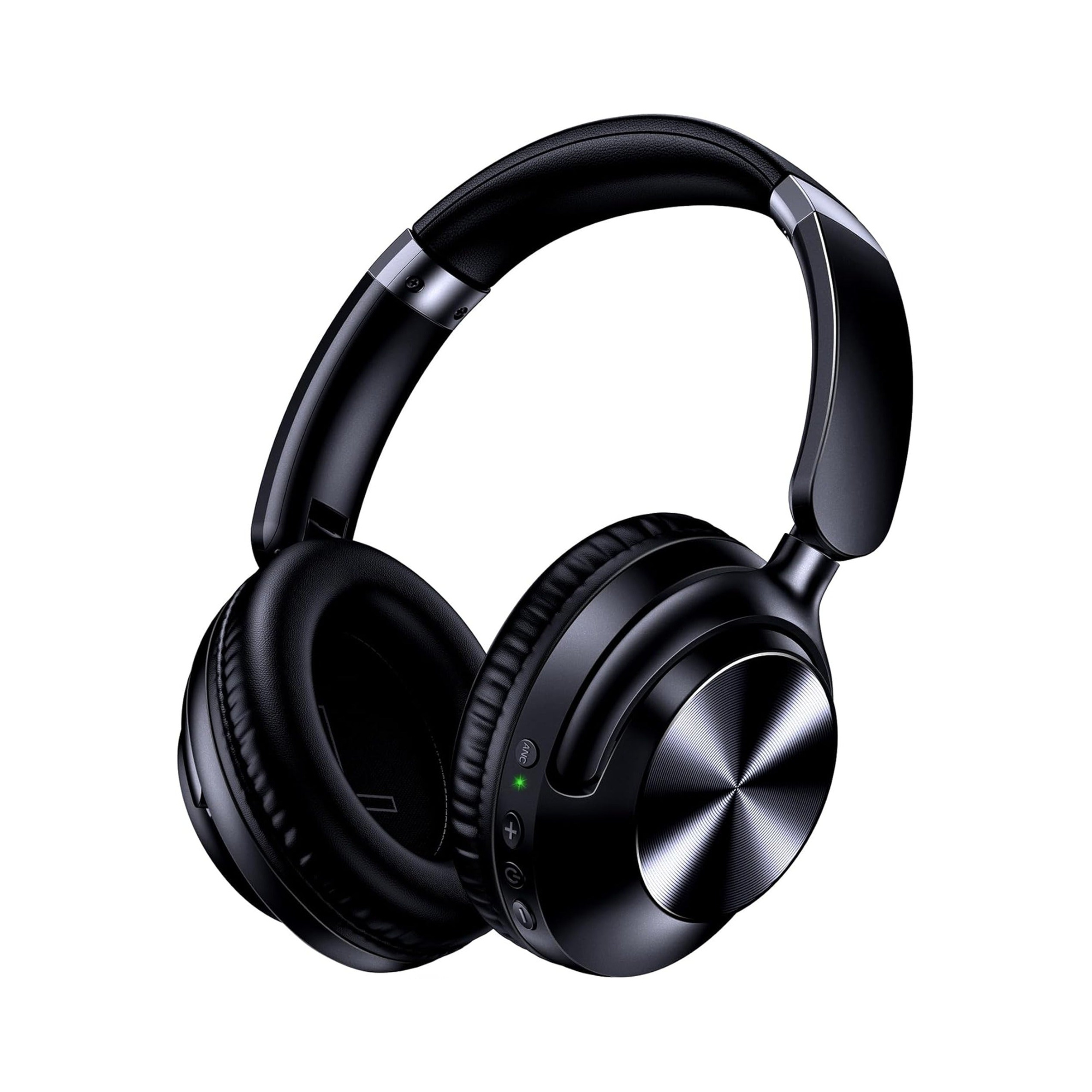
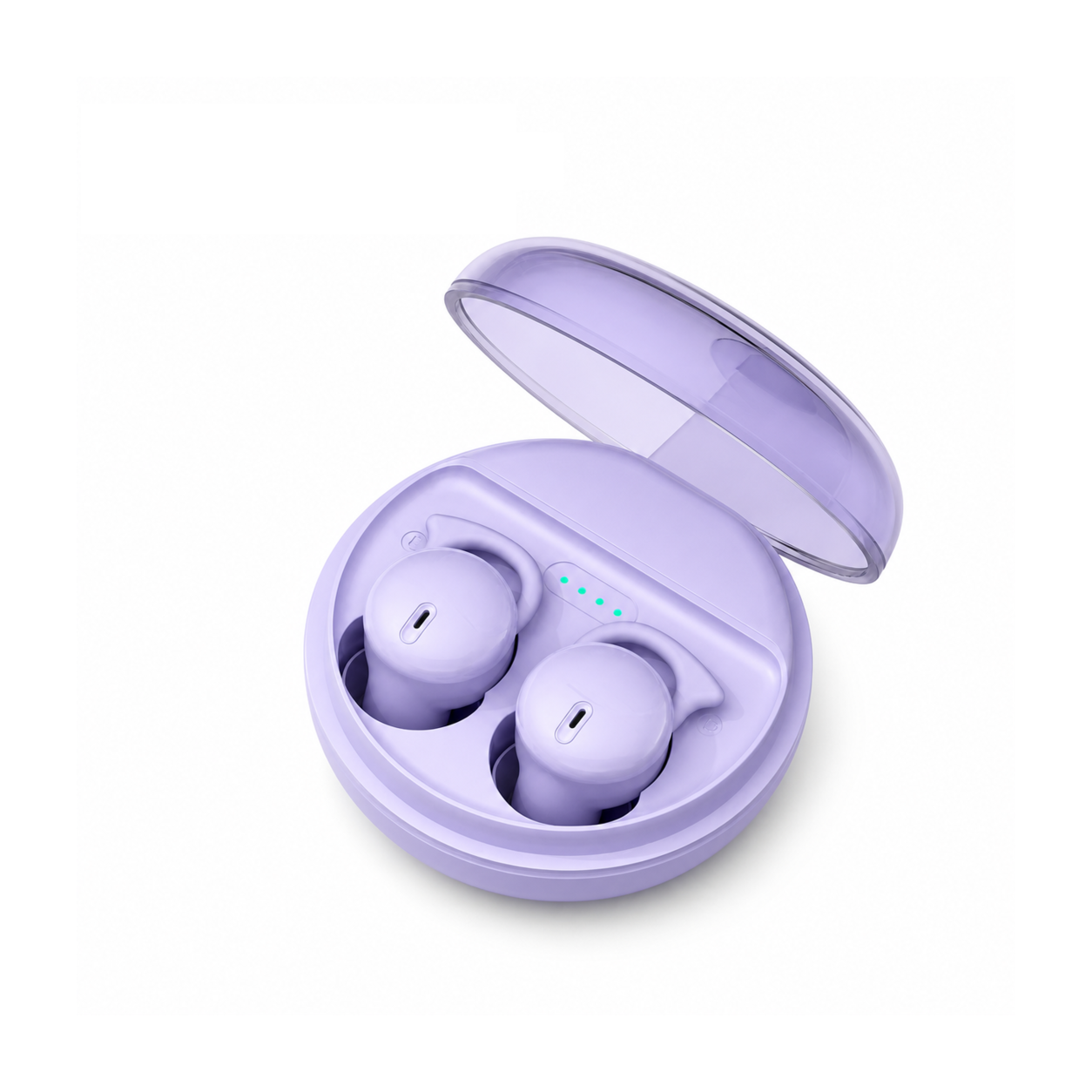
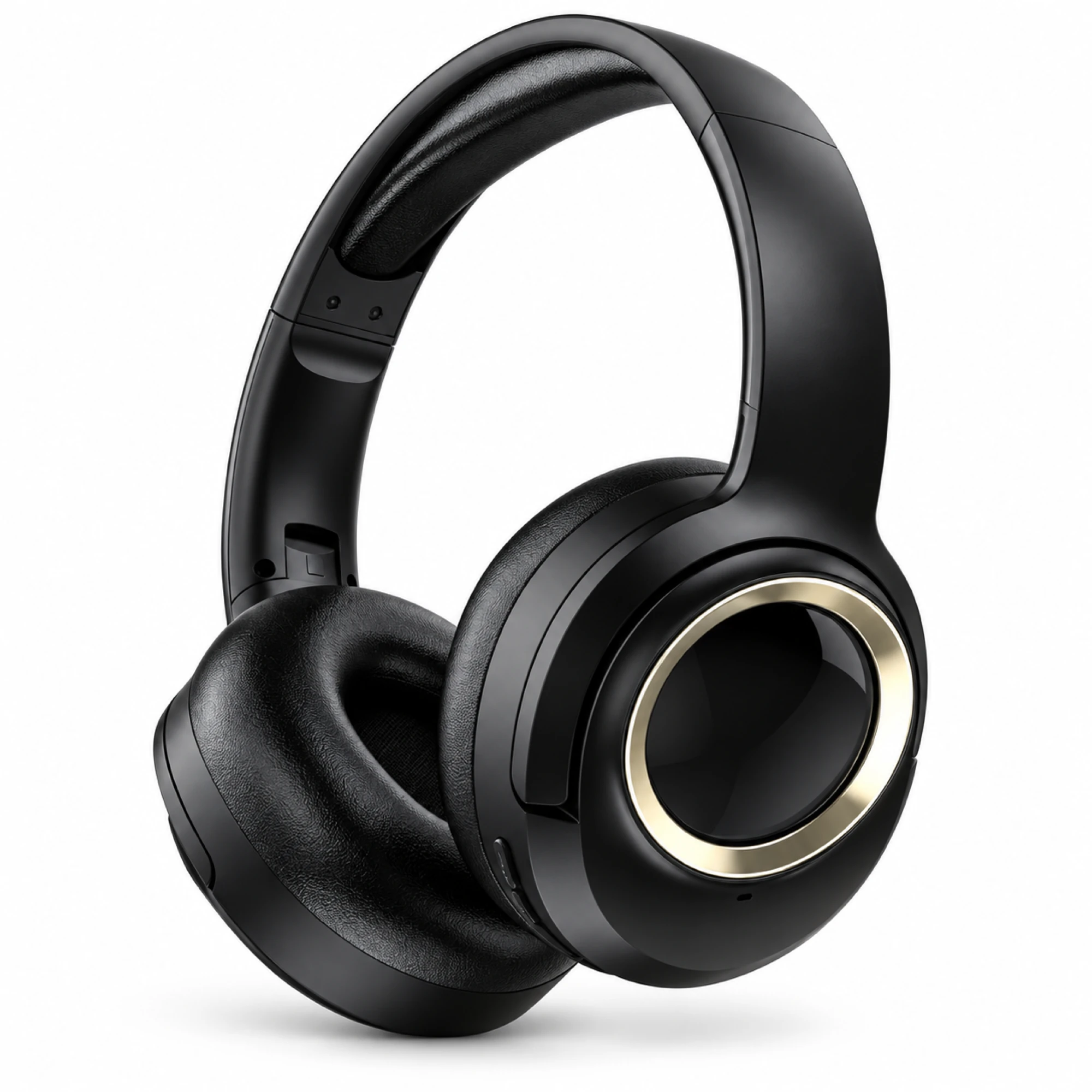
 MX-21 Black and Gold Wireless Headphones
 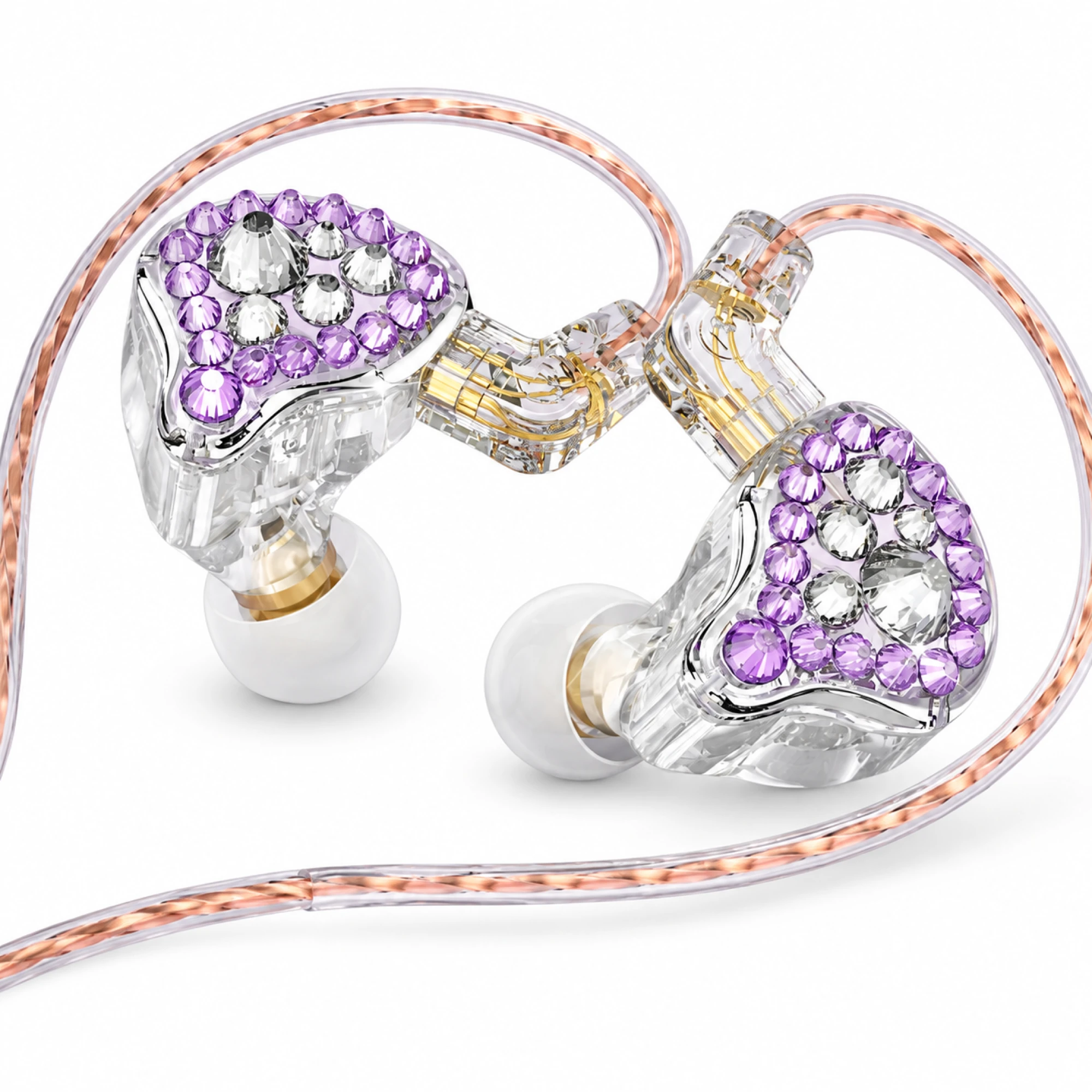 Q2 Pro Purple Crystal In-Ear Monitors
 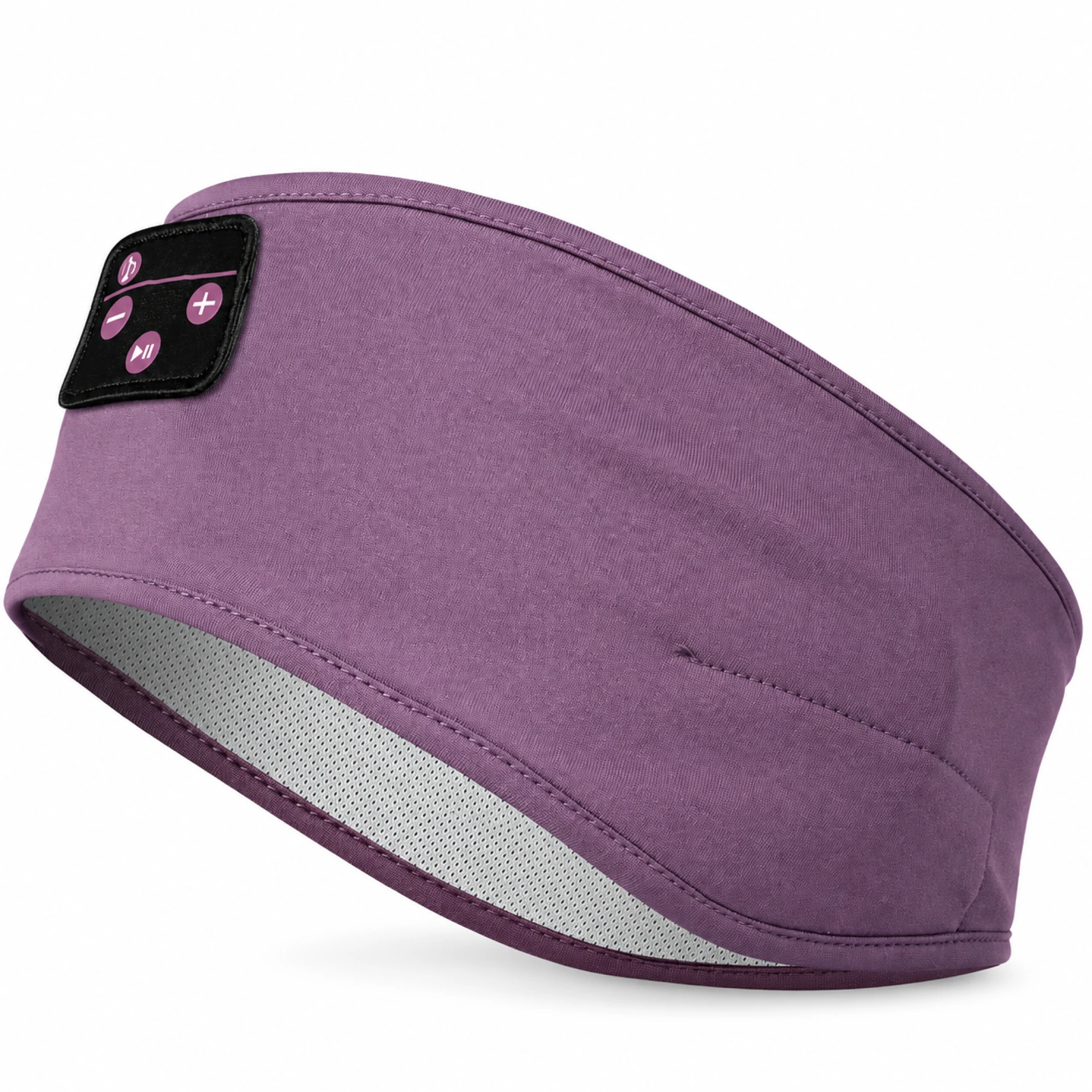 Purple Sleep Headband Headphones with Triangle Controls
 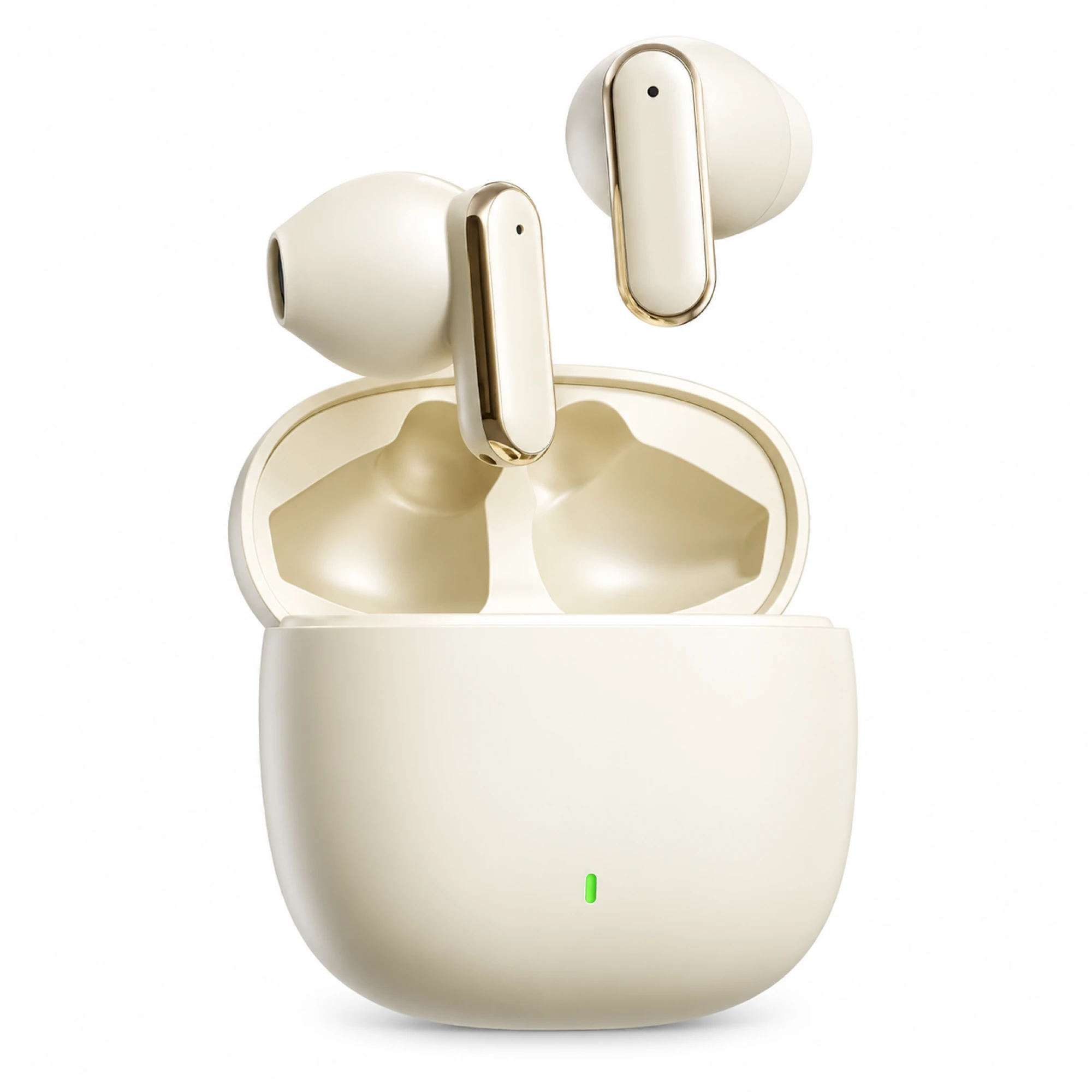 Cream Reflective-Stem Wireless Earbuds
 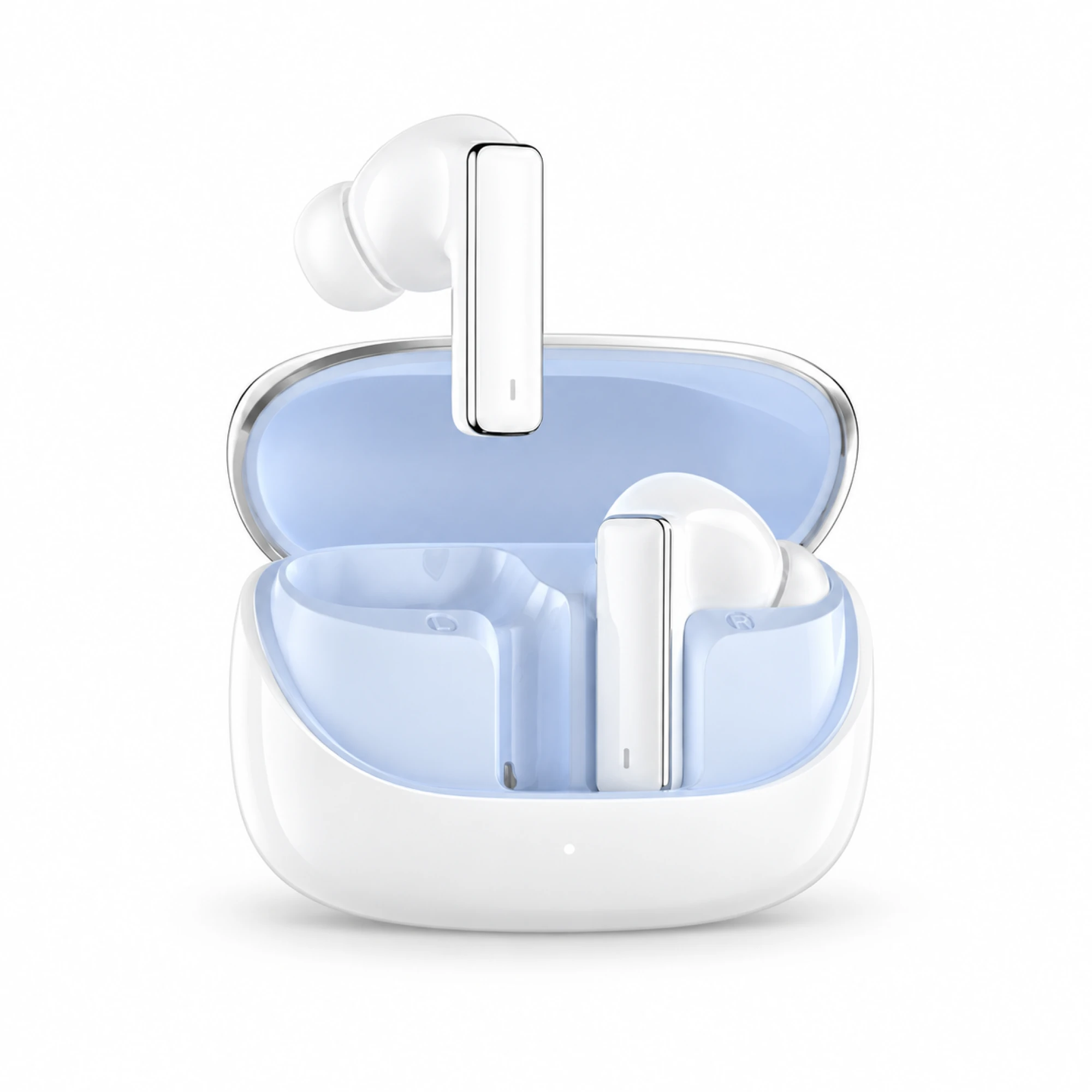 IN-01 White ANC Earbuds with Pale Blue Case Interior
 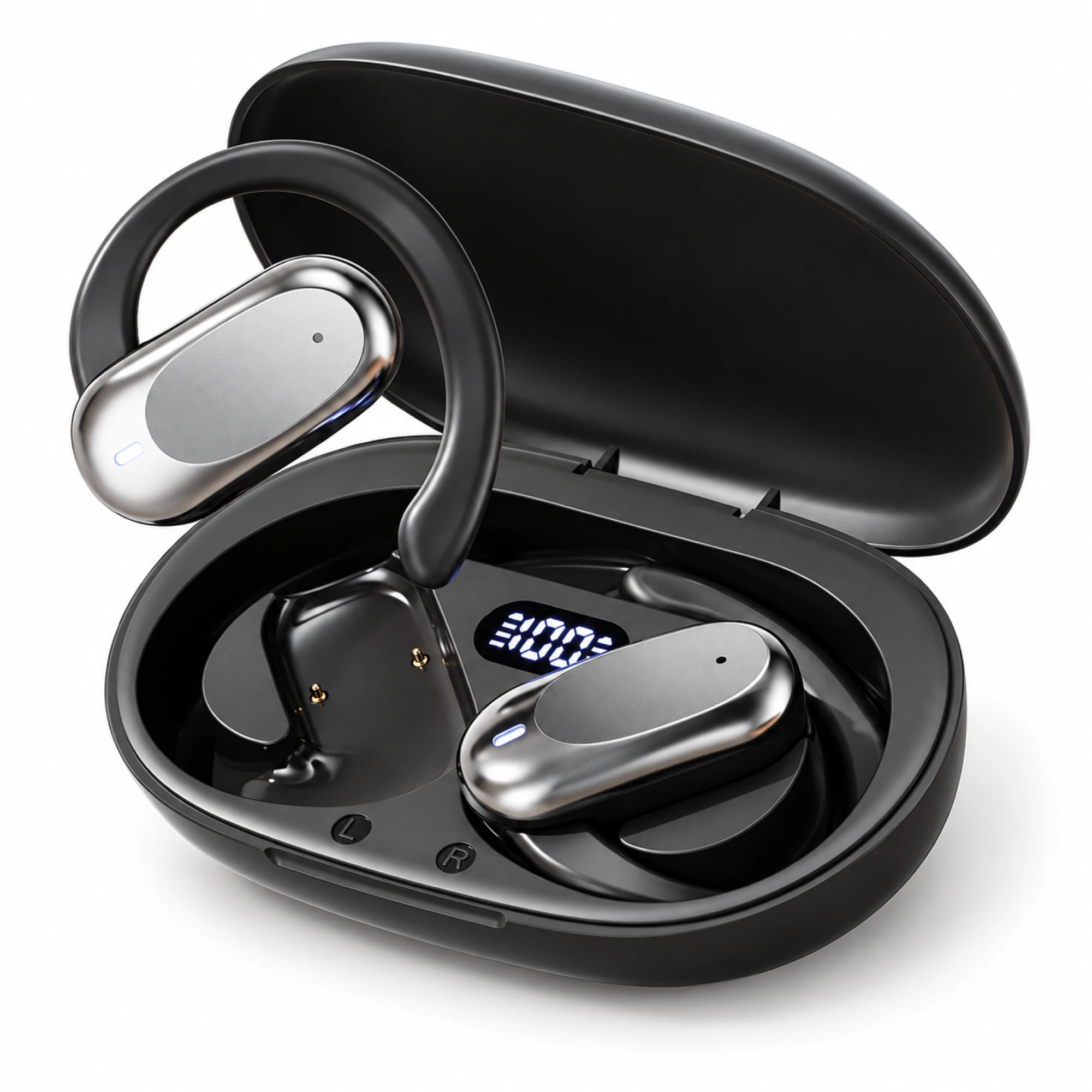 Silver Capsule Open-Ear Earbuds
 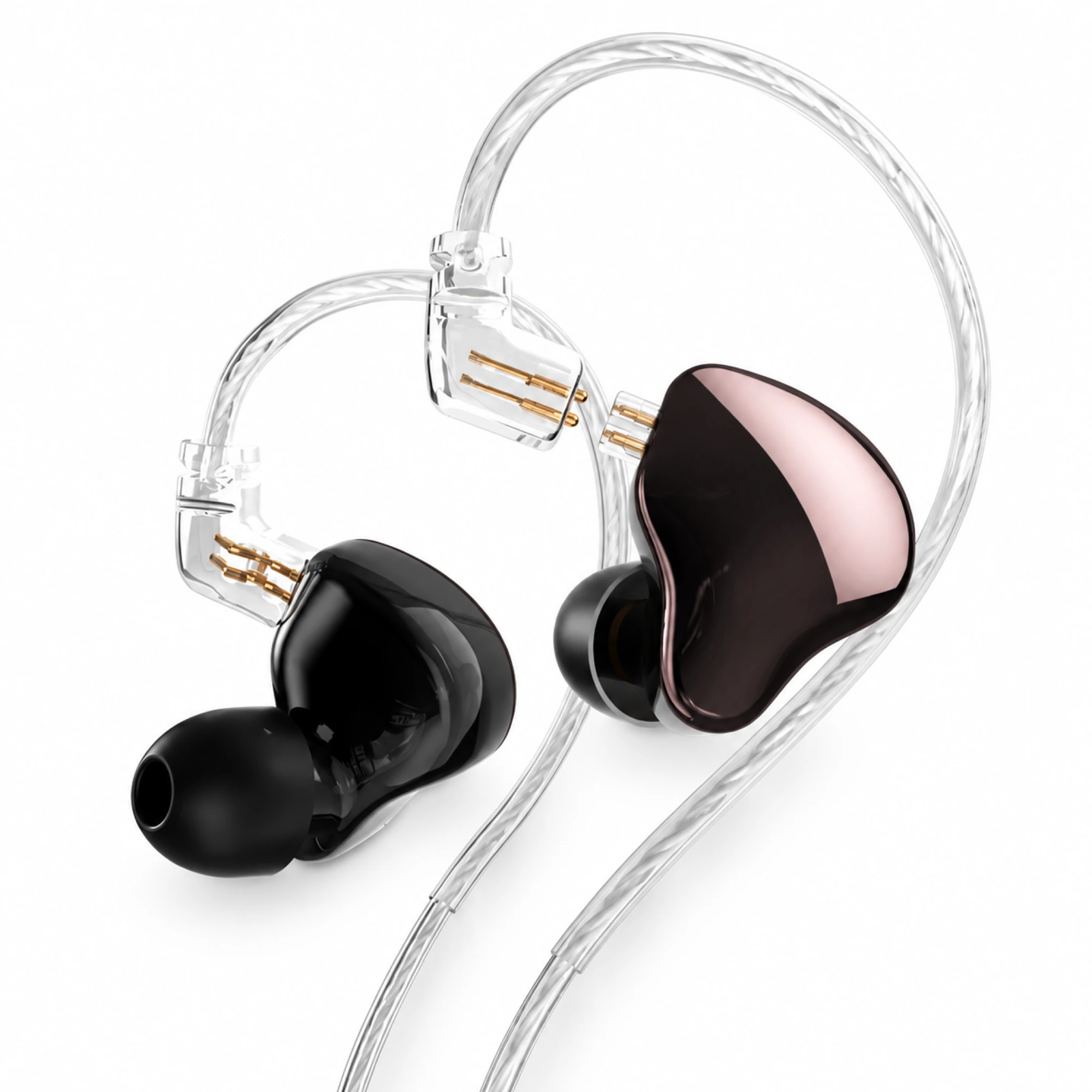 MN Rose-Metallic Detachable In-Ear Monitors
 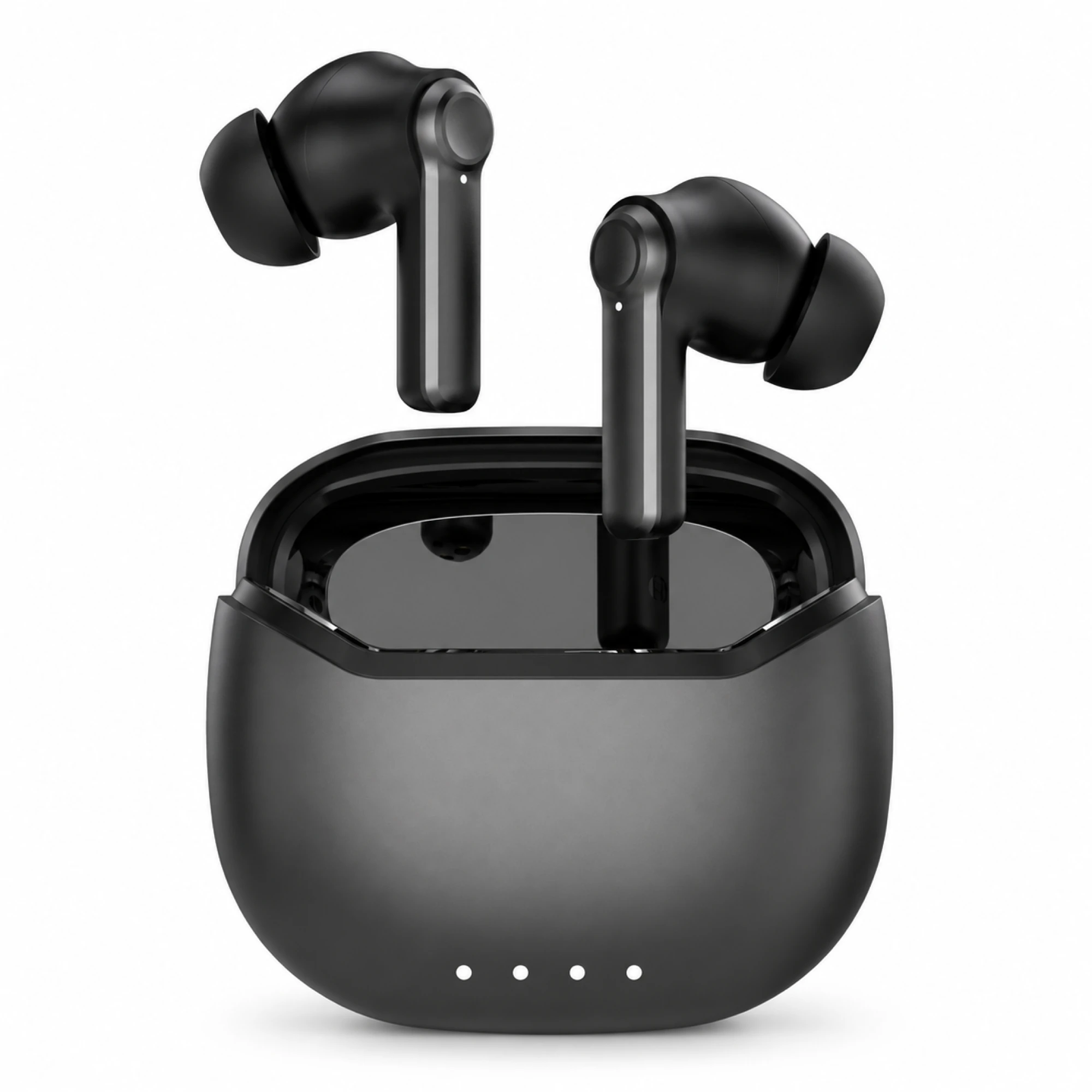 Black ANC Earbuds with Four-Indicator Case
Gaming headphones over ear win on three mechanical grounds: a headband spreads weight across the skull instead of loading the ear canal, a cup gives a boom microphone somewhere rigid to mount, and a sealed pad lifts quiet in-game cues above room noise. They lose on heat and clamp pressure, and both arrive around hour two, long after a twenty-minute audition has ended.
Why the cup shape dominates gaming
Comfort across four continuous hours is slow and personal to test, which is why the phrase "comfortable for long sessions" does so much work on packaging and so little for the buyer. The uniformity of the category is partly commercial: a cup is a large flat surface that carries branding and reads as equipment at a glance in a photograph. Two reasons underneath are mechanical. A pad sealing against the side of the head blocks a useful amount of mid and high-frequency room noise, such as keyboards, fans and a television next door, with nothing inserted into your ear, which earbuds match only by wedging a tip into the canal. And the cup is a mounting point.
The cup is a mounting platform for the microphone
A boom parks the mic capsule a few centimetres from the corner of your mouth and holds it there. Distance is the whole trick: move a mic closer to a voice and the voice rises against the room, while room noise stays put. A boom also keeps that distance constant as you turn your head, so your level in voice chat does not swing.
An earbud has nowhere to anchor an arm. Its mic sits in the housing beside your ear, or on an in-line remote on a cable, roughly 15 to 25 cm from your mouth and moving every time you shift. Earbuds compensate with beamforming and noise suppression, and modern ones are decent, but they solve in software what a boom solves with a stick.
Worth saying: not every over-ear headset has a boom. Many, including the ones we list, use a small mic built into the cup instead. Confirm the boom exists before assuming the shape implies it; what a gaming mic spec tells you covers how to read the listing.
What changes between minute ten and hour four
Clamp force is a slow variable
Clamp is the inward spring pressure of the headband. At minute ten it reads as "secure". By hour two or three the same pressure reads as a dull ache, usually over the temporal bone above and behind the ear, because the load has been constant. You cannot judge it in a shop, and rarely from a spec sheet, because almost nobody publishes a clamp figure. Too tight can sometimes be eased by stretching the headband over a stack of books; too loose cannot be fixed at all. Depth matters for the same reason: if your pinna touches the driver grille, that contact point becomes a hotspot.
Heat is a different problem from workout sweat
A sealed cup is an insulated pocket around a body part that produces heat. During exercise the failure is obvious and wet. During a four-hour desk session it is quiet and dry: skin temperature under the pad climbs slowly, moisture has nowhere to go, and the first symptom is usually an itch before any sense of sweating. Two mitigations work. Take the headset off for five minutes every hour, which map loads and queue times accommodate, and prefer replaceable pads, since a fresh pad runs cooler than a compressed one.
Glasses under a gaming cup
Clamp plus a spectacle temple arm equals a narrow line of concentrated pressure against the side of your head. Over twenty minutes it is nothing. Over four hours it is the most common reason glasses wearers give up on over the ear gaming headphones. What helps, roughly in order of effect: thinner, flatter temple arms instead of thick acetate; a softer pad that deforms around the arm instead of pressing over it; the widest stable headband setting; and accepting a small seal leak as the price. That leak costs some bass, which matters far less for gaming than for noise cancelling on a plane. If none of it works, our guide to earbuds for glasses wearers covers the alternative.
| Property | What it gives | What it costs | When it shows up |
|---|---|---|---|
| Sealed pad | Isolation; quiet cues audible | Trapped heat and humidity | Hour 1 to 2 |
| Headband clamp | Stability, no canal insertion | Pressure on temporal bone and glasses arms | Hour 2 to 3 |
| Rigid cup and band | A mount for a boom mic | Neck weight, desk bulk | Hour 3 onward |
| Large closed-cup drivers | Easy low-frequency output | No positional edge over a good earbud | Immediately |
If a product causes pain, irritation, ringing or a noticeable hearing change, stop using it and seek qualified care.
Positional audio without the marketing
Gaming marketing often implies a bigger cup or a "7.1" badge produces better directional hearing. A stereo headset has one driver per ear; surround labels on it describe virtual processing, not seven speakers per side. Microsoft documents Spatial Sound as a platform-level service and states that it "can also be used with any pair of headphones the consumer may own", rendered through Windows Sonic for Headphones, Dolby Atmos for Headphones or DTS Headphone:X. That layer is available to nearly any stereo headphone you own, earbuds included; the cups do not supply it.
What affects how well you place a sound:
- Isolation. A footstep well below the level of the mix is easy to locate in a quiet ear and impossible to hear over a fan. This is the real positional benefit of the shape, and it is indirect.
- A consistent seal on both sides, plus correct left/right orientation. Asymmetric leak means asymmetric bass, which biases your sense of direction; glasses on one side only can do this.
- The game's own mix. If a title outputs plain stereo, no headset recovers what the mix never contained.
- Your own head shape. Spatialisation profiles approximate very individual anatomy, so some people localise well with one and some do not. Try the free system option before paying for a headset feature.
Our piece on how spatial audio is produced covers the rendering side, and latency is a separate question from placement.
What the Series 186 to 191 copy states and leaves out
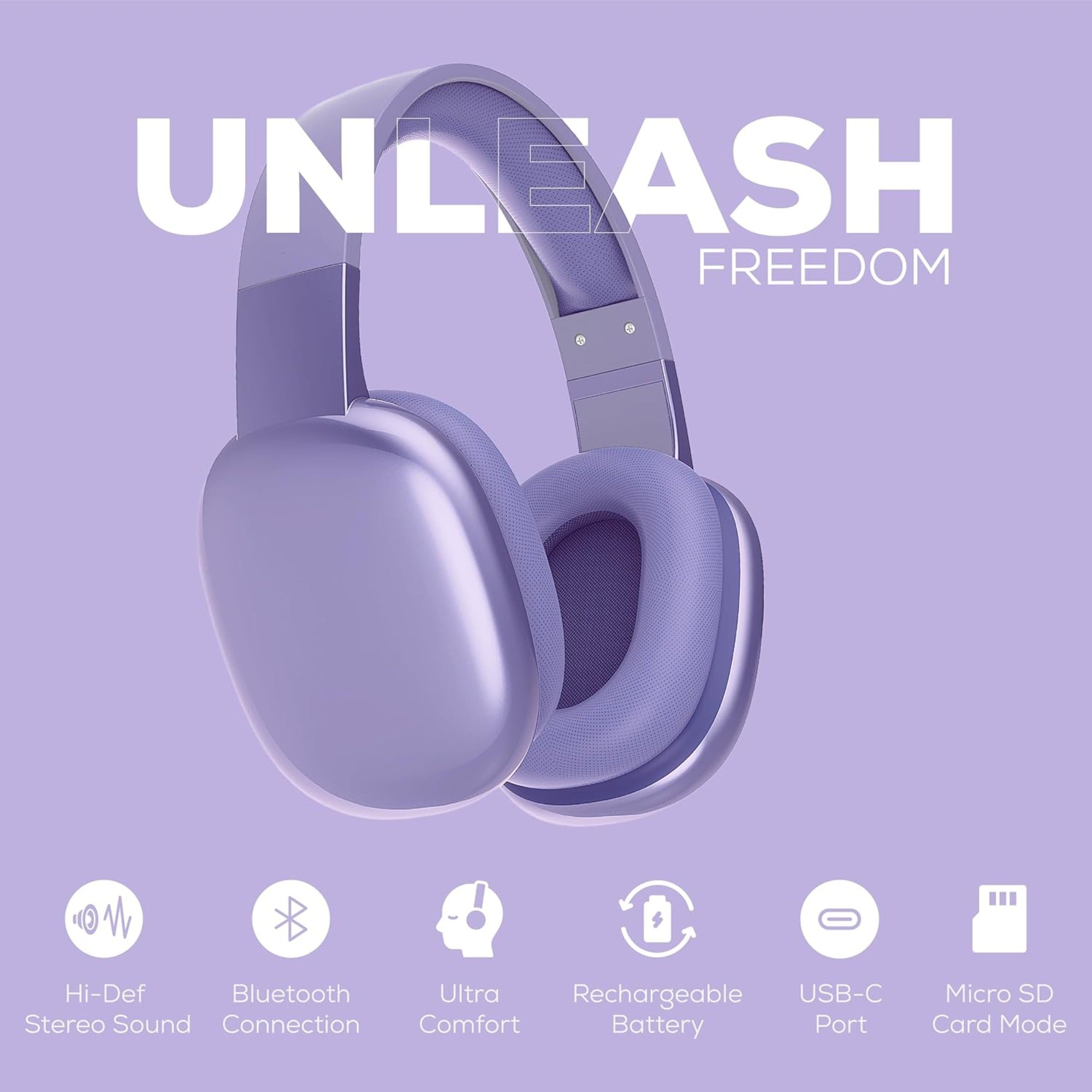
Our over-ear gaming listings, Series 186 through 191, all sit at $33.34 at the time of writing in the gaming collection. Their published copy is identical across the range: 40 mm drivers, Bluetooth or a 3.5 mm cable, cushioned artificial-leather ear muffs, a foldable frame, a built-in microphone, plus microSD playback and volume and pause controls.
Now the part the copy leaves out. Those listings do not state a Bluetooth version. They do not state an IP rating. They do not state a playtime in hours. We will not fill those gaps with numbers we cannot support, so treat them as unknown: assume nothing about codec or latency until you test it, do not treat them as sweat-rated, and plan on the cable as the fallback for any session that might outlast a battery nobody has quantified.
The contrast inside our range is instructive. The Over-Ear Wireless Headphones Series 127 at $44.75 at the time of writing are not marketed for gaming, yet the listing does state active noise cancellation, up to 100 hours of playtime, protein-leather cups, a 3.5 mm wired option, ear cups that rotate up to 105 degrees, and a weight of 0.54 lb, about 245 g. Same shape, more disclosed. And since the gaming listings carry one specification, nothing in the copy separates Series 188 from Series 191. Choose on colour and photographs; picking one of the identical spec sheets as the best of the group would be guessing. Whether earbuds suit you better is the subject of gaming earbuds versus headsets.
The hour-three test to run inside the return window
- Play one uninterrupted session of at least three hours, wearing whatever you normally wear, glasses included.
- Note where it hurts first: top of the head means weight distribution, above the ear means clamp, inside the ear means a shallow cup.
- Check for heat and itch under the pad before sweat; itch is the earlier signal.
- Record 30 seconds of your voice in the actual chat application, not a browser test page, and listen for level swings as you turn your head.
- Confirm you can still hear a doorbell or a person in the room. Isolation you cannot switch off is a cost as well as a feature.
Questions we get about over-ear headsets for long sessions
Are over-ear headphones good for gaming?
Generally yes, for two mechanical reasons: isolation without inserting anything into the ear canal, and a rigid structure that can carry a boom mic. The trade is heat and clamp pressure. Under an hour that barely registers; over four hours it often decides the purchase, which is why the return-window test above runs for three.
Do glasses rule out an over-ear gaming headset?
No, but they change what to look for. The temple arm turns broad pad contact into a narrow line, so a softer pad, thinner arms and the widest stable headband setting matter more than any driver spec. Accept a small seal leak at the arm; it costs a little bass and nothing that matters in a game.
Where that leaves you
The over-ear shape earns its place in gaming through isolation and through being something a boom mic can bolt onto, and neither soundstage nor a surround badge is the reason. Its costs are heat and clamp, both functions of time, which is why a twenty-minute audition never finds them. Wireless adds battery and latency questions on top. Our Series 186 to 191 headsets at $33.34 state 40 mm drivers, Bluetooth or 3.5 mm, a foldable frame and a built-in mic, and no Bluetooth version, IP rating or playtime. Buy for fit and verify at hour three.
- Microsoft Learn, Spatial Sound for app developers.