 MX-21 Black and Gold Wireless Headphones
 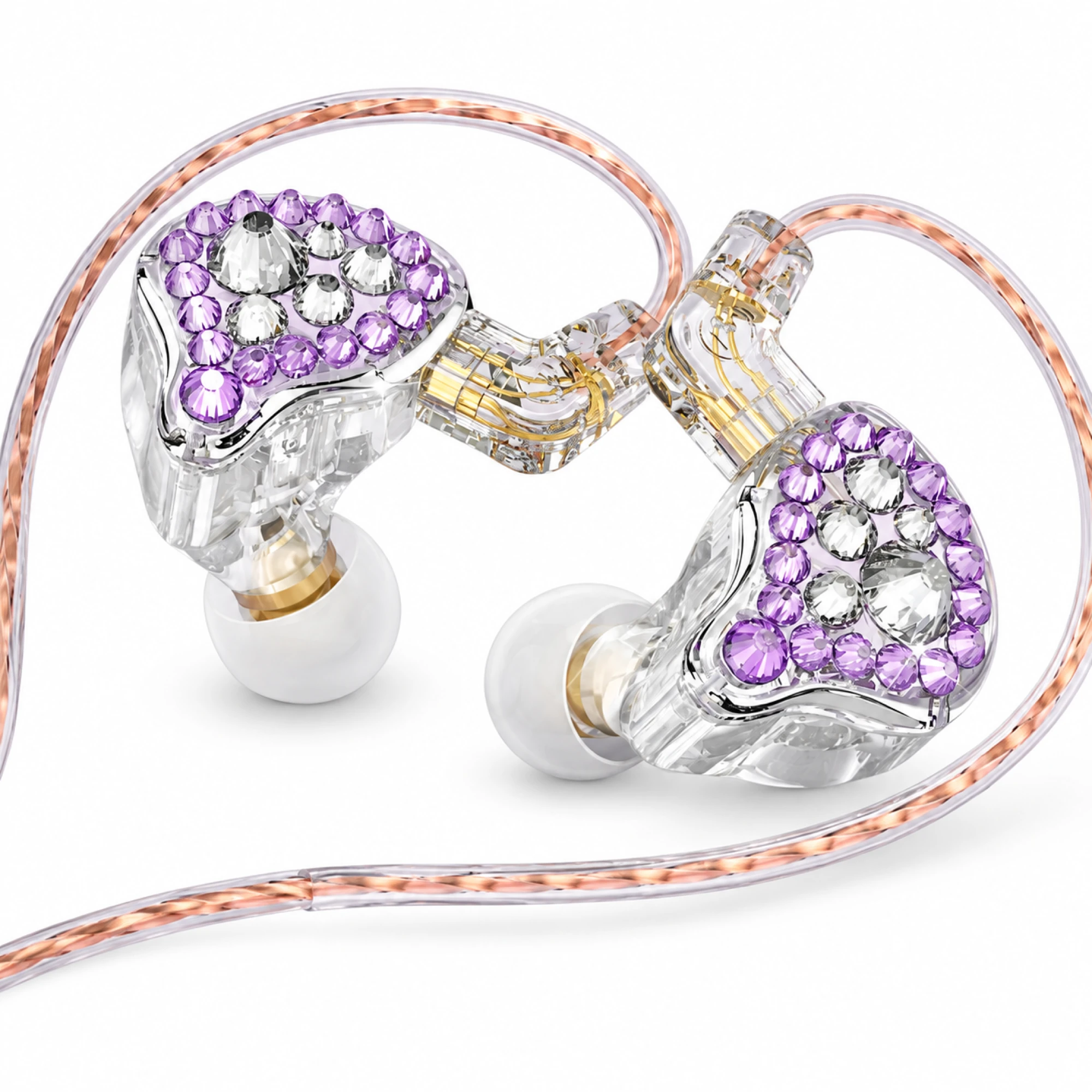 Q2 Pro Purple Crystal In-Ear Monitors
 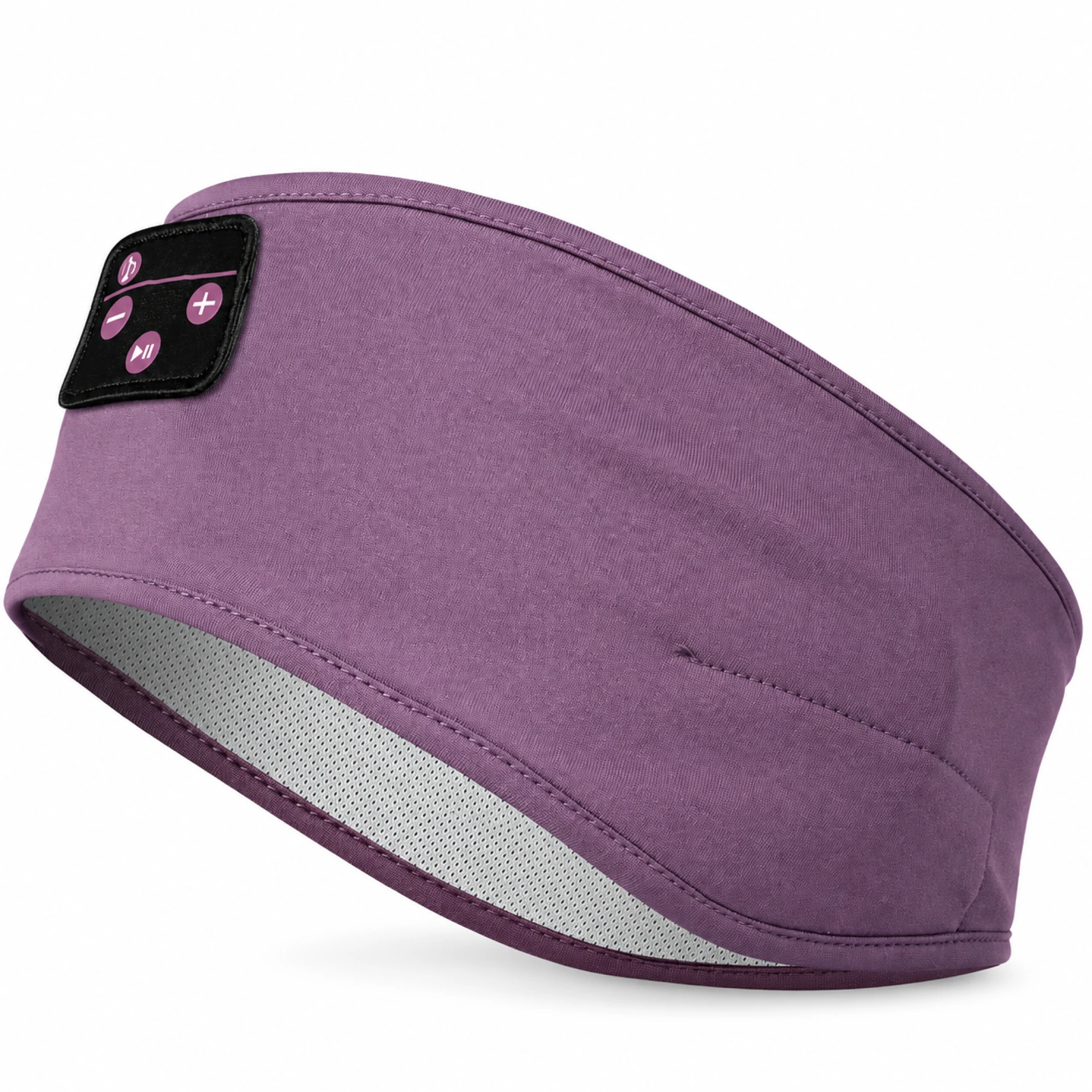 Purple Sleep Headband Headphones with Triangle Controls
 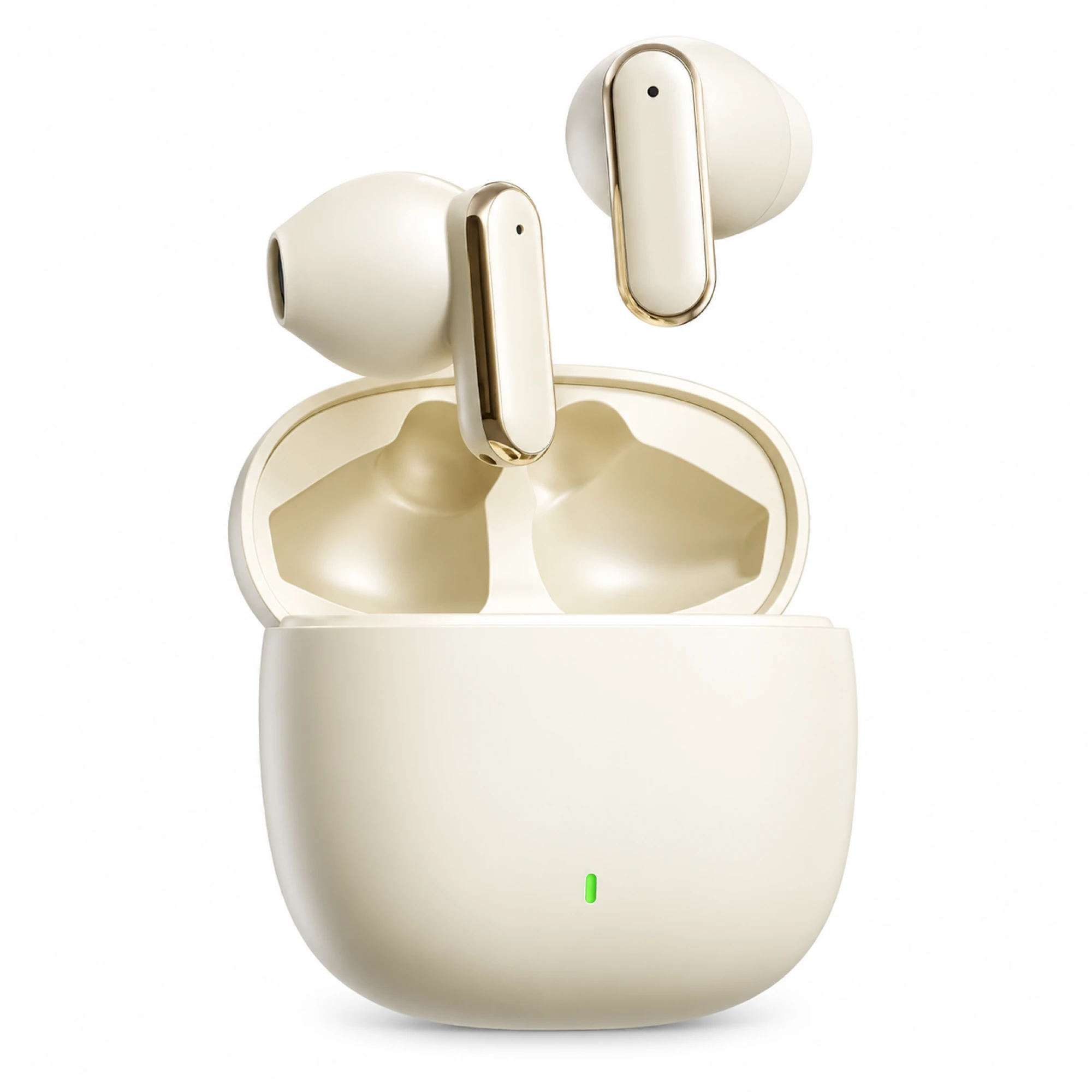 Cream Reflective-Stem Wireless Earbuds
 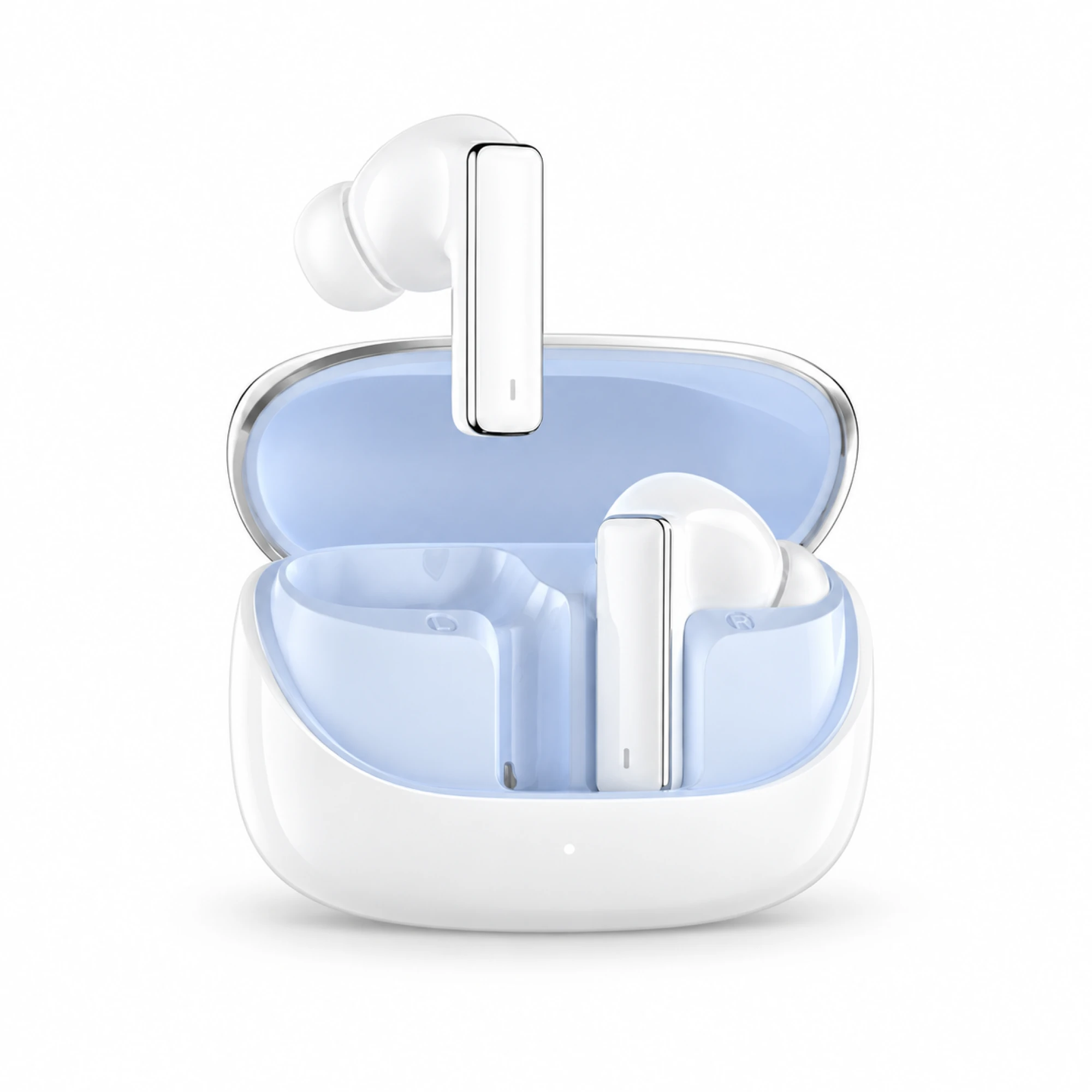 IN-01 White ANC Earbuds with Pale Blue Case Interior
 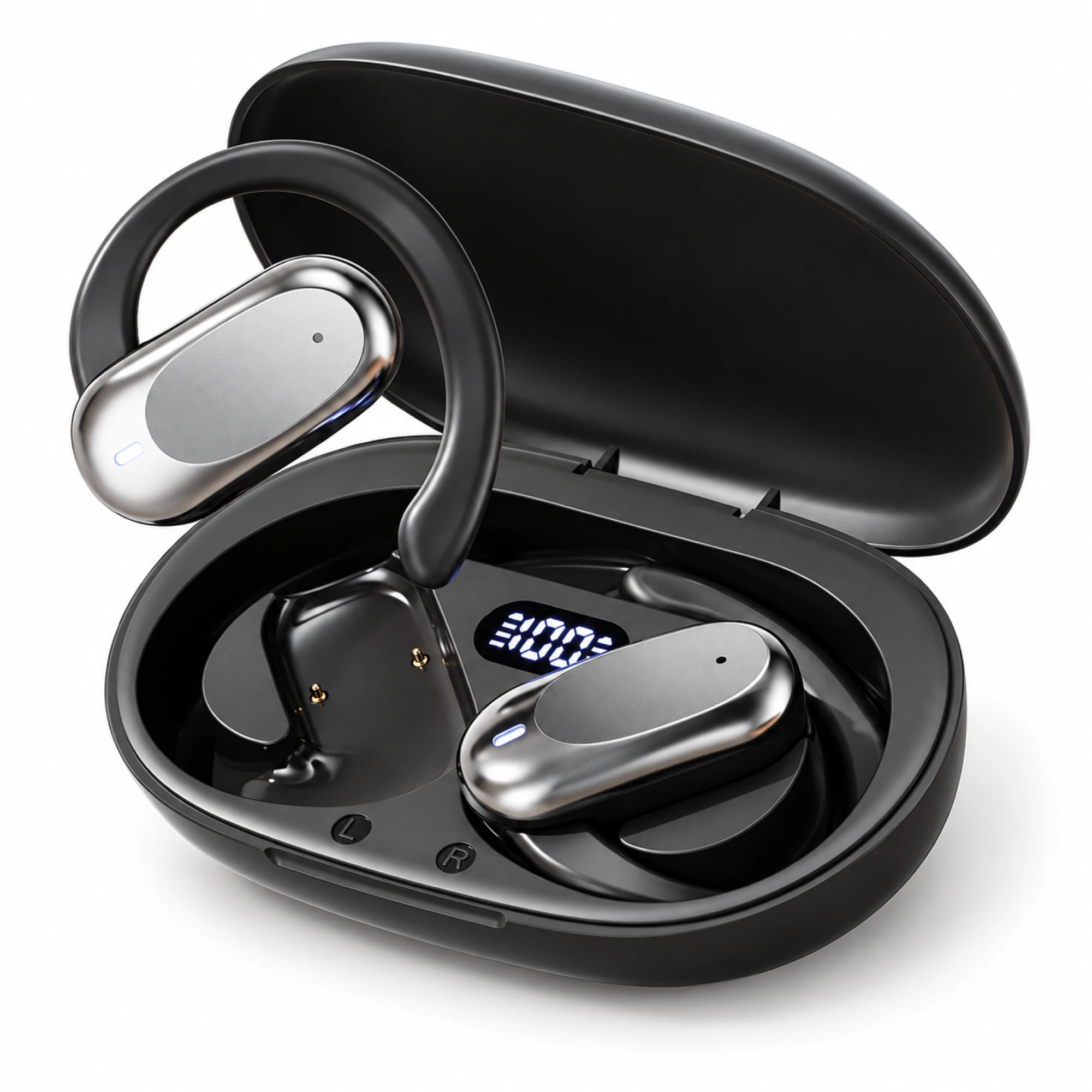 Silver Capsule Open-Ear Earbuds
 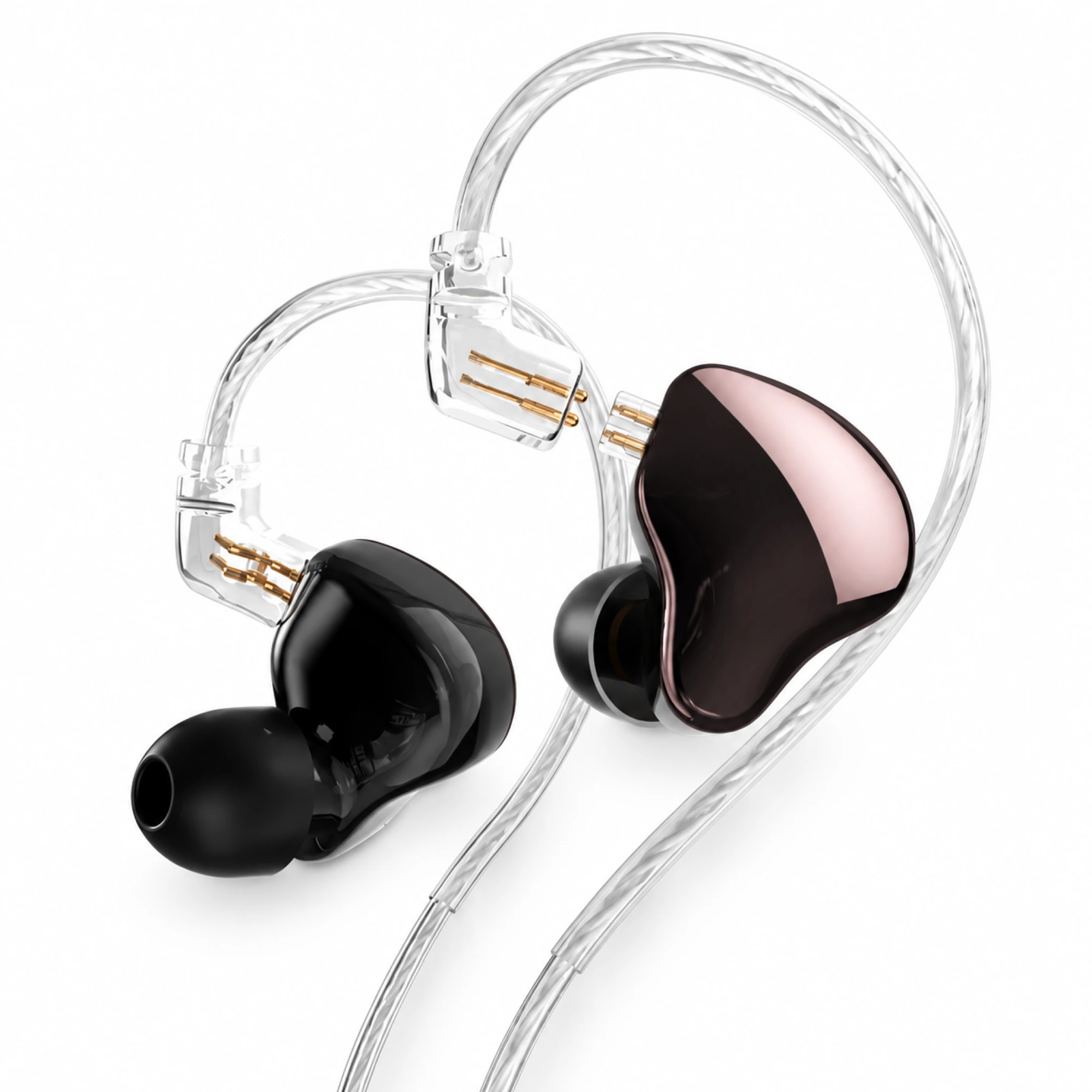 MN Rose-Metallic Detachable In-Ear Monitors
 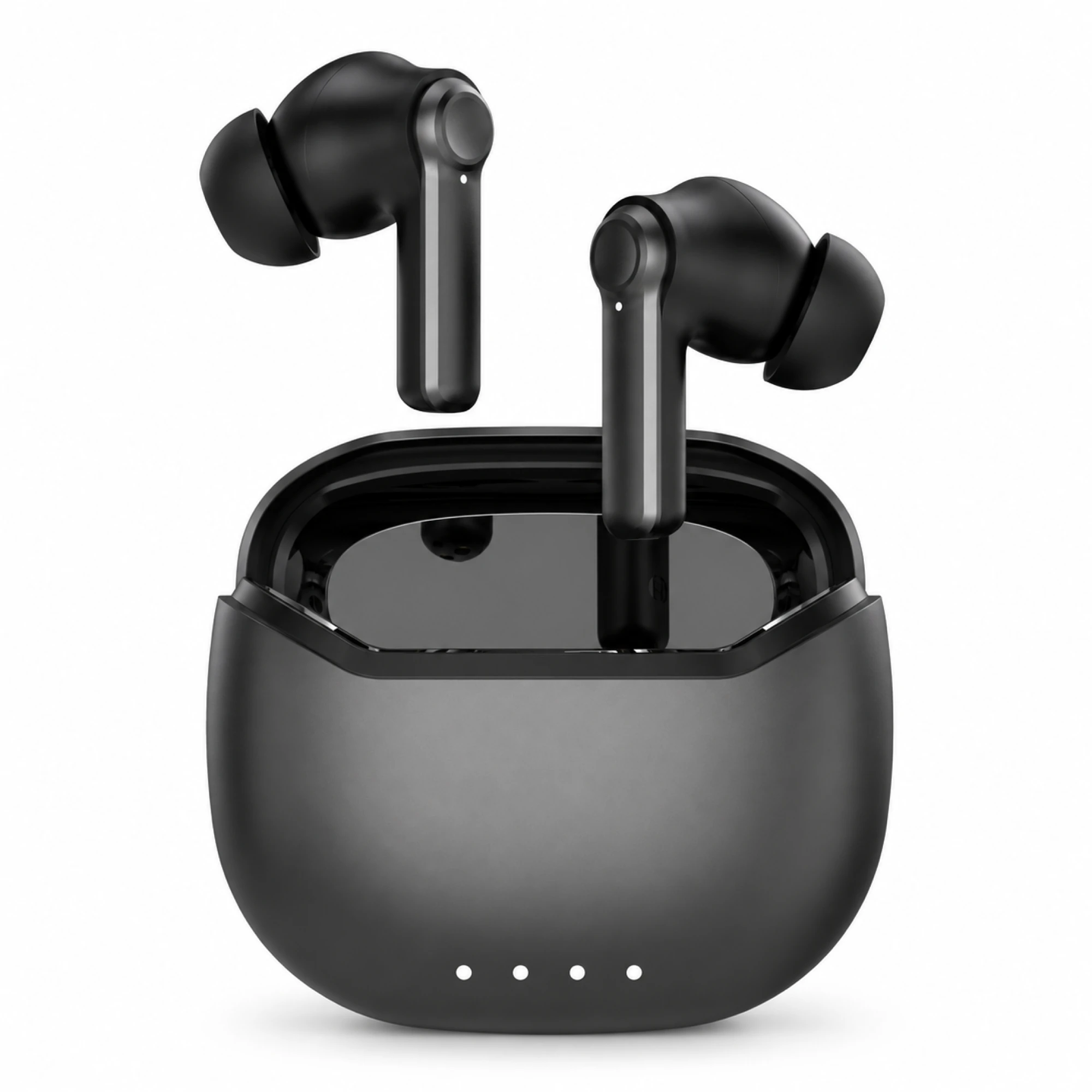 Black ANC Earbuds with Four-Indicator Case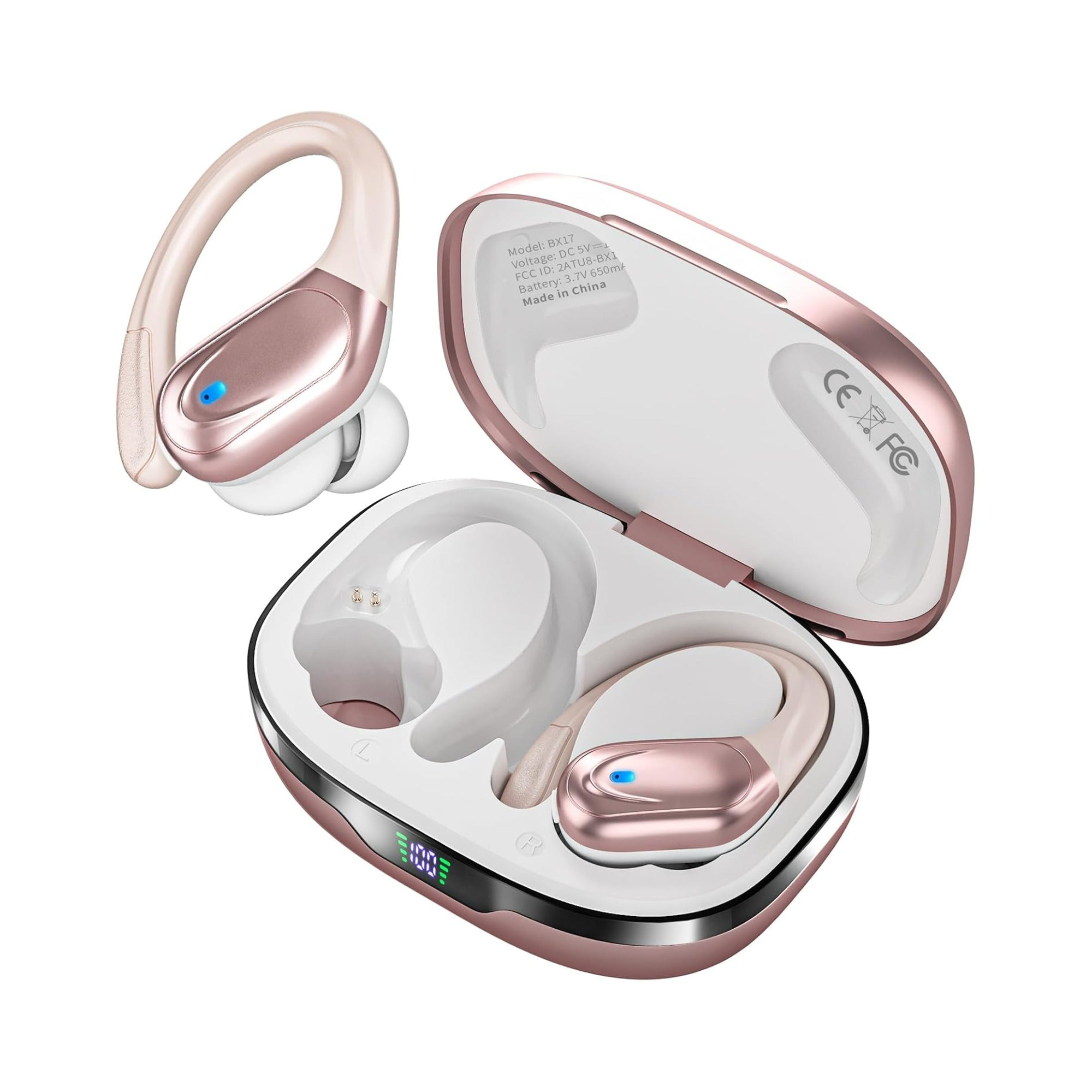
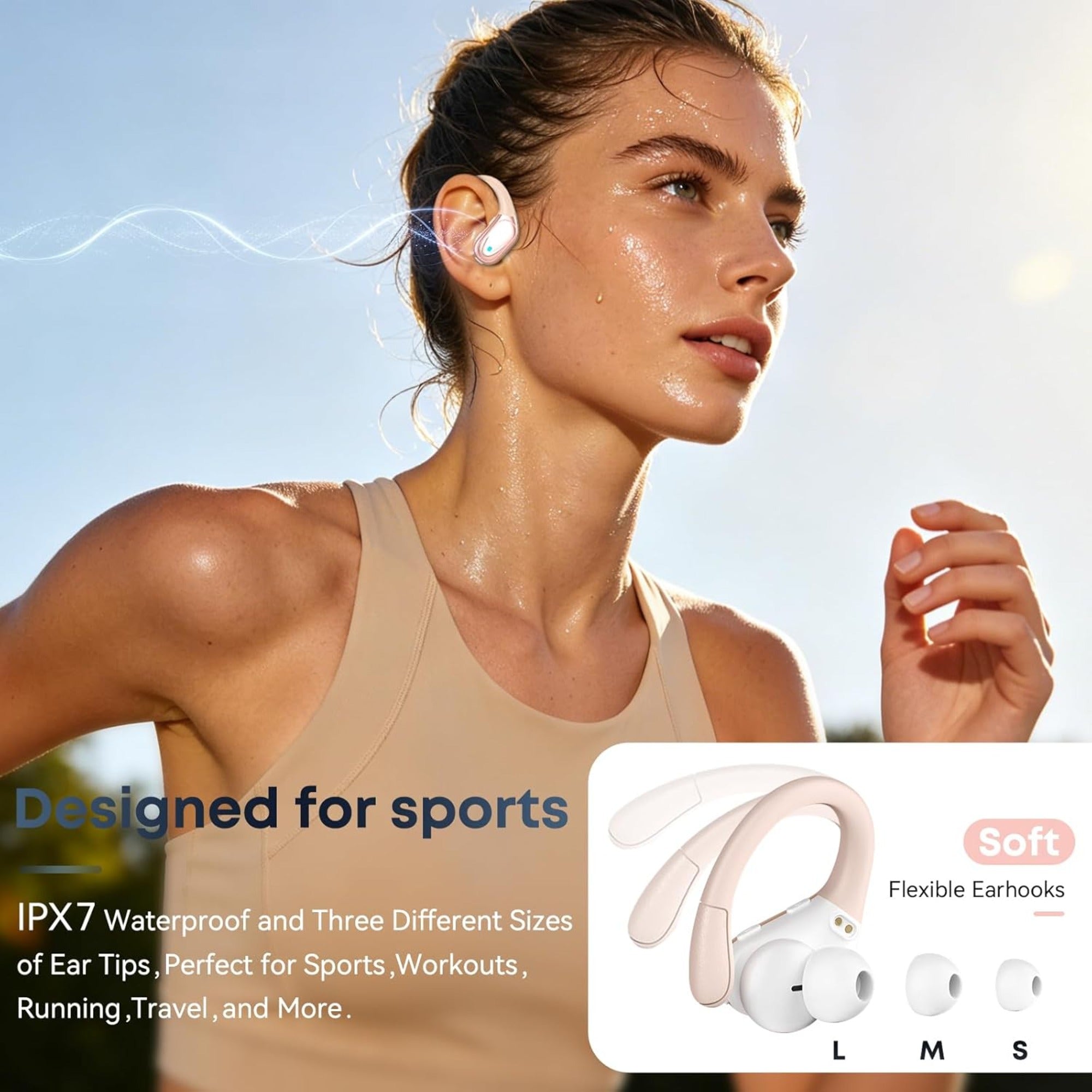
The best earbuds for working out indoors have to survive sweat before they have to survive motion. Demand three things: a water rating the listing names in words, a shape that clears a bench pad when you lie back, and buttons you can find with a wet thumb. Our Series 217 listing states IPX7 and spells it out as accidental submersion, 1 meter for 30 minutes.
Sweat breaks gym earbuds before motion does
Outdoors you are fighting wind, rain and stride. Indoors none of that applies. The room is still, the air is warm, and the only liquid involved is the one you are producing. On a big-box gym floor at six in the evening, or on a garage rack in August, sweat runs down the concha, collects behind the nozzle and sits on the two charging pins on the back of each earbud. It stays there while you finish the set.
Those pins are the part a water rating says least about. An IP code describes an enclosure; the pins are on the outside of it, and so are the matching contacts in the case. Water evaporates from them. The salt it carried does not. That is why good earbuds for working out indoors should be judged on how quickly you can dry them, and why the habit worth building is a dry cloth over the nozzle and the pins, a few minutes of air, then the lid. Our earbud cleaning guide covers the method for the mesh and the shell.
The rest of what a gym does to a pair — a phone left on a bench, a room full of competing 2.4 GHz radio, a drop from ear height onto rubber — belongs to the room instead of the earbud, and we have written that up separately in what a gym breaks. This page is about the thing in your ear.
What IP rating the best earbuds for working out need
The code comes from IEC 60529, Degrees of protection provided by enclosures (IP Code), which applies to "the classification of degrees of protection provided by enclosures for electrical equipment". Two useful things follow from that one sentence. It classifies enclosures, so it describes a sealed body rather than the contacts, ports and tips attached to one. And it classifies them on a sample, which is a different question from how a body behaves after a season of salt. The X in IPX7 means the dust digit went untested rather than failed, and our IP ratings explainer takes the two digits apart properly.
What matters more than the number is whether a listing names one at all. Here is what our three sport listings state, and where each of them stops.
| Listing | What it states about water | What it leaves open |
|---|---|---|
| Series 217 | IPX7: resists sweat or rain, and "even survives accidental submersion (1 meter for 30 minutes)" | No rating stated for the charging case |
| Series 216 | IPX7: "resists sweat and water splashes" | No submersion condition given, and again nothing for the case |
| Sport Ear-Hook | No IP figure at all; a "sweat-resistant and dust-resistant build" | How much sweat, under what test, for how long |
Prices and listing text are as published at the time of writing.
A five-session week, worked through
Take an ordinary training week: five sessions, seventy minutes of playback each, so about five hours fifty minutes. The Series 217 listing states 15 hours per charge, which puts roughly twelve sessions between one charge and the next. Twelve times, then, damp earbuds go into a closed case, and eleven of those closures happen with nobody thinking about it. The 1 meter for 30 minutes on that listing describes one immersion of one enclosure; it says nothing about twelve damp closures, and no other IP figure would either, because that is not the thing the standard classifies.
Set the same week against the hearing side and the arithmetic runs the other way. The WHO's safe-listening guidance is that "if one listens at an average volume of 80dB (decibels), one can keep listening safely for up to 40 hours a week". Five hours fifty is nowhere near that ceiling; what a gym threatens is the level, not the hours.
The bench-press problem no spec sheet covers
Lie back on a flat bench and the pad meets the back of your ear. That contact patch is where an earbud gets levered: anything hanging below the canal is pushed forward, the seal breaks, and you spend the set aware of a bud you should have forgotten. The same thing happens on a decline, on hip thrusts with your shoulder blades on the bench, and on any floor work done on a thin mat.
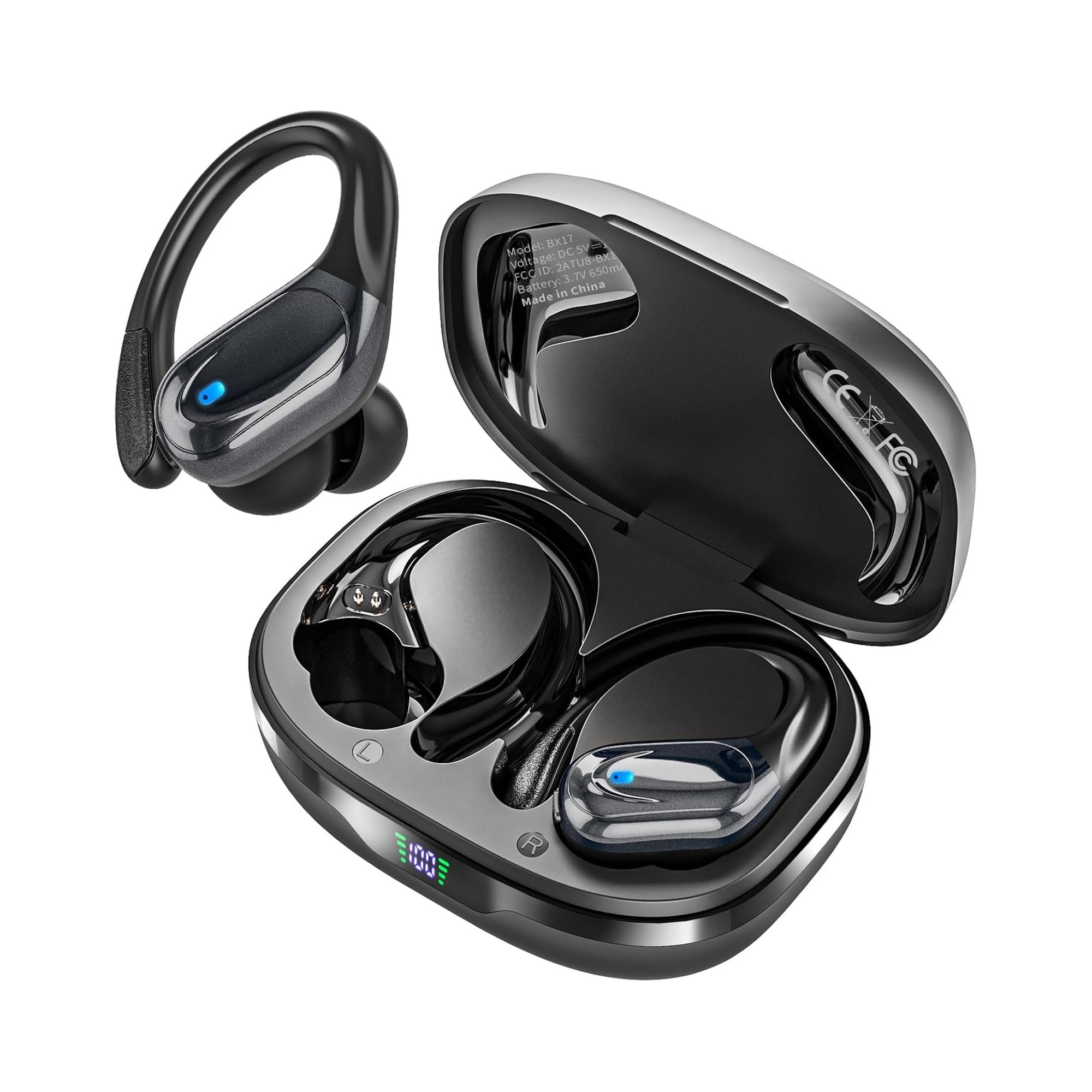
Every pair of wireless earbuds for exercise in our range hooks over the top of the ear, which carries the battery mass above the contact patch and keeps the pressure off the part that seals. The hook arm can still catch the edge of a pad on a steep incline, so find out before you load a bar: lie on the bench you actually use, roll your head slowly to each side, and feel whether anything is being pushed.
Tip size does the rest of the work. The Series 217 and Series 216 listings both state three sizes of silicone tips, S, M and L, alongside flexible ear hooks. The Sport Ear-Hook listing describes adjustable hooks but does not state how many tip sizes come in the box. A tip half a size too small behaves perfectly on the sofa and starts creeping once the canal is slick, which is the whole reason a dry fit check settles nothing.
Wet hands, loud room
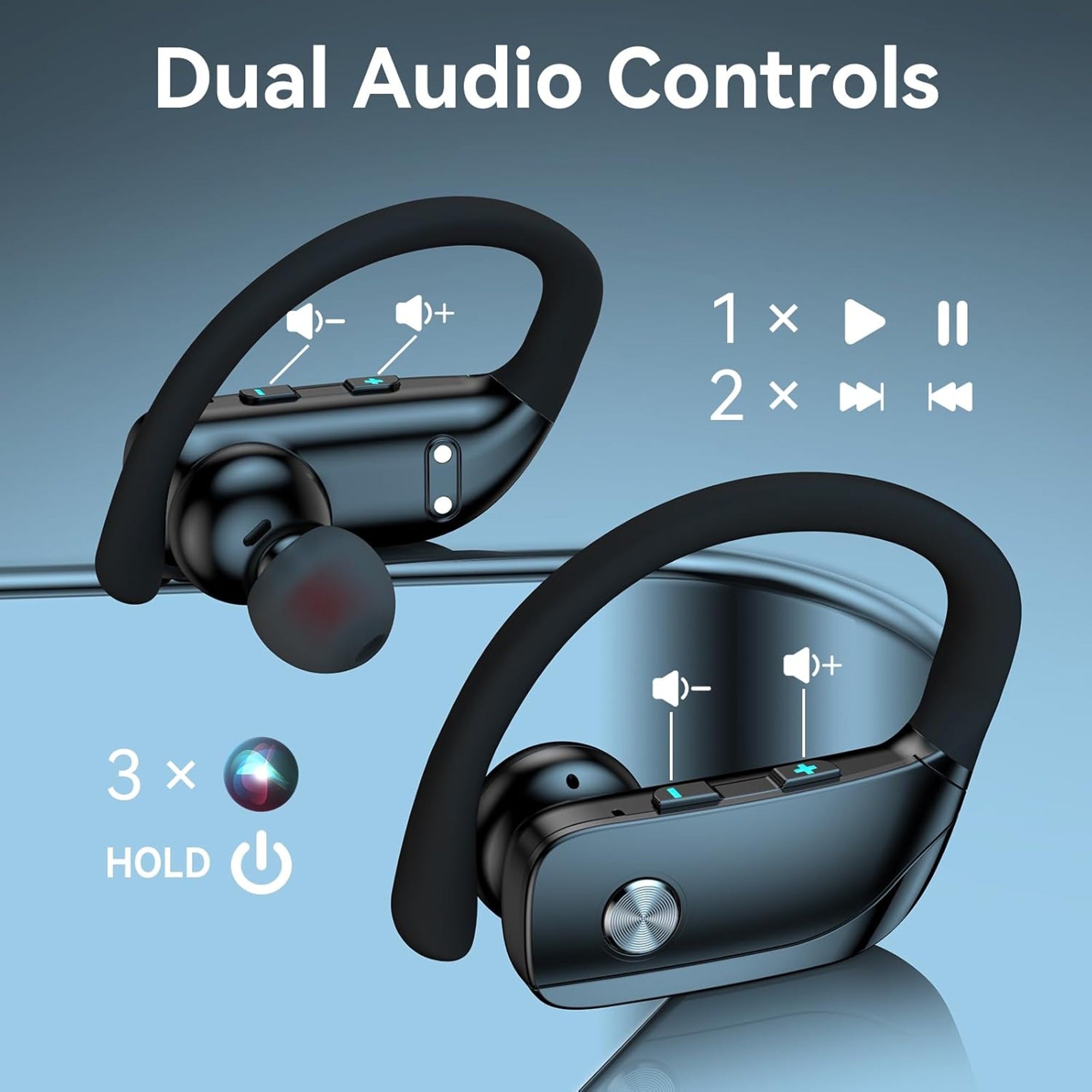
Good workout earbuds put a physical button where a chalked thumb can find it. All three of ours are built that way: the Series 217 lists physical buttons it calls "an ideal design for sweaty or gloved hands"; the Sport Ear-Hook lists separate main and volume buttons; the Series 216 lists one-touch button controls. Our reading is that a capacitive touch panel has the harder job in this setting, since it senses a change in capacitance and a film of sweat changes capacitance too.
Volume is the second thing a loud room does to you. A class with the music up, or a rack of plates going down at the far end, quietly raises the level you settle at, and the WHO's advice is to "keep the volume at a level below 60% of the maximum" and to "use well-fitted, and noise cancelling headphones to reduce the need to raise volume in noisy situations".
Which raises the acronym question. The Series 216 listing states ENC, and ENC works on what your microphone sends to the person on the other end of a call. None of these three listings state active noise cancelling for what you hear, so nothing in this range lowers the gym floor electronically. A correctly sized tip does that job passively, which is why fit and volume are the same conversation. Our ANC versus ENC explainer sets out where each acronym applies.
If a product causes pain, irritation, ringing or a noticeable hearing change, stop using it and seek qualified care.
Which of our three suits which session
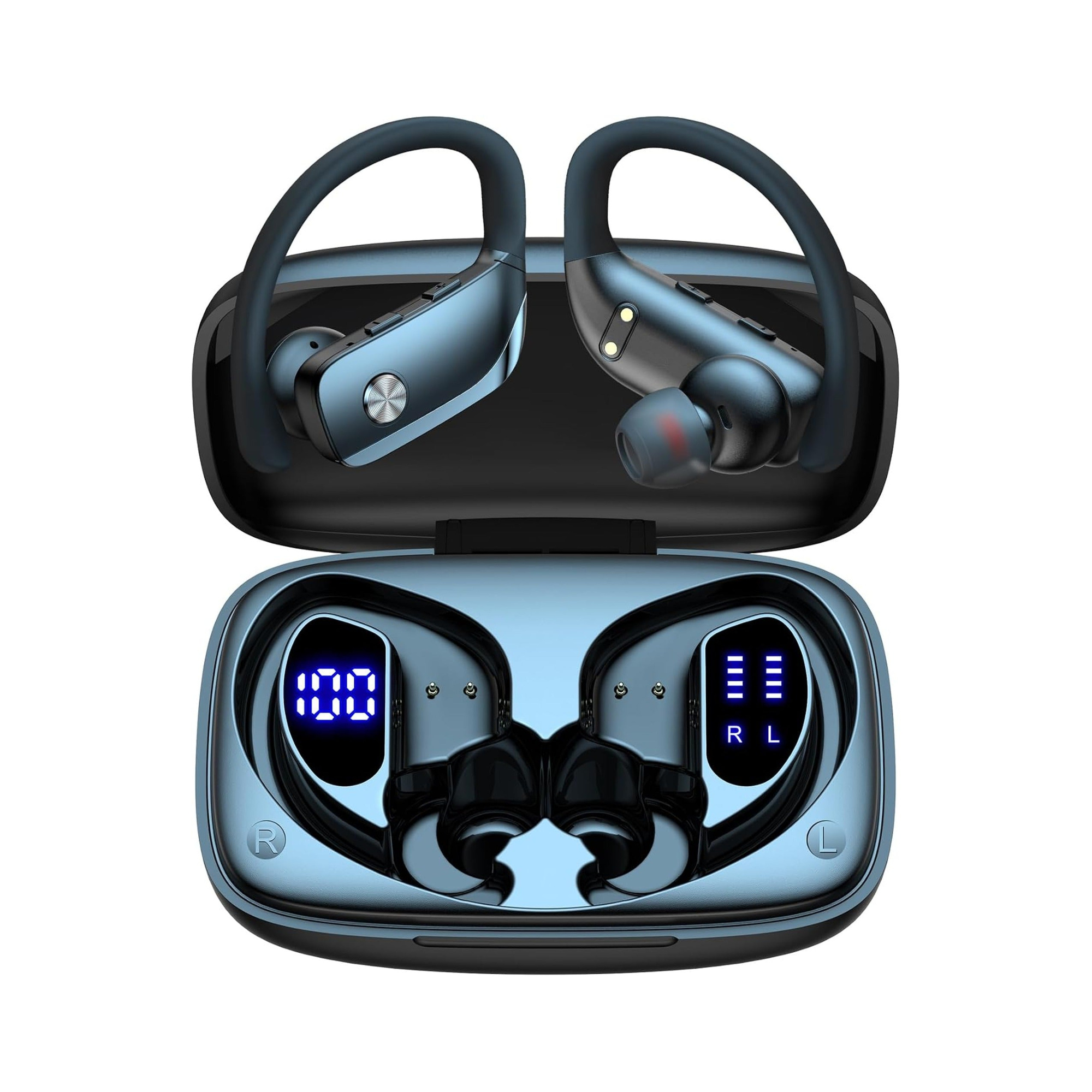
All three of the wireless earbuds for working out below are ear-hook designs, and they differ mostly in what their listings are willing to commit to.
The Series 217, $22.99 at the time of writing, is the one to take into the wettest sessions, because it is the only one that spells out what its IPX7 covers. It also states 14.3 mm dynamic drivers, Bluetooth 5.3 with a stated range up to 33 feet, 15 hours of playtime per charge and 80 with the case, and a case that recharges over USB-C in 1.5 hours.
The Series 216, also $22.99, matches it on IPX7, on 15 hours per charge and on three tip sizes, and adds the only call-side feature named across the three: ENC, with a balanced air pressure design the listing credits for reducing leakage. Hall switch technology powers it on as the lid opens. It is the pick if you take calls between sets.
The Sport Ear-Hook, $28.99, has the most deliberate controls of the three, with separate main and volume buttons, plus 10 mm drivers, dual microphones and 8 hours per bud against 80 with the case. The limitation to weigh: its listing claims a sweat-resistant and dust-resistant build without naming any IP figure, so treat it as splash tolerance and keep it out of your longest, wettest session. All three sit in the everyday wireless collection.
Questions about earbuds, sweat and bench work
Is IPX7 more than a gym needs?
For water, yes. Nothing in a weights room submerges an earbud at 1 meter for 30 minutes. The reason to prefer a listing that names IPX7 is that it names something at all: a stated code points at a defined condition the maker wrote down. A listing that says only sweat-resistant defines nothing you can hold it to.
Should I rinse sweaty earbuds under the tap?
We would not. An immersion rating describes a sealed enclosure, and the charging pins on the back of each bud sit outside it, as do the contacts inside the case. Rinsing runs water across exactly the surfaces that suffer, then leaves them to dry behind a closed lid. A dry cloth over the nozzle and pins, a few minutes of air, then the case, does more over a year.
Can I wear ear-hook earbuds lying on a bench?
Usually, because the hook carries the mass above the ear instead of hanging it below. Test it unloaded first: lie on the bench you use, roll your head slowly to each side, and feel whether the pad is levering the arm. On a steep incline the pad meets your head higher up, so the same pair can behave differently there, and both angles are worth checking.