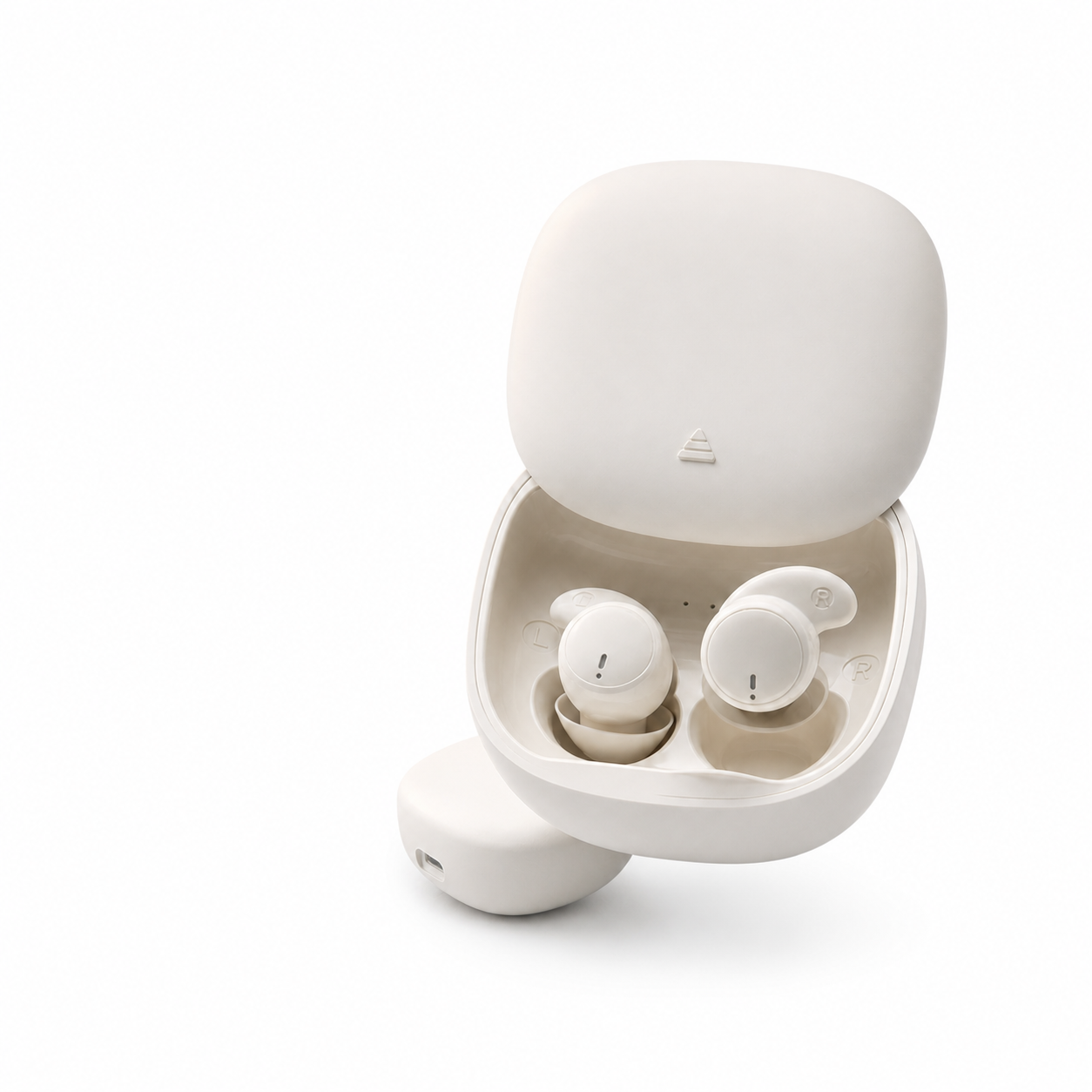
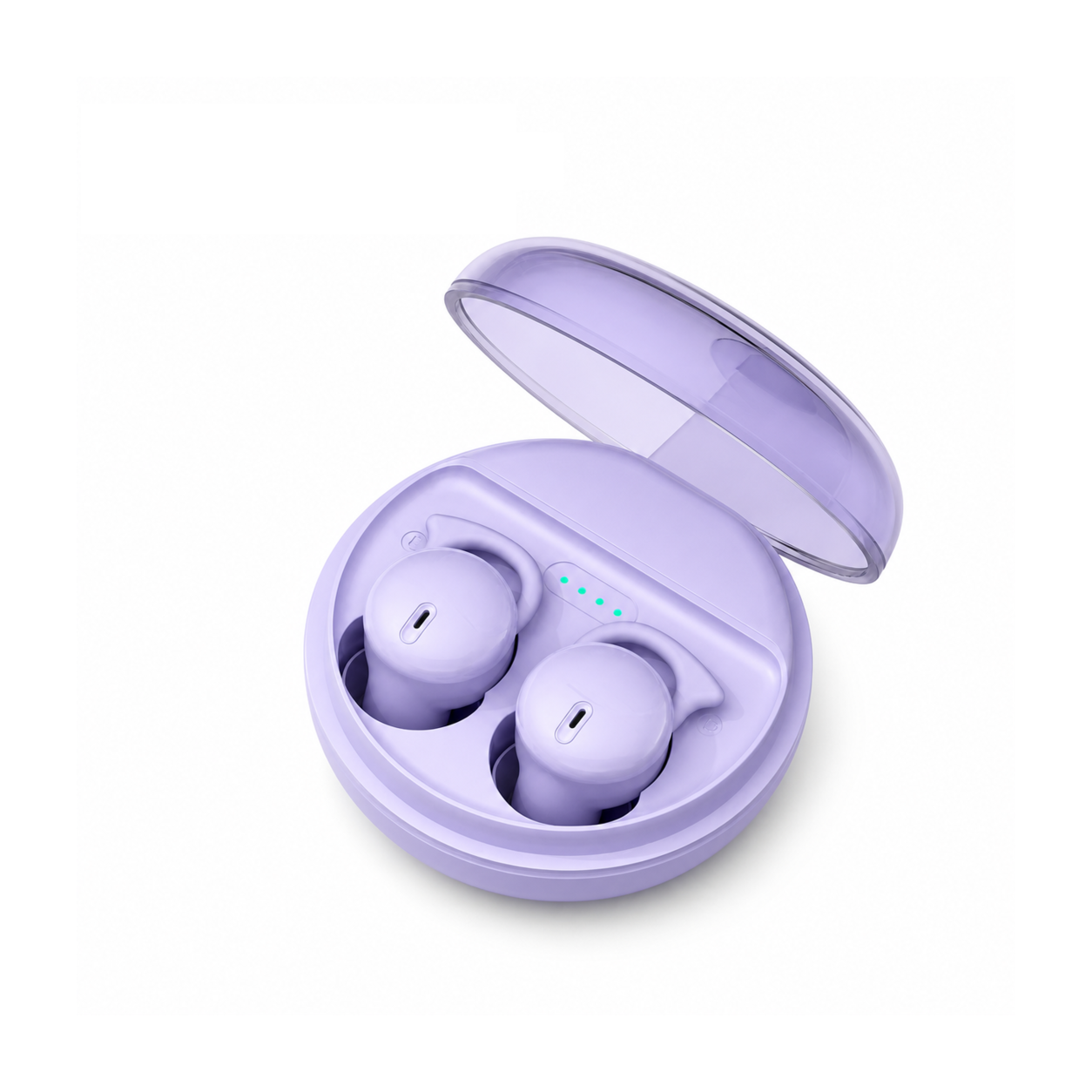
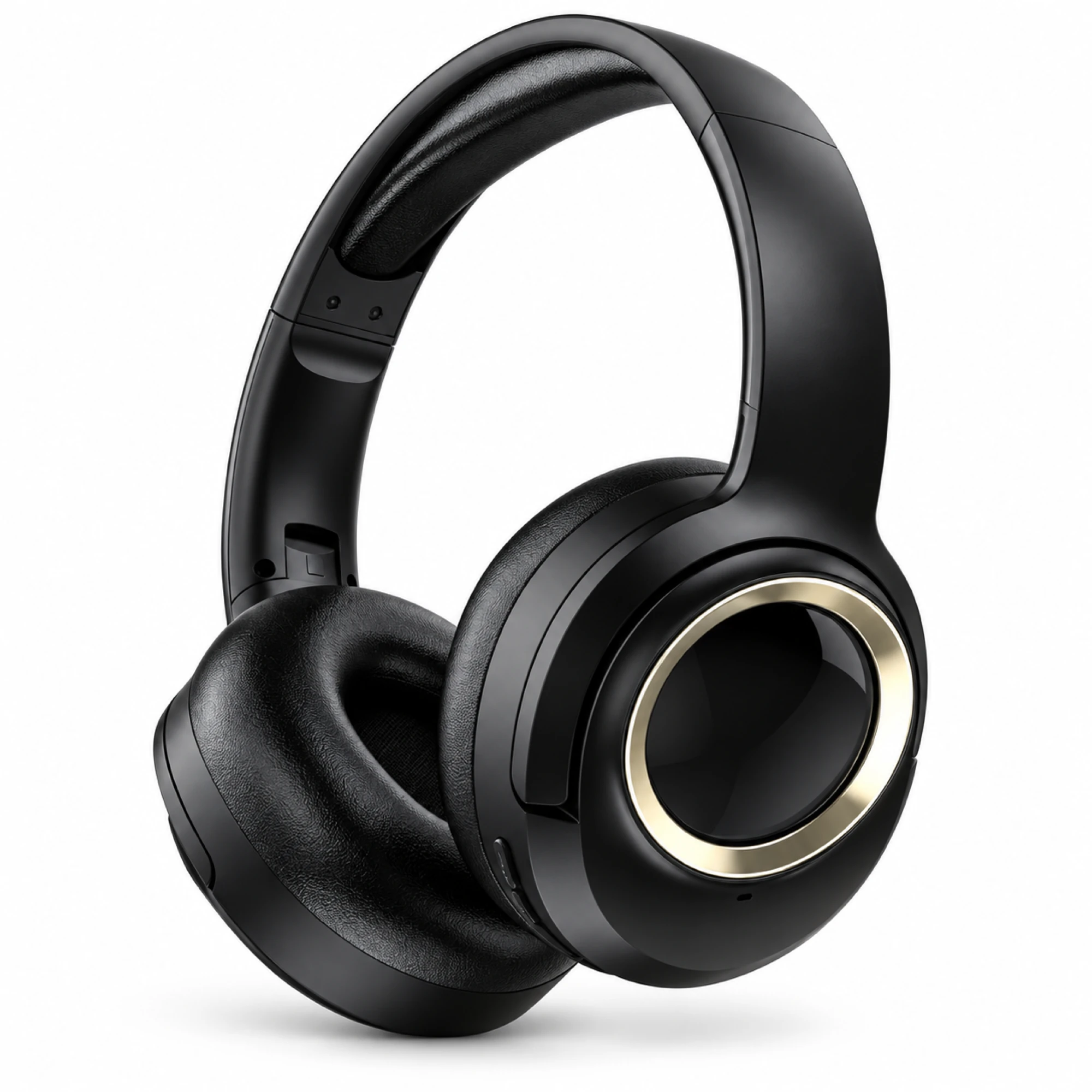
 MX-21 Black and Gold Wireless Headphones
 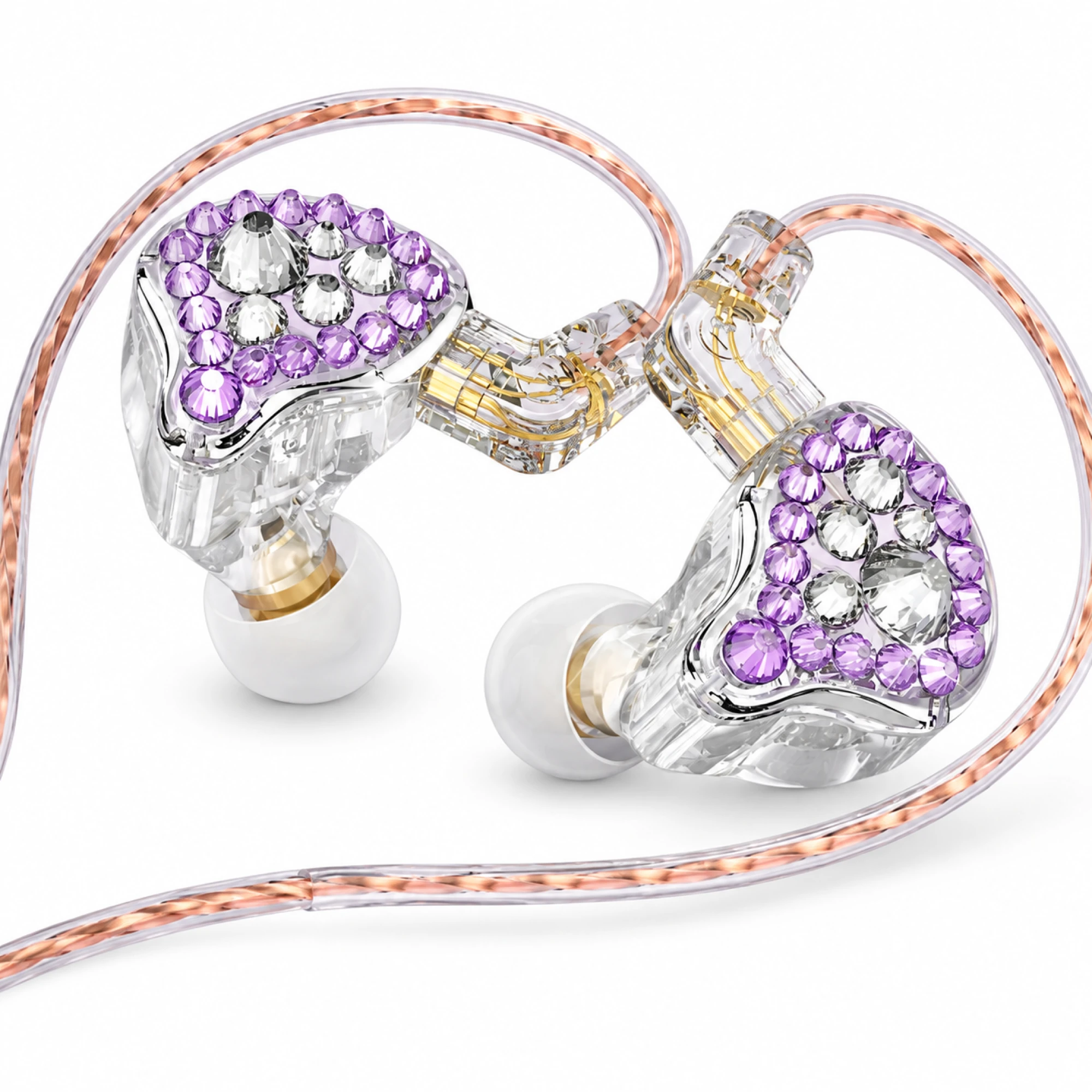 Q2 Pro Purple Crystal In-Ear Monitors
 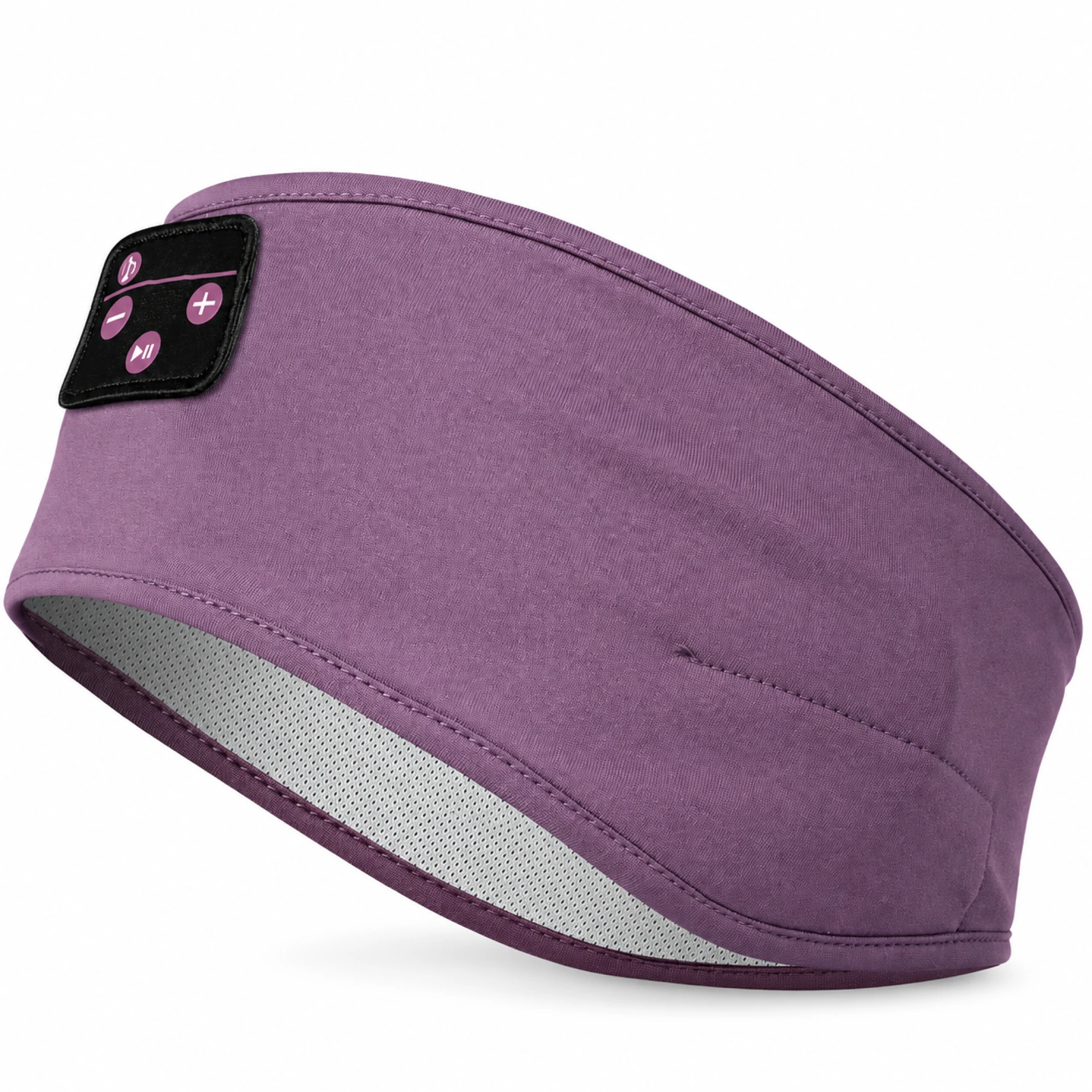 Purple Sleep Headband Headphones with Triangle Controls
 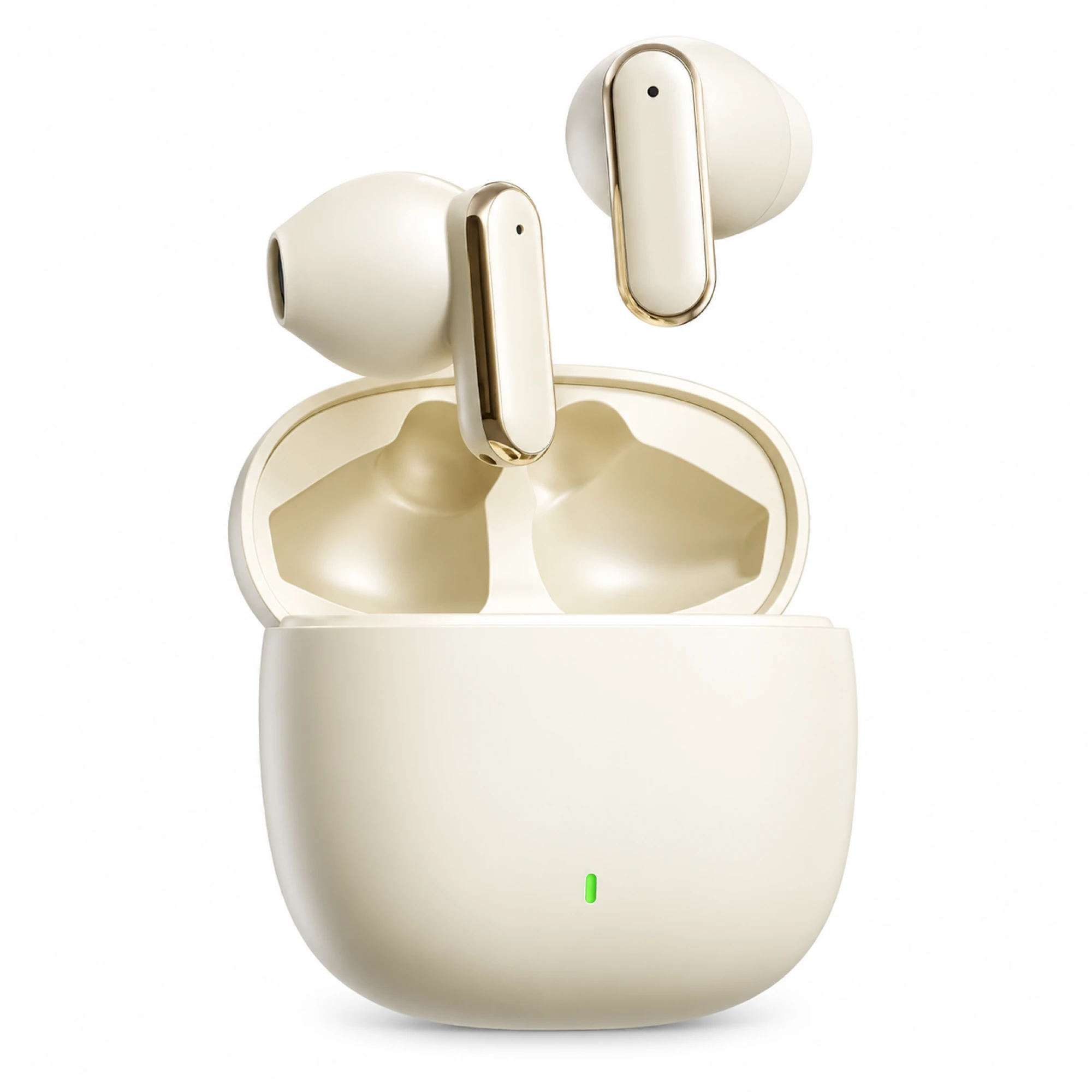 Cream Reflective-Stem Wireless Earbuds
 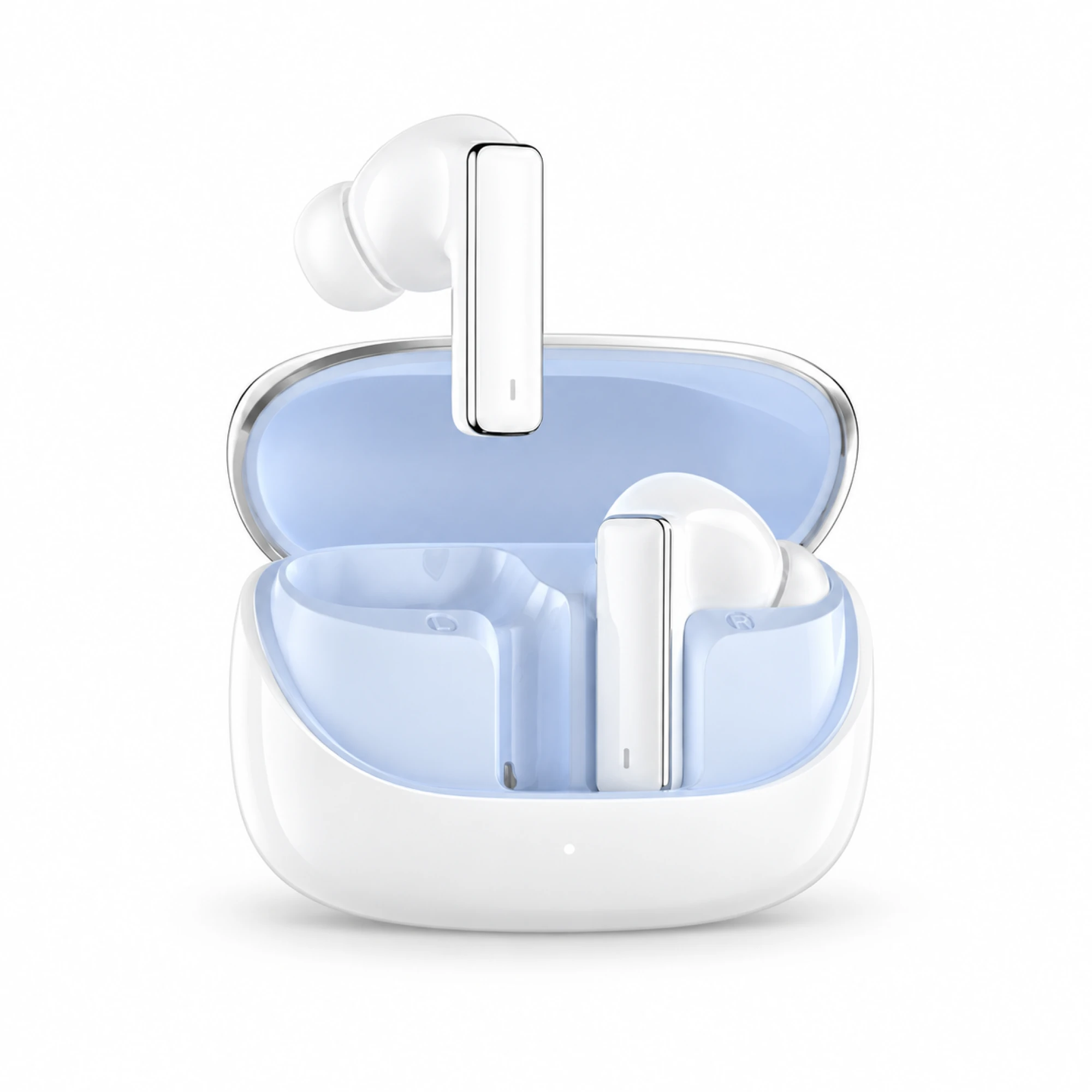 IN-01 White ANC Earbuds with Pale Blue Case Interior
 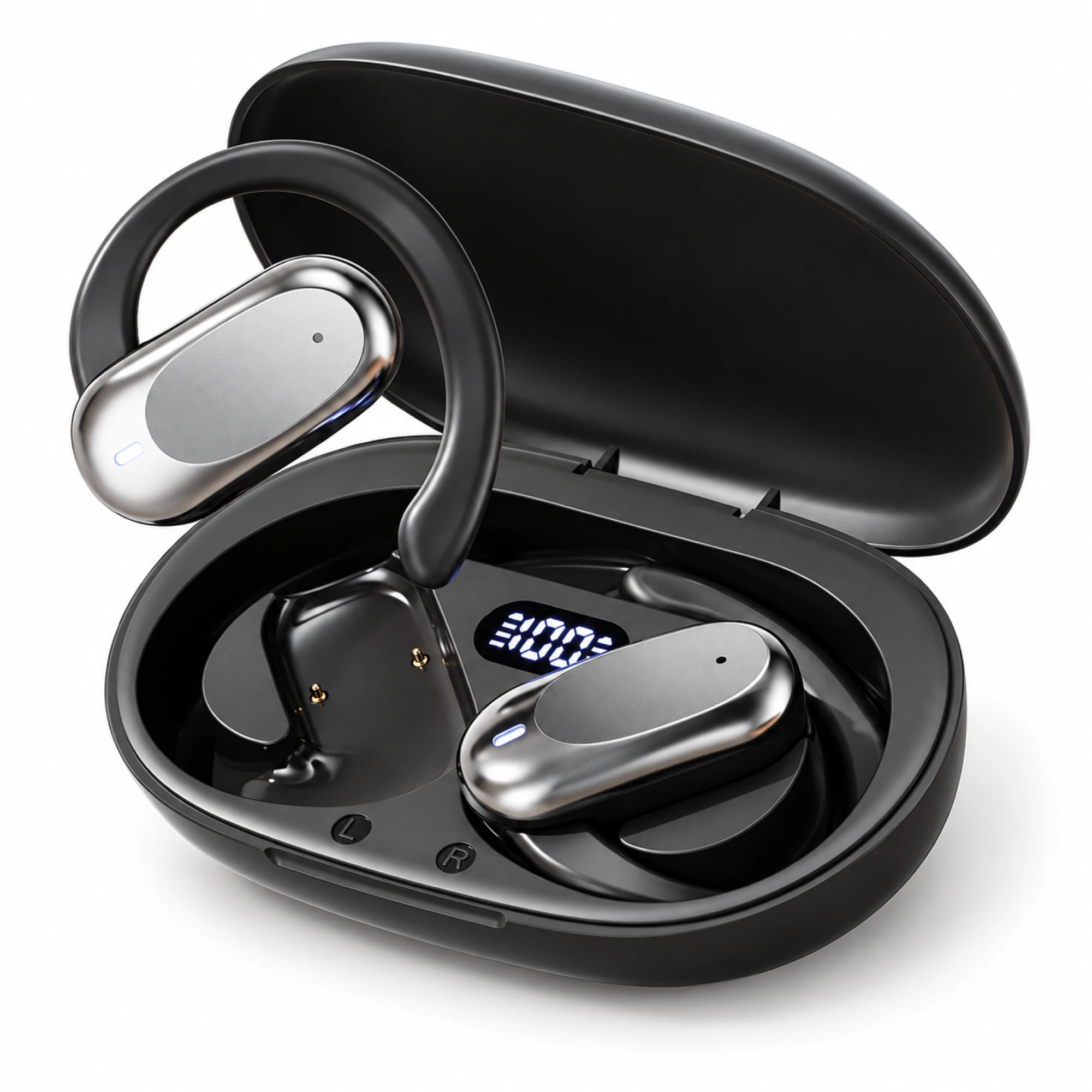 Silver Capsule Open-Ear Earbuds
 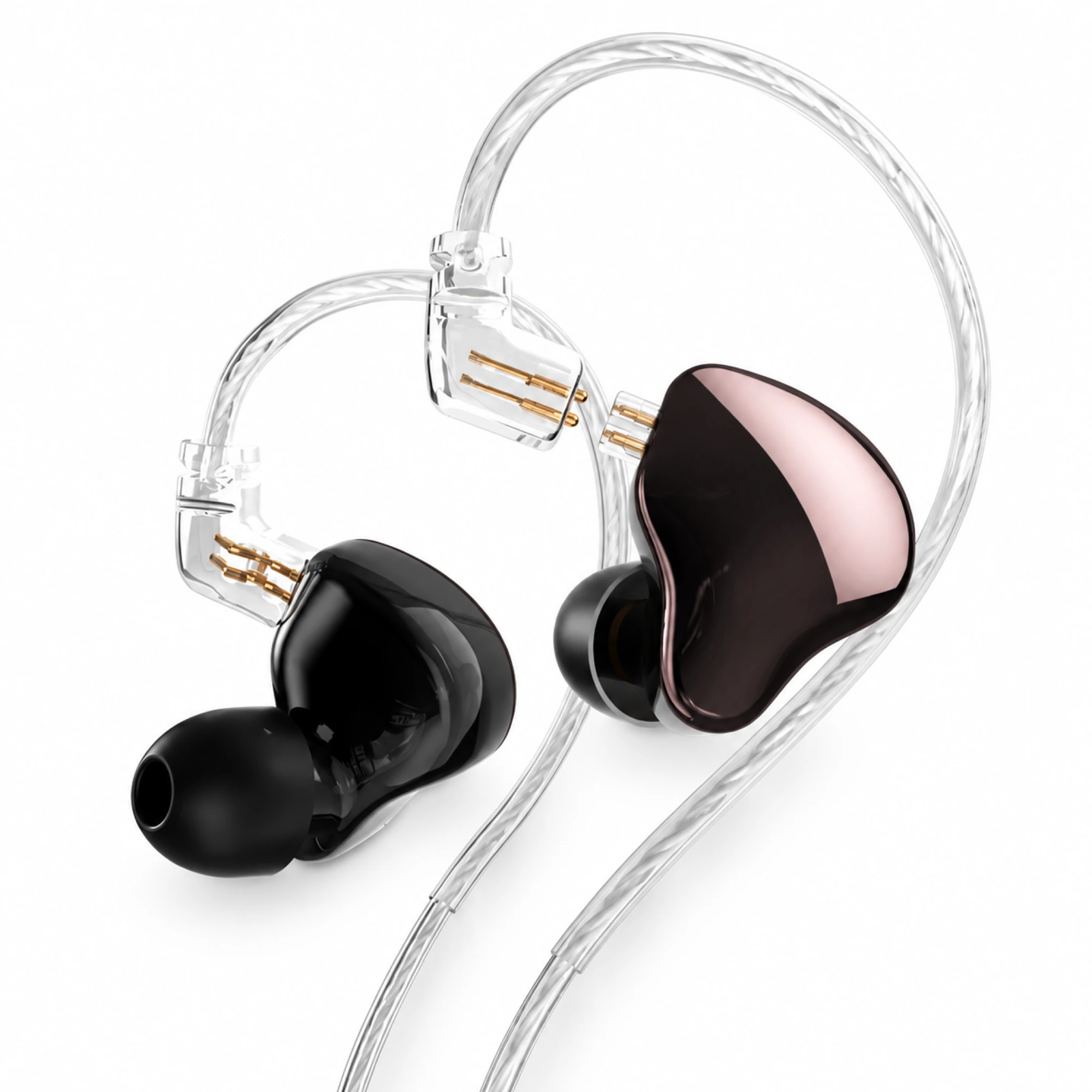 MN Rose-Metallic Detachable In-Ear Monitors
 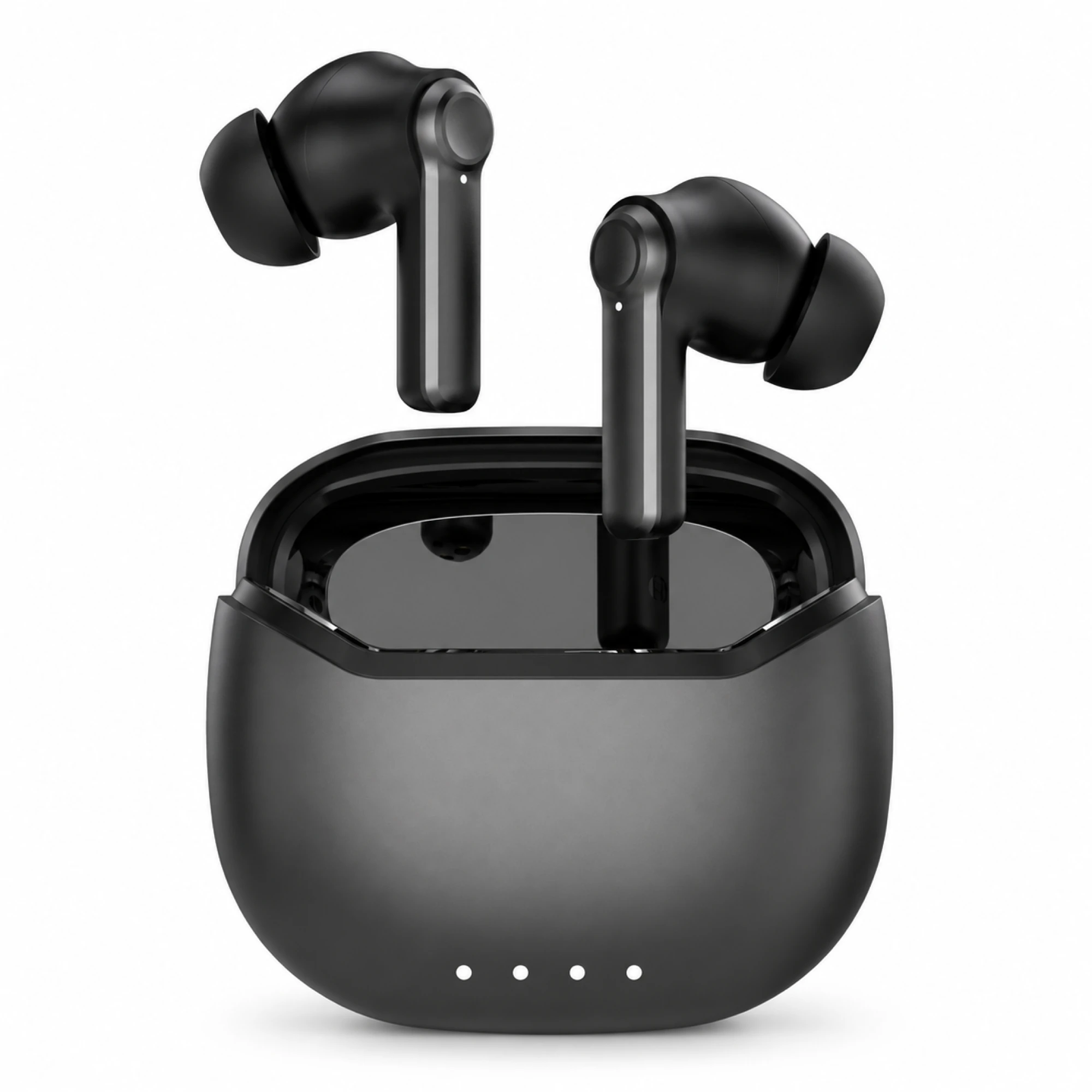 Black ANC Earbuds with Four-Indicator Case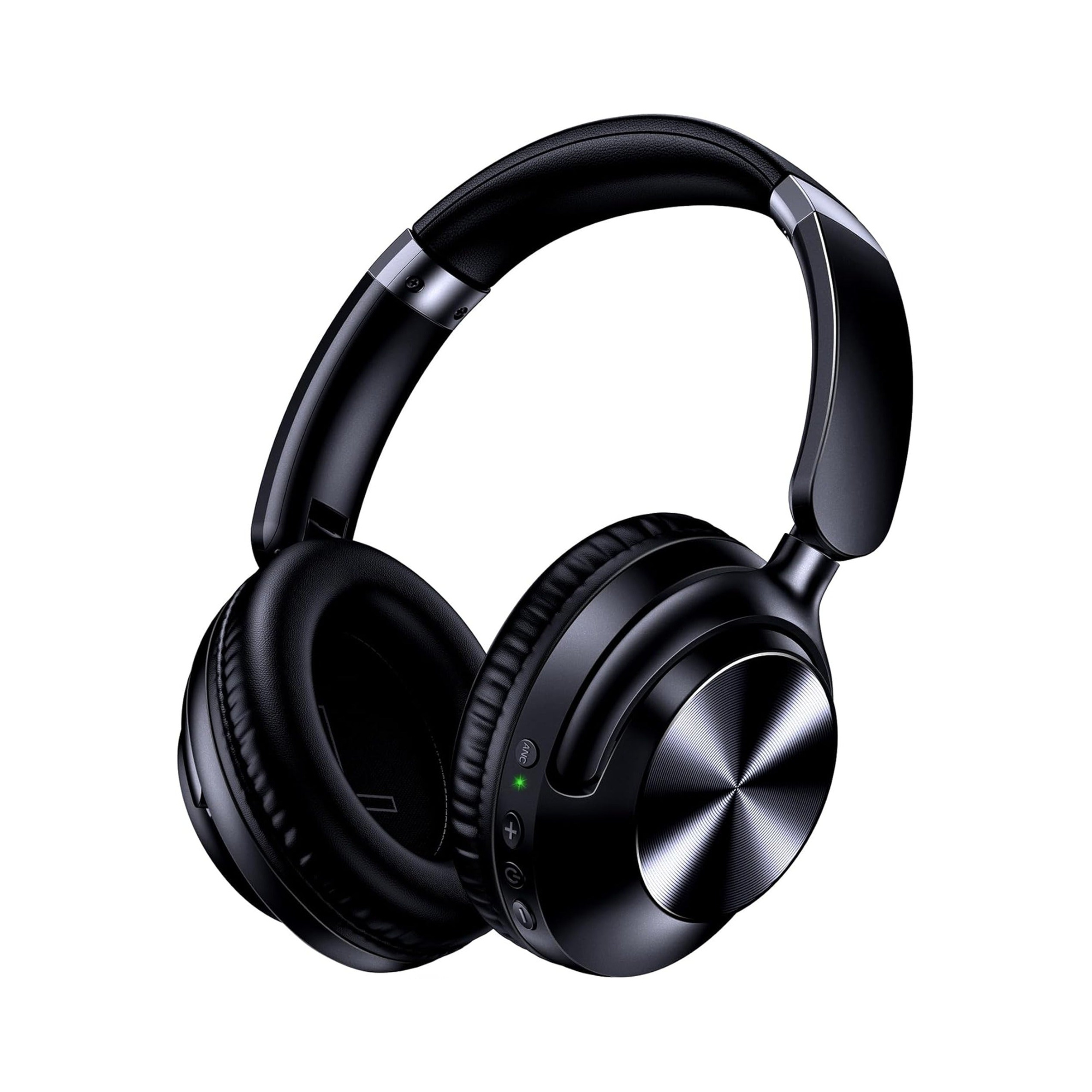
You can sleep in noise cancelling headphones, and it is not inherently dangerous. The problem is mechanical: a full-size over-ear headphone is a rigid cup held against your skull by a sprung headband, and a pillow pushes back. Most people manage it on their back and give up on their side within an hour or two.
Why a full-size headphone falls apart once you lie on your side
Over-ear headphones are engineered for an upright head. The headband arch rests on the crown of your skull and the two cups clamp inward, with the force balanced across three contact points that stay where the designer expected them.
Lying down breaks those assumptions. On your back, the headband meets the pillow before your skull does, so the mattress lifts the band and levers the cups off your ears. On your side, the pillow presses one cup flat against your head, and the load that was spread around the earpad ring concentrates on whatever is trapped between rigid plastic and a firm surface.
None of that is a defect. It is a product used in a geometry it was never designed around, which is why comfort reports for noise cancelling headphones for sleep vary so much. Pillow firmness and shoulder width matter more than the brand.
The outer ear is cartilage, and it folds. Sustained pressure on a folded pinna tends to produce an ache people describe as bruising more than pinching, and it often does not announce itself until you have been asleep for a while.
| Sleeping position | What happens to a full-size ANC headphone | Typical outcome |
|---|---|---|
| On your back | Headband hits the pillow first; cups lift and lose seal | Workable, but isolation drops |
| On your side | Pillow presses the cup onto a folded outer ear | The most common reason people give up |
| Face down | Cup edge and headband loaded at odd angles | Rarely tolerable all night |
| Frequent position changes | Headband slides, cups rotate off the ear | Often on the floor by morning |
If you are a committed side sleeper, over-ear cans are the wrong tool. A soft memory-foam pillow that lets the cup sink in helps a little, but no pad softness fixes a rigid disc sitting between your head and the mattress.
The pressure sensation gets louder when nothing else is happening
Many people notice a mild pressure or fullness in the ears with ANC engaged, sometimes described as the feeling of altitude change without the altitude. It is a perceptual side effect of how the system works against low-frequency sound, and it is not harmful.
What matters for sleep is attention. During the day you are moving and occupied, so the sensation fades into the background. At sleep onset you are lying still in the dark with nothing to occupy you, which is exactly when a small constant bodily sensation becomes the thing you cannot stop noticing. People who tolerate ANC happily for an eight-hour flight sometimes cannot fall asleep with it on at home.
Test it before committing. Lie down with ANC on and no audio for fifteen minutes. If the sensation recedes you are probably fine; if it grows, neither music nor a more expensive headphone will fix it.
How ANC copes with a snoring partner
Active noise cancellation is generally strongest against steady, continuous, low-frequency sound: engine drone, a fan, air conditioning. Snoring is only partly that. ANC handles the low rumble reasonably well. The parts that wake you are the irregular ones: the snort, the catch, the sudden pitch change after a period of quiet. Those are unpredictable and sit higher in frequency, precisely where cancellation does least.
| Night-time noise | Likely ANC result | Better first move |
|---|---|---|
| Low steady snoring rumble | Often noticeably reduced | ANC is a reasonable fit |
| Snorts, gasps, irregular peaks | Little effect | Steady low-volume masking |
| Traffic, distant motorway | Partial reduction | ANC plus room changes |
| Voices or TV through a wall | Limited | Passive seal and masking |
| Door slams, a dog, a car alarm | Effectively none | Nothing head-worn solves this |
So buying larger, stronger ANC headphones to defeat a snorer is usually the wrong purchase. A quiet, continuous masking sound plus a comfortable passive seal generally does more for the peaks than cancellation does; our guide on earbuds for a snoring partner works through that decision. If the snoring includes breathing that starts and stops, or gasping for air, that is a conversation for a clinician before any audio purchase: the NHLBI lists both among the symptoms of sleep apnoea.
Heat, batteries and the other overnight failure modes
An over-ear pad forms a warm, sealed chamber around the ear. For a two-hour flight that is fine. Across a full night it traps heat and moisture against skin that normally stays dry, and side sleepers add a second heat source underneath.
The consequences are unglamorous but real: itching, a damp earpad by morning, and pads that break down faster than with daytime use. Protein leather in particular tends to flake once it is cycled wet and dry every night. NHS guidance on ear infections lists earache, discharge, itching and difficulty hearing among the symptoms, and says to see a GP if earache has not improved after three days.
If a product causes pain, irritation, ringing or a noticeable hearing change, stop using it and seek qualified care.
A few other things only surface after several nights.
- The battery runs out mid-night. When ANC stops, the room does not fade in gently; the noise floor jumps, and some models add a beep or click on shutdown. That is a wake-up event at three in the morning.
- Auto-off timers fight you. Many headphones power down after a period with no audio. If your plan is ANC with silence, check whether yours simply switches itself off.
- Wear detection unpauses things. Sensors that pause audio when the headphone leaves your head can resume playback when a cup shifts back into contact. Turning that off is usually the fix.
- Alarms route to the headphone. Behaviour varies by operating system and by whether the headphone is still connected. Test yours on a weekend; we cover it in will your morning alarm still play.
- It ends up on the floor. Hinges and headband adjusters are the parts that fail, and a nightly drop from bed height accelerates that.
If you already own a pair, this configuration survives best
None of the above means you should not try. If you want to sleep with noise cancelling headphones you already own, this setup gives the best odds.
- Sleep on your back. This is the single biggest factor.
- Use a softer pillow that lets the headband arch sink in instead of levering the cups off.
- Loosen the headband to the largest setting that still holds the cups in place. You want the minimum clamp that keeps a seal.
- Run ANC with no audio if the noise is low and steady. Silence removes the volume question entirely.
- If you do play audio, set the level in the already-quiet bedroom, then take it down one step. Our bedtime volume guide covers the method.
- Disable wear detection and check the auto-off behaviour before relying on it.
- Keep a second alarm that does not depend on the headphone being connected or charged.
A worked example shows why step five matters. WHO safe-listening guidance gives 40 hours a week as the safe allowance at an average of 80 dB, and only four hours a week at 90 dB. Seven hours a night for five nights is 35 hours, so an all-night stream at 80 dB uses almost the entire weekly allowance on its own, before a single commute or workout. At 90 dB the allowance is gone before the first night is half over. Overnight audio has to sit well below either figure, which in practice means a level you can barely pick out over the room.
Our one full-size model, and the earbuds we point sleepers to
Our range has one full-size model, the Over-Ear Wireless Headphones Series 127, $44.75 on the listing today. Its listing states active noise cancellation, a 3.5 mm wired option and protein-leather earcups. The listing does not claim it is designed for sleeping, and we will not imply otherwise.
For bedtime our range is built around low-profile earbuds instead of cans. The Low-Profile Sleeping Earbuds for Side Sleepers, $31.99 on the listing today, use a stemless shape that sits close to the ear, with passive noise reduction and up to 20 hours of combined playtime with the case. The MY-20 Soft Silicone Sleeping Earbuds, $33.99 on the listing today, take the same approach with soft silicone contact surfaces. Neither listing claims ANC, and each says so in its own questions section. Both rely on physical fit, which against irregular noise is often the more useful half. The sleeping earbuds collection shows what each model specifies.
Questions about wearing over-ear ANC to bed
Is it safe to fall asleep wearing noise cancelling headphones?
Yes. There is no established harm in wearing them overnight, provided the volume stays low and you can still hear an alarm. The limits are comfort, heat and the pressure of a rigid earcup against a pillow, and those decide the night long before safety does.
Which over-ear features matter most if I sleep in them?
Weight, pad depth and clamp force. The over-ear designs that survive a night are the lightest, with the softest, deepest pads and the lowest clamp force, worn loosened to the largest setting that still seals. In practice most side sleepers end up switching format instead of finding a better can.
Do noise cancelling headphones block a snoring partner?
Partly. ANC handles the low rumble of snoring but does relatively little for the irregular snorts that actually wake you. A comfortable passive seal combined with a quiet, steady masking sound usually performs better than stronger cancellation on its own.