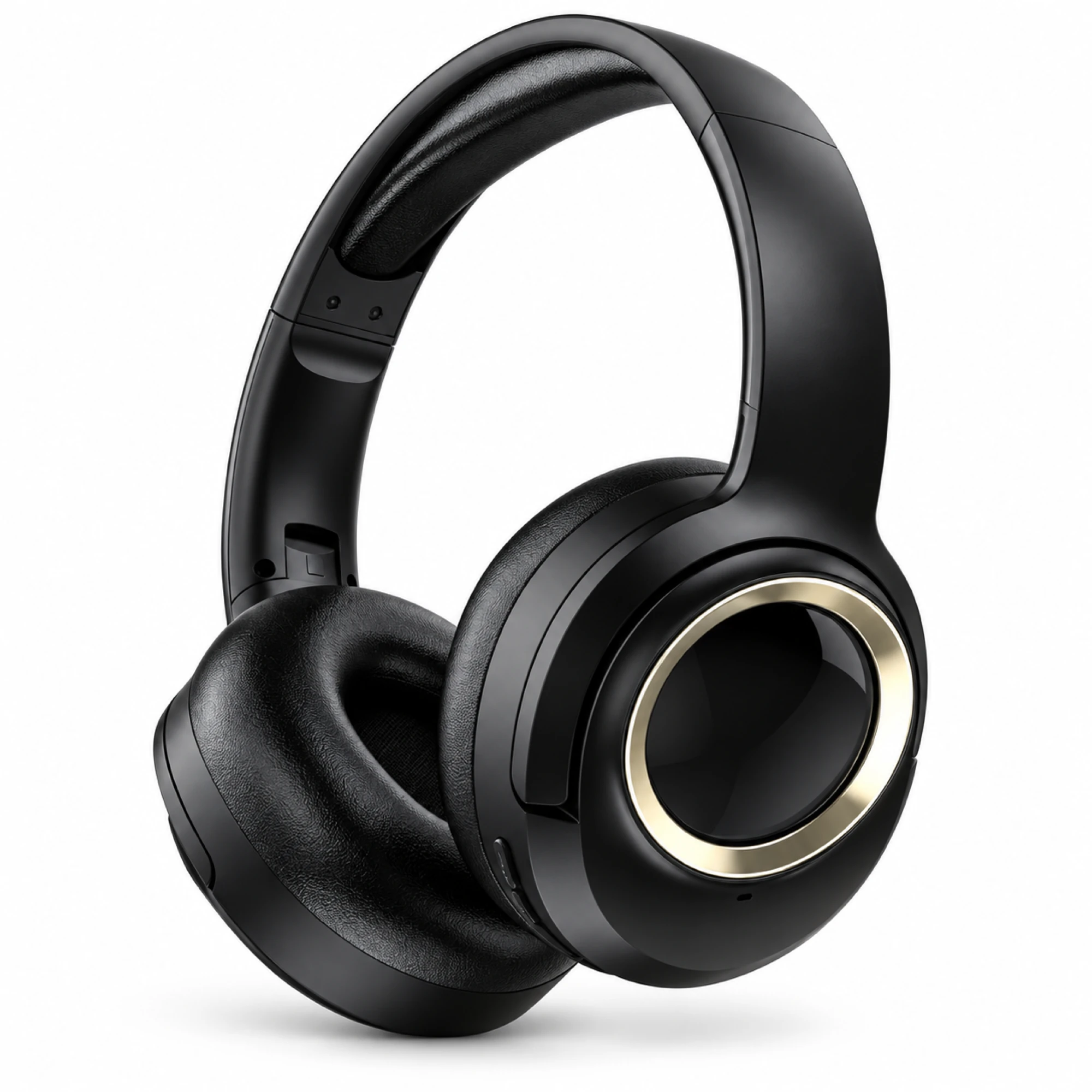
 MX-21 Black and Gold Wireless Headphones
 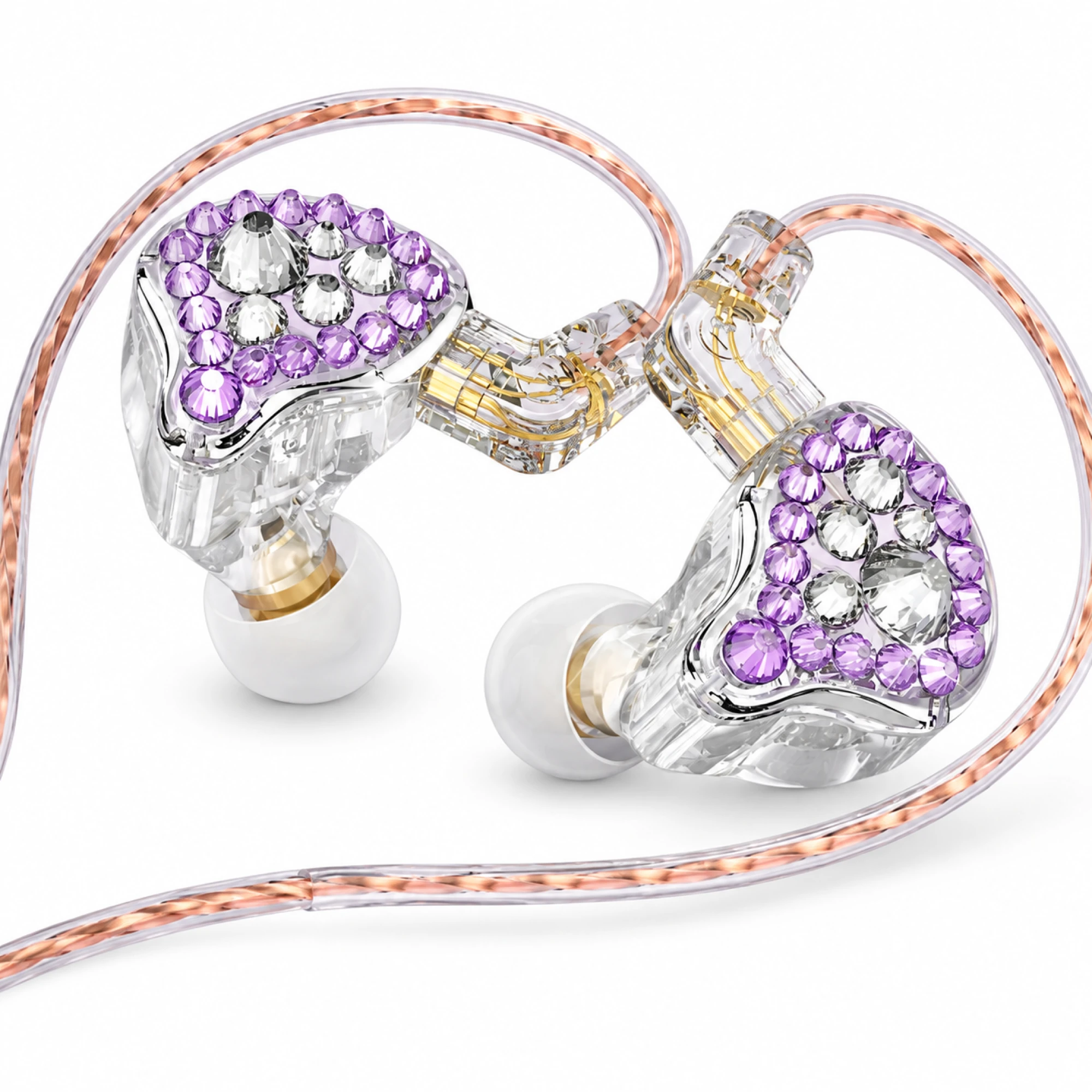 Q2 Pro Purple Crystal In-Ear Monitors
 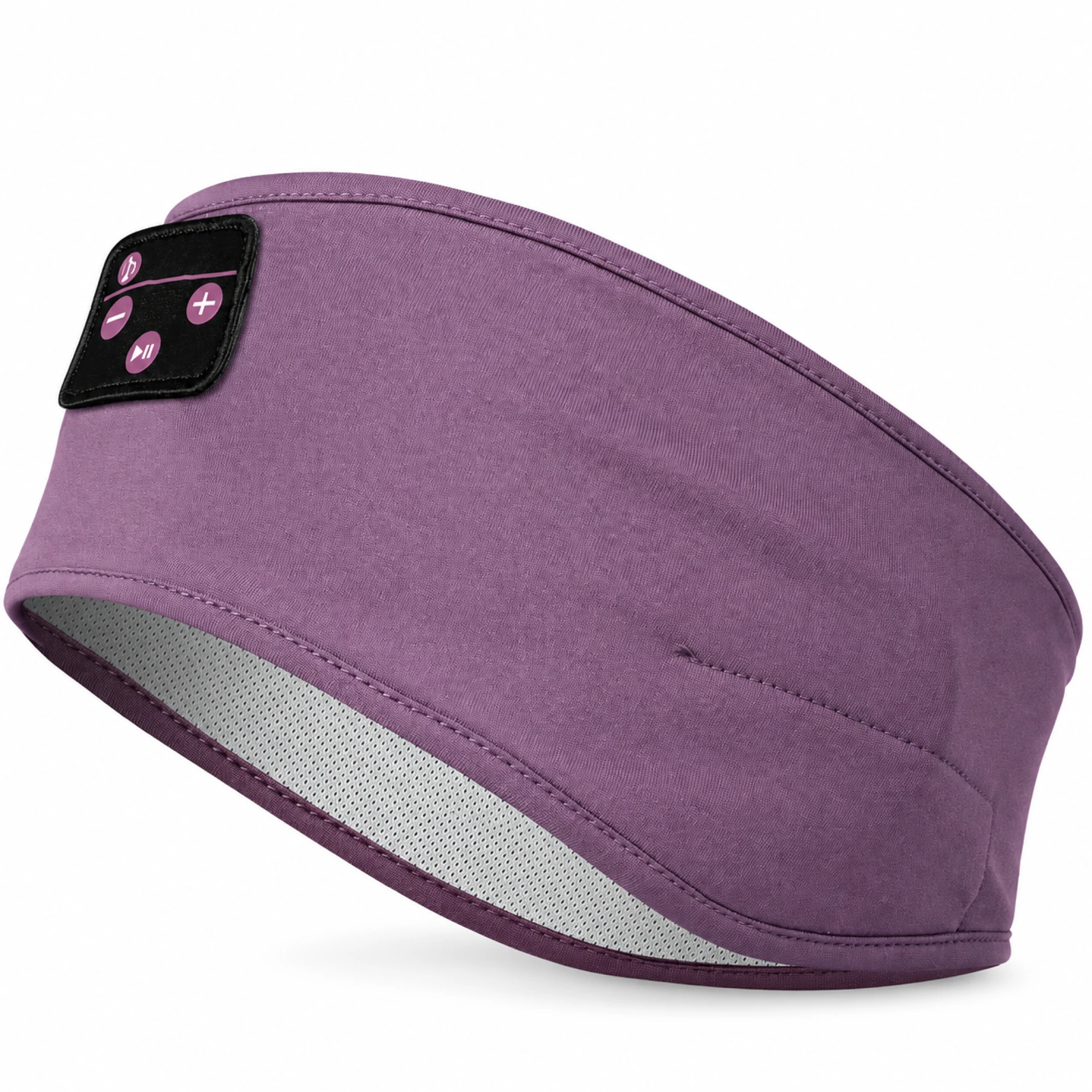 Purple Sleep Headband Headphones with Triangle Controls
 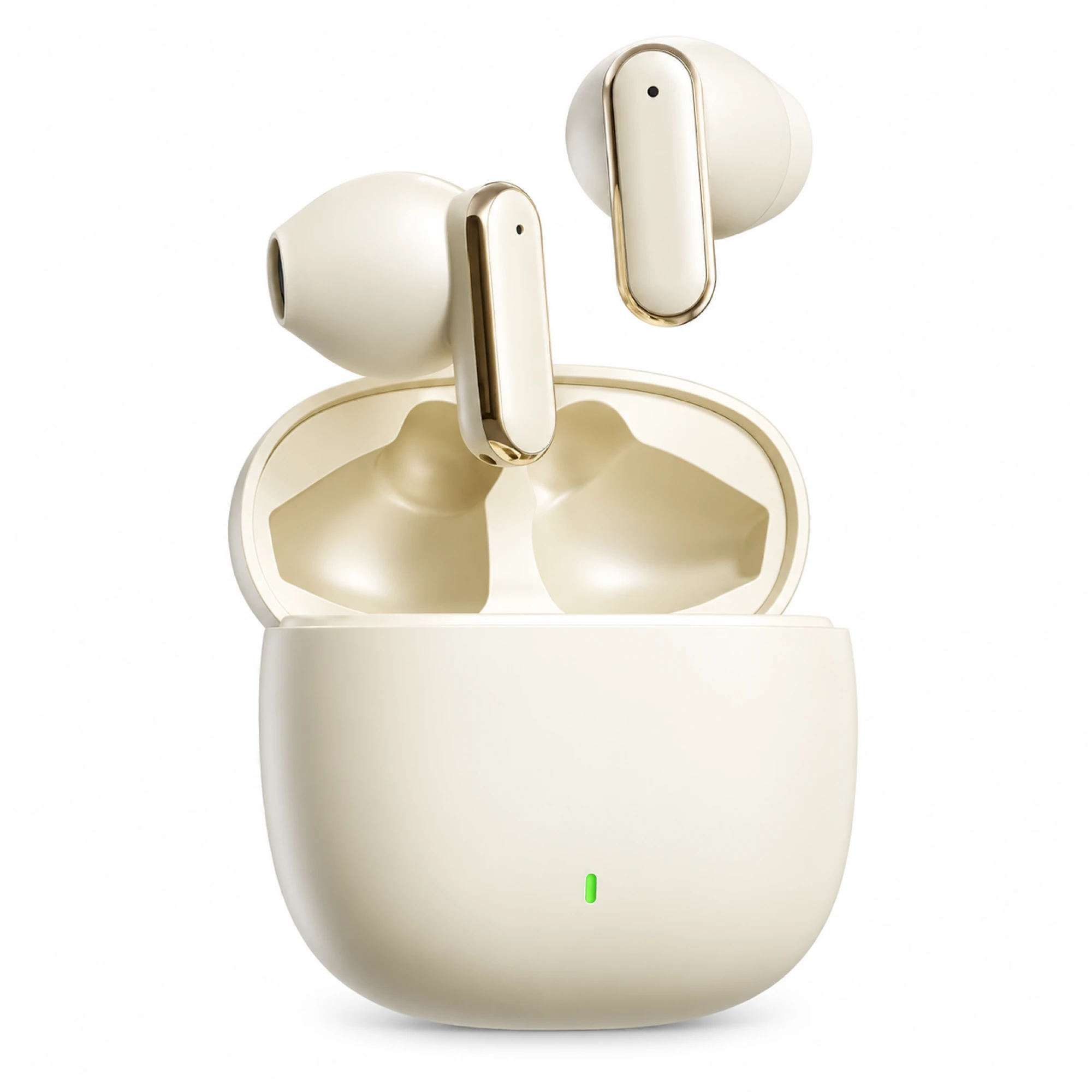 Cream Reflective-Stem Wireless Earbuds
 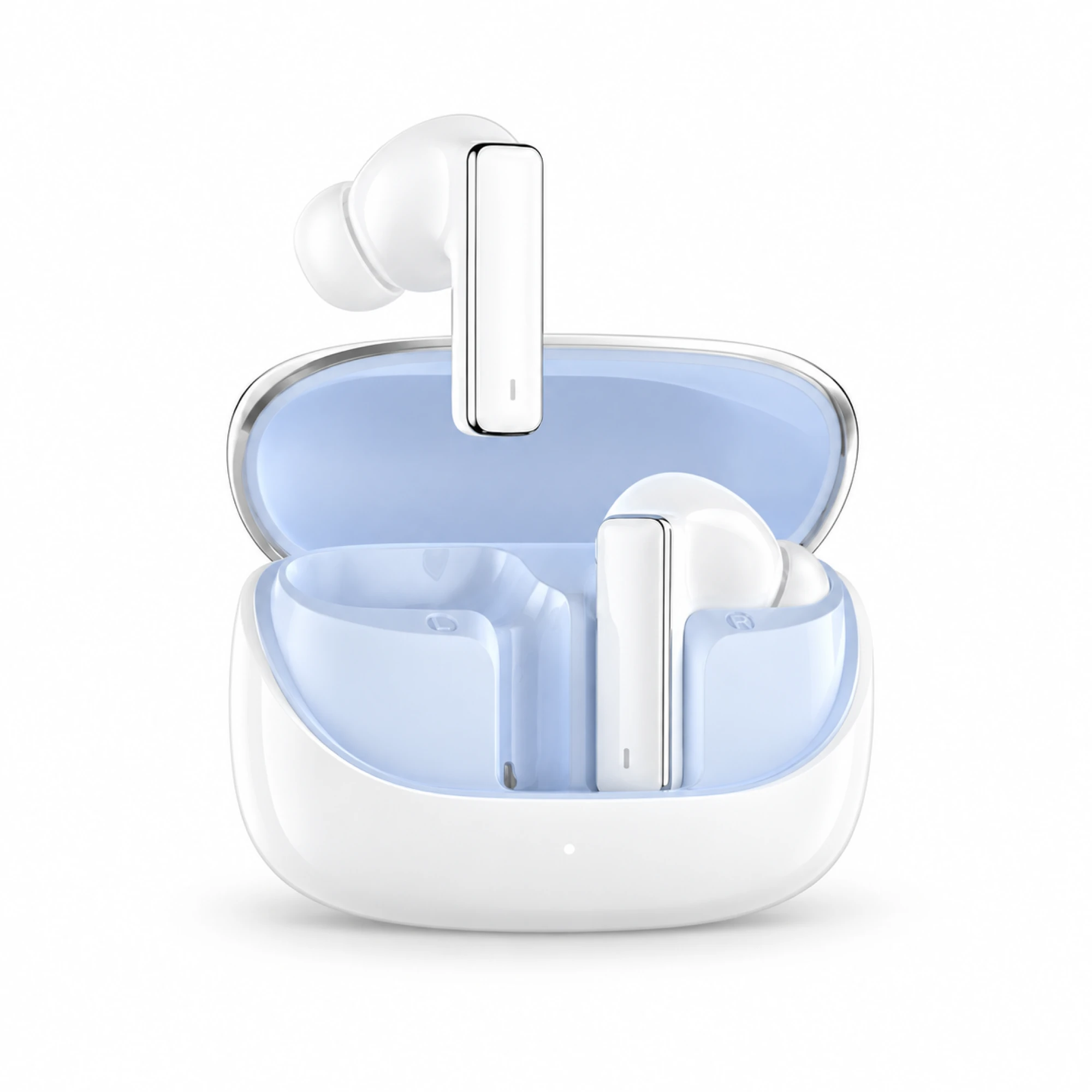 IN-01 White ANC Earbuds with Pale Blue Case Interior
 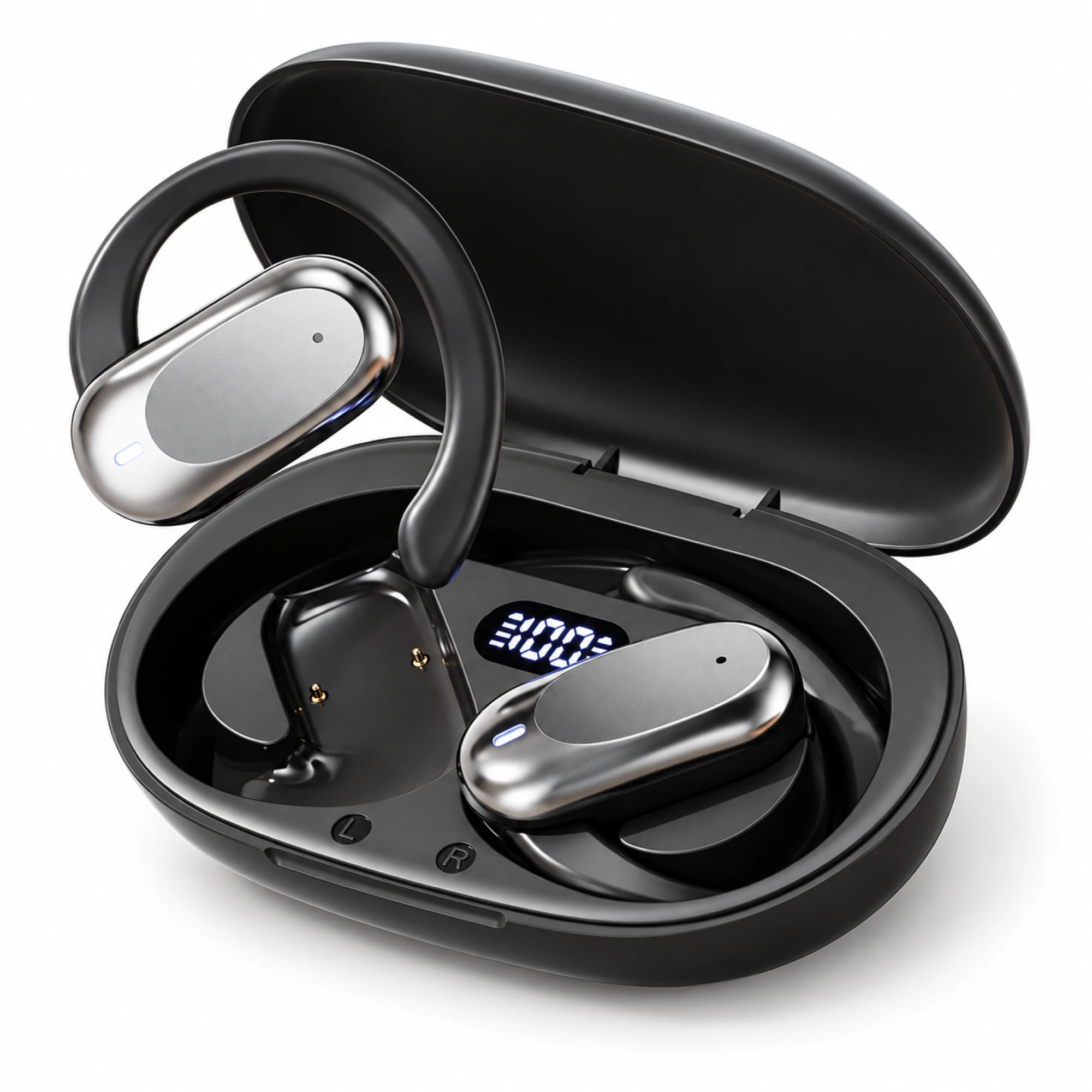 Silver Capsule Open-Ear Earbuds
 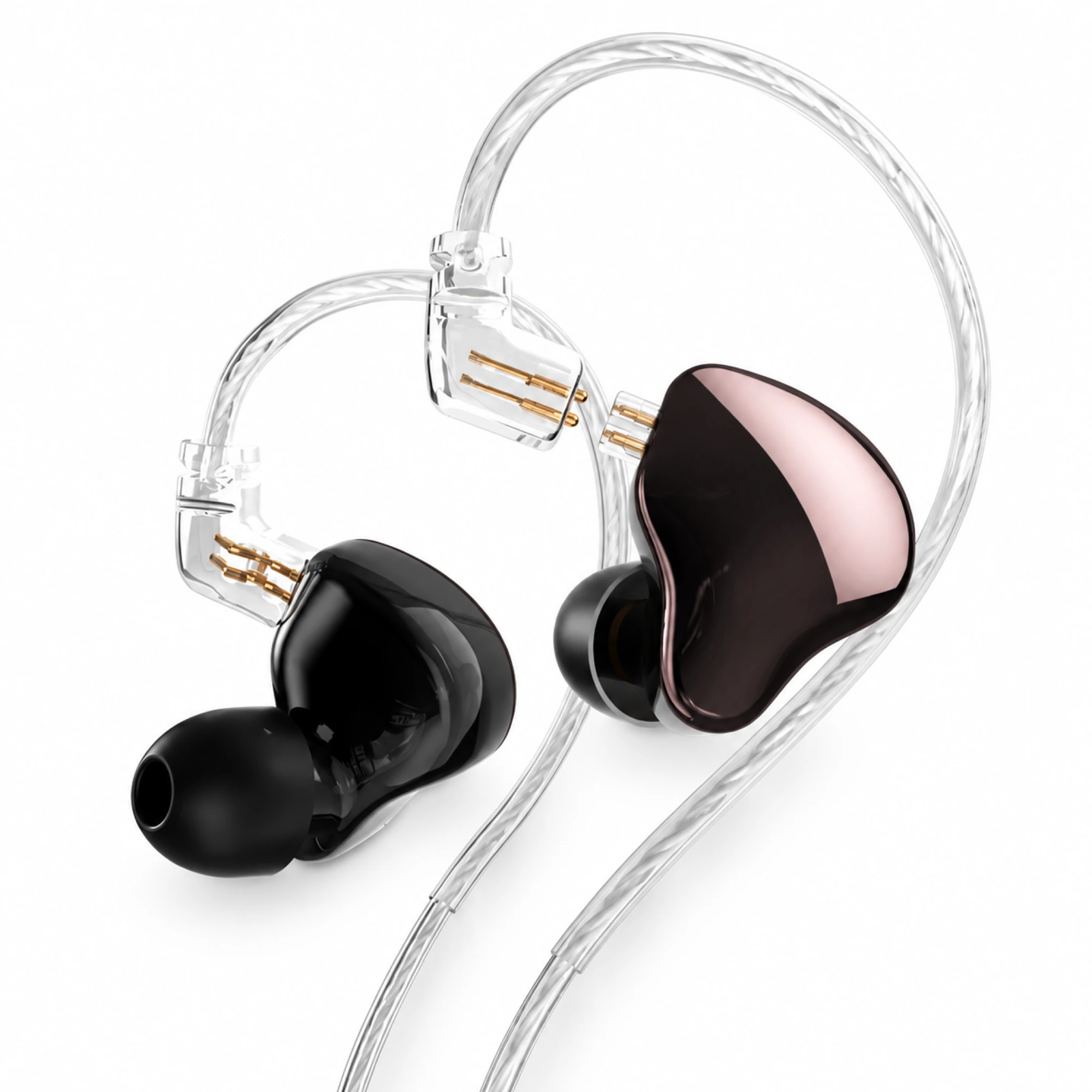 MN Rose-Metallic Detachable In-Ear Monitors
 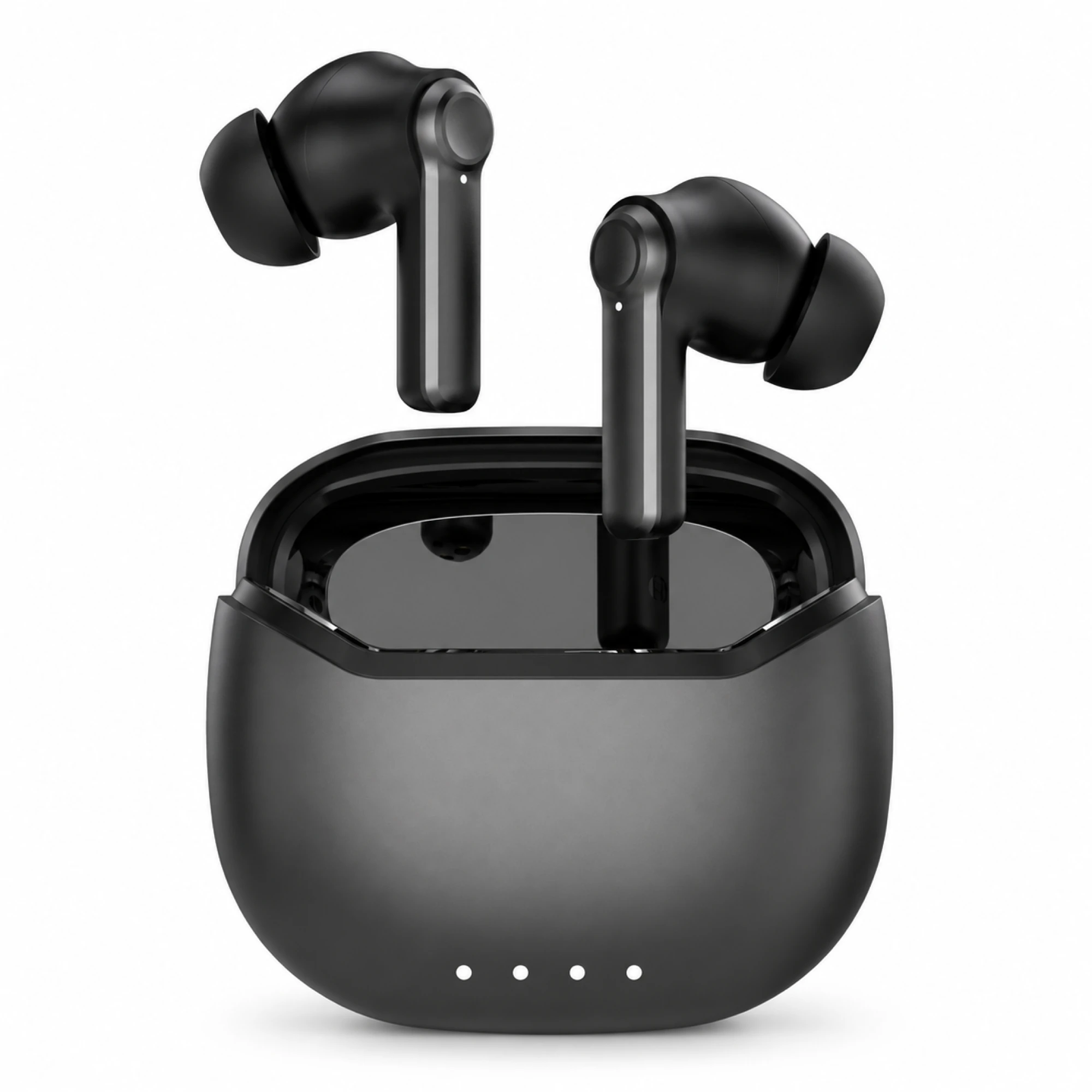 Black ANC Earbuds with Four-Indicator Case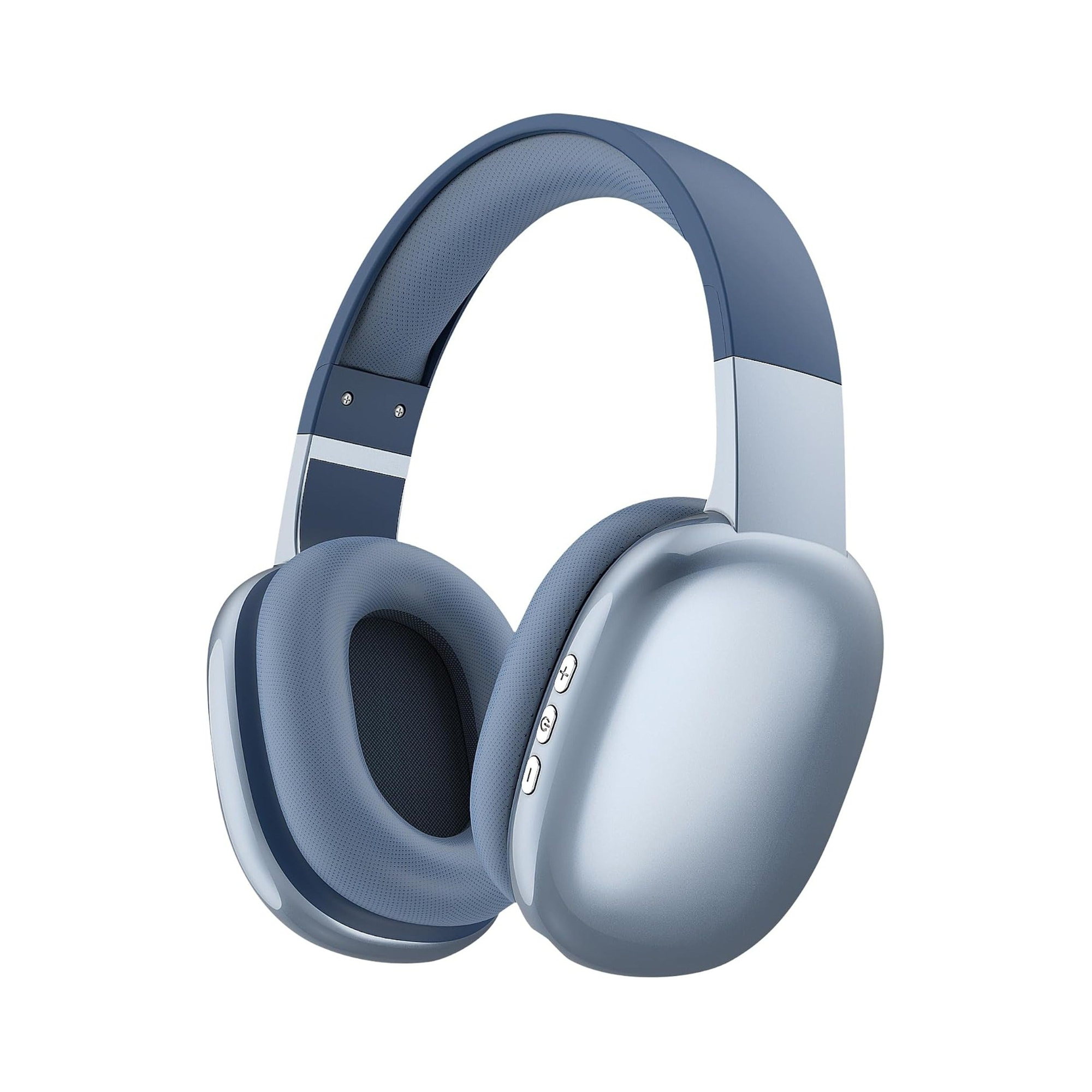
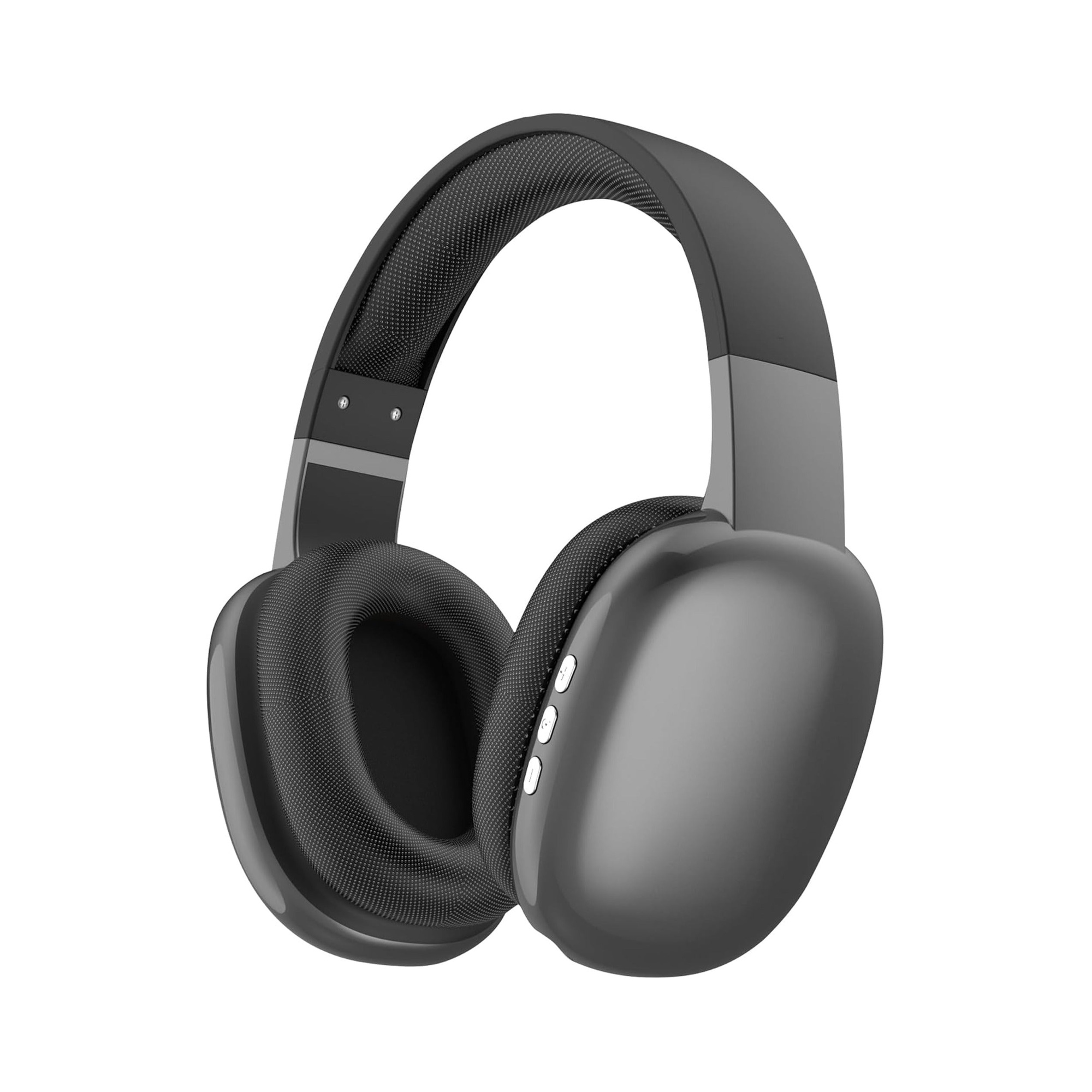
Most over ear earphones with mic support put the capsule in the ear cup, roughly 15 to 20 cm from your mouth and shadowed by your own jaw. A boom arm reaches the mouth; a cup cannot. That distance, an echo path a few centimetres long, and a Bluetooth profile switch that downgrades your drivers are the three costs a listing rarely spells out.

The distance problem, written out
A voice behaves like a point source, and OSHA's technical manual states the rule in one sentence: "the sound pressure level decreases 6 dB, on a Z-weighted (i.e., unweighted) scale, each time the distance from the point source is doubled." Room noise does not follow that rule: fans, traffic and chatter arrive from many directions at once. Your voice drops with distance; the room does not. That asymmetry is the whole advantage of a boom.
| Capsule distance from mouth | Typical mounting | Your voice, relative to a 3 cm boom |
|---|---|---|
| 3 cm | Boom arm parked beside the mouth | Reference, 0 dB |
| 12 cm | Front lower edge of an ear cup | About 12 dB down |
| 18 cm | Outer face of an ear cup | About 16 dB down |
| 24 cm | Rear of a cup | About 18 dB down |
Read that last column as a signal-to-noise penalty rather than a volume problem: gain raises your voice and the room together, so the 16 dB is what processing must claw back in software. The figures are worked from the 6 dB rule alone; real rooms flatten the falloff, so treat them as the shape of the effect.
Why a cup mic sounds duller as well as quieter
The capsule sits roughly level with your ear canal, putting your cheek and jaw between mouth and mic. Whether sound bends round that obstacle depends on wavelength against head size. At about 343 m/s in air, a 300 Hz tone has a wavelength over a metre and passes a head as though it were not there; at 3.4 kHz it is near 10 cm and the head acts as a barrier. Consonants live in that upper range and carry most of the intelligibility, so a cup mic is not merely quieter — it is low-passed: warm, thick, slightly mumbled.
The mic also sits centimetres from a loudspeaker
Capsule and driver share one plastic part. Every cup leaks, and that leak reaches the mic at a healthy level while your voice has just lost 16 dB crossing your cheek — so the far end hears itself unless the device removes it. Good echo cancellation subtracts the leak; cheaper designs simply gate the microphone whenever the far end speaks, which is why your first syllable vanishes when you interrupt.
Why so many over-ear headsets use a detachable boom
A boom solves the geometry and creates a commercial problem: few people want a microphone arm on their face on a train, so a fixed boom makes a headset unsellable to anyone who also walks around in it. A socket on the left cup lets one chassis serve both buyers. Detachable booms became standard for that commercial reason; a captive arm is stronger and has no connector to fail.
What matters at purchase is what happens with the arm removed, and behaviour is not standardised:
- Some models fall back to a cup mic, so calls degrade to everything above but still work.
- Some have no other microphone at all. Lose the arm and the headset becomes headphones; replacements are often unavailable a year later.
- A few keep the socket live for third-party arms, the only case where detachable is an upgrade rather than a compromise.
Park a boom beside the corner of your mouth, off to one side, so breath misses it on plosives.
Headset mode turns down the drivers you paid for
This cost hits over-ears hardest, because that is where the money went on drivers. Microsoft's Bluetooth Classic audio documentation defines wideband speech as "operation of HFP at a higher 16 kilohertz (16kHz) sampling rate using the mSBC codec," narrowband as 8 kHz, and states that HFP "supports concurrent monaural capture (microphone) and monaural playback."
Monaural, on a stereo headset with 40 mm drivers. The same page spells out the consequence: "if the microphone is used during a VoIP call, which puts the headset into HFP mode at 8kHz or 16kHz, and another application plays audio to the same device at 48kHz, the sound is resampled to match the HFP endpoint."
An awkward conclusion follows for anyone buying over ear headphones with mic capability over Bluetooth: you cannot have the good playback and the built-in microphone at once. Running the 3.5 mm cable restores full-range playback, but on many designs the analogue input is playback-only and the microphone disappears. One workaround is worth testing: the switch is triggered by an app opening that device's input, so leaving the headset on A2DP and selecting a different microphone should keep stereo alive through the call. See why Bluetooth earbuds sound bad on Windows calls.
Does the isolation make you talk more quietly?
Probably, and nobody warns you: people raise their voices in noise automatically. A 2017 study in Acta Acustica united with Acustica set out to find whether this Lombard effect has a starting point. Its authors describe the effect as speakers increasing their vocal effort "when their communication is disturbed by noise", and they report a change-point at a background level of 43.3 dB(A), the level from which the effect sets in.
Now consider a sealed cup plus active noise cancellation. It removes the noise from your ears. It does not remove it from the microphone, which is bolted to the outside of the cup and still sits in the room at full level. The loop that would push your voice up is cut while the noise it compensates for is untouched, and the seal traps your bone-conducted voice, so you back off further. The predicted result is worse far-end intelligibility in exactly the noisy place you bought isolation for. That study measured speakers in noise rather than headphone wearers, so treat this as a mechanism-based expectation; we have not tested it.
The fix has a name: sidetone, sold as mic monitoring or talk-through, feeds a little of your own microphone back into the cups so your voice tracks the room again. Call-centre headsets have had it for decades; consumer over-ear models mostly do not. See also ANC versus ENC.
What our headset listings say about the microphone
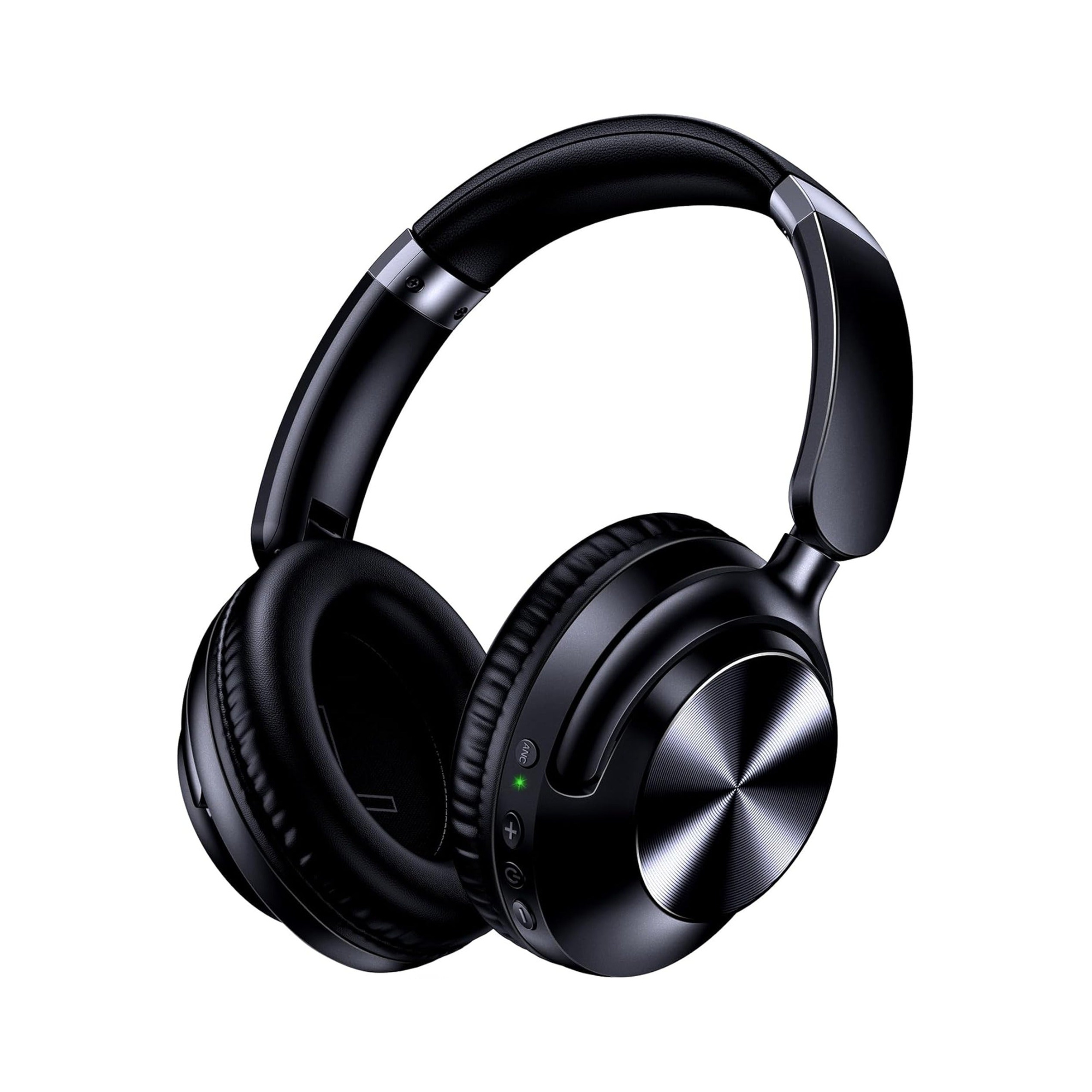
Two statements, both awkward for us. First, the Over-Ear Wireless Headphones Series 127 is the most fully specified headphone in our range: its listing states active noise cancellation, up to 100 hours of playtime, protein-leather cups, a 3.5 mm cable and a weight of 0.54 lb. It does not mention a microphone. Treat it as output only.
Second, our over-ear gaming headsets, Series 186 through Series 191, all $33.34 on the listing today in the gaming collection, each state 40 mm drivers, Bluetooth or a 3.5 mm cable, and "built-in microphone: for clear hands-free calling." That is a cup microphone; there is no boom. Beyond that phrase, the words "highly sensitive" and a line about hands-free communication "through our special noise reduction technology", the listings publish nothing about the microphone: no pickup pattern, no frequency range, no named ENC or CVC processing. We will not invent any of it.
Three absences, offered because they are information too:
- None mentions a boom microphone. If a boom is what you need, none of these is it.
- None mentions a detachable microphone, so the socket question applies to nothing in our range.
- None mentions sidetone, and none of these listings mentions a transparency mode.
A ten-minute check inside the return window
- Record yourself into the headset mic, then the same sentences on a phone at arm's length. Play both on speakers; the gap is the distance penalty.
- Repeat with noise cancellation on, then off, in the same noisy room at normal effort. If your level drops with ANC on, that is your own reverse-Lombard problem.
- Play music, then join a call and listen for the moment stereo collapses to mono. If there is a cable, plug it in mid-call and check whether the mic survives.
Fuller procedure: how to test a microphone before a call. For the open-ear alternative, see open-ear microphone call quality.
Questions we get about headset microphones
Is there a proper name for earphones that have a microphone?
A headset. The distinction is more than cosmetic: Bluetooth encodes it as the Hands-Free Profile, and a device offering it appears to your computer as both an output and an input. Headphones without a microphone are output only, and a computer will list them under playback devices alone.
Which over-ear design is best for calls?
Prioritise a boom arm, a wired or dongle connection that avoids the profile downgrade, sidetone, and a closed cup that leaks little into the mic. That combination is common in office headsets and rare in travel headphones, and it matters more than the badge on the cup.
- OSHA, Technical Manual, Section III, Chapter 5.
- Bottalico, Ipsaro Passione, Graetzer and Hunter, Evaluation of the starting point of the Lombard Effect, Acta Acustica united with Acustica, 2017.
- Microsoft Learn, Bluetooth Classic Audio.
- Bluetooth SIG, Hands-Free Profile.