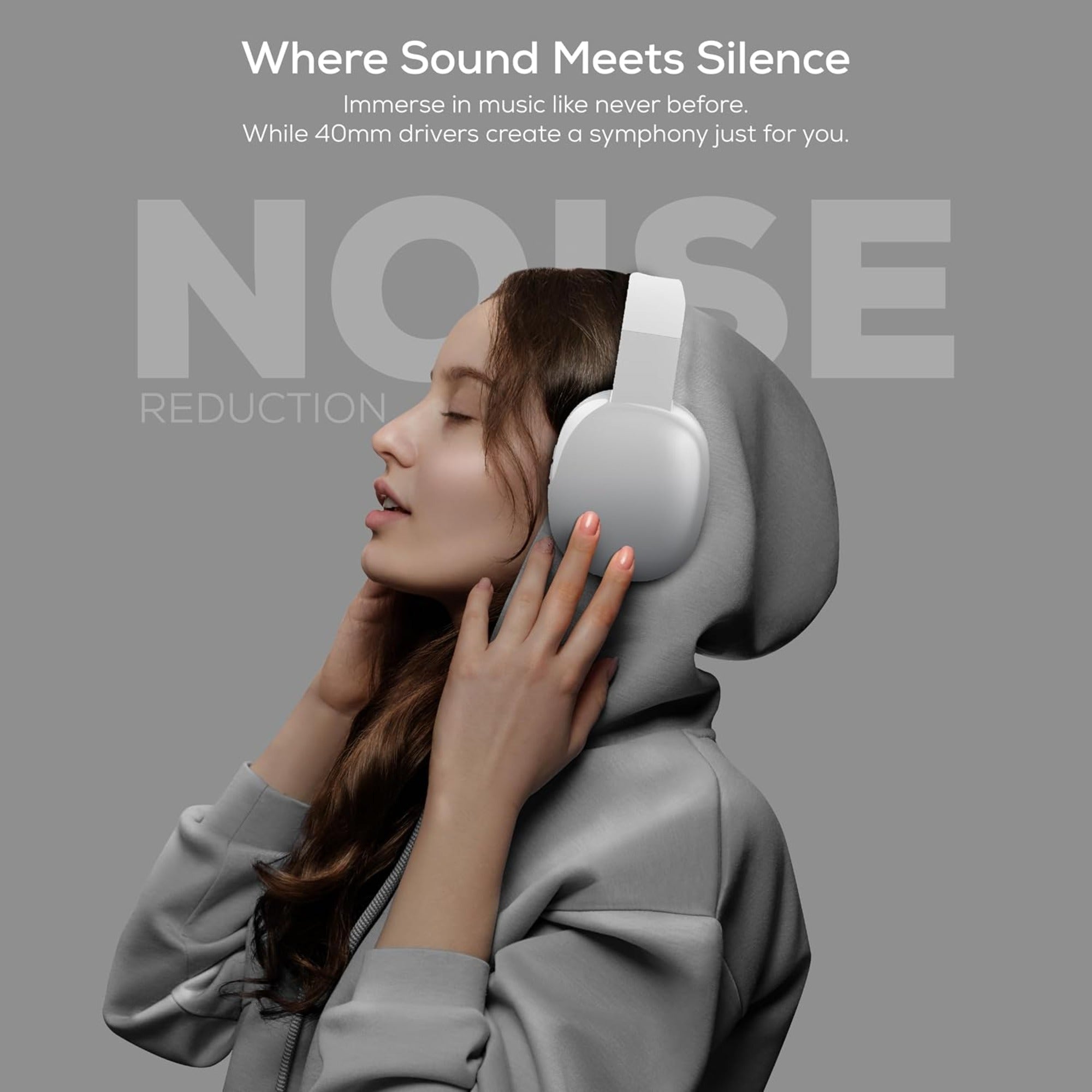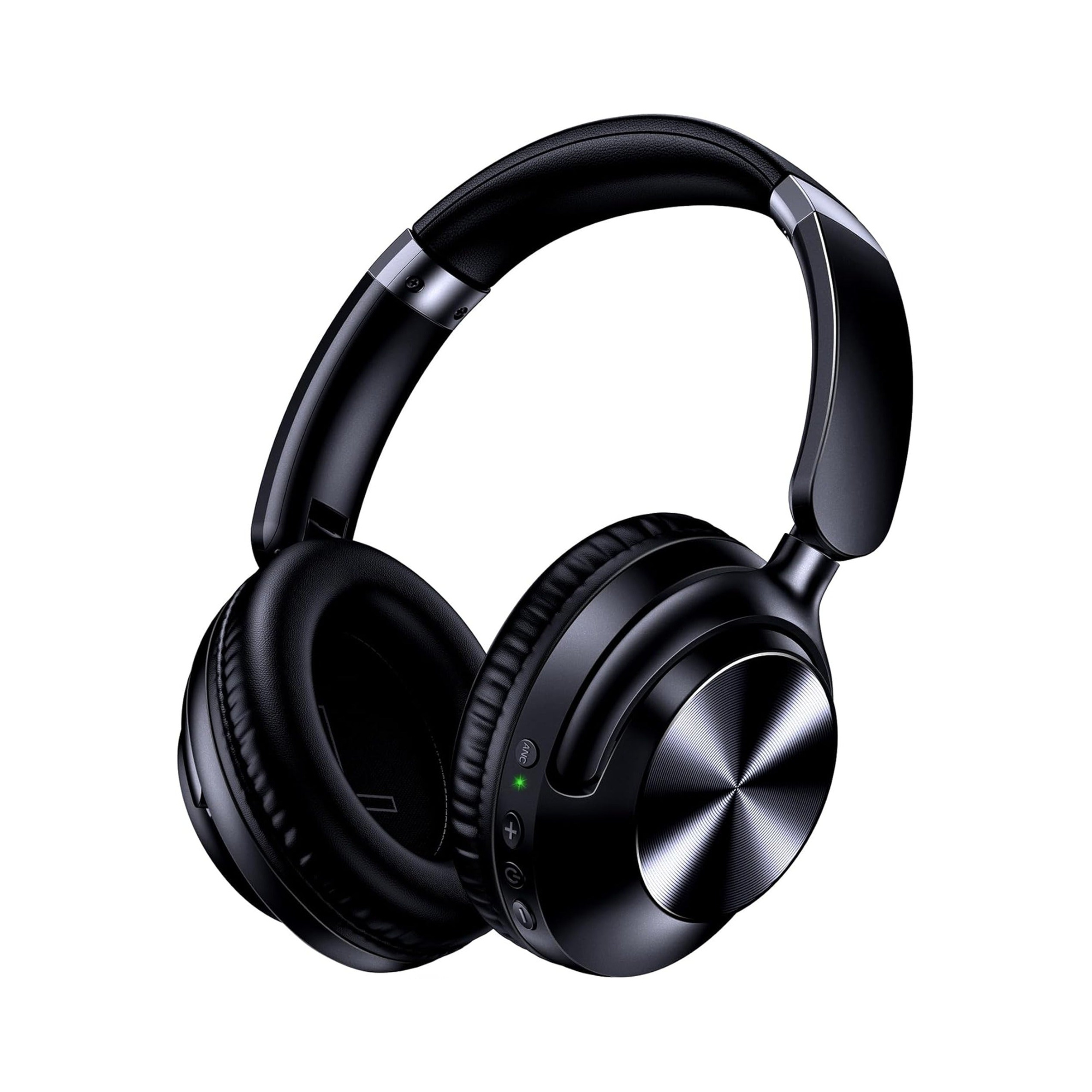
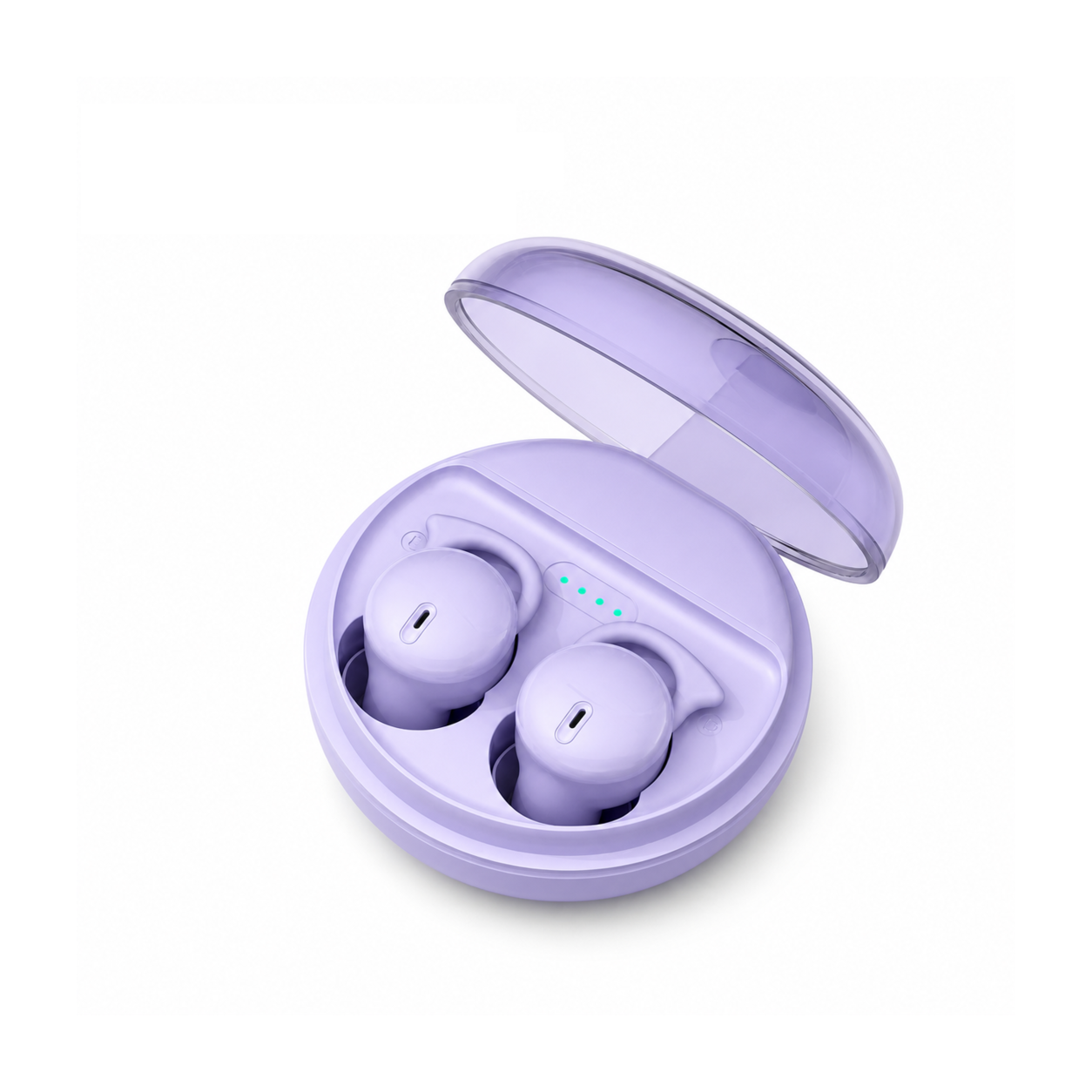
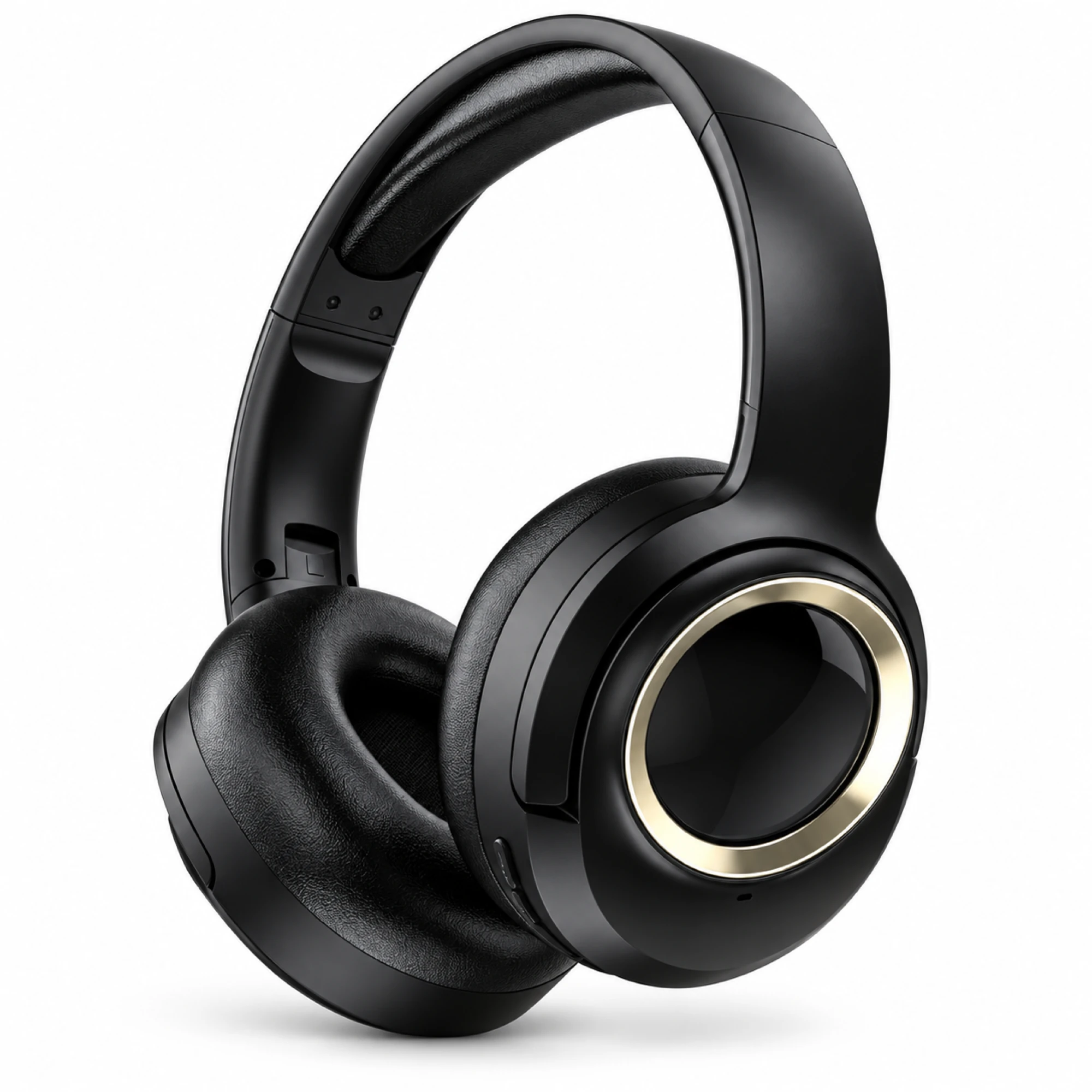
 MX-21 Black and Gold Wireless Headphones
 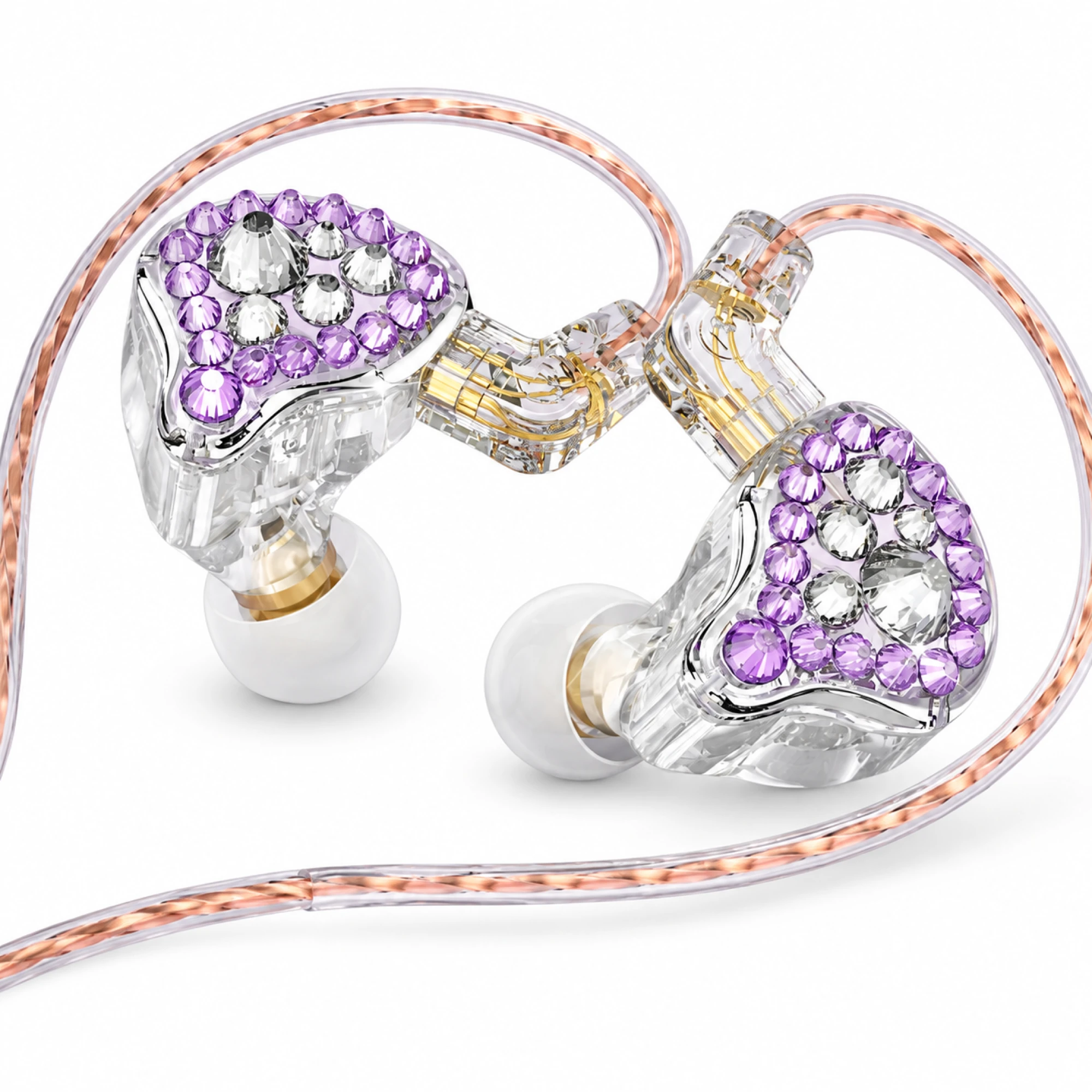 Q2 Pro Purple Crystal In-Ear Monitors
 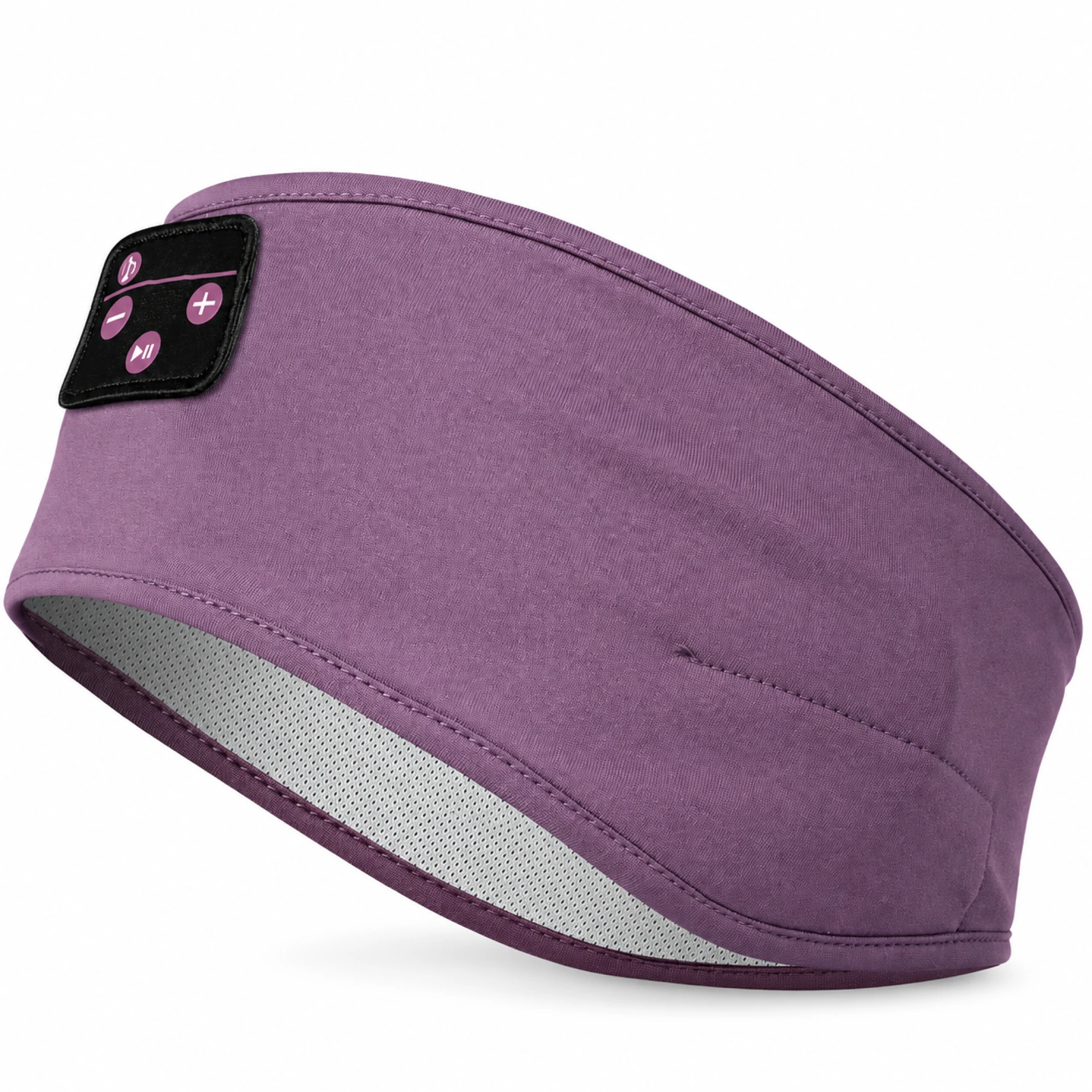 Purple Sleep Headband Headphones with Triangle Controls
 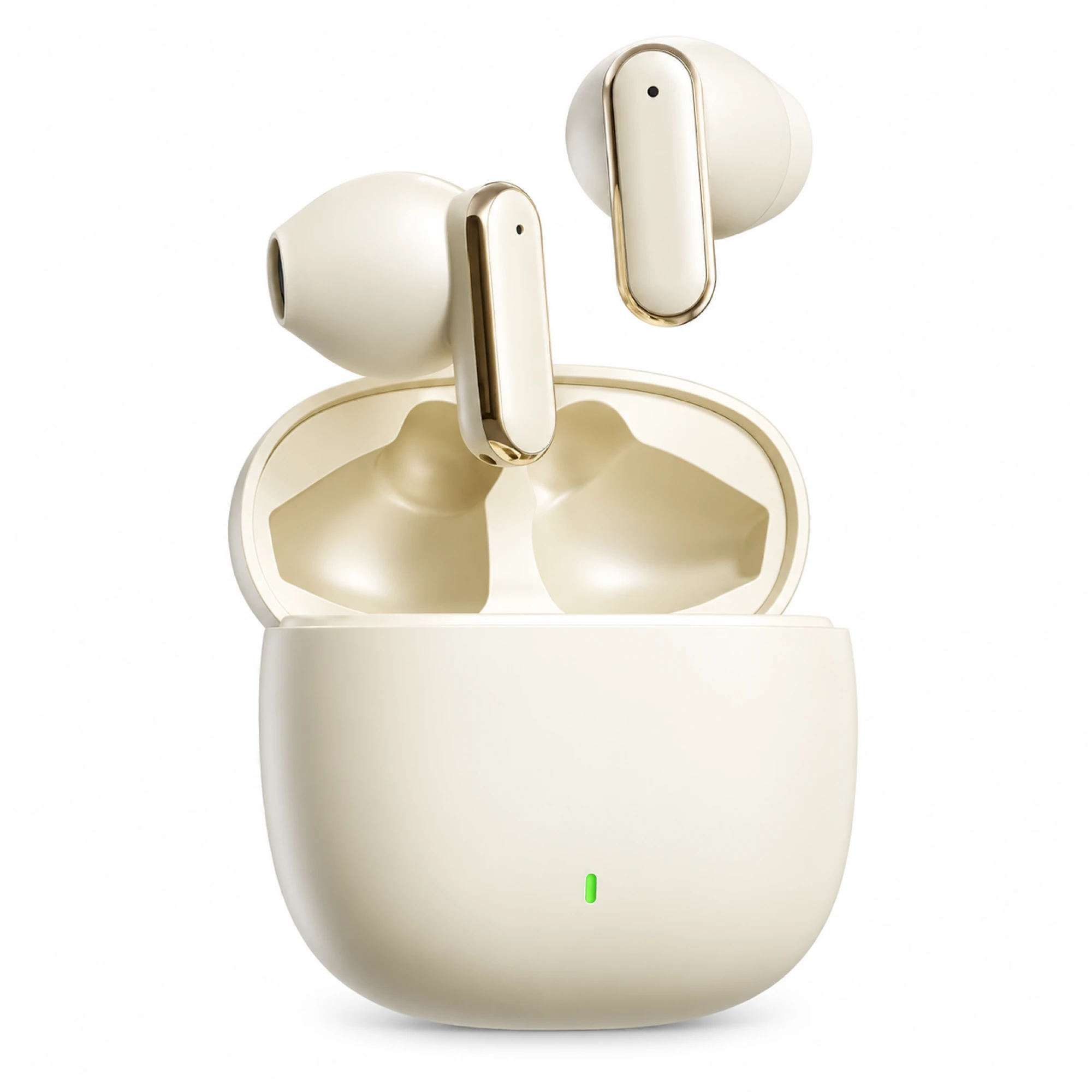 Cream Reflective-Stem Wireless Earbuds
 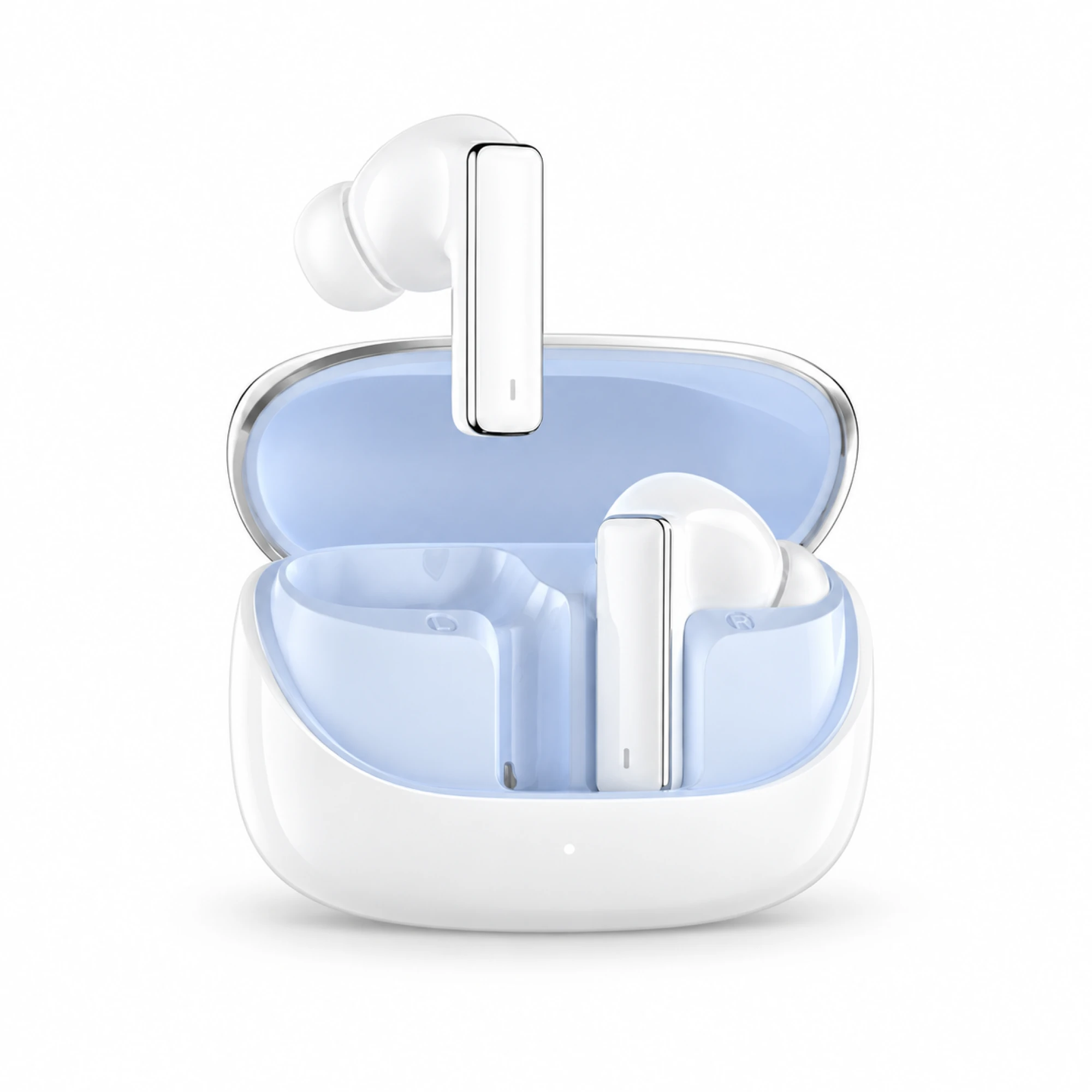 IN-01 White ANC Earbuds with Pale Blue Case Interior
 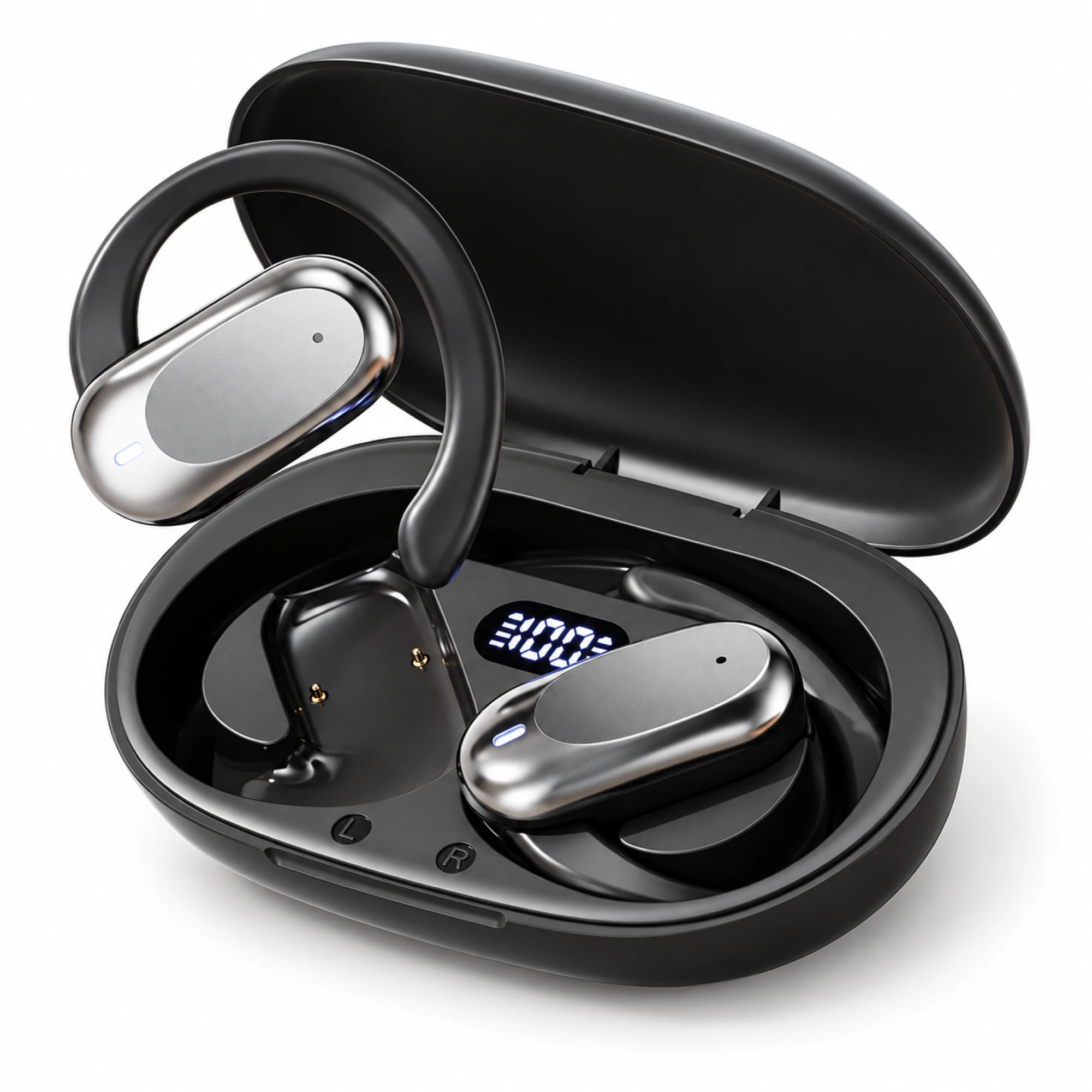 Silver Capsule Open-Ear Earbuds
 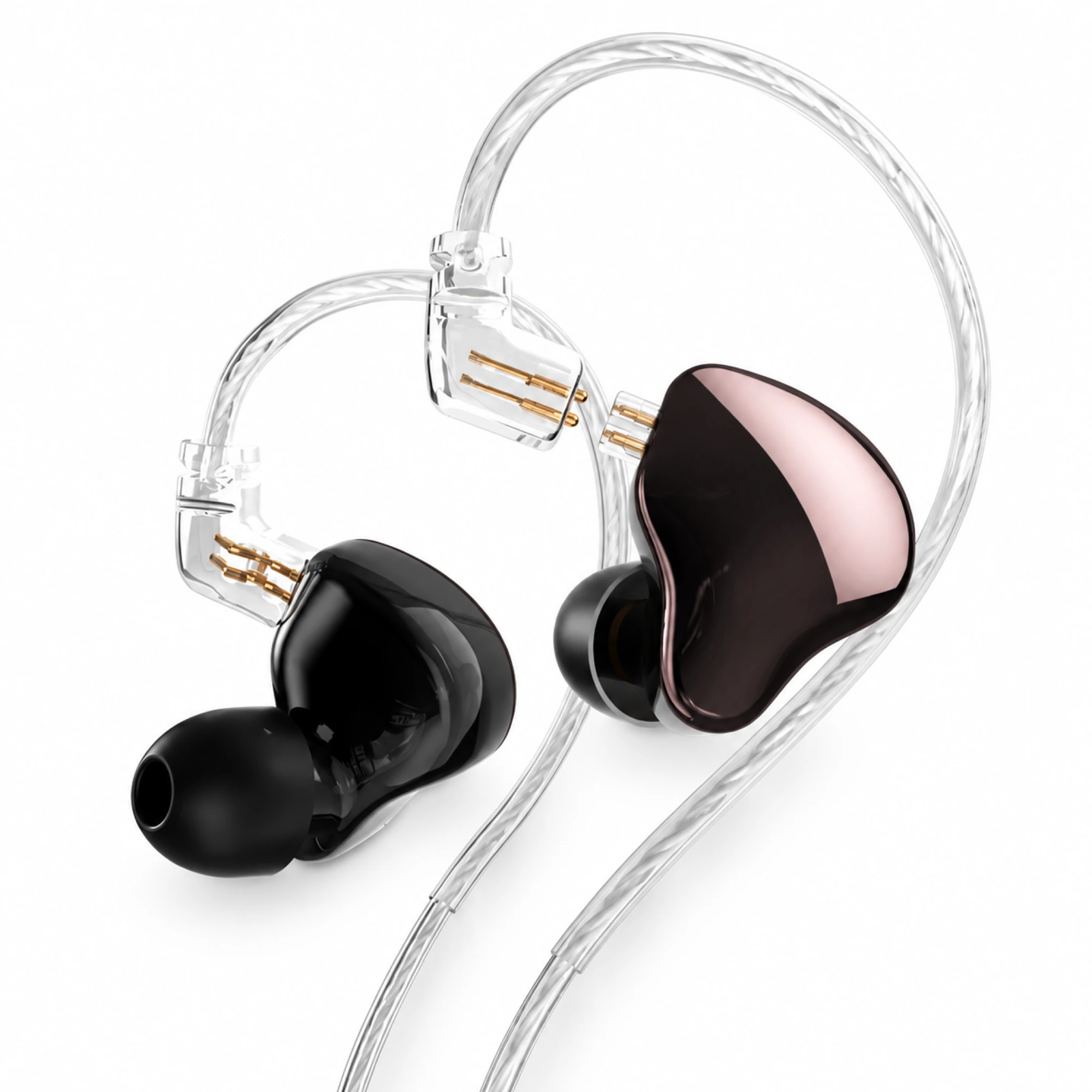 MN Rose-Metallic Detachable In-Ear Monitors
 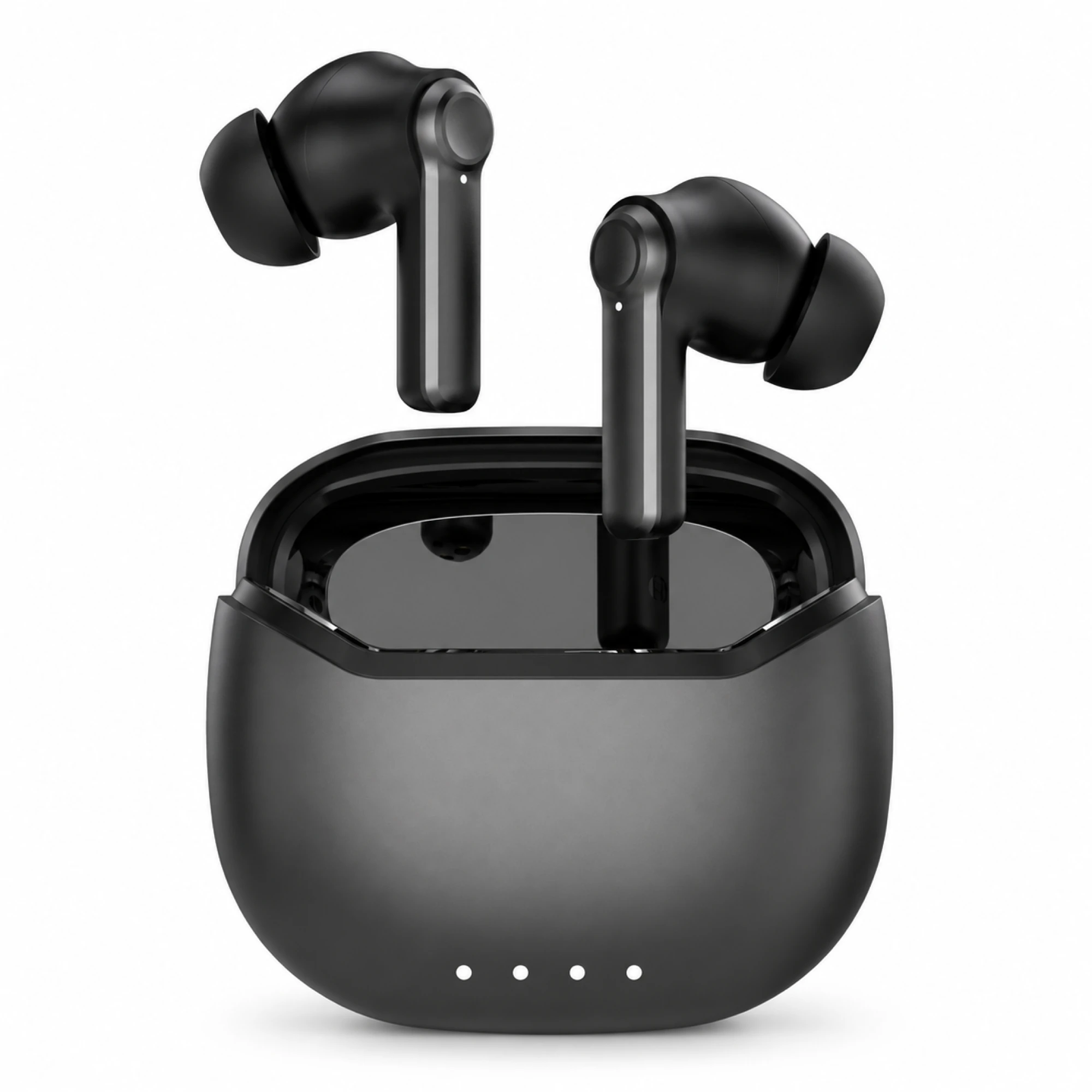 Black ANC Earbuds with Four-Indicator Case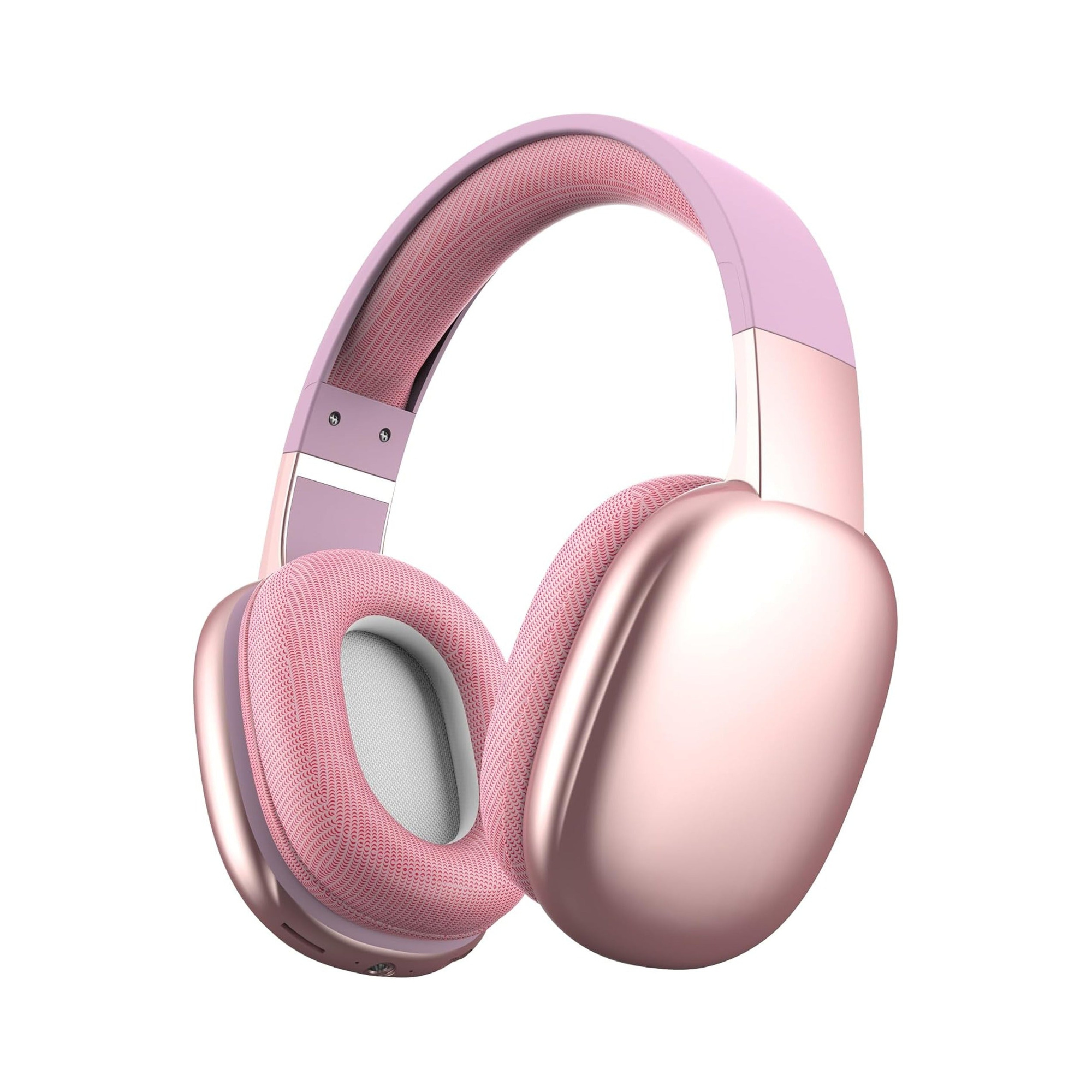
There is no one comfiest gaming headset, because comfort is not a feature a headset carries. It is what happens when a given mass is divided across the surfaces of a particular head. Three surfaces do the carrying: the crown, the ring of skin around each ear, and the sides of your skull. Every design decision moves load between them.
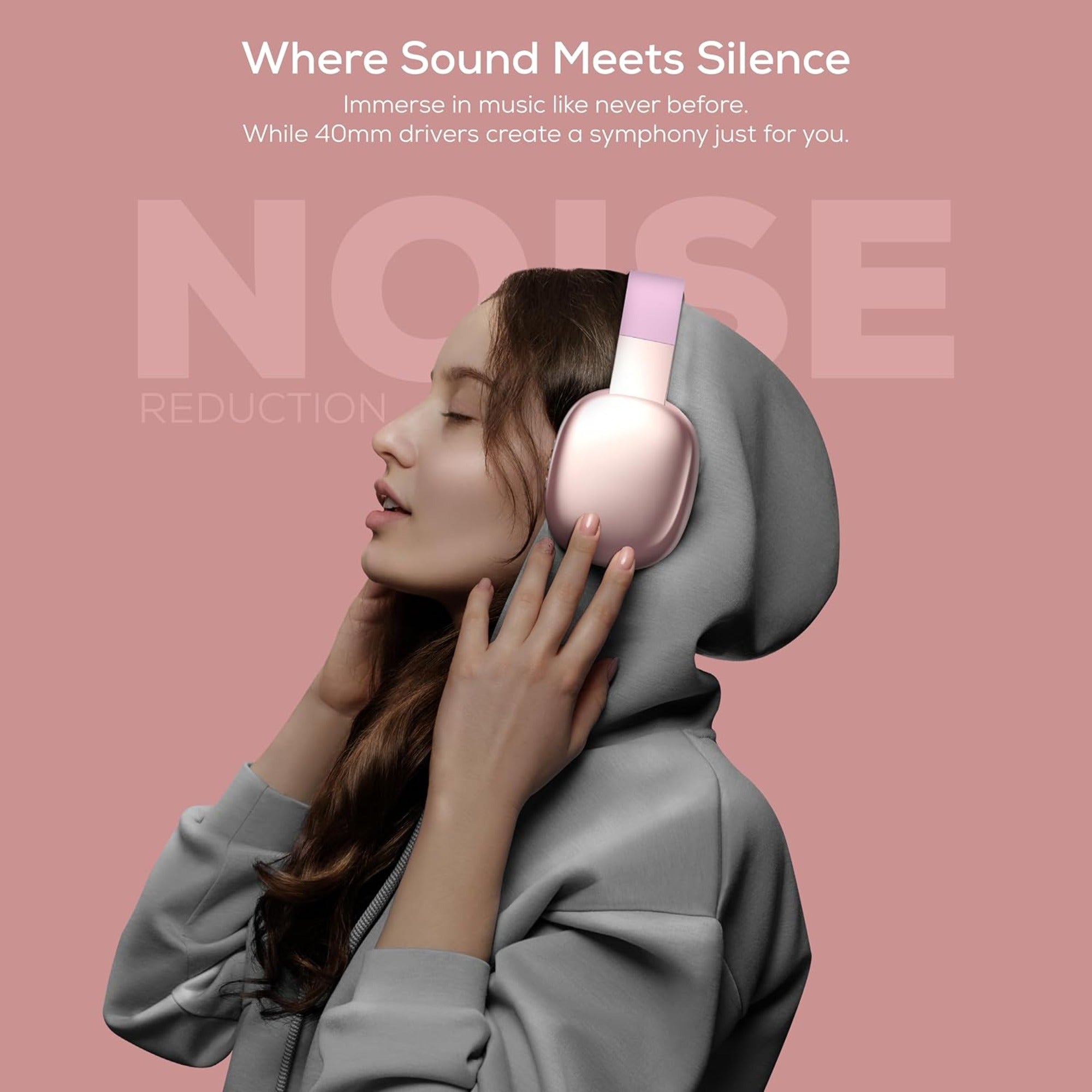
Comfort is pressure, and pressure is force divided by area
Two numbers set how a headset feels: its mass, and how many square centimetres of you hold that mass up. Halve the contact area and you double the pressure everywhere it touches, with no change in weight. That is why a heavy headphone with wide, well-shaped pads can sit easier than a light one that meets you along a narrow edge.
The mass has to land somewhere. It goes down one of three paths, and moving it off one always puts it onto another.
| Load path | What carries the weight | What shifts load onto it | What it feels like when overloaded |
|---|---|---|---|
| Crown | The headband, across the top of the skull | Looser clamp, heavier cups, a suspension sling | A narrow sore line along your parting |
| Pad ring | The skin and cartilage circling each ear | Deeper cups, softer pads, cups that rotate flat | A ring-shaped ache, usually worst at the jaw hinge |
| Side clamp | The temporal bone on each side, through the pad | A stiffer band spring, a shallower cup, a shorter band | Pressure above and behind the ear |
| The ear itself | Concha, canal wall and outer rim, on earbuds only | Removing the headband from the equation | One localised sore point instead of a broad ache |
Clinical guidance concerns a far more serious problem but points at the same variable. The NHS notes that pressure ulcers usually form on bony parts of the body, because pressure concentrates where there is little tissue to spread it. The bump behind your ear and the ridge along your crown are exactly that.
The headband is where designs really diverge
Drivers are close to interchangeable across the category. Headbands are not, and they decide crown pressure.
- A padded band puts firm foam under a rigid arch, contacting a strip perhaps two to three centimetres wide. Cheap, adjustable in defined steps, and if the arch does not match your skull it will find the one spot that does.
- A suspension strap hangs an elastic sling under the rigid frame, so the frame never touches you. The strip is wider and deforms to your shape. The costs are real: the frame sits taller, adding bulk and sway mass, and a self-tensioning sling removes your ability to tune a fit that lands wrong.
- A thin metal band with minimal padding is the lightest option and the least forgiving. It works well on the heads it happens to match.
The second variable is cup rotation. A head is not a cylinder, and the side of your head is not a vertical plane. If a cup cannot pivot to meet that angle, the pad touches along its upper edge and lifts at the jaw, so true contact area is a fraction of the pad's apparent size, a large pressure increase that no spec sheet mentions and every finger can detect.
How much heads vary, with the numbers attached
The ANSUR II anthropometric survey is described by its publishers as the most comprehensive publicly available data set on body size and shape, covering 93 measures for over 6,000 adult US military personnel, 4,082 men and 1,986 women. The same page attaches a warning: the sample "is still not an approximation of the US Civilian population", and "designs and standards based on these data will not accommodate most user populations in the intended manner." So the best head-dimension data available openly says it does not describe the general public, and one fixed band spring meeting that range reads as gentle on some heads and as a headache on others.
What earbuds do to the same equation
Earbuds delete two of the three load paths: no crown load, no clamp across the temporal bones, no pad ring. The entire weight moves into the concha and the canal wall, an enormous reduction in mass and an equally large reduction in the area holding it, applied to cartilage instead of bone under muscle.
Whether that nets out better is individual, which is why we will not claim it does. For some players a marathon session ends with nothing sore at all; for others the single contact point becomes the new hot spot by hour two. Our guides to earbud pressure points and fatigue versus pain tell you which group you are in.
Open-ear and clip-on designs sit at a third point again: load on the outer rim of the ear, nothing in the canal, no sealed pocket to trap heat. Our clip-on models work this way, and what you give up is isolation, along with the quiet in-game cues it makes audible. For gaming specifically we list two earbud sets alongside the headsets, and the trade against any over-ear headset is the microphone, which our comparison of earbuds versus headsets works through.
The four comfort figures our listings omit
We stock six over-ear gaming models, Series 186 through 191, all at $33.34 on the listing today, with identical copy: a 40 mm driver, Bluetooth or a 3.5 mm cable, cushioned ear muffs made of artificial leather, a foldable frame and a built-in microphone. The copy calls it a "Super Comfortable design", which is an assertion and not a measurement.
Of the four figures that would actually predict comfort, those six listings state none. Stated weight: absent. Headband type: nothing beyond "foldable". Cup rotation: absent. Clamp force: absent. By contrast the Over-Ear Wireless Headphones Series 127, $44.75, which we do not market for gaming at all, answers three of the four: its listing states 0.54 lb, about 245 g, an adjustable headband, and ear cups that "rotate up to 105 degrees". Clamp force it leaves out too, as almost nobody in this industry publishes one.
Two admissions belong here. Our product database has a weight field and it is empty across the whole range, so the most predictive comfort number we hold is one we have not published. And because the six gaming listings share one specification, nothing separates Series 186 from Series 191. Calling one of them the pick of the six would be guessing. They sit together in the gaming collection.
Six checks that find the load path in five minutes
None of these need audio, and all work inside a return window.
- Put it on, say nothing, wait sixty seconds. The first place you can feel it names the overloaded path: parting, ring around the ear, or above and behind it.
- Look down at your keyboard, then back up. If the headset slides, the crown is not carrying its share and retention is coming from clamp alone.
- Slide a fingertip under the pad at four points, top, bottom, front and back. If it enters easily at the jaw but not at the top, the cup is not rotating to your head and your real contact area is smaller than the pad looks.
- Weigh it on a kitchen scale. Fifteen seconds gets you the number most listings, ours included, do not state.
- Check whether the band adjusts in steps you can feel, or self-tensions. Self-adjusting is excellent when it lands right and unfixable when it does not.
- Repeat wearing whatever you normally wear: glasses, a cap, hair tied up. A spectacle arm turns broad pad contact into a narrow line, which is a pressure problem first, and our guide for glasses wearers covers the alternatives.
Questions about long sessions in a headset
Which gaming headsets are comfortable and don't hurt my ears?
Look for low mass, wide crown contact, pads deep enough that your ear misses the driver grille, and cups that pivot. Those four properties predict comfort better than any brand does. If pain is sharp and localised instead of a general ache, treat it as a fit problem rather than a build-quality one.
What is the comfiest wireless gaming headset?
Wireless adds a battery and its housing, so a wireless model is usually the heavier of two otherwise matched designs. That is not disqualifying, but the headband and pad geometry have to be better to carry it. Since no reviewer can test on your head, shortlist on the measurable properties above and confirm inside the return window.
Which headphones are the comfiest over a long session?
Across all headphones, the designs that feel best over hours spread weight widely and clamp lightly, which is also the combination that isolates least. Comfort and isolation pull in opposite directions, so decide which one your room requires before you shop.
What five minutes on your own head settles
Comfort is mass divided by contact area, landing on the crown, the ring around your ear, or the sides of your head. Design does not remove that load; it moves it. Judge gaming headphones on stated weight, headband style, cup rotation and pad depth, and treat "super comfortable" as marketing until you have worn it. Our own six gaming models state none of those four figures, which is why the fingertip and kitchen-scale checks above beat reading another specification list.