

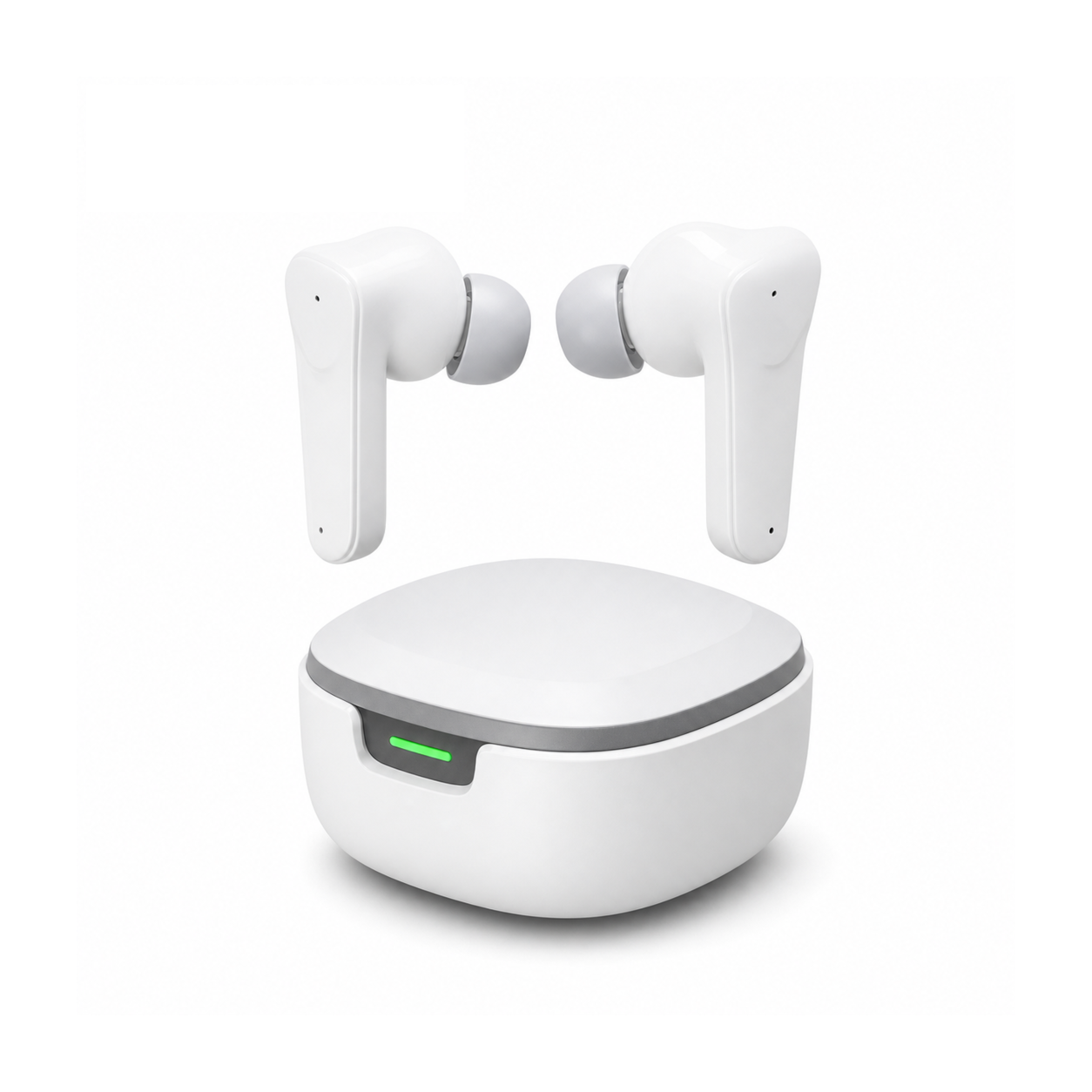
2.4 GHz Gaming Earbuds With USB-C Dongles that Bypass the Bluetooth Audio Stack
Competitive gaming requires immediate acoustic positioning that matches the blistering pace of modern high-refresh gaming monitors. Standard Bluetooth audio connections introduce significant transmission latency because operating system software layers, codec compression buffers, and retransmission queues slow signal delivery. For gamers who prefer lightweight in-ear monitors over bulky over-ear headsets, standard Bluetooth latency creates noticeable frame desynchronization. High-performance 2.4 GHz gaming earbuds eliminate this lag by using dedicated USB-C wireless transmitters that completely bypass generic Bluetooth audio processing pipelines.
By plugging a compact 2.4 GHz radio frequency dongle directly into a PC, PlayStation 5, Nintendo Switch, or mobile device, the transmitter establishes an ultra-fast private wireless audio pipeline. Instead of negotiating multi-layered Bluetooth protocols, the dongle functions as a direct hardware endpoint that streams uncompressed digital audio in real time. Understanding how dedicated radio transceivers interface with host hardware reveals why specialized dongles represent the pinnacle of competitive wireless in-ear performance.
USB Audio Class Architecture and Bluetooth Stack Bypass
The key technical advantage of 2.4 GHz wireless gaming earbuds lies in how their dedicated USB-C transceivers communicate with the host operating system. Standard Bluetooth earbuds depend on software driver stacks that compress audio into lossy SBC or AAC formats, introducing twenty to fifty milliseconds of encoding delay before packets reach the antenna. In contrast, a 2.4 GHz transmitter enumerates immediately as a native USB Audio Class device, allowing game audio engines to stream raw PCM digital samples directly to the hardware dongle.
Once received by the dongle, specialized RF hardware encodes the digital stream using proprietary low-latency subband codecs designed specifically for instantaneous gaming transmission. Operating across clear channels within the 2.4 GHz industrial, scientific, and medical radio band, these transceivers deploy aggressive frequency-hopping algorithms to evade Wi-Fi congestion. This streamlined direct-to-silicon pipeline slashes end-to-end audio latency to fifteen milliseconds or less, guaranteeing frame-perfect sound cues during intense esports competition.
| Transmission Interface | Host Audio Stack Delay | RF Transmission Window | Total End-to-End Latency | Voice Microphone Channel |
|---|---|---|---|---|
| Dedicated 2.4 GHz USB Dongle | 2ms - 5ms (Direct UAC2) | 10ms - 15ms (Proprietary RF) | 15ms - 20ms (Ultra-Low) | Uncompressed 32kHz Full-Duplex |
| Bluetooth LE Audio (LC3) | 15ms - 25ms (OS Stack) | 25ms - 35ms (Standard BLE) | 45ms - 60ms (Moderate) | 16kHz Mono Chat Profile |
| Standard Bluetooth (AAC/SBC) | 40ms - 80ms (Buffer Queue) | 80ms - 120ms (Jitter Buffer) | 120ms - 200ms (High Lag) | Hands-Free Profile drops to 8kHz |
| Analog 3.5mm Controller Jack | 5ms - 10ms (Gamepad DAC) | 0ms (Direct Copper Wire) | 5ms - 10ms (Near-Zero) | Passive Analog Electret Line |
Dual-Mode Wireless Switching and Simultaneous Chat Mixing
Modern gaming setups frequently require balancing competitive game audio from a primary console with incoming voice calls from mobile communication apps. Advanced 2.4 GHz gaming earbuds feature sophisticated dual-mode chipsets that maintain simultaneous connections across both high-speed 2.4 GHz RF and standard Bluetooth. This hybrid architecture lets gamers play on a PC or PlayStation using the ultra-low-latency USB-C dongle while staying connected to Discord or phone calls via secondary Bluetooth pairing.
Intelligent onboard digital signal processors mix both incoming audio streams simultaneously without introducing distortion or interrupting game communication. If a phone call rings mid-match, the earbuds automatically blend the caller’s voice over lowered background game volume, allowing players to answer without pausing. When mobile calls conclude, the DSP instantly restores primary 2.4 GHz stream priority, ensuring uninterrupted acoustic focus across crucial ranked match moments.
High-SPL Acoustic Saturation and Nighttime Sensory Decompression
Spending long hours immersed in high-SPL competitive gaming environments subjects middle-ear mechanics to immense acoustic saturation. Sustained exposure to explosive bass transients, sharp hitmarker spikes, and constant party chat over-stimulates the delicate auditory reflex and causes ear canal fatigue. Providing your ears with total acoustic rest and physical pressure relief during the night is vital for preventing long-term listening fatigue and preserving hearing sensitivity.
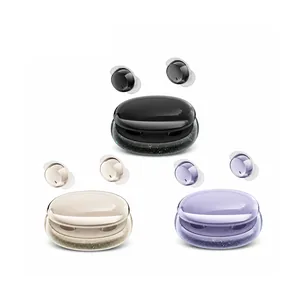
Flat, stemless earbuds for sleeping on your side, with a dynamic sleep-support mode and a starlight glow charging case. See the three colors at EARSOLE.
Switching from rigid gaming earpieces to smooth ergonomic sleeping earbuds allows sensitive concha cartilage to decompress naturally against pillows. The stemless low-profile housing distributes contact pressure evenly without creating uncomfortable leverage points, letting road-weary competitive gamers drift off peacefully to soothing natural frequencies and wake up refreshed for tomorrow’s competition.
Low-Latency USB-C Dongle Setup Checklist for PC and Console
Maximizing the wireless performance and signal stability of your 2.4 GHz gaming earbuds requires proper transceiver placement and system configuration. First, insert the USB-C transmitter directly into an unobstructed motherboard port rather than a crowded unpowered USB hub to prevent electrical packet jitter. Second, utilize the included USB-A extension cable if your PC tower sits under a desk, positioning the transmitter within direct line of sight of your seating position.
Finally, verify in your console or PC sound control panel that the USB dongle is designated as the primary default communications device, setting the output bit depth to 24-bit 48kHz studio quality. Regularly inspect the USB-C connector contacts for lint or oxidation to ensure pristine digital handshake communication. Methodical transceiver setup guarantees bulletproof radio frequency stability and lightning-fast acoustic reaction speeds throughout every competitive session.
Frequently Asked Questions
Can 2.4 GHz gaming earbuds connect simultaneously to a phone and PC?
Yes, premium 2.4 GHz gaming earbuds incorporate dual-chip wireless architectures that maintain simultaneous high-speed 2.4 GHz dongle connections to a PC while pairing over Bluetooth to a mobile phone for seamless call mixing.
Does a USB-C wireless transmitter work through a USB-A adapter hub?
A 2.4 GHz USB-C dongle functions through a USB-A adapter on legacy console and PC ports, provided the adapter supports full USB 2.0 or higher data throughput to maintain high-speed digital audio streaming.